Home Blog Page 1756

IIT Madras launches online degree programs with no age bar, becomes the first University in the world to do so

IIT Madras, which currently stands first in the country according to NIRF rankings, has launched an online diploma and degree programs in data science and programming. It has become the first university in the world to do so. In a webinar on Tuesday morning, Union Minister for HRD Ramesh Pokhriyal Nishank launched this program.

The base qualification for this program is the completion of class 12 and does not have an age bar. Additionally, it also does not require the JEE exam qualification that is usually necessary for joining IITs or NITs in the country.

While talking about it, Bhaskar Ramamurthi, Director, IIT Madras said that through these courses, the institute aims to reach a larger number of students. The course comes with multiple entries and exit points. Students can get a certificate, diploma, and degree based on when they exit the course. After completing class 12, students will have to pursue a foundation course while those who have a college-level degree can directly enroll at the diploma level. Those who have dropped out of college are also eligible for this course.

The course curriculum is structured in such a way that it is compliant with the industry. While the entire coursework will be based online, those who take the course will be required to take the assessments alone offline.

In a scenario where the pandemic has been posing a looming uncertainty to the educational system, this has come as a welcome initiative, as online education has become the need of the hour to tackle the crisis.


All you need to know about China’s new National Security law

What is this new security law that the Chinese Government has imposed?

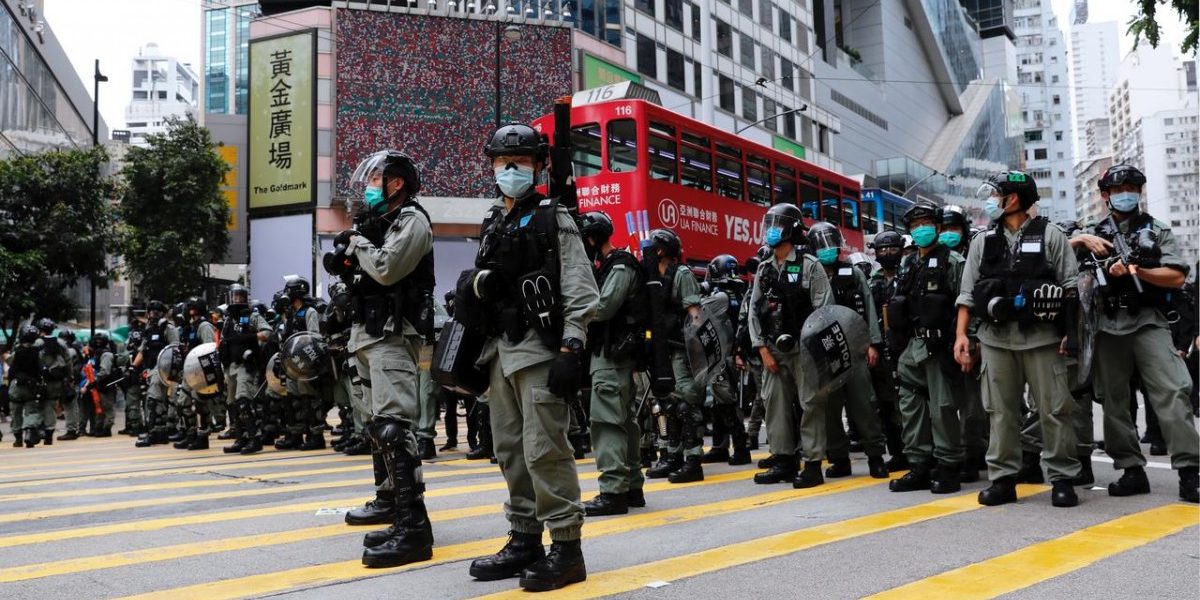
The city of Hong Kong was restored to China from the British in 1997, after signing a “one country, two systems” pact. This agreement entitles Hong Kong to certain privileges that are otherwise absent in Mainland China.

Recently, the Parliament in China came together and voted for a draft proposal that could potentially snatch away these rights that had been granted to Hong Kong by the 1997 agreement. This was enacted into a National Security Law on the 30th June, when it went through unanimously in a session of the Standing Committee of the National People’s Congress in Beijing. This has been passed a day before the 23rd anniversary of handing over the city.

This law also criminalises the certain acts making them punishable offences that has raised a lot of concerns among Hong Kong citizens. The acts, which fall under the following categories, but are not restricted to these alone, are secession, subversion, terrorism, and activities by foreign forces that interfere in Hong Kong

Why has the Chinese Government suddenly fast-tracked the passing of this Act?

Because of the “one country, two systems” agreement, the city of Hong Kong has its mini-constitution called the Basic Law. This protects Hong Kong, giving it a certain degree of freedom in terms of governing themselves. Hong Kong can create its own security law, under Article 23 of this Basic Law. But, thanks to there being consistent dissent against this decision, it had never seen the light of the day.

After protests broke all over the city over an extradition law, as well as widespread violence over this issue, China decided to take matters into hand, in the form of the new security law. This new law will positively supersede the local governance, while also corroding the wide-ranging freedoms enjoyed by residents of the global financial hub.

How this will affect Hong Kong’s status quo

According to their official news agency, Xinhua, this calls for a new national security office to be set up in Hong Kong that will handle all the national security-related crimes. This will also dictate that the mainland agencies will be granted the power to “take over” to protect national security as and when they please. The Xinhua’s statement also specified that the legislation would make it clear that the Hong Kong government would need to respect and protect human rights as it safeguarded national security.

It is also a cause of concern because this legislation will grant direct access to mainland China over those crimes that it deems a possible cause for the “jeopardy of national security”.

As a direct effect of the new law, pro-democracy activists, including pastors and religious leaders, are put at risk of being extradited to and tried in mainland China. This could mean the end of all kinds of independent activities that had been going on in Hong Kong thus far, which include the protests in the likes of the extradition bill protests last year. It is also feared that once the law is completely brought into force, the judicial system in Hong Kong might become a mirror of China’s, wherein all national security trials are conducted in a closed-door manner which is a cause of concern.

Another major concern expressed by the citizens of Hong Kong is the fact that the law might put an end to Hong Kong’s status as a business and economic powerhouse.

Where does the rest of the world stand on this issue?

The G7 summit of countries released a statement in disapproval of this act by China, calling it a violation of rights. They said that China’s efforts seriously jeopardize Hong Kong’s peace and success.

The United States, in particular, has even threatened to end its trading relationship with Hong Kong, in addition to imposing trade sanctions on officials involved, while the UK has promised a potential mechanism using which hundreds of Hong Kong citizens could look at a path to British citizenship. Currently, some 350,000 people holding BNO passports can travel to the UK visa-free for six months. In addition to this, the European Commission came out in criticism of China’s new ‘blueprint’ of the national security law, in a video conference meeting on Monday.

Responding to these statements, the foreign ministry spokesperson of China said that this was a ‘domestic issue’ and that country wanted “peace without hegemony”. It had also sent demarches to countries like India, explaining the reason for the new draft legislation with a reminder that upholding national security. However, post the Galwan valley attacks, relationship between India and China have metamorphosed into a new reality with India sending both subtle and strong messages to China through Atmanirbhar Bharat and banning of Chinese apps. India hasn’t made any public comment on the ongoing crisis in China. It remains to be seen if it will do so.

China forces draconian birth control measures on Uighur Muslims to ‘curb their population’

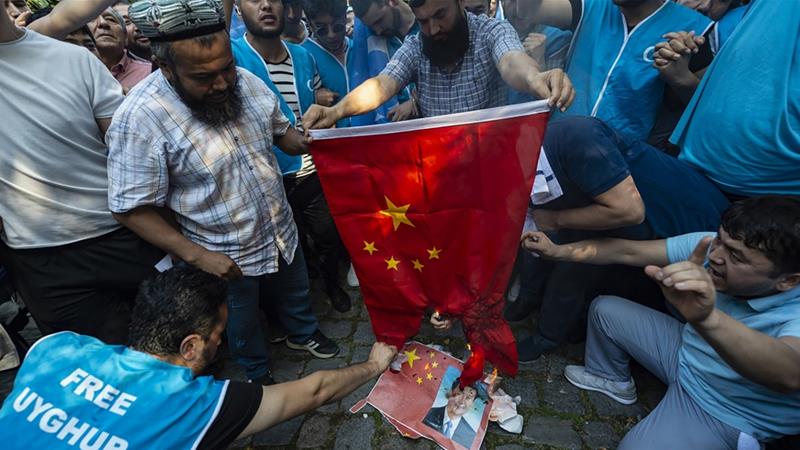
China has been reported to be ‘forcibly sterilising’ women of the Uighur Muslim population in their country, as an attempt to ‘control their population’. It has been pushing birth control on them in an attempt to slash their population, and suppress the minority group. Meanwhile, it has been pushing for the Han community to have children, and increase the majority.

Reports have confirmed that the government constantly forces women of this community to take pregnancy tests, and forces intrauterine devices, sterilisation and even abortion on hundreds of thousands. Police raid their homes, and constantly strike terror in their minds, as they search for ‘hidden children’. People of this community are also sent to detention camps, where they are separated from their families, the only reason being ‘having too many children’. Once in the camps, the women are forced to take IUDs and ‘preventive shots’ so they don’t conceive.

As a result of this, birth rates have dropped by 60% in the last 3 years and this has caused an untoward shift in the demographic. Across the Xinjiang region, birth rates continue to plummet, falling nearly 24% last year alone — compared to just 4.2 % nationwide.

The United Nations has come out in opposition of it, as have several other countries, calling it ‘demographic genocide’. United States’ Secretary Mike Pompeo has also come in opposition of this and called it labelled as “shocking” and “disturbing” reports against China’s ruling Communist Party accusing them of coercive family planning against minority Muslims. The Chinese Ministry for Health, however, refused to comment on the same.

White Man’s Legacy

We may be familiar with the term from our school history classes. The western world at that time was at the pinnacle of their glory and thought to themselves to be the highest in the world order in terms of civilization.

So naturally, they thought it was their duty to educate the people of the colonies whose resources they looted and plundered for their well being.

The Government of India Act,1935, and other such legal frameworks were put in place to colonize Indians for their benefit.

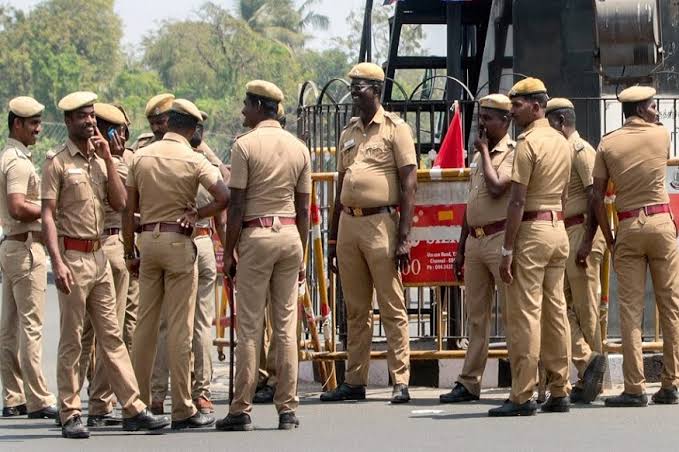
The custodial deaths of a father-son duo traders Jeyaraj and Bennicks shook the conscience of the whole Nation triggering an outburst of reaction in social media and a section of people started asking for police reforms as in the case of the death of George Floyd in United States which erupted into the #BlackLivesMatter protests.

Jeyaraj and Bennicks were arrested on the charges of not closing their shops even after the deadline was over(due to lockdown) which angered the police who arrested both members of the family. The two later died.

The issue gained national attention with people demanding justice be meted out. Justice, as assumed would be to dismiss the officers from the service and charge them for murder. However, there is a section for whom justice means instigating protests, bringing people to streets, blocking roads, rioting, vandalizing, looting, damaging public property and inconveniencing the public.

But the questions arises as to whether the punishment meted out to the culprit officers will stop the police from indulging in such acts of violence? In that case, can we even call it justice?

The answer is a big NO.

Systemic Lacunae

The curriculum for premier civil services like IAS, IPS, state services, and the Indian Penal Code are based on systems and codes designed by English men who viewed Indians, not as citizens with rights but as subjects meant to be subjugated. The usual tendency of the personnel inducted into these services is to view their position not as a means to serve but as a position of power and privileges. The colonial mindset is even more in the state police and especially among those lower in the hierarchy. If such is the legal framework, mindset and training that the bureaucrats undergo, how will such atrocities stop?

One may even remember that almost all Indians welcomed the encounters of four men who were accused of rape and murder of the veterinary doctor Priyanka Reddy. Had due process of law been followed in that case, the punishment would have been different and considering the snail’s pace in which the judicial systems work, it would have come too late (as in Nirbhaya case). To add to the agony of victims, we will have ‘human rights activists’ and lawyers appealing and delaying justice.

Unless these systemic lacunae that exist in our bureaucracy and judiciary are reformed, there will be no cure to corruption, highhandedness, and extrajudicial killings.

The other side of the coin

Our police are over governed and under regulated. They are working under scorching sun in summer and they do a whole lot of work other than what police in other countries are assigned to. They need to stop agitations,cool down protestors,to protect politicians besides catching murderers, rapists,petty thieves, and so on.

They work overtime for state-determined wages and are not allowed to form unions unlike the other government staffs like teachers whose demand for higher wages no matter how much ever they earn seems to never end.

The need of the hour

Our policy should be amended to treat perpetrators and victims as fellow Indians and mainly humans and not as subjects who need to be educated or tamed for the benefits of the very few in the top ladder of governance. The Central government has used this pandemic as an opportunity to undertake structural reforms in different sectors that comes under its control. Likewise, the State government should prioritize areas under it that includes police and prisons. The judiciary too should evolve process that ensures speedy dispensation of justice.

Every citizen should be subject to the same rule of law and no innocent should die unnecessarily except through due process of law for crimes committed.

Koala bears at the risk of being extinct by 2050

A recent study has proven that unless adequate action is taken to conserve their habitats, Koala bears are at the risk of becoming extinct by 2050. These thriving marsupials are indigenous to the grasslands of Australia, but are slowly diminishing due to the rapid destruction of their living environments. This decline in their presence was accelerated by the massive Australian forest fires of 2019-’20 when 11,264 bush or grass fires burnt 5.4 million hectares (13 million acres) of land. It is believed that close to 500 koala bears had been killed during this disaster.

An inquiry has been launched into their disappearance by the New South Wales Department of Environmental Conservation. The inquiry, by a cross-party committee, found pre-bushfire estimates that koalas numbered 36,000 in NSW were now outdated. The committee made 42 recommendations, including establishing new national parks in identified areas and reducing land clearing. “Koalas are an iconic Australian animal recognised the world over and a national treasure which we will do everything we can to protect for future generations,” state Environment Minister Matt Kean said, after a meeting with the above committee.

Koala bears are primarily found in New South Wales, although they are also scattered across  Queensland, South Australia, Victoria and the Australian Capital Territory. As of 2019, the Australian Koala Foundation has estimated a number of “only 80,000” koala bears remaining in the world.

This statistic actively places them on the endangered list, placing an immediate call to action for their conservation.

Mumbai’s Taj Hotel of 26/11 attacks fame gets a bomb scare

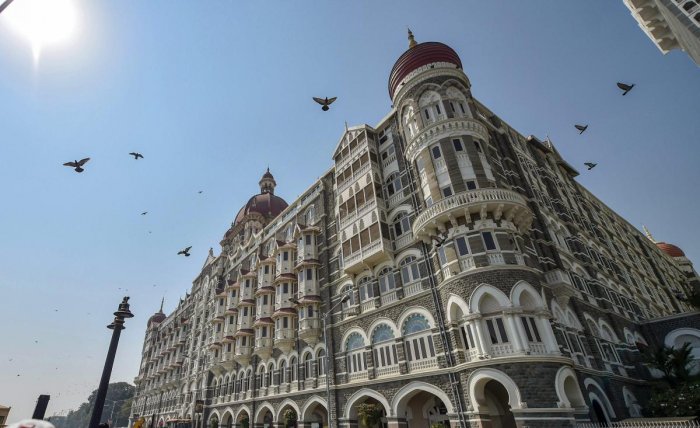
The Taj Mahal Palace and the Taj Lands End hotels in Mumbai have received a bomb threat from an unidentified caller from Pakistan. The former is in the Colaba area, while the latter is in Bandra. Security has been tightened in the areas following this call. Although the hotels are not operating due to the coronavirus lockdown, strict measures have been taken to ensure that

The hotels reported receiving calls on their landline late last night, saying that he would “blow up the hotels like in 2008”. The Mumbai police are currently in the process of identifying the whereabouts of the caller. While talking about this, a hotel official said, “Police are on alert and an adequate number of police personnel have been deployed in the (Taj hotel) area”. The call is particularly disturbing, as it has come just one day after the Karachi Stock Exchange attacks on Monday.

So far, the caller has been identified to be from Pakistan and is suspected to belong to Lashkar-e-Taiba, the same group that wreaked havoc during the 26/11 attacks.

The iconic hotel in Colaba area was among the targets of Pakistani terrorists during the 26/11 Mumbai terror attack. 10 Lashkar-e-Taiba terrorists had attacked the Taj Mahal Palace hotel, Chhatrapati Shivaji Terminus, and Leopold Cafe in the 2008 Mumbai Terror attacks, killing 174, and injuring over 300.


Barren land near Odisha’s prison gets a new lease of life as inmates turn it into a vegetable garden

The Nayagarh sub-jail in Odisha is present in a particularly barren terrain, that is geographically hilly. As part of a psychological uplift program, the prison inmates there have converted this land into a vegetable garden. They grow vegetables like brinjal, turmeric, onion, and spinach. These vegetables are then sold in the local market.

This jail has filled one lakh rupees into the government’s coffers as a result of this garden in the last year, from the revenue obtained by selling the vegetables.

Speaking about this, Umesh Chandra Balbantaray, a jail authority who was appointed at the jail over a year ago said, “For us, it’s not really about the revenue. I’m just happy that convicts are engaged in productive activity. Each person here has an individual savings account and their earnings are gathered in their passbooks, which greatly benefits their families too”. He added that, upon being released, they would be leaving the jail with the capability of earning for themselves, and said that this instills confidence in them.

Notably, Balbantaray was one of the frontmen of the initiative, as this was started as a result of observing a massive drop in morale in the prison inmates.

Covaxin, India’s first COVID-19 vaccine gets DCGI approval

Covaxin, India’s first-ever coronavirus vaccine gets the nod from the Drug Controller General of India, to conduct phase 1 and phase two of clinical trials. This was developed by Bharat Biotech and was developed in collaboration with the Indian Council of Medical Research (ICMR) and the National Institute of Virology (NIV). The clinical human trials are scheduled to begin in July.

While major pharmaceutical companies have been in contention for the development of a vaccine, Bharat Biotech’s vaccine has demonstrated extensive safety and effective immune responses. As treatment drugs like the Remdesivir and various others have been sanctioned for approval, this is the first vaccine that has been developed.

In May, the DCGI released a statement saying that more than thirty groups have been working on a vaccine. Notably, this was said to be developed in the shortest span of time as compared to any others, since this research which usually takes years and millions of dollars, and has been condensed into a 12-month span due to the urgency of the situation.

Meanwhile, the global pharmaceutical giant AstraZeneca’s vaccine has had the maximum response and reception so far. Since its announcement, the company’s formulation has been signed for delivery by the European Union as well as Brazil. China has also rolled out permissions to conduct clinical trials for a vaccine that was produced by CanSino Biologics.

The pandemic has already claimed over five lakh victims worldwide, including 16,475 in India. There are over 1.01 crore confirmed cases, including nearly 5.5 lakh in India – the fourth worst-affected country.


FIFA-certified football stadium soon in Mizoram

Mizoram’s Sports Minister, Robert Romawia Royte had visited the construction of a sports academy under  Sports Authority of India (SAI). He announced that the Kolasib town in Mizoram will soon have a football ground. The football ground will be certified by the Fédération Internationale de Football Association (FIFA).

He was accompanied by Supply Minister and Kolasib MLA K Lalrinliana and Serlui MLA Lalrinsanga Ralte during the inspection. He said that the artificial turf being laid at the SAI academy ground at Saidan was certified by FIFA and the construction will be completed soon.

He said that the new football stadium will play a vital role to aid sportspersons of the state and pave way for them to cast their names in national and international competitions.

He visited other regions of the town to check if it is feasible to invest in new sports infrastructure and even upgrade existing facilities. The existing football ground at Kawnpui will be converted to a standard ground after laying artificial turf. In addition to that, a sports training center would be set up at Vairengte located on the Mizoram-Assam border.

The state of Mizoram passed the ‘industrial status’ to sports last month. This step means plenty of funds for various aspects under sports infrastructure. Moreover, it encourages private players to become important stakeholders in the space of sports.

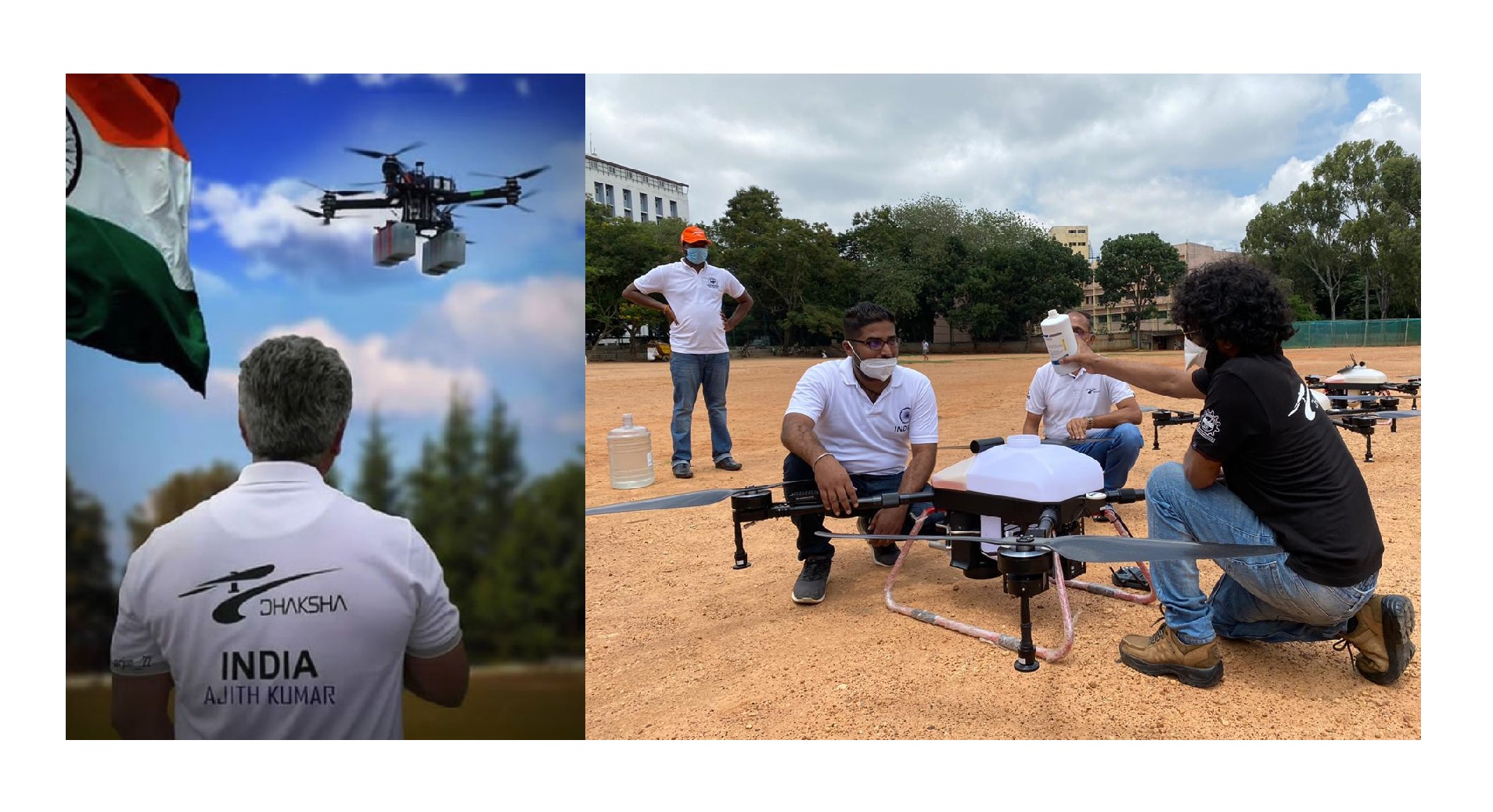
Drones built by Thala’s tech team Dhaksha goes places, K’taka Dy. CM appreciates team’s efforts

At a time when corona virus cases are increasing in Tamil Nadu and also in neighbouring Karnataka, the Dhaksha Team mentored by Thala Ajith Kumar has come to the rescue with a drone aiding in the fight against virus. The drone can spray disinfectant to sanitize large areas.

The drone was launched by Karnataka Deputy Chief Minister Dr. C.N. Ashwathnarayan who took to Twitter to congratulate the actor and the team for their efforts.

Team Dhaksha comprises of a team of researchers from Madras Institute of Technology and is mentored by Actor Ajith Kumar. The team had earlier won the Drone Olympics last year.

The team has been collaborating with state governments in Tamil Nadu and Karnataka to sanitize areas and building using microbial organic disinfectant. The drone uses petrol as fuel.

Team Dhaksha has collaborated with Sugardhana Foundation, an common man’s initiative to fight COVID using drones.

The