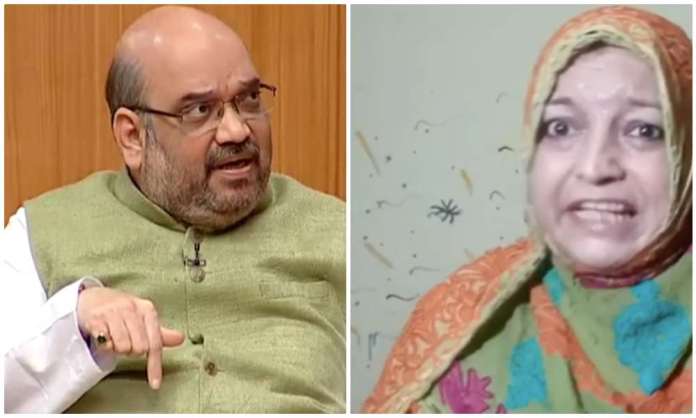
Aiman Rizvi, one of the key figures of the Shaheen Bagh protests in Delhi that happened at the behest of radical left wing organizations and Islamist outfits, asked Muslims to pray for Home Minister Amit Shah’s death as he tested positive for the Wuhan virus.
On the other hand she also said that corona virus is a ‘myth’ and that she believes that the Modi government is spreading it to cover up many failures.
In the 10 minutes video which has now been deleted, Aiman can be heard saying “Amit Shah doesn’t have a corona, but I really pray that he dies if that is the case”.
Even though Mr. Amit Shah tested positive for the virus, she believes that it is all a hoax.
“If Amit Shah dies, then we will believe that that coronavirus is true. None of the BJP leaders or the pro-BJP media has died. But a Muslim or a Dalit is dying because of some ordinary disease”, she said.
She went on to call BJP spokesperson Sambit Patra as ‘Gobar Patra’.
She claimed that this is a conspiracy to divert attention from the problems that are already going on.
She also asked “How come Amit Shah who has been hiding for the past 5 months have got the virus?”
She further floated a conspiracy theory that Amit Shah caught coronavirus because the government wants to ‘hide’ the ‘fact’ that Muslims are being beaten up to death for not wearing masks.
During the Tablighi Jamaat episode, many of the Tablighis had hid inside mosque, pelted stones on those who came to test and harassed health workers in hospitals by spitting and misbehaving with them.
Throughout the video she can be heard saying that the corona virus is a myth and does not exist in India.
She went on to say that they did not announce Modi being infected of coronavirus because he had to go for shilanyas at Ram Mandir. “As per their strategy, they made Amit Shah get corona virus.”
Meanwhile, Amit Shah continues to stay at Medanta hospital in Gurugram. He had got admitted after he showed initial symptoms of the Wuhan virus.
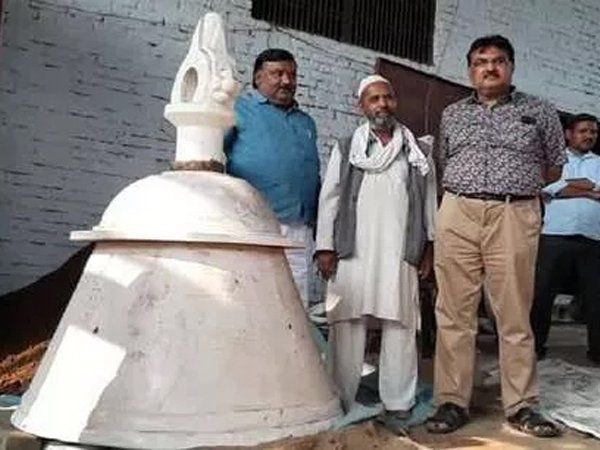
Construction work on the grand Ram Temple in Ayodhya has begun. The Uttar Pradesh government has ordered one of the petitioners, Nirmoki Akara, to make a grand bell for the Ram temple.
The ‘order’ was given to Vikas Mittal of Jalesar, a traditional bell maker. Dau Dayal, who has been making temple bells for 4 generations, took charge of making this bell.
The designer of the bell is a Muslim named Iqbal Mistry. 25 Hindu and Muslim artisans have been working together for 4 months to make the bell.
The ashtadhatu bell is made of a combination of eight metals — gold, silver, copper, zinc, lead, tin, iron and mercury. It is a single piece from the bottom to top.
This bell once installed will be the biggest bell in the country. It is said that the sound of this bell could be heard up to 15 kms.
It cost ₹21 lakh to make this bell and is being donated to the Ram Temple by Nirmohi Akhara.
As India is gearing towards its first manned mission to space in 2022, Indian Air Force (IAF) pilot Wing Commander Nikhil Rath who is one the four astronauts selected for Gaganyaan, will bring a lot of pride to the state of Odisha.
Wing Commander Rath is from the Balangir province of Odisha and has completed his first phase training in crew actions at the Gagarin Cosmonaut Training Center (GCTC) in Russia.
As per the latest reports released by the Russian Space Corporation Roscosmos, the four cosmonauts have completed training on crew actions in all weather and all terrain modules.
All the four astronauts-elect also have completed there training in short-term weightlessness mode aboard the IL-76MDK special laboratory aircraft. They have also been trained to lift aboard a helicopter while evacuating from the descent module landing point.
In a statement released by Roscosmos, “They are in good health and determined to continue their training. Their training in a centrifuge and hyperbaric chamber to prepare their organisms for sustaining spaceflight factors, such as G-force, hypoxia and pressure drops, will be started soon. All training modules will be completed in the first quarter, next year,”.
These four astronauts were selected from a pool of 25 shortlisted pilots for undergoing training for one year for the space mission under the ambitious Gaganyaan mission by the Indian Space Research Organisation (ISRO).
It is likely that Wing Commander Rath will be among the three astronauts to go to space for a seven-day mission.
India’s Gaganyaan is supposed to be launched next year, however, it will be launched in 2022, that coincides with the 75th anniversary of India’s Independence.
The mission has got delayed due to the Wuhan virus pandemic.
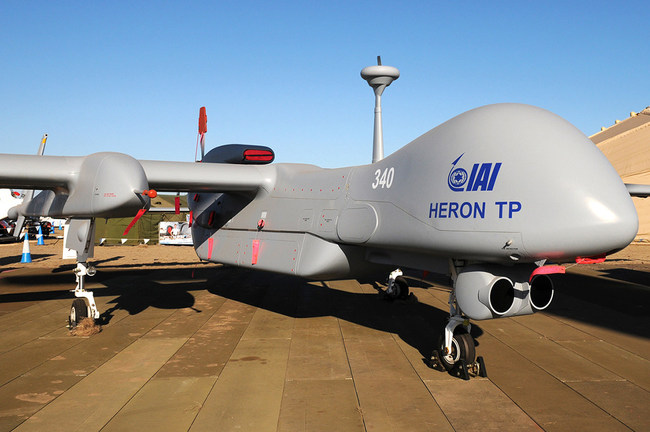
As the simmering tension with China seems to have no end in sight, the Indian military is pushing the government to give clearance for arming their Heron UAVs with laser-guided bombs, precision-guided munitions and anti-tank missiles.
China has placed several type 15light tank also known as ZTQ-15 in the Eastern border in Ladakh that gives them the significant advantage to them and poses a huge threat to our infantry.
An armed UAV with precision munitions can not only take out fixed enemy positions like a bunker, but it can also obliterate armour and other mechanised units.
Under the proposal of Project Cheetah, the armed forces want “90 Heron drones of the three services to be upgraded to be armed with laser-guided bombs, air to ground and air-launched anti-tank guided missiles,”.
This ₹3,500 crores project has been pending for a long time and as the tension with China seems to escalate, this project is getting some serious attention.
A high-level Defence Ministry body that includes Defence Secretary Ajay Kumar, who is now the in-charge of all capital procurements for the three services has been set up.
The armed forces want to equip the drones with stronger surveillance and reconnaissance payloads. This will allow the forward commanders to keep an eye on any Chinese moment and if required enemy locations and stations can also be taken out.
At present these drones are playing a vital role in helping and verifying the disengagement by Chinese along with knowing their troop build-up strength-in-depth areas.
The project on upgrading the drones for carrying out offensive operations against the enemies would involve a number of Indian-developed solutions too.
If the project is approved, the UAVs can not only be used against conventional military operations, it can also play an important role in counter-terrorism operations that will help our security forces take out terrorists and reduce causality.
UAVs can also be used in intelligence and its reconnaissance capabilities allow the forces on the ground to get pin-point locations about terrorist hideouts.
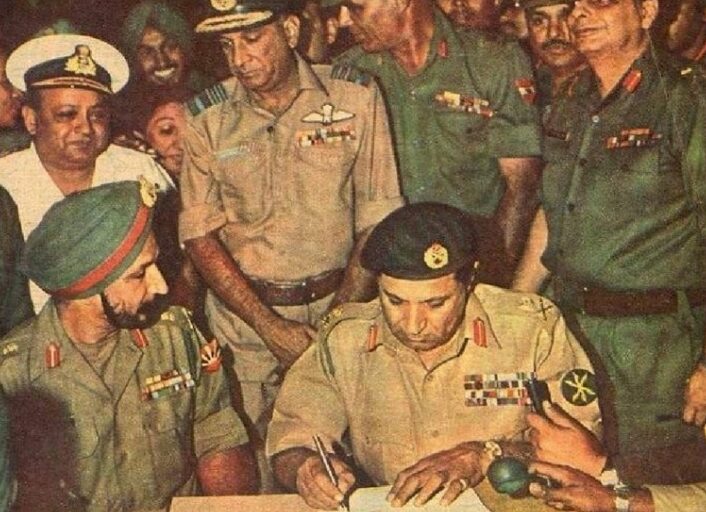
The government of Bangladesh in a landmark decision has decided to construct a war memorial for the Indian soldiers who died fighting Pakistan in 1971 liberation of East Pakistan.
The announcement was made by Bangladesh War Liberation Minister Mozammel Haque on Friday (7 July).
A ministry spokesman quoted Haque who had said, “We are constructing the monument coinciding with the 50th anniversary of our independence”.
This decision will only bring the two nations closer as Bangaladesh honoured Indian soldiers who were instrumental in freeing East Pakistan where the armies of West Pakistan killed over 30 lakh people and raped somewhere between 2 to 5 lakh women.
The Hasina government has selected 3.5 acres in Ashuganj of Brahmanbaria district, bordering Tripura. This place a lot of significance in the Liberation War of 1971 and the architectural design will reflect the special relationship between both the neighbours.
An official said, “The site that has been selected has historic significance … Indian army fought some decisive battles with the Pakistan Army in 1971 along with our (Bangladeshi) freedom fighters in Ashuganj.”
Bangladesh already has a National Memorial on the outskirts of Dhaka for all 1971 martyrs, but this proposal to build a memorial for Indian soldiers alone shows the camaraderie between the two nations armed forces.
Bangladesh is now letting the world know about the crimes commented by Pakistan and a while back felicitated Indian soldiers and veterans. It posthumously honoured former Prime Minister Indira Gandhi and several other distinguished Indians for their role in the Liberation War.
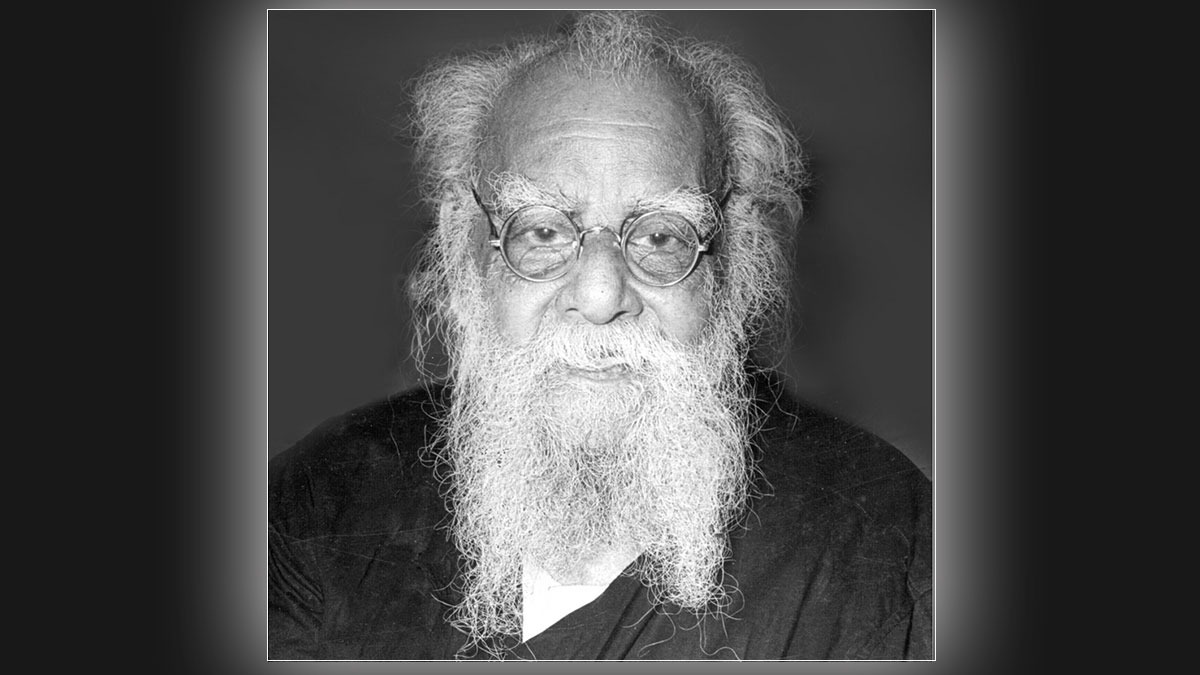
E.V. Ramasamy Naicker, known as “Periyar” by his followers, is seen as a firebrand leader who ushered in a golden era in Tamil Nadu. An image has been constructed of EVR that, if not for him, the people of Tamil Nadu would be living in caves. He is considered as a demigod by Dravidian political parties and outfits. The word “Periyar” is equated with ‘self-respect’, ‘social justice’, ‘rationalism’, ‘woman empowerment’, and a ‘anti-Hindi crusader’ by the Dravidian elements.
The Dravidian chauvinists keep blowing their trumpets about how Periyar still remains a ‘nightmare’ for his opponents. However, of late, the halo created around him has been getting shattered, thanks to internet and social media.
In this age of information, it is hard to conceal the truth and is easy to call out the bluff. Earlier, the truth behind EVR being conferred the title of “Socrates of Southeast Asia” by UNESCO was called out.
In continuation to this, another fact has come to light. In popular rhetoric, EVR is hailed as the person who saved Tamil and Tamil Nadu by standing up to the imposition of Hindi. The Dravidian chauvinists and fanatics claim that Tamil Nadu is “Periyar’s soil” which has no place for Hindi. In fact, Tamil Nadu’s opposition to Hindi today is traced to this man who is said to have protected Tamil and spearheaded the anti-Hindi protests when the then Chief Minister of Madras Presidency C. Rajagopalachari introduced Hindi as a compulsory language in schools in 1938.
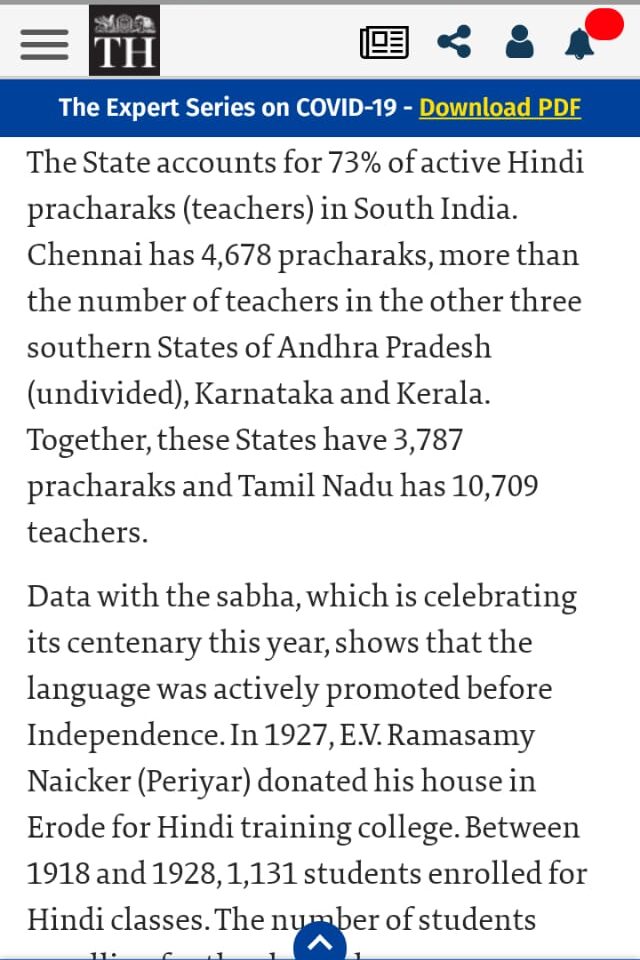
However, if truth be told, the first ever Hindi teacher training college was started in EVR’s house at Erode. While the Dakshin Bharat Hindi Prachar Sabha (DBHPS) website notes that it was started in the year 1922, a report by The Hindu says that “In 1927, E.V. Ramasamy Naicker (Periyar) donated his house in Erode for Hindi training college.”
The Hindu report also mentioned that between 1918 and 1928, 1131 students were enrolled for Hindi classes.
Periyar had given full support to the Dakshin Bharat Hindi Prachar Sabha and it was on behalf of the sabha that Rajaji Vidyalaya High School (CBSE) was started, the DBHPS notes.
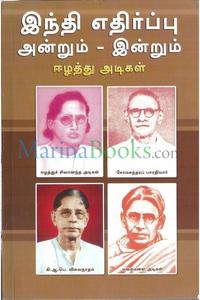
Even the anti-Hindi agitations were not started by Periyar. In fact, the seeds of anti-Hindi agitation were first sown by Saivite saints and Tamil scholars like Eezhathu Sivananda Adigal, Arunagiri Adigal, Maraimalai Adigal, Sanmugananda Adigal, K.A.P Viswanathan, Somasundara Bharathiyar, Vimalananda and others. It was these scholars who had first condemned the Rajaji government in 1937 that mandated Hindi to be taught in schools.
Eezhathu Sivananda Adigal in his book “Hindi Edhirpu: Andrum Indrum” (Opposition to Hindi: Then and Now) says that the first protest against Hindi imposition took place in 1937 with 120 members outside the Chief Minister’s residence. On the third day of these protests around 60 people were arrested. At that time, EVR had supposedly told the remaining crowd that these protests are nothing but lazy Congress-style protests that will end up fruitless and asked them not to continue. Eezhathu Adigal goes on to say that EVR had even offered to give money to the protestors to go back to their native places. In response to this, Eezhathu Adigal had respectfully told EVR that his non-interference in the issue would be of great service to Tamil.
After Eezhathu Sivananda Adigal, Arunagiri Adigal, Sanmugananda Adigal and others were arrested, the protest became leaderless. Upon seeing the reception of the people to these protests, EVR jumped in to take the lead. Just like how he did for Vaikom Satyagraha.
Eezhathu Adigal goes on to say that EVR had later went on to portray himself as the person who laid the foundations of the anti-Hindi protests. But, it does remain a fact that EVR was arrested during these agitations and was released 6 months later.
Later, in a surprise move, he called off the protests in 1939 even before the Rajaji government rolled back the move. When the press had asked about this sudden move, EVR had told:
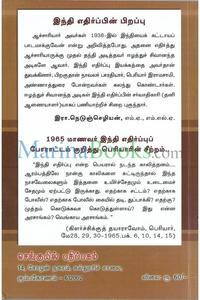
“The anti-Hindi agitations were used by me only to trouble the Congress government ministers. I do not care if Hindi gets imposed or Tamil gets perished.” (Hindi Edhirpu: Andrum Indrum, Page 30).
To this, Eezhathu Sivananda Adigal had said that EVR does not have any right to call off the protest and gave an announcement on November 4, 1939 that a protest would happen in front of the Governor’s bungalow. It was only on February 21, 1940 that the Rajaji government rolled back its move of imposing Hindi.
When the Official Languages Act of 1963 was passed by the Congress government at the Centre, another round of anti-Hindi agitations broke out. This time the DMK jumped into the student led protests. To this, EVR out of the jealousy over Anna’s rise as a leader, had written an essay in his Viduthalai magazine saying that a regime without suppression is only an anarchy, indirectly calling for Anna to quell the protest. Even though the DMK had extended its support for the anti-Hindi agitations, it had given an order to the students on February 10, 1965 to call of the protests. He had even said that these agitations no longer have any connections with the DMK.
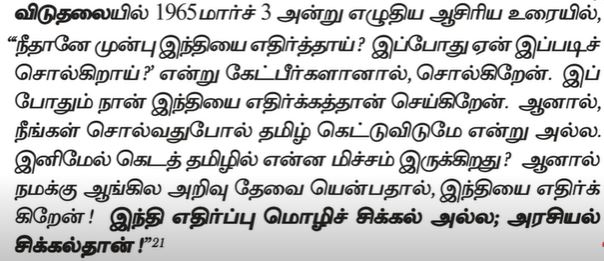
In the issue of Viduthalai dated March 3, 1965, Periyar in his editorial piece answered to the questions posed to him about his ambiguous stance on anti-Hindi agitations. He said that he still opposed Hindi not because out of concern that Tamil might get spoilt but to promote English. “What is there in Tamil to get spoilt?”, he had said. He noted that Hindi opposition was a political problem and not a linguistic issue.
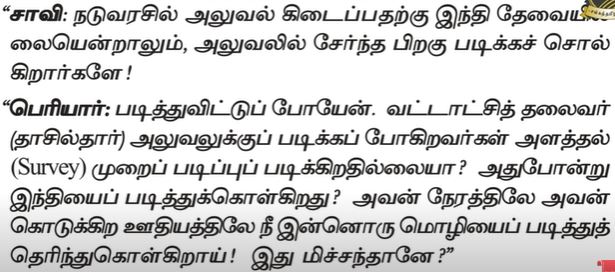
In an interview to Ananda Vikatan on April 11, 1965, EVR was asked by the reporter/interviewer Savi about the Central government asking its employees to learn Hindi upon joining service to which EVR replied “Just learn and go. What is the problem? Don’t those who work at Tahsildar’s office learn about surveying land? Why can’t you study Hindi similarly?”
“He (Central government) is even giving you salary to learn a new language. Isn’t it a good deal?”, EVR had said.
So, it is clear from all this that Periyar’s anti-Hindi agitations was nothing but another sham in the list of shams to his name.
Since May, the kingdom of Saudi Arabia has stopped supply of oil to Pakistan after it failed to make payments of USD 3.2 billion.
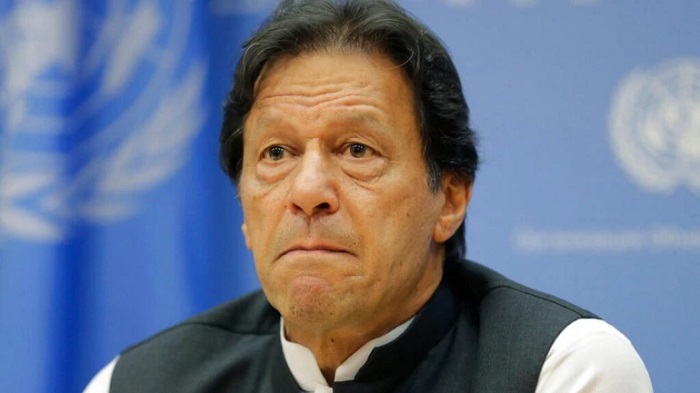
In November 2018, when Prime Minister Imran Khan was playing driver to the Saudi Crown Prince Mohammad Bin Salman, a 3.2 billion dollers oil facility which is part of 6.2-billion dollers Saudi Arabian package to ease Pakistan’s external sector woes was signed.
The agreement had expired in May and Pakistan has been trying to renew the facility while awaiting a response from the Saudi government.
Pakistan is in the midst of a serious economic crisis amid the Wuhan virus pandemic and its IMF programme also remains technically suspended for the last five months.
With the Saudis asking for the payment of the loan of the oil facility, it will put a serious strain on the reserves of the central bank, built purely by taking loans.
Pakistan has already returned 1 billion dollars to the Saudis, four months ahead of its repayment period.
It was believed that Pakistan was under the impression that Saudi Arabia will not ask for the money back. and got a rude awakening when the money was asked to be repaid.
China, in its bid to help Pakistan has given $ 1 billion dollars which Pakistan will now be using to pay its bills to Saudi.
We all know about Rani Laxmibai, the Queen of Jhansi. Rani Laxmibai occupies a significant portion of our history pages for fighting against the British in the 1857 war of independence. People across India, from Lakshadweep to Ladakh and Kutch to Kameng, revere her and celebrate her as the valiant lady who fought till her last breath.
No doubt that she should be celebrated and seen as a symbol of woman power. But, over a period of time, some of the other brave women who made the supreme sacrifice while fighting the foreigners and oppressors much before Rani Laxmibai have been lost to time.
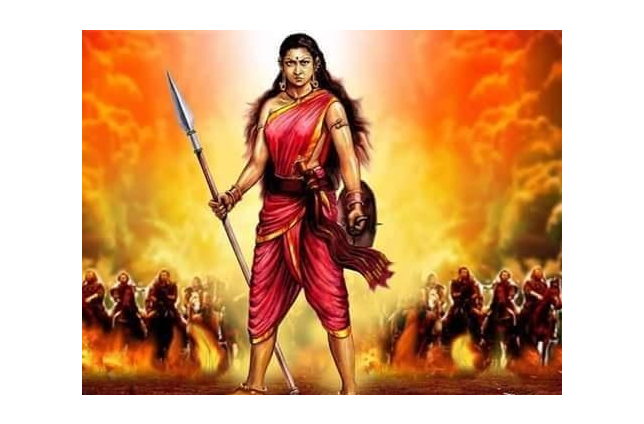
One such brave woman was Kuyili.
Early Life
Kuyili was born in Kudanchavadi near Sivagangai into an Arunthathiyar family. Some sources say that she belonged to the Sambavar community while most sources mention that she belonged to the Arunthathiyars. Both her parents worked in the fields to sustain themselves. When Kuyili was a child, her mother Raku died while saving the fields from a wild bull.
Later, her father Periyamutthan along with his daughter moved to Mutthuppatti, a village close to Sivagangai where he worked as a cobbler and eventually became one of the spies to Queen Velunachiyar.
Being a spy to the queen had its perks. Both the father and the daughter had unrestricted access to Queen Velunachiyar. This paved way for a strong bond to develop between both Kuyili and the Queen.
Veera Mangai Rani Velu Nachiyar
As a child, Kuyili grew up listening to the courageous acts of her mother who was known for her bravery and also of Queen Velunachiyar. This seems to have had a huge impression on her as she would go on to perform valiant acts that would make her become a folk legend of sorts.
Kuyili’s Instincts
Kuyili seems to have inherited her spy instinct from her father. Two instances stand testimony to Kuyili’s bravery and her astuteness as a spy which earned her the queen’s trust as well.
Queen Velunachiyar went into exile after her husband Raja Muthu Vaduganatha Thevar was killed in the Battle of Kalayar Kovil that was fought against the British troops headed by Colonel Smitt.She, along with her daughter Vellachi Nachiyar and a few others that included her soldiers, her silambam master Vetrivel and Kuyili camped at Virupaatchi near Dindigul.
One day, Vetrivel asked Kuyili to hand over a letter to Mallari Rayan, a polygar loyal to the British. Kuyili had always been suspicious of Vetrivel.
So, she opened the letter and found out that Vetrivel was in fact sending details about Velunachiyar’s hideout details and her plans to attack Mallari Rayan and the British.
Enraged, Kuyili killed Vetrivel.
In another instance, when an intruder tried to murder Velunachiyar in her sleep, Kuyili saved the queen by getting herself injured.
Since then, both Velunachiyar and Kuyili became inseparable.
The Rise of a Warrior
During the exile period at Virupaatchi from 1772 to 1780, Kuyili was trained in arms and spying by the Marudhu Brothers.
Thereafter, Kuyili trained the women’s wing of the army called Udayal Padai, named after the lady who saved Queen Velunachiyar’s life when she was escaping from the British troops.
The women army was trained on kalari, silambu and also on spying. Looking at her skills and acumen, Kuyili was made the Chief Commander of the Udayal Padai by Velunachiyar.
But life wasn’t easy for Kuyili. Her becoming the close confidante of Velunachiyar upset many of the Queen’s advisors.
It is said that when Kuyili was appointed the Chief Commander of Udayal Padai, the Queen’s council of advisors did not deem her worthy of the position, as they considered her to be a low born.
But Velunachiyar paid no heed to them as she was someone who respected talent and looked beyond caste and religion.
In another incident, when Kuyili refused to reveal Velunachiyar’s plans to the British, they excruciated her community by committing various atrocities against them.
But Kuyili wasn’t cowed down by such acts. She had one goal and one goal only – to save her motherland from the foreigners.
The Flame That Gave The Chills
After Raja Muthu Vaduganatha Thevar was defeated in the Battle of Kalayar Kovil in 1772, the palace at Sivagangai came under the control of the British.
This palace was constructed in 1730 by Sasivarna Periya Udayana Thevar, the first polygar of Sivagangai. This palace used to be the spot where Kattabomman and Marudhu Brothers frequently met to discuss about overthrowing the British.
The palace has a temple dedicated to Goddess Sri Rajarajeswari. This temple exists even today.
Back then, there was an underground armoury used for the safe keeping of arms.
After the British took over the palace, they began to use this underground chamber to keep their ammunition. For security reasons, they stopped allowing people to worship at this temple.
However, an exception was made on Vijayadasami day.
Kuyili found out that women were being allowed into the palace on Vijayadasami day to worship at the temple.She devised a plan to take on the British on the auspicious day – a day to commemorate the triumph of good over evil.
Kuyili suggested to Velu Nachiyar that the Udayal Padai can be disguised as worshippers with weapons tucked into their clothes. Velunachiyar agreed to the plan.
On the day of Vijayadasami, Queen Velu Nachiyar, Kuyili and the Udayal Padai entered the palace and proceeded towards the temple. After a round of worship, Velu Nachiyar and her army charged at the British.Captain Benjour and his troops were caught unawares and many British soldiers were slain.
As the British rushed to get their ammunitions, Kuyili doused herself in ghee, set herself ablaze and exploded the warehouse destroying all the arms and ammunitions of the British.
Thereafter, the British stood no chance against the Queen’s forces. Captain Benjour surrendered. Begging for his life, he pleaded with the Queen and promised her that he would never interfere in Sivaganga’s affairs. The magnanimous queen spared his life.
Kuyili’s brave act not just allowed Velu Nachiyar to win the battle but also helped her in reclaiming her kingdom.
This incident that happened 77 years before 1857 down south in Tamil Nadu, that had sent shivers down the spine of the English men was reduced to a footnote in our history textbooks.
Where is Kuyili today?
The sacrifice of this legendary woman has largely remained unacknowledged. Not many people in India know about Kuyili. I myself did not know about her until recently and I am ashamed of it. It was only recently that she was given a small due.
In commemoration of her supreme sacrifice, the Tamil Nadu government under Jayalalithaa decided to construct a memorial in honour of Kuyili in 2013. The project saw its completion in July 2014.
Over glorification of values like non-violence overshadowed the values of sacrifice, loyalty, bravery, courage, justice and dharma instilled by revolutionaries like Kuyili.
Even though our history pages have failed to recognize Kuyili, she continues to live through local legends and folklore.
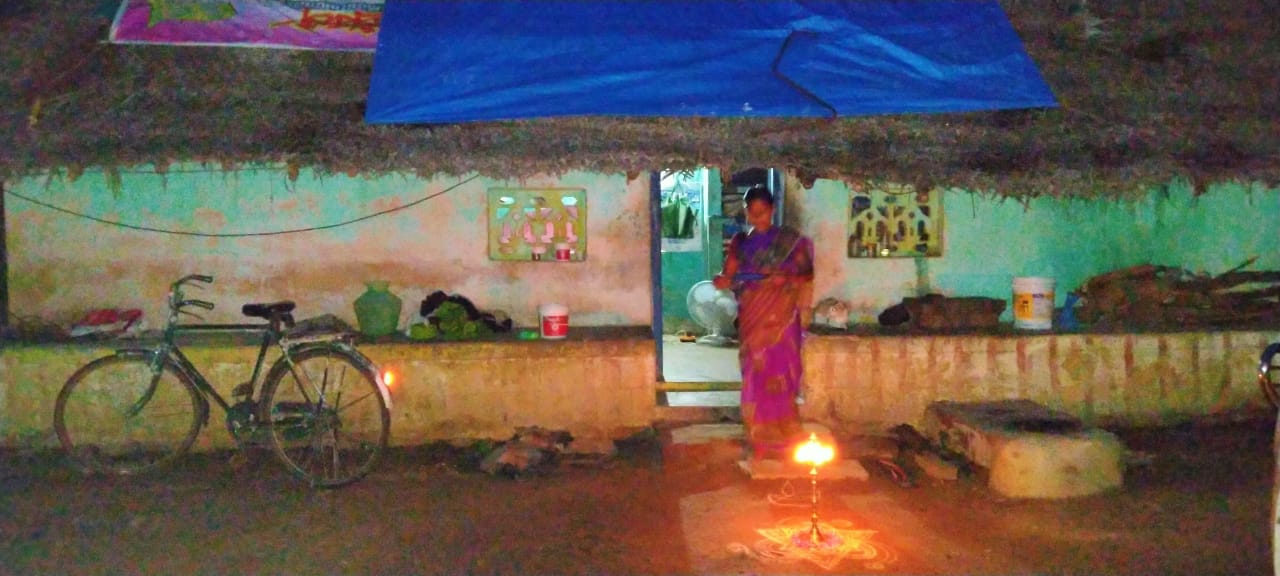
In response to Karuppar Koottam’s abusive video against Hindu God Murugan and Kandha Sashti Kavasam, homes across Tamil Nadu conducted Vel Pooja and recited the hymn sung in praise of Lord Murugan.
The BJP’s Tamil Nadu unit under Dr. L. Murugan and several Hindu organizations and Mutts, had given a clarion call upon the request of several Murugan devotees including Kavadi and Padayatra groups to conduct Vel Pooja and recite the Kandha Sashti Kavasam on August 9 at 6 PM.
Millions across the state conducted the Vel Pooja with an image of Lord Murugan or his spear and recited the Kandha Sashti Kavasam.
Large number of them took to social media and posted photos and videos of the pooja being performed. The hashtag #Vel_Pooja was trending on Twitter.
BJP National General Secretary Muralidhar Rao marked the occasion in Delhi.
Now the right time have comeup to raise our voice so that in future no such Elements would be ready to do such worst act.#Vel_Poojapic.twitter.com/5xOpTh3gxF
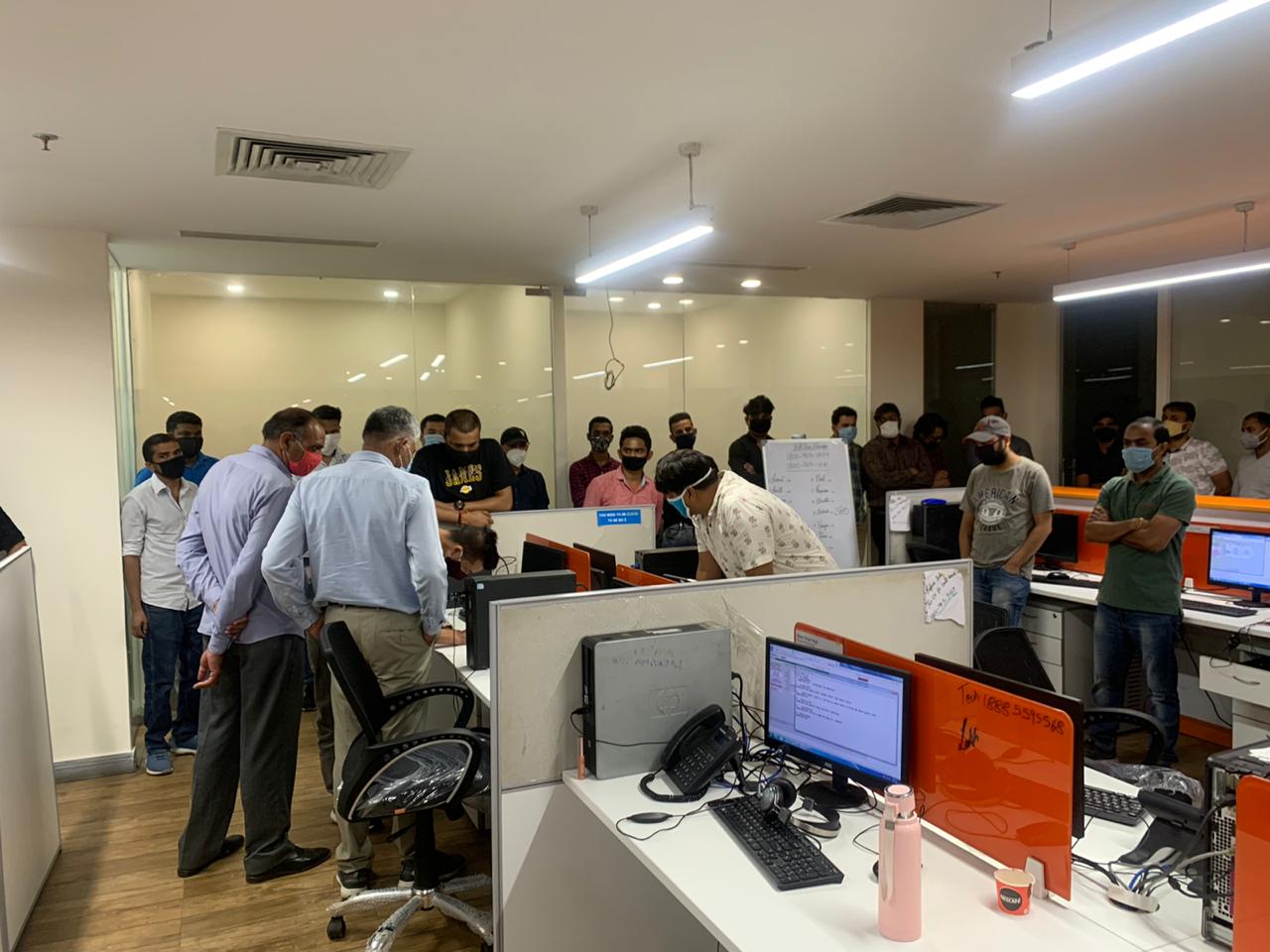
Haryana Chief Minister’s flying squad busted an illegal call centre operating out of Gurugram on Saturday. They had allegedly duped over 35,000 US citizens of millions of dollars. The CM flying squad captured 24 men and women working as employees in the centre being run at JMD Megapolis mall.
It was reported that the victims had received an email or a pop-up message saying that their personal information was not safe as their computer was attacked by a virus, shortly after which their screen froze. Unsuspecting victims would then contact this call centre called Green Rock Entreprise, which had been posing as a technical support centre for those who had been receiving these messages. A fake antivirus software would then be sold to them, following which they would hack their systems.
DSP Inderjeet Yadav, who had masterminded this raid, said, “The accused first collected data of the callers such as names, mobile numbers, e-mails and addresses and then sent them voice mails through an eyebeam dialer. They trapped foreigners to clear pop-ups and provide antivirus in the name of technical help. They had remote access software for pop-ups and using the name of antivirus software, namely Mcafee, Bit Defender, Trenmicro and Kasper Sky. They asked the US nationals to purchase i-Tune gifts cards and in turn, got a hold of their phone number. With this trick, they duped more than Rs 1 crore from over 600 foreigners.”
The employes denied having any knowledge of this illegal operation, claiming that they had been duped. The kingpin of this operation, Vikram Verma, is now being interrogated by the Haryana Police.