Home Blog Page 1681

An Imagined Rivalry: Sanskrit and Tamil
Since the beginning of the Dravidian Movement in the early 20th century, there has been an unceasing campaign for the promotion of the Tamil language, which has unfortunately resulted in the mainstreaming of Hinduphobia and anti-Hindi rhetoric.

The reason for this is that the campaign that seeks to elevate Tamil does not seek to do so on the language’s own virtues and beauty, or the great works of literature that have been produced in the language. Instead, it is characterised largely by an explicit opposition to Sanskrit and a denial of the influence that the ‘Brahminical’ language and ‘Brahminical’ culture has had on the Tamil language and the Tamil people.

The weltanschauung of the entire Dravidian movement rests on the central tenet that the Dravidians, the original inhabitants of South India, were systematically expropriated and enslaved by Brahmins. The Brahmins, whom the Dravidianists consider to be originally invaders and migrants from northern India, supposedly derive their ideology of Brahminical caste superiority from Hindu Sanskrit texts. The Dravidian movement was thus anti-Brahmin; anti-Sanskrit, the language of Brahminism; anti-North India, the homeland of Brahmins and Brahminism; and anti-Hindi, the Sanskrit-derived language spoken in northern India. For the first decade or so of Indian independence, the Dravidian movement was also secessionist in nature.

The Dravidian parties have reaped great political dividends in Tamil Nadu by engaging in an ideology most pugnacious and divisive. The Dravidian parties have held sway over the political terrain in pre-independence Madras Province and post-independence Tamil Nadu, obscuring the voices of more inclusive Tamil people and political organisations. This dominant ‘Dravidian’ voice has percolated from political discourse into popular psyche.

While secessionism wins little to no reward today, anti-Brahmin, anti-north India and anti-Hindi sentiments are still present among the Dravidian ideologues. The fierce anti-Brahmin position of the Dravidian parties also led to Tamil Brahmins in the 1970s to the 1990s leaving their homeland for better opportunities. Tamil has also been repeatedly purged of its Sanskritic vocabulary, in the Dravidianists’ bid to ‘purify’ the language.

Brahmins, who were never numerically and politically significant in India, and Sanskrit, a language used in ritual, high culture and secular literature, were targeted and portrayed by the proponents of Dravidian ideology as being oppressive and discriminatory against the so-called ‘lower castes’. The Dravidian ideology resulted in the alienation of Brahmins and North Indians in Tamil-speaking lands. North Indians and Tamil Brahmins were (and still are) viewed with suspicion and contempt.  Dravidianists accuse them of allegedly imposing their language and culture in an apparent bid to undermine Dravidian/Tamil supremacy.

Hinduphobia has also taken hold over Dravidianists. This is evident from the ridiculous claim that ‘Tamils are not Hindus’ frequently seen on social media.

Inevitably, a situation such as this has led to the common, popular perception that the two languages – Sanskrit and Tamil – are rivals.

But does such a claim of language-rivalry (and cultural rivalry) hold true historically?

Faulty scholarship

One cannot deny the natural differences between the cultures and peoples of North India and South India, but much of the animosity and aversion between the two is relatively recent and due to historical myth rather than reality. A few European philologists and historians such as Sir John Marshall, George Uglow Pope and Robert Caldwell, in their faulty hypotheses provided the basis for a separate historical Dravidian mythos, which reaches back into an epoch of bygone glory-days. Dravidian ideology reconstructs history from scanty resources and ample conjecture, recalling an antiquity dating from the Indus Valley Civilisation to the powerful Tamil kingdoms of the peninsula.

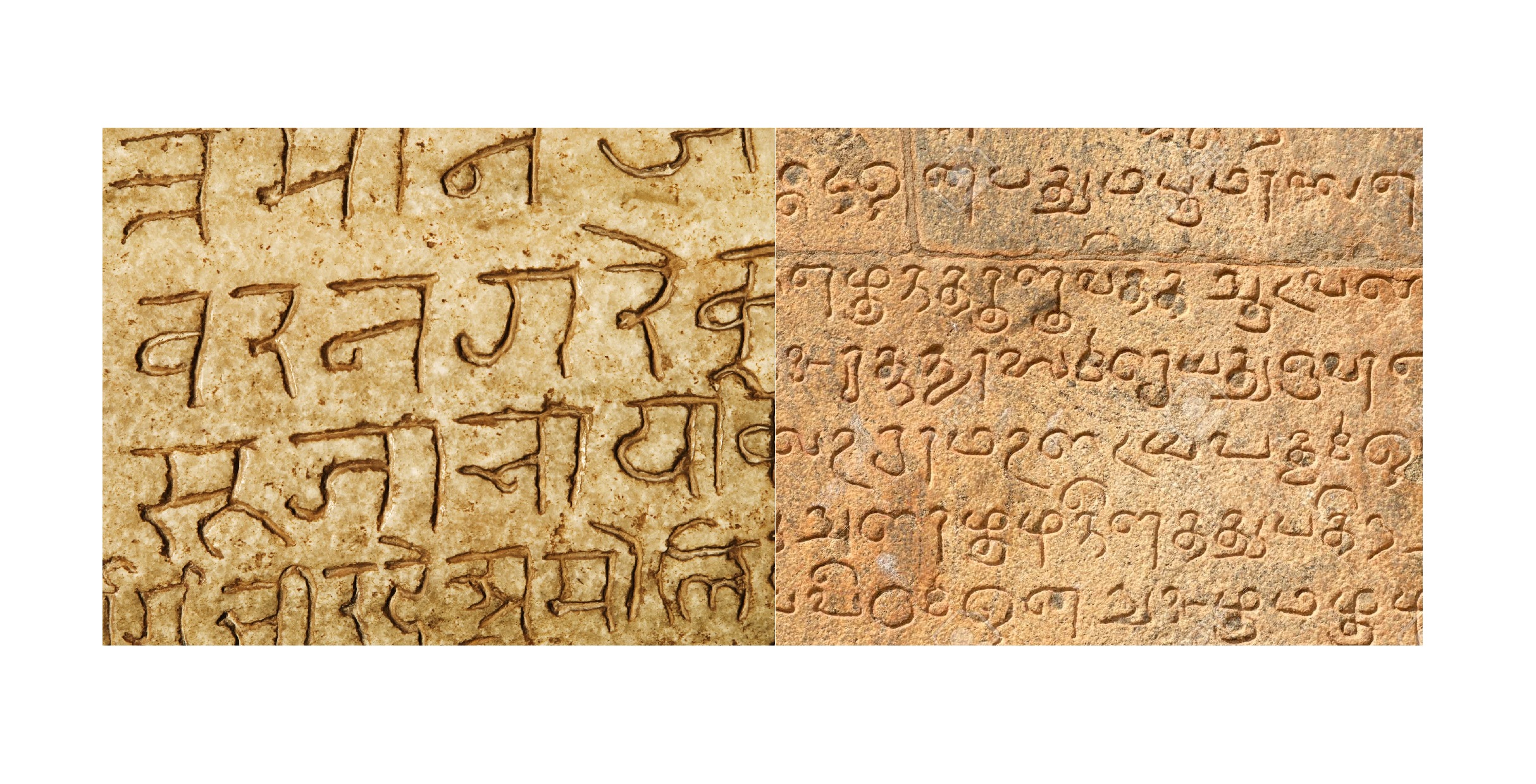
Across the landscape of history, rulers in the Tamil lands have patronised both Tamil and Sanskrit. We find that the inscriptions of Pallava, Chola and Pandya rulers are not only in Tamil but also in Sanskrit. Often, the inscriptions are bilingual, in both Sanskrit and Tamil.1 The gold and silver coins issued by the Pandya rulers too have Sanskrit inscriptions on them.2 These monarchs also commissioned translations of Sanskrit epics like the Mahābhārata into Tamil.

In the literary and cultural sphere, the two languages have coexisted together, enriching the lives of the Tamil people. Sanskrit was the lingua franca across the Indian subcontinent, and Tamil was spoken in Tamil lands and in the Tamil communities settled along Southeast Asia. Tamil and Sanskrit inscriptions have been found in these regions as well.3 The intermixing of Sanskrit and Tamil literary cultures has nourished the Tamil mind with philosophy, poesy, prosody and music. Many stalwarts who have graced the Tamil lands in the past – be it Thiruvalluvar, Kambar, Arunagirinathar, Sri Ramanuja, Appayya Dikshitar or Subramania Bharati – they were born in this Tamil-Sanskrit confluence and were nurtured, directly or indirectly, by both Tamil and Sanskrit.

This ‘contest’ over the supremacy and antiquity of the Sanskrit and Tamil languages can only be attributed to Dravidian politics and the political parties that espouse the disruptive and acrimonious ideology of Dravidianism. Mutual respect for one another’s traditions and culture is an important aspect of living in a multi-ethnic, multi-cultural, pluralistic nation-state, but for the Dravidianists the notion of mutual respect and harmonious coexistence seems to have taken a backseat.

The Aryan Invasion/Migration Theory, which is fundamental to the Dravidian ideology, has been sufficiently debunked by scholars such as Shrikant Talageri, Koenraad Elst, BB Lal and several others. However, the Dravidianists are still stuck at propagating centuries-old, outmoded theories.

‘Dominant’ Caste?

The Dravidian movement — which seemingly stood for championing self-respect, social and economic equality, upliftment of the downtrodden, women’s rights, socialism, atheism and Russellian rationalism — decisively found its way into politics of a foul nature.

Ironically, most of the men who spearheaded early Dravidian politics were neither poor and nor were they from the lower socio-economic strata of society. Some were not even born in Tamil-speaking families. The pro-British Justice Party, also called the South Indian Liberation Federation, was created for the sole purpose of ending ‘Brahmin domination’ in the civil services of British India’s Madras Presidency. It was an elite affair presided over by affluent men, who sought only to take plum positions in the employment of the British.

One of its co-founders, PT Chetty, was a wealthy lawyer and an industrialist. Another co-founder, TM Nair, was born in a well-off family. His father and brother were prominent district officials and served the British administration. He quit the Indian National Congress after his electoral defeat in 1916 and accused the Congress of harbouring caste-based prejudices. The third co-founder was CN Mudaliar, from a non-Brahmin family of feudal landlords. Two of the Justice Party’s Presidents were wealthy zamindars (landholders) — the Raja of Panagal and the Raja of Bobbili. The Justice Party and its offshoots — the newly-formed ‘Dravidian parties’ — were also hostile to the Indian Home Rule Movement, MK Gandhi’s Non-Cooperation Movement and the Indian National Congress.

The foundations of the Dravidian movement were laid by men in the upper echelons of Tamil society. It was not a grassroots movement against so-called ‘Brahminical oppression’ but a movement aimed at securing certain political goals.

A Re-evaluation

Historically, the term draviḍa or drāviḍa has never meant a separate racial or ethnic identity; it was a geographical marker. It was never an anti-Aryan or an anti-North Indian cultural identity either. On the other hand, the modern Dravidian identity is purely a political identity legitimised by the vague and highly suspect narratives of the “Aryan” Brahmin’s 2000 year-old suppression of the “Dravidian” non-Brahmin by a supposed denial of education and other opportunities of upliftment.

If Sanskrit were indeed a language imposed by political conquest upon the Tamil people, it would not have been so readily accepted by them. Sanskrit and its associated culture would not have flourished so strongly alongside the Tamil language and culture. It is also a testament to the genius of the Tamil people that they have imbibed an appreciation for both Tamil and Sanskrit. They have, at their disposal, two extraordinarily rich means of literary expression and exposition.

It is high time that narratives based on speculation and fantasy are questioned and consigned into the waste-basket of history.

FOOTNOTES:
  1. Singh, Upinder. A History of ancient and early medieval India: from the stone age to the 12th century (PB). Pearson Education India, 2009. Page 46.
  2. Government Museum Chennai, Coins Gallery
  3. Kulke, Hermann, Krishnasamy Kesavapany, and Vijay Sakhuja, eds. Nagapattinam to Suvarnadwipa: Reflections on the Chola naval expeditions to Southeast Asia. Vol. 1. Institute of Southeast Asian Studies, 2009. Pages 271-291
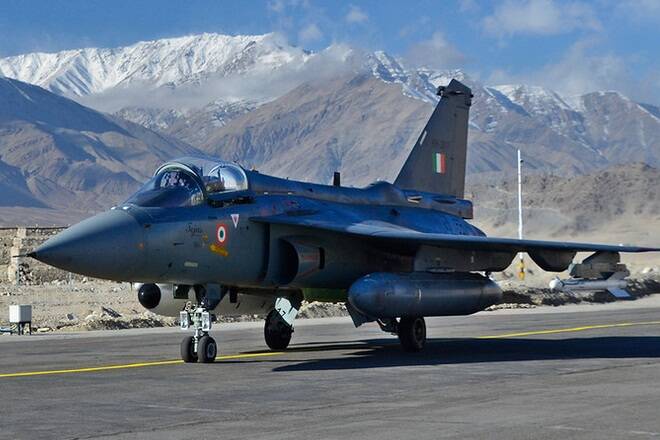
LCA Tejas deployed on western front along Pak border

The ingenuously built Light Combat Aircraft Tejas has been deployed on the western front along the Pakistan border. This comes after the row with China along the Line of Actual Control.

During his independence day speech, Prime Minister Narendra Modi , said that the deal for the 83 Mark1A LCAs will be finalised soon.

“The LCA Tejas was deployed by the Indian Air Force on the western front close to the Pakistan border to take care of any possible action by the adversary there,” ANI reported quoting government sources.

LCA is India’s first indigenous fighter aircraft. The deal, worth over Rs 40,000 crore, will likely be the largest-ever deal for an indigenous equipment in the country.

LCA Tejas is a single-engine multirole light combat aircraft that is set to replace the aging Mig-21 fighter aircrafts.

It is the second supersonic fighter jet developed by Hindustan Aeronautics Limited (HAL), the first one being HAL HF-24 Marut.

It is designed to carry a range of air-to-air, air-to-surface, precision-guided and standoff weaponry and has a general range of 850 km and a combat range of 500 km.

LRPF files complaint against AP Home Minister for misusing SC reservation

The Legal Right Protection Forum has filed a complaint against Andhra Pradesh Home Minister Mekathoti Sucharitha for misusing the provision of reservation by concealing the fact about her conversion to Christianity.

Sucharitha belongs to the YSRCP and was elected MLA from the Prathipadu Assembly Constituency, a reserved constituency.

The LRPF in its complaint to the Under Secretary (Petition) of the President’s Secretariat,  stated that at the time of filing the nomination she had mentioned in the election affidavit submitted to Election Commission that she belonged to the Scheduled Caste.

However, in an interview to a Telugu Youtube Channel called iDream Media, she had admitted that she was a practicing Christian.

LRPF noted in its complaint that Home Minister Sucharitha had suppressed the fact that she was a Christian and violated The Constitution (Scheduled Castes) Order 1950 that states that no person who professes a religion different from the Hindu, the Sikh or the Buddhist religion shall be deemed to be a member of a scheduled caste.

“We are very much worried about misuse of Reservations which are meant for welfare of the people of weaker section of this society.”, the LRPF said.

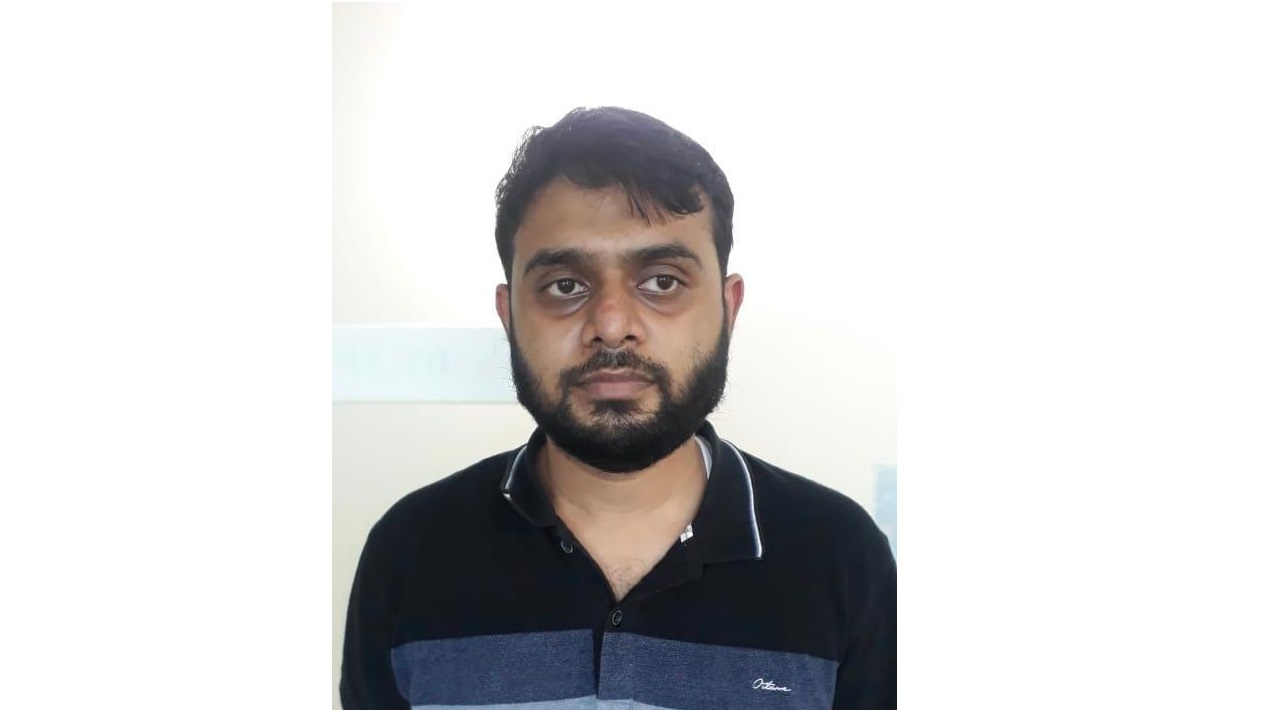
Bengaluru doctor Abdur Rahman arrested by NIA for ISIS links, developed a medical and weaponry app for ISIS

The National Investigation Agency (NIA) has arrested a man named Abdur Rahman working as an ophthalmologist in Bengaluru’ s MS Ramaiah Medical College over alleged links with the Islamic State, the Hindustan Times had reported quoting an NIA press release.

The NIA had raided premises of Abdur Rahman in Bengaluru and seized digital devices like laptops, phones, and other incriminating material.

Abdur Rahman was developing a medical app for the benefit of injured ISIS terrorists in Islamic State Khorasan Province (ISKP).

ISKP is the branch Islamic State in Afghanistan and Pakistan.

He was also developing a weaponry-related application for ISIS terrorists.

Abdur Rahman is a resident of Basavanagudi in Bengaluru and is said to have visited Syria in 2014. He had treated IS terrorists and had stayed with IS operatives for 10 days before returning to India.

The arrest of Abdur Rahman was based on a case registered by the Delhi Police Special Cell in March 2020 following the arrest of a Kashmiri couple – Jahanzaib Sami Wani and his wife Hina Bashir Beigh from Okhla Vihar, Jamia Nagar in Delhi who had links with ISKP.

Two others from Pune – Sadiya Anwar Sheikh and Nabeel Siddick Khatri were arrested in this case with the charge of conspiracy to further activities of ISIS in India.

Abdur Rahman had conspired with Jahanzaib Sami and other Syria-based ISIS operatives on secure messaging platforms to further ISIS activities.

CPM goons in Kerala attack a pregnant woman and husband for joining BJP

Communist Party of India (Marxists) attacked a pregnant woman and her husband for leaving the CPM and joining the Bharatiya Janata Party.

The incident reportedly happened at Maruthongara near Kozhikode.

The couple were attacked at their home. The CPM goons are said to have kicked and trampled on the pregnant woman’s stomach.

She was later taken to the hospital.

The Thottilpalam Police have registered case against the perpetrators. The BJP has demanded a stern action against the CPM goons.

They said that the CPM goons have resorted to violence as retaliation as many people from the area have been leaving the party.


Dream11 wins the sponsorship rights for IPL 2020

Dream11, the fantasy gaming startup based on cricket, has bagged the sponsorship rights for the Indian Premier League 2020. It has outbid other major bidders for the cash-rich league purely on the basis of the volume of the sponsorship money it had to offer to the BCCI, according to various media reports.

The competitors included giants like the Tata Group, as well as EdTech startups like Byju’s and Unacademy. Dream11 offered to pay Rs 222 crore which was relatively higher than the sponsorship fees offered by other bidders for the 13th season of the IPL. For the sponsorship rights, Unacademy offered to pay Rs 210 crore, while Tata offered Rs 180 crore and Byju’s could offer only Rs 125 crore to the BCCI.

Notably, the Tatas had apparently wanted some “barter deal” in return for the IPL 2020 rights fee and the BCCI did not agree. If the Tata Group had bagged the IPL title rights, it would have been a first for them in cricket.

Vivo, a fully-funded Chinese firm, was initially the sponsor for this tournament and had withdrawn after calls for boycotting Chinese products grew louder, following the Galwan Valley Clash. The Indian government banned several Chinese apps, prompting the withdrawal. This caused a void in sponsorship, leading to the auction.

Supreme Court reserves verdict on conducting end sem exams for final year students

The Supreme Court on Tuesday heard the pleas against the UGC guidelines to conduct final year exams by September 30 amidst the Covid-19 pandemic and reserved its judgement. There have been multiple hearings preceding this in the case. The latest hearing, which was on August 14, had pushed the issuing of the verdict to Tuesday (18-08-2020).

The bench was the same one that presided over the PM-Cares Fund case, headed by Justice Ashok Bhushan, with the Solicitor General Tushar Mehta representing the Centre.

The UGC has till now maintained that the final-year exams are to be conducted in order to issue the degree certificate. Following this, the governments of Maharashtra and New Delhi appealed to the Supreme Court and had refused to conduct the college final-year exams due to the rising number of Covid-19 cases. Senior Advocate Arvind Datar made submissions for the State of Maharashtra. He referred to the UGC Act and said that while UGC can lay down the standards, it couldn’t compel for exams to be held. He also noted that when the Disaster Management Act was invoked, it couldn’t be diluted and right to life preceded above everything else.

There were also questions  raised about conducting exams without classes taking place for months, hostels which are now acting quarantine centres, and the commuting problems students would face as many would need to use public transport. Supreme Court then reserved its judgement and asked the counsels to submit a note on their submission in three days’ time.

Zee5 and Abhay 2 makers face ire for placing Khudiram Bose’s photo next to criminals

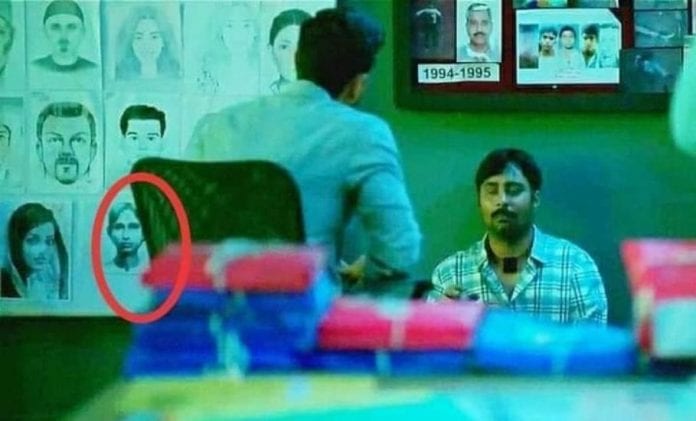
Video streaming platform Zee5 has faced major backlash after their new series Abhay 2 featured the photo of legendary freedom fighter Khudiram Bose on a criminal board. This series stars Kunal Khemu, and the sketch of Khudiram Bose had been placed next to criminals during one of the scenes shot inside a police station.

Netizens were quick to blast the makers of the web series for disrespecting the revolutionary figure Khudiram Bose as they portrayed him as a criminal. In the second episode of the newly released season, the social media users have alleged that the picture of the freedom fighter was seen alongside photographs of other criminals in a police station.

Zee5 immediately apologised for the blunder and wrote on Twitter, “The producers, show & the platform, have no intent whatsoever to offend any community or hurt anybody’s sentiments. Keeping in mind the feedback received and with utmost respect to our audience, we have blurred the image (inadvertently) used in one of the scenes of Abhay2.”

Khudiram Bose was a revolutionary Bengali freedom fighter who faced the gallows at 18 years of age for bombing the carriage of a British General and his family. He was one of the youngest martyrs of the Indian Independence Movement.

“Gunjan Saxena was not the first woman to be sent to Kargil, I was” : Srividya Rajan

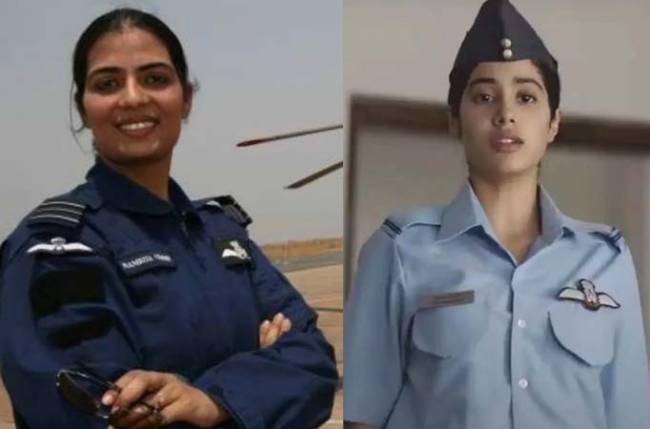
In an open letter to the Outlook, Namrita Chandi, a retired Wing Commander, accused Netflix and Dharma Productions of peddling lies to the world. The letter read, “Srividya Rajan was the first lady pilot who flew to Kargil – not Gunjan Saxena. Though I am certain that Srividya has no complaints about the credit being taken away from her.” It further included how the movie Gunjan Saxena: the Kargil Girl had been twisting facts and showing male Indian Air force officers in poor light.

She also refuted the portrayal of prejudice against women as shown in the movie saying that she had never faced abuse or maltreatment and that in all of 15 years of service, the officers had even stood guard outside the changing rooms, as they have been lack of facilities in certain regions. She added that male pilots had flown more extensively and faced more hardships and yet had never sought any publicity.

Srividya Rajan herself took to Facebook upon seeing the movie and expressed her shock over the misdirection. She wrote, “Both of us were posted to Udhampur in 1996 but in the movie, it was shown that she was the only lady pilot posted at the unit. Since the two of us were the first lady pilots to be posted to that helicopter unit, we were sceptical about our acceptance in the male-dominated niche area of flying.”

She added, saying, “I was the first woman pilot to be sent along with the male counterparts in the first detachment of our unit which was deployed at Srinagar. After a few days of operation, Gunjan Saxena came to Srinagar with the next set of crew. We actively participated in all operations given to us which included casualty evacuation, supply drop, communication sorties, SAR (search and rescue).”

₹3.6 crore commission went to Swapna Suresh from Kerala flood relief project : ED

Swapna Suresh, the primary accused of the gold smuggling case in Kerala, had received a ₹3.68 crore commission from the Vadakanchery Life Mission Project, along with a few other top brass of the Consulate, the Enforcement Directorate informed.  It was also  said that an Egyptian citizen has also received this commission.

They had agreed to give the construction work to a contractor for a commission amounting to 20% of the project cost. The commission amount was fixed in a meeting between the company representatives and the accused persons at a hotel in Thiruvananthapuram. The Vadakkanchery Life Mission Project is aimed at building flats for the Kerala flood victims at a cost of ₹18 crores.

Swapna had also received ₹70 lakh in 2019 as a commission from the company that had acquired the contract for visa stamping at the consulate. She had also received $1000 commission for every kilogram of gold smuggled. This is in addition to $1000 commission for handing over the smuggled gold to the Consulate. Swapna and her accomplices also received ₹50,000 as additional remuneration for every successful smuggling bid.

Life Mission and Red Crescent had signed a Memorandum Of Understanding (MoU) for this project, which was handed over to the Enforcement Directorate on Monday.

Source: Janam TV