Home Blog Page 1678

Border tensions diffuse: India and China agree to resolve differences peacefully

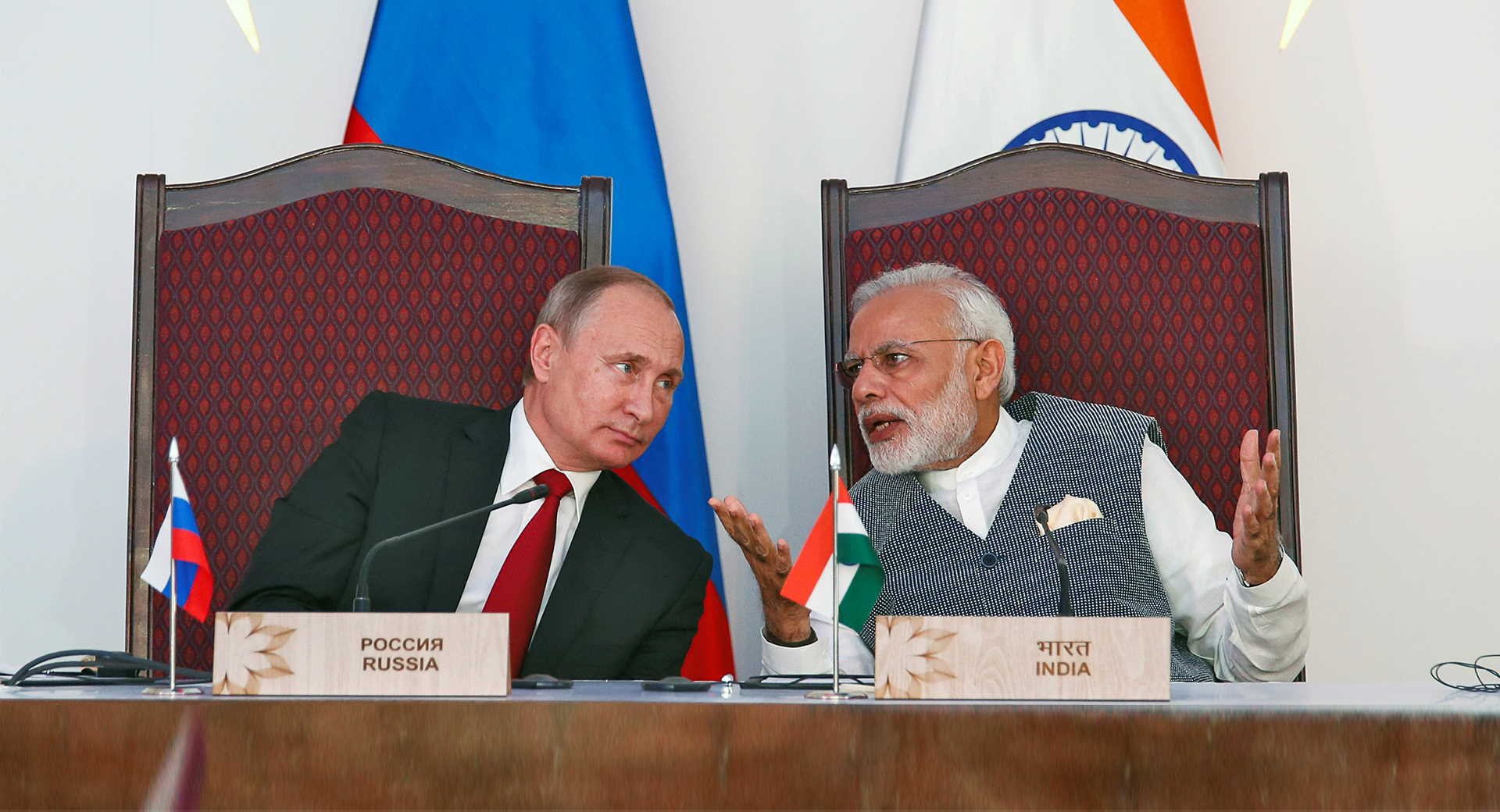
On Friday, the Foreign Ministries of India and China held talks and arrived at a consensus that differences should be handled peacefully and not escalate into disputes. This is the highest level of diplomatic engagement to happen since tensions along the Line of Actual Control erupted in May.

India’s External Affairs Ministry in its statement said that both sides agreed to handle their differences through peaceful discussion bearing in mind the importance of respecting each other’s sensitivities, concerns and aspirations and not allow them to become disputes.

The MEA said that both the countries reviewed the state of bilateral relations including the “current development”.

Joint Secretary (East Asia) in the Ministry of External Affairs Naveen Srivastava and Director General of the Asia Department at the Chinese Ministry of Foreign Affairs Wu Jianghao held a video conference on Friday. The MEA on its side noted that the “consensus reached by the leaders of the two countries that peaceful, stable and balanced relations between India and China will be a positive factor for stability in the current global sitation”. The statement issued by China’s MFA said that both the countries agreed to “implement the consensus that the two countries do not constitute a threat to each other and do not let differences rise to disputes. It added that both the sides discussed initiatives to mark the 70th anniversary of diplomatic relations. It also said that the two countries should oppose politicising the epidemic situation and support the WHO. However, this was not mentioned in the MEA’s statement.

Talks are scheduled to happen between the two Lieutenant Generals on Saturday.

Do you know the real story behind DMK’s symbol?

It is important to know the history of election symbols in India because a majority of the Indian population vote on the basis of the symbol. Some symbols have been etched in the minds of people and commands loyalty among its cadres. One of the political parties in India that has been able to have a symbol of its own since its inception is the Dravida Munnetra Kazhagam (DMK). Its symbol, the rising sun, still holds its sway among the people of Tamil Nadu. Odi Varugiran Udaya Suriyan penned and sung by Nagore Hanifa remains its propaganda song in its rallies. This symbol has not just shaped Tamil Nadu politics but has played its role at the national arena too. So, how did the party get this symbol that ushered in the era of Dravidian politics and has gone on to define one of the most powerful families in the world?

The story that we know

In 1948, there was a party called “Vanniyar Kula Kshatriyar Katchi” headed by S.S. Ramasamy Padayatchiyar with Govindasamy Padayatchiyar as its secretary. This party had the symbol of the rising sun. In 1951, the Vanniyars convened a major conference to organize Vanniyars into a political force.  The conference resolved that the Vanniyars would contest the elections in solidarity with the “toiling masses” and the Tamil Nadu Toilers’ Party (TNTP) was founded in the year 1951 by Ramasamy Padayatchiyar.

In the first General Elections held in 1952 the TNTP won 19 seats in the Madras Legislative Assembly. When Rajagopalachari resigned as Chief Minister of the Madras state and was replaced by Kamaraj, the TNTP decided to extend its support and Ramasamy Padayatchi became a member of Kamaraj’s cabinet. Later, the TNTP was dissolved.

Govindasamy Padayatchiyar came out and started his own outfit called the Workers’ Party. The Workers’ Party was advised to get a symbol of its own by C. Annadurai. This symbol was the rising sun.

In the rally held in 1956 by the DMK, it was resolved that the DMK would contest the elections in 1957. At that time, Annadurai requested the Election Commission to allot the rising sun symbol of Workers’ Party to the DMK saying that Govindasamy Padayatchiyar had dissolved the Workers’ Party and merged with the DMK and that Govindasamy’s cadres had won using the support extended by the DMK. Since then, till today, the DMK for more than six decades has had the ‘rising sun’ as its symbol.

There were threats to the symbol when M.G. Ramachandran split from the DMK in 1972 to form All India Anna Dravida Munnetra Kazhagam (AIADMK) and again when Vaiko parted ways to form his own party Marumalarchi Dravida Munnetra Kazhagam (MDMK) in 1994. Vaiko took enormous efforts to appropriate the symbol to his own party. Back then he is said to have mentioned that the rising sun symbol was brought to life by Anna and is the property of his ‘paattan’ (grandfather) Anna in which he also has claim and that Karunanidhi cannot claim it as his own personal property. But Vaiko couldn’t submit enough evidence to claim the symbol.

This is a known story of how the DMK has been able to keep the rising son symbol for its own. But there exists a hidden history behind the symbol that not many know. A history of how a party exploited the efforts spearheaded by one of the greatest revolutionaries Tamil Nadu has ever seen.

The hidden history

In 1929, a rally of the Self-Respect Movement happened in Chengelpet. For the rally, a flag was designed that had sun emitting four rays with the pictures of four leaders – Theagaraya Chetty, T.M. Nair, Panagal Arasar, and Periyar E.V. Ramasamy. This flag was designed by Thatha Rettamalai Srinivasan who also led the rally at Chengelpet.

Ten years later in 1939, Thatha Rettamalai Srinivasan started the Madras Province Scheduled Castes’ Federation with Dr. Ambedkar’s support. This federation took the form of a political party which was popularly and colloquially known as “Surya Katchi” because the party’s flag had a sun in it. A magazine for the Madras Province Scheduled Caste federation that was published from Gudiyattam near Vellore had for the first time carried the symbol of a rising sun emerging from two mountains (Rettamalai in Tamil means 2 mountains).

Now this can be washed off as a story meant to discredit the DMK. But, the truth put out here has been documented by Dr. Nirmala herself, who is the granddaughter of Thatha Rettamalai Srinivasan.

The history of Rettamalai Srinivasan and his contribution towards emancipation of Dalits has been marginalized and doesn’t find a place in the mainstream. Born into the Paraiyar caste he was a close associate of both Gandhi and Ambedkar. He is considered to be one of the pioneers of the scheduled caste movement in Tamil Nadu. He is the brother-in-law of Iyothee Thass, another prominent anti-caste leader. He worked as a translator in South African court where Gandhi was practicing as a barrister. It was him who taught Gandhi how to sign M.K. Gandhi in Tamil.

He established the Paraiyar Mahajana Sabha and represented the Paraiyars in the first two round table conferences held in London along with Babasaheb Ambedkar.

When the Temple Entry Disabilities Bill was introduced in the Madras Legislative Council in November 1932, Rettamalai Srinivasan described it as a modest and said “whether the God is inside the temple or not, but I am the original inhabitant of this soil and I must have the birth right or civil right to move an where and everywhere in my land weather it is a land or sea, road or temple”. When Ambedkar decided to convert to Buddhism, he issued a statement asking him to reconsider his decision. However, like Ambedkar, he too believed that Gandhi’s approach would not lead to upliftment of Dalits but was of the stance that legislations in favour of temple entry would definitely help in the amelioration of Dalits.

So, the original creator and the proprietor of the rising sun symbol was none other than the firebrand Dalit leader Thatha Rettamalai Srinivasan. But never has the DMK that lectures others on social justice has ever acknowledged Rettamalai Srinivasan and his contribution towards the upliftment of Dalits in Tamil Nadu.

Police officers responsible for George Floyd’s death charged with murder

Derek Chauvin, the police officer responsible for the death of George Floyd, as well as the officers Alexander Keung, Thomas Lane and Tou Thao, who had been his accomplices, have all been charged with murder amongst other charges. While Chauvin, the main man behind the case, is charged with second degree murder charges, the other three face aiding and abetting murder charges. The announcement came more than a week after Floyd was killed while in police custody in Minneapolis, sparking nationwide protests calling for ending violence against black citizens.

Derek Chauvin, who pressed his knee to Floyd’s neck, as the latter constantly proclaimed that he couldn’t breathe, triggered a nationwide protest against racism. Following this, Chauvin was initially charged with third degree murder charges. But, on Wednesday, the federal court increased it to second degree charges.

The court also announced charges of aiding and abetting murder against officers J Alexander Kueng, Tou Thao and Thomas Lane.

All four men were fired in the immediate aftermath of Floyd’s death, which was filmed by a witness. Kueng, Thao and Lane were not arrested and were reported to have gone to ground.

Do you know what The Quint is upto?

For the past few days, violence has gripped US cities following the death of George Floyd as a result of police brutality. The US now finds itself dealing with the double challenge of fighting the pandemic and the violence unleashed by arsonists and vandals in the name of protests under #BlackLivesMatter.

Meanwhile in India, as the number of Wuhan virus cases is on the rise, a popular online news media The Quint, has been putting stories (check this and this) and sending mails calling for a US style protest ‘to bring justice home’. The Quint is owned by Raghav Bahl, who is accused of money laundering.

On June 1, the outlet published an article claiming to tell a story of two protests. The article sought to draw similarities between the anti-CAA protests (violence) and the protests that are happening in the US currently.

It selectively quoted incidents that shows Hindus as perpetrators and Muslims as the victims of violence in India since 2014 when Prime Minister Modi came to power. However, in its articles, it conveniently left out hate crimes and atrocities committed on Hindus during the same period.

The list could go on and on where Hindus have been victims of violence.

But The Quint’s selective quoting of incidents to draw a comparison between US and India at a time when the George Floyd protests are flaring up the streets of US raises questions about its intentions. The article concludes by saying “The time has come to ask ourselves how many Faizans, how many George Floyds it will take” implying that only Faizans and not Fanikeshwars have been victims of hate crimes and violence.

It did not just stop there. Shorbori Purkayastha, Senior Producer at The Quint sent bulk emails appealing to people to take to the streets like in America.

This is nothing but a blatant call for violence and mayhem at a time when the country is fighting the pandemic.

Ofcourse, what else can be expected from an outlet that eulogizes a terrorist and associates Holi with terror?

1 arrested in Kerala pregnant elephant murder case

Wilson a rubber tapper from Edavanna has been arrested in connection with the death of the pregnant elephant in Mannarkkad forest range. The one month pregnant elephant died in Palakkad on May 27 after it ate a pineapple laced with explosives.

Earlier, the Forest Department had rounded up 3 persons in connection with the case, taking them into custody on Thursday evening. While Wilson has been arrested, reports stated that the other two were being questioned by officers.

Wilson had taken land on lease at Ambalappara near Mannarkkad.

An FIR was registered under section 9B (1)(b)  [possesses, uses, sells or transports any explosive shall be punishable with imprisonment] of the Explosive Act, 1884 based on the complaint of a forest range official in Mannarkkad. A case has also been registered under section 11 (1) of the Prevention of Cruelty to Animals Act, 1960, which lists various offences, including sub-section (1) (a) “beats, kicks, over-rides, over-drives, over-loads, tortures or otherwise treats any animal so as to subject it to unnecessary pain or suffering or causes or, being the owner permits, any animals to be so treated”.

The elephant is reported to have been injured between May 13 and May 20 when it had eaten a pineapple containing explosives. It was unable to eat or drink water for several days. It spent its last moments standing in the Veliyar river before it passed away.

Vande Bharat Mission set to make new record

Ministry of External Affairs said on Thursday that a total of 3,48,565 citizens have registered so far for repatriation with the India’s diplomatic missions across the world of which 1,07,123 Indians have already been brought back through commercial flights, ships and buses in case of Nepal, Bhutan and Bangladesh. The rest of them are to be brought back in the coming weeks.

With this, the registered number of Indian evacuees has surpassed the previous count of Indians airlifted from Kuwait during the Gulf War of 1990 when Iraq under Saddam Hussein invaded the country.

Out of the total number of citizens evacuated, 17,485 are migrant workers, 11,511 are students and 8,633 are professionals. Apart from this more than 32,000 Indians have returned through the immigration checkpoints at borders with Nepal, Bhutan and Bangladesh.

The third phase of the mission will evacuate 38,000 citizens from 31 countries in 337 commercial flights and is to be launched on June 11.

54 and 24 flights will take off from the U.S. and Canada respectively. 11 flights will arrive from Nigeria, South Africa, Egypt, Kenya, Mauritius and Seychelles.

Repatriation of Indian citizens is done only those who register to return under ‘compelling grounds’.

Centre rolls out internship scheme for 25000 fresh graduates

As the economy faces the challenges of emerging from the lockdown with concerns of unemployment for new entrants to the job market, the Centre has launched a scheme to provide internship opportunities for 25000 fresh graduates with smart cities and urban local bodies.

Minister for Housing and Urban Affairs Hardeep Singh Puri speaking at the launch of The Urban Learning Internship Programme (TULIP) on Thursday said that the internship opportunity will help graduates become market ready and will give them multiple options.

The TULIP scheme is a 5 year joint venture between MoHUA and All India Council for Technical Education (AICTE). The scheme featured in the 2020 Budget speech.

A dedicated portal has been launched where city administration can register available opportunities across domains like urban planning, water supply, waste management and digital governance. Applicants must be Indian citizens who have completed their final year of college within the last 18 months. The duration of the internship can range from 8 weeks to 1 year. However, there is clarity on whether the internship comes with a stipend. The smart cities and urban local bodies are free to chart out their own selection procedure.

Though the programme does not have a budget of its own, the 100 smart cities and 4,400 urban local bodies can use the administrative expenses allocated by the Centre to pay for stipends and other perks.

RSS’ labour union to protest against privatization of PSUs

Bharatiya Mazdoor Sangh (BMS), the Rashtriya Swayamsevak Sangh’s labour wing said on Thursday that it would launch a protest against the privatization of public sector enterprises by the Union government.

The decision was taken at the national coordination committee for public sector of the BMS with representatives from workers’ union of different public sector companies across sectors like coal, insurance, railways, postal, banking, telecom, steel, power, etc.

The protest under the banner “Save Public Sector, Save India” would be held on June 10 by BMS in different public sector undertakings across the country.

The agitation would include protest meetings, day-long dharnas, and campaigns at the unit level.

‘The BMS is committed to fight until it stops the government from taking the anti-public sector and anti-worker decisions”, the statement issued by BMS said.

Time to up the game on digital infra

While the Chinese virus has created a pandemic, the Chinese mobile has created a pandemonium. Chinese mobile, a leading mobile service provider of china has installed data network even on the highest peak of earth, the Mount Everest. What Chinese mobile has achieved is enviable inspite of the impact on ecology and strategic interests of India.

China after constructing fast rails, broad highways and big cities for the last couple of decades has been concentrating heavily on digital infrastructure. This vision and execution of China on digital sphere has put itself ahead in the digital curve as well as the global growth curve.

A dire consequence of the Chinese virus has left most part of the world motion-less. The importance of digital infrastructure has been brought to light during this period of global lock down. In fact, it is digital infrastructure which is preserving global economy from melt down.

Today most of the administrators are using video conferencing and other means of online methods to run day to day administration. This usage of digital methods has percolated into all verticals of social life. People are using video conferences, online applications, digital class rooms, virtual meetings etc for their business as well as social life.

Many socio-cultural gatherings, clubs and associations are using application such as zoom, Microsoft Tteam, to organize webinars and meetings. Many government bodies and local administrators have efficiently disbursed emergency passes and permissions on the basis of mobile and online application. We can see this usage even in tier 2 and 3 townships. This is a clear indication of a growing digital world in the near future and the new normal in a post-COVID world. This experience of easy and efficient usage of mobile and online applications can be widened in future for many public utilities.

More and more issuance of certificates and disposal of applications required for the common man useful in his daily affairs can be issued digitally. Revenue records, driving license renewal, income certificate, caste certificate and many more such sundry and day to day matters can be speedily and easily sorted out through mobile and online apps. Definitely the private enterprises will adopt digital modes for their businesses. By now, they would have realized the cost efficiency of virtual meetings, video conferences, working from home and other benefits of running their business digitally.

But now it is time for us as a country and as a community to think, act and adopt digital means and methods for our growth and wellbeing. It is evidently clear that digital methods reduce pollution of air, water and soil. It also reduces the cost and burden on physical infrastructure especially of cities and urban areas. It gives impetus for decentralized growth of the country. De-centralization of growth shall lead to lesser income disparity among people and reduce social tensions. It will also help in solving anxiety and health issues prompted by irregular mobility and traffic jams.

We can list out many more advantages that may benefit every category of individual. Hence undoubtedly moving towards digital world is not only economically beneficial but also ecologically and socially desirable. It is not an option but a compulsion of time.

Therefore, we need to build a strong and secure digital infrastructure. Today India doesn’t have its own safe servers except for defenses and government purpose. As citizens we need to depend on the servers in America or China to store our data.

The multinational companies like Amazon and Google are leading server storage providers. However there is not such an Indian entity of their size located within India providing a safe space to house Indian data.

Though we are one of the largest data consumers and our per capita usage of data is increasing to a quantum jump, thanks to lowest data cost post 2014, we still lack in fast and safe digital cable systems.

Our digital operations are highly dependent on mobile towers and satellite systems. We need to build a strong, safe and capable digital cable network across the country.

National Infrastructure Pipeline Task force has submitted its final report on 29th April 2020 to Hon’ble Finance Minister. The total outlay is a massive 110 lakh crore rupees, this is almost half of India’s net GDP. This outlay is for the period 2022-24. In this report amount earmarked for energy sector, road infrastructure,  urban infrastructure, and railways is 27 lakh crores, 20 lakh crores, 18 lakh crores and 13 lakh crores respectively. The aggregate of above 4 sectors is above 70% of total outlay with the rest of it is distributed among social sector, health, education etc. If a small amount of this is earmarked for digital infrastructure it will definitely bring down the burden on road, railways, urban and energy sectors.

Post the Facebook-Jio deal, the present market valuation of Jio is 4 lakh crores. The capital expenditure of Jio on its digital infrastructure development including data cable, 4G & 5G network development is much less than this. Jio already has around 40 crore subscribers. Hence the cost and time for digital infrastructure development is much less than that of physical infrastructure. A planned and reasonable investment on digital infrastructure will reduce the burden of enormous investment on physical infrastructure. Foreign institutional investors and banks are also more interested in investing in quickly rewarding digital infrastructure than in physical infrastructure which has a very long tenure of investment realization.

These above stated digital infrastructures along with other similar steps are essential to keep ourselves ahead in the digital race. The 19th century was the age of industry, 20th century was the age of physical infrastructure and 21st century will be the age of digital infrastructure and A.I.

Germany announces huge recovery package to restart the economy

Germany has announced a €130 billion recovery package to tackle the recession caused as a result of the Coronavirus pandemic in an attempt to resume economic activities. This will be a package comprising of tax and spending measures. Being Europe’s largest economy, this package is touted to have sweeping tax cuts, as well as increase benefits, in an attempt to help with economic rejuvenation.

This package includes the following features:

  • A temporary VAT cut from 19% to 16%, from 1 July until 31 December
  • A €300 one-off payment for every child in the country
  • A €50bn fund to address climate change, innovation and digital technology›
  • A €25bn loan support programme for small firms that have seen their sales drop by more than 60% for June to August. This could be a particular boost for bars, restaurants, hotels and other hospitality businesses.
  • €10bn for municipalities struggling with lower tax receipts, with public spending on infrastructure and housing

Germany’s chancellor Angela Merkel said a “bold response” was required to secure jobs and keep the economy running, since the country was experiencing massive unemployment due to recession.

This package comes as an addition to the already announced €750 billion, to cushion the blow to the economy. It included loan guarantees and direct spending measures such as furlough wage subsidies.