Over the last few years or so, there is a sudden buzz and craze for celebrating another new modern “day” called the “Madras day”. “Happy Birthday Madras” “I am a proud Madrasi” “Namma Madras” etc are the slogans screamed by the Madrasis/Chennaities on this day all over the city and in social media. It is celebrated on every 22nd of August to mark the so called birth of the city of Madras, now called Chennai. To put it better, Madras Day marks the day, the agents of British East India Company bought a small piece of land to build Fort St George. Detailing further, it commemorates the founding of the modern city by establishing Fort St George on a small piece of land acquired from the last King of Chandragiri in 1639 by the British East India Company. On this very day in 1639, Mr. Francis Day of the British East India Company bought a small strip of land between the river Cooum almost at the point it enters the sea and another river known as the Egmore river on the Coromandel Coast from Damarla Venkatadri Nayaka, a Nayak (local chieftain) under the Vijayanagara King, Peda Venkata Raya in Chandragiri. A year later, the Fort St. George was built to house the British merchants, factory workers, and other colonial settlers. (It is known that all this can be sourced online). Later at various points of time, many surrounding villages were added to this piece of property militarily, commercially, poltically and administratively which eventually gave way to the current form of the city.
However what is not known is the sham that is being done in the name of promoting a city’s history and the criminal design to alter the course of the city’s history. Historically Chennai or Madras has been a part of the Tondaimandalam ruled by the dynasties of Cholas, Pallavas, Pandyas and Satavanhas. Later it came under the control of the Vijayanagar empire. When many temples in the city are more than 1000 years old if not older, what sense does it make to celebrate something exclusively as ‘Madras Day’ on 22nd August 1639, a day when a bunch of foreigners bought our land? Even more – when there were lands, animals and humans and what not before 22nd August 1639 in the very same area which was handed over to British merchants, how can a city be born only on that date? The villages of Madrasapattnam and or Chennapattanam were already existing and flourishing. Obviously cities aren’t dropped by “God” from heaven on a particular day.
If that is comical, let’s see what is then worrying. If at all anyone had to celebrate Madras day, it should have been the British who bought this piece of land on that day. They could have celebrated it every 22nd August till 1946 for buying a piece of land and from there building a city and then colonizing it and then ruling it as a Presidency. But it looks like they had better common sense than our present day folks who cling on to any damn day as long as it has a western perspective and a western interest in it. They never celebrated it. We do have customs and festivals for celebrations and remembrance. We have anniversaries. Rarely do we celebrate anniversaries every year for buying a plot or a house. However it will make some sense even if we do so. And the day we will do it will be either the day of signing the agreement or the day of Grihapravesam. So, the buyer of the plot of house will be the one who will be celebrating it and not the seller. And in turn after few years, if the buyer again sells it to the person from whom he bought the property, the original owner who is again the new owner can and will too celebrate the purchase. But he will not celebrate it on the date he sold the property to the other person. He will actually celebrate it on the date when he bought it back from that person. Now, replace Indians with the original owner and the Britishers with the buyer. We Indians/Madrasis are celebrating the day when we actually sold a piece of land to the British merchants for their commercial purposes. Wow!
Now the more shameful part in this is, Damarla Venkatadri Nayaka sold this piece of land innocently to the British merchants thinking that they were here only for doing trade and commerce. Little did he know they will one day become rulers of this vast country through criminal and inhuman methods. And what do we do to honour such great acts of back stabbing and cunning designs? We go ahead and celebrate the very day when the first step was taken to make us slaves. How proud we are of ourselves! Bravo! How will it be if all the Indians celebrate the day when the first British or European set his foot in this country rather than the Independence Day? Or how will it be if Indians celebrate the day when Robert Clive won the different wars he fought and then enslaved us? Or how will it be if we celebrate the day when Queen Victoria proclaimed herself as the Empress of India in 1857 rather than the Republic Day of India? Why should we simply celebrate the day when one of our ancestors trusting the British sold a piece of land and also offered all kinds of assistance to them for their trade becoming well established? If at all we should do something on this day, it should be marked as the day for learning our lessons from our history where we were cheated and ill treated and then enslaved so that we don’t repeat that mistake again. In essence, it is not a day of celebration.
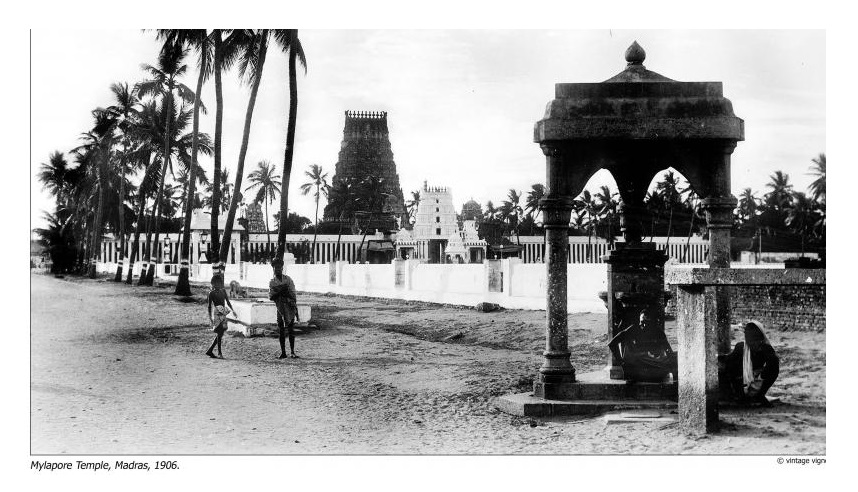
Now let’s come to the criminal part of it. Most of us know that the day of primary celebration of an entire village, town or city in our country will be the day when the temple in that village/town/city has its biggest annual festival as per its calendar. Many localities in Chennai like Mylapore, Tiruvellikaenni, Thiruvanmaiyur, Thiruvottiuyr, etc celebrate in a similar fashion. And same is the case in almost all the other cities, towns and villages across India. But the promoters of this sham called Madras Day want to erase this kind of a Hindu or Indian pride and custom associated with the city and want to bring in a British legacy into the minds of the Madrasis. The celebration of this very day is to give credit to the birth of the “modern” city to the British and thereby making the Madrasis being ever grateful and thankful to their colonial masters. It is only one another way of colonizing Indians through the minds than politically or administratively. Even for argument sake, if we agree that the promoters of this sham did not or do not have this intention, then they have got the date and reason behind the Madras Day celebration woefully, awfully and completely wrong. But knowing who the promoters are of this sham, it is pertinent to raise these objections. It is a sinister design to make the Madrasis come out of their native and indigenous pride and be ever enslaved to the glory of their past colonial masters. Of course in the initial stages or periods, the impact of this will not be seen. But one has to wait and watch to see the success of this long term plan in front of our eyes. We not allowing that to happen is another issue altogether.
There are various attempts, through various quarters and in various forms to enslave Indians mentally to their past colonial masters and other western powers. One such attempt is this Madras Day sham through which the entire credit for building of the city is given to the British. And thereby it makes Indians feel that all that has been constructive in this country has been due to the British. We have seen many examples where people keep thanking the British for the Railways, Post & Telegraph, Roads, Bureaucracy, Millitary forces, etc as though they had done this with a charitable motive for the well being of the Indians. Similarly they built the Fort St George not for handing it over later to Indians, but for themselves to initially protect themselves from the likes of French and Dutch who were rival imperialistic powers in the vicinity of Madras. Later they used the very same building to politically and administratively enslave millions of Tamilians, Telugus, Malayalees and Kannadigas who all formed the citizens of the famed Madras Presidency.
At a time when there is a rising pride among the Hindus and Indians about their religious and cultural practices, the forces who are unable to digest this fact are making attempts through these designs to make us lose our pride and glory once again. The celebration of an entire village or town or city or a state or even our country has been only through religious festivals and temple festivals. Kolkotta/Bengal and Durga Pooja are inseparable. Mumbai/Maharashtra and Ganesh festival are inseparable. Gujarat and Navratri are inseparable. Mysore/Karnataka and Dushera are inseparable. Tamil Nadu and Pongal are inseparable. Kerala and Onam are inseparable. Orissa/Puri and the Jagannath Yatra are inseparable. Baisakhi and Punjab are inseparable. Delhi and Ram Leela are inseparable. Allahabad and Kubh Mela are inseparable. Mathura and Janmashtami are inseparable. India and Holi are inseparable. India and Diwali are inseparable. Similarly cities and towns like Madurai, Trichy, Thiruchendur, Palani, Tiruvanmalai, Chidambaram, etc all have such inseparable celebrations with their respective primary temples. The entire city, town and village will erupt in joy, pomp and fanfare on such temple festival occasions. The entire city/town or village will be on the streets and celebrate the annual Rath Yatra (temple car festival). In Chennai/Madras similarly each locality has its own identity with a particular temple festival. Even streets have their festivals tied to the local Goddess Ammans and Karuppu Saamis during different times of the year. It is to erase such celebrations and identities, that this one of its kind experiment is being tested. To allow it be successful will be another blot in the history.
Not even planned cities in India like New Delhi, Chandigarh have a particular day of birth to celebrate when actually it should be sensible of them to do so. And nowhere else in the world do we hear of days like New York Day, London Day, Paris Day, Tokyo Day, Sydney Day, etc. Exceptions may always be there. But certainly not for reasons like that we have in our hands.
The promoters of this day are primarily from the venomous English daily situated on Mount Road and their other royal, elitists and intellectual friends. That alone should speak volumes of the noble intentions behind this “Madras Day”.