Home Blog Page 1673

Targeted demolition of Hindu homes in Pakistan, India issues demarche

India issued a strong demarche to Pakistan High Commission yesterday on targeted demolition of Hindu homes in Pakistan’s Punjab province.

While targeted attacks and forced conversions of ethnic and religious minorities in Pakistan are a usual happening in Pakistan it has taken a new proportion now as the minorities in Pakistan face the brunt of both the virus and the state of Pakistan.

Local authorities in Pakistan have demolished several homes of minority Hindu community in Pakistan’s Punjab province despite producing legal document of ownership by Hindus.

India’s action is followed by serious concern’s raised by civil society in Pakistan regarding this issue.

India expressed its concerns and asked the Pakistan High Commission to inform relevant authorities to take remedial action.

What the pandemic taught me about acceptance

“The curious paradox is that when I accept myself just as I am, then I can change” – Carl Rogers, American psychologist

We all have lived our lives close to the fire escape – sometimes we go down and return, ready to face the fire again, other times we live under the reassurance that it exists. We drown out the noise in our life with more noise – television, mobiles you name it. We avoid the subliminal realities of life, the chinks in our armour that make us uncomfortable. Unless it blows up into something big or something forces us to have a deeper look.

So when the Coronavirus hit, and the lockdown ensued, I was fearful and anxious. I resisted status quo with deep conviction — this was not how it was supposed to happen, I had life all planned out, didn’t I? I frantically searched for my fire escape, but there was none. It was absolute, all pervasive.

Identify, Observe, Accept

In her book, Radical Acceptance, American psychologist Dr. Tara Brach says acceptance is “clearly recognizing that we are feeling in the present moment and regarding that experience with compassion”.

On one such day, out of sheer frustration, my mind refused to take any more stress. This forced me to think about identifying what it was exactly that was tormenting me. As I found instances that led to the feeling of helplessness, I began to trace the threads that led to the cause. Through this process, I also realized that we are, indeed, lucky if we even manage to identify all that perturbs us.  But it is the biggest favour you can do yourself — instead of escaping it, resisting it, or pretending it doesn’t exist.

Once I got to the root of it, I observed without judgement. The realization is quite powerful and the underlying reasons equally so. And then you accept it for what it is, for it is the reality you are currently in. This process gives you the strength to move ahead in life and make sustainable choices.

How is your inner judge doing?

I remember reading a post on LinkedIn during the early days of the lockdown, a top professional at a consulting company had written about how if you didn’t emerge out of the lockdown with your skills enhanced, your reading up-to-date, magically becoming a linguist and a musician while you’re at it, you were solely responsible for this “wasted time”. This man was riding a FOMO Ferrari; there was no genuineness, no space for natural curiosity.

But it happens to the best of us. We have a relentless inner judge who is constantly on the job and is often merciless. While some would say that it drives us and makes us highly functional, we should be mindful of choosing to pause, reflect and be a bit kind to ourselves. It is ok to run or walk but in the spirit of growth.

Has anything changed?

Yes and no. Circumstances are still the same. We are still under a lockdown as I write this. But as you go ahead, try to emerge out of all the lamenting, imagining the what-ifs and fixating on negativity. Instead, do whatever it takes to observe, accept and gently approach the niggles that you carry around.

And become a linguist/musician while you’re at it – why not?

Know about Twitter’s new feature ‘Fleets’

Twitter on Tuesday announced that it will start rolling out its new feature ‘Fleets’ in India that allows users to post ‘fleeting thoughts’ that will disappear in 24 hours. These ‘fleets’ cannot be liked or retweeted.

This is similar to the ‘stories’ first popularized by Snapchat which was later adapted by other social media platforms of Facebook – Instagram, Whatsapp and Facebook itself.

‘Fleets’ of account that one follows will appear on top of one’s timeline. To ‘fleet’, users will have to tap on the profile picture on the top left corner, type and/or post a picture or video and then tap on ‘fleet’ to post.

However, the option to reply to a ‘fleet’ will be available when Direct Messages (DM) is enabled. Followers will be able to react with an emoji or reply to the ‘fleet’. Replies and reaction will appear in DM just like how it does in Instagram.

The company said that that people are hesitant to tweet as they feel tweets are public, permanent and displays the number of retweets and likes. “We hope ‘Fleets’ will empower many more people to express themselves more freely”, the social media giant said.

Twitter is rolling out the feature in India, Brazil and Italy on test basis.

Fleets will be available for both iOS and Android in the coming days in the updated app versions.

DMK MLA Anbazhagan loses fight against COVID

Anbazhagan, incumbent MLA of Chepauk-Thiruvallikeni constituency belonging to the DMK who tested positive for the Wuhan virus passed away early this morning of acute respiratory distress.

He was admitted at a private hospital in Chennai on June 2, 2020. The 62 year old MLA was put on ventilator as his respiratory distress worsened a few days back.

“The 61-year old MLA, who has been fighting for his life with severe COVID-19 pneumonia rapidly deteriorated early this morning. Inspite of full medical support, including mechanical ventilation at our COVID-19 facility, he succumbed to his illness,” the hospital said in a statement.

Ironically, he passed away on his birthdate June 10.

Anbazhagan was a three time MLA and was elected to the Assembly in 2001, 2011 and 2016. He was the son of erstwhile DMK strong man ‘Pazhakadai Jayaraman’ who started the famous fruit juice shop “Anbazhagan Pazhakkadai” on the corner of Ranganathan Street in T.Nagar.

Tamil Nadu Chief Minister Edappadi K Palaniswami condoled the MLA’s death and offered his deepest condolences to the family. DMK president MK Stalin also condoled Anbazhagan’s death and paid tributes to him.

DMK President MK Stalin in a statement said “How will I forget Anbazhagan who dedicated himself to people’s service. How will I say my condolences to his family and brethren when I myself am weeping?”

With the passing away of Anbazhagan, there are 3 vacancies in the Assembly now all of which had been due to the death of a DMK MLA. Earlier 2 seats fell vacant when KPP Samy (Tiruvottiyur) and S Kathavarayan (Gudiyatham) passed away.

Ladakh MP Jamyang responds to Wayanad MP Rahul’s question

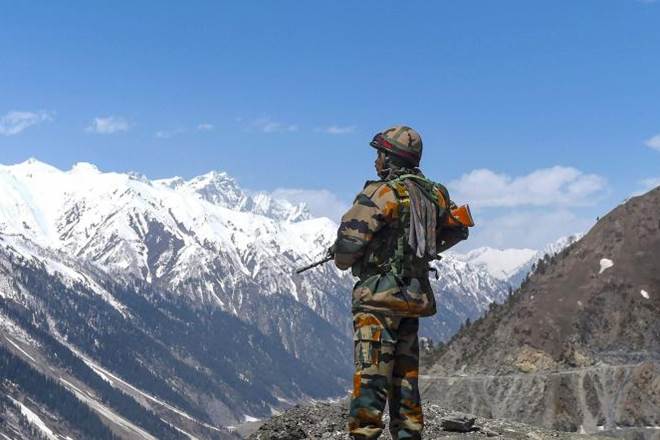
On June 9, Rahul Gandhi tweeted whether the Chinese have occupied Indian territory in Ladakh. He had said “Once RM is done commenting on the hand symbol, can he answer: Have the Chinese occupied Indian territory in Ladakh?”, an apparent reference to Defence Minister Rajnath Singh’s tweet.

Rahul Gandhi had earlier taken a jibe at Home Minister Amit Shah improvising on a Mirza Ghalib couplet that read “Everyone knows the reality of what’s going on at the border, but ignorance is bliss at this time to maintain a happy heart”. His comments were about Home Minister’s statement in a virtual rally where he said India’s defence policy is strong and that the country knows how to protect its borders.

Replying to this tweet of Rahul Gandhi, Defence Minister Rajnath Singh who also quoted Mirza Ghalib said “If your hand aches, you have medicine; But what to do when the reason of ache is your hand.”

To this, Rahul Gandhi said “Once RM is done commenting on the hand symbol, can he answer: Have the Chinese occupied Indian territory in Ladakh?”

The young MP from Ladakh Jamyang Tsering Namgyal replied “Yes Chinese occupied Indian territory as under” and quoted instances of failures under the Congress regime. “Aksai Chin (37244 sq km) in 1962 during Congress regime, Tia Pangnak and Chabji Valley (250 km length) in Chumur area till 2008 during UPA time, Zorawart Fort in Demjok was destroyed by PLA in 2008 and set up PLA’s Observing Point in 2012 during UPA regime and also created Chinese/new Demjok/Colony with 13 cemented houses, India lost Doom Cheley (the ancient trade point) between Dungti and Demjok in 2008-2009 during UPA regime.

The Ladakh MP even posted a picture locating Chinese occupations done during the Congress rule.

Centre calls for door to door survey to battle COVID19 across 10 states

Health Ministry has asked officials of 10 states across 38 districts which are witnessing a surge in COVID19 cases to conduct house-to-house surveys, and surveillance to contain the infection and reduce mortality.

The 38 districts are from Maharashtra, Telangana, Tamil Nadu, Rajasthan, Haryana, Gujarat, J&K, Karnataka, Uttarakhand and Madhya Pradesh.

Centre has also stressed on efficient survey teams, ambulance management, efficient tracing of patients and bed management and clinical management of the hospitalised cases through rotational 24X7 teams.

The country now has 2,66,598 confirmed cases of which 7,471 have died.

FIR booked against veteran news reader Varadarajan for controversial video

An FIR has been registered against yesteryear newsreader and actor famously called as TV Varadarajan for releasing a video on social media about shortage of beds in Tamil Nadu for treating COVID19 patients.

Varadarajan had shared a video in social media warning people about the shortage of beds to treat COVID patients in Chennai. He has also narrated an example of his close relative being denied a bed.  “People should not be lethargic that they will not get infected for corona, there are no beds anywhere in Chennai. They have struggled a lot to get admitted to the hospital. They spoke to MD, top government officers, but they didn’t get a bed, this is the situation”, he said in his controversial video.

TN Health Minister Vijayabaskar later rebutted the claims of Varadarajan in a press conference and accused him of spreading false information.

An FIR has been registered against the actor under various sections of the IPC and the Central crime branch of police has also invoked the epidemics act and disaster management act against the actor. Actor Varadarajan has been booked under 153, 505(1)(b), 188, section 3 of the epidemic diseases act, 54 of the disaster management act.

IB warns Telangana officials of phishing attacks from Pakistan via fake Aarogya Setu app

Telangana government officials have been alerted by the Intelligence Bureau (IB) to be cautious about phishing attacks in the name of Aarogya Setu mobile application as Pakistan-based groups were sending links to take away data of users.

Phishing denotes the cyber term of luring and cheating an internet user through a fake SMS or email and thereby breaching their privacy to steal sensitive information.

IB Informed the government that actors from Pakistan are initiating a campaign to compromise Android-based smartphones and devices of Indian Defence personnel and government officials by sending messages on Whatsapp and SMS to click on a link to download the fake Aarogya Setu app .

“As the user tries to download the app by opening the link, a malicious app (ChatMe) downloads on the device and begins data exfiltration to the servers of the adversary based outside India” the note circulated by the Intelligence Department said.

Telangana government has advised people to download the app only via MyGov.in, or Google Play Store and Apple App store.

Citizens of Spain to remain masked even after end of emergency

The use of masks will remain compulsory in Spain even after lifting the emergency state on June 21.

In a conference on Tuesday, Spanish Health Minister Salvador Illa said that as part of a new ruling by the government, citizens of Spain should mandatorily wear masks outside their homes if the 1.5m social distancing cannot be followed by them.  While most of Spain further relaxed measures on Monday, the Health Ministry reported the lowest number of new coronavirus infections since early March.

The total number of confirmed infections is now at 241,550. The ministry also confirmed no new deaths, but reported that 56 people have died of the infectious disease over the past week. Yet, the total number of fatalities now sits at 27,136 – up only nine from last Monday.

This discrepancy is due to Spain’s controversial system of only adding deaths to the total fatality count that occurred and were reported the day prior to publishing the daily numbers. If someone, for instance, died of COVID-19 on Saturday, but the death was not confirmed until Sunday, this system excludes that fatality from the total death count. Despite questions around the data, much of the country moved forward to ease lockdown measures on Monday.

The Lived Reality Of Lal Bahadur Shastri

Lal Bahadur Shastri was the Indian statesman who rose to the occasion and held the top office at a time when riots were rife, famines were prevalent and the threat of war loomed large. The enormity of his character was visible even to the blind eye, for he was soft-spoken and simple in demeanour, but his voice reverberated in the hearts of fifty crore Indians whom he led by example.

Born in 1904, on 2nd of October in Mughalsarai, he acquired virtues like courage and patience at a noticeably young age. Why, after all he was a Kayastha, the legendary community who were sought by the Mughals in Delhi and Nizams in Hyderabad, by the British government and by independent India, for their administrative prowess, efficient recordkeeping and quick wit (even today, most Kayasthas serve as administrators in the Government of India and have risen to become Principal and Cabinet secretaries). Hence, the community followed a tradition of being educated in Urdu and Islamic scriptures from an early age. Lal Bahadur Srivastava, as he was known earlier, began his primary education under a maulvi, which came to a halt in sixth standard when his entire family moved to Varanasi. He joined seventh standard in Harish Chandra High School, where he dropped his surname to identify as casteless.

Such was young Shastri, short yet strong, subtle yet visible.

As fate would have it, Nishkameshwar Mishra was a teacher at Harish Chandra High School at the time when Shastri enrolled. Owing to his teaching, Shastri began taking a deep interest in Indian history and soon, in 1921, when he was in tenth standard, Mahatma Gandhi and Madan Mohan Malviya, in a public lecture attended by Shastri, called for the masses to quit government schools and jobs. Shastri quit the next day, marking the beginning of the Non-Cooperation Movement.

He became a full-time volunteer at the local branch of the Congress Party and began taking part in protests and demonstrations, for which he went to jail multiple times. He was given the title ‘Shastri’ as part of his degree at Kashi Vidyapeeth, which later stuck to his name and became part of his identity.

By 1928, Shastri had been jailed for two and a half years and by 1937, became the Organising Secretary of the Parliamentary Board of Uttar Pradesh. In 1940 he was again imprisoned for one year for supporting the independence movement. He was made the Minister of Police and Transport in Uttar Pradesh on 15th August 1947. Five years later in 1952, Nehru summoned him to Delhi and made him the Minister of Railways.

Twelve years later in 1964, Nehru died. The question in every India’s mind was the same – “after Nehru who?”

It was Shastri who answered the call.

As soon as he took office, when anti-Hindi riots flared up in the State of Madras; he pacified it by ensuring everyone that English would go on as the official language. Madras trusted him. Next, he discontinued Nehru’s socialist economic policies and created the National Dairy Development Board to help Amul grow. India was starving at the time and Shastri’s White Revolution was a boon. However, the situation was still tense and an immediate solution was required. So Shastri, the Prime Minister of India, started skipping a meal a week and distributing it to the hungry. He went on air and appealed to his countrymen to do the same. His words struck the right chord and the response was overwhelming. Restaurants and eateries began downing their shutters on Monday evenings and people started calling it the Shastri Vrat (Shastri Fast).

Then one day, by ploughing a patch of land in his Delhi residence all by himself, he sparked the Green Revolution of India. It had the desired response; farmers began to cultivate more crops and M.S Swaminathan was chosen to lead the team of scientists to deliver a long-term solution.

In 1962 under Nehru, India had been pushed back in the India-China war. Shastri had not forgotten the resulting humiliation and expanded India’s defence budget as soon as he came to power. He also chose to build closer relations with Russia.

It was then, in the 1965 Indo-Pak war, that Shastri showed the world what he was made of. In his speech to the Parliament, he stated:

In the utilization of our limited resources, we have always given primacy to plans and projects for economic development. It would, therefore, be obvious for anyone who is prepared to look at things objectively that India can have no possible interest in provoking border incidents or in building up an atmosphere of strife… In these circumstances, the duty of Government is quite clear and this duty will be discharged fully and effectively. We would prefer to live in poverty for as long as necessary but we shall not allow our freedom to be subverted.

India pushed back Islamic militants and Pakistani soldiers alike, captured Lahore, and brought it under direct mortar fire while major tank battles ensued in Punjab. When the war finally ended with a United Nations mandated ceasefire, India emerged victorious and Shastri the hero. He met Ayub Khan informally after that, and both formally signed the Tashkent Declaration on 11th January 1966.

It was on that tragic day, under mysterious circumstances, that India’s second Prime Minister was allegedly murdered on foreign land.

A grieving nation was not ready to believe that their beloved Prime Minister had died due to a heart-stroke and yet, a post-mortem was not performed.

And then, just like that, as swiftly as Shastri had settled in the hearts of fifty crore Indians, he was forgotten. History textbooks did not do justice to his achievements; his own government, led by Indira Gandhi, paid no heed to the man who started the White and the Green Revolutions of India. Like this, slowly and systematically, the memory of Lal Bahadur Shastri was wiped clean.

In a recent film called Tashkent Files, the circumstances of his death have been revisited.

This article was republished from Standpoint India with permission. Read the original article here.