Home Blog Page 1671

Accenture to lay-off 5% of the global workforce, 10,000 people in India at risk of losing jobs

Accenture is set to lay-off 5% of its global employees due to the ongoing COVID-19 crisis.

CEO Julie Sweet has said that despite halting fresh recruitments and cutting subcontractors, the company has had to reduce its workforce owing to the numbers that the pandemic has taken hold.

India has the largest Accenture employee base of over two lakh employees and following the decision to fire 5% staff, at least 10,000 people stand at the risk of losing their jobs. As many as 25,000 people are likely to be shown the pink slip across the world as the US-listed firm has unilaterally decided. Sweet has said that the amount of hours put in by its employees has dropped below 90% for the first time in the last decade. Their performance metrics have been used to target staffs to “transition out” of the company.

All you need to know about the Railway Management System

Why in news? 

The Prime Minister Office wants the process of amalgamating the railway services to be completed by November 2020.

What is the story behind? 

In 2019, the Cabinet decided to integrate the Railways’ eight Group ‘A’ services into a single Indian Railways Management Service (IRMS). It wanted to downsize the Railway Board, re-designating its members on functional basis instead of departments. The government directed the whole process of amalgamating the services to be finalised within a year by a Home Minister-led group of ministers.

Why an enduring format needs to be devised?

A successful transition to a new integrated cadre will depend on devising an enduring format for future recruitment. A fair readjustment of existing 8,400 Group A officers to have their legitimate career progression is the need of the hour. Those existing officers who are unwilling to opt for merger with IRMS may be allowed to continue, seeking their prospects in their cadres. But, those who are opting for merger must be prepared for a fresh selection by the UPSC to determine inter-se seniority, done on basis of genuine suitability. Age and seniority based on rank in UPSC test years back alone cannot be a fair measure of suitability.

What are the anomalies with regard to the top GM posts?

The other major concern is of increasing anomalies and distortions with regard to top general management (GM) posts. There is an issue that these top posts are being occupied by officers from certain departments. In government, career prospects mostly depend on date of birth, and rank in UPSC results. The administration remains purblind to disadvantage of age encountered by officers through civil services stream, against those from the engineering services examination. The former generally join the service when they are 25-27 years old, while the latter join technical cadres at 21-24. There’s a similar age anomaly in the case of Special Class Apprentices. This affects the morale of the staff. The organisation is the major loser, as it fails to optimally utilise its trained and experienced human capital.

How did the selection procedure of the top managers evolve?

In 1947, the Railway Board had a Chief Commissioner (in 1951, re-designated as Chairman), a Financial Commissioner, and three Members (Transportation, Staff and Engineering).  Later in 1954 – a Member Mechanical was added and in 1987, a Member Electrical was added. Soon clamour set in for the remaining two cadres (Signalling and Stores) also to have their representation on the Board.  In 2015, the government initiated a halfway measure to merge two verticals of Electrical and Mechanical branches on ‘functional lines’.

But, the Railway Board was expanded to make it a nine-Member body, with two new Members, one for Signalling, and one for Stores. Meanwhile, since 1980s, precepts for selection of GMs and Board Members for railways were altered. This eroded the effectiveness of the system. A mechanism should have been devised first for the selection of suitable officers with requisite experience from different disciplines.

How should the Railways’ top posts be manned?

The primary task of the Railways is production and marketing transport efficiently and economically. So, its top management posts must be manned only by those who are appropriately trained and exposed to the market vagaries and rigours of field operations. Those others who provide vital support for railways’ primary business would naturally be enabled to rise in their specialised domains. That is how the Tandon Committee (1994) advised for suitable selection of officers.

What are the other anomalies?

Anomalies and distortions have been creeping in through subtle ploys. Departmental posts are ring-fenced. Some departments particularly compete to inflate the numbers to secure senior positions proportionate to the respective cadre strengths. Little has ever been attempted to determine cadre-wise optimal strength.  It currently varies widely with civil engineering commanding the largest chunk, followed by mechanical engineering, traffic, etc.. Departments engaged in executing projects kept widening their bases through “work charged” posts. The Debroy Committee found that these posts were surreptitiously continued for years well after the projects were completed.

What could be done?

There is a need to create a cohesive and integrated ‘cadre’ for the future. For this, the Railways may look for its entire Group ‘A’ managers to be inducted into IRMS only from amongst technical/engineering graduates. For future recruitments, there may thus be no major hurdle to abide by the underlying spirit of IRMS. Again, it is of critical importance that the Railways institutionalise the selection for the general management pool.  A rigorous selection process together with training will help an enduring management cadre to evolve.


 

US imposes visa ban on members of Chinese Communist Party, People’s Liberation Army and state-owned businesses

The United States government has imposed visa ban on members of the Communist Party of China (CPC) members, People’s Liberation Army (PLA) and few state-owned businesses for occupying and militarising South China Sea.

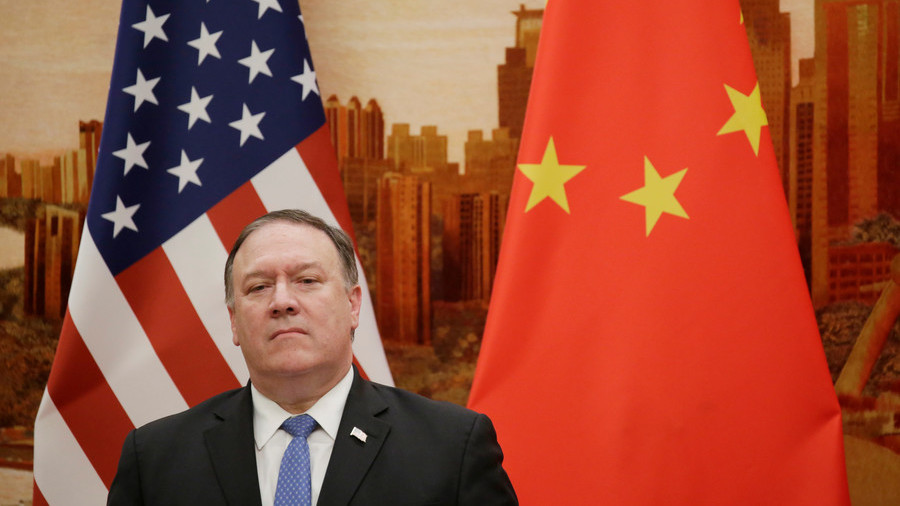
Secretary of State Mike Pompeo, in a statement issued on Wednesday (August 26) by the State Department said that the US has begun “imposing visa restrictions on People’s Republic of China (PRC) individuals responsible for, or complicit in, either the large-scale reclamation, construction, or militarisation of disputed outposts in the South China Sea, or the PRC’s use of coercion against Southeast Asian claimants to inhibit their access to offshore resources”.

The visa ban extends not just to CPC and PLA members but also to private individuals and businesses involved in the occupation of South China Sea.

“These individuals will now be inadmissible into the United States, and their immediate family members may be subject to these visa restrictions as well,” the State Department said.

Along with this, the US Department of Commerce has added 24 Chinese state-owned enterprises including several subsidies of the China Communications Construction Company (CCCC) to the Entity List

The State Department said that the CCCC led the destructive dredging of the PRC’s South China Sea outposts and is also one of the leading contractors used by Beijing in its global ‘One Belt One Road’ strategy.

The US also came down heavy on China by saying that  CCCC and its subsidiaries have engaged in corruption, predatory financing, environmental destruction, and other abuses across the world.

“The PRC must not be allowed to use CCCC and other state-owned enterprises as weapons to impose an expansionist agenda,” Pompeo said.

US calls for UNSC meeting to discuss Hong Kong, frantic China extends olive branch to India

WASHINGTON, DC - JULY 07: U.S. President Donald Trump participates in an event with students, teachers and administrators about how to safely re-open schools during the novel coronavirus pandemic in the East Room at the White House July 07, 2020 in Washington, DC. As the number of COVID-19 cases surge across southern states like Florida, Texas, Louisiana, South Carolina and Arizona, Trump joined with guests from across the country to discuss how to responsibly return to the classroom. (Photo by Chip Somodevilla/Getty Images)

After the United States called for an immediate online UN Security Council meeting to discuss and debate the draconian national security law for Hong Kong, China has extended reconciliatory messages to India.

Chinese Ambassador to India, Sun Weidong told select Indian media that, “China and India should never let their differences shadow the overall bilateral ties and must enhance mutual trust.”

“China and India should be good neighbours of harmonious coexistence and good partners to move forward hand in hand. The realisation of ‘Dragon and Elephant dancing together’ is the only right choice for China and India, which serves the fundamental interests of our two countries and two peoples,” the Chinese envoy added.


After weeks of talks held between senior generals and diplomats of India and China over the standoff in East Ladakh, China has still not deescalated in this region and the threat of conflict still looms large. There is growing concern that if armed conflict breaks out, it might not be limited to just one theatre as the borders with Pakistan are not that far from this place.

Indian and Chinese soldiers are still facing each other at the Line of Actual Control (LAC) apart from the unrelenting damage caused that the Wuhan virus has caused to the country.

After the US requested for an immediate online UN Security Council meeting to discuss how China’s new legislation is crushing the dissent in Hong Kong, an angry and isolated China has called this move a direct interference into its internal matters.

China’s Ambassador to the UN, Zhang Jun tweeted that “Beijing categorically rejects the baseless request of the US for a Security Council meeting” and “legislation on national security for Hong Kong is purely China’s internal affairs”.

The US has called the new national security law proposed by the Communist regime in Beijing, “a matter of urgent global concern that implicates international peace and security, and warrants the immediate attention of the UN Security Council”.

President Donald Trump who has a habit of wading into international issues has sent Beijing into a tizzy when he tweeted that “Washington was willing to mediate or arbitrate in the “raging border dispute”.

This comes right after what some see as his diplomatic victory in the Middle East when the United Arab Emirates and Israel decided to recognise each other as nations and have established diplomatic relations.

Even though China has sent a reconciliatory message to India, however, it must be taken with a pinch of salt because China has a habit of going back in its words as it continues to build its military capabilities in the LAC. Just last week, reports emerged of Chinese PLA soldiers desecrating Mount Kailash and Mansarovar by building hotels and campls along with placing of surface to air missiles.

In Beijing, Foreign Ministry spokesman Zhao Lijian said that “now the China-India border area situation is overall stable and controllable”. What this means is China does not want any discussion on Hong Kong but it will keep escalating tensions with most of its neighbours.

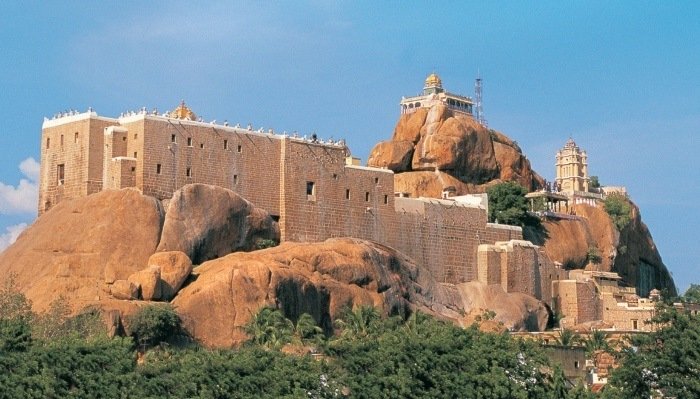
Tiruchirapalli announced as a new circle under ASI

The Archaeological Survey of India (ASI) has announced the creation of 6 new circles and expansion of 3 others to promote conservation and protect ancient sites and monuments.

The new circles created are Tiruchirapalli in Tamil Nadu, Rajkot in Gujarat, Jabalpur in Madhya Pradesh, Meerut and Jhansi in Uttar Pradesh, and Raiganj in West Bengal.

With this Tamil Nadu will have 2 circles – Chennai and Tiruchirapalli.

The Tiruchi circle has been created keeping in mind the rich archaeological significance of the land of Cheras, Chozhas, Pandyas and Pallavas. Also, Tamil Nadu is home to thousands of temples that are 3000-4000 years old.

Along with the creation of new circles, the Delhi mini circle has been merged with Delhi circle and the Hampi mini circle has been expanded to a full-fledged circle by joining a few areas from the Dharwar circle.

‘Liberal historian’ William Dalrymple, the sexual predator who had creeped out women with his behaviour

‘Liberal’ historian William Dalrymple, part of the lobby that bullied Bloomsbury India publication to drop the book “Delhi Riots 2020: The Untold Story” authored by Advocate Monika Arora, Sonali Chitalkar and Prerna Malhotra, had made women feel uncomfortable with his “creepy behaviour” and was called out for his sexual overtures during the 2018 #MeToo movement.

The #MeToo movement had given many women the courage, strength and a platform to freely voice their opinion without fearing retaliation.

Over the years many women had kept quiet when it came to all types of harassment, particularly in the media, advertising, academia and the film industry which is wrought with instances of sexual harassment.

However, William Dalrymple being a celebrated author & historian and someone who is looked up by many people seems to have taken advantage of his position and had made moves on women that made them feel uncomfortable.

Dalrymple sent friend requests through Facebook and had asked out young women for drinks and dinner.

Scroll employee Karnika Kohli had put out a tweet in October 2018 in which she asked if no one will be talking about William Dalrymple, implying his attempts to make sexual moves on women.

Following this, women who felt uncomfortable around him or who had been engaging in conversations with him on social media accused him of flirtatious behaviour.

A girl named Preetha had received a friend request out of the blue which she had accepted being his fan. However, he started making her feel uncomfortable by complimenting her and even asked her out for dinner and drinks. When she replied that he might consider it, he had supposedly replied with ‘winks’ and ‘kissy smileys’.

But instead of questioning the sexual predator, people pounced on the prey. They had told Preetha that it is not wrong for someone to ask a woman out for dinner or drinks. This had forced her to write a long post where she said “It is disheartening not at all shocking that men are questioning my intentions instead of Dalrymple’s in this case although other women have shared that they have heard of/had similar encounters with him.”

Note by Preetha. Image Credits: OpIndia

Many other women followed suit and called out his attempts to make moves on them. A twitter user MissKandpal also said that she was asked out for dinner. “Creeped out to the core”, she wrote on her twitter.

Author and political analyst Shubhrastha had also received a random friend request and unsolicited messages from Dalrymple.

It is to be noted that Dalrymple is married and is father to three children. He spends most of his time in India to do research for his books which many historians claim is nothing but an attempt to whitewash the crimes of the Mughal empire and the colonial rule of the British.

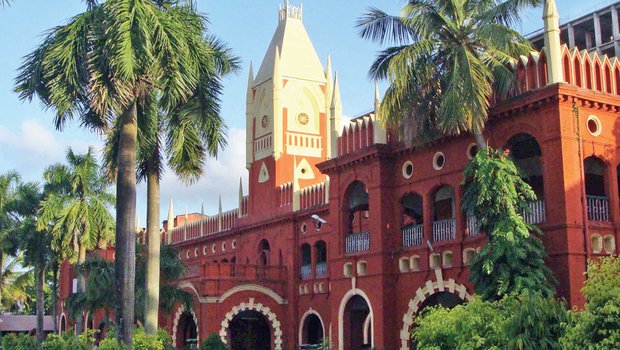
Odisha High Court allows trans-man to live with partner

In a significant judgement, the Odisha High Court allowed a 24-year-old trans-man to live with his same-sex partner. The petitioner, a woman who identifies herself as a man, was forced by her parents to marry a guy against her consent.

Petitioner Chinmayee Jena alias Sonu Krishna Jena had filed a habeas corpus application under Article 226 and 227 of the Constitution seeking protection of her woman partner, alleging that she was being kept away by her mother and uncle. The petitioner told the court that her partner’s mother and uncle were now trying to marry her off.

Jena produced a certification of Gender Dysphoria for Trans man from a psychiatrist. She went on to claim that she and her partner had fallen in love with each other in 2011 and had been enjoying a consensual relationship since 2017. The two were studying in the same school and later in the same college. They had been living in together in Bhubaneshwar until the latter’s mother had forcefully tried to take her away and get her married to a boy against her will.

A division bench of Justice SK Mishra and Justice Savitri Ratho heard this case and said that the petitioner has the right of self-determination of sex/gender and also has the right to have a live-in relationship with a person of choice even though such person may belong to the same gender as the petitioner, following the partner’s expression of consent towards wanting to live with Jena. They further directed the police to provide security to the girl and her partner. The High Court also ordered that the petitioner would have to allow the mother and sister of her partner to be in touch with her and that her partner would have all the rights of a woman as enshrined under the Protection of Women from Domestic Violence Act, 2005.


Kashmiri man carrying ‘codes’ arrested in Delhi

A Kashmiri man carrying suspicious-looking codes was arrested in Delhi on Wednesday. This man is reported to be a resident of the Budgam district of Jammu and Kashmir and had been caught roaming around the Parliament by the CRPF personnel upon raising suspicion.

He had been giving misleading information to the police upon interrogation following which he was arrested. A sheet containing mysterious code was later recovered from him. His Aadhaar and driving licence has been seized amongst other belongings. Notably, both of the IDs have different names. His Aadhar identifies him to be Manzoor Ahmed Ahanger, while his name has been mentioned as Firdaus in the driving licence.

A bag has also been found from him. According to the CRPF officials, the arrested person has been changing his statements which aroused further suspicion about him.

First, he said that he had come to Delhi in 2016. Then he said that he had come to the national capital during the coronavirus-induced lockdown. He told the CRPF officials that he has been staying in Delhi since then. The man, whose identity is not clear yet, said that he first stayed in Jamia locality, then near the Jama Masjid area in Nizamuddin. He is now in the custody of Delhi Police.

Flash floods kill 70 in Afghanistan

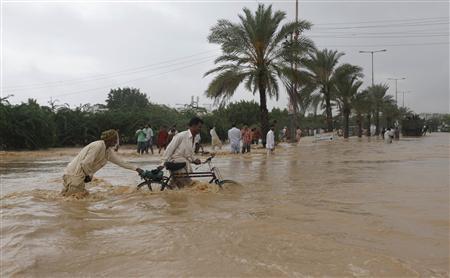
A recent flash flood that happened as a result of sudden downpour killed more than 70 in Afghanistan on Wednesday. It also ended up destroying hundreds of homes just north of Afghanistan’s capital.

Provinces like Maidan, Wardak and Nangahar also experienced a heavy loss of lives due to this disaster, as well as through eight other northern provinces of the country.

The Parwan province experienced a heavy downpour late on Tuesday night, which stretched out into the early hours of Wednesday. This caused a sudden flash flood, washing away men, women and children and destroying 300 homes, according to Ministry of Disaster Management spokesman Ahmad Tamim Azimi. Rescuers searched through mud throughout the day for bodies, with the confirmed death toll at 72, and at least 90 injured, Azimi added. He went on to say that climate change was the reason these floods have caused more damage than is usually observed due to a heavy downpour. The government’s spokesperson said on Twitter that appropriate measures were being taken to combat the losses caused by these flash floods.The disaster comes as the war-torn nation already faces a sinking economy due to the coronavirus pandemic and as violence continues despite the United States attempting to usher peace talks between the Afghan government and insurgent Taliban.

ICICI becomes the first bank in introducing satellite data to assess farmers’ credit worthiness

ICICI has become the first bank to introduce satellite data to assess farmers’ credit worthiness. It will conduct these assessments in combination with technologies from agri-tech and fin-tech firms, to offer advanced, remote credit assessment for extending loans to farmers. The technology will involve using advanced satellite imagery to assess farmlands in parameters such as land quality, location, irrigation and year-round crop patterns.

It will then use the collected data to perform analytics for metrics like availability of surface-level water for easy irrigation, extensive crop trends for a particular farmer’s farmlands including types of crops grown, duration between sowing and harvesting, as well as average quality and health of crop yields.

The bank is using readily available satellite images from Indian Space Research Organisation and the U.S.’s National Aeronautics and Space Administration for the purpose. “We will cover 25,000 villages over the next one month and scale it to 63,000 villages over the next two month,” ICICI Bank’s Executive Director Anup Bagchi said Tuesday, without offering any quantitative numbers on how the project will reduce the cost for the lender as well as the farmers.

The bank is partnering with agri-fin-tech companies specialising in harnessing space technology and weather information for commercial usage.