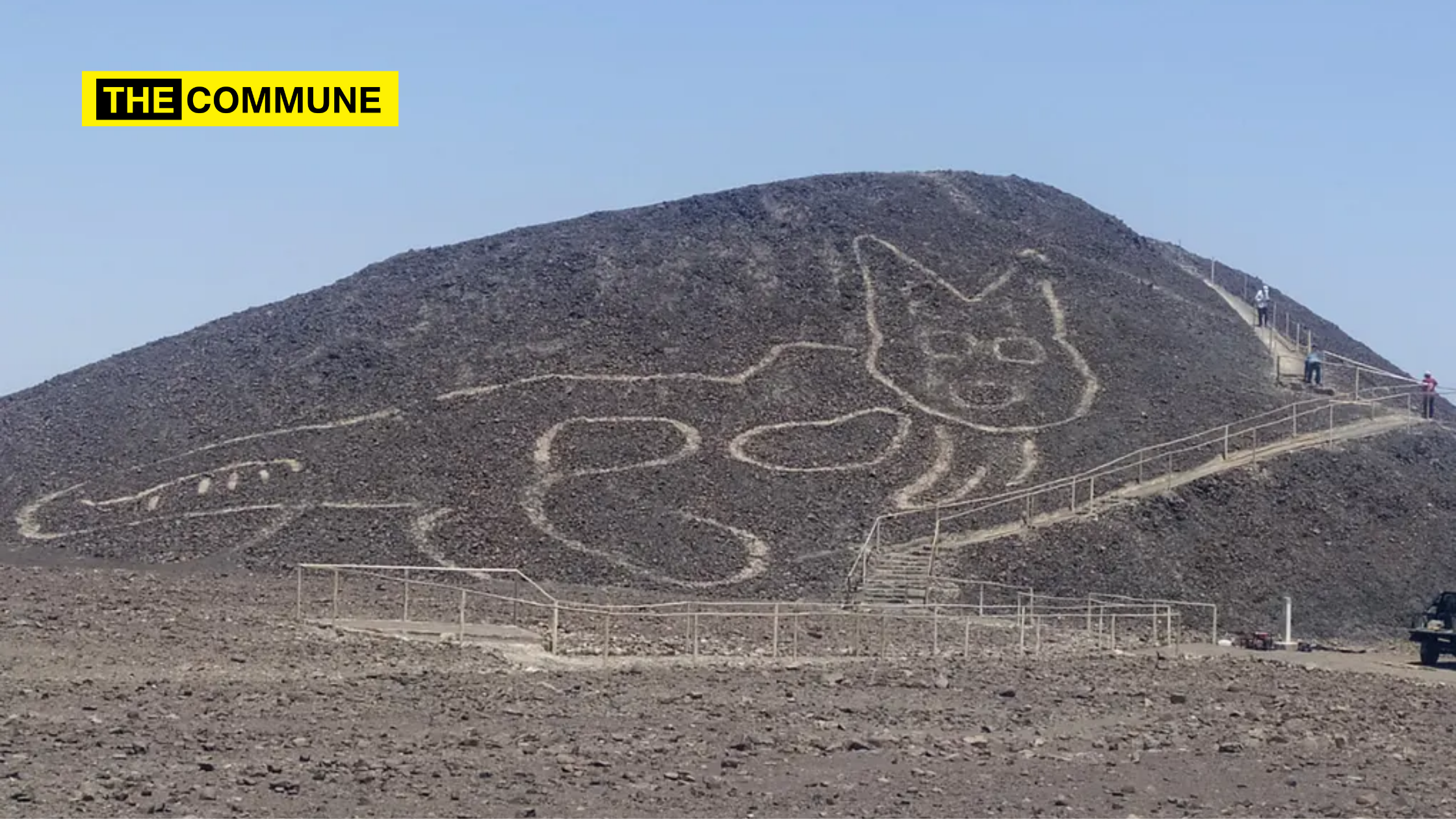
Supernatural sightings have been taking place for several hundred years and various bizarre images have been found in the past. One search is the image of a cat that has been found to be etched into the desert among the Nazca lines in Peru. This feline geoglyph has been dated to be as old as 200 BC. This was found during work that was taking place at a UNESCO World Heritage site.
“The figure was scarcely visible and was about to disappear because it’s situated on quite a steep slope that’s prone to the effects of natural erosion,” Peru’s culture ministry said in a statement this week.
Archaeologists claim that over 80-100 search figures have emerged in this valleys over the past few years, with all of them being connected to the Nazca culture. The cat is dated to have been drawn in the late Paracas era which lasted from 500 BC to 200 AD
A UNESCO world heritage site since 1994, the Nazca Lines, which are made up of hundreds of geometric and zoomorphic images, were created by removing rocks and earth to reveal the contrasting materials below. They lie 250 miles (400km) south of Lima and cover about 450 sq km (175 sq miles) of Peru’s arid coastal plain. Because the regions is isolated and has a dry, windless, stable climate, the lines have mostly been preserved naturally. Earlier images of heron, monkey, lizard, hummingbird, spider, fish, condor, dog, and a human have been found.
When she was selling roadside biryani last week, she was ridiculed and harassed by some. The video she posted asking people for help became popular and donations piled up and she is now going to set up a restaurant with the funds obtained. Until a few months ago, she had been cooking biryani at home and used to sell it on the roadside.
In a video released by her last week, Sajna talked about how all the biryani she had brought was wasted without being sold. She also mentioned that she had been mocked and abused by the shopkeepers nearby for several days. The video also revealed that some people had beaten and tortured her.
A lot of celebrities have come forward to help and support her. Malayalam actor Jayasurya has offered to fund her to help start a restaurant for Sajna. Nasser Manu, a social worker from Malappuram, has offered to help build a house. Also, actor Santosh Keezhatoor has been supporting her to sell biryani since October 15 with the aim of helping transgender people.
“We talked to Jayasuriya. He said he would help start a restaurant. We are looking for a place for it. It will cost more if we start in Kochi. I will find a place soon,” said Sajna. Kerala Health Minister K.K.Sailaja also spoke to her on the phone and promised to help.
Prime Minister Narendra Modi on Friday said that the government would soon reach a consensus on revising the minimum age of marriage for girls. The Prime Minister said the girls’ gross enrolment ratio in education has turned higher than that of boys for the first time in the country because of several efforts taken by the government in the last six years.
PM Modi was addressing a video conference after releasing a commemorative coin of ₹75 denomination on the 75th anniversary of the Food and Agriculture Organisation (FAO).
“There is an important deliberation going on to decide what should be the ideal age of marriage for daughters,” Modi said. He said that deliberations were going on in the government regarding the same and that consensus will be reached soon. This is a follow-through of his Independence Day speech, wherein he had addressed the need for increasing the minimum marriage age for women in India. He had announced that the government has set up a committee to look into the matter.
Even in the Parliament, the government has appointed a task force had been constituted “to examine the correlation of the age of marriage and motherhood”. The current legal age of marriage for women is 18, while that of men is 21.
Yet again, politicians belonging to the Dravidian parties are up to what they are good at – playing unwarranted politics over education by blocking reforms and establishment of institutions that can help improve the quality of education and students. Decades back, they opposed the setting up of Jawahar Navodaya Vidyalayas that would have provided cheap and best residential education with international exposure to rural poor students of Tamil Nadu. Now, they are opposing upgrading of Anna University into an ‘Institute of Eminence’ that can make it a world class institution.
What is an ‘Institute of Eminence’?
The ‘Institute of Eminence’ was announced by the then Finance Minister Arun Jaitley in his budget speech in February 2016 to empower higher educational institutions of the country become world class education and research institutions. This announcement came in the wake of no Indian university finding place in the top 200 of World University Rankings.
Under this scheme, 20 institutes (10 public and 10 private) recognized as ‘Institutes of Eminence’ (IoE) will enjoy complete academic and administrative autonomy. Each public institute under this scheme will receive ₹1000 crores worth grants over 5 years from the Ministry of Education for the purpose of enhancing the research infrastructure, teaching capabilities, start new disciplines, train faculties, fund fellowships, incubate innovations and businesses, invite foreign faculty for lectures, collaborate with foreign universities, etc.
An Empowered Expert Committee comprising Harvard Business School professor Tarun Khanna, former Director of Gurgaon-based Management Development Institute Dr. Pritam Singh and Chancellor of University of Houston System Renu Khator as members and headed by Former Chief Election Commissioner N. Gopalaswami identified 20 institutes (10 public and 10 private) from around 120 institutes including Central Universities, State Universities, IITs, and private universities.
As of August 2019, 8 public institutions have been declared as ‘Institute of Eminence’. These include: Banaras Hindu University, Indian Institute of Science Bengaluru, IIT Bombay, IIT Delhi, IIT Kharagpur, IIT Madras, University of Delhi and University of Hyderabad.
Anna University, Chennai and Jadavpur University, Kolkata are the only two State Public Universities that have been selected for ‘IoE’ tag.
About Anna University
Anna University (College of Engineering, Guindy) is one of the oldest engineering colleges not just in the country but in the entire world. The College of Engineering, Guindy was established in 1794 as School of Survey. Subsequently, it became Civil Engineering School in 1858 and was brought under the Madras University in 1859. It became College of Engineering in 1861 with the addition of mechanical engineering course.
The institute gained the name Anna University through the Anna University Chennai Act 1978, thus bringing the institute under the Tamil Nadu government’s control.
Today, Anna University comprises of four main constituent campuses: i) College Of Engineering, Guindy; ii) Alagappa College of Technology, Guindy; iii) School of Architecture and Planning, Guindy; and iv) Madras Institute of Technology, Chromepet.
It is for these four colleges that ‘Institute of Eminence’ tag (IoE) was offered to be conferred. However, this prestigious tag which would have upped the game of Anna University has been rejected, thanks to the Dravidian political parties.
Rhetoric and Facts
Contrary to the misinformation peddled by the Dravidian politicians and their accomplices in the media, a State public university recognized as ‘Institute of Eminence’ will provide for lots of benefits and will in no way infringe upon the State’s rights, policies and control over the institution.
Here are the top three rumours peddled by Dravidian political parties and the mainstream media.
Rumour 1: Anna University will come under Centre’s control
Truth: Anna University after getting the ‘Institute of Eminence’ tag will have greater autonomy by not having to adhere to the curriculum structure of University Grants Commission (UGC), a Central government body. It will be free from UGC inspections and guidelines which it is mandated to follow now.
Ioe guidelines para 6.1 f
Rumour 2: Tamil Nadu’s 69% reservation policy will not be implemented if Anna University gets ‘IoE’ tag
Truth: It has been clearly stated that the ‘IoE’ scheme for public institutions is meant to provide them with grant support to increase their competence at the global level. It does not interfere with the administrative aspects of the institute like admission procedure, recruitments, reservation of seats, etc., because such aspects are covered by the Anna University Chennai Act 1978, a State Act, which the Centre cannot touch.
Anna University Chennai Act 1978
Rumour 3: Students will have to pay more fees
Truth: As mentioned, the granting of ‘IoE’ status does not interfere in the administrative aspects like fee payment as that is also governed by Anna University Chennai Act 1978. It is the Syndicate comprising of Vice Chancellor and other Secretary-level officers of the state government that considers and reviews the financial requirements and approves the annual financial estimates of the university. So, any fee rise or fall has to be approved and mandated by the Syndicate. The Centre does not have any administrative jurisdiction over the institution.
Anna University Chennai Act 1978
Also, para 6.1c in the IoE guidelines clearly states that the institute will have the freedom to determine the fees for domestic students and that no student who gains admission should be turned away for lack of finance.
IoE guidelines point 6.1 c
What do the ‘IoE’ guidelines say?
Para 5.3 of the ‘IoE’ guidelines states that State Public Universities set up under State Acts would continue to function under their respective Acts. So, administrative aspects like admissions, recruitment, fees, reservation policy, governance, etc., of Anna University will continue to function per the provisions of the Anna University Chennai Act 1978.
IoE guidelines
What did Vice Chancellor Surappa do?
Ever since Prof. M.K. Surappa, a renowned academician, was appointed as the Vice Chancellor of Anna University in April 2018, the Dravidian chauvinists especially the DMK has been trying to cow him down through their racist narratives just because he is a native of Karnataka.
The proposal for including Anna University as an ‘Institute of Eminence’ was prepared and submitted by Tamil Nadu government’s Higher Education Department along with Professors and Deans of Anna University in 2017, even before Prof. M.K. Surappa was appointed. This proposal was signed by the Principal Secretary of Higher Education Mr. Sunil Paliwal IAS who had forwarded the proposal to the Ministry of Education (Ministry of Human Resource Development then). Thus, this proposal was submitted officially with the knowledge of the Tamil Nadu government unlike the claims made.
After Prof. Surappa became the Vice Chancellor, he in his capacity as the head of the institution along with the Professors and Deans made a presentation to the Empowered Expert Committee in October 2018. After the first set of ‘IoE’ comprising just the IITs and two private universities were released, two universities falling under State governments – Anna University (Tamil Nadu) and Jadavpur University (West Bengal) found place in the expanded list of 10 public institutes.
Upon being selected, the Ministry of Education had sent a communication to the Tamil Nadu government and Anna University asking for a financial plan about how to make Anna University as an ‘Institute of Eminence’ sustainable in addition to the ₹1000 crores grant offered by the Centre. Since this is a State government established and administered institution, it is expected that the State also commits financially to the scheme. In the plan, it was stated that Anna University had the means to raise ₹1570 crores on its own. It was this communication sent by Surappa which was picked up by DMK chief MK Stalin to stir up the controversy.
Prof. Surappa wrote to the Tamil Nadu government requesting to send a letter of commitment to the Centre accepting the ‘IoE’ tag. The Tamil Nadu government formed a five member committee to finalize the matter. Prof. Surappa even met the Higher Education Minister K.P. Anbalagan around 4-5 times on the issue. As the letter of commitment was not received by the Centre, it gave a deadline of May 31 to send the letter.
Prof. Surappa had met Tamil Nadu Chief Minister Edappadi K. Palaniswami, Higher Education Minister K.P. Anbalagan and other members on May 20 and made a detailed presentation on the financial proposal that had already been submitted.
On May 29, Chief Secretary K. Shanmugam sent a letter to the Centre accepting the ‘IoE’ status in-principle. Meanwhile, Higher Education Minister K.P. Anbalagan wanted to ensure that the granting of ‘IoE’ status does not affect the 69% reservation policy of Tamil Nadu government. It was Prof. Surappa himself who took the initiative and wrote a letter to the Centre saying that the Tamil Nadu government is insisting that the state wishes to continue its reservation policy and requested the Centre to give a written confirmation that there will be no change in the reservation policy.
The Joint Secretary of Ministry of Education sent a letter to the Vice Chancellor in which it was highlighted that as per para 5.3 of the ‘IoE’ guidelines State public universities will continue to function as per the provisions of the respective state Acts which includes the admissions procedure, recruitments, governance structure, reservations and other administrative aspects.
Thus it has been clarified more than once that Anna University can continue with the existing scheme of reservation for admissions and recruitments. In essence, the status quo will remain unchanged.
Another great opportunity lost due to false propaganda by DMK
Minister K.P. Anabalagan on October 16 communicated that the Tamil Nadu government will not accept the ‘Institute of Eminence’ status stating that it ‘could’ affect the state’s reservation policy. He also added that there are ‘chances’ of introducing entrance exams and increasing fees. However, none of these apprehensions holds water as per the ‘IoE’ guidelines and the communication indicated from the Centre. What the Tamil Nadu government has done is to succumb to the false and mischievous propaganda peddled by the DMK chief MK Stalin and his son ‘actor’ Udhayanidhi Stalin. By this move, the Dravidian parties have once again flushed a glorious opportunity down the drain that would have provided Tamil Nadu students exposure at the international level.
Former Vice Chancellor of Anna University E. Balagurusamy heavily criticised the Tamil Nadu government’s move to reject the ‘IoE’ staus stating that the Tamil Nadu government has insulted Anna University by failing to recognize its significance. He said that it is very unfortunate that the Tamil Nadu government has let go of this opportunity and has appealed to reconsider its position. He said that nobody should do politics over this as Anna University is a public institution meant to benefit the public.
Kamal Singh has become one of the first Indian students to be admitted into the English National Ballet School in the United Kingdom. Coming from a background where learning ballet would be last in the mind, this rickshaw walah’s son has now earned himself a spot in the world’s most prestigious ballet school.
Kamal, who is known as Noddy amongst his peers, had been attracted by ballet dancers after watching Bollywood movies and wanted to learn the art.
“I cannot explain how it feels, it is all my dreams come true,” said Singh, 21. “It’s amazing, I’m enjoying every day. “My family do not know much about ballet but they are very happy and very proud that I am at the English National Ballet. I am the first in my family to come to London.”
The school fees and London living expenses totaling about £20,000 were far beyond the reach of Singh’s family, but a crowdfunding campaign, backed by some of Bollywood’s biggest names, managed to raise all the funds needed in less than two weeks. Having only started training at 17, Singh’s capabilities as classically trained ballet dancer developed relatively late. After just four years’ training in India and some fast crowd-funding, Kamal Singh is now joining English National Ballet School.
Following the gory incident where a transwoman named Hamsa was burnt to death by a transwomen gang, another incident of violence has been reported where a transwoman named Swapna was attacked by a transwomen gang led by Sony Begum, the cartel head (Nayak) of a ‘hijra’ Haveli.
The ‘Hijra’ council/collective system is known by different names in different parts of the country. In Telangana region, it is known as Dayyar or Haveli. The Haveli is inherently a hierarchical set up which is headed by a Nayak (a senior transwoman). These shared communities are close knit and include only transwomen (people born as biologically male whose gender identity or expression is of a woman). People under this system are essentially those who have run away from their families due to the unacceptance of their identities as transgender persons.
Swapna (25) belongs to the Madiga community, a Scheduled Caste. She along with a few other transwomen had gone to the Mangalaya showroom to seek alms. As they were splitting the day’s collection amongst themselves, a few transwomen under the command of Sony Begum had attacked them out of the blue, Swapna states in her complaint to the National Commission for Scheduled Castes.
She states that she and a few others belonged to Monalisa, another transwoman’s group and identified her attackers as Kajal, Zoya, Swapna, Karuna, Madhushalini and Lavanya who belong to Sony Begum’s group.
“They viz. Kajal, Zoya, Swapna, Karuna, Madhushalini and Lavanya are all from the Muslim community. The attackers thrashed me on my private parts with their legs and hands and footballed us. They dragged me by my hair and totally denuded & stripped me naked right on the main road in front of Big C showroom in full public view.” Swapna stated in her complaint.
They had also verbally abused her using casteist slurs saying “madiga lanje, madiga lamdi lanje, madiga moddalu cheekave” and ran away with ₹2500/- cash that Swapna had.
Swapna also mentions in the complaint to NCSC that the Sony Begum’s gang had threatened her stating that if she wishes to beg or seek alms in Hyderabad she must work as a bonded labour under Sony Begum.
“We will chase, thrash, and break your bones if you don’t come under Sony Begum. We will destroy your livelihood. We will not let you live.” Swapna had quoted Sony Begum’s gang members saying.
A complaint has already been filed at the Panjagutta Police Station in Hyderabad. However, Swapna says that the FIR registered has not included the casteist slurs hurled against her.
“This case is not just a case of violence against a transgender but is also a crime towards Scheduled Caste” one of the transwoman who spoke to The Commune said.
Video of a man entering the sanctum sanctorum of an Amman temple and hitting the priest has gone viral on social media.
The man identified as Lenin is the husband of DMK Union Councillor of the region Baby and son of Chairman of the board of trustees of the temple Kasirajan. According to a news report, Kasirajan was reported to be a Communist party member.
He entered the sanctum sanctorum of the Angaalaparameswari Amman Temple in Kannanur located near Thuraiyur in Tiruchirapalli district and hit the temple priest Om Prakash in front of the devotees while he was performing pooja.
It is said that Lenin and Om Prakash had already engaged in a dispute over the operation of the temple and had closed and locked the temple following it. Om Prakash had opened the temple yesterday for publish worship when Lenin attacked him.
திருச்சி துறையூர் கண்ணனூர் அங்காளம்மன் கோவில் பூசாரியை கருவறைக்குள் புகுந்து தாக்கும் திமுக பிரதிநிதி லெனின்.
திமுக அட்டகாசங்களில் தற்பொழுது இதுவும். கோவில் கருவறைக்குள் புகுந்து கோவில் பூசாரியை தாக்கும் அளவிற்கு வளர்ச்சி அடைந்துள்ள திமுகவிற்கு எதிராக மக்கள் ஒன்று திரள வேண்டும் pic.twitter.com/xn2TgQBqLW
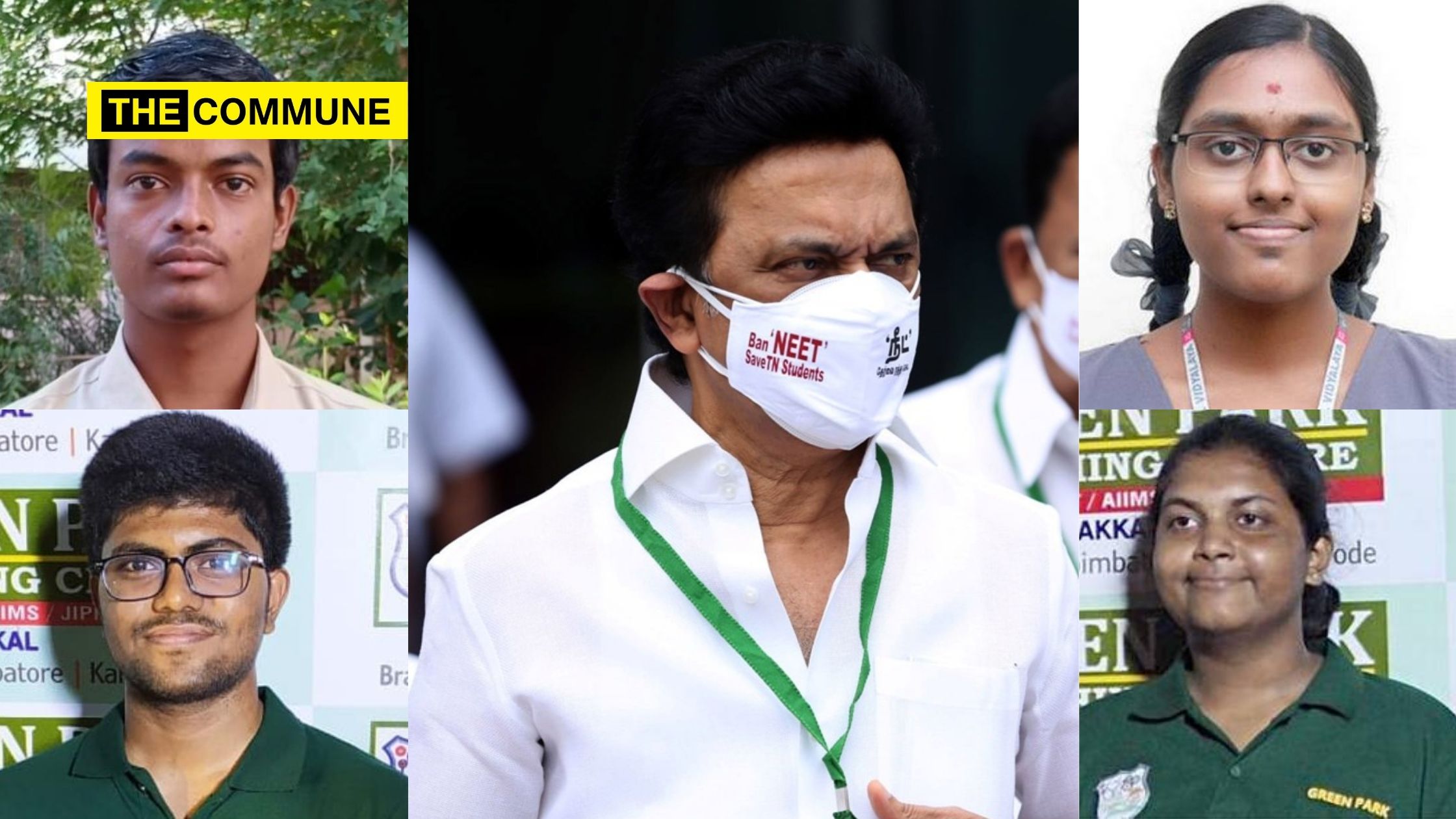
The results of the National Eligibility cum Entrance Test (NEET) for the year 2020 were declared on Friday (October 16).
Tamil Nadu where Dravidian political parties have been doing politics over NEET asking for the scrapping of the exam saw 57.44% students clearing it, a 8.87% increase from last year’s 48.57%.
Srijan R, a native of Vellakovil in Tirupur district secured the all India 8th rank with a score of 710 out of 720 and a percentile of 99.99. Mohanaprabha Ravichandran scored 705 securing the 52nd rank while G Swetha from the state secured 62nd rank with a score of 702.
In a remarkable feat, N. Jeevith Kumar, and student of Silvarpatti Government Higher Secondary School in Theni district who studied in Tamil medium scored 664 out of 720. He has secured 1823 rank at the national level. This is is the first time a government school student from Tamil Nadu has made it to the top.
Jeevith Kumar’s father K. Narayanamoorthi is a goat herder while his mother N. Parameswari is a MGNREGA worker. He had joined a coaching institute in Namakkal. Jeevith Kumar had completed 12th std in 2018-19 academic year. In his first attempt at NEET he scored 190 marks.
Out of the 121617 students who had registered for the exam, 99610 appeared and 57215 have qualified.
A significant rise was observed in the number of candidates who took the exam in Tamil with a total of 17,101 candidates. 1,017 candidates took the exam in Tamil in NEET 2019.
Tamil Nadu has seen a consistent increase in the number and percentage of students clearing NEET. In 2018, the pass percentage was 39.56% with 45336 students clearing the exam. In 2019, it increased to 48.57% and this year 57.44% students have cleared the exam.
Following the poor performance of Tamil Nadu students in the previous year exams, owing to the sub-standard Samacheer Kalvi syllabus that rendered students ineligible to shine in competitive exams, the Tamil Nadu government undertook the exercise of revamping the syllabus and textbooks to bring it on par with CBSE standard. Teachers were also trained on the new syllabus and many coaching facilities for rural students were opened to prepare for NEET.
Earlier, professors who were part of the textbook committee of the Tamil Nadu School Education Department had told that, 97% of the questions in biology, chemistry and physics in this year’s NEET were from the textbooks of the Government of Tamil Nadu based on the new syllabus.
They have told that 87 questions (54% from class 11, 46% from class 12) in biology, 43 questions (47% from class 11, 53% from class 12) in chemistry and 44 questions (45% from class 11, 55% from class 12) in physics have been taken from the latest 11th and 12th textbooks brought out by the Tamil Nadu. Deputy Director of State Council of Education S Shameem, Research and Training (SCERT) had said that the Tamil Nadu textbooks had covered more questions this year than the NCERT textbooks.
In all, 174 questions of the total 180 were said to have been covered in the syllabus brought out by Tamil Nadu government for class 11 and class 12. The new syllabus is said to have bridged the gap establishing a level playing field.
The performance of Tamil Nadu students in NEET has come as a setback to political parties that have been doing unwarranted politics over the exam.
The Vishwa Hindu Parishad (VHP) in Jammu and Kashmir has welcomed the order given by the High Court on Friday (October 16), wherein the court has ordered a CBI probe in the Roshni land scam.
The Bench of Chief Justice Gita Mittal and Justice Rajesh Bindal ruled, “Given the nature of the crimes, the status of those who are involved, including the allegations of involvement of Ministers, legislators, bureaucrats, Government officials as well as the local police officials of Union Territory of Jammu and Kashmir, it is essential to do complete justice in the matter and to ensure confidence in the minds of the public that, in order to enable a fair, proper and complete investigation, the CBI should be requested to take up and proceed in the matter in accordance with law.”
This is said to be the biggest scam in the history of Jammu and Kashmir, and is estimated to have cost the state exchequer as high as ₹25,000 crores.
A Press Statement issued by Rajesh Gupta, Working President, VHP J&K and Ladakh reads,
Press statement of shri Rajesh Gupta, working president Jammu & Kashmir on the HC verdict regarding Roshni Scheme: pic.twitter.com/fU4mLv4zMf
J&K High Court, while declaring the infamous ‘Roshni Scheme’ (popularly known as ‘Roshni Scam’), as invalid and illegal; have entrusted its further investigation to CBI. With this, general public of J&K is hoping for the retrieval of all the state land, and also legal remedies for conspirators and beneficiaries.
In 2001, the then government of J&K, announced with much hype, a self-proclaimed revolutionary, mother of all schemes, aimed to generate a revenue of ₹25,000 crores to be used to set up hydropower projects in J&K (which actually generated only less than ₹100 crores), by giving ownership of State land under illegal occupation of encroachers. The Rules of the Act, illegitimately, were amended at the whims and fancies of people in power multiple times, by all major Kashmir centric politicos till 2007 to include their supporters and kins as beneficiaries.
As detected by Comptroller & Auditor General of India in the year 2013, in a deep contrast between Jammu & Kashmir regions, ownership rights of approximately 33,000 kanals of state land were vested to state blessed encroachers in 10 districts of Kashmir province but around 6 lacs kanals of land (around 20 times that of Kashmir province) was regularised in favor of encroachers (with a sizeable number belonging to different districts of Kashmir region) in 10 districts of Jammu province. In Kashmir 100% of the beneficiaries were Muslims as Hindus stands forcefully expelled from the region but surprisingly in Jammu province where Hindus account for 75% of the population, they comprised of less than 10% of the beneficiaries.
Hon’ble High Court’s order for a conclusive investigation into all aspects of this scam by CBI, along with strictures on modus operandi of investigation agencies of erstwhile state of J&K, with directions to the U.T. Government to extend all cooperation to CBI for their investigation processes has raised hope among law-abiding citizens of J&K U.T., who were earlier treated as children of lesser God.
Kashmir centric leadership of J&K comprising all political parties who have now joined hands with their self proclaimed ‘Gupkar Declaration’ have not only collided for land jihad for demographic change of J&K and now have adopted a criminal silence on the expose.
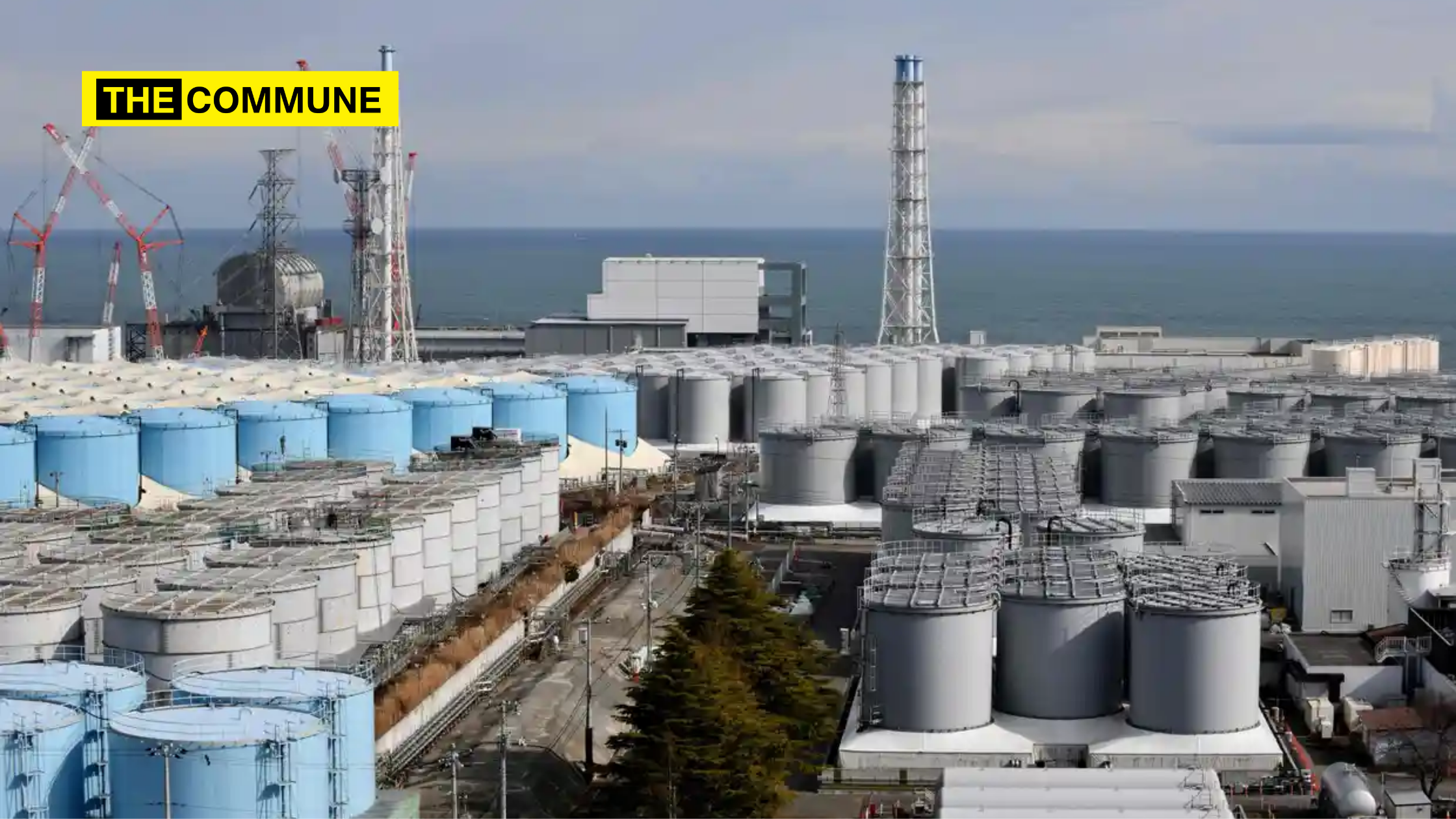
Japan is all set to release Fukushima reactor’s treated water into the sea by 2022. A lot of neighbouring countries and environmentalists have disapproved of this move, since it is not completely safe. All but one radioactive isotope have been removed with water, which does not render it completely safe.
The decision ends years of speculation over what to do with the more than one million tons of water that were treated after the power plant was severely damaged and suffered a meltdown due to the massive earthquake and ensuing tsunami in 2011.
Japanese Industry Minister Hiroshi Kajiyama said no formal decision has been made, but that the government planned to move quickly. “Decommissioning of the Fukushima Daiichi plant is a major premise for restoration in Fukushima from the nuclear disaster. To prevent any delays in the decommissioning process, we need to make a decision quickly,” said Kajiyama during a news conference.
As of last month, 1.23m tonnes of water, which becomes contaminated when it mixes with water used to prevent the three damaged reactor cores from melting, were being stored in 1,044 tanks, with the amount of wastewater increasing by 170 tonnes a day. The water at Fukushima Daiichi will be diluted inside the plant before it is released so that it is 40 times less concentrated, with the whole process taking 30 years, according to the Yomiuri Shimbun newspaper.








#SaveAnnaUniversity: From whom? The IoE controversy explained
Yet again, politicians belonging to the Dravidian parties are up to what they are good at – playing unwarranted politics over education by blocking reforms and establishment of institutions that can help improve the quality of education and students. Decades back, they opposed the setting up of Jawahar Navodaya Vidyalayas that would have provided cheap and best residential education with international exposure to rural poor students of Tamil Nadu. Now, they are opposing upgrading of Anna University into an ‘Institute of Eminence’ that can make it a world class institution.
What is an ‘Institute of Eminence’?
The ‘Institute of Eminence’ was announced by the then Finance Minister Arun Jaitley in his budget speech in February 2016 to empower higher educational institutions of the country become world class education and research institutions. This announcement came in the wake of no Indian university finding place in the top 200 of World University Rankings.
Under this scheme, 20 institutes (10 public and 10 private) recognized as ‘Institutes of Eminence’ (IoE) will enjoy complete academic and administrative autonomy. Each public institute under this scheme will receive ₹1000 crores worth grants over 5 years from the Ministry of Education for the purpose of enhancing the research infrastructure, teaching capabilities, start new disciplines, train faculties, fund fellowships, incubate innovations and businesses, invite foreign faculty for lectures, collaborate with foreign universities, etc.
An Empowered Expert Committee comprising Harvard Business School professor Tarun Khanna, former Director of Gurgaon-based Management Development Institute Dr. Pritam Singh and Chancellor of University of Houston System Renu Khator as members and headed by Former Chief Election Commissioner N. Gopalaswami identified 20 institutes (10 public and 10 private) from around 120 institutes including Central Universities, State Universities, IITs, and private universities.
As of August 2019, 8 public institutions have been declared as ‘Institute of Eminence’. These include: Banaras Hindu University, Indian Institute of Science Bengaluru, IIT Bombay, IIT Delhi, IIT Kharagpur, IIT Madras, University of Delhi and University of Hyderabad.
Anna University, Chennai and Jadavpur University, Kolkata are the only two State Public Universities that have been selected for ‘IoE’ tag.
About Anna University
Anna University (College of Engineering, Guindy) is one of the oldest engineering colleges not just in the country but in the entire world. The College of Engineering, Guindy was established in 1794 as School of Survey. Subsequently, it became Civil Engineering School in 1858 and was brought under the Madras University in 1859. It became College of Engineering in 1861 with the addition of mechanical engineering course.
The institute gained the name Anna University through the Anna University Chennai Act 1978, thus bringing the institute under the Tamil Nadu government’s control.
Today, Anna University comprises of four main constituent campuses: i) College Of Engineering, Guindy; ii) Alagappa College of Technology, Guindy; iii) School of Architecture and Planning, Guindy; and iv) Madras Institute of Technology, Chromepet.
It is for these four colleges that ‘Institute of Eminence’ tag (IoE) was offered to be conferred. However, this prestigious tag which would have upped the game of Anna University has been rejected, thanks to the Dravidian political parties.
Rhetoric and Facts
Contrary to the misinformation peddled by the Dravidian politicians and their accomplices in the media, a State public university recognized as ‘Institute of Eminence’ will provide for lots of benefits and will in no way infringe upon the State’s rights, policies and control over the institution.
Here are the top three rumours peddled by Dravidian political parties and the mainstream media.
Rumour 1: Anna University will come under Centre’s control
Truth: Anna University after getting the ‘Institute of Eminence’ tag will have greater autonomy by not having to adhere to the curriculum structure of University Grants Commission (UGC), a Central government body. It will be free from UGC inspections and guidelines which it is mandated to follow now.
Rumour 2: Tamil Nadu’s 69% reservation policy will not be implemented if Anna University gets ‘IoE’ tag
Truth: It has been clearly stated that the ‘IoE’ scheme for public institutions is meant to provide them with grant support to increase their competence at the global level. It does not interfere with the administrative aspects of the institute like admission procedure, recruitments, reservation of seats, etc., because such aspects are covered by the Anna University Chennai Act 1978, a State Act, which the Centre cannot touch.
Rumour 3: Students will have to pay more fees
Truth: As mentioned, the granting of ‘IoE’ status does not interfere in the administrative aspects like fee payment as that is also governed by Anna University Chennai Act 1978. It is the Syndicate comprising of Vice Chancellor and other Secretary-level officers of the state government that considers and reviews the financial requirements and approves the annual financial estimates of the university. So, any fee rise or fall has to be approved and mandated by the Syndicate. The Centre does not have any administrative jurisdiction over the institution.
Also, para 6.1c in the IoE guidelines clearly states that the institute will have the freedom to determine the fees for domestic students and that no student who gains admission should be turned away for lack of finance.
What do the ‘IoE’ guidelines say?
Para 5.3 of the ‘IoE’ guidelines states that State Public Universities set up under State Acts would continue to function under their respective Acts. So, administrative aspects like admissions, recruitment, fees, reservation policy, governance, etc., of Anna University will continue to function per the provisions of the Anna University Chennai Act 1978.
What did Vice Chancellor Surappa do?
Ever since Prof. M.K. Surappa, a renowned academician, was appointed as the Vice Chancellor of Anna University in April 2018, the Dravidian chauvinists especially the DMK has been trying to cow him down through their racist narratives just because he is a native of Karnataka.
The proposal for including Anna University as an ‘Institute of Eminence’ was prepared and submitted by Tamil Nadu government’s Higher Education Department along with Professors and Deans of Anna University in 2017, even before Prof. M.K. Surappa was appointed. This proposal was signed by the Principal Secretary of Higher Education Mr. Sunil Paliwal IAS who had forwarded the proposal to the Ministry of Education (Ministry of Human Resource Development then). Thus, this proposal was submitted officially with the knowledge of the Tamil Nadu government unlike the claims made.
After Prof. Surappa became the Vice Chancellor, he in his capacity as the head of the institution along with the Professors and Deans made a presentation to the Empowered Expert Committee in October 2018. After the first set of ‘IoE’ comprising just the IITs and two private universities were released, two universities falling under State governments – Anna University (Tamil Nadu) and Jadavpur University (West Bengal) found place in the expanded list of 10 public institutes.
Upon being selected, the Ministry of Education had sent a communication to the Tamil Nadu government and Anna University asking for a financial plan about how to make Anna University as an ‘Institute of Eminence’ sustainable in addition to the ₹1000 crores grant offered by the Centre. Since this is a State government established and administered institution, it is expected that the State also commits financially to the scheme. In the plan, it was stated that Anna University had the means to raise ₹1570 crores on its own. It was this communication sent by Surappa which was picked up by DMK chief MK Stalin to stir up the controversy.
Prof. Surappa wrote to the Tamil Nadu government requesting to send a letter of commitment to the Centre accepting the ‘IoE’ tag. The Tamil Nadu government formed a five member committee to finalize the matter. Prof. Surappa even met the Higher Education Minister K.P. Anbalagan around 4-5 times on the issue. As the letter of commitment was not received by the Centre, it gave a deadline of May 31 to send the letter.
Prof. Surappa had met Tamil Nadu Chief Minister Edappadi K. Palaniswami, Higher Education Minister K.P. Anbalagan and other members on May 20 and made a detailed presentation on the financial proposal that had already been submitted.
On May 29, Chief Secretary K. Shanmugam sent a letter to the Centre accepting the ‘IoE’ status in-principle. Meanwhile, Higher Education Minister K.P. Anbalagan wanted to ensure that the granting of ‘IoE’ status does not affect the 69% reservation policy of Tamil Nadu government. It was Prof. Surappa himself who took the initiative and wrote a letter to the Centre saying that the Tamil Nadu government is insisting that the state wishes to continue its reservation policy and requested the Centre to give a written confirmation that there will be no change in the reservation policy.
The Joint Secretary of Ministry of Education sent a letter to the Vice Chancellor in which it was highlighted that as per para 5.3 of the ‘IoE’ guidelines State public universities will continue to function as per the provisions of the respective state Acts which includes the admissions procedure, recruitments, governance structure, reservations and other administrative aspects.
Thus it has been clarified more than once that Anna University can continue with the existing scheme of reservation for admissions and recruitments. In essence, the status quo will remain unchanged.
Another great opportunity lost due to false propaganda by DMK
Minister K.P. Anabalagan on October 16 communicated that the Tamil Nadu government will not accept the ‘Institute of Eminence’ status stating that it ‘could’ affect the state’s reservation policy. He also added that there are ‘chances’ of introducing entrance exams and increasing fees. However, none of these apprehensions holds water as per the ‘IoE’ guidelines and the communication indicated from the Centre. What the Tamil Nadu government has done is to succumb to the false and mischievous propaganda peddled by the DMK chief MK Stalin and his son ‘actor’ Udhayanidhi Stalin. By this move, the Dravidian parties have once again flushed a glorious opportunity down the drain that would have provided Tamil Nadu students exposure at the international level.
Former Vice Chancellor of Anna University E. Balagurusamy heavily criticised the Tamil Nadu government’s move to reject the ‘IoE’ staus stating that the Tamil Nadu government has insulted Anna University by failing to recognize its significance. He said that it is very unfortunate that the Tamil Nadu government has let go of this opportunity and has appealed to reconsider its position. He said that nobody should do politics over this as Anna University is a public institution meant to benefit the public.