Home Blog Page 1598

Numbers don’t lie: Debunking the protests against farm laws, what the media is not telling you
For the year 2018-19, India saw a record food grain production of 285.21 million tonnes. The fourth advance estimate of production of food grains for the year 2019-20 placed the total food grain production at 296.65 million tonnes i.e., 11.44 tonnes more than what was achieved in 2018-19. The first advance estimates for the current year 2020-21 (kharif only) has put the total food grains production at 144.52 million tonnes.

Now, that is a lot of food that we have but where to sell them?

Earlier, farmers had to sell their produce at the local APMC mandis which are heavily politicised and controlled by commission agents and middlemen. These commission agents and middlemen having political influence gulp a major portion of the profit leaving the producer (farmer) parched.

But with the new farm laws, the farmers have been empowered by giving them the choice to sell their produce where they get a better price. Those who want to sell in the APMC can continue to do so and those wanting to explore the market have been given the choice to. What these farm laws have done is to create one more route for the farmer to sell the produce and realize higher incomes.

Also, how much can the government alone buy? Even after the government procures grains through Food Corporation of India (FCI) to ensure food security and to maintain a buffer stock, tonnes of food grains remain left to be sold. Doesn’t it make sense to make these grains available to individual private small and medium businessmen to be sold in the open market for consumption?

So, if these farm laws are a boon to the farmer then why are the ‘farmers’, especially those from Punjab protesting in Delhi?

Here are some numbers that sheds some light.

Food grain production and GVA

The 5 states that topped food production for the year 2018-19 are:

State

Total Food Grain Production

(million tonnes)

Uttar Pradesh

5.4

Madhya Pradesh

3.2

Punjab

3.1

Rajasthan

2.1

Haryana

1.8

(Source: RBI Data Handbook)

The Gross Value Added in Agriculture and Allied Industries (GVA) by these states for the year 2018-19 are:

State

GVA in Agriculture and Allied Industries

(₹ in lakh crores)

Uttar Pradesh

2.2

Madhya Pradesh

1.6

Punjab

0.89

Rajasthan

1.5

Haryana

0.81

(Source: Agricultural Statistics at a Glance 2019)

From the data, it can be seen that Punjab, which produces 2 million tonnes more food grains than Rajasthan has a GVA much less than the latter. Haryana which produces 1.7 times less food grains has a GVA almost equal to Punjab’s.

Even states with lesser food grain production compared to Punjab have a better GVA in agriculture and allied sector. Andhra Pradesh which recorded a food grain production of 1 million tonnes (3.1 times more than Punjab) had ₹1.8 lakh crores GVA. Tamil Nadu with 1.03 million tonnes food grain production recorded a GVA of ₹1.2 lakh crores in the agriculture and allied sector.

Now, the question that arises is – how come a state, that benefitted the most from the green revolution emerging as the wheat bowl of India have lesser GVA in agriculture sector when compared to other states. Who is eating away the money in between?

The middlemen/commission agents, known as ‘arhtiyas’ in Punjab.

The powerful middlemen and the hapless farmer

The middle men not just eat into the farmer’s gains but also into the nation’s GVA. They take large chunks of the profits as commissions that should ideally reach the farmer.

A report by Tribune India notes how the presence of middlemen in Punjab is killing the aspirations of farmers to increase their incomes. One of the farmers was quoted saying that they are compelled to sell their produce to middlemen who sell it at double the rate in the market leaving the farmer with nothing.

In 2013, the vegetable growers of Punjab decided to explore avenues for direct marketing of their produce. “We are exploited by middlemen, who take large chunks of our profits as their commission. To get rid of this menace and to achieve various benefits from the central government policies for the vegetable growers of the country, we have joined hands with the Vegetable Growers Association of India” Jaswinder Singh Sangha, newly elected president of Punjab Vegetable Growers Association was quoted saying in the Business Standard.

The middlemen walk away with huge commissions for virtually doing nothing. They have no significant role in procuring the rice or wheat produced by the farmer. All that these middlemen do is provide for contract labour in the mandis. The FCI which procures the food grains from the farmer at Minimum Support Price (MSP) routes its payment to the farmers through the ‘arhtiyas’ who take a 2.5% commission on the payment.

And these arhtiyas are a powerful lobby in Punjab. Back in 2010, when the FCI decided to directly pay the farmer bypassing the middlemen, they threatened to boycott procurements from the farmer and successfully lobbied the Punjab government. In the next few days, the FCI retracted its order saying “direct payment order of minimum support price to farmers is kept under abeyance for Punjab and Haryana up to Sept 30, 2011 or till further orders”.

A 2015 study by Punjab Agricultural University elaborates on the modus operandi of the commission agents. It states

The most common mode of exploitation of farmers is the indirect payment system, wherein the commission agents receive payment of the sale of produce from farmers. Other tools of exploitation like non-registration as moneylenders, system of indirect payment of farm produce, non-issuance of J-form, slip mechanism, multiple licences and multiple business constitute the modus operandi through which the business of commission agents flourishes.Page 59, Commission Agent System: Significance in Contemporary Agricultural Economy of Punjab, Economic and Political Weekly.

The study also explains how paying farmers through the commission agents, an exploitative mechanism remains the backbone of the procurement system in Punjab. Commission agents with their political clout have managed to increase their commission rates from 1.5% to 2.5%, time to time by pressuring the state government.
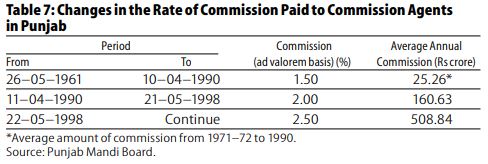
Source: Dr. Sukhpal Singh and Shruti Bhogal’s paper in EPW

Another issue that the study points out is that most of the commission agents are also moneylenders not registered with the government, acting detrimental for both the farmers and the government. “The prime motive of commission agents for not getting registered is to evade taxes, pursue malpractices like exorbitant rate of interest, use of blank promissory notes, and so on.”, the paper says.

The commission agents also follow a practice of called ‘damami’ during times of low productivity by which these commission agents charge the farmer equivalent to the previous year’s commission, irrespective of the low produce.

There are also other ways through which the farmer is essentially bound to the middlemen. The slip mechanism is one. Farmers in need of money for their day-to-day needs are not paid cash but are given ‘slips’ for obtaining items from their owned or connected shops where goods are sold at a much higher price than market rate.

The study notes

“..the commission agents earn about Rs 1,034 crore, amounting to an average of Rs 5.11 lakh for each commission agent in the state. Thus, during 2012–13 the commission agents earned about Rs 2,407 crore from various sources. Each commission agent received about Rs 12 lakh per annum by acting as commission agent. Above all, the commission agents enhance their income through slip mechanism, supply farm inputs and domestic articles and act as middlemen in all transactions related with farming and domestic articles, cheating in weighing and pricing, etc. There is a need to inhibit the commission agents which have now become an integral part of the agrarian economy, and are flourishing at the expense of the government and farmers in Punjab.” – Page 61, Commission Agent System: Significance in Contemporary Agricultural Economy of Punjab, Economic and Political Weekly.

None of the mainstream media has brought this out in light. Worse, some of them have portrayed this oppressive relationship between the arhtiyas and the farmer as something that is ‘friendly’. An Indian Express article dated December 3 noted that the arhtiyas and farmers ‘enjoy a friendship and bonding’ going back decades adding that they take care of the farmers’ financial loans and timely procurement at ‘adequate prices’.

Political parties like the Congress and Shiromani Akali Dali (SAD) too, as expected are on the side of the middlemen. Punjab Chief Minister Amarinder Singh had justified that the arhtiya system was the “backbone of Punjab’s successful agricultural model, with the farmers and arhtiyas sharing a very close bond”.

Farm laws – shifting the balance in favour of the hardworking farmer

The farm laws passed by the Centre will break the monopoly of the commission agents and relieve the farmer from their mercy. With the definition of ‘trade area’ getting changed to ‘any place of production, collection, and aggregation of farmers’ produce’, farmers can directly sell their produce to anyone they want at the farm gate. By giving the option to the farmer to directly trade with anyone in the market who offers a better price, the middlemen who have been gobbling up the farmer’s profits will be hit.

There are a total of 28,000 licensed arhtiyas in Punjab who wield great social, economic and political power. As soon as the farm bills were passed by the Parliament, the Arhtiyas Association passed a resolution condemning the Centre. It is these arhtiyas and the farmers tied to them (and instigated by them?) who are behind the protests in Delhi, not the hapless farmer who is longing for getting out of the clutches of these arhtiyas.

Ofcourse, those comfortable with the arhtiya system can continue to sell their produce through commission agents. Mandis will continue to function and trading through these state government run mandis will continue as before. The Centre has categorically stated that MSP will not be affected by these laws and that the government will continue to procure from the farmers at MSP rates. In fact, the government paddy procurement from Punjab accounted for 20.28 million tonnes or 67% of the 31.8 million tonnes of paddy bought across the country as per the Press Information Bureau release.

Many experts have called for reducing the role of middle in procurement and agricultural trade. Former RBI Governor Raghuram Rajan too in 2014 said the there is a need to wedge the gap between what the farmer gets and what is paid by the household by reducing the role, number, and monopoly power of middlemen as well as by improving logistics.

HS Dhaliwal, Director of Punjab Agricultural Management and Extension Training Institute (PAMETI), said that agriculture in the state had achieved production heights but farmers who toiled hard make meagre profits as middle men walk away with major share.

He said that there was a pressing need to reduce the role of middle men and encourage farmers to sell their produce directly to consumers.

The new farm laws aims to do precisely that – empower the poor farmer by giving him the option to directly sell the produce to any trader or consumer who offers a better price. This will not just shift the balance of power towards the poor farmers of Punjab but also help in increasing the state’s share of the GVA in agriculture and allied industries.

But this true picture has been lost in the noise behind the protests by ‘farmers’ who are just people wanting the exploitative status-quo to continue.

What the government should now do is to bring out this picture and address the genuine concerns of farmers entangled in the arhitya system. It should not let the protests get hijacked by inimical forces to become another Shaheenbagh episode.

This article was inspired from the Twitter thread of Krishna Kumar Murugan (@ikkmurugan).


Hindu priests caned by temple staff in Andhra Pradesh

The temple trust chairman in Bandi Atmakur Mandal Prathap Reddy, on Monday (December 30) beat two Hindu priests, Murugu Phani Sarma and Chakrapani Sarma, with a cane.

As per a report by The New Indian Express, temple staff Eswaraiah and Nagaraju also joined Reddy in the act of caning the temple priest. 

The priest had apparently questioned the chairman for violating the Covid-19 regulations and issuing tickets for darshan even after 5 PM.

Both the wounded priests were later taken to the Nandyal government hospital and a case has been filed with regards to this incident according to Superintendent of Police (SI) Raja Reddy

In recent times there have been multiple reports of priests being physically assaulted in Andhra Pradesh (AP) has come into light.

In November 2018, a 68-year-old Hindu pujari of the Sai Baba temple in Warangal was attacked by his Muslim neighbour over the utilization of loudspeaker at the shrine. The priest and later he succumbed to his injuries. 

In September 2020, miscreants vandalized the idol of Nandi kept at the Abhaya Anjaneya Swamy Temple in Agara Mangalam village in Gangadhara Nellore Mandal of Chittoor district. The same month also witnessed the burning of Lakshmi Narasimha temple chariot in Andhra Pradesh.

Law to prohibit unlawful conversion in UP introduced 4 days ago put to use

Just days after Uttar Pradesh Governor Anandiben Patel had given assent to the Uttar Pradesh Prohibition of Unlawful Conversion of Religion Ordinance, 2020, against forcible or fraudulent religious conversions, the UP police has made its first arrest under the new anti-conversion law, reports The Deccan Chronicle.

A father had raised a complaint his daughter was being regularly harassed in a bid to change her religion, officials said on Thursday (December 3).

“This is the first arrest under the new law. Accused Owais Ahmad was arrested from the Richha railway gate in the Bahedi area here on Wednesday. He was produced before a local court and was sent to 14 days judicial custody,” Deputy Inspector General (DIG) of Police, Bareilly, Rajesh Kumar Pandey said.

Under the Vidhi Virudh Dharmantaran 2020 ordinance, a person could face a prison term of 5-10 years for indulging in forced religious conversions and it also carries a maximum fine of Rs 50,000 under different categories.

The case was registered at the Devarniya police station in Bareilly district on November 28 against Ahmad, under the state new law.

Based on a complaint from Tikaram, the father of the Hindu girl who happens to be a resident of Sharif Nagar village in Devarniya, a case was registered under sections of the Indian Penal Code and the anti-conversion law.

The complainant has accused Ahmad, a resident of the same village, of trying to convert his daughter through “allurement”, police said. The boy and girl had gone to same school and had studied together in Class 12.

As per the complaint, Ahmad started pressurising his daughter three years ago to undergo religious conversion and perform ‘nikaah’ (marriage) with him. However, when the girl refused he threatened to kidnap her which is quite similar to the Nikita Tomar case that took place in Haryana.

The complainant’s daughter married someone else in June but Ahmad continued to harass her and her family members, he has alleged.

Under the Uttar Pradesh Prohibition of Unlawful Conversion of Religion Ordinance, 2020, a marriage will be declared “null and void” if the conversion of a woman is solely for that purpose to change her religion and if a change of religion is required after marriage they must apply to the district magistrate.

The law was implemented just four days ago by the Yogi Adityanath government in the state. 

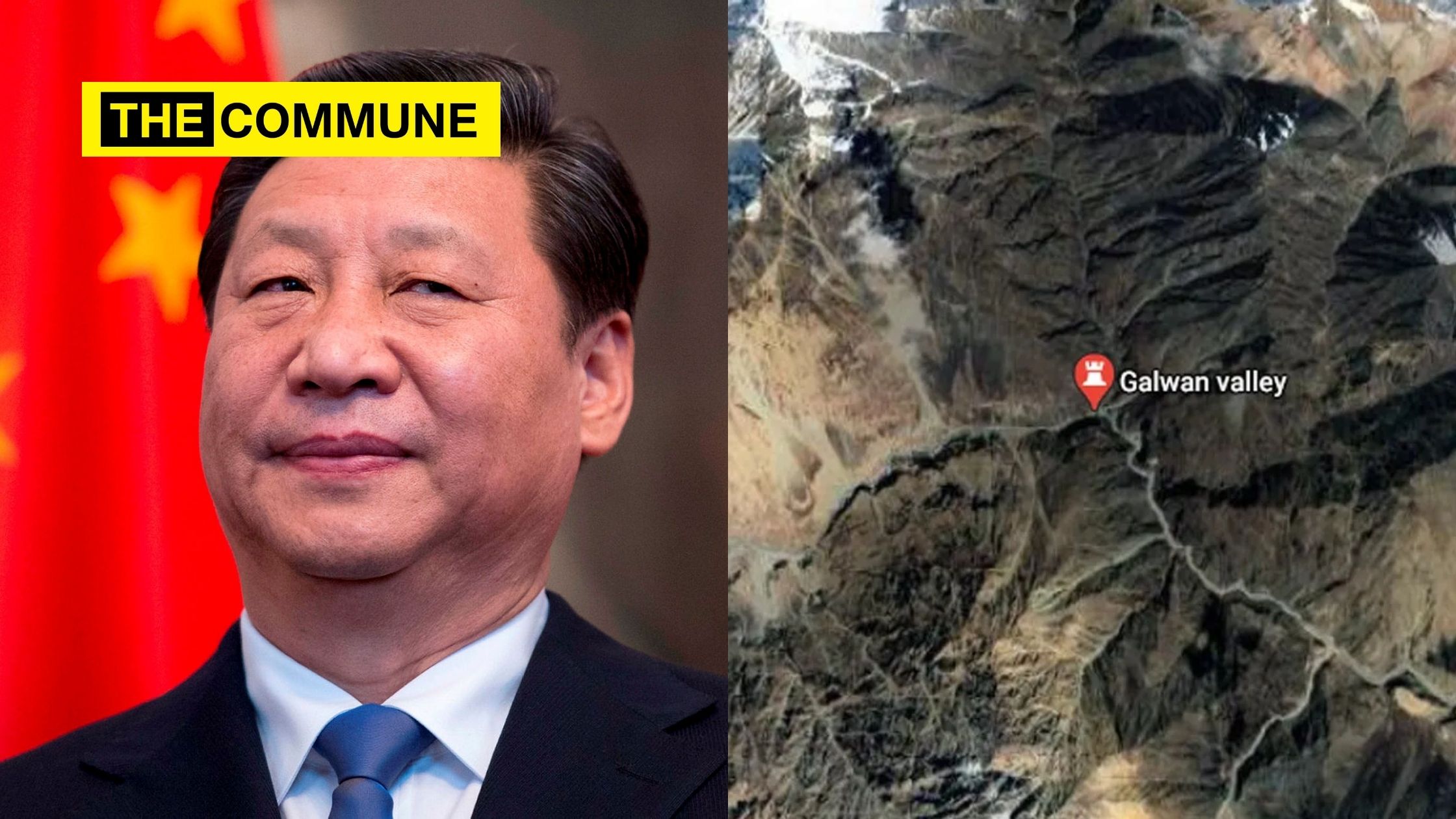
US Congressional Commission reports says China planned Galwan Valley clash

The annual report released by the United States (US) Congressional Commission has said that the Chinese Communist government had possibly “preplanned the Galwan Valley clashes” in June this year, as reported by Swarajya.

On June 15 2019, the Chinese People’s Liberation Army (PLA) mounted an ambush on the Indian Army at Galwan who had gone to verify Chinese withdrawal of posts as part of a disengagement measure.

This attack led to the death of 20 Indian soldiers and as per reports, the Chinese PLA suffered 35 death. However, China to this day has not acknowledged the number of soldiers who died on June 15.

“The proximate cause of the clash appeared to be India’s construction of a strategic access road to support troops stationed along the LAC. China has also built extensive infrastructure along the LAC in recent years. In the aftermath of the clash, Beijing asserted sovereignty over the entire Galwan Valley, a new claim and significant change to the territorial status quo,” the report says.

On the possibility of China planning the Galwan clashes, the report says: “Some evidence suggested the Chinese government had planned the incident, potentially including the possibility for fatalities,”

The report also has sensitive satellite images that showed China had already built up large force levels, ‘potentially 1,000 PLA soldiers’ the week before the clashes.

Speaking of Beijing’s troubles with its other neighbours the reports said that “Beijing ramped up its multiyear coercion campaign against its neighbours, provoking military or paramilitary standoffs with countries from Japan to India and much of Southeast Asia.”

“Shortly after China’s defence minister urged Beijing to use military force to stabilise its periphery, a violent clash on the China-India border in June led to the first loss of life between the two countries since 1975”, the report added. 

BJP General Secretary George Kurian calls for anti-conversion laws in Kerala

With cases of conversion by marriage increasing in Kerala, the Bharatiya Janata Party (BJP) State General Secretary George Kurian has called for anti-conversion laws to be introduced in Kerala.

Kurian wants similar laws that Uttar Pradesh government introduced. However, he was also clear that the BJP is not against love marriages, but is against religious conversion happening just for marriage purposes.
 
“21 people from Kerala had travelled to Iraq and Syria to join ISIS and about half of them were Christian converts”, he said. Kurian pointed out that these figures were put out in public by the Christian church.
 
It was the Catholic Church in Kerala that first reported systematic Love Jihad cases were Hindu and Christian women are lured into marriage and conversion to Islam as a mandatory process.

There are reports of organisations like the Popular Front of India (PFI) providing financial aid to such activities and that is why many states are bringing legislation to counter the love jihad and make it an illegal activity.

What RJ Balaji didn’t tell you in Mookuthi Amman

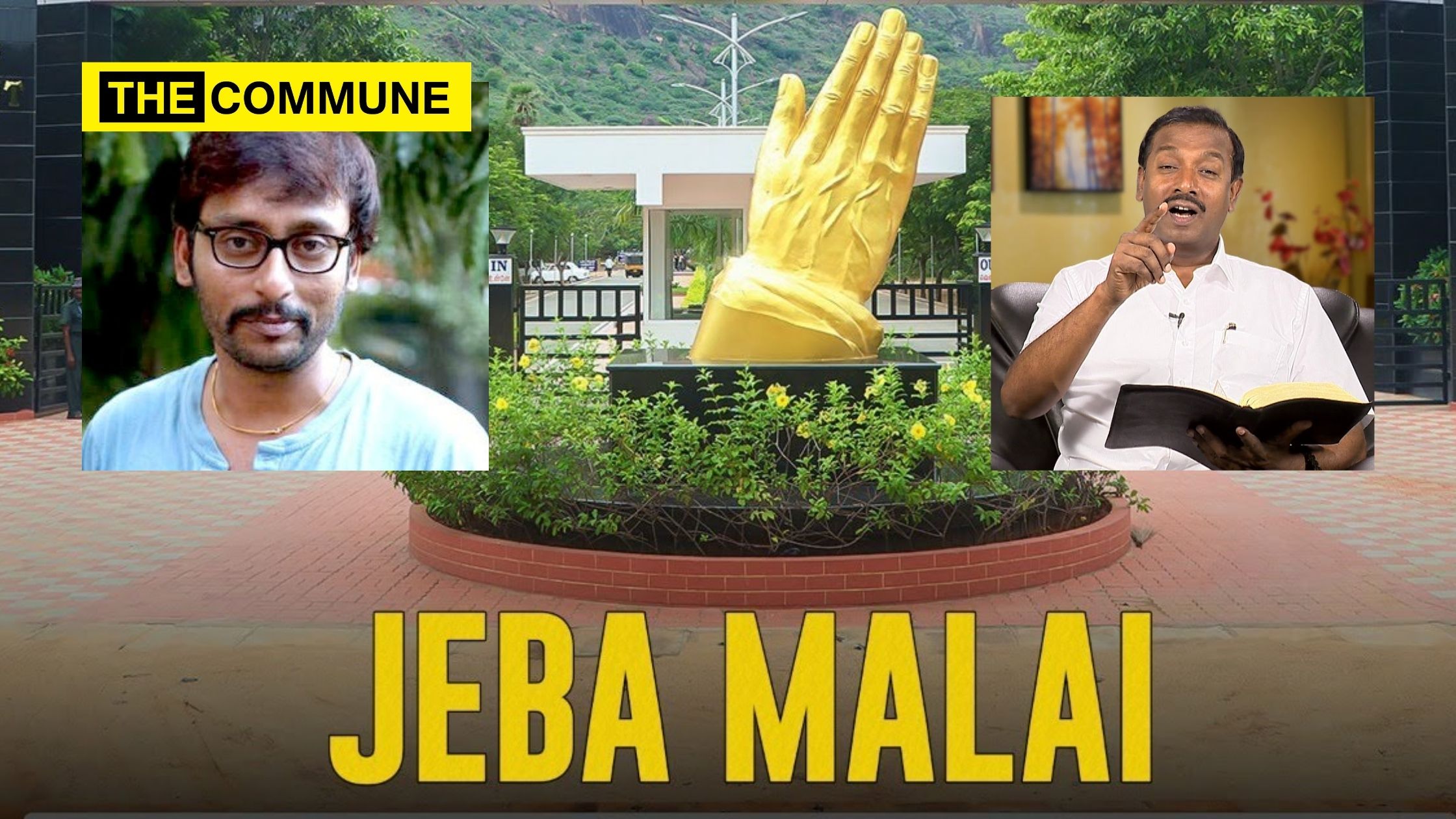
In the recently released Tamil movie Mookkuthi Amman, the director of the movie RJ Balaji took a sly dig at Isha Yoga’s Sadhguru Jaggi Vasudev and Nithyananda while retracting the scene mocking at Christian missionary shenanigans.

Since then, many have called out the RJ-turned-actor-cum-director for his double standards and being silent on atrocities committed by religious fanatics.

In this context, another shocking information has come to light where the famous tele-evangelist Mohan C Lazarus has bought a mountain and is creating a new Christian town!

The village of Thoranamalai near Kadayam in Tenkasi district is famous for its Murugan temple. It is believed that Agathiyar taught his disciple Theraiyar Siddhar all about Siddha medicine in Thoranamalai, which is rich in various types of herbs.

It has been reported that Christian evangelist Mohan C Lazarus is about to usurp a 108 acre hill near the special Hindu place of worship and is calling it as ‘Jebamalai’ (prayer mountain).

On the website of the Jesus Redeems organization, it says

“The Lord spoke to Brother [Mohan C Lazarus] while he was praying, “I would give you a mountainous area”. Exactly did He give one at ‘Keezha Maathapuram’ in Kadayam area, approximately 10 kms from Courtallam through a brother who had purchased it and donated for the “Jesus Redeems” at free of cost.”, the website says.

“God had promised Bro. Mohan C. Lazarus while he was praying that He would give him a mountainous region and that mountain is to be formed into a Prayer Mountain. As per the promise, in the year 2002, God gave a 100 acres of mountainous region near Courtallam, Tamil Nadu.” says the website.


The website also notes that “Prayer Walk Garden”, “Prayer Tower”, “Prayer Village”, “Prayer Palace” (with a seating capacity of 3,000 ) “Prayer cave” is likely to be built and that two “Prayer Towers” and a “Gethsemane Prayer” is already functional. For the purpose of lodging for those who attend the camp, ‘Mordecail Mansion’ and ‘Esther Mansion’ are also being built.

Jebamalai - Route Map

Mohan C Lazarus is a problematic Christian evangelist who runs the missionary organization, Jesus Redeems, which receives funding from abroad through FCRA. He is known for his hate speech against Hindus. controversy by claiming that prostitution is rampant in temples. Mohan C Lazarus also said that Satan’s grip is tight only in Tamil Nadu as it is the state with the highest number of temples in India.

The Legal Rights Protection Forum (LRPF), a voluntary organization working in the area of securing rights of Dalits and tribal communities, has sent an application to the Union Home Ministry seeking the revocation of the license of the Jesus Redeems organization for violating FCRA rules and fomenting religious hatred.


“Naan vandhutten nu sollu”: Superstar Rajinikanth confirms political entry, to start party in January 2021

Superstar Rajinikanth on December 3 announced that he would be floating his political party in January 2021 and that an announcement would be made on December 31.

In a message on social media in Tamil, Rajini said “In the coming Assembly elections, with the massive support of the people we will emerge victorious, and a honest, genuine, transparent, corruption-free, secular, spiritual politics formation is assured. Wonders.. Miracles.. will happen!”

He ended with the hashtags “Maathuvom Ellathayum Maathuvom” and “Ippo illena eppovum illa” roughly translating to “Let’s change everything” and “If not now, then never” respectively.

Tahawwur Rana, key 26/11 conspirator wanted Pakistan’s top military honor for the 9 jihadists

Tahawwur Rana, a key conspirator of the 26/11 Mumbai terror attacks had demanded a top medal for his role in the strikes, India Today reports

The US government has informed a federal court that Rana also wanted the nine Lashkar-e-Taiba (LeT) terrorists who died to be awarded Pakistan’s highest military honour, the Nishan-e-Haider. 

This admission means of clear involvement of the banned Islamic terror group LeT and the Pakistani military and its notorious intelligence agency, the Inter-Service Intelligence.

India has been chasing for Rana’s extradition for a very long time to seek answers. Jacqueline Chelonian, a US District Court Judge in Los Angeles, announced that a hearing will take place on 12 February 2021.

“Referring to a 1971 attack on his school in Pakistan, (David) Headley told Rana, that he believed he was ‘even with the Indians now’. In response, Rana said that they (the Indian people) deserved it. Also, in September 2009, the FBI intercepted Rana telling Headley that the nine LeT attackers who had been killed during the attacks should be given Pakistan’s highest military honour,” said US attorney Nicola T Hanna, who made submissions to a court in Los Angeles supporting Rana’s extradition to India.

As per details that are emerging and also long suspected by India, Rana had allowed Headley to use his business as a cover to conduct surveillance so the LeT terrorist attacks in Mumbai and also other parts of the country.

Rana ran an immigration service business and Headley had travelled to India in 2006 on the pretext to open operation of Rana’s business.

However, it was a cover for an extended stay in Mumbai that allowed Headley do comprehensive video surveillance of different places including the Taj Mahal Palace Hotel.

Inception’s dream designer comes out as trans on Twitter

Inception star Ellen Page has come out as trans and has identifying himself as Elliot Page, going forward. The 33-year-old from Nova Scotia, Canada said that his decision to come out as trans has come after a long journey and has been created with a great amount of support from the LGBTQIA community.

“I love that I am trans. And I love that I am queer,” Page said in a statement on social media. “I can’t begin to express how remarkable it feels to finally love who I am enough to pursue my authentic self,” Page wrote. “I’ve been endlessly inspired by so many in the trans community. Thank you for your courage, your generosity and ceaselessly working to make this world a more inclusive and compassionate place.”

“The more I hold myself close and fully embrace who I am, the more I dream, the more my heart grows and the more I thrive,” added Page, who said his pronouns are “he” and “they.” He is the star of Juno, Inception and The Umbrella Academy, and will continue to play the role of cisgender woman Vanya Hargreeves in The Umbrella Academy, the Netflix series about a family of superheroes that’s become one of the streaming service’s biggest hits.

Elliot is known for his role in Inception in which he plays an architecture student named ‘Ariadne’ who is tasked with designing the dream’s labyrinth.

Government constitutes High-level Ministerial Committee for implementation of Paris Agreement

In another move that re-affirms India’s seriousness to ‘walk the talk’ on climate change, the Ministry of Environment, Forest and Climate Change (MoEFCC) has constituted a high-level inter-ministerial Apex Committee for Implementation of Paris Agreement (AIPA) under the chairmanship of Secretary, MoEFCC.

The purpose of AIPA is to generate a coordinated response on climate change matters that ensures India is on track towards meeting its obligations under the Paris Agreement including its Nationally Determined Contributions (NDC).

Senior officials from fourteen ministries will serve as Members to AIPA who will oversee the progress in implementation of India’s NDC and receive periodic information updates to monitor, review and revisit climate goals to fulfil the requirements of the Paris Agreement.

Another key function of AIPA would be to operate as a National Authority to regulate carbon markets in India under Article 6 of the Paris Agreement, formulate guidelines for consideration of projects or activities under Article 6 of the Paris Agreement, issue guidelines on carbon pricing, market mechanism, and other similar instruments that have a bearing on climate change and NDCs. It will take note of the contributions of the private sector as well as multi-/bi-lateral agencies in the field of climate change and provide guidance for aligning their climate actions with national priorities.

The year 2021 would mark the beginning of implementation of the Paris Agreement and constitution of AIPA is central to strengthening the national systems and institutional arrangements for implementation and monitoring of climate actions. It will also ensure that India maintains its climate leadership as one the few countries in the world whose climate actions are consistent with the goals of the Paris Agreement.

(Published from PIB)