Home Blog Page 1594

Jack of all trades, master of all: Remembering the legend Cho Ramaswamy

The year was 1944.

A young man in his twenties went up to the director of the play and demanded that a meaty role be written for him. Thenmozhiyaal was the title of the play. The director however told the young man that there was no role for him and that it was not possible to fit him in any other role. But that did not discourage this witty young man. Irked, he replied “Well, then I will walk into every scene.”

The smirk on the face and the mischief in the eyes made the director perspire. The director hurriedly went to speak to the heavyweights of the drama troupe and mentioned the encounter with the young man. They asked him to calm down and not take him seriously.

“Don’t worry. Do you think that fellow will pull out such a threat?”

A voice from behind said “You’re damn right, I will. I need at least three scenes with dialogues for me.”

The whole set looked perplexed at the unfolding situation. Hurriedly, the director writes not three but five scenes for him.

“There is a problem. I am not able to come up with a name for your character.”

“Never mind. I will go with my name.” The character was named Cho.

This three lettered sobriquet stuck with him for eternity. These three letters would go on to define a legend who made a mark in every endeavour of his.

But how did he get the name ‘Cho’? Neelu, a popular drama actor and a close friend of Cho recounts in an interview to Times of India that as a boy, Cho was puny and weak. Elders in the house and his friends used to call him as “Chozha Brahmmahaththi” which is a reference to the king who was possessed by an evil spirit that made him abnormally thin and weak. Little did they realize that this Chozha Brahmmahaththi would go on to become an intellectual giant!

Beginning his career as an advocate at Madras High Court, he helped his father and grandfather in their law firm during his early years. Later he served as a legal adviser to T.T. Krishnamachari group of companies for fifteen years. But his interest towards drama made him shift his trajectory in life. Over a period of time, Cho became a well reputed name in the households of Tamil Nadu. He acted and directed twenty three plays, acted in more than a hundred films, wrote screen play for five films and directed another five.

With the launch of Thuglak magazine, his name however started spilling from the homes of Tamil Nadu to the streets! Be it the middle class mamas discussing politics in the living room or the working class at the tea-kadai benches, every conversation would be about Cho’s take on national and state politics. Laced with wit and humour he made politics cool. The humour in his speeches and writing were never slapstick or vulgar but was clean and usually self-depreciating which tickled ribs of people cutting across ages.

Though he was called out for his Brahmin lineage by the rationalist ilk, he was unapologetic about it just like his friend and the late Chief Minister Jayalalithaa. Nevertheless, he was never a Brahmin apologist. Through his plays like Sattiram Sonnadhillai (The Sastras Never Said So), he made a strong statement against casteism by exposing the hypocrisy of certain section of the Brahmins and their rigid and parochial mindset. His book Engey Brahmanan which was made into a series and telecasted in Jaya TV talks about what it takes to be a true Brahmin. His other play titled Yarukkum Vekkammillai (No One Has Any Shame) portrays how a society creates prostitutes and later condemns and ostracizes them. In this play, a young lawyer from a rich industrial family brings home a prostitute as his first case. As the events unfold, it turns out that the lady was driven to prostitution by the lawyer’s brother. An interesting aspect of the play is that it is a Muslim who stands by the side of the prostitute and exposes the elder brother. Such messages of social cohesion were part of many of his work in his later years.

His most well know political satire Mohammad Bin Thuglak, which was later made into a movie was the one that won him accolades. In the shows performed in the later years, he thanks the audience for making the play relevant even today.

Be it his plays or books, Thuglak the movie or Thuglak the magazine, he held a huge mirror towards us and made us question ourselves. He conveyed that the country will not progress unless its people do.

To elaborate on several of the hats that he donned and his contribution to the myriad fields he touched would require multiple books and cannot be condensed in a 1000 word article. Rarely do we come across such an eclectic personality. A lawyer, an actor, a dramatist, a director, a journalist, a political commentator and a kingmaker, Mr. Cho was not just a jack of all trades, he was a master of it all. The void he has left since his passing away remains unfilled and will remain so forever. It is the responsibility of every one of us to ensure that such a person is not lost to time and continue to remember him for his service to India and the Tamil society in particular.
Indian village teacher who won 2020 Global Teacher Prize gives away half of it to runners up

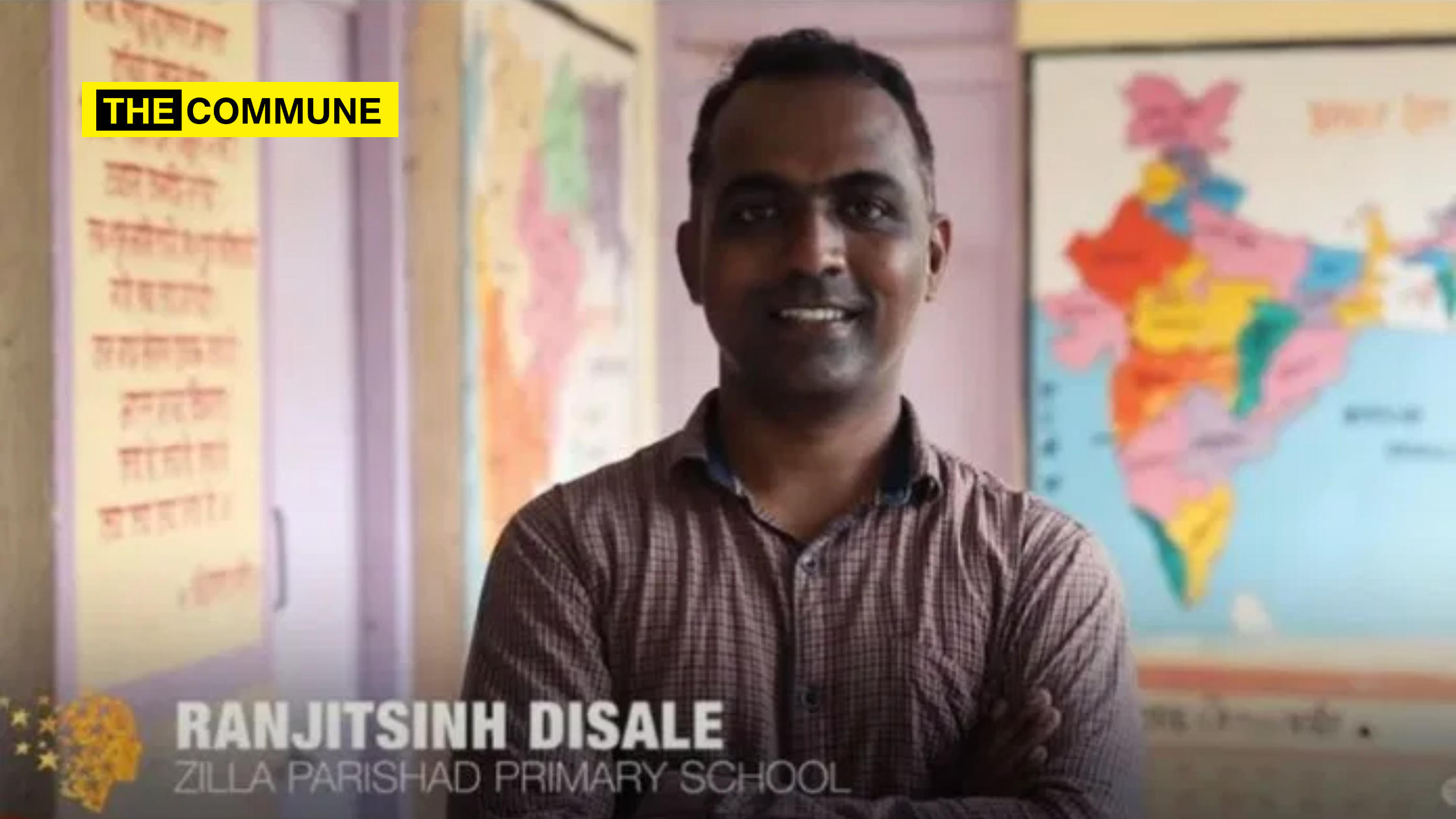
Ranjitsinh Disale, a teacher at Zilla Parishad Primary School, located in the village of Paritewadi in Maharashtra, has won the 2020 Global Teacher Prize by the UNESCO. He was selected amongst 12,000 nominations and applications, from over 140 countries around the world. The prize entitles him to be awarded $1 million, half of which he has vowed to give away to the runners up.

“The Covid-19 pandemic has exposed education and the communities it serves in a multitude of ways. But in this hard time, teachers are giving their best to make sure every student has access to their birthright of a good education,” said Disale, as per PTI. “Teachers are the real change-makers who are changing the lives of their students with a mixture of chalk and challenges. They always believe in giving and sharing,” he said. “I believe, together, we can change this world because sharing is growing,” Disale added.

He learned the local language of the village in order to translate class textbooks into his pupils’ mother tongue.
He also created unique QR codes on the textbooks to give students access to audio poems, video lectures, stories and assignments, greatly improving school attendance. His QR technology is now being rolled out more widely across India.

The Global Teacher Prize is awarded to an exceptional teacher who has made an outstanding contribution to the profession. This year’s Top 10 were selected from over 12,000 applications and nominations from over 140 countries around the world.

Widespread unrest in Paris after Macron’s new security bill passes

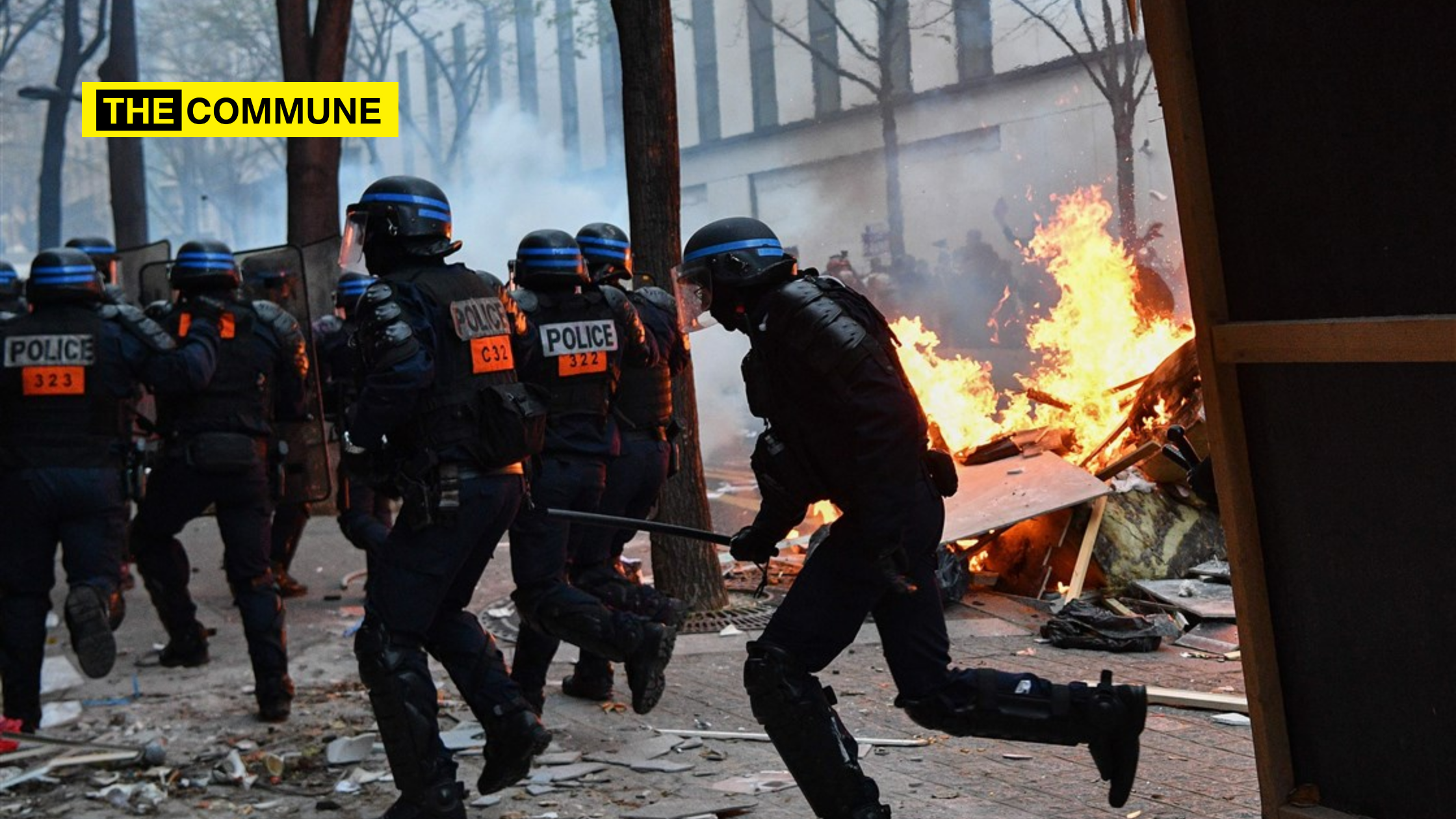
Nationwide protests erupted in Paris after the new Security Bill passed in Paris under the Emmanuel Macron government. The tensions are particularly intense because of the recent beating of a Black music producer by the police last month. Members of the Yellow Vests movement, which shook Macron with protests against economic hardship in France over the winter of 2018-2019, were also prominent in the rally.

Windows of a supermarket, property agency and bank were broken while several cars burst into flames along Avenue Gambetta as demonstrators marched towards Place de la République in eastern Paris, AFP reporters said. Nearly 100 rallies were planned nationwide on Saturday over the draft bill that would outlaw taking photos of police with malevolent intent. Opponents say the bill undermines press freedom to document police brutality.

Close to three hours of teargas was let out by the police to contain the protestors. It marked the second consecutive weekend of unrest in Paris, provoked by recent episodes of police brutality and President Emmanuel Macron’s security plans, which the demonstrators say would restrict civil liberties.

France has been hit by a wave of street protests after the government introduced a security bill in parliament that set out to increase its surveillance tools and restrict rights on circulating images of police officers in the media and online. The bill was part of Macron’s drive to get tougher on law and order ahead of elections in 2022. His government also said the police needed to be better protected from online hate.

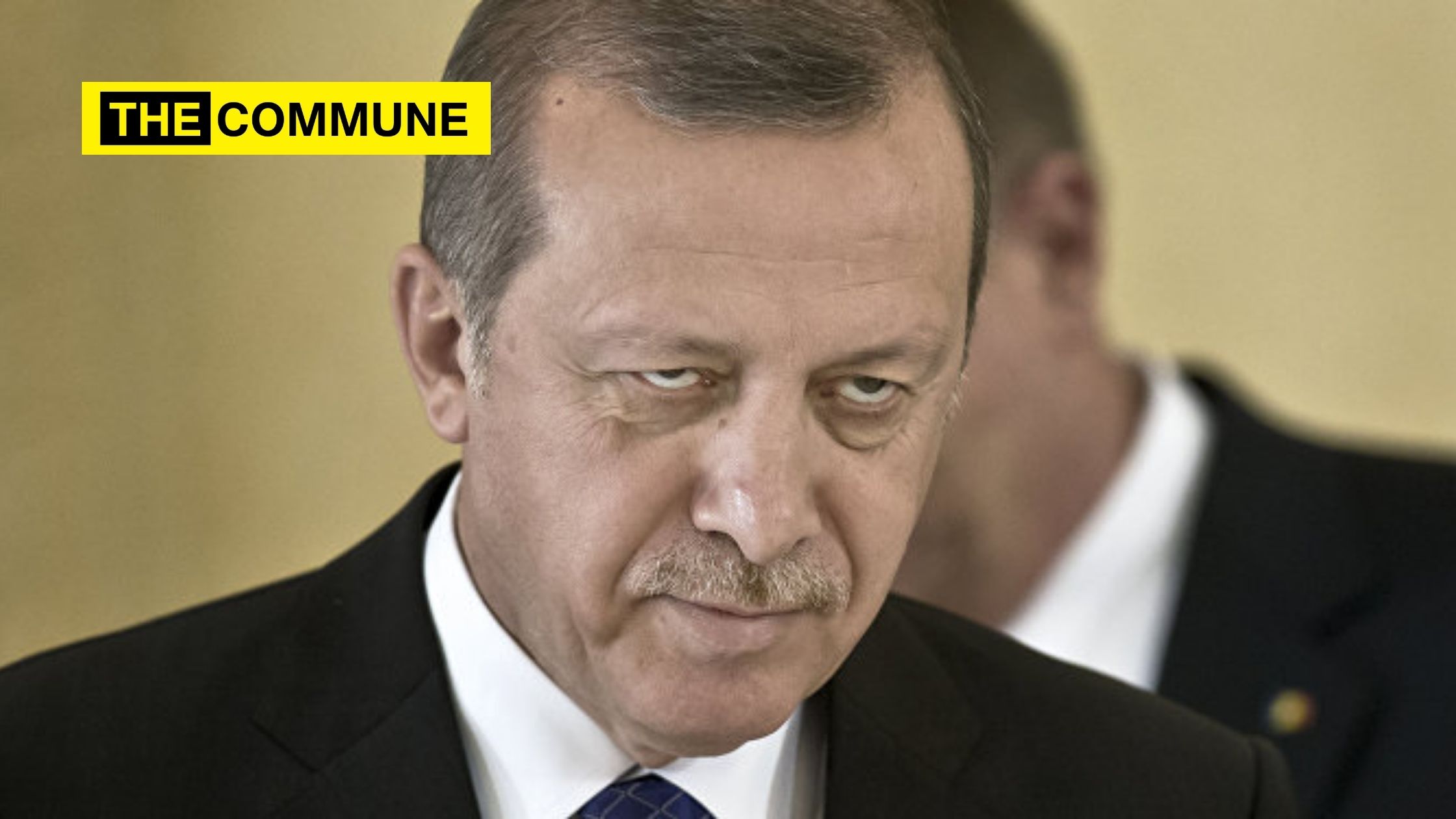
Turkey plans to send jihadists into Kashmir to help Pakistan and influence Muslims in South Asia

Serious reports have emerged that Turkey is allegedly preparing to send fighters from East Syria to the Indian Union Territory of Jammu and Kashmir, reports India.com.

As per reports, the mujahideen or ‘holy warriors’ are being paid 2,000 dollars each to create trouble in Jammu and Kashmir.

Relations between India and Turkey soured when the latter started making unwarranted statements on India’s internal matter of Kashmir as it cozied to its new friend Pakistan.

Turkey openly supported Azerbaijan against its conflict with Armenia and according to Greek journalist Andreas Mountzouralias, Recep Tayyip Erdogan plans to send mercenaries to Kashmir.’

As per the report published in Pentapostagama, Erdogan sending jihadists to Kashmir is part of Ankara’s attempt to extend its influence to Muslims over South Asian Muslims to challenge Saudi Arabia’s influence in the Islamic world.

“Turkey has started preparing its gangs in Syria to send them to Kashmir after Karabakh to fight for Pakistan and against India,” the report said quoting local sources.

Woman pretending to be pregnant to smuggle 1 kg of marijuana caught redhanded

Like Ambika in the Rajinikanth starrer ‘Padikathavan’, a woman in Madurai pretending to be pregnant and carrying 1 kg cannabis has been caught by the police.

Nagamalai Pudukottai police received a tip-off that cannabis was being sold in the Keelamathur area near Cholavanthan in Madurai district. Following this, the police patrolled the area and interrogated a pregnant woman who was loitering around. The police became suspicious when they saw her and was immediately interrogated. It was found that she folded the cannabis into a packet around her stomach and pretended to be pregnant. Following this, the police arrested Rani and seized 1 kg of cannabis.

Police investigation revealed that the woman was Rani from the Keelmathur region near Madurai.

This isn’t the first time that a case like this has been caught since an exactly similar incident took place in Argentina. The woman was caught carrying 15 bricks of weed, hidden inside a fake belly made out of papier-mâché.

BJP cadres attacked by DMK goons near Tenkasi

Members belonging to the BJP Tamil Nadu, who were returning from Kerala after campaigning for the state local body elections, were attacked by DMK goons last night near Kottaivasal close to the Kerala border in Tenkasi district.

Elections to 941 gram panchayats, 152 block panchayats, 14 district panchayats, 86 municipal councils, and 6 municipal corporations is slated to be held in three phases  on December 8, 10, and 14 with counting of votes happening on December 16.

The BJP which is contesting in almost all wards is hopeful of emerging victorious like in the case of GHMC polls. A large number of women are also contesting in this election from the party.

Cadres from the BJP Tamil Nadu unit had gone for campaigning in Kerala. They were returning in a campaign van   on Saturday night (December 5), after campaigning in the Acchan Koil area.

As the van neared Kattalai Kudiyirupu, DMK members with their party flag tied to the car and two wheelers intercepted and surrounded the BJP campaign vehicle. They started to hit the car and the occupants inside while spewing abuses and damaging the BJP flag on the vehicle. Upon seeing the people coming to the spot, the assailants fled from the scene.

Following this, a group of BJP members staged a demonstration near Kottaivaasal demanding the arrest of the DMK men. The police who reached the scene later assured eased the tense situation with the Sengottai Inspection of Police assuring that the assailants would be booked.

Upon investigation, it was found that Sengottai DMK union secretary Ravi Shankar and his goons had attacked the BJP members. A case has been registered against Ravishankar.

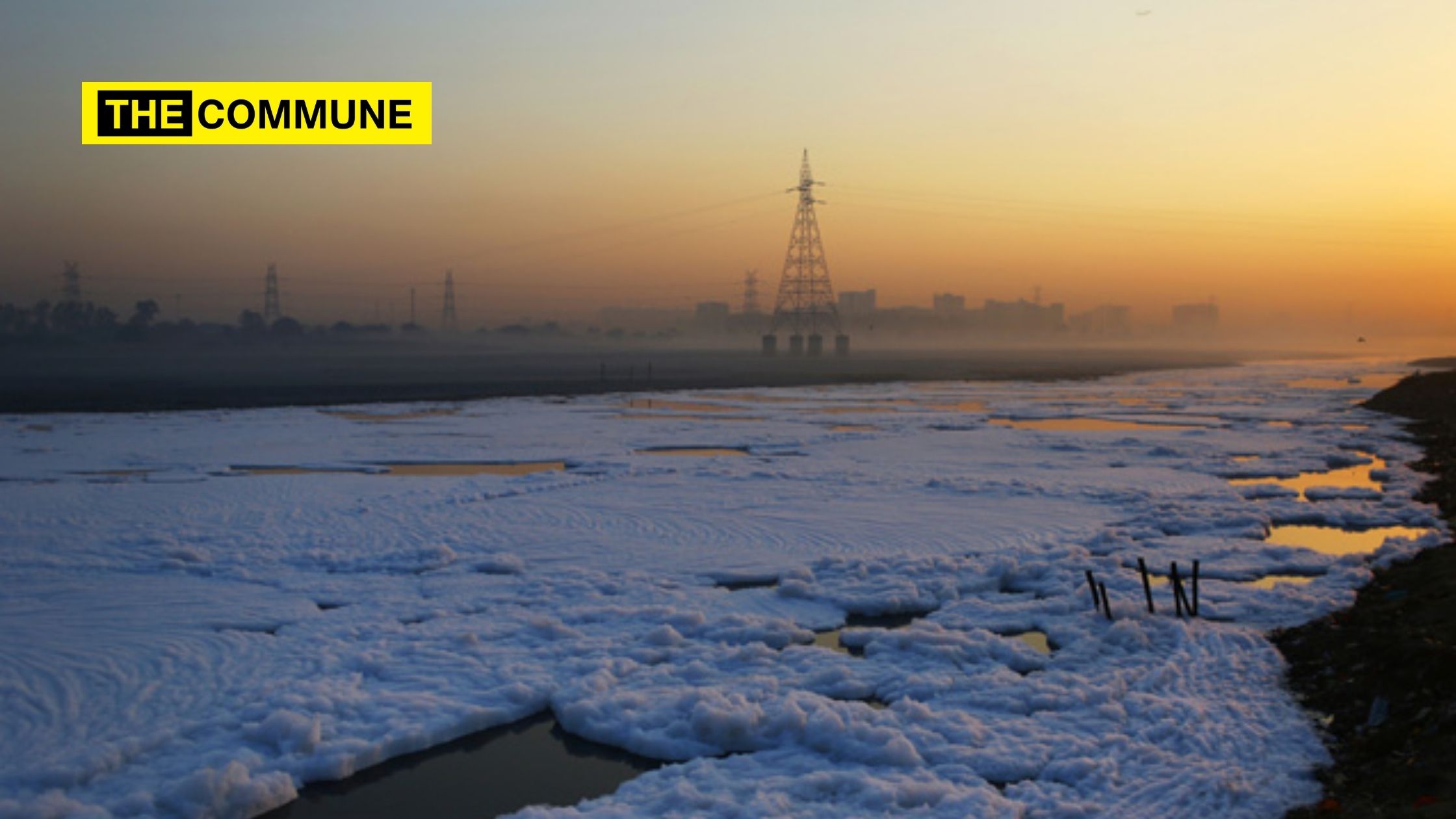
CPCB raises concern on pollution and frothing in Yamuna, asks Delhi and other states for effective sewage treatment

CPCB monitors water quality of River Yamuna and drains discharging into the River.

In the past, CPCB observed froth formation and increase in ammonia levels in river Yamuna because of discharge of untreated sewage, non-operation of existing Sewage Treatment Plants, improper functioning of Effluent Treatment Plants(ETPs) installed by the industries and Common Effluent Treatment Plants(CETPs) located on the banks of river Yamuna.

Monitoring of 22 drains carried out recently ,indicated that 14 drains (Sonia Vihar, Najafgarh, Shastri Park, Shahdara, etc.) are found untapped ,discharging sewage. While 05 drains are 100% tapped and no flow at downward of interception observed,02 drains were found tapped but overflow into river yamuna was observed. One drain (drain no. 14) has no flow at all. Due to partially/untreated discharge of sewage and industrial effluent containing phosphorus, many times, foaming also is observed.

CPCB, taking cognizance of this, issued directions to Delhi Jal Board to submit time bound action plan to ensure compliance to norms by STPs and that no untreated sewage is discharged to these drains.

Delhi Pollution Control Committe(DPCC) has been directed to take action against non-complying Common Effluent Treatment Plans(CETPs) and industrial units. Similar directions have also been issued to State Pollution Control Boards of Haryana and Uttar Pradesh.

In view of the importance of the issues, reminders have been issued today to concerned agencies to submit action taken report by 15th December, 2020.

(Published from PIB)

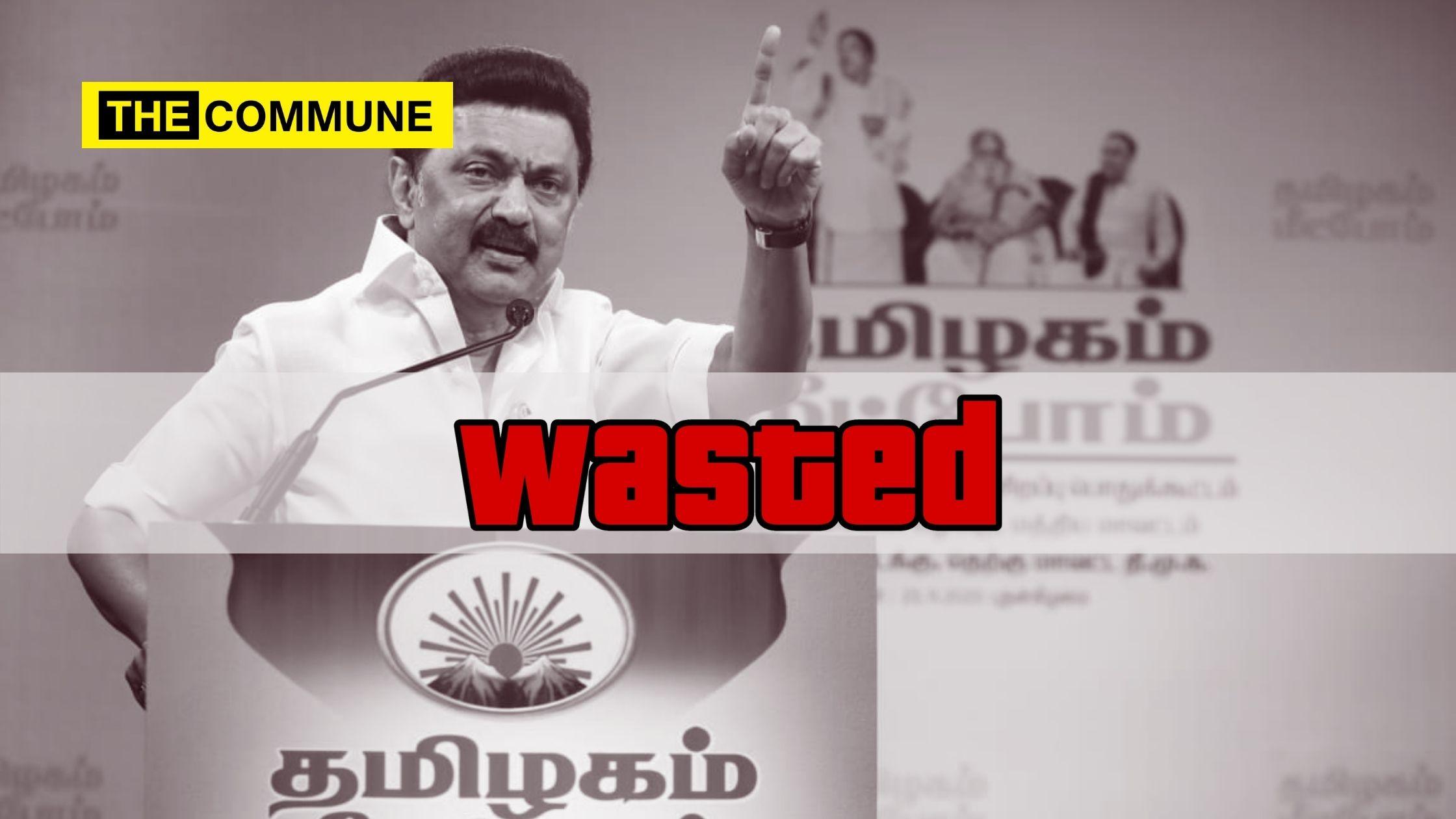
DMK’s propaganda against farm laws busted, party protests against the very same things it promised in 2016

Ever since the Centre passed the three farm bills, the opposition parties in Tamil Nadu especially the DMK and its allies like the VCK and Communist parties have been protesting against the laws that seeks to empower farmers by providing them avenues for realizing better prizes.

After the initial protest announced by the DMK in September failed to gain steam, it relaunched its protest against the farm laws once again on December 5 in the wake of the protests by ‘farmers’ from Punjab in Delhi.

Party chief M.K. Stalin, his son and DMK’s youth wing secretary ‘actor’ Udhayanidhi Stalin and other senior leaders have been participating in protests condemning the farmer empowerment laws.

However, it has been found that they are protesting against the very same things that they promised in their manifesto in 2016.

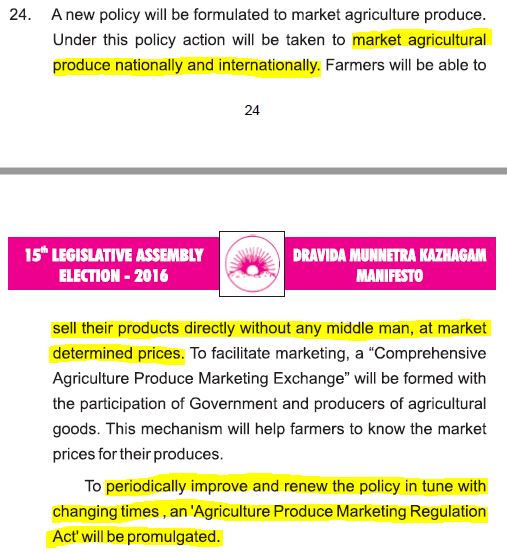
In its 2016 manifesto for the Assembly Elections, the DMK had promised to formulate a new policy to help farmers market agricultural produce nationally and internationally.

It had stated that it would bring in a policy that will enable farmers to sell their produce directly without the interference of any middlemen at market determined prices.

It had also stated that it would review the Agriculture Produce Marketing Regulation Act with changing times.

Source: DMK Election Manifesto 2016

This is exactly what the recently enacted farm laws seeks to do. Through the new farm laws, farmers have been empowered by giving them the choice to sell their produce where they get a better price. Those who want to sell in the APMC can continue to do so and those wanting to explore the market have been given the choice to. The middlemen commission and patronage structure will disappear as farmers have the choice to sell directly to anyone at the farm gate.

Senior Journalist R. Rajagopalan has also pointed this double talk of DMK.


The suppressed thoughts of Ambedkar

'Congress Press Knows Only How To Criticise, Rebuke And Revile Me': Ambedkar Was Aware Of Media Bias

Ever wondered why people always associate only works like “Annihilation of Caste” and “Riddles in Hinduism” with Ambedkar?

Ever heard of the book “Thoughts on Pakistan”, or “Pakistan or Partition of India”, or “Buddha, China and Communism”?

No?  Don’t worry, you are not alone. These pieces of art by Ambedkar are deliberately concealed from mainstream discourse for a number of reasons. But the two major reasons why these books were hidden from the public at large are as follows-

1) Due to Ambedkar directly challenging the crux and edifices that the two major Abrahamic faiths are based on,

2) Due to Ambedkar desecrating the diktats of Communism.

Let us analyse two major questions at this juncture.

1) So what exactly were Ambedkar’s views on the major “minority” religion of the world at that point in time – Islam and why was he more brutal towards the assessment of its theology as compared to even Hinduism?

2) Why did Ambedkar choose to remain inside the Dharmic fold by moving to Buddhism out of Hinduism?

In Page 220 of his book “Pakistan Or Partition of India” Ambedkar writes as follows,

Islam has all the evils(social evils) that Hinduism does and something more.

Something More?” What does he mean by this?

Ambedkar substantiates this “something more” by exposing the caste system prevalent in Islam. Islam according to him, characterises Muslims into 3 categories  –

  1. Ashraf
  2. Ajraf
  3. Arzal

Ashraf” means “noble” and the people associated with this Caste are those Hindus who happen to hail from “Upper Castes” and later converted to Islam, “Ajraf” refers to those that belonged to the “lower caste” of Hindus and later became Muslim, and finally the lowermost category of Islam the “Azrals” who were the former “untouchables” among Hindus who went on to embrace Islam eventually.

Often the Azrals are not allowed to enter mosques and while the Ajrafs can enter the mosque, they could never aspire to become the priest or the Maulvi of the Mosque.

There is an internal hierarchy within the “noble” Ashraf class too in the form of Sheiks, Sayyids, Pathans, Moghuls, etc.

But quite astonishingly despite these hierarchies inside Indian Islam, it is overlapped by an overall hierarchy in World Islam.

The Arabs have a different idea of hierarchy which goes in a particular order-

  • Ashrafs,
  • Mawaalis

The Arabs claim themselves to be the real Ashrafs or the “nobles”, while the Persian (Iraq, Iran, Syria) Muslims are the inferior “Mawaalis” and the Indian/African/European/Oriental Muslims being the Ajraf Muslims who are not necessarily inferior to the Ashrafs but definitely sub-ordinate to them. To this date, only the “Ashraf” (Arabs) can get to be priests inside the Kaaba of the Great Mosque of Mecca.

But beyond all of these hierarchies inside Islam, the greatest untouchables according to its theology are the “Kafirs” or the non- believers who are according to Ambedkar “equated to urine, sweat and faeces as per the doctrines of the religion”.

The above reasons are precisely why Ambedkar summarises Islam the following way,

“The universal brotherhood of Islam is not the universal brotherhood of mankind”

It had always been Ambedkar’s position that conversion to any Abrahamic faith from the Hindu fold “de-nationalises the citizen” which means that the moment a Hindu becomes a part of an “imported religion”, he shall lose all sense of nationality and ultimately shift his loyalty to an entity that does not belong to his Mother land. This phenomenon, Ambedkar believed was an issue of national security.

Precisely for this reason, in Chapter 5 of his book “Pakistan or Partition of India” Ambedkar calls for the removal of Muslims from the Indian Army as he believes that an increased number of Muslims in the army shall cost India dearly in its future pursuits towards security.

One can only imagine what would have been the reactions to such an appeal had the same been made by Hedgewar, Guruji Golwalkar or Veer Savarkar. But since it was Ambedkar in this case, the entire story ended up being white-washed.

But after all, Ambedkar was proved to be right in 1948 when the Muslim commanders of the Raja Hari Singh’s Kashmir Army reneged on him by joining hands with the invading Pakistani Pathan forces thus leading to the takeover of what we know today as “Pakistan Occupied Kashmir”.

Ambedkar was once again proven right when Punjab was partitioned with a major chunk of it given away to Pakistan solely because of the 3 Christian candidates of the Parliament voting in favour of the Muslim League.

But now that we have looked into Ambedkar’s views on foreign faiths, let us segway into the core crux of this article, “Did Ambedkar want the abolition of Hinduism?”

Before answering this question, we shall have to ask ourselves, “Why did Ambedkar convert to Buddhism?” It was an unconventional option to choose, but nevertheless it proves a significant point which is to say that regardless of Ambedkar’s justifiable disappointments with the Hindu faith, he chose to remain in the Dharmic fold by choosing to move to Buddhism.

Upon being asked by an English reporter as to why he chose to take this route instead of the conventional option of choosing an Abrahamic faith, Ambedkar replies ” By moving to Buddhism from Hinduism I am simply moving from one room of the house to another as opposed to moving to a different house altogether”.

This shows the affiliation the man had with Indic faiths and how he understood the significance it posed on the Indian society at large.

At the end of the day Ambedkar only called for the “Annihilation of Caste” and not the “Annihilation of Hinduism”.

Ambedkar once along with a dear friend of his, the RSS affiliate Dattopant Tengadi met with several Hindu Mutt Saints including the famous Shankaracharya Mutt where he kick-started major reforms to eliminate systemic untouchability prevalent in the country. Ambedkar always was of the impression that the Indic faiths were malleable and hence could be reformed with enough beating.

In fact during the Constitutional Assembly debates of 17th September 1949, as Chairman of the Drafting Committee, Ambedkar called for Sanskrit to be made the official language of the Union of India owing to its rich cultural and spiritual significance to this land and also because of its innate capabilities to serve as a tool to bind the souls of India’s majority.

But unfortunately, owing to lack of majority, the proposal had to be turned down by the assembly. That day marked the beginning of the promotion of English, a language known to hardly 2% of the Indian population then, as the recognised language for all official communications of the State.

Addititonally, the definition of a Hindu as authored by Ambedkar in Article 25(2) of the Indian Constitution is as follows,

Hindus shall be construed as including a reference to persons professing the Sikh, Jain, or Buddhist religion.

This simply goes on to substantiate how Ambedkar saw the derivatives of Hinduism, namely Sikhism, Jainism and Buddhism merely as smaller parts of a greater whole. Therefore, he draws a clear parallel between who is a Hindu and who isn’t and at the same time making himself a Hindu as per constitutional standards.

Additionally, some believe that it was based on earlier proposals made by Dr. Ambedkar in the Constituent Assembly that led to the provisions of the Hindu Marriage Act, 1955 which gives a woman the right to obtain instant divorce if her husband is to convert to a religion that is NOT Hinduism, Sikhism, Jainism or Buddhism.

All of these give us a revelation that an honest analysis of the persona that was Dr. Bhimrao Ramji Ambedkar would help us understand that he was not even close to being a “Hindu-hater” as depicted by those academics and scholars of Modern Indian history in top institutions and think-tanks across the length and breadth of India and the world.

Cauvery Calling pays tribute to Thiru. Nel Jayaraman with plantation drive in Erode

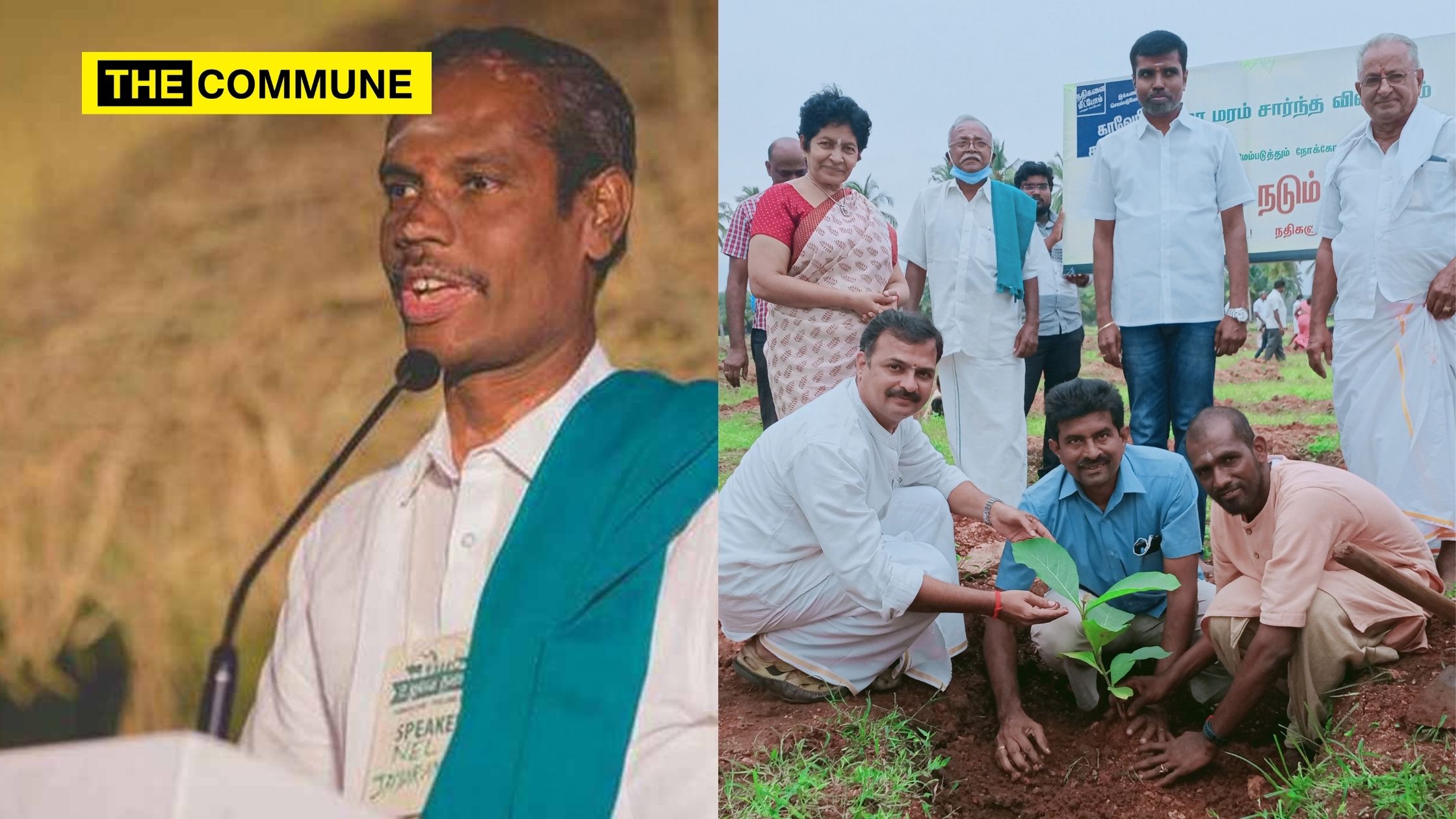
Cauvery Calling volunteers organized a plantation drive in Erode today in memory of Thiru. Nel Jayaraman who dedicated his life to the restoration of traditional paddy varieties and was a tireless supporter of Isha’s grassroots ecological initiatives. The event was inaugurated by Thiru. S. Nallasamy, President of Lower Bhavani Farmers’ Welfare Association (Irrigation Farmers Welfare Association). Around 3,500 saplings were planted on 12 acres of farmland belonging to Thiru. K.S. Rajeshwaran of Sivalingapuram village in Gulur Panchayat of Erode district.

Paying tribute to Thiru. Nel Jayaraman, Cauvery Calling Field Co-Coordinator [Tamil Nadu], Thiru. Tamilmaran said that Thiru. Nel Jayaraman had offered invaluable support to Isha’s ecological initiatives including Project GreenHands and Sadhguru’s river revitalization effort. Thiru. Jayaraman had raised and distributed 10,000 timber saplings to farmers free of cost in partnership with Project GreenHands. He said Thiru. Jayaraman had also supported the Rally For Rivers initiative on river revitalization. “We are planting these saplings today in his memory and in gratitude for his service to farmers for whom he toiled tirelessly,” said Thiru. Tamilmaran.

More than 100 people including youth, college students, Isha volunteers and members of voluntary organizations operating in Erode district, participated in the plantation drive.  Commercially valuable timber such as teak, blackberry, sandalwood and rosewood were planted on the farmland. The species will substantially enhance farmer income and have a significant ecological impact.

The plantation drive in Erode was part of ‘Maram Nada Virumbu’ platform launched by Cauvery Calling to involve the general public in sapling plantation. The platform offers first-hand experience in sapling selection and planting to the general public. The Erode drive was the second event after the initiative was launched last month. The first plantation drive was held in Karur district on 18 November.

Cauvery Calling is a movement launched by Sadhguru, Founder of Isha Foundation, to revitalize river Cauvery. It promotes tree based agriculture on private farmlands in the Cauvery basin. Its 12-year mission is to enable over 50 lakh farmers to plant 242 crore trees on their own farmlands in the river basin for economic gain. This will substantially increase farmer income by 3 to 8 times, enrich soil in the basin, improve water tables and augment Cauvery’s source flow levels.