Home Blog Page 1575

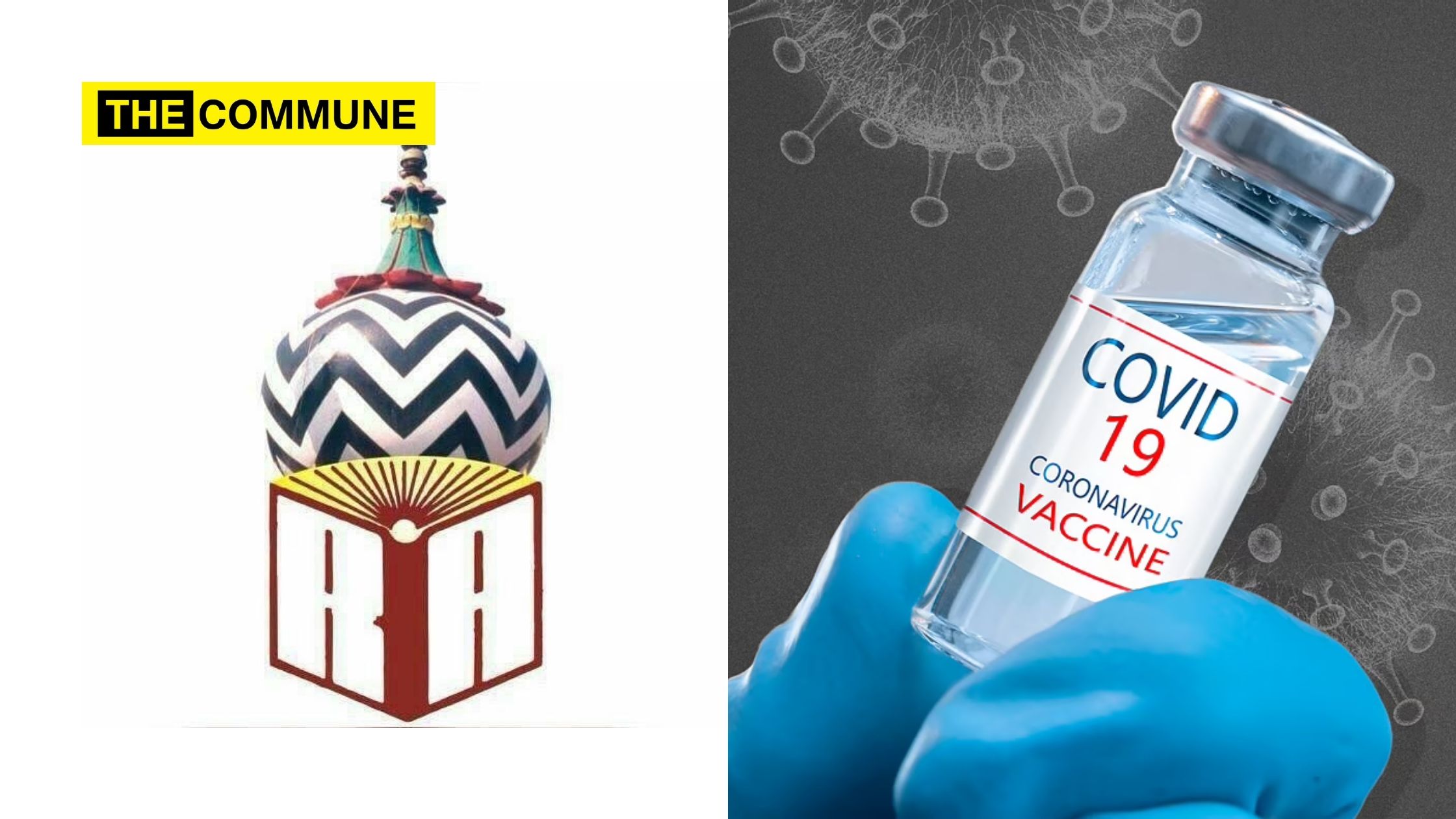
N-100 mask that filters 99.97% air manufactured by Indian company

N-100 mask has been manufactured by an Indian company named Excel 3D Advanced Technologies. They claim that this mask filters 99.97% air and have applied for a patent. They have made it under the Make in India drive, and have named it as XD100. This has been manufactured by Mumbai based Sameet Raut, and his London-based partners Dr Rahul Gore and his associates. It had taken them four months to design and develop this mask and was tested by DRDO. They had also sent it to the US for NIOSH approval.

“There is a USA based firm which sells N-100 mask in India. This firm manufactures the mask in China and they are costlier. We focused on the best quality by using the highest standard medical materials with a long life which will result in affordability. We provide 5 filters with this reusable mask,” he added.

This is the first Indian company to manufacture this mask. There are only 9 companies all over the world that make such masks. So far, N95 masks have been mass-produced in India, but this is claimed to be safer as it filters 99.97% of 3-micron particles in the air.

Furthermore, this is washable, and its filtration capacity does not reduce with every wash. Its filter is also replaceable. It is expected that, in the post COVID era, it can be used by those working in the chemical, pharmaceutical and cement industry. This comes at a time where the government has issued an advisory saying that the usage of masks with an exhalation valve is to be avoided.

₹17,100 crores to 8.55 crore farmers released, ₹1 lakh crore worth financing facility under Agri Infra Fund launched by PM Modi

Prime Minister Narendra Modi on Sunday (August 9) launched ₹1 lakh crore worth financing facility under Agriculture Infrastructure Fund for agricultural start-ups, entrepreneurs, farmer groups through video conferencing.

Through the Agricultural Infrastructure Fund, the government aims to provide medium to long to debt financing to create infrastructure for post-harvest management like cold storage chains, ripening chambers, warehouses, packaging units, e-marketing points, and also nurture farm assets through interest subvention and financial support.

₹1 lakh crore will be sanctioned under this fund in partnership with different lending institutions to agri entrepreneurs, start-ups and farmer society groups. 11 of the 12 public sector banks have already signed MoU with the Ministry of Agriculture.

Beneficiaries will be receiving credit guarantee upto ₹2 crores and interest subvention of 3%

The Union Cabinet had approved this fund as part of the ₹20 lakh crore Atmanirbhar Package last month.

Prime Minister Modi also released the sixth instalment of ₹17,100 crores to more than 8.55 crore farmers under the Pradhan Mantri Kisan Samman Nidhi (PM-KISAN) scheme that was launched in 2018. The PM-KISAN scheme provides ₹6000 in three equal instalments to marginal and small farmers through DBT.

Oscar winning Spotlight movie fame SNAP Network extends support to Loyola College sexual harassment survivor

Survivors Network of those Abused by Priests (SNAP) that found a mention in the Academy Award winning film Spotlight, has extended its support to the All India Christian Forum (AICF) that is helping Mary get justice in the Loyola College sexual harassment case.

In a message to the founder of AICF Mr. Savio Rodrigues, who also runs the goachronicle.com, Mr. Tim Lennon, President of the SNAP Network said “Mary, a faculty member of Loyola College, seeks justice in the courts yet is blocked by inaction. We call on the court to provide a path to justice for her.”

Mary, a senior faculty member of Loyola College, Chennai was sexually harassed by Father Xavier Alphonse, the former principal of Loyola College who was also the former Director for Loyola College Alumni Association.

SNAP Network is an independent, peer network of survivors of institutional sexual abuse. It is the oldest, largest and the most active support group for women and men wounded by religious and institutional authorities (priests, ministers, bishops, deacons, nuns, coaches, teachers, and others.

Mary had revealed in her petition to the Madras High Court that the Loyola College administration had warned her against approaching the Tamil Nadu police to file a sexual harassment complaint against Father Xavier Alphonse.

In her petition Mary said that she was continuously harassed by Rev. Fr. Xavier Alphonse over telephone as well as in person at the college campus and that wheever she brought it to the attention of the college authorities she was dissuaded from pursuing any action against Father Xavier Alphonse stating that it will impact the college’s reputation. The authorities had informed Mary that action was being taken on the Father by transferring him to another location.

In addition to this, not a not a single Internal Complaints Committee was setup by the Loyola College as mandated by the Sexual Harassment Act.

Mr. Rodrigues also noted that the Loyola College administration and alumni have remained mute on this case despite the fact that the sexual harassment survivor is known to most of the senior members. He has been helping the survivor get justice by offering legal support through AICF.

Source: Goa Chronicle

Cafe-cum-gym opened in Muzaffarnagar for cops on duty

Cops on duty in Muzaffarnagar will now be able to take some time off from their rigorous duty as the police department opened a unique cafe-cum-gym. This cafe is to serve healthy food options like poha, dalia, fresh fruit juices, smoothies, and food cooked in olive oil. It also has a gym attached to it, that is open for usage by police personnel.

This cafe is also set to deliver food orders to various places in the city and will be open until 9 PM throughout the week. This centrally air-conditioned cafe was opened to cops on Friday and offers affordable meals at reasonable prices. This is a sugar-free cafe and will use jaggery as a sweetener.

This initiative is the brainchild of Muzaffarnagar’s SSP Abhishek Yadav, a fitness freak. He has been working on this project for the last six months. “Policemen need to follow a highly exhaustive schedule of duty that seldom gives them the opportunity to avail of a proper diet. Cases of hypertension, diabetes and stress are common among the UP police force. This facility is aimed at alleviating such health problems. Improper diet and lack of awareness for a healthy lifestyle were also the reasons behind opening such a unique cafe,” the SSP said.

“This unique concept will be upgraded once we start getting more feedback. It may be then introduced to other police stations as well,” the SSP added.


Amazon and Narayana Murthy’s family enterprise Catamaran Ventures help SMB go digital

Prione Business Services, a joint venture between Amazon and Catamaran Ventures, the family enterprise of Infosys co-founder N.R. Narayana Murthy is helping small and medium businesses (SMBs) go digital by helping them with strategies and creating an ecosystem of SMBs.

Prione Business Services was started in 2014 with Catamaran Ventures holding a 76% majority stake. It is also the logistics partner of Amazon India and owns Cloudtail, the single largest seller on Amazon India.

The start-up headquartered in Bengaluru envisions making India self-reliant by promoting local manufacturing and Indian brands.

Recently, it had helped a Jaipur based business named Benavji that was hurt by the pandemic and lockdown to clock more than ₹50 lakh in monthly revenue. Benavji had invested in plant and machinery to scale up its baby clothing business but the Wuhan virus pandemic hurt its capex. Prione came to the rescue that strategized its business by making them produce masks and gloves.

Prione claims to have served in 150 cities in the last 5 years and has seen ₹10,000 crore in consolidated turnovers (Prione + Cloudtail).

The startup has an authorised capital of ₹ 550 crore. As per the details available from the Registrar of Companies, it had a revenue of ₹ 7,245 crore in FY 2018, and ₹ 9,039 crore in FY 2019. The profits in FY 2019 were ₹ 9,039 crore 38 crore.

Prione trains the SMBs on digital marketing, analysing consumer behaviour, warehousing, packaging and cataloguing. It also trains smaller shops on technology through Amazon’s Local Shops programme. It has enabled 3 million sellers to transact digitally.

Sandeep Varagunti, the Managing Director of Prione is planning to on-board 40,000 SMBs by this year end and help them sell their products on Amazon.

“In the last decade, the advent of ecommerce has helped new-age brands. Consumer durables, healthcare, and consumables are going to keep growing, and SMBs will revive the economy. However, the road to recovery is a good 12 or 24 months away. But SMBs need to go digital. They are crucial to India’s economic recovery. Indian SMBs are an alternative for imports from China, and our SMBs can participate in the global supply chain. Local consumption is the key, and from this year, Prione will help SMBs go global,” Mr. Sandeep was quoted saying in an article by YourStory.

Source: YourStory

BMS asks govt take measures to protect labour intensive sectors

The Bharatiya Mazdoor Sangh (BMS), an affiliate to Rashtriya Swayamsevak Sangh (RSS) on Saturday urged Central Group of Ministers (GoM) to protect labour incentive sectors from layoffs and job losses.

According to the press release by BMS, the organization presented their suggestions on different measures for employment generation before the GoM.

The Centre has formed a Group of Ministers on employment and skill development under the chairmanship of Union Minister for Social Justice Thavar Chand Gehlot.

The BMS suggested protecting labour intensive sectors like agriculture, handloom, beedi, plantations etc.

The BMS has also asked to recognize community-based professions as employment avenues and identify districts provides mass employment with the help of local resources and talents.

Defence sector set to become Atmanirbhar: Import embargo on 101 defence items

The Ministry of Defence announced on Sunday (August 9) that it will introduce import embargo on 101 items to boost indigenisation of defence production.

Under this, 101 weapons and platforms will be progressively banned from December 2020 to December 2025 in a bid to become self-reliant in defence production.

This negative list of 101 items also includes wheeled armoured fighting vehicles.

This is meant to serve as an opportunity to the Indian defence manufacturing sector to come up with indigenous products using their own design and development capabilities or adopting the technologies designed and developed by the Defence Research and Development Organization (DRDO).

Defence Minister Rajnath Singh told that this list has been made after several rounds of discussion to assess the current and future capabilities with all relevant stakeholders – Armed Forces, public sector, private industries, DRDO, Ordnance Factory Board and other defence PSUs.

Indian is one of the top defence importers in the world. In 2020, it was the second largest defence importer after Saudi Arabia making up 9.2% of global arms import.

This import embargo will be a shot in the arm for the domestic defence manufacturing industry along with the revised defence procurement and export promotion policy.

Check the list of 101 items here.

A village in Erode joins BJP

Ever since Karuppar Koottam’s slander against Hindu Gods especially of that of Lord Murugan and the sacred hymn Kandha Sashti Kavasam took Tamil Nadu by storm, there has been growing opposition among the lower cadres of the DMK who are pious Hindus in personal as the DMK leadership, especially MK Stalin has not condemned the YouTube channel for its abuse of Hindu Gods.

To add more wounds to the injury, the party has been indirectly providing legal assistance to those who posted the video abusing Hindu God Murugan.

On top of this, DMK MP A. Raja has stirred another controversy by saying that there is nothing called as Hindu religion and that the entire ‘Kandha Sashti episode’ was an attempt to deviate from other issues. He also said drove home the point that for the DMK, “Periyar’s principles” are more important than “Kandha Sashti Kavasam”.

All this has led to a situation where the DMK cadres are not even able to convince their own relatives vote for the DMK.

In light of this, 150 members from 70 families from Arachalur village in Erode district who traditionally voted for the DMK, including the local DMK leader Devaraj joined the BJP disappointed with the DMK leadership and its attitude towards the Hindus.

At a small ceremony held, special poojas were performed and Kandha Sashti Kavasam was recited.

In other news, sitting DMK MLA KK Selvam has been revolting against the party leadership for side-lining him by not giving the post of district secretary. KK Selvam even met BJP National President JP Nadda on Tuesday (August 4) along with BJP Tamil Nadu President Dr. L. Murugan.

Releasing children from internet lockdown

The current generation’s addiction to social media like Facebook, WhatsApp, Twitter and online gaming is not just becoming a psychological condition for the children but is also taking a toll on their parents as they get anxious over their children’s wellbeing. Though they cite various reasons like – need to maintain relationships with their peers, for studies, or staying updated on happenings around them, it is pertinent to note that many of them suffer from intrapsychic conflict due to excessive usage of gadgets and online stuffs. With the lockdown period, the amount of time spent online by children  has only has further increased posing several challenges to both children and their parents.

Today’s society has different expectations for all types of relationships. Social media is a web-based technology that transforms how people communicate by enhancing interactive conversations. Even though the user feels he is clear and defined in choosing what kind of relationship one wants, it is not always the case and is totally unsafe. The amount of cybercrimes that has increased in the recent past gives us a shock and an alarming signal to look at what is happening around our kids.

Social networking and excessive use of the platform interferes with other aspects of daily life, disrupts regular routines and disturbs interpersonal relationships. Internet Addiction Disorder (IAD) also known as problematic internet use or pathological internet use is generally defined as problematic, compulsive use of the internet, that results in significant impairment in an individual’s function in various life domains over a prolonged period of time. The internet can foster various addictions including addiction to pornography, game-playing, auction sites, social networking sites, and surfing of the web.

Excessive Internet use has not been recognised as a disorder by the World Health Organization or the Diagnostic and Statistical Manual of Mental Disorders (DSM-5). However, the related diagnosis of gaming disorder has been included in the International Classification of Diseases (ICD-11). As a mental health professional I see an increasing proportion of clients with problems related to internet addiction – where internet gaming is an inevitable condition in a quarter of the children whom I encounter.

The first step to identifying internet addiction is to see where the emotional and mental attachments lie. Many reasons have come out from the users that usage of these platforms helps them boost their identity, motivation, companionship, and entertainment.

The changes in relationships are exceptionally present in teens that use instant messaging as a substitute for face-to-face conversation with friends. Also the anonymity of social network profiles allows adolescents to create an identity and find social acceptability without having to directly face scrutiny.

College students are exposed to a higher risk of Internet addiction because of their vulnerability. They in particular, are adjusting to massive amounts of developmental and life changes.

A lot of us understand how people become addicted to substances/chemicals, like nicotine, alcohol, prescription and illegal drugs. A common question being asked to me is “are non-substance addictions like gambling really addictions at all? And always my response is “Yes, behavioural addictions can be just as serious as substance addictions.”

Even though there are numerous benefits of social media, it is an undeniable fact that it affects users’ psychological status in multiple ways. The pattern of one-to-many communication which allows users to share information about their lives, including social activities and photographs has the dimension of bigger cyber risks. Beyond cyber risks, the frequent use of any of such social media messaging, socializing or gaming platform is threatens the mental health as well. The very common challenges we mental health professionals see (not limiting to) among children and college goers are – cultural and behavioural changes, comparison & low self-esteem, negative relationships, social isolation and ostracism, depression, fear of missing out (FOMO), sleep deprivation, addictive behaviour, eating disorders, ADHD.

So, when it comes down to ensuring children’s mental health, parental monitoring is crucial. Parental monitoring isn’t about privacy but about safety. If one can understand the threats, every parent will start monitoring his or her child’s internet activity. It is important for parents to notice indicators of change in behaviour, protect them from cyber predators by ensuring privacy settings, covering webcams and setting secure browser settings.

Beyond all it is important for parent to talk to their children about what they do online and spend quality time with children.

US withdrawal from Afghanistan and implications for India

“The high probability is if American forces withdraw from Afghanistan and if no alternative international arrangement is made that then the historic contests between the regions and the sects will reappear, the Taliban will re-emerge, and a very complicated and maybe chaotic situation will develop.”- Henry Kissinger.

As the United States prepares to leave Afghanistan after nearly twenty years, an alliance of terror groups has emerged in this region that could have serious security implications at destabilising peace in South Asia.

After the 9/11 terror attack and the subsequent invasion of Afghanistan by the US, this war-ravaged nation has still not seen peace. Sustained attack by the Taliban and the effective covert support by Pakistan never allowed peace and democracy any chance to grow.

Pakistan has been biding its time for the American troop withdrawal and the Pakistani Army backed militant organisations, such as Lashker-e-Taiba and Jaish-e-Mohammed, the Afghan Taliban, Haqqani network and Islamic State-Khorasan, have increased their attacks on the on Indian assets in Kabul.

The recent attack on a Sikh temple in Kabul, in March, which left 25 dead, gives a clear indication that minorities will not be safe in Afghanistan. According to the officials who want to remain unidentified, the Islamic terror alliance is planning to attack other regions in South Asia, including troops in India’s Kashmir.

Former U.S. Deputy Assistant Secretary ofState Alyssa Ayres and author of the book Our Time Has Come: How India is Making Its Place in the World said, “The longstanding fear has been that such groups would simply ‘wait out’ the U.S. and international presence and that once the international presence was gone, they would destabilize Afghanistan and the larger region”.

Experts believe any increase in terrorist activity in South Asia, home to a quarter of the world’s population and a third of its poor, could have a far-reaching economic impact as millions of dollars will have to be diverted to counter-terrorism in a post-pandemic environment.

Also, India and Pakistan are nuclear-armed states and any time these two countries get into a confrontation, the whole world seem to hold their breath. Many security experts call Kashmir a “Nuclear flashpoint”.

The Balakot airstrike by the Indian Air Force in 2019, on terror camps operated by the banned Islamic terror group, Jaish-e-Mohammed is one recent example. Pakistan in retaliation launched its fighters to attack Indian military installations and one Indian IAF pilot was captured by them when his Mig-21 fighter jet was shot down.

On February 29 this year the US signed the peace deal with the Taliban in Qatar as per the promise made during the campaign by President Donald Trump, who is seeking a re-election. Many in America felt the war on terror being fought in Afghanistan had run its course. The US has already reduced its forces to about 8,000 and handed over some bases to the Afghan government.

Both, the Afghan Government under the leadership of President Ashraf Ghani and the Taliban agreed to a three-day cease-fire during the upcoming Eid al-Adha festival. But many believe the attacks will soon follow and the cycle of bloodshed will start all over again.

The Taliban claims it wants normal relations with other nations, including India and that it must not be treated as a terror organisation. However, they are still maintaining contact with regional and international Islamic terrorist organisations, including al-Qaeda, Islamic State, LeT and others, according to Javid Faisal, the spokesman for Afghanistan’s National Security Council.

Faisal said, “This partnership between these terrorist organizations and the Taliban isn’t just destabilizing Afghanistan or this region, but the entire world,”. They were supposed to cut off their ties to these terrorist groups long ago, they haven’t done yet and they won’t do as they all share the same ideology.”

In April this year, during a counter-terror operation in the Nanghar Province, 14 terrorists belonging to Pakistan-based militant groups and the Taliban were killed.

Before the invasion and the ouster of the Taliban, Afghanistan under them was known as the Islamic Emirate of Afghanistan, a totalitarian and puritanical Islamic state established in September 1996 with the help of Pakistan.

The peace deal signed by the US and the Taliban only precludes any attack on American or North Atlantic Treaty Organisation (NATO) forces. However, the Afghan defence forces are a fair game.

Attacks on Afghan defence forces are coordinated with the help of the tie-up. Multiple joint training facilities have also been set up in southern and central Afghanistan to carry out frequent attacks.

Pakistan sees Afghanistan as its sphere of influence and for nearly twenty years, resented Indian presence. India has played a major role in the development of Afghanistan and built roads, dams and highways. The Salma dam and the Afghan Parliament are India’s developmental footprints in the war-ravaged country. India also gives training to the Afghan army and many of its officers are trained at the Officer’s Training Academy, Chennai. No other country in the region has truly helped build Afghanistan.

It is an open secret that Afghans do not trust Pakistan and the only reason they have to depend upon them is because they are a landlocked country. Import and export of goods have to go through Pakistan which gives them an upper hand. Also, Pakistan has nothing to offer economically as they themselves are a poor nation trapped in debt, but with the help of the Taliban, they want to regain control.

However, this time the dynamics have changed and China wants to develop its Belt and Road Initiative (BRI) along with the China-Pakistan Economic Corridor (CPEC) in Afghanistan. Since the Taliban are in a sense an extension of the Pakistan army and treated as its most valuable strategic asset, China is hedging that Pakistan will rein them in.

If China gets access to the roads of Afghanistan, it will have access to the entire central Asian region.

These are serious and long thought out attempts at altering the power dynamics in Afghanistan. A recent report of the United Nations states that nearly 6500 Pakistani Nationals are fighting alongside terrorist groups in Afghanistan.

In May, this year, there were reports that the Taliban was joining Jihad in Kashmir. However, it was immediately disavowed by the Taliban spokesperson Suhail Shaheen who said, “The statement published in the media about Taliban joining Jihad in Kashmir is wrong…. The policy of the Islamic Emirate is clear that it does not interfere in the internal affairs of other countries.”

However, just as a leopard never changes its spots, any such change wherein India could operate its embassy and consulate in Afghanistan unmolested is a far cry. Right now the Taliban may claim that it has no intension of joining Jihad (Holy War) and wage war against India in Kashmir, but history suggests otherwise.

Pakistan hopes to have total hegemony over Afghanistan with the help of China which sees this country as an important strategic outlet. Also, Pakistan is not going to end its support to terrorism in Kashmir and China is heavily invested in the Pakistan Occupied Kashmir (PoK) and in the Gilgit-Baltistan region crucial for (CPEC).

Pakistan can claim that after the US troop withdrawal there will not be any increase in violence in Afghanistan or its jihadists directed towards Kashmir.

But everyone knows that the main aim of Pakistan is it to maintain its strategic depth and Keep India out. As far as Kashmir is concerned, it is the cornerstone, the very being of Pakistan as a nation.

Pakistan has abundantly made it clear that it does not desire any security role of India in Afghanistan because India has always played the role of spoiler.

Salman Rushdi said it best, “Pakistan is alarmed by the rising Indian influence in Afghanistan, and fears that an Afghanistan cleansed of the Taliban would be an Indian client state, thus sandwiching Pakistan between two hostile countries. The paranoia of Pakistan about India’s supposed dark machinations should never be underestimated.”

Pakistan said U.S. troop withdrawal won’t lead to an increase of violence in the region, adding that the Kashmir situation was becoming volatile due to its mishandling by India. Prime Minister Narendra Modi’s government scrapped a key status for Jammu and Kashmir state last year and imposed federal rule.

Pakistan’s defence forces media wing in a statement had said, “Trying to link the post-U.S. withdrawal Afghanistan to Kashmir issue is another malicious attempt by India to keep the region in a state of flux. The so-called intelligence reports alleging Pakistan to be following some kind of strategic design are simply baseless and laughable.”

Pakistan may celebrate the defeat of yet another superpower in Afghanistan, as the Americans leave after 18 years.
It seems the words, Henry Kissinger was prophetic when he said, “Taliban will re-emerge, and a very complicated and maybe chaotic situation will develop”.