Home Blog Page 1572

Man from Karnataka gets life-like statue of deceased wife made for house-warming

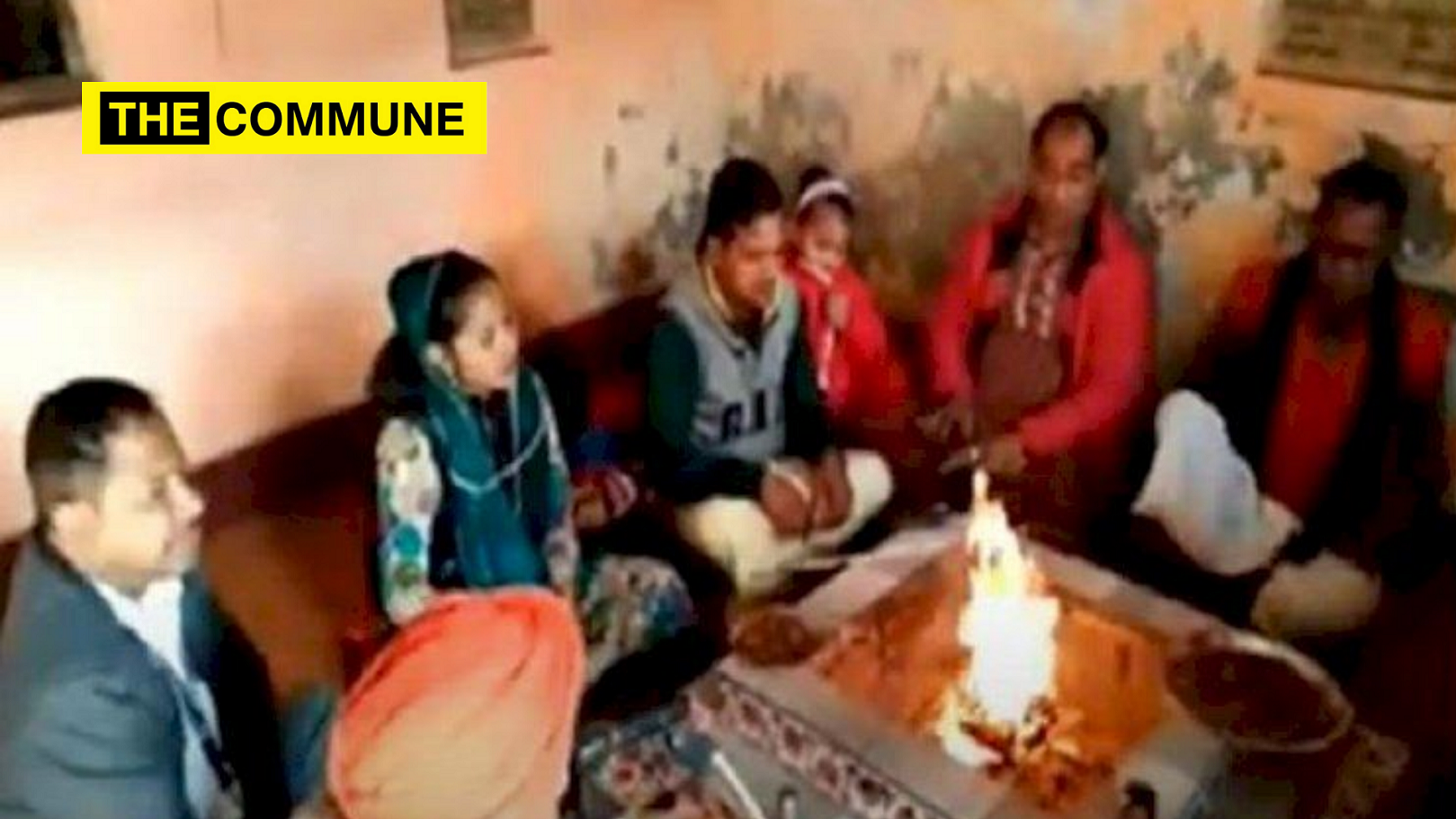
Shrinivas Gupta, an industrialist from Karnataka has made the headlines after installing a lifelike silicone statue of his wife who had recently passed away. They had recently moved into a new home which had apparently been his wife’s dream house. Upon realising that she would not be present with them, he had ordered and got made a real-life size silicone statue of his wife and hard poster pictures online.

The guests who had attended the house warming were shocked to see his dead wife on their couch, only to later realise that it was a lifelike statue. Following this, they had shared images online. These images became viral and earned a lot of appreciation and tears from people all over the world who had reshared it.

Speaking about his wife’s statue, Shrinivas Gupta told ANI that his new residence was Madhavi’s “dream home”. The industrialist also said that the statue was built over one year by artist Shreedhar Murthy from Bengaluru.

Madhavi, who was Shrinivas’ wife, had passed away due to a car accident in 2017. It had been her dream home, the family was reluctant to move-in. The answer to the dilemma had been a  statue was installed at his new home with the help of an acclaimed architect, Ranghannanavar, ANI reported. Her statue is an exact replica of Madhavi, decked up in a bright magenta saree and gold jewellery, seated on a sofa, as seen in the pictures made available.


The Atheist and the Cross: European proceedings on secularism

Italy, 2002. Soile Lautsi, a Finnish-origin Italian citizen and member of the Italian Union of Atheists, found out that a crucifix was hung on the walls of every classroom in the school attended by her two children. Being a firm believer in the principles of secularism and wanting to pass on that belief to her children, she filed a complaint to the school board asking that the crucifixes be removed; after all, the crucifixes’ presence in the school contravened the principles of secularism.

Italy’s laws from the early twentieth century make classroom crucifixes mandatory, even though the laws have not been aggressively enforced ever since Catholicism stopped being the state religion. Anyway, in May of 2002, the school board decided not to remove the crucifixes and the Ministry of Education confirmed this. Mrs. Lautsi claimed that the school board’s decision conflicted with the principles of secularism and state neutrality enshrined in the constitution of Italy and filed a complaint in the Veneto Regional Administrative Court. In January of 2004, the Administrative Court permitted the case to be submitted before the Constitutional Court, as per Mrs Lautsi’s request. The Constitutional Court disavowed jurisdiction and returned the case to the Administrative Court.

The Administrative Court then ruled against Mrs. Lautsi. This ruling held that the presence of the crucifixes in the classroom did not violate the principle of secularism and nor did it infringe upon the religious freedom that was guaranteed under the Italian Constitution!

In its judgement, the regional court held that the crucifix was certainly a Christian religious symbol, but it was also a symbol of the shared history and culture of Italy; it was thus representative of the identity of the Italian people. The Court pronounced that the secular state, freedom, and equal rights – all of which were key elements of the Enlightenment – derive from the doctrines of Christianity. The Court “perceive[d] an affinity between (but not the identity of) the ‘hard core’ of Christianity, which, placing charity above everything else, including faith, emphasises the acceptance of difference, and the ‘hard core’ of the republican Constitution, which, in a spirit of solidarity, attaches value to the freedom of all, and therefore constitutes the legal guarantee of respect for others.”1 Therefore, the Court saw the crucifix “as a symbol of a value system: liberty, equality, human dignity, and religious toleration, and accordingly also of the secular nature of the State – principles which underpin our Constitution.”2

The Secular Crucifix

In other words, the crucifix was a symbol of the principles of equality, liberty, and tolerance, and thus – the Court ruled – it was also a symbol of state secularism! (Imagine that, a religious symbol as a symbol of secularism!) The Court also accepted the argument of the Italian government that not only was the crucifix a religious symbol, but also a symbol of the Italian state! To the layperson reading this, this might sound absolutely absurd, especially if you hail from a country where saffron is supposedly a fascist colour and placing saffron flags on a fruit-stall can get you arrested for ‘rioting, ‘unlawful assembly’, ‘disobedience’ and ‘hurting religious sentiments’. (There have also been several demands in the past by secularists to prohibit Sanskrit shlokas from being chanted in the morning assemblies of government-run schools and to also have Sanskrit shlokas removed from school curriculum. Many secularists seem to believe that anything said in Sanskrit can never be secular.)

Here, it is to be noted that while the court held that the crucifix could have several meanings, including an interpretation that is strictly religious, these meanings were “ultimately irrelevant”3 to the case at hand. According to the court, the presence of students from different cultures in Italian public schools had made it vital to reiterate Italian identity, and that Christianity was the only religion which does not reject unbelievers, since charity is held above all other values in Christianity. Even as a Christian symbol, the crucifix is “the universal sign of the acceptance of and respect for every human being as such, irrespective of any belief, religious or other, which he or she may hold”4, the Court stated.

Mrs. Lautsi appealed to the Council of State, the supreme administrative court in Italy, against this decision. In February 2006, the Council of State dismissed Mrs. Lautsi’s appeal on the basis that the cross is indeed a symbol of the secular values of the Italian constitution. The crucifix symbolised the religious origins of the tenets of mutual respect, tolerance, and freedom of conscience. (Readers ought to note that these values are secular values). In the Italian Constitution, secularism is not stated explicitly, but derived from certain other Constitutional articles. Secularism, the court stated, had to emerge from within this legal structure under certain conditions, conditions such as Italy’s “cultural traditions and customs”.5

The court also ruled that the meaning of the crucifix varied according to the place or context where it is displayed. It was possible that the crucifix could also be deprived of its symbolic significance and displayed as a mere ornament of some artistic value. In a non-religious backdrop of a school, the crucifix does not discriminate if it can represent “values which are important for civil society”.6 Furthermore, the crucifix acts as a reference-point and clearly shows the transcendent source (this source being obviously Christian and religious) of the secular values enshrined in the Italian constitution without opposing and diminishing the secular nature of the Constitution.

European reversal and re-reversal

Mrs. Lautsi then complained to the European Court of Human Rights (ECtHR), and finally, on 3 November 2009, the court ruled unanimously that the display of crucifixes in Italy’s public schools is opposed to the children’s religious freedom and to the parents’ right to educate their children in agreement with their beliefs. The ECtHR rejected the rationale of the Italian judges and concluded that displaying crucifixes in state schools amounts to a breach of state neutrality. The religious connotation of the crucifix is prominent and is linked with the majority religion in Italy, it said. Display of religious symbols in classrooms went against the secular convictions and could disturb students of non-Christian religions and those students who professed no religion. The State ought to refrain from imposing, directly or indirectly, any beliefs upon people in situations where they are dependent on the State. A Secular State “had a duty to uphold confessional neutrality in public education”7, the court pronounced. The compulsory display of crucifixes was “incompatible with the State’s duty to respect neutrality in the exercise of public authority, particularly in the field of education”.8

The European court’s judgement resulted in public uproar not only in Italy but across Europe. The Italian government was joined by other third parties, including twenty other European nations, all of whom strongly opposed this interpretation of the ECtHR. They argued that the crucifix was a “passive symbol” whose presence expressed a “national particularity” characterised by the interactions between the Italian State, the people and Catholicism; these interactions were further ascribed to Italy’s historical, cultural and territorial development.9 All in all, the crucifix was a cultural symbol representing the foundational principles of Western Civilization and democracy. Their presence in the classrooms was to “enable children to understand the national community in which they were expected to integrate”.10 But the applicants further argued that the positioning of the crucifix, which was undeniably a religious symbol, as a cultural symbol was “an attempt to maintain a hopeless last-ditch defence”.11

The ECtHR finally reversed its earlier judgement in March 2011. The Court ruled that its task at hand was to examine whether the presence of school crucifixes clashed with articles of the European Convention on Human Rights, and not to assess the compatibility between secularism as protected or guaranteed under the Italian Constitution and the presence of school crucifixes. The judges also brought in the margin of appreciation, as submitted by several intervening organisations and European countries, and left it to each member-state of the European Union to decide if crucifixes were allowed in state schools. The judges of the ECtHR also said that the crucifix while undoubtedly a Christian religious symbol – whether or not an additional secular meaning was attached to it – it was also “essentially passive” and its presence does not actively indoctrinate or impose any religious beliefs.12

Lessons on secularism

Are there any lessons that could be learnt from this case, especially for Indians?

To start with, we see here secularism taken to its logical end by the Secular State: the Secular State seeks to establish a neutral public space that is untainted by any religious symbols and religious symbolism. However, what is the scope of religion, and what comes under the range or reach of religion, and what distinguishes the religious from the secular – the answers to these questions remain unclear. The Secular State cannot even determine what is a religious symbol and what is a secular or cultural symbol! Paradoxically, the secular courts engage in theology and hold discussions on religion to determine what counts as a religious symbol and what does not – all of which is done in order to fashion a space that is devoid of religion. Things are no different, and no less ridiculously absurd, in the Republic of India. But that is a matter of discussion for another time.

Secondly, it is noteworthy that while the Italian courts and the Italian State saw the cross as a cultural symbol and also as a symbol of the secular state (consider, for instance, the high improbability of an Indian court ever viewing a saffron flag or the Sanskrit language as a symbol of the secular Indian state), the European Court of Human Rights argued in its first judgement that while the symbol of the crucifix has several meanings, the religious connotation is predominant and hence students would interpret the crucifix as a religious symbol. The public display of a religious sign in an educational setting, the ECtHR had said, would imply to the students that the Italian State was endorsing that particular religion, which in this case was Catholicism. This would be disturbing to atheists and to members of other religious communities, the ECtHR added. The freedom of religion ensured under the European Charter of Human Rights includes the freedom not to believe, and the Court said that this freedom has to be protected especially when it was the State that was expressing a religious belief by a public display of the crucifix in a school. The Court also remarked that public display of a crucifix could not possibly work for the cause of pluralism. The Court’s ruling observed that the display of religious symbols in state-run institutions impeded the parents’ rights to educate their children in conformity to their beliefs, and also restricted the children’s rights to believe or not to believe.13

Here, it might be relevant for us to ask that if an overtly Christian symbol like the crucifix can be a symbol of secularism, can there be other symbols from other religions that may be interpreted as being a secular symbol? Or, can these symbols be interpreted as a symbol, not of secularism itself, but of a Secular State?

The answer to this question lies in another remarkable observation of the Italian courts (which is also the third lesson that can be drawn from this case) – that the secular nature of the Italian Constitution originated in the teachings and doctrines of Christianity. The Italian judges reasoned (and rightly so) that secularism was (and still is) a development within Christianity. It was (and again, still is) a part of the worldview shaped by the centuries-long historical events that occurred in European Christendom. In such a case, Italian (and European) secularism is inherently Christian in nature. In other words, it is a Christian secularism and can be justifiably represented by the crucifix. The Council of State went so far as to give interpretations of Christian teachings (note that the secular body engages in theological matters) and argued that these teachings correspond with secular values. How then, could a non-Christian religious symbol be a symbol of secularism?

Here is another related question: if there is a Christian secularism, can there be a Muslim secularism or a Hindu secularism? Evidently not, since secularism emerged in the European Christian context. That is to say, the liberal secular model that is followed in different parts of the world stems from secularism as it developed in this Christian framework in European societies.

To what extent then is secularism acceptable as a model for coexistence between different communities in non-Christian, non-European societies? What effect will secularism have on the indigenous non-Christian religions and traditions of that society? How do people not familiar with Christian doctrines and secularism’s foundation in Christian theology interpret secularism? What are the implications of implementing secularism in a society where Christian theology has never before been used to address political inquiries and administrative goals? – these then become valid questions that need to be asked and explored.

The question of the saffron flag

Let us now come back to the much-maligned saffron flag. Is it a religious symbol or a cultural symbol?

Let us presume that the saffron flag is on top of a residential building. Is it a cultural symbol? Maybe. It could also be a religious symbol, depending on the religious inclinations of the people living in the building. There is perhaps no way to determine exactly whether it is a cultural symbol or a religious symbol, since there is a large overlap between Hindu religious traditions and Indian cultures. What if the same flag is hung inside the puja room of a family living in the building? Now, arguably, the flag takes on a religious connotation.

Let us add another dimension to the question. What if a saffron flag is on top of a building that houses the offices of a political party? Is the flag now a cultural symbol or a religious symbol or a political symbol?

Can a saffron flag be a social symbol, in the sense that it is representative of a society or a community and thus evokes a collective identity, as was the case of the secular crucifix in Italy? (Of course, several people would be quick to argue that such symbolism imposes “majoritarian” beliefs on minority communities, but nobody ever bothers to explain how a mere flag fluttering in the wind can “impose” beliefs upon people. Let us say some Italian unacquainted with Indian politics and social discourse views a saffron flag. Would the individual interpret the flag as a cultural or religious sign? Would the flag impose “majoritarian” beliefs on such a person? How does such “imposition” happen?)

What about a saffron flag on top of a temple or a religious structure? Is that a religious symbol or a cultural symbol? Could it be both? This is a more difficult question to answer. Another question that is more difficult to answer is this: do such distinctions between the religious and the cultural, between the religious and the secular, make sense in a Hindu context?

Furthermore, does a symbol like a saffron flag or a swastika have a meaning that is somehow embedded in it and is recognizable all over the world, or is the meaning dependent on the framework or a background setting where the symbol is situated?

Do symbols on public display have multiple meanings or do they take on one predominant interpretation? (Before answering this question, it would be pertinent to ask by what mechanism symbols take on meaning in the first place.)

Or is the meaning in the eye of the beholder, with symbols meaning different things for different people? In such a scenario where the meaning of a symbol is supposedly ambiguous, are the State and its legal machinery the ones who get to establish – even impose – meaning on to a symbol and thus decide the (non-)issue for the masses?

This array of questions might seem silly (and they are) to the reader. Some might think that all this amounts to futile hair-splitting. But if the Secular State wishes to create a secular religion-neutral space, these questions must be deliberated upon sooner or later. Readers must observe that only in a Secular State are such questions necessary.

Footnotes

  1. Lautsi v. Italy, paragraph 15
  2. Ibid.
  3. Ibid.
  4. Ibid.
  5. Lautsi v. Italy, paragraph 16
  6. Ibid.
  7. Lautsi v. Italy, paragraph 31
  8. Lautsi v. Italy, paragraph 32
  9. Lautsi v. Italy, paragraph 36
  10. Lautsi v. Italy, paragraph 39
  11. Lautsi v. Italy, paragraph 42
  12. Lautsi v. Italy, paragraph 71-72
  13. Lautsi v. Italy, paragraph 31-32

Further Reading

  • European Court of Human Rights, Case of Lautsi and Others v. Italy, Application no. 30814/06, Judgement dated 18 March 2011
  • Andreescu, Gabriel, and Liviu Andreescu. “The European Court of Human Rights Lautsi Decision: Context, Contents, Consequences.” Journal for the Study of Religions and Ideologies9, no. 26 (2010): 47-74.
  • De Roover, Jakob. Europe, India, and the limits of secularism. No. s 11. New Delhi: Oxford University Press, 2015.

12 Maoists Surrender In Chhattisgarh: Say they were disillusioned by Maoist ideology

In a major development, twelve Maoists surrendered to the police in Chhattisgarh’s Dantewada district on Sunday (July 9). Five of the surrendered Maoists had a reward of ₹6 lakh rupees.

The Maoists are a violent armed wing of the left and have been waging a relentless campaign for decades against the Indian state. Over the years they have been responsible for killing many civilians and security forces.

On Sunday, these Maoists surrendered to the police and the CRPF officials in Dantewada town as a result of the rehabilitation campaign run by the local police.

Dantewada Superintendent of Police Abhishek Pallava told PTI that these people gave up arms because they were disappointed with the hollow Maoist ideology.

This surrender will serves as a big blow to the ultra-left group as one of the surrendered Maoists is Chanduram Sethiya, who was an active member of platoon no. 26 and was allegedly involved in three Maoist attacks, including in Bhusaras-Chingavarm in 2008, wherein 23 policemen and two civilians were killed.

Other four Maoists who had a bounty of  ₹ 1 lakh on their heads are Lakhmu Hemla, Sunil Tati, Manu Mandavi and Maituram Barsa.

“All 12 ultras said in their statement that they were disappointed with the hollow Maoist ideology, and were impressed by the ”Lon Varratu” (term coined in local Gondi dialect which means ”return to your village”) campaign being run by the police in Dantewada,” Mr Pallava said.

“Those Muslims who support Ram Mandir Bhoomi Pujan and their families will not be spared”: Bengal Imam Association declares

The Bengal Imam Association issued a statement on Friday (7 August) asking Muslims to end their ties with the BJP, RSS, VHP and other organization. They had warned Muslims that “their families will not be spared” in the coming days if they do not “rectify their mistakes”, the Indian Express reported.

The Imam association also opposed to the Ram Mandir’s Bhoomi Pujan said that those supporting it are anti-Islam.

“Recently, the foundation stone was laid to construct a temple on a site that once hosted a mosque. So, it is clear that BJP and RSS are not friends of Muslims. A Muslim will not remain a Muslim if he remains with someone who is against Islam. Muslims who are members of RSS, VHP and its affiliated organisations need to think about their positions. They have to decide whether they want to remain with the BJP-RSS combine or rectify their mistakes. They must remember that in the days to come their families will not be spared”, said the statement.

Last week Sajid Rashidi the president of All India Imam Association said that “a mosque will always be a mosque” and a temple now may be demolished to build one.

The All India Muslim Personal Law Board (AIMPLB) before the verdict was announced had said it would respect if the decision went against it. However, it now states that Babri Masjid was and shall always remain a mosque, and cast aspersions on the Supreme Court’s unanimous verdict.

It also went on to say, “No need to be heartbroken. Situations don’t last forever.”

Newly arrived Rafale fighter jets prepped for Ladakh deployment, carries out night sorties in Himachal mountains

The newly inducted Rafale fighter jets by the Indian Air Force (IAF) has been prepped for night flying along the Line of Actual Control (LAC) in eastern Ladakh, reported the Hindustan Times.

The Golden Arrows squadron which operates these advanced fighters are practising night operations in the mountainous terrain of Himachal Pradesh to prepare for any situations along the LAC.

The squadron is practicing Rafales with their Meteor beyond visual range air-to-air missile and SCALP air-to-ground stand-off weapon for any emergency call of duty.

The Rafale aircraft landed in the Ambala airbase on 29 July, and is currently “fully operational”, as per the report. HT had reported that Rafales are not being flown too close from the LAC to prevent the Chinese radars, stationed in occupied Aksai Chin, to identify their frequency and jam it in any case.

An expert in aviation told HT, “Even though the Chinese PLA (People’s Liberation Army) have placed their electronic intelligence radars on mountain tops in the occupied Aksai Chin area for a clear line of sight, the war-time signature of Rafale will be different from that in practise mode. The PLA aircraft detection radars are good as they have been manufactured keeping the US air force in mind”.

India to develop transshipment port at Great Nicobar Island to improve connectivity

The Prime Minister, Shri Narendra Modi addressing at the launch of the auction process of Coal blocks for Commercial mining through video conference, in New Delhi on June 18, 2020.

In a masterstroke, India is set to invest ₹10,000 crore for building a transshipment port at Great Nicobar Island in the Bay of Bengal, the Economic Times reported.

If this port is built, it will provide shippers with an alternative to similar ports in the region, Prime Minister Narendra Modi said on Monday (July 10).

The announcement was made by Prime Minister Modi when he inaugurated the first undersea optical fibre project to provide high-speed internet to Andaman and Nicobar Islands.

Modi said the long due 2,312-kilometre-long submarine optical fibre cable from Chennai to Andaman and Nicobar Islands will provide better internet experience for the islanders.

He emphasised on the importance of boosting 4G mobile services and digital services like tele-education, telehealth, e-governance services and tourism on the Islands.

During his speech, held through video link, PM Modi said, “There is a proposal to build a transshipment port at Great Nicobar at an estimated expenditure of about Rs 10,000 crore. Large ships can dock once this port is ready”.

The dedicated container transshipment terminal will give India a strategic advantage with the Indo-Pacific region gaining significance due to China’s presence.

India can an keep an eye on the busy east-west international shipping route while facilitating shorter transits and greater economies of scale. Deep natural water ports enable big ships to anchor and raise India’s profile in maritime trade as well as create new job opportunities.

When this port is developed, it will provide Indian shippers with an alternative to Colombo, Singapore and Port Klang (Malaysia) transshipment ports.

The Wuhan virus has changed the global outlook on China and the need to end its death grip over the global supply and value chain. 

To ensure rapid development, legal and bureaucratic bottlenecks in the development of port infrastructure are also being removed continuously.

The in-principal approval has been given for building a deep draft greenfield seaport on the west coast and work starting on a deep draft inner harbour on the east coast.

Modi said, “From Chennai to Port Blair, Port Blair to Little Andaman and Port Blair to Swaraj Dweep (Havelock), this service has started in large part of Andaman Nicobar from today”.

India is also working on physical connectivity through road, air, and water. Two big bridges and widening of National Highway No.4 are being undertaken to improve road connectivity between North and Middle Andaman.

Port Blair Airport is being developed to handle a capacity of 1,200 passengers. Seaplane services will start once water aerodrome infrastructure including passenger terminal and floating jetty is ready at Swaraj Dweep, Shaheed Dweep, and Long Island.

Under the present regime, a lot of importance has been given to developing long-ignored infrastructure projects key to development of the economy and also national security. PM Modi stressed on the self-sufficiency and for India to become an important player in the global supply and value chain by strengthening our network of waterways and our ports.

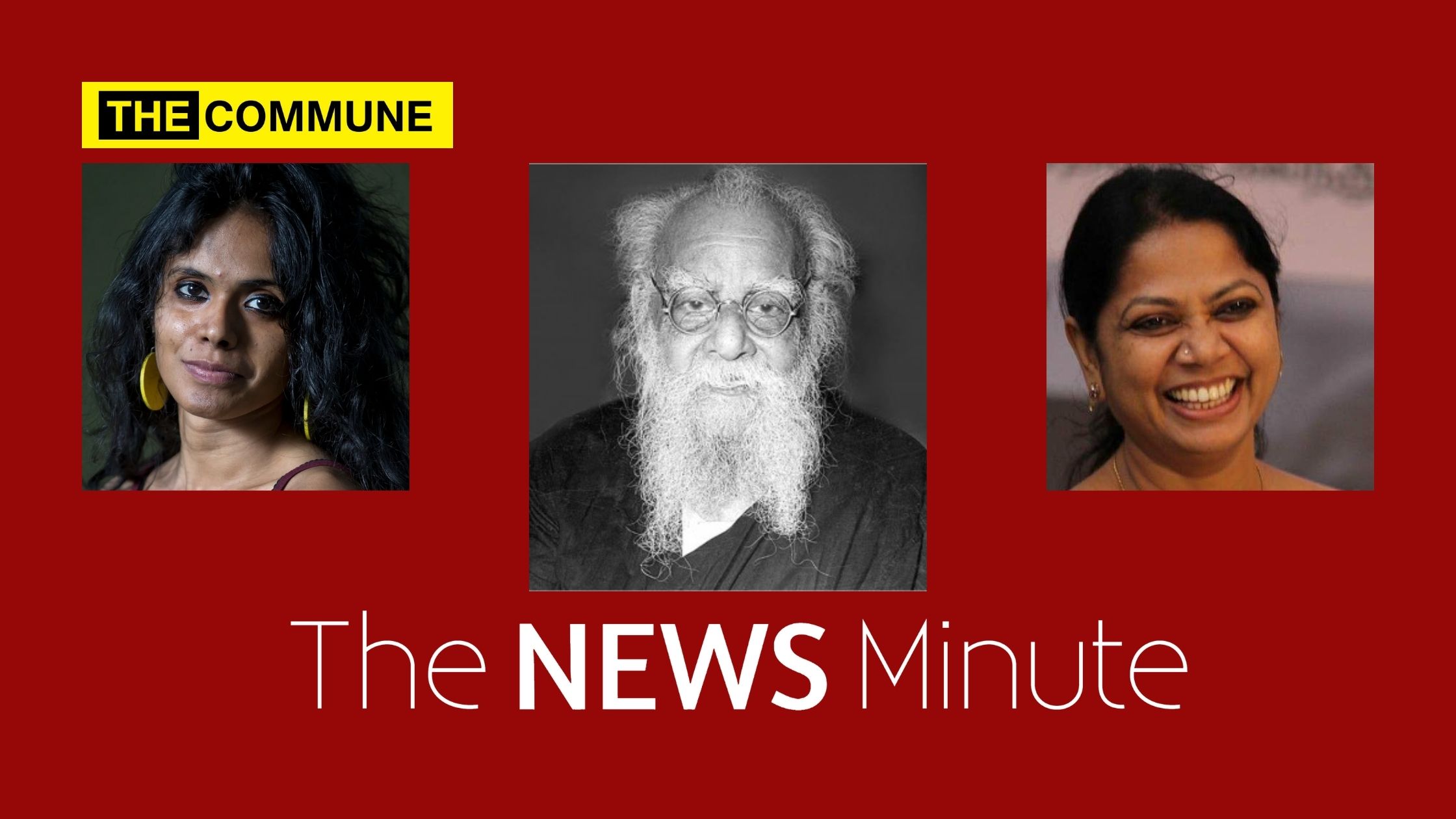
“Long live Periyar”: DMK MP Jagathrakshakan wearing sacred thread photo goes viral, raises several questions

A photo of DMK MP Jagathrakshakan has gone viral on the internet in which he can be seen clad in a dhoti with thiruman on his forehead, wearing the poonool (sacred thread).

The DMK is a party that is known for its anti-Brahmin and anti-Hindu politics. The Dravidian party and its fringe outfits like Thanthai Periyar Dravida Kazhagam (TDPK) are known conducting thread ceremony for pigs on Avani Avittam day.

In one of the pictures, M. Karunanidhi can be seen holding the sacred thread of a child dressed as Thiruvalluvar in a mocking way along with his son MK Stalin.

However, this photo of the DMK MP wearing sacred thread has stirred up a controversy with several  wondering whether another horse is about to run from the DMK’s stables.

This has also hit the image of the party that claims to stand by the ideals of “Periyar”.

Ever since the ‘Karuppar Koottam’ episode where the rabid Youtube channel had made derogatory remarks on Hindu God Murugan and Kandha Sashti Kavasam, the DMK has come to be seen as a party that is against the Hindus that wantonly hurts Hindu sentiments in an unsolicited way while appeasing the minorities.

Investigations done by the Tamil Nadu police revealed the links the between Karuppar Koottam and the Dravida Munnetra Kazhagam (DMK). Pictures surfaced established the close relationship shared by Karuppar Koottam and the DMK. In fact, it has led to questions if whether the DMK IT wing is behind the channel itself.

Realizing that popular sentiments were turning against them, the DMK has been trying to shed its anti-Hindu image to woo Hindu voters.

Earlier on July 18, during a press meet, DMK Rajya Sabha MP RS Bharathi distanced himself from the Karuppar Koottam saying that the DMK is no way linked to the rabid Youtube channel. He added that a false campaign was being done and also condemned denigration of Lord Murugan. He went on to recall Anna’s slogan of “Ondre Kulam Oruvane Devan” (One Community, One God).

The DMK chief MK Stalin also had put out a tweet condemning the incident where an Amman temple and Ganesha temple were vandalized in Coimbatore.

Added to this, the DMK IT Wing also released a video flaunting its Hindutva credentials saying that the party is more Hindu than one could ever imagine and that it has done more for the Hindus than any Hindutva party.

Also, the DMK leadership has been facing a severe credibility crisis as senior leaders have switched to the BJP. V.P Duraiswamy who was a Deputy General Secretary in the DMK joined the BJP and is now the Vice President of the party’s Tamil Nadu unit. Sitting DMK MLA of Thousand Lights KK Selvam is on the verge of joining the BJP with the MLA having met the BJP National President JP Nadda a few days back. He has also been quite active on Twitter questioning Stalin’s stance on various issues.

In light of this, there were rumours that that DMK MP Jagathrakshakan was next in line to defect. However, he has defied it. “I am neither dissatisfied, nor did I meet the Prime Minister”, said DMK MP Jagatharakshakan and added that it is not possible to keep responding to such rumours circulating in social media.

But DMK MP Jagathrakshakan’s photo has not only thrown open several questions but also the party’s double standards.

Doctor, Captain, Politician: Remembering Lakshmi Sehgal

If one were to mention the word captain or narrate a story of brave soldier who served the Indian National Army (INA) during the freedom struggle, the image of a macho, well-built man would be the first image that would come to our minds. In actuality, it was actually a diminutive, South Indian woman from an orthodox family, who would go on to be known in history as ‘Captain’ Lakshmi Sehgal.

Childhood and beyond

Lakshmi was born in erstwhile Madras Presidency in an orthodox South Indian family to Swaminadhan, a decorate lawyer and Ammukutty, a freedom fighter who would later on become a member of Constituent Assembly of India. She was a rebel even when she was young when stood  up to her grandmother’s discriminatory practices towards Dalits. As her mother was involved in the freedom struggle, the seeds of nationalism and service towards the nation were sown inside Lakshmi in her formative years. She had also noticed how the fight for freedom was coupled with the struggle for social reform against child marriage and untouchability.

In an era where it was a rarity for women to even graduate from high school, Sehgal joined the Madras Medical College in 1938, where she took her MBBS. Her encounters with Suhasini Nambiar, who was Sarojini Naidu’s sister and a radical who had spent many years in Germany, as well as the book Red Star over China by Edgar Snow gave her a profound exposure about communism. One could say that this acted as a gentle nudge that would later push her to join the INA.

Lakshmi to Captain Lakshmi Sehgal

Sehgal had met with Subhash Chandra Bose at the age of 26 in Singapore, when she had gone to practice medicine as a young doctor. Little did she know that the meeting was going to change her life forever.

In an interview by Lakshmi at a later stage, she was quoted saying: “In Singapore, there were a lot of nationalist Indians like K. P. Kesava Menon, S. C. Guha, N. Raghavan, and others, who formed a Council of Action. The Japanese, however, would not give any firm commitment to the Indian National Army, nor would they say how the movement was to be expanded, how they would go into Burma, or how the fighting would take place. People naturally got fed up.”

It was only when Bose had entered the picture that the paradigm shifted. She had met with Subhash Chandra Bose upon learning that he was keen on recruiting women. In the meeting, she pushed for and ended up with a mandate to set up a women’s regiment, which was to be called the Rani of Jhansi regiment. There was a tremendous response from women to join the all-women brigade. This would mark a moment in history, the moment when Dr. Lakshmi became Captain Lakshmi Swaminadhan.

INA days

Lakshmi with her regiment marched to Burma in December 1944, and the decision to retreat was taken by the INA leadership by March 1945, before they entered Imphal. Lakshmi was arrested and kept under house arrest in the jungles of Burma. She came to India in 1946 when the INA trials were going on and the entire nation saw struggles against the colonial forces intensifying.

Lakshmi later married Col. Prem Kumar Sehgal who was also with her in the INA. Following her marriage, she moved to Kanpur, where she resumed her medical practice to help the refugees during the Partition.

Activist Lakshmi

In post-Independence India, she spent her life as a member of the Communist Party of India (Marxist) and the All India Democratic Women’s Association (AIDWA), championing the movement against socio-economic inequalities. Notably, she had joined the CPI(M) after her daughter, Subhashini, who was already a member, had appealed her to help out with the medical camps for Bangladeshi refugees. Lakshmi was quoted saying that joining the CPI (M) felt “like coming home”, since she had already had strong influences in the ideology from childhood.

She founded the AIDWA and led many of its activities and campaigns, including the relief measures after the Bhopal Gas Tragedy and the Anti-Sikh riots post Indira Gandhi’s assassination.

Political stint

She stood for the presidential elections against Dr. APJ Abdul Kalam in 2002, which the latter won hands down. During one of the campaigns, the diminutive doctor went on to say on camera in her unadorned and direct manner: “Freedom comes in three forms. The first is political emancipation from the conqueror, the second is economic [emancipation] and the third is social… India has only achieved the first.”

Captain Lakshmi Sehgal passed away in 2012, having led a full life, as an advocate against discrimination and as a champion of rights for the voiceless. Her struggles were one of the profound ones that shaped the position of women in politics in the 20th and 21st centuries.

After Karuppar Koottam, complaint filed against another Youtube Channel that abuses Hindu Gods

After bringing the rabid Youtube channel Karuppar Koottam to books, the BJP Tamil Nadu unit has filed a complaint against another Youtube channel named ‘Saattai’ that is run by Duraimurugan Pandiyan, a campaigner for NTK’s Seeman.

In one of the videos titled “Rama Leelaigal”, ‘Saattai’ Duraimurugan had made derogatory comments against Hindu God Ram.

In light of this the BJP Tamil Unit’s IT Cell had filed a complaint with the Thiruverumbur Police Station asking for strict action against Saattai Duraimurugan and his Youtube channel.

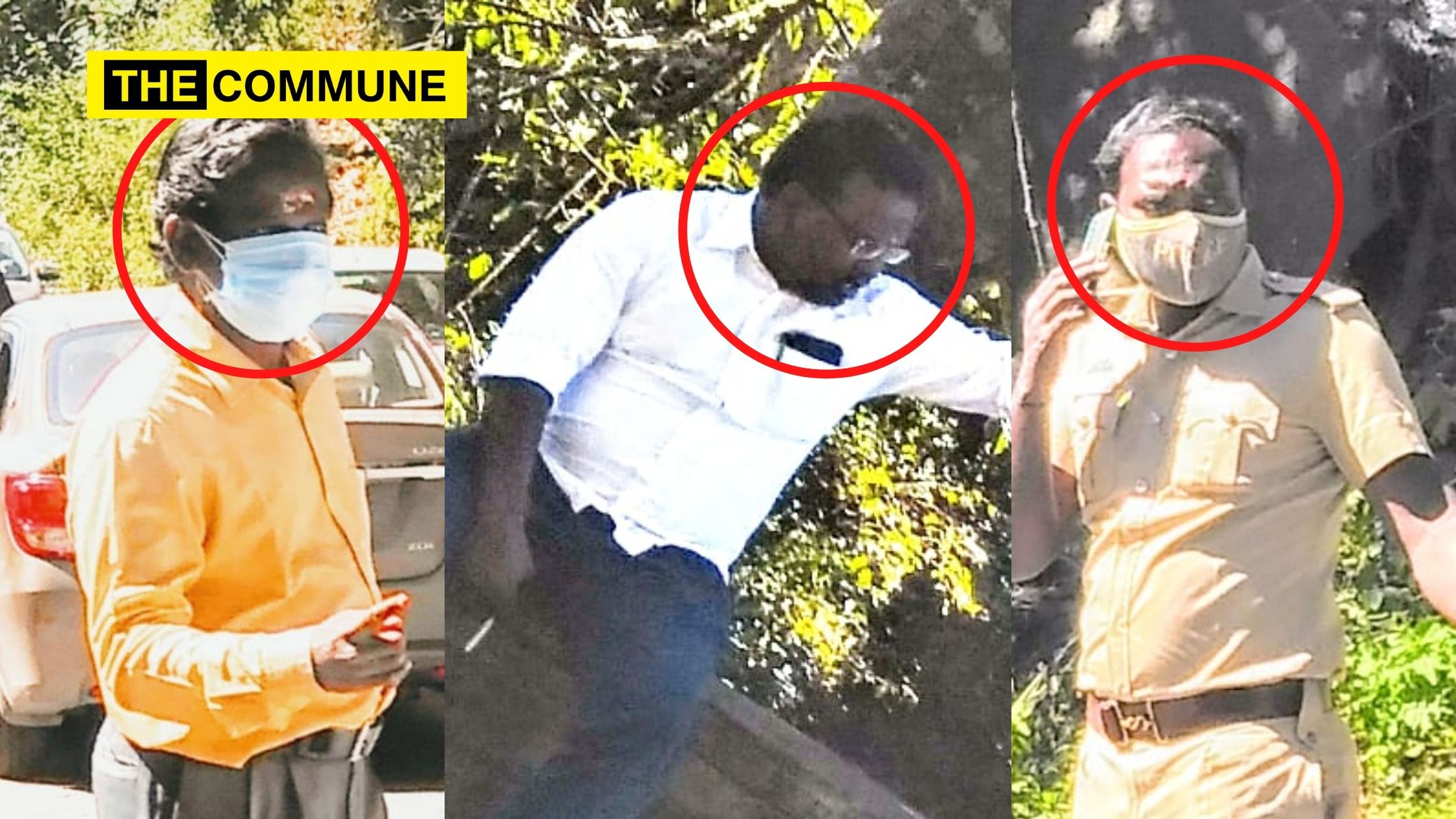
D. Gopi, State Secretary of the party along with District Vice President C. Indiran, former District Secretary P. Raja Rajan, SC Wing District Vice President D. Selvaraj had accompanied the station.

A CSR copy has been received.

Hubble Telescope uses the Moon as a ‘mirror’ to search for exoplanets

Scientists have been studying the signs for the existence of planets that could potentially support lives for decades now. In a recent study, they have programmed the Hubble Telescope to use the moon as the earth’s mirror to search for signs of exoplanets. They have taken advantage of the lunar eclipse to detect potential ‘biosignatures’ like the ozone layer and such on planets outside our solar system using NASA’s Hubble Telescope.

“One of NASA’s major goals is to identify planets that could support life,” Allison Youngblood of the Laboratory for Atmospheric and Space Physics at the University of Colorado Boulder said in a NASA statement.

“But how would we know a habitable or an uninhabited planet if we saw one? What would they look like with the techniques that astronomers have at their disposal for characterising the atmospheres of exoplanets? That’s why it’s important to develop models of Earth’s spectrum as a template for categorising atmospheres on extrasolar planets,” she explained.

To use the Moon as a ‘mirror’ in this case means that the Hubble Telescope did not look at the Earth directly, but used the Moon to reflect sunlight that had passed through the Earth’s atmosphere into the Hubble Telescope. Though numerous ground-based observations of this kind have been done previously, this is the first time a total lunar eclipse was captured at ultraviolet wavelengths and from a space telescope. The Hubble detected the strong spectral fingerprint of ozone, which absorbs some of the sunlight.