Home Blog Page 1567

Kerala gold smuggling case suspect M Sivasankar interrogated by ED

M Sivasankar, the former Principal Secretary at the Kerala CMO was interrogated on Saturday regarding the gold smuggling case. He arrived in Kochi on Saturday and was questioned by the Enforcement Directorate.

They questioned him on this case as well as probed based on the money laundering case that was suspected to be happening through diplomatic channels. He was questioned for more than 5 hrs. There was already an earlier investigation conducted at his residence in Thiruvananthapuram. These interrogations are following the revelations of Swapna closeness with Sivasankar, as well as the reports released based on the fact that he was completely aware of her dubious identity.

Notably, the three primary suspects of this case, Swapna Suresh, Sandeep Nair, and Sarith PS were sent to the custody of the Enforcement Directorate on Friday and are to remain in their custody till August 17th.

The Kerala gold smuggling case dealt with smuggling of gold into the state through diplomatic channels. This came to light after 30 kilograms gold worth of ₹14.82 crores were smuggled through a consignment camouflaged as diplomatic baggage. Following this, a series of investigations were launched to crack down the kingpins in this case. Swapna Suresh, one of the main kingpins was cracked down by the Kerala Police on July11, following the arrests of her accomplices Sarith, Sandeep Nair, and Fazil. Swapna, Sandeep, Sarith and Fazil Fareed are the four main accused in the gold smuggling case that has rattled Kerala.

Woman makes it to the Guinness book of records for most words spelt backwards in one minute

Pam Onnen, a woman from Hastings, Minnesota, made it to the Guinness Book of World Records, for the maximum words spelt backwards in one minute. She had spelt 56 words backwards in one minute, earning her a spot in the Guinness Book.

“Pam felt that her town, Hastings, Minnesota deserved to have Guinness World Records title holder as an inhabitant. It is Pam’s love of her town that has inspired her to achieve this GWR title. With this record attempt Pam wanted her historic town of Hastings to make history,” Guinness World Records said on their website.

Guinness World Records shared a video of Onnen spelling 56 words backwards from a randomised list in a duration of one minute. She had also made a record by reciting the English alphabet backwards. She then went on to show off another talent of hers: pronouncing words backwards. Whenever she learns a new word, she is keen to spell it backwards and see how fast she can spell it backwards.

Onnen said that she did not know that there was a record of her talent. She said, “I looked up because this is just really weird. Nobody else I know does this. So much so that I wasn’t going to tell this to anybody.” She added, “I do this all the time. I must be really good. So then, I decided to look it up. And there was a record for spelling backwards!” She was happy to know that she wasn’t the only one. “It’s not usual but it’s not bad,” she said.

Parents in Maharashtra booked for getting 12-year-old daughter married

The parents and husband of a 12-year-old girl were booked under the Prohibition of Child Marriage Act after she had approached the social worker claiming that her parents had forced to marry the man a month ago. The social worker had approached the Pimpri Chinchwad Commissionerate. Upon receiving this complaint, an FIR was filed under the Bhosari police station on the girl’s parents and the 19-year-old bridegroom’s name.

This incident took place in Indiraya Nagar in Bhosari. They had planned and executed this wedding using the COVID-19 lockdown to their advantage and the fact that there will be no police or law enforcement to look into this illegal marriage. This had happened in July.

Police sub-inspector Pooja Kadam, who had filed the FIR, had said, “The girl is 12 years old, while the boy is a 19-year-old from the same community. It seems that it is a ritual in their community. Despite opposition from the girl, no one had listened, and it was performed last month. She had approached a social worker who had guided her to us. Upon enquiry in their locality, their neighbours spilt the beans. Based on the primary investigation, her family was arrested. They later confessed, saying that they had done so under the insistence of their “community head.”

“All the suspects are roadside vendors. We will soon arrest them”, she added. The girl is now safe at her maternal grandparents’ house.

Meet Koovi, the dog that helped find toddler’s body in the Idukki landslide

The Idukki landslide has claimed almost 70 lives, and the numbers are still not final. In light of this disaster, there have been search-operations that have been going on ever since the news of the landslide made the news. On Saturday, the body of a two-year-old toddler was unearthed from the landslide, thanks to a dog that belonged to her family.

Koovi, the dog that belonged to the toddler Dhanushka’s family, had been waiting next to the site of the landslide for two days without moving. She had been running around the area of frantically and trying to find the bodies of their owners. Upon noticing this, rescue forces conducted search operations in that region. They discovered the body of the toddler along with a child’s piggy Bank believed to have been possessed by one of the 17 children who were found.

“I was there at the spot while Dhanushka’s body was being retrieved. The dog seemed to be upset. There is a bridge named Cemet bridge. Her body was found near a tree under the bridge. It was lying in the river, which flows through Pettimudi. The dog caught the smell and helped the rescue workers find the baby’s body.” Idukki MP Dean Kuriakose was reported saying.

Along with Koovi, two other dogs had also been circling the area and had been trying to find their owners. Many are yet to be recovered from the debris.

EPS-OPS orders to get the house in order

Over the past few days, speculations were doing the rounds about who will be the AIADMK’s face for the next polls and about the party’s alliance.

It all started when Minister for Cooperation Sellur K. Raju said that if the party comes back to power in 2021, the Chief Minister would be chosen by elected MLAs.

Later, Minister of Dairy and Development Rajenthra Balaji emphatically declared on his Twitter page that the AIADMK would go to polls with Edappadi K. Palaniswami as the CM candidate.

This had led to a lot of rumours about different camps existing in the party – one that wants EPS as CM, one that wants OPS as CM and another procrastinating group.

Earlier today, some of the party functionaries and Ministers visited Deputy Chief Minister O. Panneerselvam (OPS) at his residence. The meeting spanned over 2 hours.

Later, TN Ministers met CM Palaniswami.

Following this, a joint statement was issued by the two leaders to put an end to the controversy over the party’s CM candidate for 2021 polls and other matters.

The statement issued by Party Coordinator Panneerselvam and Party Joint Coordinator Edappadi K Palaniswami asked leaders to not air their personal opinion and warned of strict action for those disobeying the party conduct.

It said that the party would take all policy decisions including matters of alliance in a democratic manner keeping in mind their sentiments.

With this, the party leadership has put an end to speculations for now by putting a united front.

India has not 1 or 2 but 3 vaccines ready: PM Modi at Red Fort

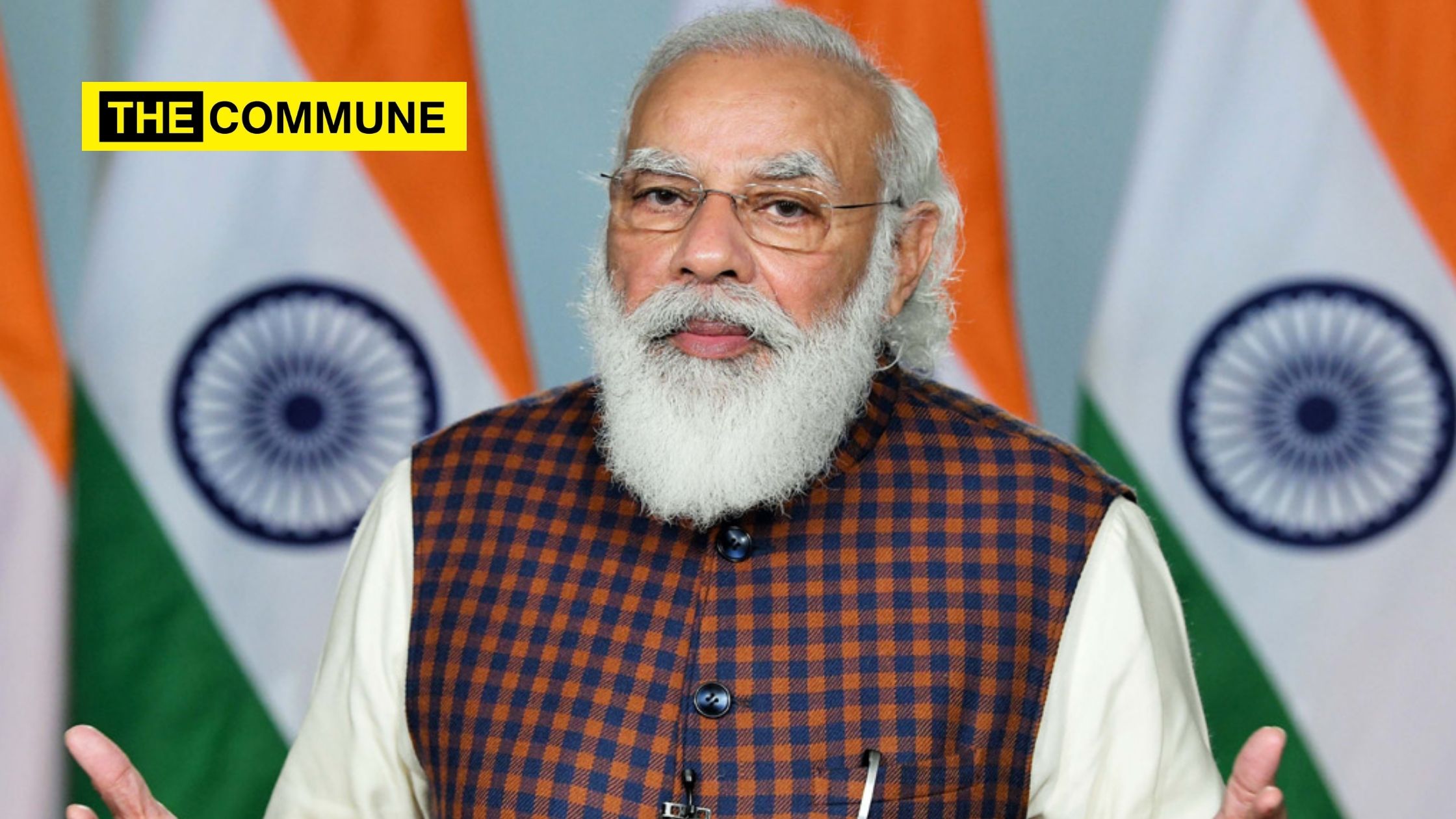
Prime Minister Narendra Modi delivered his Independence Day speech from the ramparts of the Red Fort. With the menace of Wuhan virus prevailing, the celebrations had to be toned down adhering to social distancing norms.

During his address PM Modi said that India has three potential vaccines in its kitty. He said that it will be produced in large amounts once scientists give the green signal after trials.

He also said that the roadmap is ready for large scale production and distribution.

How the vaccine will reach every Indian in the least amount of time – we have a roadmap ready for that,” the Prime Minister Modi said.

Mr. Modi also launched the National Digital Health Mission to give a fillip to the health sector in India. Under this initiative, every Indian will receive a health ID card into which the details of a person’s health will be updated everytime he/she makes a visit to the doctor or pharmacy.

Prime Minister Modi also thanked the selfless service of the frontline warriors fighting the Wuhan virus pandemic.

PM Modi delivers power packed speech on Independence Day

Prime Minister Narendra Modi in his address to the nation on Independence Day said that India sought to be become self-reliant and added that COVID19 may be a hindrance but it can’t beat India’s resolve to become ‘Atmanirbhar’.

He applauded the service rendered by frontline workers who have been braving the Wuhan virus day in and out. Prime Minister Modi said that India was going through a unique phase due to the pandemic but would emerge victorious owing to the resolve of the people.

He also launched the National Digital Health Mission that is set to usher in a revolution in the health sector. Under this, every Indian will be getting a unique heath ID.

He said that Atmanirbhar was not just a word but should become the people’s mantra. He called for ‘Make In India’ along with ‘Make for the world’, sending a signal to both domestic and international investors.

In a strong message to China and Pakistan without taking their names, Prime Minister Modi said “Those who challenge India’s sovereignty, be it LoC or LAC, have been given a befitting reply in their own language. What India can do, the world has seen it in Ladakh.”

He also said that Government of India is committed to holding Assembly elections in Jammu and Kashmir once the delimitation exercise is complete.

About the Ram Mandir in Ayodhya, Prime Minister Modi said that an issue that persisted for centuries has been resolved peacefully and applauded the people of the country for showing exemplary conduct.

Prime Minister Narendra Modi hoisted the Indian flag at the Red Fort and addressed the nation from its premises. The Independence Day celebrations at the Red Fort saw 4000 people in attendance that included diplomats, government officials and media personnel. Necessary precautions for COVID19 were taken.

The less heard women voices of the freedom struggle

India enters its 74th year of independence this August 15th. Due to the chaotic situation the pandemic has created, grand celebrations are unlikely and the government has decided to keep this year low-key. But it is important for us to remember those sons and daughters of Bharat who gave their sweat and blood to end the colonial rule on this important day. It is their efforts whose fruits we are enjoying today. On this day, let us remember a few lesser known women legends who played an integral part in the freedom struggle.

Jhalkari Bai

Lost in the pages of history is the tale of an incredible warrior and woman named Jhalkari Bai. Jhalkaribai was born to Moolchand and Dhaniyabai on 22 November 1830 in Bhojla village near Jhansi in a Kori family. Known for her exceptional strength of will , several folk tales sing odes about her acts of bravery. Though she lacked formal military training , she was excellent in horse riding and in the use of weaponry. She married Puran mhavar koli , a soldier from the artillery unit of Rani Laxmibai’s army, who introduced her to the Rani. Jhalkaribai bore an uncanny resemblance to Laxmibai and because of this she was inducted into the women’s wing of the army.

Jhalkaribai - Wikipedia

When discontent against the British policies was brewing, the people of Jhansi rallied around Rani Lakshmi Bai and resolved to take up arms to uphold the independence of their state. In 1858, there were several attacks on the Jhansi fort by the British and their native allies. Though the recorded history does not reveal much about the antecedents or heroic exploits of Jhalkari Bai, the ever loyal Jhalkari Bai must have been a pillar of strength for the queen in those trying times.

It is said that when the fall of the fortress became imminent when General Hugh Rose invaded Jhansi, Jhalkari Bai and some generals convinced Lakshmi Bai to escape quietly with a handful of supporters. In a ploy to deceive the British, Jhalkari dressed up like the Rani and took command of the army. Though Jhalkari Bai was forced to surrender, it is believed that the British military officers, who were impressed by her loyalty, courage and fighting prowess treated her with respect and freed her. While this act of sacrifice and courage is what she is most well-known for another little acknowledged fact remains that she was a close confidante and advisor to the queen playing a key role she played in the analysis and strategizing of the battle itself, alongside Laxmibai. Thus, she too was a gem in the 1857 rebellion against the British whose shine unfortunately hasn’t been noticed by many.

Matangini Hazra

Not much is known of her early life apart from that she was born in the small village of Hogla, near Tamluk in 1869. In 1905, she became actively interested in the Indian independence movement as a Gandhian. A notable feature of the freedom struggle in Midnapore was the participation of women. In 1932, she took part in the Civil Disobedience movement and was arrested for breaking the Salt Act. She was promptly released, but protested for the abolition of the tax. Arrested again, she was incarcerated for six months at Baharampur.

Matangini Hazra

After being released, she became an active member of the Indian National Congress and took to spinning her own Khadi. In 1933, she attended the subdivisional Congress conference at Serampore and was injured in the ensuing baton charge by the police. As part of the Quit India Movement, members of the Congress planned to take over the various police stations of Medinipore district and other government offices. Hazra, who was 72 years at the time, led a procession of six thousand supporters, mostly women volunteers, with the purpose of taking over the Tamluk police station. When the procession reached the outskirts of the town, they were ordered to disband under Section 144 of the Indian Penal Code by the Crown police. As she stepped forward, Hazra was shot once. As she was repeatedly shot, she kept chanting Vande Mataram, “hail to the Motherland”.

In 2002, as part of a series of postage stamps commemorating sixty years of the Quit India Movement, the Department of Posts of India issued a five rupee postage stamp with Matangini Hazra’s likeness.

Kittur Rani Chennamma

Rani Chennamma was born in Kakati  in 1778 that is almost 56 years earlier than Rani Lakshmi Bai of Jhansi. From a very young age she received training in horse riding, sword fighting and archery. She was well known for her brave acts across her town. Rani Chennamma was married to Mallasarja Desai, ruler of Kittur at the age of 15. Her married life seemed to be a sad tale after her husband died in 1816. With this marriage she had only one son, but fate seemed to play a tragic game in her life. Her son breathed his last in 1824, leaving the lonely soul to fight against the British rule. The Doctrine of Lapse was imposed on native states by the British. Under this declaration, native rulers were not allowed to adopt a child if they had no children of their own. Their territory formed part of the British Empire automatically.The state of Kittur came under the administration of Dharwad collectorate in charge of Mr. Thackeray. Mr. Chaplin was the commissioner of the region. Both did not recognize the new ruler and the regent, and informed that Kittur had to accept the British regime.

Women honoured with the Kittur Rani Chennamma Awards

Rani Chennamma tried her best to avoid war; she negotiated with Chaplin and Governor of Bombay Presidency under whose regime Kittur fell. Chennamma was compelled to declare war. For 12 days, the valiant Queen and her soldiers defended their fort, but as is the common trait, traitors sneaked in and mixed mud and dung in the gunpowder in the canons. The Rani was defeated (1824 CE). She was taken a prisoner and kept in the fort of Bailhongal for life. She spent her days reading holy texts and performing pooja till her death in 1829 CE. Kittur Rani Chennamma could not win the war against British, but she etched her presence for many centuries in the world of history. Along with Onake Obavva, Abbakka Rani and Keladi Chennamma, she is much revered in Karnataka as an icon of bravery.

Tara Rani Srivastava

Srivastava was born in Saran near the city of Patna. She married Phulendu Babu at an early age. Following public proposals which could have led to a surge in gender inequality, Tara Rani galvanized women from and around her village to join protest marches against the British Raj. On 12 August 1942, called upon by Mahatma Gandhi, she and her husband organized a march to raise the Flag of India in front of the Siwan police station, an act that would be seen as “a major defiance.” The police, in preventing them from hoisting the flag, lathi charged the protesters. When they were unable to gain control, the police opened fire. Phulendu Babu was among the shot and wounded. Despite that, after bandaging Babu’s wounds with strips of cloth torn from her sari, Tara Rani continued her march to the police station, where she attempted to hoist the flag; on her return, she discovered that her husband had died of his injuries. On 15 August 1942, a prayer meeting was held in Chhapra in honour of her husband’s sacrifice for the country. She continued to be part of the freedom struggle until the Partition of India on 15 August 1947.

HerStory | Tara Rani Srivastava

The Indian civilization believes in the concept of Shiva Shakti aikya , a profound understanding that this cosmos exists because of the interdependence of both feminine and masculine energy. It was this fundamental idea of women being equal to men which was prevalent in Indian thought which one can witness through these less heard women voices whose contributions to the independence movement are unmatched. In fact, while we remember these martyrs on this very significant day in modern Indian history, one must introspect on how this societal position of women today has unfortunately changed. Thus, true independence is achieved only through restoring the former status women had enjoyed in our civilization. Jai Hind!

Source: The Better India, Wikipedia

Real life Kargil Girl refutes portrayal of reel life Kargil girl

A day after Indian Air Force had written a letter to the Censor Board Of Film Certification about the Netflix movie Gunjan Saxena: the Kargil girl, the real-life Gunjan Saxena has come to the aide of IAF. She opened up about her experience in the air force and said that she had always had the support of her colleagues, supervisors, and commanding officers.

IAF had written a letter to Dharma productions as well as Netflix and CBFC, complaining of the negative portrayal of the Indian Air Force in the biopic of Gunjan Saxena, who was the first woman fighter pilot in the IAF during the Kargil war. Following this, Gunjan had reacted to questions by media personnel about her portrayal in the movie. She said, “Indian Air Force is at the core and the heart of this film. It is the very training of the Indian Air Force and the strong ethos of the Indian Air Force, which gave me the courage to do all those extraordinary things that I could. And not only me, I think it is the strong values and rich culture of the air force that is really the driving force behind all the women officers from all the different branches of the Indian Air Force who have served or are still serving in this organisation.”

“Yes, as a commercial movie or as a work of fiction, this film has creatively tried to capture my story or my journey. But what cannot be denied is that even in this film the doors did open and opportunities were given,” added Saxena, who graduated from Hansraj College in Delhi, and cleared the entrance exam and joined the Indian Air Force in 1994.

The real-life hero continued: “Equal opportunities were there for me to perform, and I think they are still there for all the women officers who are in this organisation. We don’t need any other or bigger proof than the fact that over the last 20 years the number of women officers in the Indian Air Force has gone up at such a high rate. So, this shows that the Indian Air Force, which is such a deeply respected institution, has been so progressive and positive about bringing about this change in itself. So I think that’s how I would like to address this question.”

Source: Swarajya

Prime Minister’s plane to get an upgrade

Air India One, the plane that carries Prime Minister Modi and several other VVIPs is in line for an upgrade, as the new Boeing 777-300ERs is to be equipped with sophisticated technology. It will include military-level defence systems as well as a reconfigured cabin. It is also said to contain Large Aircraft InfraRed Countermeasures (LAIRCM) and Self Protection Suites (SPS). It will also have the Advanced Electronic Warfare Suits, protecting their aircraft from any kind of surface to air attacks as well as providing reinforcements in the case of an attack.

These fully-equipped planes with state-of-the-art technology are to be flown by 40 Air India pilots who are being trained alongside IAF pilots.

The 747 Boeing jets where the ones are initially carried VVIPs. This had some basic ammunition, and a modified version of this was used for civilians by Air India.

This decision has been taken after there was a long halt on a journey carrying the Prime Minister while on the 747 Boeing, due to refilling of fuel, since it cannot fly more than 10 hours continuously. Notably, this new aircraft also has an advanced communication system, which will help the Prime Minister or President to talk to the officials on the ground without hassle for the worry of being tapped.