The COVID-19 pandemic has forced Saudi Arabia, the world’s largest crude oil exporter to slash its price. The demand for oil is still very low and the Saudi state-owned Aramco has cut the price for oil sales for the coming month of October, reports Mint.
Saudi Arabia is the worlds largest oil producer and it will sell its Arab Light grade crude at a lesser price to Asia which forms its main market and for its buyers in the United States (US). Aramco will also be cutting the prices for the lighter grade of oil sold to northwest Europe and the Mediterranean region.
Saudi Arabia for a long time dictated the price of oil in the middle east but COVID-19 has caused a serious problem for the Saudi economy and despite doubling from the lowest that the prices had hit earlier this year, still, crude oil prices are down 35 per this year.
As most countries are still in a state of lockdown, demand for oil remains low including big economies like India.
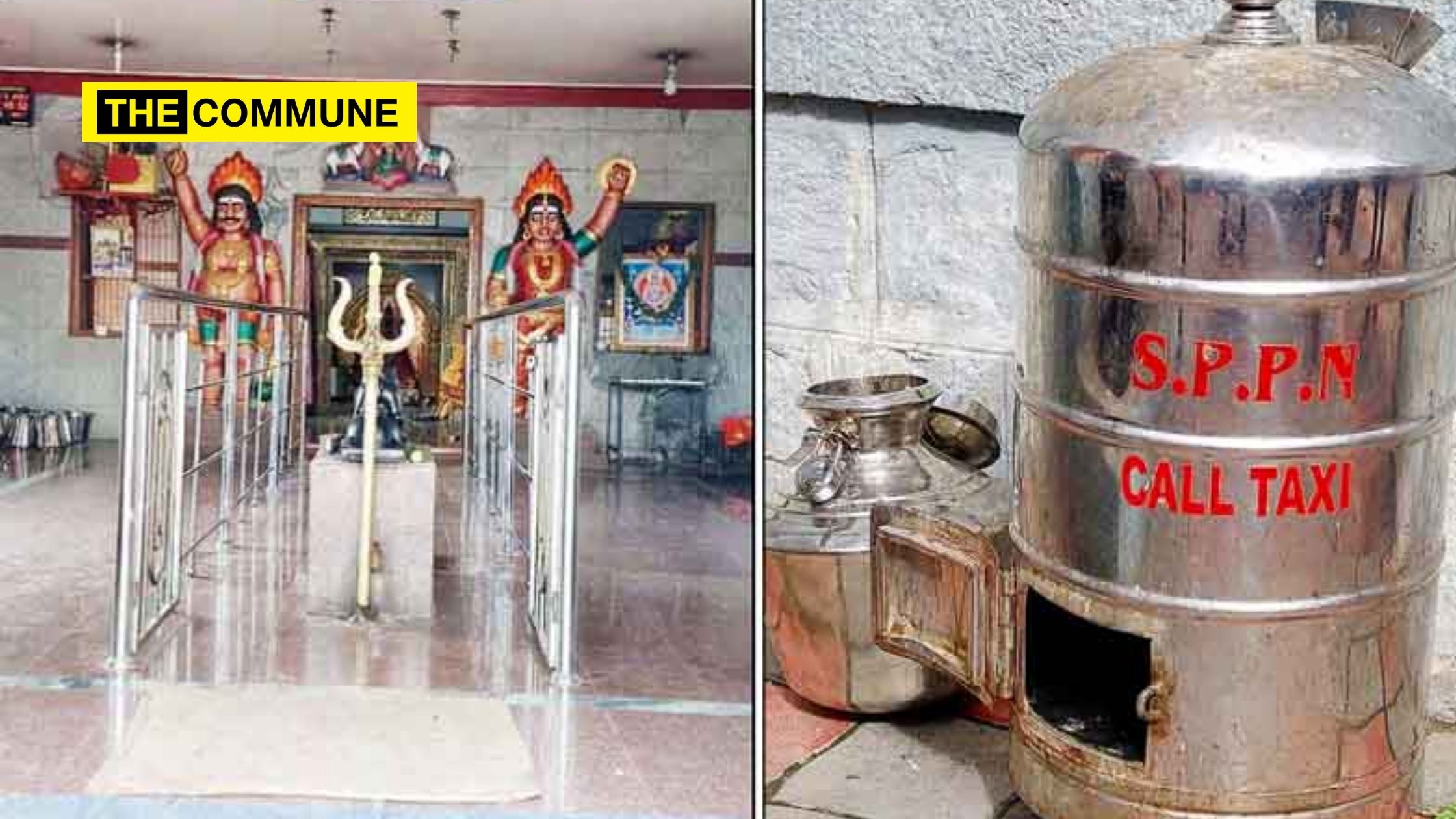
Saving about 2000 acres of temple lands worth ₹60,000 crores from sale or lease through fraud, the Madras High Court has issued an order restraining the Thiruporur sub-registrar from creating any encumbrance on the temple properties belonging mostly to Arulmigu Thiruporur Kandaswamy Temple and Arulmigu Thiru Alavandan Temple in Thiruporur.
These properties, administered by the Hindu Religious and Charitable Endowments are located in the East Coast Road (ECR) and Old Mahabalipuram Road (OMR) in Chennai which falls under the jurisdiction of Thiruporur sub-registrar office.
Justice MM Sundresh and Justice R Hemalatha admitted the Public Interest Litigation (PIL) tagging it with similar pending matters. The case has been adjourned for further hearing on September 10.
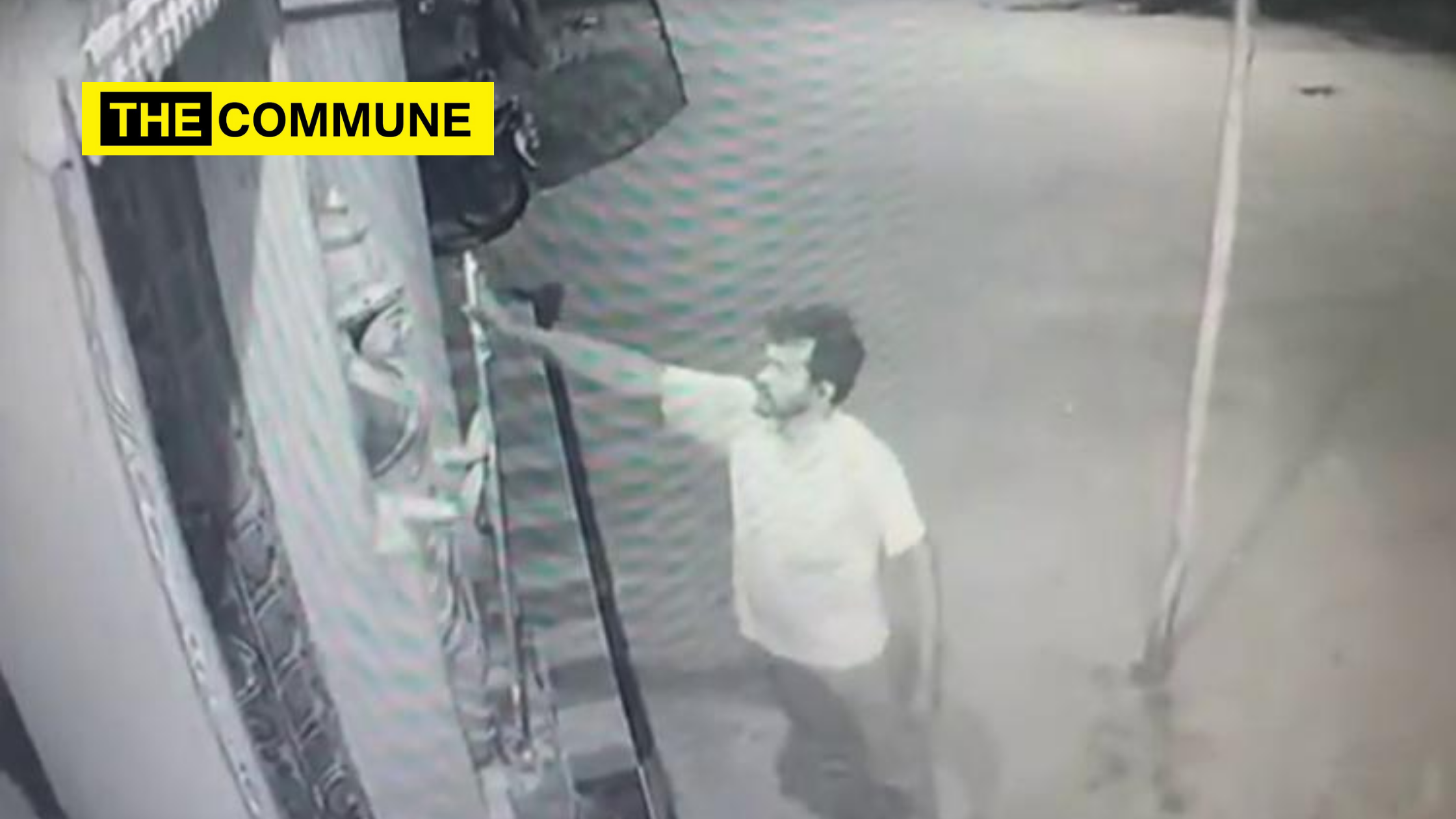
The Thiruporur shooting incident where DMK MLA Idhayavarman opened fire in broad day light in the middle of a road using an unlicensed pistol over a land dispute had brough many shady land deals to light. A Public Interest Litigation (PIL) was filed based on news reports that emerged about these shady land deals.
These reports had indicated that 2000 acres of temple land worth ₹60,000 crores were being eyed by land sharks. Around 20 gangs (some with political backing) are said be to trying to grab these properties.
The petition was filed by Advocate B Jagannath saying that there were multiple attempts to transfer these properties illegally using forged documents. Some of those staking claim were from different parts of the state.
In his petition, Jagannath sought the court to pass an interim order directing the authorities to survey the entire land and file a status report within a reasonable time detailing the land encroachments if any. He also wanted the court to restrain the Thiruporur sub-registrar from registering any encumbrance on the said properties.
“The revenue, registration and HR&CE departments have significant collective responsibility to act as custodian and guardian of the temple lands and the manner in which the temple lands are being encroached and misappropriated is disgusting to say the least”, Jagannath noted adding that those refusing to fall in line to these land deals are threatened by local politicians.
“It is the duty of the authorities, especially state revenue department, to protect these temple lands by ensuring that encumbrance of temple properties does not take place without following due process of law.”, the advocate said.
Ever since former IPS officer K. Annamalai joined the BJP, who subsequently became the Vice President of the party’s Tamil Nadu unit, the opposition parties in the state especially the DMK has become restless with its IT cell cyber-coolies running mischievous propaganda to discredit and cow down the man who is looked up to as an inspiration by youngsters and is still held dear by people in Karnataka.
Addressing a press meet in Coimbatore, Mr. Annamalai had said that the developmental indicators of Tamil Nadu have always been ahead even before the rule of Dravidian parties began in 1967.
However, he has been mocked by a crowd that lacks basic human intelligence leave alone having knowledge of history.
We need not go much back in time to understand why Tamil Nadu stands where it is today. Take the time between 1921-1951-1967. Was Tamil Nadu a backward state during this period? Tamil Nadu did not move from the 20th place to the top 5 after 1967 out of the blue. It would be injustice to not mention the contributions of exceptional leaders starting from A. Subbarayalu Reddiar to C. Rajagopalachari, Omandur Ramaswamy Reddiyar, Kumaraswamy Raja and and not to forget ‘Karmaveerar‘ Kamaraj.
Kamarajar, who the then Prime Minister Jawaharlal Nehru had great respect for, put this state on the path of development much before the Dravidian parties did. He was instrumental in bringing in a good number of central government projects to Tamil Nadu and fostered infrastructure development in the state. He laid the foundations for agriculture, education, industries, electricity, etc the benefits of which Tamil Nadu is reaping today.
While the Dravidian cabals hail E.V. Ramasamy and the DMK as the harbinger of social justice, it is to be remembered that it was the then Chief Minister Kamarajar who took up the issue of reservation to BC (Backward Classes) with Nehru and made sure that the First Amendment to the Constitution was passed by the Parliament empowering state governments to create quotas for communities identified as ‘Backward Classes. Even ‘Periyar’, hailed Kamarajar through his publishing house Viduthalai by bringing out the book “Kamarajar Aatchiyin Sadhanaigal” (The achievements of Kamarajar’s regime).
It is to be noted that in the 100 years between 1920 and 2020, it was the AIADMK that has ruled for 30 years followed by the Indian National Congress which ruled for 25 years. The DMK and Justice Party ruled for 21 years and 17 years respectively.
However, the DMK is now claiming the achievements of Kamarajar (INC) and Dr. MG Ramachandran (AIADMK) to itself as if Tamil Nadu people are indebted to their party.
Many people ask why the Congress party was not able to replicate in other states what it achieved in Tamil Nadu. The reason is that Tamil Nadu lying at the southernmost part of India, was not affected by the wounds of partition.
Apart from this, leaders like Omandurar, Rajaji and Kamarajar built the foundations of Tamil Nadu in post-independent India.
With respect to the DMK, it is important to know about two of their leaders – EVK Sampath and R. Chezhiyan who indulged in intellectual discussions of the Dravidian movement and took it to the national level intelligentsia. The works of both these leader should be read by people across the spectrum especially the present day Dravidian ideologues as they themselves have registered about Tamil Nadu’s development record before 1967. They said that Tamil Nadu had the potential to grow hundreds of times more and that it was the Congress that was hindering the growth. They had justified why Dravidianism strode a different line from the Congress as mentioned below. Here is an excerpt from their works.
Dravida Kootatchiyin Nidhi Nilamai by EVK Sampath, Image Credits: Sundar Raja Cholan
This is the revenue account of Madras, Andhra, Hyderabad, Mysore and Kochi provinces for the year 1954-55: Chennai – ₹45 crores, Andhra – ₹21.03 crores, Hyderabad – ₹27.96 crores, Mysore – ₹21.21 crores, Kochi – ₹17.28 crores totalling to ₹132.48 crores.
Similarly, they note that the tax received by the Central Government was said to be ₹82.58 crore per annum. Adding the two figures, the revenue collected by the Central Government from the Dravidian region is ₹215 crore per annum, they highlighted.
EVK Sampath noted in his essay that when compared to countries like Pakistan, Ceylon (Sri Lanka), Thailand and Vietnam, the southern region of India had more money in its reserves.
Dravida Kootatchiyin Nidhi Nilamai by EVK Sampath, Image Credits: Sundar Raja Cholan
This essay was published in 1957 under the title “Dravida Kootatchiyin Nidhi Nilamai” (The financial status of the Dravidian federation) in Nedunchezhiyan’s magazine ‘Mandram’.
So, from the figures it is conspicuous that the Madras province fared better when compared to other regions even back then. The overall situation in southern India has remained good compared to other countries abroad in those times. This did not happen just during 1952-57 but because of the inherent wealth of this land and the hardwork of the Tamil Nadu people despite the plunder by the invaders.
Thus, Mr. Annamalai stating that the state should now aspire to reach the levels of Belgium and France is similar to what DMK’s EVK Sampath mentioned about the Congress government and Kamarajar. When he asks “When has Tamil Nadu ever been down to come up?”, he comes from that point of reference.
The tragedy of the Dravidian regime is that they did not know how to properly use the foundations laid by Kamaraj – C. Subramaniam – Venkatraman. Had it not been for the noon-meal scheme of MGR and the reforms brought about by Narasimha Rao at the national level, Tamil Nadu would have gone to abyss. Fortunately Ms. Jayalalithaa was in power when Narasimha Rao brought about the economic reforms.
As far as Tamil Nadu is concerned, all the important developments happened during the AIADMK regime. In other words it was a result of the individual charisma and personality of the leaders.
Another question that is being posed is that why has the BJP ruled states in north India not reached to the levels of Tamil Nadu. The answer is simple – these states for a long time were ruled by the Congress since independence. Nowhere has the BJP ruled as long as the Dravidian parties. Also, it has been in power at the Centre for only 11 years. In these 11 years, it has managed to fulfil the basic requirements – building toilets, houses, ensuring universal access to healthcare through Aayushman Bharat and Janaushadhi store, ensuring universal financial inclusion through Jan Dhan Yojana, empowering women by providing LPG cylinders through Ujjwala Yojana, ensuring employment and credit through Mudra Yojana, etc. To top it all, there has not been a single accusation of a Minister involved in a scam or corruption.
The party was able to come back to power in 2019 with a resounding majority because of this track record of good governance and corruption free administration. In the case of Tamil Nadu, the party did not have a strong foundation and organization structure that the DMK and AIADMK has.
That being the case, are those beating their chest about 50 years Dravidian rule ready to compare with 25 years of BJP rule in Gujarat?
The Dravidian cabals say “Go develop the states where you are ruling before coming to Tamil Nadu”. Is this even a democratic argument to make? It is akin to asking Karunanidhi to first go and develop Tiruvarur before developing Tamil Nadu.
It is not the case that nothing has happened in these 50 years of Dravidian rule. All these developments would not have happened without the support of Central government. But given Tamil Nadu’s potential, it could have grown at a much faster pace. That is the point.
This article was originally written in Tamil by Sundar Raja Cholan. It has been translated to English by the author. Read the original article here.
The Reserve Bank has come out with a revised long format audit report (LFAR) norms with a view to improve the efficacy of internal audit and risk management systems prevalent in banks.
LFAR applies to statutory central auditors (SCA) and branch auditors of banks, and it has been updated considering the large scale of changes in the size, complexities, business model and risks in the banking operations.
The revised LFAR format will be put into operation for the period covering 2020-21 and onwards, the central bank has said.
The overall objective of the LFAR is to identify and assess the gaps and vulnerable areas in the business operations, risk management, compliance and the efficacy of internal audit and provide an independent opinion of the same to the Board of the bank and provide their observations. RBI asked the banks to ensure timely receipt of the LFAR from auditors. The LFAR must be placed before the Audit Committee of Board and Local Advisory Board of the bank indicating the action taken or proposed to be taken for rectification of the irregularities.
His Holiness Kesavananda Bharati Sripadagalvaru, the petitioner in the landmark ‘Kesavananda Bharti vs. State of Kerala’ case, passed away at his Mutt in Kasargod district on September 6.
He is hailed as the saviour of the Constitution as his petition led the Supreme Court to come out with the Basic Structure of the Constitution.
The Kesavananda Bharti case has the distinction of having been the longest ever heard case in Supreme Court’s history with the maximum number of judges on the bench (12 judges).
Kesavananda Bharati, the seer of Edneer Mutt had challenged the Constitution (29th Amendment) Act, 1972 standing against the Kerala government’s move to take over the Mutt’s properties.
It was during this time when former Prime Minister Indira Gandhi was on a nationalisation spree making changes to the 24th, 25th, 26th and 29th amendments to the Constitution and was trying to get a judgement in the government’s favour.
The lawyer who represented Kesavananda Bharati was Nani Palkhivala, an ardent believer in Advaita philosophy. Kesavananda Bharti lost the case with the court giving a 7-6 verdict in which the Court observed that Parliament cannot alter the Basic Structure of the Constitution.
In 2018, His Holiness was conferred the Justice VR Krishna Iyer Award.
“Men can’t live without face, trees can’t live without bark.” – Old Chinese proverb.
For thousands of years, China has been a “shame-based culture”. However, it is interesting to note it has nothing to do with individual guilt or feeling bad about their actions. The fact is the whole `losing face’ thing is all about self-preservation as long as you don’t get caught.
The expression “to save face” comes from the Chinese word for face (miànzi), which describes one’s reputation or dignity in social contexts. In China, losing face has deep cultural ramifications. Losing face means causing embarrassment to oneself and the entire family. Xi Jinping has spent his entire life trying to build his social prestige and reputation, as he concentrated on getting all the powers to favour him.
When Xi Jinping took control of the Chinese Communist Party (CCP) in 2012, he had himself at a very personal level experienced the shame of losing face even though he is a ‘Princeling’. His father Xi Zhongxun, was a political commissar and chief of the party’s propaganda department and supervised cultural and education policies.
Xi as a boy had to endure several hardships because of his father’s falling out with the party. Mao who fashioned himself after Joseph Stalin had no qualms when it came to purging party leaders and their families. In, 1962 he was purged from all party positions and was accused of leading an anti-party movement. During Mao’s great cultural revolution Xi’s father was jailed and spent long periods in confinement and had to go through ‘re-education’ and ‘rehabilitation’. In China and in any left or right-wing authoritarian regime when an individual falls from grace the entire family has to suffer the consequences.
The unexpected stand by India in Ladakh at both political and military level probably stunned the Chinese leader. If one would read the Chinese state media reports with regards to the de-escalation at the Galwan Valley, they are blaming India for the clash that led to the death of 20 Indian soldiers and that of nearly 50 Chinese soldiers as per some news reports.
It is ironic that after China who initiated the conflict now wants India to help save face and has taken affront when we did not extend them the courtesy. The Problem Xi now faces is that if he is ousted, he will be taking a lot of people who are either his backers or simply guilty by association. Chinese society has always functioned on the basis of personal relationships and this has consequences.
That is why any claim of withdrawal cannot be trusted even after it has been verified. To save face, Xi would tell a lie if it serves to protect his face. i.e to protect his political capital. After the death of Mao in 1976, Xi Jinping is the most powerful leader who has ensured that all the power is concetrated in him. For him, it is not a case of right or wrong but, protecting himself as an individual, the group that supports him, and his standing in the party.
Saving face can be called as a method to help a person avoid embarrassment but in reality, it only promotes bad behaviour. If this old cultural practice was only limited to one’s own society, perhaps it can be tolerated. However, the same cannot be applied to international relations. China is bullying practically all its neighbours and when it suffers a setback, it cannot be accommodated. India has absolutely zero obligation to help Xi Jinping save his face.
In 2016, when there was a standoff at Doklam, where India and China last clashed in 1967, India did not gloat at the climb down of China, nor did Prime Minister Narendra Modi tried to rub Xi’s nose on the dirt. He showed magnanimity and also Modi clearly understood the concept of saving face and allowed Xi to claim the responsibility of easing the tension. But such bad behaviour cannot be tolerated every time and in Ladakh, India decided to stand toe to toe against China.
For Xi, it is impossible to admit failure because failure is seen as a sign of weakness which is true in almost any country. However, failure is seen as a symptom of powerlessness in communist China. The COVID-19 crisis has put a great strain on the global economy, China at this time needs friends, instead, it has decided to open multiple fronts against its entire South-East Asian neighbourhood.
Xi Jinping has the power to spin news within China, but he does not have the power to spin his narratives at the global stage. For a very long time, countries across the world were looking for an opportunity to stand against China due to its aggressive economic policies and expansionism.
Any celebration on the part of India at the withdrawal of China from Ladakh would be an act of naivety on our part. Xi will not take this lying down and psychologically, losing face can sometimes be so insulting that will lead to create an enemy for life to seek revenge.
For decades India has avoided any confrontation with China fearing retaliation that might cost us heavily. But this is further from the truth because fear does not make lasting peace and it is important to stand against bullies and never acquiesce.
When PM Modi addressed the Indian Armed Force personnel at the Nimmoo Brigade Headquarters in Ladakh he clearly rattled Xi. Modi said, “ bravery is a pre-requisite for peace and the weak can never initiate peace”. India admitted the loss of its soldiers and they were given funerals as heroes. However, there is no official confirmation on how many Chinese soldiers were killed by the Indian Army. Nor their funerals televised in Chinese state TV.
When Modi invoked the mighty Sudarshana Chakra, the celestial weapon of Lord Vishnu which was also carried by Lord Krishna in his avatar, it is a clear indication that the days of niceties are over. Krishna had promised his aunt, mother of Shishupala that he will forgive 100 of his transgressions. China has now exhausted its transgressions after it ambushed our soldiers and from now on any act of aggression will be met with aggression.
Strength respects strength and China under Xi Jinping understands only that language. Modi has started offensive defense and there is no turning back from that. As the master strategist, Chanakya said, “Once you start working on something, don’t be afraid of failure and don’t abandon it. People who work sincerely are the happiest”.
For India, there is no turning back and we cannot settle for anything less than what we deserve. A war or an intense limited conflict with China is very much on the cards because those who refuse to learn from history are doomed to repeat it.
The time has come for India to counter Sun Tzuwith Chanakya’s wisdom. Chankya said never take your enemy at his word. China may have withdrawn but it is nothing but an act of deceit so we feel a sense of accomplishment and victory. But that can be detrimental to our interests. A person’s character is revealed during intense trouble and India now has a leader who has the strength and the sagacity to lead our country.
To admit defeat or failure is like losing face with China and it clear India is going to no longer extend this courtesy. Xi Jinping has to be given a moment of pause and it is evident he will start a new conflict in coming months with India or any of his other neighbours. But India will be more than ready to give a fitting reply using any means necessary.
A video has emerged on social media where a doctor said to be from Saveetha Hospitals, Thandalam near Chennai forces a cancer patient to read Bible apart from taking treatment.
According to several social media accounts, the doctor has been identified as one Robert Louis who is said to be an oncologist. The incident reportedly happened on Wednesday (September 2).
In the video, the doctor can be heard insisting the patient saying “just read these two lines” to which the patient politely refuses and says that he has already read them.
The patient asks “You’re a doctor.. Isn’t it enough for you to just give treatment? What is the reason for you to go beyond that?” to which the doctor says “Brother.. you are in fear right? You’ve taken treatment for these many days. Has the fear gone? No right? So, who can remove the fear?”
The patient responds saying that everyone has their own faith and beliefs.
The doctor then goes on to say “Okay. Let that faith be. But that faith hasn’t given you any result so far.” As the patient tries to respond, the doctor quickly interjects saying “Just read the lines. Let ‘him’ hear. I will read and show you” and then proceeds to read the lines from Bible in Tamil.
“If you want, you take it. Go read it at your home.”, the doctor says. Meanwhile, a nurse/lady doctor comes with reports.
Even as the patient leaves after the consultation, the doctor asks “Are you sure you don’t want this?” as the patient politely refuses again.
This video has triggered an outrage in social media with many condemning the doctor for taking advantage of the patients’ illness and vulnerability and using it to convert him.
— காஸ்மிக்பிளின்கர் (மோடியின் குடும்பம்) 🇮🇳 (@cosmicblinker) September 5, 2020
This is one of the worst abuses made on the basic humanity of any human being. If this is the behaviour to which your religion leads then your religion is worse than cancer. https://t.co/q5xCZGN7ZN
This is just wrong. Hope Saveetha hospital takes action against this Doctor. Tamil Nadu Medical Council your response please. The doctor is listed as an Oncologist. https://t.co/gohwFfIdcI
The Legal Rights Protection Forum (LRPF) has filed a complaint against the M.K. Social and Education Trust for encroaching public land and building a mosque at the Kadugodi New Extension area in Bidarahalli near Bengaluru.
In its complaint to the Director of Directorate of Municipal Administration, Govt. of Karnataka, the LRPF said that the religious structure at Kadugodi plantation has been built without any prior permission or approval from concerned authorities of Bengaluru Municipal Corporation.
The complaint stated that the said area comes under the category of ‘public premises’ under section 2(e) of the Karnataka Public Premises (Eviction of Unauthorized Occupants) Act 1974, for which prior permission and approval needs to be obtained from the concerned authority, in this case, it is the Bengaluru Municipal Corporation.
In its complaint, it urged the Directorate of Municipal Administration to serve a show cause notice and issue an order of eviction to the concerned parties for indulging in the illegal construction of a mosque in public premises and also evict them from the premises using the powers vested in section 4 and 5 of the Act.
Pictures and videos of MK Stalin riding a bicycle with helmet, glasses and colourful T-shirts are being circulated in social media in an attempt to give a ‘youth’ image to the DMK chief, with elections set to happen in a few months.
The party’s IT wing handles have made it their mission to glorify Mr. Stalin so that people of Tamil Nadu see him as their choice.
In one such tweet by the DMK IT Wing State Deputy Secretary Isai, he went to the extent of equating the DMK chief who looks visibly old and is already 67, to a college student.
Be that as it may, people have now raised questions about the cost of the cycle that Stalin is riding.
It seems that the bicycle, Merida Reacto costs in lakhs. While some have placed the price to be more than ₹1.5 lakhs, others have said that it costs more than ₹3 lakhs.
As per the price quoted in choosemybicycle.com, the Merida Reacto 5000 model costs ₹1,89,490 .
Whatever be the case, the DMK chief seems to be indulging in personal luxury for a makeover of his image in consideration of the upcoming elections. Earlier, DMK President Stalin had an hairdo with a wig to increase the proportion of hair on his head.
Netizens are now asking if this is the ‘strategy’ that IPAC is charting out in return for ₹380 crores.
Mohammed Zubair, Co-Founder of propaganda website AltNews, has been slapped with an FIR for harassing a minor girl online under the stringent Protection of Children from Sexual Offences (POCSO) Act.
On August 7, Mohammed Zubair had engage in a Twitter spat with a user named Jagdish Singh, where he targeted the latter’s granddaughter who was a minor girl.
The issue started when IPS officer Dipanshu Kabra posted a video of vehicles travelling on a bumpy road and asked to guess the city. The officer did not claim anything about the place. Zubair however assumed that the officer meant it to be a road in India and ran a fact check saying that the video was an old video of China.
Following this, a Twitter user Jagdish Singh posted “l*vde ka factchecker”, a term used for AltNews’ factchecking endeavour.
In response to this, Zubair used the display picture of Jagdish Singh in which he is with his granddaughter and tweeted “Hello Jagdish Singh, Does your cute grand daughter know about your part time job of abusing people of social media? I suggest you to change your profile pic.”
Following this, many Islamists descended on Zubairs tweet passing nefarious comments about the girl child.
Zubair’s action received widespread condemnation and was slammed for his irresponsible behaviour as he had put the girl child at risk by sharing the profile image of Jagdish.
Later, the National Commission for Protection of Child Rights took cognizance of the matter and sent a communication to Twitter India and concerned law enforcement departments for appropriate action.
According to the ATR received in @NCPCR_ ,an FIR has been lodged against the alleged persons for threatening and torturing a girl child on @Twitter.
As per the request made by @TwitterIndia an additional time of 10 days has been provided to them to provide relevant information. pic.twitter.com/RLhXvzBUs8
— प्रियंक कानूनगो Priyank Kanoongo (@KanoongoPriyank) September 5, 2020
Is Annamalai right about Tamil Nadu being ahead of the curve prior to the era of Dravidian parties regime?
Ever since former IPS officer K. Annamalai joined the BJP, who subsequently became the Vice President of the party’s Tamil Nadu unit, the opposition parties in the state especially the DMK has become restless with its IT cell cyber-coolies running mischievous propaganda to discredit and cow down the man who is looked up to as an inspiration by youngsters and is still held dear by people in Karnataka.
Addressing a press meet in Coimbatore, Mr. Annamalai had said that the developmental indicators of Tamil Nadu have always been ahead even before the rule of Dravidian parties began in 1967.
However, he has been mocked by a crowd that lacks basic human intelligence leave alone having knowledge of history.
We need not go much back in time to understand why Tamil Nadu stands where it is today. Take the time between 1921-1951-1967. Was Tamil Nadu a backward state during this period? Tamil Nadu did not move from the 20th place to the top 5 after 1967 out of the blue. It would be injustice to not mention the contributions of exceptional leaders starting from A. Subbarayalu Reddiar to C. Rajagopalachari, Omandur Ramaswamy Reddiyar, Kumaraswamy Raja and and not to forget ‘Karmaveerar‘ Kamaraj.
Kamarajar, who the then Prime Minister Jawaharlal Nehru had great respect for, put this state on the path of development much before the Dravidian parties did. He was instrumental in bringing in a good number of central government projects to Tamil Nadu and fostered infrastructure development in the state. He laid the foundations for agriculture, education, industries, electricity, etc the benefits of which Tamil Nadu is reaping today.
While the Dravidian cabals hail E.V. Ramasamy and the DMK as the harbinger of social justice, it is to be remembered that it was the then Chief Minister Kamarajar who took up the issue of reservation to BC (Backward Classes) with Nehru and made sure that the First Amendment to the Constitution was passed by the Parliament empowering state governments to create quotas for communities identified as ‘Backward Classes. Even ‘Periyar’, hailed Kamarajar through his publishing house Viduthalai by bringing out the book “Kamarajar Aatchiyin Sadhanaigal” (The achievements of Kamarajar’s regime).
It is to be noted that in the 100 years between 1920 and 2020, it was the AIADMK that has ruled for 30 years followed by the Indian National Congress which ruled for 25 years. The DMK and Justice Party ruled for 21 years and 17 years respectively.
However, the DMK is now claiming the achievements of Kamarajar (INC) and Dr. MG Ramachandran (AIADMK) to itself as if Tamil Nadu people are indebted to their party.
Many people ask why the Congress party was not able to replicate in other states what it achieved in Tamil Nadu. The reason is that Tamil Nadu lying at the southernmost part of India, was not affected by the wounds of partition.
Apart from this, leaders like Omandurar, Rajaji and Kamarajar built the foundations of Tamil Nadu in post-independent India.
With respect to the DMK, it is important to know about two of their leaders – EVK Sampath and R. Chezhiyan who indulged in intellectual discussions of the Dravidian movement and took it to the national level intelligentsia. The works of both these leader should be read by people across the spectrum especially the present day Dravidian ideologues as they themselves have registered about Tamil Nadu’s development record before 1967. They said that Tamil Nadu had the potential to grow hundreds of times more and that it was the Congress that was hindering the growth. They had justified why Dravidianism strode a different line from the Congress as mentioned below. Here is an excerpt from their works.
This is the revenue account of Madras, Andhra, Hyderabad, Mysore and Kochi provinces for the year 1954-55: Chennai – ₹45 crores, Andhra – ₹21.03 crores, Hyderabad – ₹27.96 crores, Mysore – ₹21.21 crores, Kochi – ₹17.28 crores totalling to ₹132.48 crores.
Similarly, they note that the tax received by the Central Government was said to be ₹82.58 crore per annum. Adding the two figures, the revenue collected by the Central Government from the Dravidian region is ₹215 crore per annum, they highlighted.
EVK Sampath noted in his essay that when compared to countries like Pakistan, Ceylon (Sri Lanka), Thailand and Vietnam, the southern region of India had more money in its reserves.
This essay was published in 1957 under the title “Dravida Kootatchiyin Nidhi Nilamai” (The financial status of the Dravidian federation) in Nedunchezhiyan’s magazine ‘Mandram’.
So, from the figures it is conspicuous that the Madras province fared better when compared to other regions even back then. The overall situation in southern India has remained good compared to other countries abroad in those times. This did not happen just during 1952-57 but because of the inherent wealth of this land and the hardwork of the Tamil Nadu people despite the plunder by the invaders.
Thus, Mr. Annamalai stating that the state should now aspire to reach the levels of Belgium and France is similar to what DMK’s EVK Sampath mentioned about the Congress government and Kamarajar. When he asks “When has Tamil Nadu ever been down to come up?”, he comes from that point of reference.
The tragedy of the Dravidian regime is that they did not know how to properly use the foundations laid by Kamaraj – C. Subramaniam – Venkatraman. Had it not been for the noon-meal scheme of MGR and the reforms brought about by Narasimha Rao at the national level, Tamil Nadu would have gone to abyss. Fortunately Ms. Jayalalithaa was in power when Narasimha Rao brought about the economic reforms.
As far as Tamil Nadu is concerned, all the important developments happened during the AIADMK regime. In other words it was a result of the individual charisma and personality of the leaders.
Another question that is being posed is that why has the BJP ruled states in north India not reached to the levels of Tamil Nadu. The answer is simple – these states for a long time were ruled by the Congress since independence. Nowhere has the BJP ruled as long as the Dravidian parties. Also, it has been in power at the Centre for only 11 years. In these 11 years, it has managed to fulfil the basic requirements – building toilets, houses, ensuring universal access to healthcare through Aayushman Bharat and Janaushadhi store, ensuring universal financial inclusion through Jan Dhan Yojana, empowering women by providing LPG cylinders through Ujjwala Yojana, ensuring employment and credit through Mudra Yojana, etc. To top it all, there has not been a single accusation of a Minister involved in a scam or corruption.
The party was able to come back to power in 2019 with a resounding majority because of this track record of good governance and corruption free administration. In the case of Tamil Nadu, the party did not have a strong foundation and organization structure that the DMK and AIADMK has.
That being the case, are those beating their chest about 50 years Dravidian rule ready to compare with 25 years of BJP rule in Gujarat?
The Dravidian cabals say “Go develop the states where you are ruling before coming to Tamil Nadu”. Is this even a democratic argument to make? It is akin to asking Karunanidhi to first go and develop Tiruvarur before developing Tamil Nadu.
It is not the case that nothing has happened in these 50 years of Dravidian rule. All these developments would not have happened without the support of Central government. But given Tamil Nadu’s potential, it could have grown at a much faster pace. That is the point.
This article was originally written in Tamil by Sundar Raja Cholan. It has been translated to English by the author. Read the original article here.