Home Blog Page 1520

Soon civilians in India can buy pistols used by armed forces, pistols to be made in Chennai

Glock pistols, the famous polymer frame pistols that is used by armed forces in more than 70 nations will now be made in India and made available to Indian citizens.

Tamil Nadu based Counter Measures Technologies Pvt Ltd and Glock Ges.m.b.H entered into a partnership in 2019 to produce these pistols at their CMT plant in Thiruvallur which is now a part of the state’s defence industrial corridor proposed by the Centre.

This joint venture which was initially aimed at only supplying arms to the government has now been extended to sell these pistols to civilians at the end of March 2021 as stated by Jayakumar Jayarajan, one of the company’s shareholders.

This is about to be a game-changer as these pistols have been sold to citizens in many countries including the US. “The Covid-19 lockdown delayed our project by more than six months. We are trying to pick up speed. Our first priority is to supply the 9 mm pistols to the armed forces. Civilians will get the .22 LR, .380, .357 Sig, .40 and .45 calibre pistols. We have permission to set up our own proof testing facility,” said Jayarajan.

Glock produces fifth generation pistols using its polymer technology with competitors following suit. It is the world’s first military service pistol to sport a light polymer frame and trigger safety feature.

Majority of licensed firearms owners in India, have access to only old or antiquated foreign handguns imported before 1984 or the ones being made by government ordnance factories. The Congress government in 1984 had banned import of all types of firearms, giving exemptions only to national and international shooters and state agencies.

Though the pistol has been out of reach it is a familiar name to the nation.

A 9 mm Glock 26 compact pistol was the only weapon wing commander Abhinandan Varthaman was armed with when he was captured in Pakistan in February 2019 after the Balakot airstrikes.

It was also used by National Security Guard (NSG) commandos during the terror attack on Pathankot air force base in 2016 and in other operations.


Twitter aims to shatter the glass ceiling by targeting to make half its workforce female by 2025

Twitter has targeted to make half of their global workforce to comprise of women by 2025. Women currently constitute 42.2% of Twitter’s employees all over the world as per their latest “Inclusion and Diversity Report”.

It is also targeting to make 25% of its overall us workforce to contain underrepresented minorities and at least 10% of that to comprise Black employees by 2025.

“These numbers aren’t nearly big enough, especially in technical and leadership roles, but they do show that Twitter strives to be a leader of our industry when it comes to representation of Black employees,” Dalana Brand, Twitter’s Head of Inclusion & Diversity, wrote in a blog post on Wednesday. “It’s one of the first messages we deliver to all new Tweeps on Day One in #FlightSchool, our new hire orientation,” Brand said.

In addition to this, it is also aiming to empower its workers with course is like “Healthy Conversations” which helps workers navigate uncomfortable topics in the workplace, “Words Matter” that aims to curb microagressions, and “Allyship @ Twitter” which aims to build healthy relationships between underrepresented people and other employees.

Google to pay news publishers up to USD 1 billion for their content

Tech giant Google has announced a 1 billion USD paycheck for news publishers to use and publish their content. This payment is to be spread out over three years. This comes after news firms all over the world have accused the company of publishing their content without paying them proper compensation.

This new product called News Showcase will allow news publishers from all over the world to pick out which news to present to the public and is to be rolled out on the existing Google News platform.

Speaking about it, Google’s CEO Sundar Pichai said that will be launched first in Germany and in Brazil. “This financial commitment – our biggest to date – will pay publishers to create and curate high-quality content for a different kind of online news experience,” Pichai said in a blog post. “This approach is distinct from our other news products because it leans on the editorial choices individual publishers make about which stories to show readers and how to present them,” Pichai said.

While this move by Google has been welcomed by German Publisher Spiegel, the European Publishers Council (EPC), whose members include News UK, the Guardian, Pearson, the New York Times and Schibsted, however, were not enthusiastic. They expressed their displeasure as they claim that this product works on the basis of a licensing deal, which they claim will affect their revenue.

Jizya in TN? Picture surfaces of Muslim Jamaat collecting fee from vehicles entering town in Tenkasi district

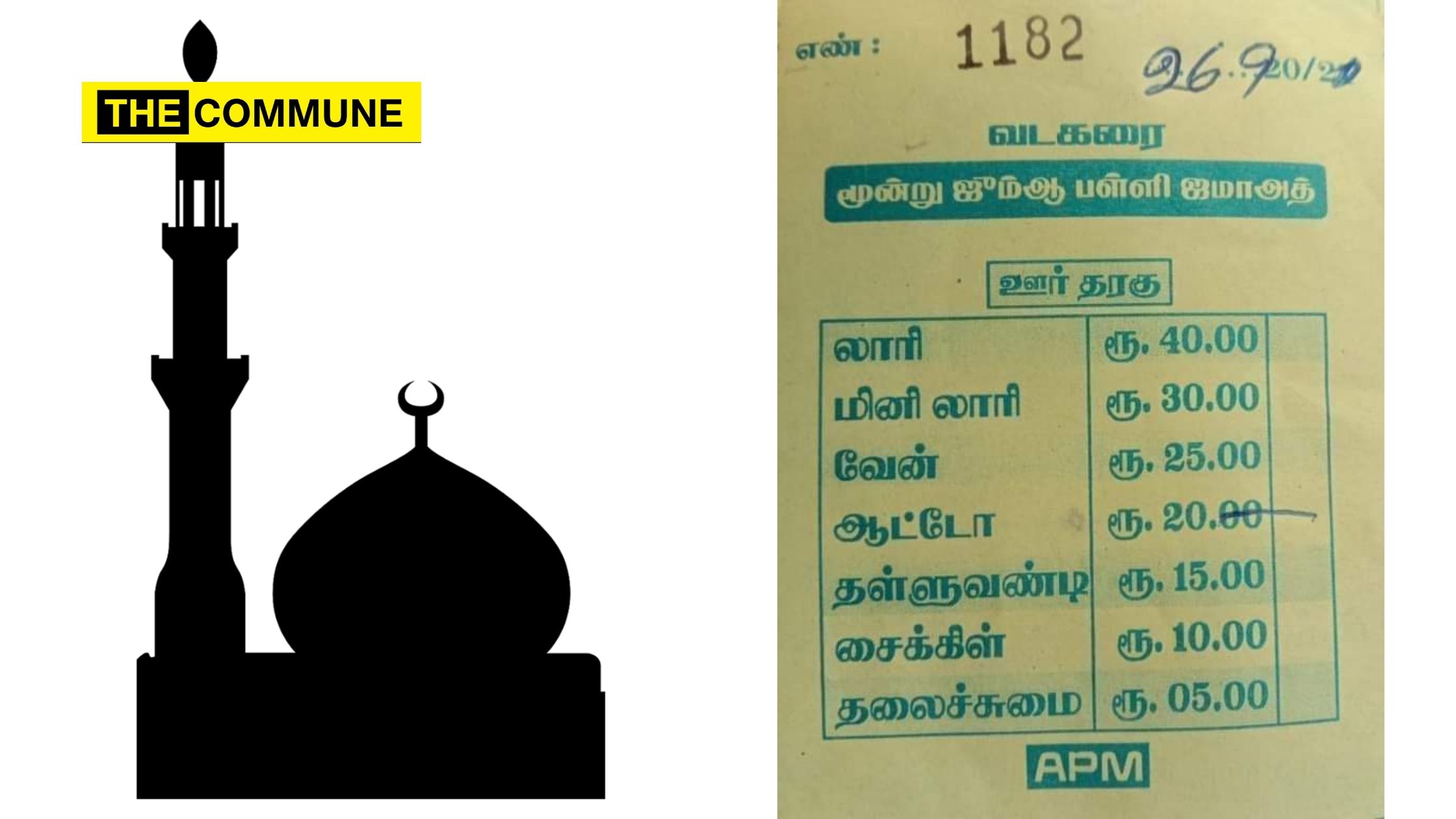
In what seems to be like the medieval Muslim practice where Islamic rulers imposed tax on non-Islamic population for just existing, a picture has surfaced on social media which shows ‘Oor Tharagu’ (town brokerage in English) being levied on vehicles by the Jamaat in Vadakarai near Senkottai in Tenkasi district.

A Twitter user posted a picture saying that the Jamaat in Vadakarai village is collecting fees from vehicles entering the town.

The tariff list shows ₹40 being levied for lorries, ₹30 for mini-lorries, ₹25 for auto rickshaws, ₹15 for handdriven carts, ₹10 for cycle.

Many on Twitter expressed shock over the incident. However, some have said that it could be a parking fee charged on vehicles parking inside the mosque. There is no clarity on what purpose this fee is being levied yet.

It is to be noted that the population of Vadakarai is predominantly Muslim. According to the Census 2011, 65% of the town comprises of Muslims.

The Indu Makkal Katchi (IMK) has said that there are many such incidents happening across Tamil Nadu in Muslim majority areas where some sort of fee is levied on non-Muslim population living in the area. The IMK spokesperson said that many businesses owned by non-Muslims in and around mosques of Ramanathapuram are being made to pay such fee to the mosques.

“IMK has been voicing out against these for a long time, but we are being called communal if we bring to light such issues.”, he said.

ISRO and French CNES enter into partnership to send probe to Venus

In a significant development, the Indian Space Research Organisation (ISRO) is set to launch its Venus mission in 2025 in partnership with French space agency CNES.

The VIRAL (Venus Infrared Atmospheric Gases Linker) instrument co-developed with the Russian federal space agency Roscosmos and the LATMOS atmospheres, environments and space observations laboratory attached to the French national scientific research centre CNRS has been selected by the ISRO after a request for proposals, it said in a statement.

ISRO chairman K Sivan and CNES President Jean-Yves Le Gall had extensive meetings and into areas where both the space agencies could further cooperation in space.

“In the domain of space exploration, France will be taking part in ISRO’s mission to Venus, scheduled to launch in 2025. CNES will coordinate and prepare the French contribution, the first time a French payload will be flown on an Indian exploration mission,” CNES said in a statement.

The mission to Venus comes after the Mars Orbiter Mission (Mangalyaan) and Moon missions Chandrayaan-1 and 2.

France has been very helpful with our mission to help send our astronaut into outer space and had provided its expertise in flight medicine.

“The two nations are pooling their expertise, notably in the domains of space medicine, astronaut health monitoring and life support. Initial exchanges have concentrated on training for India’s flight physicians and technical teams and the supply of CNES flight systems,” it added.

Also,  France has become an important country in which India has extensive collaboration in the strategic sectors of nuclear, space and defence after the US and Russia.

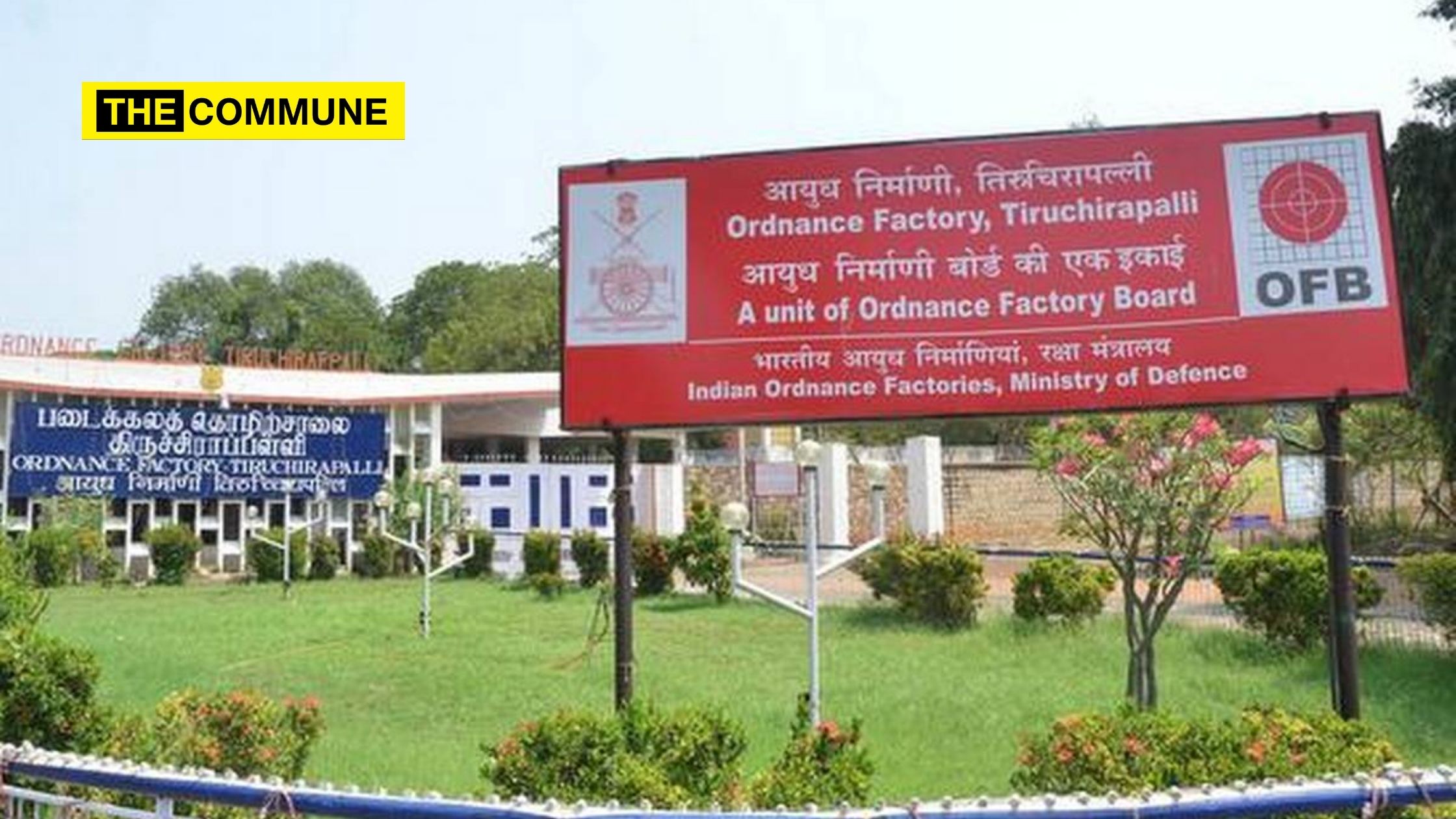
Media reports cite internal army report saying OFB manufactured faulty ammunition, OFB refutes

In a scathing indictment of the state-owned Ordnance Factory Board (OFB), media reports citing an internal army report said that the OFB manufactured substandard ammunition. Reports said that over the last six years, 100 medium artillery guns could have been purchased for the amount of money spent on the faulty ammunition.

Faulty ammunition can not only destroy a gun but many times inflict causality on those soldiers and officers who are testing the guns.

It is estimated the exchequer lost ₹960 crore due to poor quality OFB ammunition between 2014 and 2020. The report noted that, “₹960 crore roughly means 100 155-mm medium artillery guns could have been bought for this amount.”

These controversial remarks reportedly came form an internal Army report to the Ministry of Defence (MoD), said to have been accessed by India Today.

The OFB is responsible for manufacturing ammunition and weaponry for the Indian armed forces and is administered by the MoD’s Department of Defence Production.

Many have called the OFB a relic of the old socialist system and the time has come to get rid of this world’s oldest government-controlled weapons production organizations.

The ammunition that has been singled out includes 23-mm air defence shells, artillery shells, 125-mm tank rounds and different calibres of bullets used in infantry assault rifles.

Quoting the the Army report, it stated the ‘poor quality production’ at the OFB, leading to monetary resources but more importantly loss of human life due to accidents caused by faulty ammunition.

“Lack of accountability and poor quality of production results in frequent accidents. This results in injuries and deaths of soldiers. On an average, one accident takes place per week,” says the report which is said to be now with the MoD.

Since 2014, there have been 403 accidents related to faulty ammunition since 2014. However, after the advent of the Modi government the numbers of accidents have steadily reduced.

From 114 accidents in 2014, the number reduced to 53 by 2017, rose again to 78 in 2018 and dipped once again to just 16 in 2019.However, nothing can quantify the human casualty figures and accidents often lead to permanent disabilities and loss of limbs.

So far only 13 accidents have taken place in 2020, with no loss of life. Weapons testing is a important and dangerous process which is necessary to ensure in case of a serious conflict, the armed forces are ready to use them at a moments notice.

There is also a growing need for private players to become ‘mini-OFB’ type suppliers who can manufacture quality munitions.

Earlier this month, the Army’s ‘ammunition-in-chief’, the Master General Ordnance (MGO) Lt Gen Upadhya said at an industry interaction, “OFB is in any case available to us. We want a parallel capacity to come up. It may not be at the scale of the OFB. But to start with, at least a parallel set up should come and various types of ammunition would then be available from the industry which can then settle down and in the times to come, a scaling up can take place.”

However, the OFB in its press statement has refuted the reports stating that it was aimed at spreading misinformation and were defamatory and alarmist in nature.

It said that it did not have the possession of the internal Indian Army report cited by the various publications and accused the media houses of not seeking clarification before publishing.

It came down heavy on the authors of the reports for publishing articles based on “unverified internal report of the Indian Army”. The OFB claimed that accidents are complex phenomenon and there are multiple reasons for their occurrence such as poor gun maintenance, faulty firing drill, un-validated design changes in the weapon, faulty ammunition design among others.

“Out of the total number of accidents where defect investigation has been completed, only 2 per cent of the cases where casualties have been reported are attributable to the OFB,” read the statement, adding that the 98 per cent of the cases where there have been casualties reported, were not attributable to the OFB.

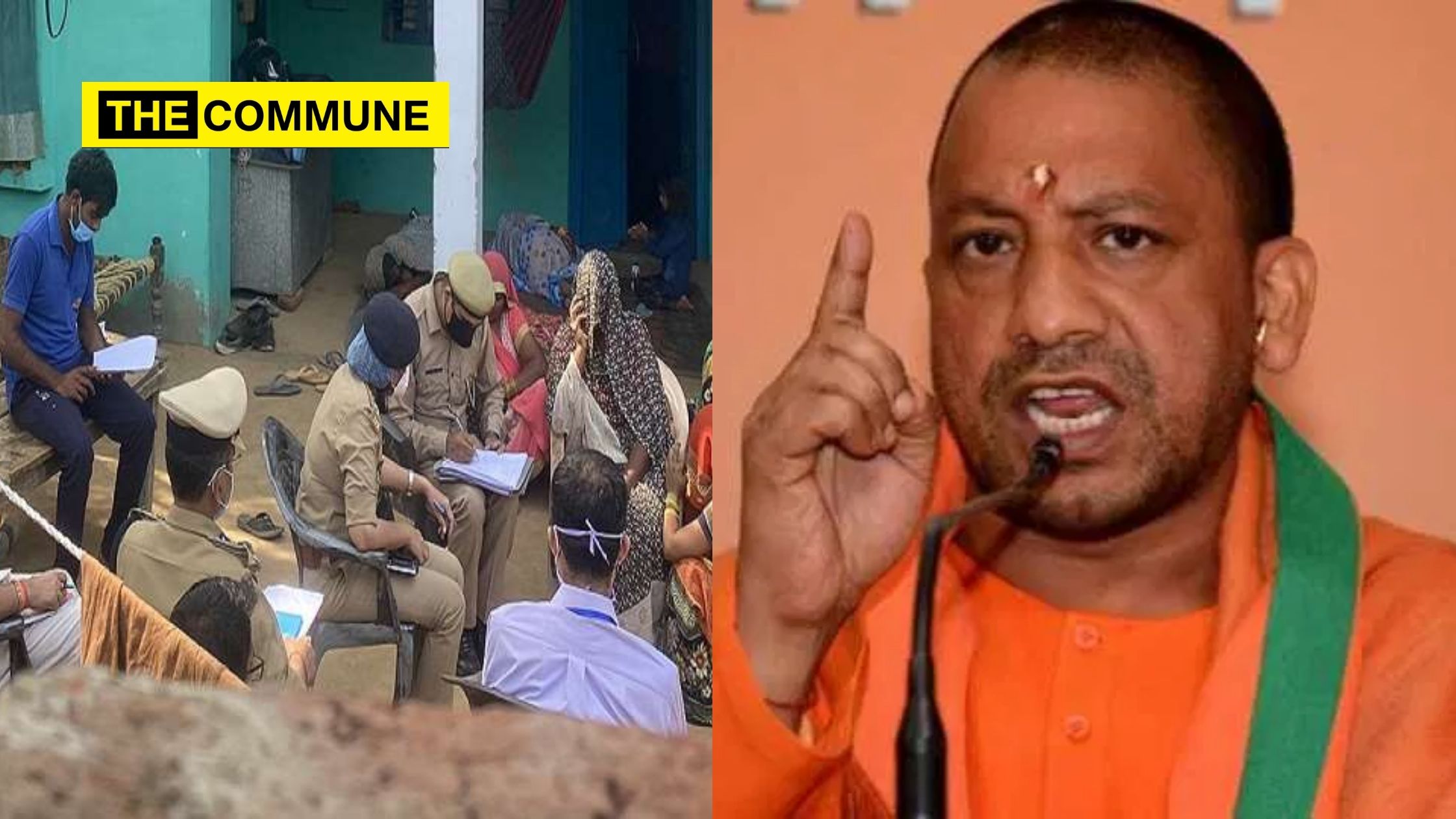
Yogi speaks to father of Hathras rape victim, assures of stringent action, appraises PM Modi

In yet another case of a brutal rape that has brought back dark memories of the infamous Nirbhaya case, Utter Pradesh Chief Minister Yogi Adityanath has promised to take stringent action against the accused.

Yogi has constituted a three-member Special Investigation Team (SIT) to investigate the heinous Hathras gang rape case which will also cover the role of the police and civil administration.

On Wednesday (September 30), an SIT was initiated and has been instructed to submit the report within seven days. Also, Yogi has been in touch with PM Modi and has apprised him about the incident.

Meanwhile, Yogi Adityanath spoke to the father of the Hathras victim via video conferencing and assured him that the harshest punishment will be given to his daughter’s assailants. The UP CM also promised that and all possible help to the family will be extended. The family is being given ₹25 lakh, a house  and a job to one of the members of the family.

On September 14, the victim had gone to collect fodder when she was attacked. The assailants dragged her by her neck, causing the spinal injuries to the nearby field where she was raped and then choked and in that process, she had ended up biting her own tongue.

Before the victim died she was able to give names of the accused namely Sandeep, Luvkush, Ravi and Ramu have been arrested by the police.

The Sation House Officer (SHO) of Chandra police station, has been transferred after allegations of delay and negligence.

22 year old SC woman gang-raped by Suhail and Shahid dies in UP’s Balrampur district, accused arrested

Following the horrific rape incident in which a Scheduled Caste girl was gang-raped by four men belonging to the dominant Thakur caste in Uttar Pradesh’s Hathras village, another incident has been reported in which a 22 year old woman was gang-raped by two Muslim men.

The woman, a 2nd year B.Com student who also reportedly worked at a private firm, had gone to pay her college fees on Tuesday but did not return home till late in the evening.

Her family members had made several attempts to reach out to her phone but to no avail.

Later that night, she had reportedly come in an auto rickshaw in a semiconscious state with a glucose drip attacked to her arm indicating that she had undergone treatment.

According to the mother of the victim, the woman had come back in pain and managed to utter the words “I am in lot of pain, I won’t survive”.

Seeing her condition, the family members rushed her to a nearby hospital but the woman died on the way.

Speaking to the reporters, the mother of the victim told that her daughter had gone to get her admission done at 10 in the morning and on her way back, 3-4men forcibly put her in their car, injected her and raped her adding that the accused broke her back and her legs and sent her back in a rickshaw. “She had no strength left to even walk,” the mother lamented.

However, the Balrampur Police had refuted reports about the victim’s limbs and waist being broken as the autopsy reports did not confirm the same.

The Balrampur police have filed a case based on the complaint of the victim’s brother. Two accused – Shahid and Suhail has been arrested on charges of gang-rape and murder.

The police have said that the victim was raped at the backroom of a grocery store in Gaisari village. Apparently, the victim’s sandals were found outside the room. It was reported that the store owner was the mastermind behind the crime.

Police noted that the accused had tried to get the victim treated post the rape. They had called a nearby doctor who later grew suspicious and of the situation and refused to treat the woman in the absence of the guardian.

The doctor told local reporters that a boy named Suhail had called him around 5 PM and was taken to Shahid’s grocery shop. He was told that the woman was a patient from their family. He had asked who the woman was after seeing that the room was empty and sensing something was wrong. The accused had told the doctor that she was the daughter of a government secretary. The doctor then refused to treat until the victim had a guardian beside her. They had then told him to go back to the clinic saying that they will get the victim to his clinic but did not turn up.

The doctor also confirmed that the victim did not have an IV drip attached when he saw her.

Similar to the Hathras incident, the Balrampur victim was also hurriedly cremated in the middle of Tuesday night amidst heavy police deployment. However in this case, the funeral was conducted with the permission of the victim’s family unlike as alleged by the family members of the Hathras victim.

Meanwhile, Uttar Pradesh Chief Minister Yogi Adityanath has assured that the perpetrators behind the Hathras incident would not be spared and that the case would be tried in fast track court.

Bengali woman captures 52kg fish, becomes rich overnight

This woman did not loot or win a lottery but struck gold by selling fish. Pushpa Kar, an elderly woman from the Sagar Island in Sundarban turned rich overnight when she caught a giant fish weighing 52kg.

She had gone fishing when she found this huge fish weighing 52kg, that had earned her ₹6200 per kg. The single fish had earned her a whopping ₹3 lakhs. It had died after colliding with a vessel.

She was reported saying that it would have fetched her even more money had it not started decomposing. Though the fish had started decomposing making it non-edible as it became rubbery, it can be used for other purposes. Organs such as the blubber are even exported to countries in Southeast Asia. Dried blubber or Fish Maw can fetch a price of ₹80,000 per kg. The fish can also be used for medicinal purposes.

For Kar, it was a moment she will never forget as her economic difficulties have now been sent to the bay.

Scientists discover super-enzyme that digests plastic in 6 hours

Scientists have re-engineered an existing enzyme into a super enzyme that degrades plastic 6 times faster than previously recorded making the plastic suitable for recycling. This super-enzyme has been derived from a bacterium named PETease which has a natural ability to eat plastic and enables the complete recycling of plastic bottles.

Plastic has forever been serving as a looming menace and has contaminated the whole planet from the Arctic to the deepest ends of oceans so much so that we even consume microplastics to some extent. This new discovery which was engineered by linking two separate enzymes could potentially be a solution to the problem.

PETase was created  accidentally by  scientists which can digest the hard, crystalline surfaces of  plastic bottles. It has now been mixed with another enzyme, MHETase to give the new super-enzyme.

“When we linked the enzymes, rather unexpectedly, we got a dramatic increase in activity,“ said Prof John McGeehan, at the University of Portsmouth, UK. “This is a trajectory towards trying to make faster enzymes that are more industrially relevant. But it’s also one of those stories about learning from nature, and then bringing it into the lab.”

The team is now examining how the enzymes can be tweaked to make them work even faster still. “There’s huge potential,” said McGeehan. “We’ve got several hundred in the lab that we’re currently sticking together.” A £1m testing centre is now being built in Portsmouth and Carbios is currently building a plant in Lyon.

This new enzyme created by linking two existing enzymes found in plastic-eating microbes, discovered at a Japanese Waste site in 2016 works at room temperature and could potentially solve the plastic problem the world faces.

This enzyme can degrade polyethylene terephthalate (PET) that is used for soft drinks and fruit juice packaging and on polyethylene furanoate (PEF) which is used to make beer bottles.