Home Blog Page 1317

Cocaine worth over ₹2000 crore seized at Tuticorin port

Based on specific intelligence that cocaine will be concealed in a consignment imported in container reaching V O C Port, Tuticorin, the officers of Directorate of Revenue Intelligence (DRI) have intercepted the container declared to be containing wooden logs. The suspected container has originated from Panama, transited through the ports of Antwerp and Colombo.

On examination, the suspected container was found to contain 9 bags concealed between the rows of wooden logs. On opening, the said bags 302 white coloured compressed bricks wrapped in multiple layers of packing material were found. The contraband weighed 303 kg and it is highly suspected to be cocaine. The contraband along with cover goods i.e. wooden logs are seized under the provisions of the NDPS Act, 1985.

Further investigation about the origin of the consignment and concealment of narcotic drugs is being carried out.

(Source: PIB)

Click here to subscribe to The Commune on Telegram and get the best stories of the day delivered to you personally.

A note on Rāmarājya

Rāmarājya

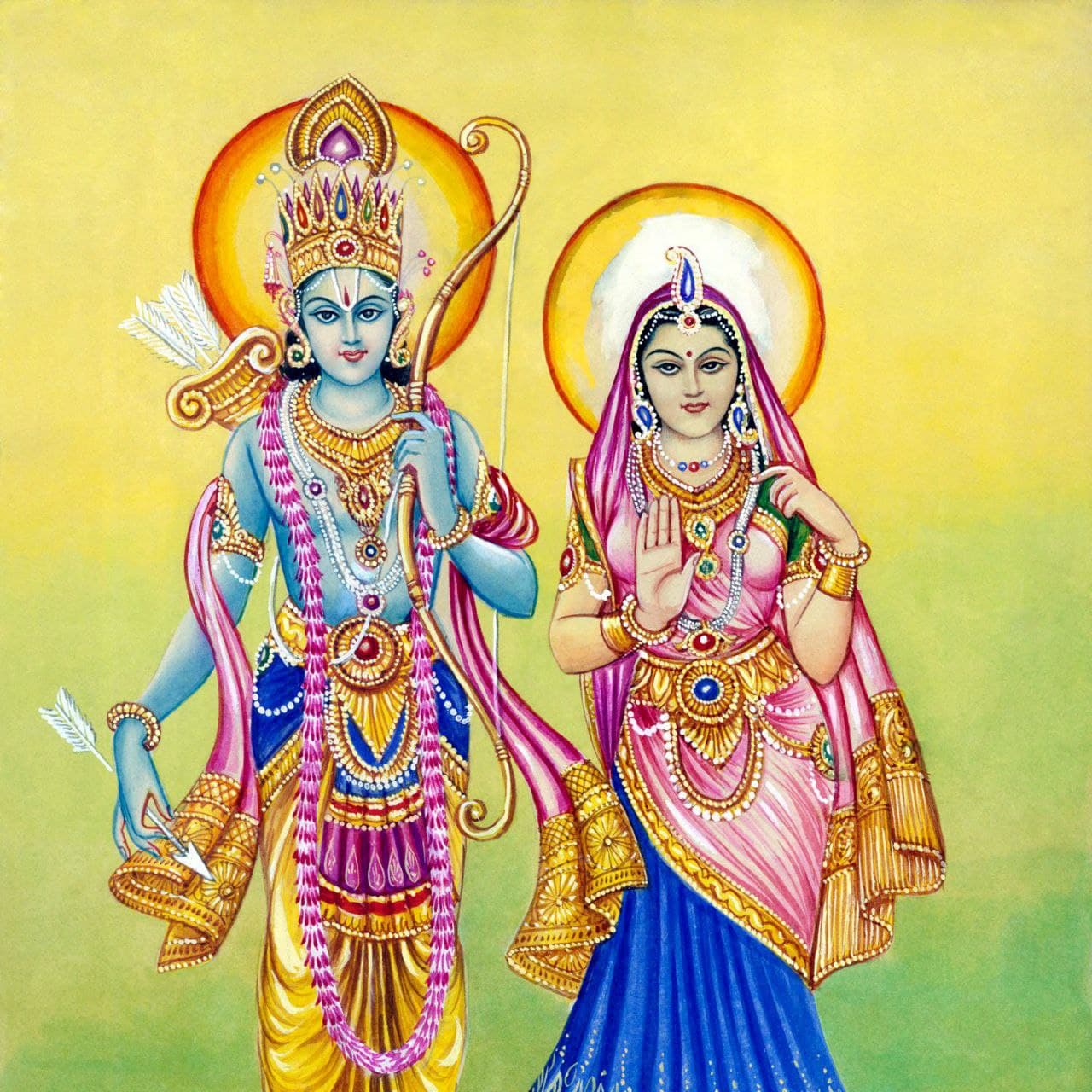
The image of Rāma as Maryādā Puruṣottama – the best among men, the ideal man – is widespread in the Hindu psyche. Rāma is the embodiment of Dharma, always keeping with righteous action, truth and duty. Even with the rise and fall of many kingdoms and empires and despite the several ebbs and flows of Hindu civilisation, this strand of thought has remained in the Hindu mind for more than a period of two thousand years.

However, Rāma is not only the ideal man, but He is also the ideal monarch. As the archetypal ideal ruler who exemplifies Dharma, He is also responsible for safeguarding Dharma from Adharma.

The idea of a State governed under Rāma – the Rāmarājya – has influenced the foundational principles of Hindu civilisation over these past centuries. Harmony and happiness all around characterises the Rāmarājya.

What Rāmarājya is and isn’t

In the Rāmarājya, statecraft is envisioned as a partnership between the deity and the earthly ruler, with Dharma as the nucleus of the State. The earthy ruler – be he elected or born into the role – upholds Dharma.

The State protects and preserves ancient traditions and practices; it does not interfere in them by alluding to naïve ideas that are incompatible with the smooth functioning of Hindu society.

Home, Family and Social bonds are strengthened and protected; they are not diluted by progressive laws and an over-reaching judiciary.

The sovereignty of the country is protected in such a State, be it on the land or marine borders, or even on the economic frontiers. Autonomy is not handed over to a globalist, imperial power in exchange for a few paltry trinkets.

The State funds true merit in the arts and sciences and does not disburse funds and taxpayer-funded employment to groups who hold the State ransom with threats of violent riots and unfavourable electoral mandates.

Upliftment of the poor and the needy does take place, but not through draconian laws that institutionalise discrimination and persecution of certain groups. Neither does the State engage in social engineering through handouts to establish faux egalitarianism.

The State facilitates entrepreneurship and financial activity. Citizen-citizen interactions and citizen-State interactions – such as those in the realms of industry, commerce, and taxation – are not made obscure and complicated by vested interests and bureaucratic red tape. There is no place for corruption and hubris.

The ruler of such a State does not claim to be a Nanny who knows what is best for the Children. He does not seek to bring in reform for reform’s sake, as a Statist government machinery mutely stands by. The ruler does not tamper in the inherent diversity of practices and rituals; he does not seek to impose a uniform and quasi-monotheistic set of practices from up above in order to create superficial conformity and glibly, and falsely, call it unity. He is not enamoured with the State’s right to run people’s lives for them.

The elimination of Adharma as central to the preservation of Dharma

But most important of all the obligations of a Dhārmika ruler towards the People is the destruction of Adharma. The extermination of foes will involve tasks that are considered difficult and uncomfortable. These acts will be considered cruel by many. But the Dhārmika ruler does not shy away from them in order to protect one’s People.

In the Bāla Kāṇḍa of the Vālmīki Rāmāyaṇa, there is a chapter where Viśvāmitra convinces Rāma that it is his duty to slay the dreadful Tāṭakā.

Tāṭakā was a very powerful yakṣiṇī. She devastated the land with wickedness and impiety, tearing asunder its sacredness. Therefore, the great Viśvāmitra beckons Rāma to slay her:

“O Rāma, thou must slay this wicked and impious demon Tāṭakā, who ravages the land. For the good of the Brāhmaṇas and the king, O Rāghava, accomplish this; do not hesitate to destroy this vile yakṣiṇī. It is the duty of a warrior to protect those of the four castes. A prince must not eschew deeds that are painful and difficult, for the preservation of his people. It is according to the law of eternal Dharma, O Rāma, that even deeds that appear ruthless are permitted to those appointed to protect their subjects. O Rāghava, Tāṭakā is wholly evil, and therefore must be destroyed […] Fulfill thy duty and slay this yakṣiṇī without delay.”

However, Rāma, who possesses great tolerance and kindness, is still reluctant. He says to his brother Lakṣmaṇa:

“She is horrible, versed in black magic and hard to subdue, but it is not proper to deprive a woman of her life. A woman is worthy of protection, therefore, I shall incapacitate her, by depriving her of the power of motion thus preventing her from doing further mischief.”

This is where Viśvāmitra comes in, with compelling and eye-opening arguments on why the resplendent Rāma must rid himself of such a perspective:

“Enough, she does not deserve further mercy; should you spare her, she will gain strength through her magic powers and will again break up our holy rites. The evening is approaching and in the evening rākṣasās are overcome with difficulty; slay her, therefore, without delay.”
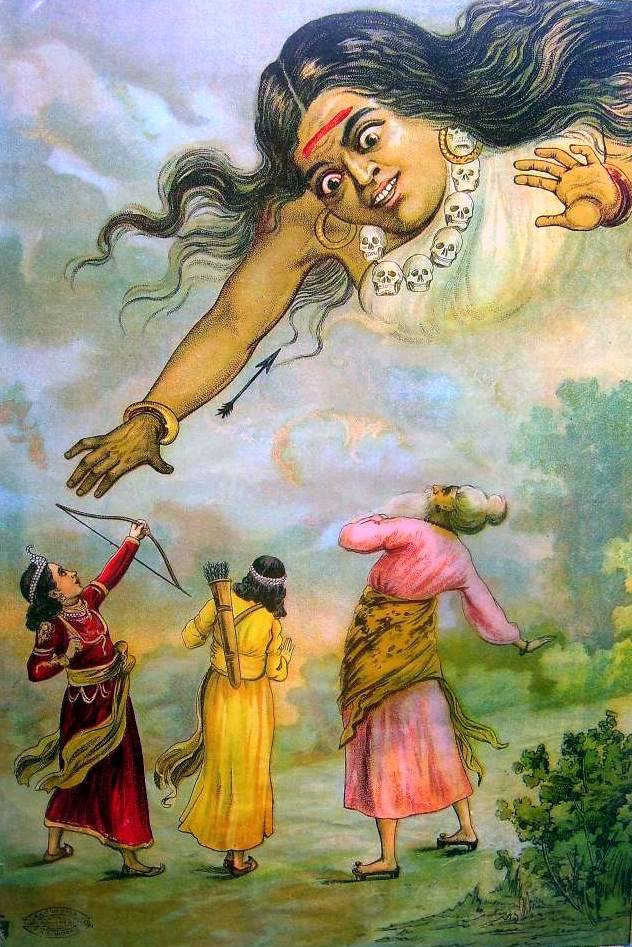
Viśvāmitra’s argument on how wickedness and evil grow stronger upon being spared is noteworthy. Stress is also laid on the symbolism of a sacred land being bereft of ritual due to Adharma. Dharma rests on the efficacy of sacred conduct and that of conducting sacred and holy rites. Adhārmika foes destroy the traditional Hindu way of life.

However, a frequent and misplaced argument is made that such methods make Hindus akin to their Adhārmika foes, resulting in a “spiritual defeat”.

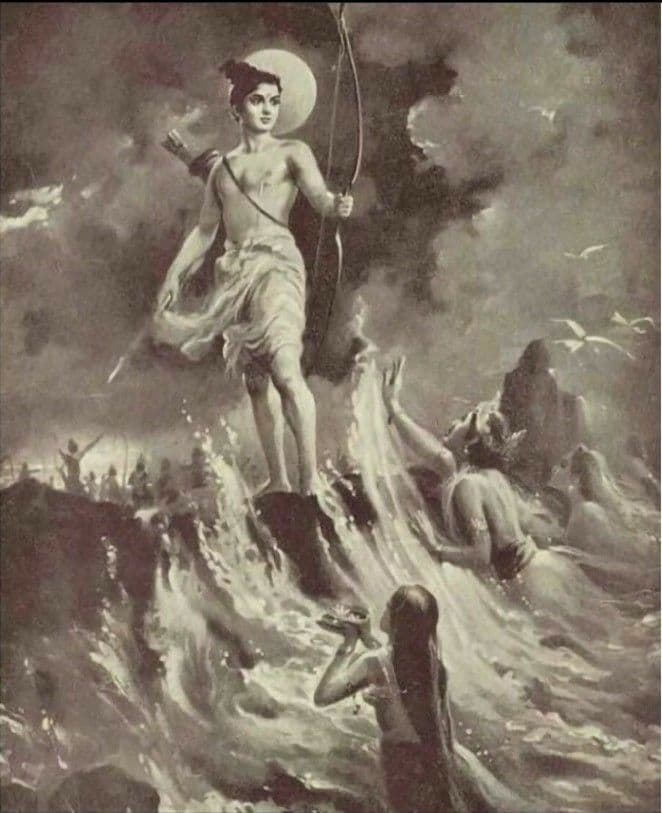
This misplaced argument can be answered in a chapter from the Yuddha Kāṇḍa of the Vālmīki Rāmāyaṇa. When the Ocean does not appear in his personal form before Him after requests and a wait of three nights, the enraged Rāma says:

“Indeed calmness, forbearance, kind spoken-ness and straight-forwardness – these qualities of noble men give weak results, when directed towards those having no virtues. This world honours that man, who boasts himself, is corrupt and shameless, runs about in all directions advertising himself and commits every kind of excess. In this world, it is not possible to obtain fame, glory or victory at the end of a battle, by conciliation. O, Lakṣmaṇa! Behold now this ocean, having its water made suffocated soon with its crocodiles floated on all sides and broken asunder by my arrows […] I will make the ocean with its multitude of conches, oyster shells, fishes and crocodiles, dry up now in this great battle. This ocean is considering me as an incapable man endowed as I am with forbearance. It is a great mistake to show forbearance to such an individual.”

And it is then, after Rāma has let loose fiery arrows which nearly dry up the seas, that the Ocean appears before Him and affords Him of a way to travel to Laṅkā with His army.
Thus, in any State where Rāma – and consequently, Dharma – is central, the annihilation of Adharma must be swift and thorough. As long as Adharma persists, the People cannot live in harmony and prosperity.

Rāmarājya is not a mere metaphor and neither is it an ideal of the past. It is an aspiration of the future that we must strive towards in the present, not just to maintain sublime principles, but for the sake of our people and our children. It is the goal that we must never forget.
Click here to subscribe to The Commune on Telegram and get the best stories of the day delivered to you personally.

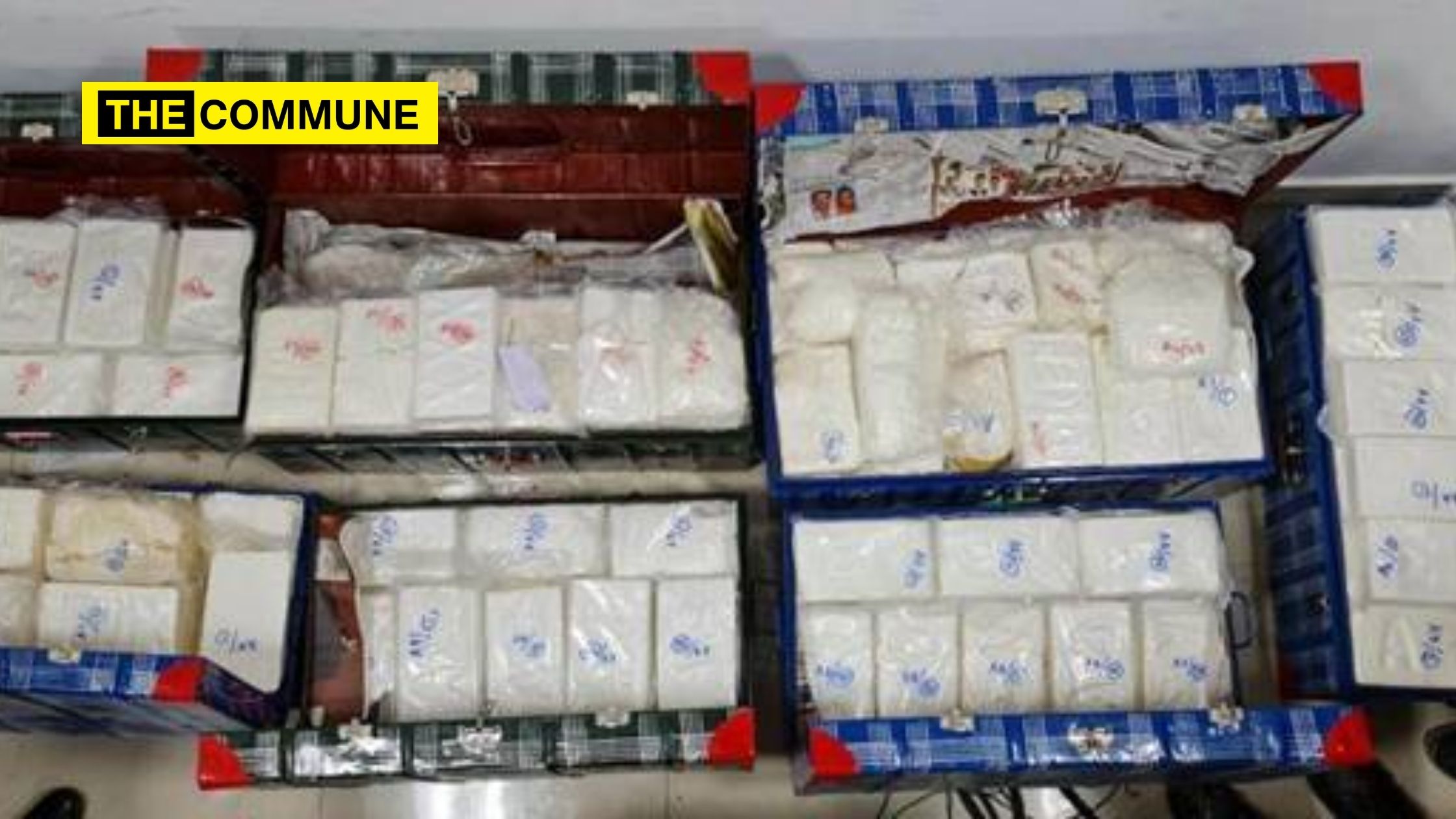
Covaxin demonstrates 100% efficacy against severe COVID in Phase-3 trials

There is good news on the Covid front as Bharat Biotech which manufactures India’s first indigenous COVID-19 vaccine – Covaxin and the Indian Council of Medical Research (ICMR) on Wednesday (21 April) announced phase 3 interim analysis results.

As per the statement that has been released by Bharat Biotech, the second interim analysis is based on accruing more than 87 symptomatic cases of COVID-19. This news could not have come at a better time when India has been hit severely by the second wave

“Due to the recent surge in cases, 127 symptomatic cases were recorded, resulting in a point estimate of vaccine efficacy of 78% (95%CI: 61-88) against mild, moderate, and severe COVID-19 disease,” said the company.

The efficacy against severe COVID-19 disease was 100 per cent (95%CI: 60-100), with an impact on reduction in hospitalizations. The efficacy against asymptomatic COVID-19 infection was 70 per cent, suggesting decreased transmission in Covaxin recipients, the company said.

Safety and Efficacy results from the final analysis will be available in June, and the final report will be submitted to a peer-reviewed publication, the company added.

The company further said that based on the achievement of the success criteria, placebo recipients have now become eligible to receive two doses of Covaxin.

The comprehensive Phase 3 study had 25,800 participants between ages 18-98, including 10 per cent over the age of 60, with analysis conducted 14 days post-second dose.

Covaxin was developed with seed strains received from the National Institute of Virology, and the phase 3 clinical trial was co-funded by the Indian Council of Medical Research, making it a true public-private partnership towards public health, it added.

Dr Krishna Ella, Chairman & Managing Director, Bharat Biotech, said, “Efficacy against SARS-Cov-2 has been established. Covaxin has demonstrated an excellent safety record in human clinical trials and in usage under emergency use. Covaxin is now a global innovator vaccine derived from Research & Development from India. The efficacy data against severe COVID-19 and asymptomatic infections is highly significant, as this helps reduce hospitalizations and disease transmission, respectively.”

Professor Balram Bhargava, Secretary Department of Health Research & Director General, ICMR, said, “I am very pleased to state that Covaxin, the first indigenous COVID-19 vaccine developed by ICMR and BBIL, has shown the efficacy of 78% in the second interim analysis. The tireless efforts of our scientists at ICMR and BBIL have resulted in a truly effective international vaccine of the highest standards and efficacy. I am also happy to note that Covaxin works well against most variants of SARS-CoV-2. These findings together consolidate the position of our indigenous vaccine in the global vaccine landscape.”

The protocols for manufacturing, testing and release of inactivated vaccines also meet the requirements of WHO, Indian and other regulatory authorities, the vaccine maker said.

These protocols have delivered consistent results over a 15-year period with more than 300 million doses supplied globally, with excellent safety and performance record, it added.

Already several million doses of Covaxin have been administered in India and exported in the form of sale or government aid to several other countries with an excellent safety record.

Bharat Biotech now plans to further develop Covaxin with clinical trials planned in India and globally. The company will now work on how to evaluate the vaccine’s safety and immunogenicity in younger age groups, the impact of booster doses, and protection against SARS-CoV-2 variants.

Click here to subscribe to The Commune on Telegram and get the best stories of the day delivered to you personally.
Sun News peddles fake news about people dying due to oxygen supply deficiency

Many people with corona infection are getting admitted at the Corona Special Ward of Vellore Government Hospital every day. On April 20th, the hospital reported the death of seven people for various reasons. However, Tamil news channels alleged that seven people died because of the scarcity of oxygen cylinder.

According to Collector Shanmugasundar, who went to the scene and conducted an investigation, seven people died for different reasons, including heart failure. He said, “the news that the corona patients have died due to lack of oxygen is completely false.  The patients were not transferred to any other hospital and that the oxygen pipeline maintenance was routine. Oxygen maintenance work has nothing to do with death.”

Manivannan, the deputy director of the district health services, said, “ All seven had recovered from the corona infection earlier and they may have died of complications such as heart disease later. No one has died due to lack of oxygen.”

The incident was misreported by Sun News, which said that the patients died due to a lack of oxygen. Even after Collector Shanmugasundaram’s report, Sun News, which had misreported the news, did not delete the video.

Sun News is part of Sun Network, owned by Kalanidhi Maran of Karunanidhi family which is the largest corporate media conglomerate in the country.

Many netizens lashed out at Sun News for resorting to fear mongering by peddling fake news at such trying times. Journalist Sandhya Ravishankar, criticized the irresponsible behaviour of the Tamil news media in instilling fear of an oxygen cylinder scarcity.

Click here to subscribe to The Commune on Telegram and get the best stories of the day delivered to you personally.

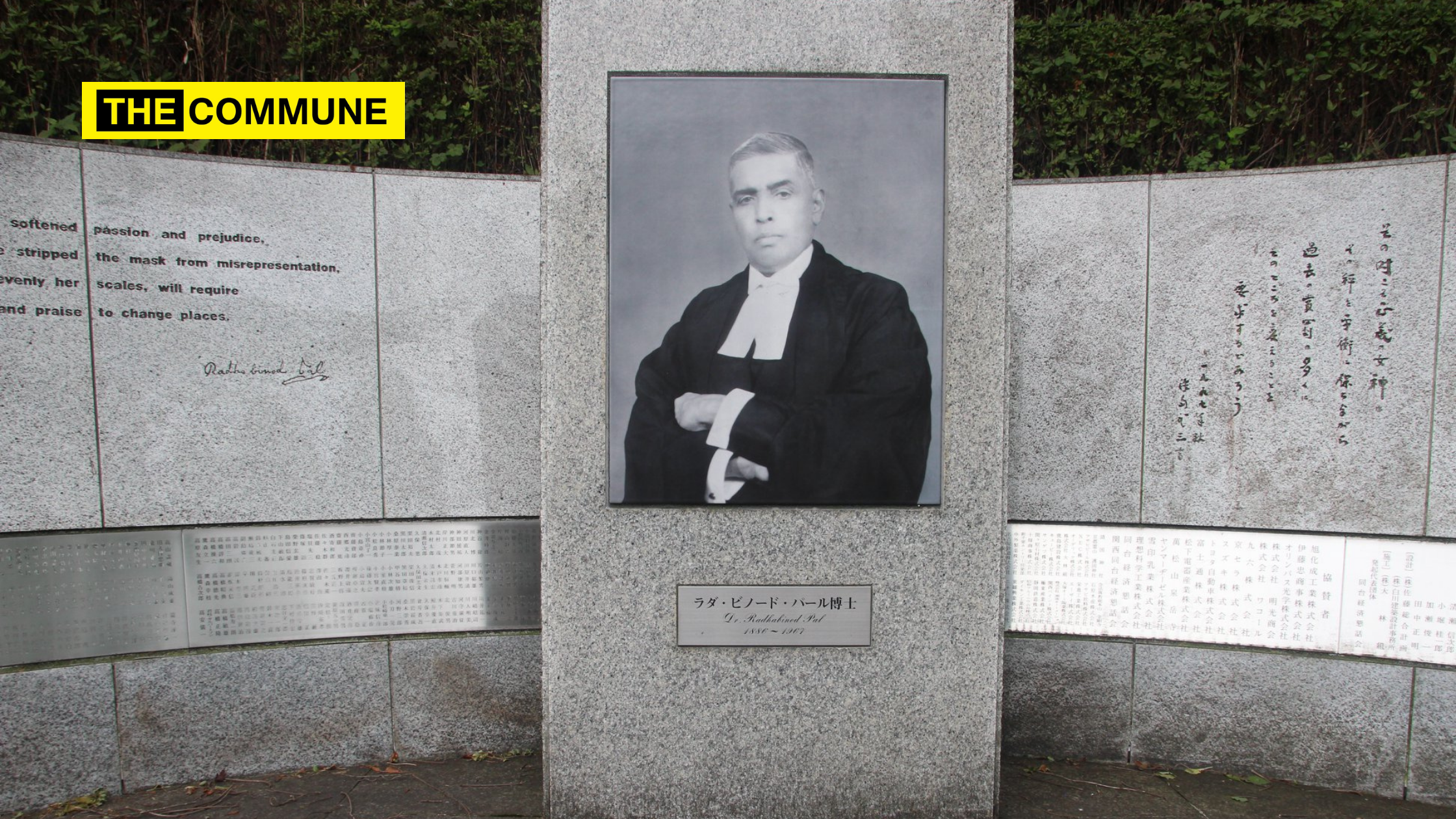
Radhabinod Pal, the Indian legal luminary celebrated by Japan

Very few Indians today remember Radhabinod Pal. That too, they might of heard of him after the Irfan Khan starrer Tokyo Trial released in 2016. During a visit to India in 2007, Japanese Prime Minister Shinzo Abe paid tribute to Pal in his speech in Parliament. Who is this Radhabinod Pal celebrated by Japan?

Early Life

Radhabinod Pal was born in the small village of Salimpur in the Kushtia District of Bengal in 1886. He started working as a Lecturer in Mathematics at Ananda Mohan College, Mymensingh, after receiving his MA (1908) in Mathematics from the Presidency College, Calcutta. Alongside his teaching, Pal obtained an LLM degree from Calcutta University. Pal was a key figure in the creation of the Indian Income Tax Act of 1922. Recognizing Pal’s legal acumen, the British government hired him as a legal counsel in 1927. Pal was appointed as Judge to the Calcutta High Court in 1941. He was asked to represent India on the tribunal of Judges presiding over the Tokyo Trials in 1946 to try Japanese leaders for “war crimes” in World War II.

Tokyo Trial

Radhabinod Pal’s nomination was seen as a symbolic gesture to increase South Asian representation on the bench. But Pal refused to be the token Indian on the bench. There was hardly any doubt in anyone’s mind about what the result of the judgement would be. It is an unwritten law that history will be written by those who win in war. This tribunal established by the Allied powers after winning World War II was no exception.

The 25 accused were found guilty by the Tribunal. Seven were sentenced to death, 16 to life imprisonment, and two were sentenced to 20 years and seven years in jail, respectively. But Pal was the only dissenting judge who absolved all the arrested suspects from all charges. Not only did his dissenting opinion enrage his colleagues, but it also enraged the Allied power regimes.

His simple argument was that the tribunal could not apply the charges, crimes against peace, and crimes against humanity, with retrospective effect. There were no such crimes listed under international law when Japan had gone to war, so Japan could hardly have broken any law. Pal concluded that the indictments themselves were invalid.

In his convincing argument to the rest of the jurists, he signified that the Allies violated the principles of restraint and neutrality of international law. In addition to ignoring Japan’s surrender hints, Allied powers killed two hundred thousand innocent people using nuclear bombardment, he added in his judgement.

Influenced by the logic of Pal’s dissenting judgement, French and Dutch Judges submitted separate dissenting notes, though agreeing with the majority judgement of finding the defendants guilty.

His Legacy

Japan respects this great legal luminary more than India did. Pal received the Order of the Sacred Treasure First Class from the Emperor of Japan in 1966, which is one of the country’s highest honours. He is also honoured with a memorial at Tokyo’s Yasukuni shrine, which honours Japanese war veterans. Two busy roads in Tokyo and Kyoto have been named after him. His verdict has been included in the syllabus of law studies there. His statue has been placed in front of Japan’s Supreme court.

When the entire war crime was blamed on the Axis powers, Radhabinod Pal was the only one brave enough to point out the Allied Powers’ faults. Many Japanese historians even now cite his judgment to prove that Japan was not the only perpetrator of World War II crimes.

Radhabinod Pal is the author of a number of legal books. In India, almost nobody knows him. It has been 70 years since the Tokyo trial ended. It may be a good time to remember this brave and patriotic man.

Click here to subscribe to The Commune on Telegram and get the best stories of the day delivered to you personally.

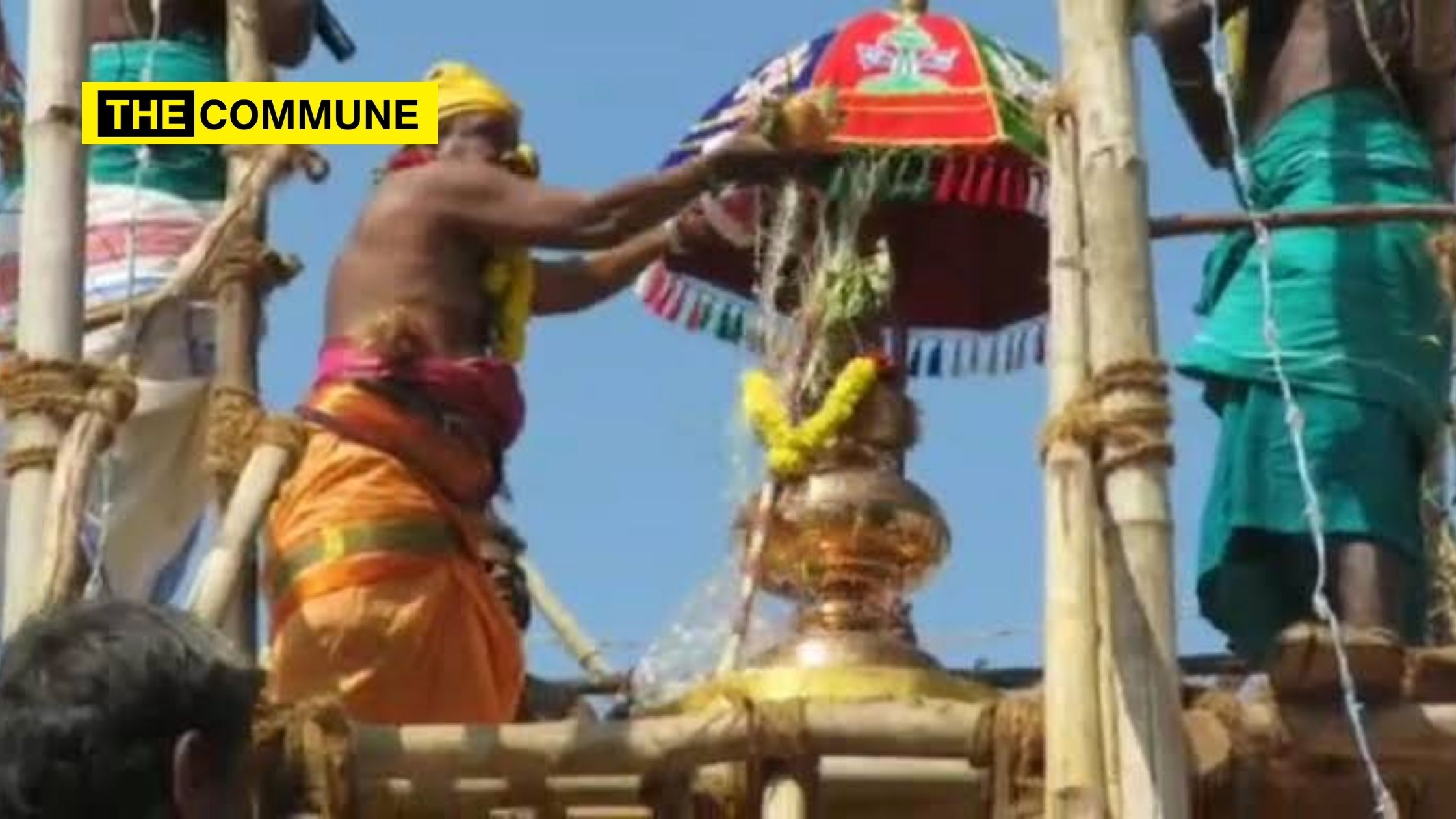
Pollachi perumal temple Kumbhabishekam gets postponed due to COVID restrictions

Devotees in Pollachi are worried as the kumbhabhishekam of the ancient Perumal temple at Vadachithur next to Pollachi’s Negamam has been postponed due to a corona infection following the consecration.

Negamam, which is situated next to Pollachi is the 19th-century Karivaratharaja Perumal Temple at the Negamam’s Vadachithur. The temple is under the control of the Tamilnadu government’s HR&CE department. The temple has not been maintained properly despite it being a very ancient temple. As a result of the demand of the people of the area, new idols have been placed in the temple, towers have been erected, a hall in front of the temple has been built, painted and renovated.

The kumbhabhishekam of the renovated temple was set to take place on April 25, according to the HR&CE Department. But now that the second wave of corona infection is spreading fast in India, various restrictions have been imposed on behalf of the government. Devotees were worried whether the renovated Karivaratharaja Perumal Temple would be held on time.

Currently, a notice board has been put up on behalf of the temple administration stating that the kumbhabhishekam of the temple has been postponed due to the rise in coronavirus infections. Thus the devotees and merchants who were waiting for the temple kumbhabhishekam to take place were greatly disappointed. The public is worried that they will face any difficulties as the temple consecration is hampered.

Click here to subscribe to The Commune on Telegram and get the best stories of the day delivered to you personally.
22 die in Nashik hospital as oxygen cylinder leaks

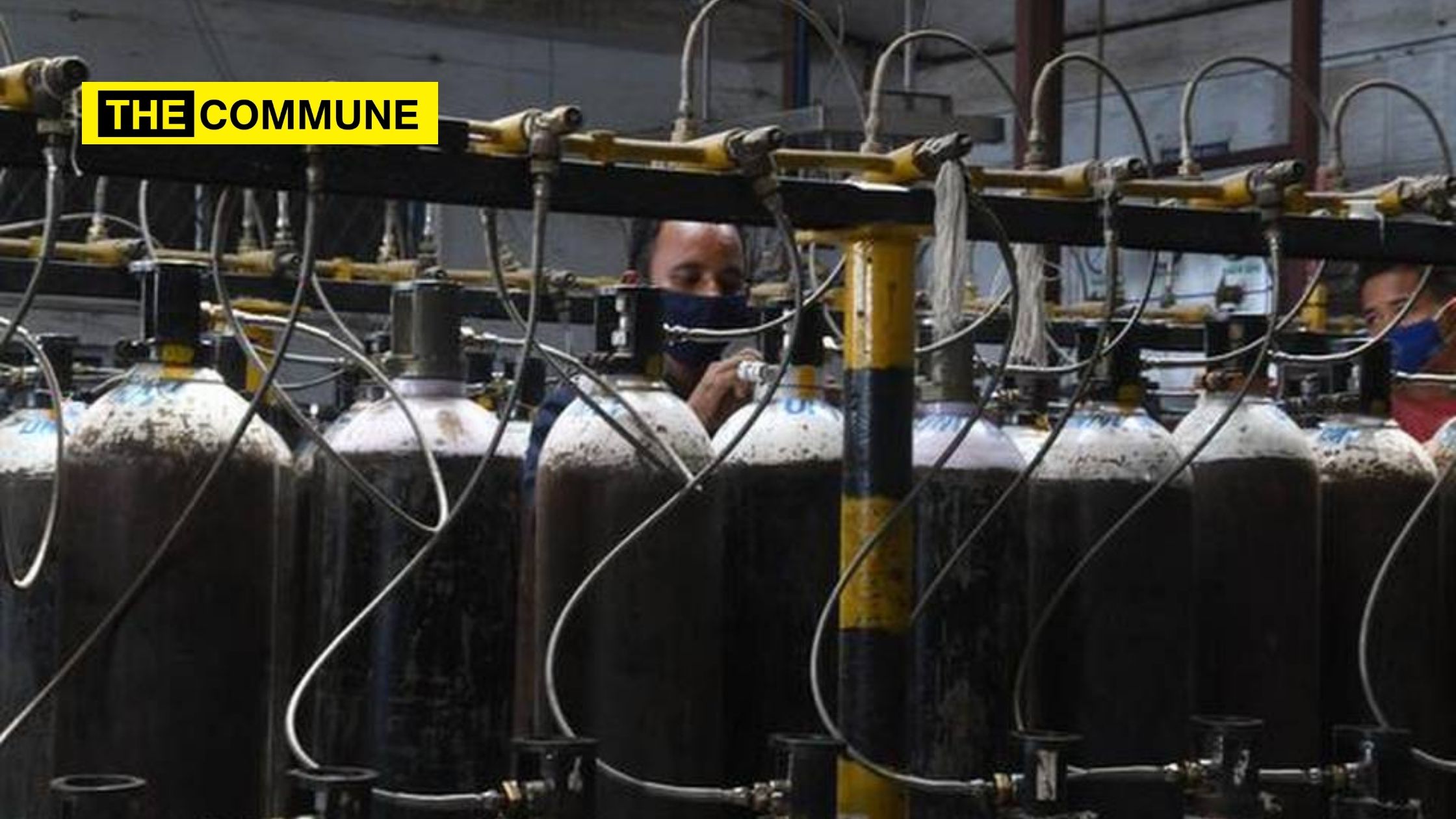
22 died at the Dr Zakir Hussain NMC Hospital in Nashik, Maharashtra, as the oxygen cylinder tank leaked. Experts reported that this leakage was due to a valve malfunction. This caused the oxygen that was supposed to be used by the hospital to be wasted, causing patients to die due to oxygen deficit. The hospital had been housing at least 157 patients at the time of the accident.

Nashik District Collector Suraj Mandhare who was present during the time of the disaster said, “This tanker is from a private vendor. Apparently, technicians were tried to fix the valve when low pressure caused the leakage. This led to the deaths of 22 critical patients who were on ventilator support. My deepest condolences to the kin of the deceased.” Mandhare went on to say, “Currently, the other patients are being supplied oxygen from the repaired tanker. They are in a stable condition, as per medical authorities.”

Prime Minister Narendra Modi expressed his condolences towards this disaster in a tweet by saying, “The tragedy at a hospital in Nashik because of oxygen tank leakage is heart-wrenching. Anguished by the loss of lives due to it. Condolences to the bereaved families in this sad hour.

Click here to subscribe to The Commune on Telegram and get the best stories of the day delivered to you personally.
Kerala HC rejects plea to set aside Lokayukta order against former Kerala minister KT Jaleel

KT Jaleel Kerala

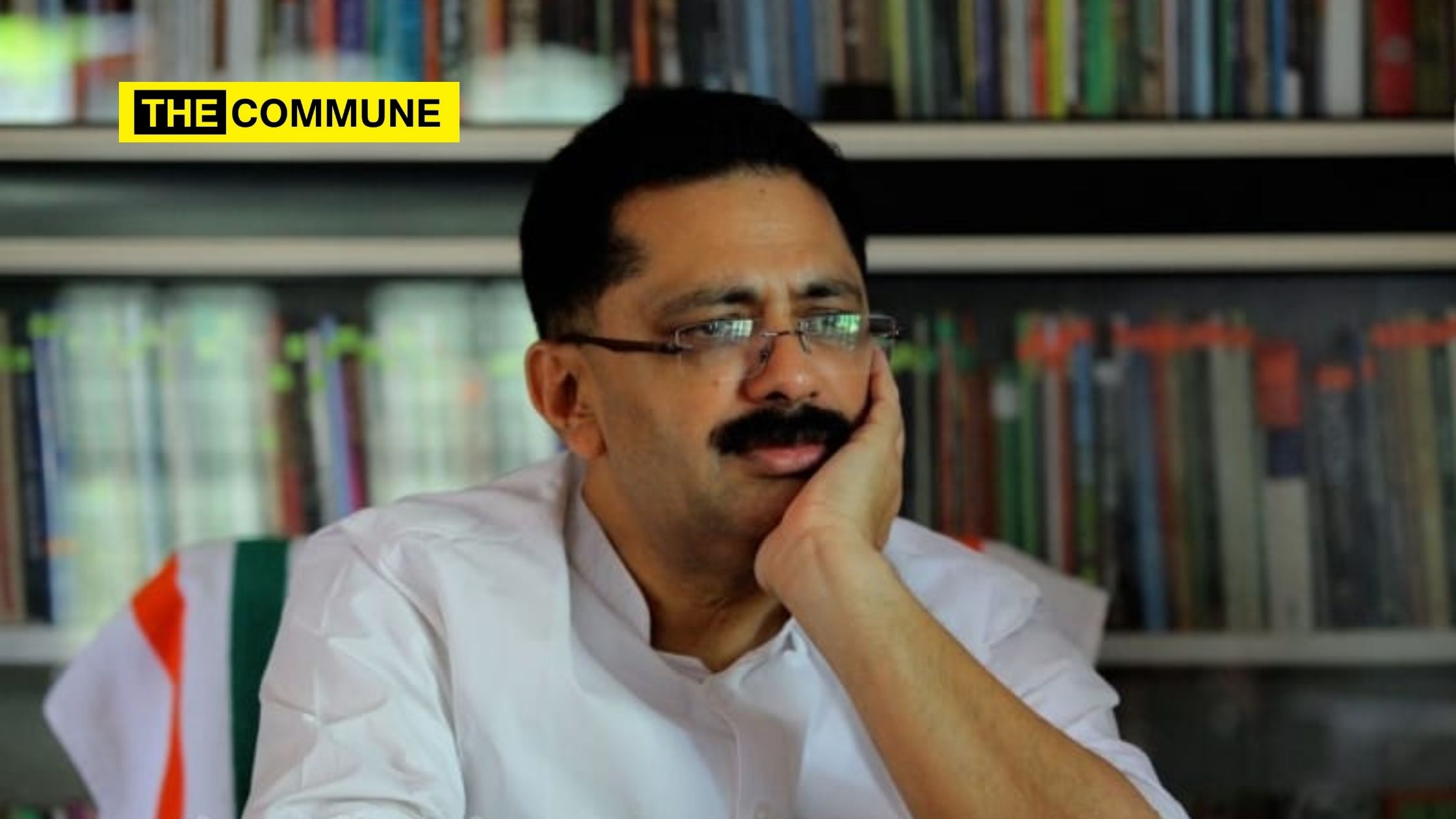
In a major setback for the Left Democratic Front (LDF) government in Kerala, the Kerala High Court has upheld the Lokayukta report against former Kerala state minister KT Jaleel. The High Court’s ruling came as response to a petition by Jaleel seeking to overturn the unfavourable Lokayukta report that had cost him his minister’s portfolio in the state cabinet.

Jaleel, formerly the Minister for Higher Education and Minority Welfare, resigned a week ago after the Lokayukta held him guilty of nepotism for facilitating the appointment of KT Adeeb, his relative, as General Manager of the Kerala State Minority Development Corporation. Adeeb had been working as the manager of a private bank before his appointment to the minority development corporation.

Jaleel had approached the High Court and had sought to set aside the Lokayukta report on the grounds that proper procedures were not complied with while investigating the case.

Rejecting his petition, the court stated that the Lokayukta had arrived at its decision after considering all files with regard to Adeeb’s appointment.

Earlier, it had been reported that the Kerala government too might move the High Court against the report. The government had even consulted the state’s Advocate General (AG) CP Sudhakara Prasad, asking for legal opinion on the matter.

The AG had had submitted that the government could approach the court as the state government did not get any opportunity to explain its position to the Lokayukta. However, the recent court ruling will force the state government to reconsider its next move.

The Lokayukta report reveals that Jaleel had altered the educational qualifications required for the post to aid his relative’s appointment. This relaxation in eligibility criterion was approved by the state government and the chief minister.

The initial complaint was made on November 2, 2018 by the Muslim Youth League, when it was alleged that Adeeb’s appointment as General Manager had flouted the rules.

Click here to subscribe to The Commune on Telegram and get the best stories of the day delivered to you personally.
“Cadres as deceiving as Stalin”, DMK trolled for publicity stunt

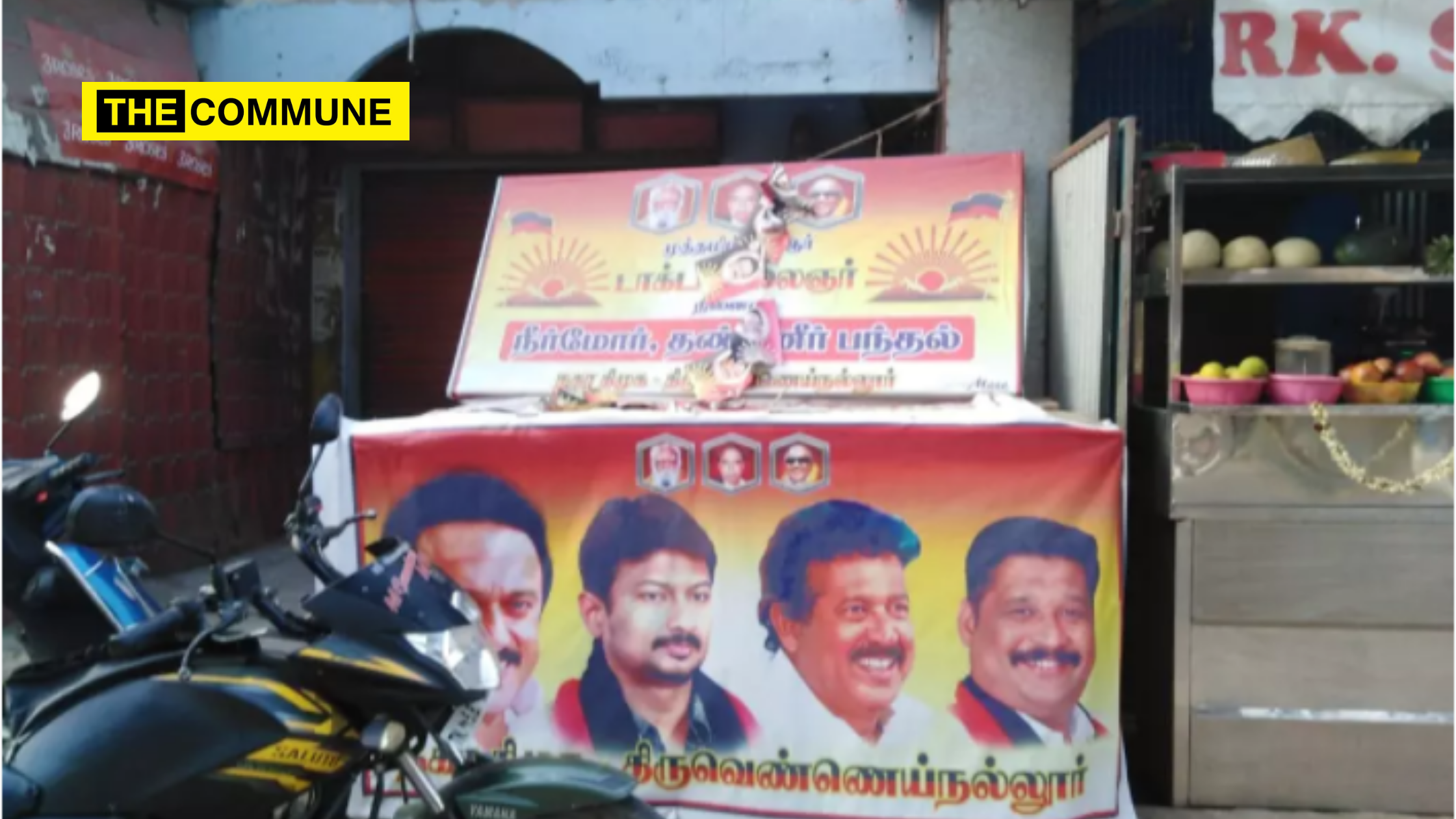
DMK president MK Stalin instructed his cadres to open camps across Tamil Nadu to distribute buttermilk and water as summer has approached. In response to this appeal, DMK cadres set up a few tents across Tamil Nadu to distribute buttermilk. Unfortunately, all of these camps only had plastic water cans. These camps were deserted the next day after posing for photos on the first day.

Netizens mocked DMK cadres and called it a one-day publicity stunt event to distribute buttermilk.

A photo showing the buttermilk tent abandoned by DMK cadres has gone viral on social media. According to the details on the banner seen in the photograph, this tent was installed in the Thiruvennainallur taluk of Viluppuram district. The image also included photographs of DMK MLA and District Secretary Ponmudy, as well as his son Gautham Sigamani. Netizens also took a jibe at the party for its dynasty politics on seeing the two father-son duo pictures.

Click here to subscribe to The Commune on Telegram and get the best stories of the day delivered to you personally.
Top Maoist comrade Muttanagari Jalandar Reddy surrenders to AP police

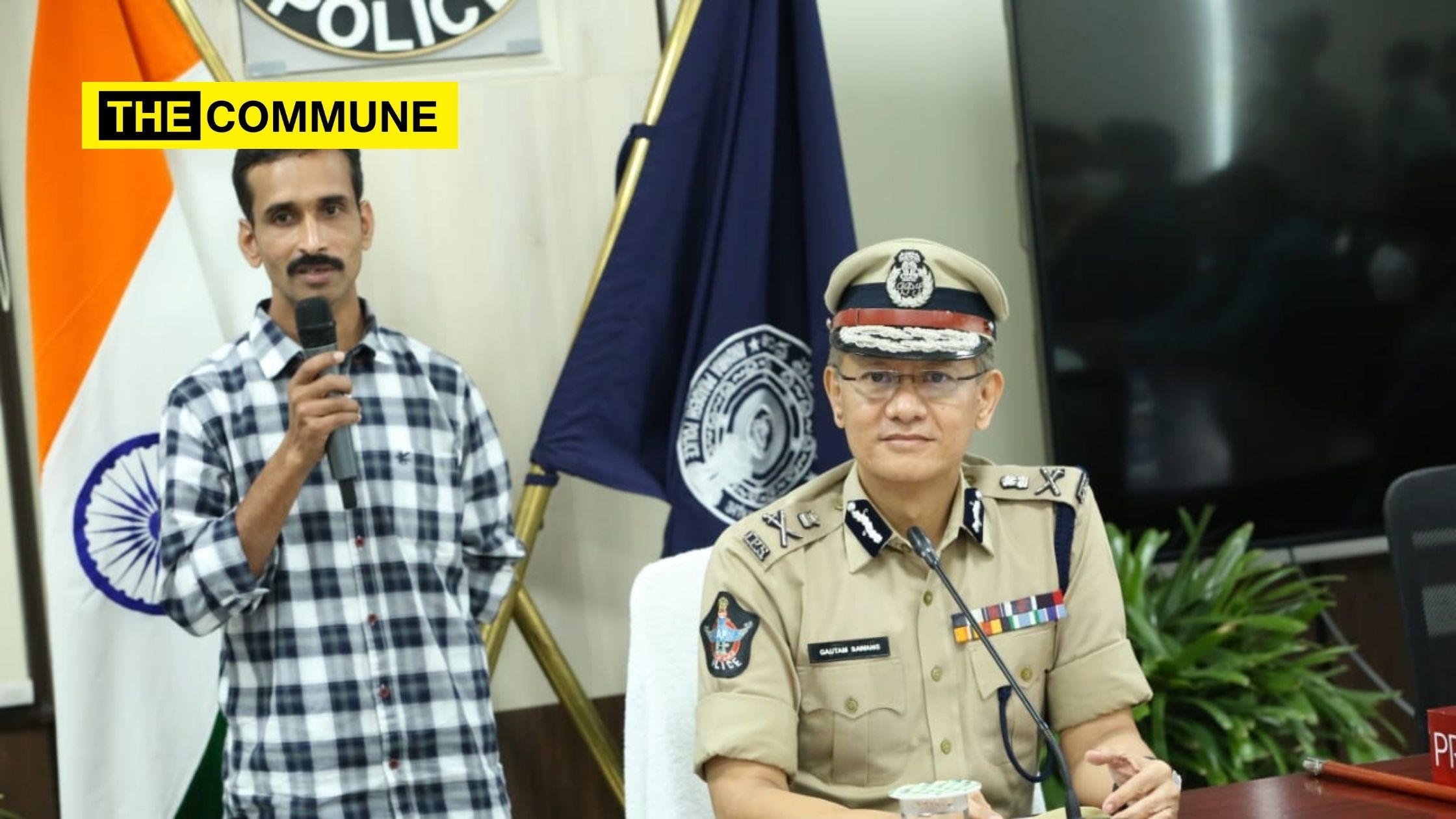
In a serious blow to the violent Naxal movement, one of its senior leaders, Muttanagari Jalandar Reddy who was having ₹20 lakh bounty on his head surrendered to the police on Tuesday (20 April) in Andhra Pradesh. Reddy made his surrender in front of AP Director General of Police (DGP) Gautam Sawang.

The reasons given by Reddy for his surrender to the authorities were – lack of local public support, lack of recruitment from local adivasis (tribals), disillusionment with the obsolete Maoist ideology and extensive police outreach programmes.

Reddy hails from Telangana’s Siddipet district and after he completed his intermediate at government junior college in Siddipet district he was inspired by the Maoist ideology and joined the naxalite ranks as a member of the radical students union in 1998.

He had an illustrious bloodsoaked career as a Maoist guerrilla fighter and as per reports he personally led the second assault team in the Balimela ambush on June 29, 2008, in which 38 commandos of the elite Greyhounds of Andhra Pradesh Police were killed.

“He was also involved in five other important ambushes,19 exchanges of fire against security forces and seven murders in the AOB area. He also played the lead role in the kidnapping of IAS officer Vineel Krishna, the then Collector of Malkangiri district (of Odisha) in February 2011,” the DGP said.

Also, 31 Maoists surrendered to the police. Sawang appealed to the Maoists to give themselves up voluntarily and join the mainstream. “Under the surrender and rehabilitation policy, we will facilitate their mainstreaming by giving the reward amount on their head and provide employment opportunities, the DGP assured.Muttanagari Jalandar Reddy went by many aliases like Maranna, Krishna, Karuna and was a active participant on many deadly raids against the state.

He also headed the protection squad of the top Maoist leader Akkiraju Haragopal, alias Ramakrishna.

As per the government policy, Krishna would be given the reward amount of Rs 20 lakh, besides a house site. “If required, agricultural land or support for taking up self-employment will be provided to Jalandhar Reddy,” he said.

Click here to subscribe to The Commune on Telegram and get the best stories of the day delivered to you personally.