Home Blog Page 1247

Assam CM: Criminals attempting to flee will be treated with zero tolerance
Bangladeshi Muslims Infiltrating Tamil Nadu For Jobs, Alleges Assam CM Himanta Biswa Sarma

On July 5, Assam Chief Minister Himanta Biswa Sarma stated at a conference titled “Redefining Policing Standards in Assam,” which was attended by Officers-in-Charge of all police stations in the state, that those who attempt to flee police custody will be treated with zero tolerance, and that “this should be a pattern if someone was trying to flee.”

Himanta Biswa Sarma said,” If someone snatches weapons from the Police and trying to escape, and on top of that, he is a rapist, Police cannot shoot him in the chest, but shooting at the leg is the law.”

Chief Minister Sarma, who is in charge of the Home Ministry of Assam, wanted Police to get more strict with those indulged in cattle smuggling.“Those who smuggle cows should be caught at all cost. I don’t even want it to go to the charge sheet stage because our cows need to be protected, A cow is like a god to us,” he said to the officers in charge of districts bordering West Bengal and Bangladesh.

After Sarma took the office as the CM of Assam, he announced a massive drive against cattle smuggling, drug trafficking, and other organized crimes in the state.

Like Uttar Pradesh under Yogi Adityanath, the criminals involved in rape, murder, cattle smuggling, and drug trafficking who allegedly attempted to escape from jail were shot in Assam under Chief Minister Himanta Biswa Sarma.

However, the opposition in Assam has accused the government of running a police state and called Sarma ‘trigger happy.” However, state police have denied the allegations, claiming that such measures were only necessary when criminals attempted to flee and police officers were forced to fire at them due to the circumstances.

CM Sarma said, “Today, if two kidnappers are nabbed, and they retaliate, the policeman has no choice but to fire, otherwise the policeman himself will die.” He further added,” when someone asks him if shooing incidents are becoming a pattern in the state, he says that it should be a pattern if the criminal tries to escape police custody. But before doing what law has permitted us to do, we must keep our conscience clear that our work is for the good of the people and not to serve any interest of our own,”.

As of now, the new standard operating procedure is that the state would take a zero-tolerance approach towards any criminal who tries to escape. Sarma made it very clear that in a democracy, crime is fought through law and not encounters. He said, “This happens only when there are no other means and criminal cases in Assam will come down by 50 percent if the charge sheet is filed quickly.”

The CM of Assam also has allocated more funds to create new police stations and a fund of Rs.2.5 lakh for each Police station annually to meet recurring expenses such as fortnightly medical check-ups of all staff.

Click here to subscribe to The Commune on Telegram and get the best stories of the day delivered to you personally.

 

Pakistan’s NSA Moeed Yusuf blames R&AW for recent bomb blasts, accuses India of cyber attacks

After there was a bomb blast near the home of international terrorist Hafiz Saeed and the subsequent blast at Lahore’s Johar Town, Pakistan National Security Adviser (NSA) Moeed Yusuf on Sunday (July 5) claimed that the evidence they have gathered during the probe pointed to “Indian-sponsored terrorism.”

In a press briefing, Moeed Yusuf who also holds an American passport said the mastermind of the attack “is an Indian citizen and RAW is in touch with him”, Dawn newspaper reported.

Yusuf said, “The IG said we have intelligence of foreign intelligence agency, so today without a doubt I want to say, (the circumstances) of this entire attack lead to Indian-sponsored terrorism.”

To further substantiate India’s role in the bomb blast, Yusuf also blamed India for thousands of coordinated cyber attacks on the country’s information infrastructure.

“The cyber attacks were carried out so that our investigation could not be successful and it would face obstacles and time could be gained for the network to disperse,” he said, as quoted by Dawn.

“We have no doubt that the Johar Town and cyberattacks are linked. And the number in which (the cyberattacks) were done, there is no doubt that there was state involvement of our neighbour,” he added.

Click here to subscribe to The Commune on Telegram and get the best stories of the day delivered to you personally.

IAF floats request for information to purchase Counter Unmanned Aircraft System after drone attack in Jammu airbase

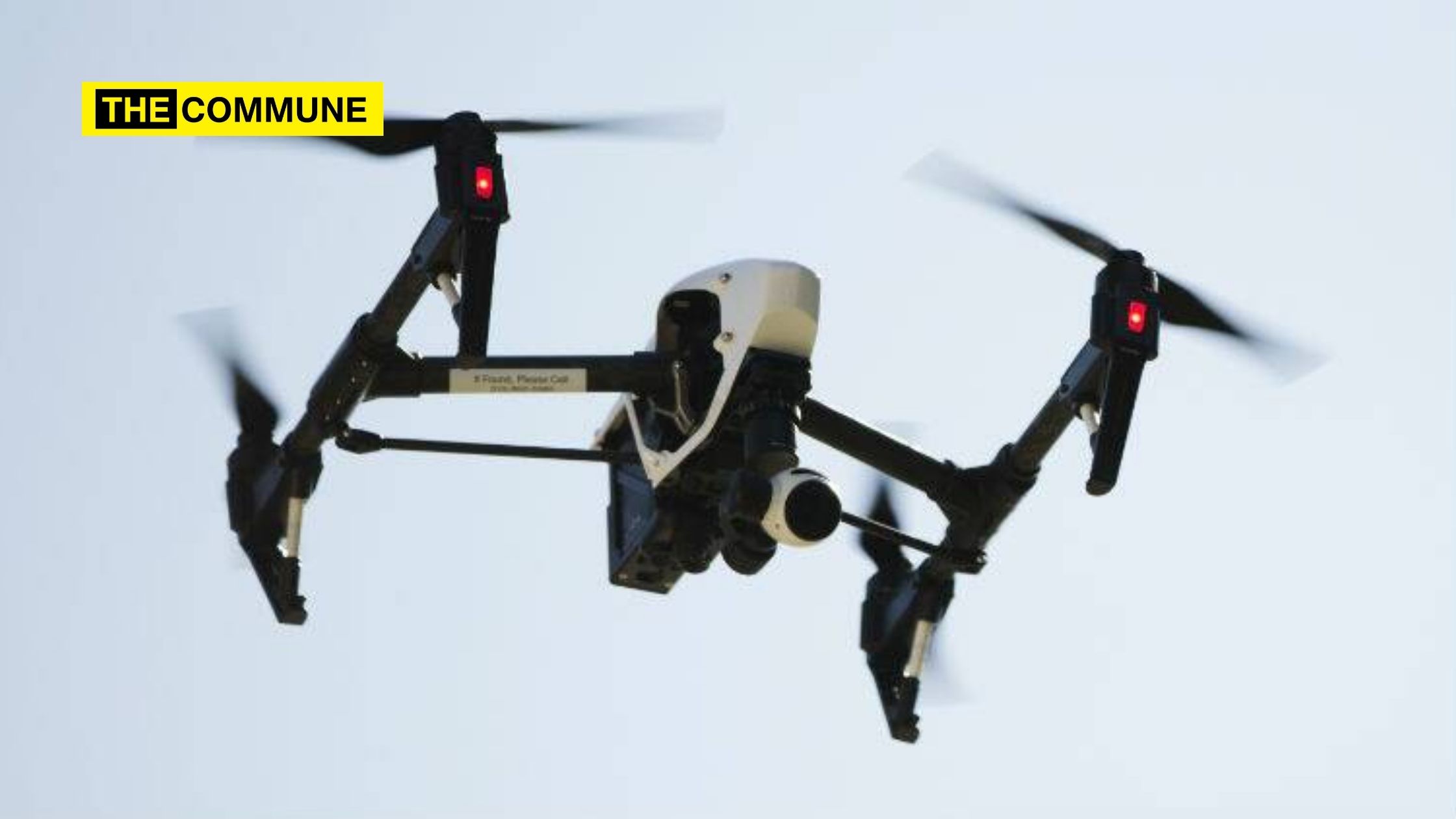
After terrorists used drones to attack the military airbase in Jammu, the Indian Air Force (IAF) is seeking approval to purchase 10 Counter Unmanned Aircraft System (CUASs) or anti-drone systems specifically from Indian vendors.

Such was the necessity to buy this equipment from a security point of view to counter this emerging threat, the IAF floated a Request for Information (RFI) to invite bids last week.

The RFI bids to make CUASs were dated 28 June after two low-intensity improvised explosive devices were dropped from a drone at the Jammu airbase, which exploded close to the station’s helicopter hangar and left two IAF personnel injured.

However, the procurement and the RFI for CUASs has been in the works for the last several months, but after the terror attack, the request has now been expedited.

The RFI is very specific and is looking to procure 10 CUAS via indigenous routes that have the capability to “detect, track, identify, designate and neutralize” hostile drones with a Laser Directed Energy Weapon (Laser-DEW) is essentially required as a “kill option”.

Other requirements in the RFI include a “multi-sensor, multi kill solution” effective enforcement of ‘No-Fly’ zones for unmanned aircraft (drones) while inflicting minimal collateral damage to the surrounding environment.

Other points include, a composite air situational picture for the operator and generate alerts based on user defined parameters which means inputs from different sensors will be consolidated on a single screen to enable a composite understanding of the situation for the controlling agency and the commander.

To mount the CUAS on indigenous vehicles with cross country capability and powered by indigenous electrical power supply systems, and to transport it by air and road.

The system should have a phased array radar (for detection of the UAV); radio frequency sensor (for detecting the UAV frequency); and an electro optical and infrared (EO/IR) system for detection and tracing a hostile UAV by way of visual and heat signatures.

It should have a soft kill option, which can include a Global Navigation Satellite Jammer System and RF Jammer, and a hard kill option (Laser-DEW).

After the Jammu airbase attack, the need for the Indian military installations military bases, airports, critical infrastructure and other sites critical to national security has taken precedent.

The CUASs when put in service will detect and intercept hostile drones and unmanned aerial systems, which can be used for intelligence gathering or smuggling contraband, or to deploy explosives.

Click here to subscribe to The Commune on Telegram and get the best stories of the day delivered to you personally.
Swapna Suresh moves HC for bail in Kerala gold smuggling case

Swapna Suresh, the main accused in the ‘diplomatic gold smuggling’ case, has filed a bail application with the Kerala High Court in response to the National Investigation Agency’s FIR against her.

Swapna, the main accused in the case before the NIA special court in Ernakulam, is charged under provisions of the Unlawful Activities (Prevention) Act, or UAPA. Justice K Vinod Chandran and Justice Ziyad Rahman A. A will hear the matter on Tuesday.

She has claimed that the charges leveled against her do not constitute an offense under the UAPA and that the charge sheet lacks sufficient evidence to link her to the alleged gold smuggling. Swapna Suresh filed a bail petition in the High Court after her plea for bail before a special court hearing was denied twice.

Swapna had been detained for smuggling gold through diplomatic channels as well as illegally smuggling large quantities of gold from foreign countries. She was accused of engaging in the criminal conspiracy with the aim and knowledge that it may endanger the nation’s economic security. In her plea, she has rejected all of the charges and claimed her innocence.

Click here to subscribe to The Commune on Telegram and get the best stories of the day delivered to you personally.

DMK heavyweights upset as Stalin hands government posts to allies

In terms of government appointments, Chief Minister MK Stalin appears to be sympathetic to his party’s allies, as seen by the recent nomination of senior Congress politician Peter Alphonse to head the Tamil Nadu Minority Commission.

There are around 30 positions vacant in various public entities in the State, therefore the government is likely to make additional appointments. While Stalin’s approach is well received by the DMK’s allies, a portion of the party’s members is enraged because their chances have been harmed.

The Newindianexpress, which interviewed Congressmen, said in its article, “Peter Alphonse’s appointment won’t be the last. We expect more Congressmen to get similar posts. Even in the previous DMK regime, the then Chief Minister Karunanidhi appointed Congressmen to the State Planning Commission and the Library Authority Committee. The head of the Palm Products Development Board was also from the Congress.”

Other allies of DMK, such as the MDMK, have indicated that their members expect similar government jobs and that some of their supporters may be appointed vice-chancellors of universities.

On the other hand, a group of DMK heavyweights, who expected government posting, are dissatisfied. A DMK leader, speaking on the condition of anonymity, said he welcomes the nomination of Pon Kumar of the Tamil Nadu Peasants and Workers Party as head of the Tamil Nadu Construction Employees Welfare Board, according to the Newindianexpress. “He was an ally but was not allocated a seat in the polls and he campaigned for the party well. But Congress already got 25 seats. So why to give them such posts?” he said.

Another DMK leader stated that there are DMK men who have worked for the party for years and should be rewarded. “The allies may abandon us in the next elections,” the leader said. As additional selections are announced in the coming days, the DMK may be able to bargain with its partners in the next local body elections.

(with inputs from NewIndianExpress)

Click here to subscribe to The Commune on Telegram and get the best stories of the day delivered to you personally.
DMK office bearer charges usurious rent in Erode vegetable market, angry traders take to streets to protest

The DMK office bearer, who leased the Erode Netaji vegetable market, has hiked entry fees and daily rent manifold, causing Erode vegetable traders to demonstrate on the streets.

There are allegations that DMK cadres charge an exorbitant rates in the Nethaji market in Erode district, which has 800 shops and operates from VOC park.

The merchants of the Nethaji Market, who were affected by the hike in rent, protested by throwing vegetables on the street, causing a stir in the area. The merchants allegedly received death threats from DMK cadres, when they questioned DMK cadres charging an excessive fee that is far more than the amount set by the government.

Local traders alleged that the DMK cadres were charging one rupee for a bundle of curry leaves and ten rupees for a bundle of cauliflower. They also charge 5 rupees for a tomato box and 10 rupees for a bike token, both of which were previously not charged.

Traders alleged that DMK Agriculture wing State Joint Secretary Kurinji N Sivakumar and leaseholder Arun Prasad are to blame for the increase in Erode vegetable market rent.

Traders called off the demonstration after receiving assurances from police who arrived on the scene after the protest that they would take action against the DMK’s office-bearer.

(with inputs from NewsJ)

Click here to subscribe to The Commune on Telegram and get the best stories of the day delivered to you personally.
“It won’t be of our prestige to conduct talks with TN”: K’taka Congress head DK Shivakumar on Mekedatu

Karnataka Pradesh Congress Committee President D.K. Shivakumar told reporters on Monday (July 5) that Chief Minister Yediyurappa should not conduct any talks with his Tamil Nadu counterpart MK Stalin on the Mekedatu dam issue.

Speaking to reporters in Mangalore, the Congress leader said “It won’t be of our prestige for our state Chief Minister Yediyurappa to go for peace talks with the Chief Minister of Tamil Nadu in the matter of Mekadatu”.

“No matter what government comes to power in Tamil Nadu, they will come together in their state affairs. Therefore, Chief Minister Yediyurappa must also protect the interests of our state. The Mekedatu Dam project should be called for tender immediately and work should start. The Supreme Court has also said the same.” he said.

He asked what was the need for conducting talks with Tamil Nadu Chief Minister about starting the Mekedatu project and added that the project was of great importance to Bengaluru city. He said that the plan was drafted during the Congress regime and that it has got the requisite environmental clearance.

“It is our plan. Going for talks won’t be of prestige to our state”, the Congress leader said.

Click here to subscribe to The Commune on Telegram and get the best stories of the day delivered to you personally.
 

Ministry of Tourism signs MOU with Yatra.com to strengthen hospitality and tourism industry

Ministry of Tourism, Government of India to strengthen the Hospitality & Tourism Industry signed Memorandum of Understanding (MOU) with Yatra on 02nd July 2021. The event was organized under the arrangement between Ministry of Tourism and Quality Council of India (QCI) for implementing measures for strengthening the Indian Hospitality & Tourism Industry.

The primary objective of this MoU is to provide extensive visibility to accommodation units, which have self-certified themselves on SAATHI (System for Assessment, Awareness & Training for the Hospitality Industry) on the OTA platform. The MoU also outlines both parties to encourage Units to register on NIDHI and thereby on SAATHI and encourage local tourism Industry with appropriate safeguards for curbing spread of COVID-19. The idea is also to gather more information on accommodation units in order to gain actionable insights & designing evidence based & targeted policy measures and to promote safe, honourable and sustainable tourism.

The Ministry of Tourism & Yatra will endeavour to take necessary steps to encourage and promote strategic and technical co-operation in the Indian hospitality & tourism sector for overall benefit in the identified areas through the MoU. It is expected that in the future more OTAs will come forward for signing such MOUs in order to strengthen the Hospitality & Tourism Industry of India.

Signing of MOU was done in the presence of Rakesh Kumar Verma, Joint Secretary, Ministry of Tourism Sanjay Singh, Deputy Director General (H&R), Ministry of Tourism; Dr. A Raj, Senior Director, QCI; Mr. Aditya Gupta, Senior Vice President, Yatra and Mr. Akshay Mehta, General Manager, Yatra.

(Published from PIB)

Click here to subscribe to The Commune on Telegram and get the best stories of the day delivered to you personally.
Excess irrigation over northern India shifting monsoons towards northwest risking agriculture

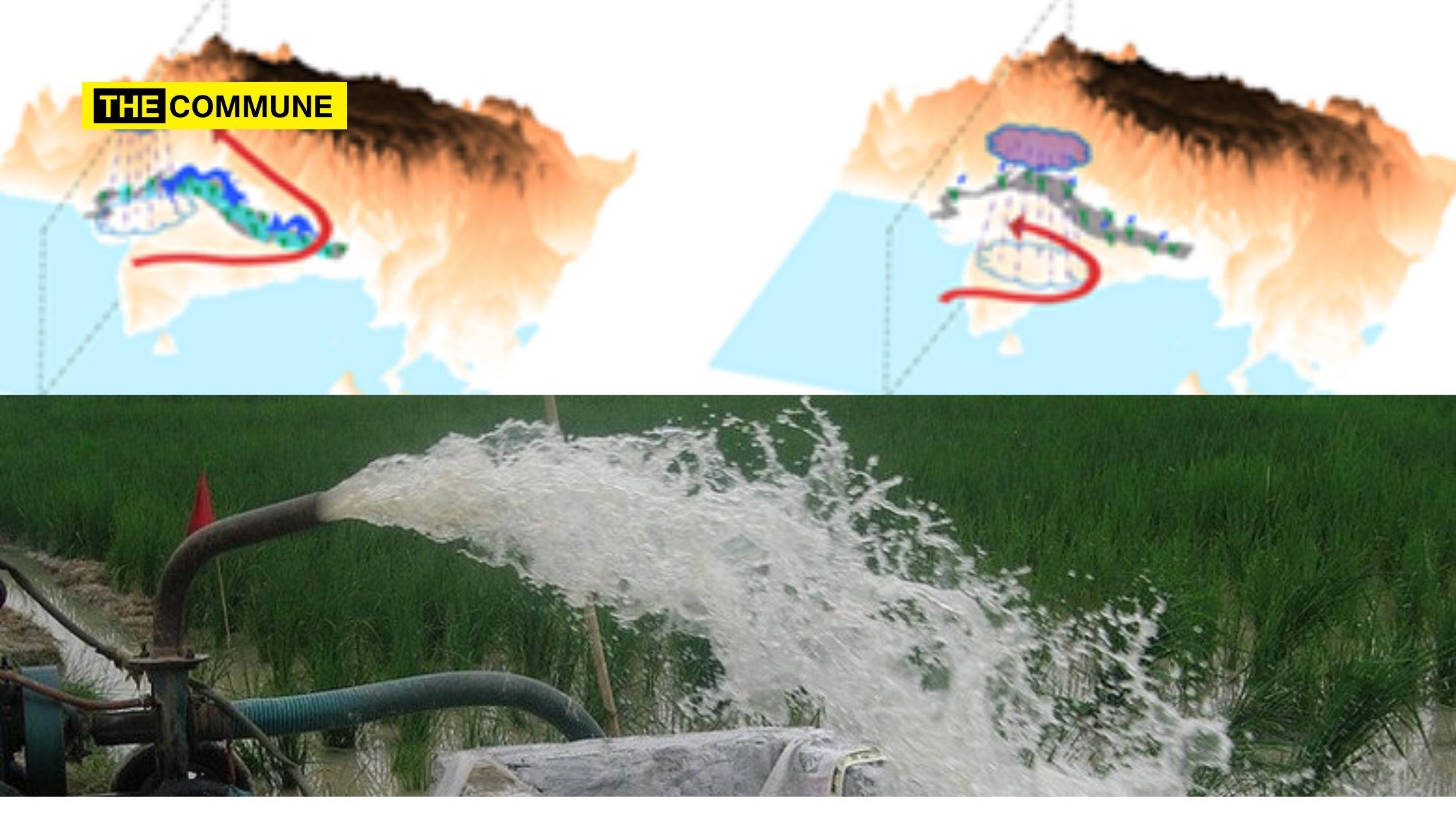
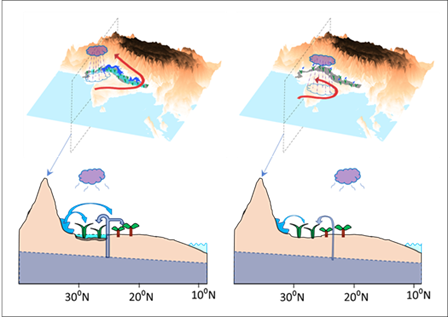
Climate researchers have discovered that excess irrigation over northern India shifts the September monsoon rainfall towards the north-western part of the subcontinent increases widespread weather extremes over Central India. These meteorological hazards expose the vulnerable farmers and their crops to risks of failure.

The study which establishes that monsoon precipitation is sensitive to the choice of irrigation practices in South Asia can help plan agricultural practices in this region.

South Asia is one of the most heavily irrigated regions of the world, largely using groundwater, and its major summer crop is paddy which is cultivated in water flooded fields. Hence it was pertinent to study how such practices can influence the monsoons which form the fulcrum of this agro-based economy.

Subimal Ghosh, Professor in Department of Civil Engineering and Convener at Interdisciplinary Programme in Climate Studies (IDPCS), a Centre of Excellence at IIT Bombay supported by the Department of Science and Technology and his climate group, investigated the impact of agricultural water use on the Indian Summer Monsoon using a climate model.

The research published in the journal ‘Geophysical Research Letters’ recently showed that monsoon precipitation is sensitive to the choice of irrigation practices in South Asia. In another study, Prof. Subhankar Karmakar from IDPCS, IIT Bombay, and his research group identified for the first time that risks for rice and wheat have increased in the recent decade, with wheat at a two-fold higher magnitude than rice. The study followed the Assessment Report 5 of IPCC definition to quantify ‘Risk’ and has been published in ‘Environmental Research Letters.

Increasing crop risk is predominantly driven by the decreasing number of farmers, and the wheat risk is also attributed to increasing minimum temperatures during the crop growing season. This study provided compelling evidence indicating that the hydro-climatic hazards related to precipitation extremes and drought are specifically alarmingly increasing the crops risk as compared to temperature extremes.

Another finding obtained from this study was extreme rainfall in recent decades in Central India has been increasing, and this is also caused by an increase in irrigation and consequent increase in evapotranspiration (the sum of evaporation from the land surface plus transpiration from plants)


India offers CoWIN platform as a digital public good to the world

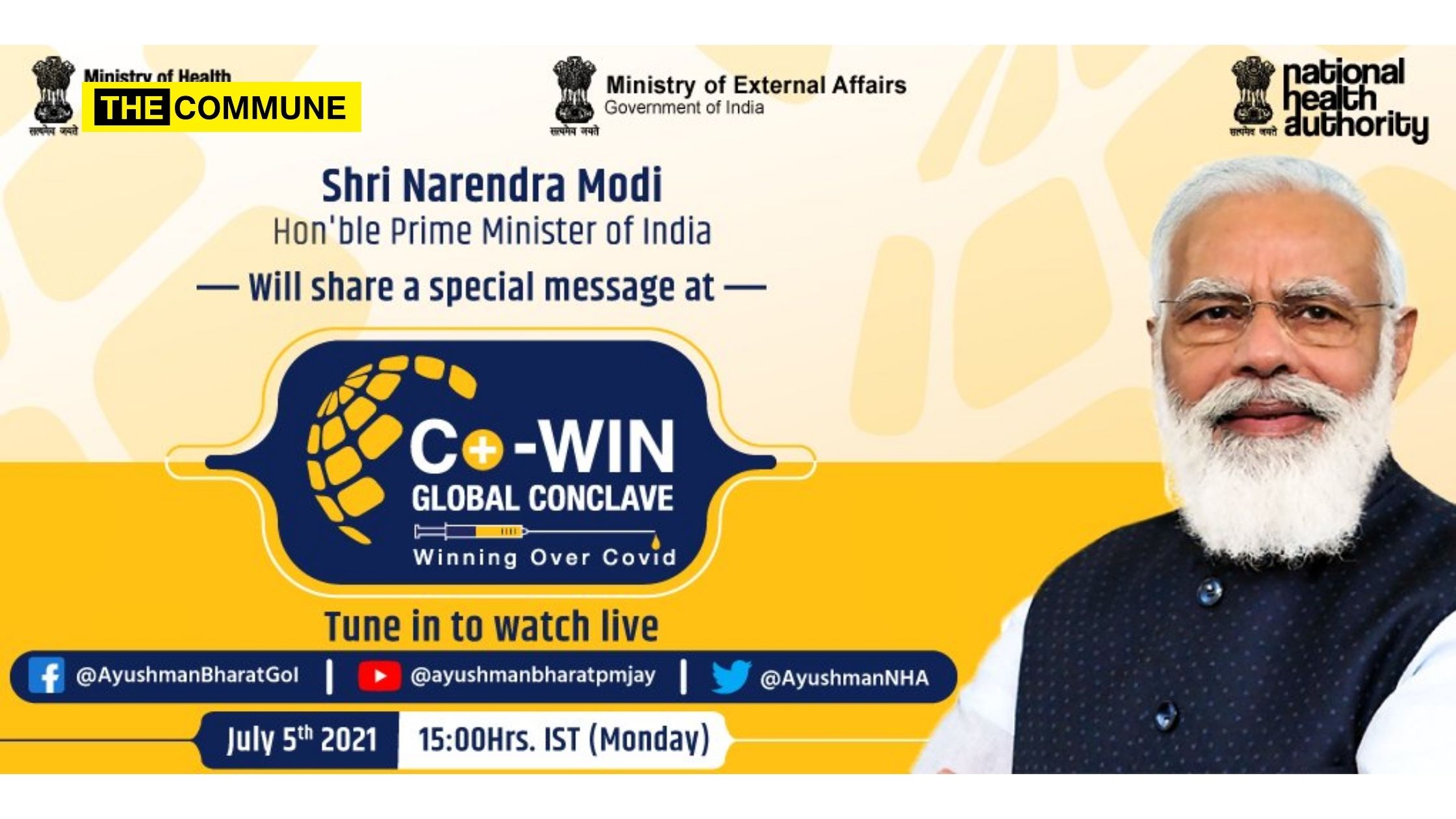
Prime Minister Narendra Modi today addressed the CoWin Global Conclave as India offered CoWIN platform as a digital public good to the world to combat COVID19.

The Prime Minister began with conveying his condolences for all the lives lost to the pandemic, in all the countries. The Prime Minister remarked that there is no parallel to such a pandemic in hundred years and no nation, however powerful, can solve a challenge like this in isolation. “The biggest lesson from the COVID-19 pandemic is that for humanity and the human cause, we have to work together and move ahead together. We have to learn from each other and guide each other about our best practices” said the Prime Minister.

Underlining India’s Commitment for sharing experiences, expertise and resources with the global community, the Prime Minister also expressed India’s eagerness to learn from global practices. Emphasizing the importance of technology in the fight against pandemic PM Modi said that software is one area in which there are no resource constraints. That’s why India made its Covid tracking and tracing App open source as soon as it was technically feasible. He pointed out that with nearly 200 million users, the ‘Aarogya Setu’ app is a readily available package for developers. Having been used in India, the Prime Minister told the global audience, you can be sure that it has been tested in the real world for speed and scale.

The Prime Minister said that given the importance of vaccination, India decided to adopt a completely digital approach while planning its vaccination strategy. This helps people in proving that they have been vaccinated, expediting the normalcy in the post pandemic globalized world. A safe, secure and trustworthy proof helps people to establish when, where and by whom they have been vaccinated. Digital approach also helps in tracking the usage of vaccination and minimizes the wastage.

In line with India’s philosophy of considering the whole world as one family, the Prime Minister said, Covid vaccination platform CoWin is being prepared to be made open source. Soon, it will be available to any and all countries.

PM Modi stressed that today’s Conclave is the first step to introduce this platform to the global audience. The Prime Minister informed that through CoWin, India has administered 350 million doses of Covid vaccines, including 9 million people in one day, few days ago. Furthermore, vaccinated people do not need to carry around fragile pieces of paper to prove anything. It is all available in digital format. The Prime Minister also highlighted the customizability to the software as per the local requirements of the interested countries. The Prime Minister concluded with the hope that guided by the approach of ‘One Earth, One Health’, humanity will certainly overcome this pandemic.

(Published from PIB)

Click here to subscribe to The Commune on Telegram and get the best stories of the day delivered to you personally.