Home Blog Page 1077

“Court language should not be like wedding mantras that people don’t understand”: Chief Justice of India

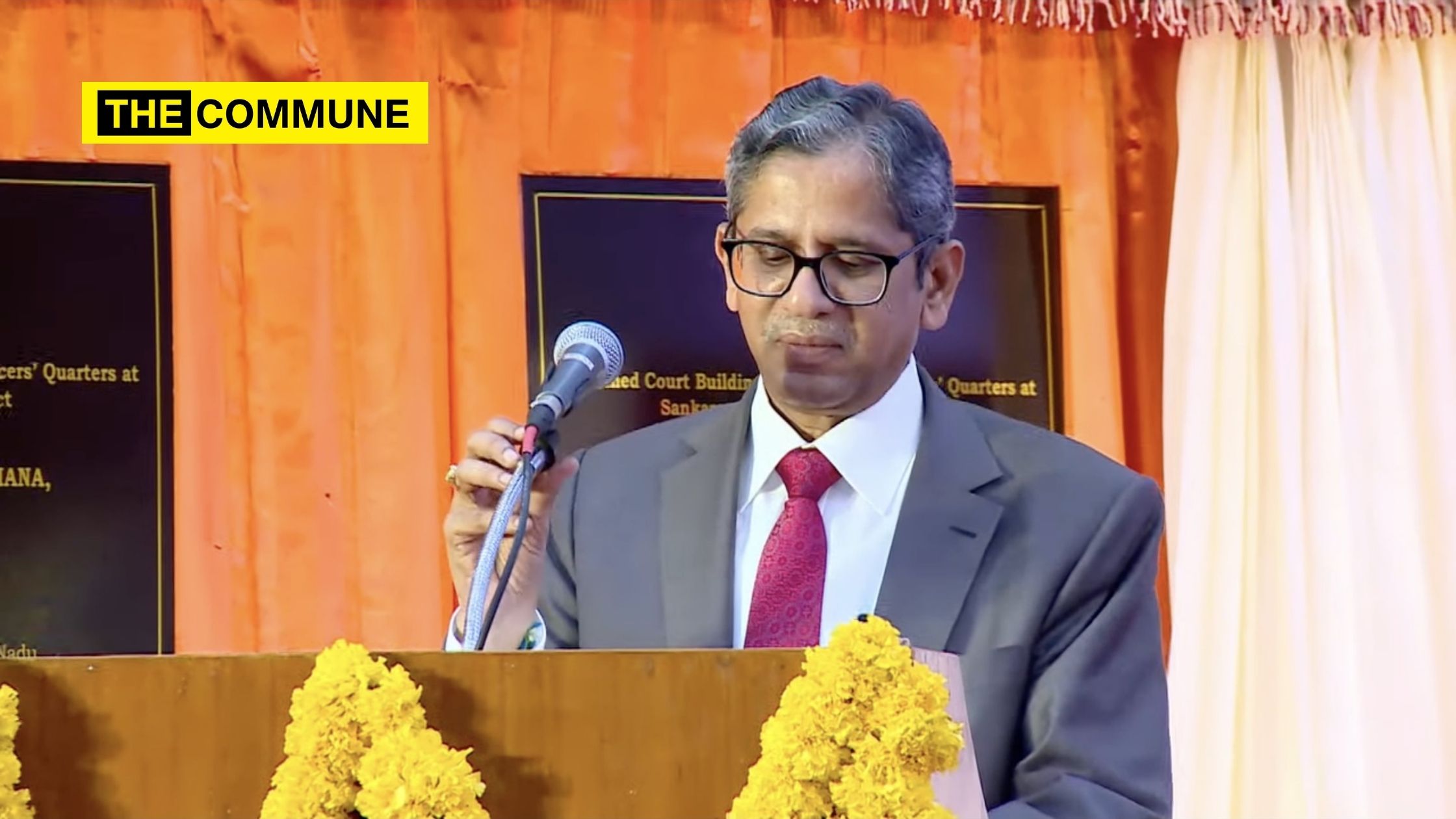
Chief Justice of India, Justice NV Ramana, while speaking at the foundation laying ceremony of a new administrative block in the Madras High Court said that the “language of the court should not be like Mantras in a wedding which most of us don’t understand”.

He said “The common citizen of this country cannot understand the language of the court. The parties must understand developments in their case, the language of the court should not be like Mantras in a wedding which most of us don’t understand.”

The event also saw the participation Supreme Court judges Justices Ramasubramanian and MM Sundaresh, Chief Justice of Madras High Court Justice Munishwar Nath Bhandari, and Tamil Nadu Chief Minister MK Stalin.

Justice Ramana also said  “I have been a strong advocate of Indianisation justice delivery system. By Indianisation I mean making judiciary suit the needs of people of India.”

It is noteworthy to mention that DMK chief MK Stalin back when he was an Opposition leader had on multiple occasions made similar remarks on Hindu wedding mantras.

Once while speaking at a Muslim wedding function said that if one were to look at the meaning of the mantras chanted during Hindu wedding ceremonies, it would turn out to be ‘disgusting’.

Click here to subscribe to The Commune on Telegram and get the best stories of the day delivered to you personally.

After Dravidian Stockists, TN Congress leader abuses Maestro Ilaiyaraaja

Ever since music composer ‘Isaignani’ Ilaiyaraaja’s praised Prime Minister Narendra Modi, he has been at the receiving end of the venom spewed by sympathizers of the ruling regime in Tamil Nadu.

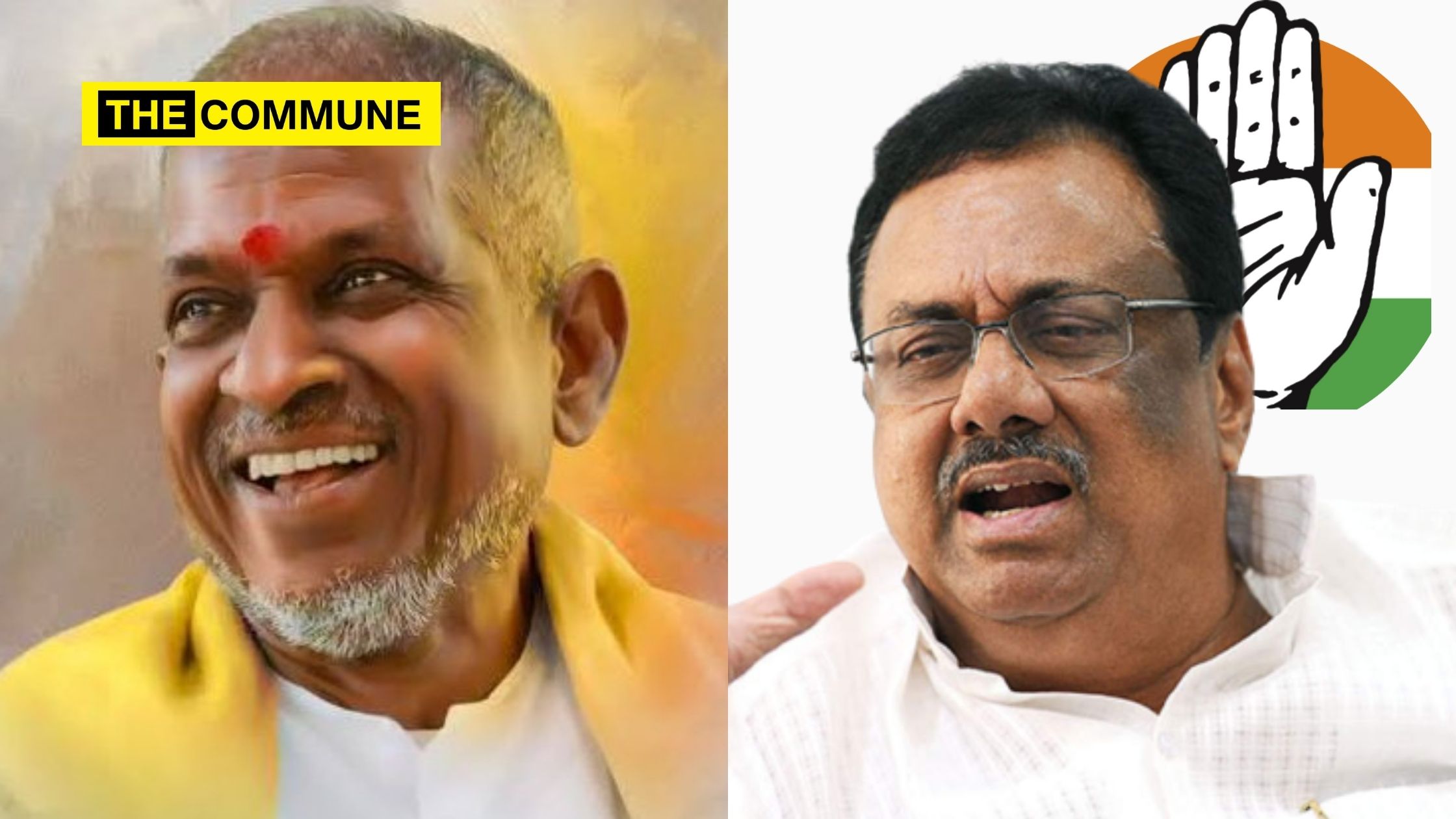
In continuation of that, former Lok Sabha MP and Tamil Nadu Congress leader E.V.K.S. Elangovan has abused the musical maestro making casteist remarks.

Speaking at an event organized by Dravida Kazhagam in Erode, the Congress leader in an indirect reference to Mr. Ilaiyaraaja said “There are certain elements in Tamil Nadu today claiming themselves to be ‘king of music’. Everybody knows who is the king of music.  Not everyone who plays the tabla can become a music composer”.

“Those who accepted the Communisti ideology when they had no means to afford food and were living below the poverty line are today, after getting money and fame, are considering themselves to be upper castes. You know who I am referring to.”, the Congress leader said referring to Mr. Ilaiyaraaja.

“Raja and that too ‘Ilaya’ Raaja it seems! He must be inching over 80 years of age and they call him ‘Ilaya’ Raaja”, the senior Congress leader said making personal caustic remarks about the ace music composer.

Elangovan also said that Ilaiyaraaja has become a ‘bakthimaan‘, a devout person, due to greed for more money and fame.

The senior Congress leader objected to Mr. Ilaiyaraaja comparing Prime Minister Modi with Dr. Ambedkar in the foreword written by him for a book.

“Tomorrow they might equate Modi with Periyar saying both had long beard”, Elangovan said who is also the grandson of E.V. Ramaswamy Naicker (known as ‘Periyar’ by his followers).

He also said that if Mr. Ilaiyaraaja wanted to draw comparisons for Modi he might do so with Hitler and Mussolini.

The senior Congress leader also resorted to bodyshaming Union Home Minister Amit Shah calling him a ‘kulla kathirikai‘ (short brinjal).

Spewing further vitriol against Mr. Ilaiyaraaja, Elangovan said “I think Ilaiyaraaja facing music one time is not enough. This Ilayaraaja is the man who denied scoring music for the film on Periyar. He thinks himself as a ‘Sankaracharyaar’.”

In a veiled threat, the Congress leader said “We live in times when even the Sankarachaarya himself was put in jail.”.

The Congress leader also said that if such persons (referring to Ilaiyaraaja) had to be eradicated, hands of people like K. Veeramani, the head of Dravida Kazhagam and Tamil Nadu Chief Minister MK Stalin.

Netizens are now lashing out at the senior Congress leader for his derogatory comments.

Click here to subscribe to The Commune on Telegram and get the best stories of the day delivered to you personally.
The ‘Pacific blunder’ of the West

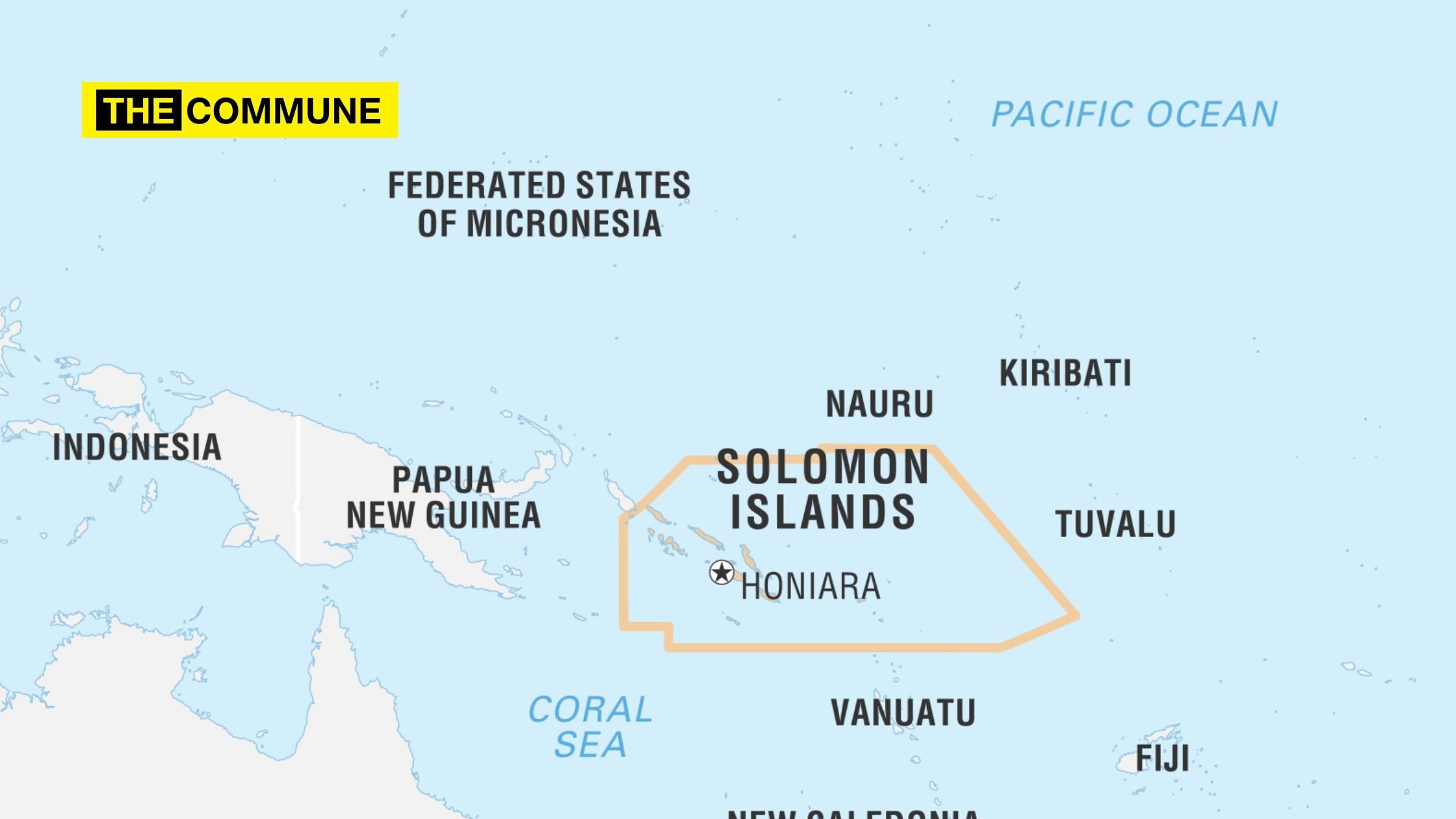
Alarm bells are ringing in the South Pacific after the government of Solomon Island signed a framework agreement on security cooperation with China. This is big news in the geostrategic circles. However, it seems the world is still obsessing over Ukraine and Russia and this unnecessary preoccupation is now costing America and its Southern Hemisphere allies in their own backyard.

Bejing calls the agreement between the Solomon Island and the People’s Republic of China, an agreement that seeks “social stability and long-term tranquillity in the Solomon Islands and is not targeted at any third country. The agreement states that China will help maintain social order, protection of the safety of people’s lives and property, humanitarian assistance, and natural disaster response,”.

However, the West fears that China once it has control of these islands, that is not far from Australia or the strategic US state of Hawaii islands which is also home to its Pacific fleet, will begin to strengthen its capacity building in that region which can transmute into political and military flashpoints in the future.

The security cooperation signed by the Soloman Island with China was long in the making and the String of Pearls hypothesis which was proposed against India is now slowly becoming a reality in the South Pacific. In 2012, When Xi Jinping was new to the top job of the communist party, Xi had said, “The vast Pacific Ocean has ample space for China and the United States. We welcome a constructive role by the United States in promoting peace, stability, and prosperity in the region. We also hope that the United States will fully respect and accommodate the major interests and legitimate concerns of Asia-Pacific countries.”.

This diplomatic statement was made right before Xi embarked on an official trip to the United States when Barack Obama was President and was in awe of China and in that process, left Japan high and dry on certain security issues.

American laxity 

However, in the last ten years, the United States has failed to counter Chinese ambitions in the South-West and South Pacific which is part of its Indo-Pacific strategy. The US has completely failed in recognizing the strategic importance of the Solomon Islands which played such a crucial role during the Second World War as a springboard to launch operations against Japan.

Over the years, China has filled the vacuum of instability in many countries with its debt-trap diplomacy and the US effectively failed to respond to the problems faced by the Solomon Islands and had outsourced the policy-making to Australia which also failed. The policy of  “strategic oversight” extended to two regional Five Eyes partners, Australia and New Zealand is now a clear failure and has compromised the free and open Indo-Pacific.

The shortsightedness displayed by the West has now come too close to the home to roost because the Solomon Islands is key to the important Sea Lanes of Communication connecting the US, Australia, and the rest of Asia and the ultimate aim for China will be to use this strategic sea lane to disconnect the US from the rest of the Southwest and the South Pacific or most likely use it as a powerful bargaining chip in the South China sea.

If that happens, Taiwan will be in big trouble because China has been using all its economic leverage to isolate Taiwan diplomatically, by courting (bribing) Solomon Islands politicians with grants and aid to drop Taipei and become part of its Belt and Road Initiative, like its Pacific island neighbours of Fiji, Papua New Guinea, and Vanuatu.

It is a sad irony that the Americans do not even have a permanent diplomatic mission in the Solomon Islands that saw the US battle the Japanese forces in the battle of Guadalcanal where so thousands of American soldiers gave their lives in some of the most brutal combat that took place during the war. Not having any diplomatic presence on Solomon Island has definitely played its role in not allowing policymakers actionable recommendations to safeguard American interests and strategic requirements.

But what is astonishing is that the US has still not learned from its mistakes and has not yet worked on the modalities of establishing its diplomatic presence in the Pacific and working towards building strong, independent bilateral relations with each independent Pacific Island by funding, personnel, and institutional support and address the needs of Honiara (Solomon Islands), Port Vila (Vanuatu), Tarawa (Kiribati), and Nuku’alofa (Tonga).

AUKUS, a nonstarter

Though the ink is not dry on the agreement signed between China and the Solomon Island, if necessary actions are not taken, the entire region in the next decade could become a flashpoint of confrontation and AUKUS is a nonstarter and China knows this.

The AUKUS, which China calls the “Obsolete cold war zero-sum mentality and narrow-minded geopolitical concepts” looks good on paper but it will take decades to bear fruit because it is one thing to agree to transfer cutting-edge nuclear submarine technology and another to actually build it. For Australia which will head for the general election in May 2022, enhancing its cyber capabilities, artificial intelligence, quantum technologies and additional undersea capabilities will take time.

Already China is calling for AUKUS as a replacement for ASEAN and has said that it contravenes and exploits the loopholes in the Nuclear Non-Proliferation Treaty (NPT) and the International Atomic Energy Agency (IAEA) safeguard mechanism.

Meanwhile, China with its vast albeit under the stress industrial complex would have significantly augmented its capability in the Pacific region and that is why the by-standing days of Australia and New Zealand that has for a long time enjoyed its geostrategic location must step up to the plate and take responsibility.

Solomon Island is very far away from the Indian Ocean Region but the growing influence of China in the Pacific region must be seen as a challenge to protecting India’s interests. Distance is an ally as long as it is not exploited by the enemy and the attack on Pearl Harbour must be a reminder for all.

The article was originally published in Samvada World and has been republished here with permission.

Click here to subscribe to The Commune on Telegram and get the best stories of the day delivered to you personally.
Sadhguru’s Earth Day Message: Ensure The World Speaks About Soil

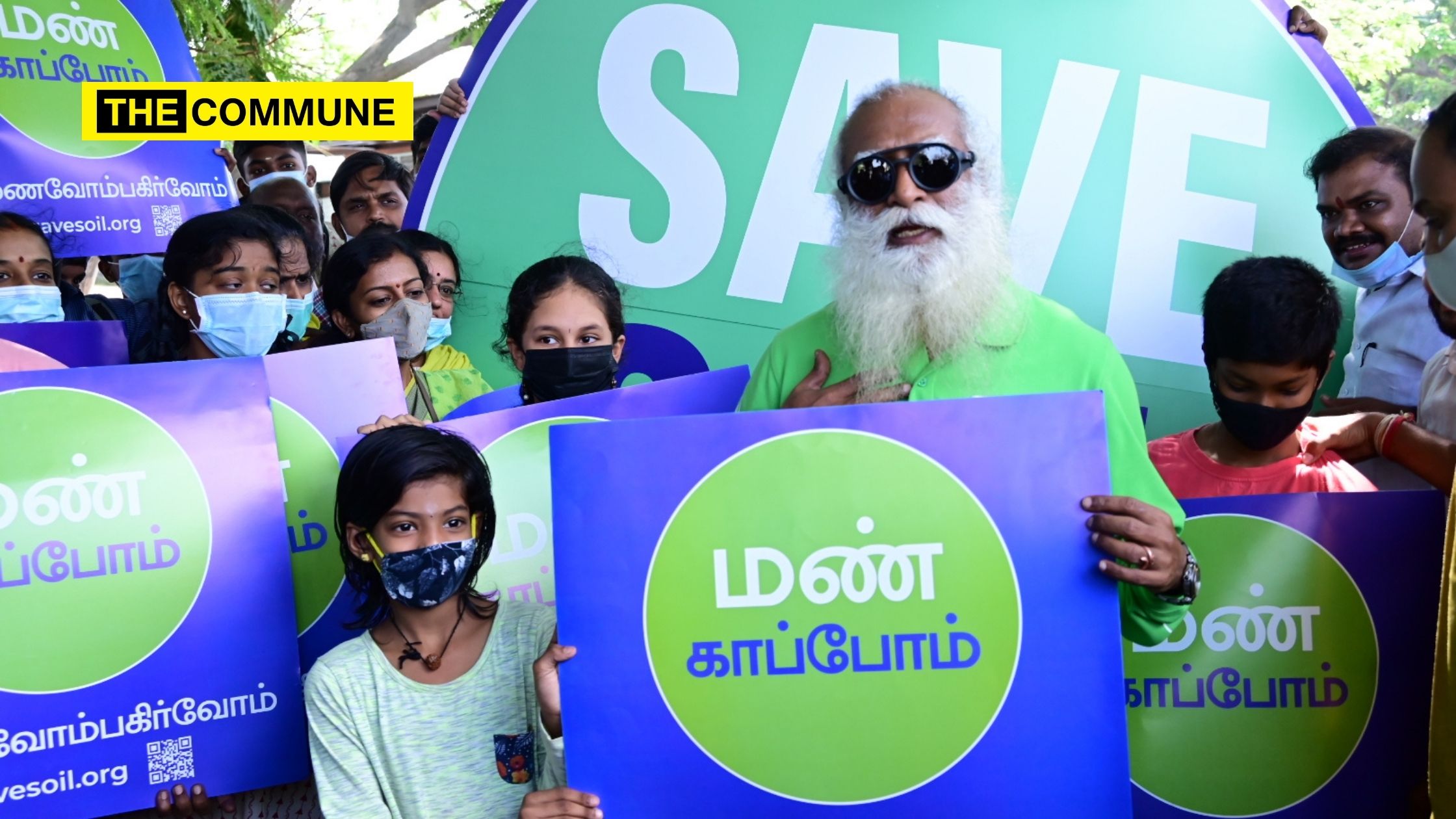
“Ensure that the world speaks about soil because soil is the basis of pure water, (clean air and) the basis of the very life that we are,” said Sadhguru, Founder-Isha Foundation, in his Earth Day message. Conveying his “best wishes to all the Earthlings” from the Seriban capital city, Belgrade, on day 33 of his 100-day, 30,000 km lone motorcycle journey as part of the Movement to Save Soil, Sadhguru said that the planet “could be in serious peril in the next 30-40 years’ time” if the world failed to act immediately and decisively to initiate global policy reforms to save soil from extinction. “We, as a generation, if we make up our minds, we can turn this around in the next 8-12 or maximum 15 years’ time,” he said referring to rapid soil degradation leading to an annual extinction rate of 27,000 microbial species.

Speaking about the potent power of rich soil which is not only responsible for a fertile earth but also water security and clean air, Sadhguru urged citizens around the world to “take this commitment on Earth Day” to “be a source of inspiration (and) a source of galvanizing this Movement. Ensure that the world speaks about soil.”

Referring to the impact of human footprint on soil, Sadhguru said that in the last thousand years, “the area of photosynthesis in the world has come down by 85%”. Photosynthesis is the phenomenon which ensures that the earth’s atmosphere is rich in oxygen and the soil is rich in carbon to keep it alive and thriving with microbial activity. Only green cover makes both possible. “We need to make policies in every nation to ensure the land must either have crops, cover crops, bushes or trees – something green – which is doing this miracle called photosynthesis which both enriches the soil and the atmosphere: soil with carbon sugars, atmosphere with oxygen,” he explained.

United Nations’ bodies such as United Nations Convention to Combat Desertification (UNCCD) and the Food and Agriculture Organization (FAO) have warned that soil extinction poses a global threat to food and water security and could result in brutal civil strife around the world. It could also set off unprecedented migratory exodus, threating national security of every country.

Sadhguru launched the global Movement to Save Soil last month. His journey through Europe, Central Asia and the Middle East to build global consensus for urgent policy reform will culminate in the Cauvery river basin in June. The river basin is ground zero for Isha’s Cauvery Calling – an ambitious ecological movement initiated by Sadhguru to showcase the river basin as a demonstrable model for restoration of soil health and water bodies in tropical regions.

(This is an official press release from Isha Foundation. The Commune was not involved in creating this content.)

Click here to subscribe to The Commune on Telegram and get the best stories of the day delivered to you personally.
Shocking: Old lady in TN gets electricity bill of ₹25,000; house has just 3 bulbs

An old woman named Devaki living in Madhamangalam near Bandalur in Tamil Nadu’s Nilgiris district was in shock when she received an electricity bill of  ₹25,071.

The house in which the lady lives has just 3 bulbs.

The lady had received the bill as SMS in her mobile phone. Her son had complained to the electiricity board office in Serampore. However, no action was taken for days. Other residents of the area too had lodged complaints upon which an investigation was carried out by the authorities. 

It was revealed that the man who comes to take the ‘reading of the meter’ named Ramesh had calculated the readings without visiting the houses.

The erroneous accountant has now been fired.

(With inputs from News 18 Tamil Nadu)

Click here to subscribe to The Commune on Telegram and get the best stories of the day delivered to you personally.

Power outages reported in many parts of TN, DMK Govt blames Centre

Residents in Tamil Nadu took to reminiscing the erstwhile DMK government of 2006-11 as simultaneous power outages were reported in several parts of Tamil Nadu.

Power cuts were reported from different districts since 8 pm on Wednesday (April 21, 2022). In some areas, the power outage laster for more than 2 hours.

In Cuddalore district, power was cut off from 8 pm in several areas including Nellikuppam, Panruti and Virudhachalam.

Power outages lasted for more than an hour in Karaikudi, Devakottai and Tirupattur areas.

In Karur, Puliyur, Gandhigramam and Vengamedu power cut lasted for 45 minutes. Elsewhere in Karur, power outages lasted for 1-1.5 hours.

In Tiruvannamalai district, several villages in Arani Town and surrounding areas including Sevur, Gunnathur, Kannamangalam and Kalampur power was off for 2 hours. There were similar power outages in Vandavasi, Seiyar and Polur.

The power outage lasted for 2 hours in various parts of Kanyakumari district including Nagercoil, Konam and Parvathipuram.

Many on social media pointed out that the power outage is typical of the DMK regime in Tamil Nadu and started the trend #Powercut_DMK.

https://twitter.com/katterumpu/status/1516954183198724096


Popular political satire handle Indha Vaainko had even come out with a song taking a jibe on powercuts being a hallmark of the DMK government.

Facing backlash from the public, the Electricity Minister V. Senthilbalaji blamed the Central Government for the powercuts.

He said that about 750 MW of power that was to come from the central grid to the southern states was suddenly cut off last night.

“To overcome the power shortage in some places, the production capacity of the Tamil Nadu Electrcity Board was increased and action was taken to purchase power from private players. Thus the situation in the urban areas was immediately rectified. Measures have been taken to improve the situation in rural areas in the next 15 minutes.”, he had tweeted.

Last time when power cuts in the state made news, the DMK Minister blamed squirrels Electricity Minister Senthil Balaji gave a shocking response that squirrels that run over electric lines are to blame to blame for the frequent power outages.

(With inputs from News18 Tamil Nadu)

Click here to subscribe to The Commune on Telegram and get the best stories of the day delivered to you personally.
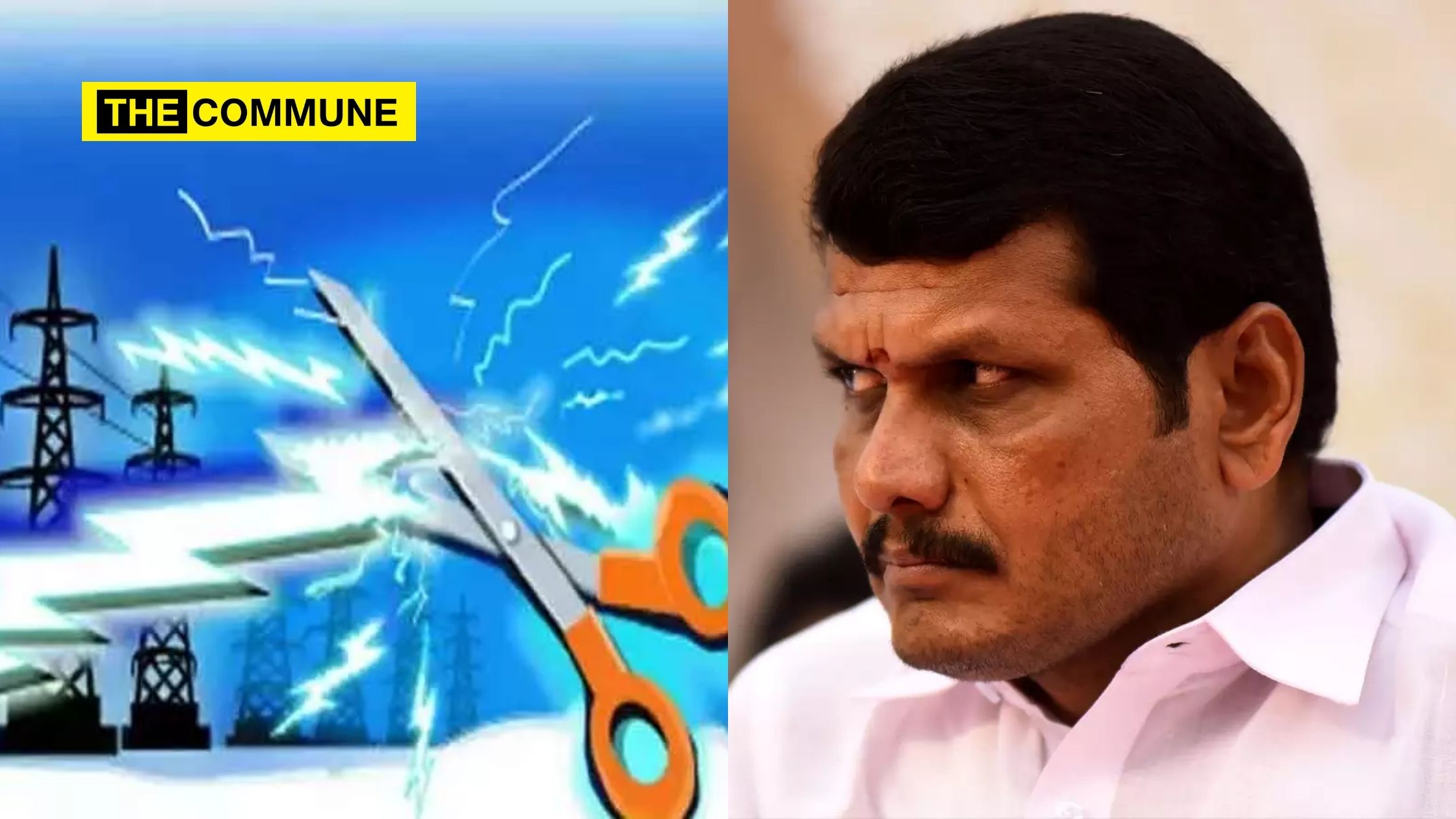
Murasoli And Decency: A Troubled Relationship

It is common knowledge that DMK and ‘decency’ are poles apart. The Dravida Munnetra Kazhagam has a history, and that history is tainted with numerous instances of the party crossing the limits of decency.

It has once again lived up to that reputation.

Recently, a war of words ensued between BJP Tamil Nadu President K. Annamalai and DMK’s mouthpiece ‘Murasoli’.

Murasoli, in its ‘Q&A’ section, had called Mr. Annamalai names and addressed him in singular.

“Did BJP Tamil Nadu President Annamalai study to be IPS?”, read the question.

This is what the answer given in Murasoli loosely translates to: “Do you know who dismissed Namboodripad’s government in Kerala in 1959? Madam Indira Gandhi did.”, says this ‘guy’ in a interview. It is a mystery how he passed IPS. ‘Dolts’ who don’t even know who the Prime Minister was in 1959 claiming to be IPS and IAS, and giving an interview as a head of a party is miserable“.

Responding to this vile attack, Annamalai called DMK’s mouth piece ‘a third rate, toilet paper worthy newspaper’.

In the tweet, Annamalai also clarified that the Namboodripad government was in fact dismissed by then Prime Minister Jawaharlal Nehru at the insistance of his daughter Indira Gandhi, who was then Congress President.

However, the bile that Murasoli spewed against Annamalai the very next day stands testimony to the gutter level politics of DMK. The party’s organ resorted to personal attacks equating Annamalai with an animal that goes to ‘lick excreta’.

“After exposing his ignorance, Annamalai should not try to escape by burying his face in the toilet.”, it said in another line.

It also justified the crass language stating that ‘some people will understand only if they are given the same way’.

But this is not the first time that Murasoli has made such crass remarks against a leader. The DMK’s mouth piece had made unsavoury remarks against political adversaries even during Karunanidhi’s time.

1. When Murasoli Insulted Kamaraj And Kakkan

In 1970, a cartoon was published in Murasoli which caricatured Congress leaders K. Kamaraj and P. Kakkan in a derogatory manner.

The cartoon showed Kamaraj scantily clad as Goddess Parvati decorating Kakkan portrayed as Lord Ganesha.

This cartoon is not just symbolic violence on the Hindu faith but also amounts to caste violence as both the Congress leaders hail from disadvantaged communities. Kamaraj belonged to the Nadar community and Kakkan was from the Dalit community.

2.  When MGR Was Attacked

Murasoli frequently caricatured MGR as an old man and a buffoon demeaning the AIADMK as an “actor party”. In 1978, Karunanidhi had called MGR a Malayali in a bid to portray him as non-Tamil.

However, Karunanidhi went under radio silence after his ancestral roots were traced to Ongole in Prakasam district of Andhra Pradesh.

Murasoli attacked MGR even years after his death. In October 2021, Murasoli criticized MGR saying that the AIADMK was floated by him in 1972 due to threats from the then Central Government. The DMK’s mouthpiece stated that MGR bowed down to the Central Government’s threats of I-T raids and action by Enforcement Directorate over his foreign trips . Murasoli said that MGR was put under pressure to split the DMK and topple the Karunanidhi government.

3. When EPS, OPS And CVB Were Dehumanized

In October 2017, Murasoli had dehumanized AIADMK leaders Edappadi K. Palaniswami, O. Panneerselvam and C. Vijayabhaskar describing them as ‘traitors’ who have drunk more blood of the people than mosquitoes.

The former Tamil Nadu Health Minister C. Vijayabhaskar was called as ‘Dengue Bhaskar’.

4. When Murasoli Attacked Jayalalithaa’s Brahmin Lineage

Responding to a Vikatan article that criticized DMK, the party’s mouthpiece took to lashing out Jayalalithaa invoking her Brahmin lineage.

The late AIADMK supremo was called ‘Paapathi‘ (a derogatory way of calling a Brahmin woman) more than 5 times in the article.


Ofcourse, the Brahmin community has always been the go-to punching bag for the DMK.

When Mahatma Gandhi was assasinated by Nathuram Godse, the DMK mouthpiece carried a frontpage headline that read “Utthamar Gaandhiyin Uyirai Kudithavan Oru Oodhaari Paarpaan” which translates to  “The person who consumed Mahatma Gandhi’s life was a wastrel/scoundrel Brahmin”.

Source: The News Minute

Given the trackrecord of this publication, BJP President K. Annamalai is not wrong in calling Murasoli what it is – a toilet paper.

Click here to subscribe to The Commune on Telegram and get the best stories of the day delivered to you personally.
Cop in Bangladesh attacks Hindu woman allegedly for wearing bindi

On the 2nd April, 2022, Lata Samaddar, a Hindu woman and a lecturer in the Department of Theater and Media Studies at Tejgaon College in Dhaka, Bangladesh, was verbally harassed and almost ran over by a Police vehicle by police officer Nazmul Tarek for wearing a bindi (the red dotted ornament on the forehead). The incident took place between 8:20 am and 8:30 am while the victim was crossing the junction at Farmgate towards Tejgaon College.

Lata told how she was walking towards the college when suddenly a middle aged looking man with a beard questioned her why she was wearing bindi. Additionally, that man hurled such profanities, that Lata even felt ashamed to retell her husband what exact words this man had directed at her. Lata turned to see and noticed that the man was sitting on a Police motorbike and wearing the Police uniform. According to Lata’s testimony, the kind of tone this officer had used when he questioned Lata about her bindi was vulgar. After the officer had thrown profanities, he looked greedily at Lata and tried to ride over her, managing to ride his bike over her feet.

Lata told Prothomalo how people nearby were observing this incident but nobody came to help her, perhaps in the fear of repercussions from the law and order. There was a traffic police nearby to whom Lata went to and that officer told Lata to lodge a complaint to the Police. After the incident, Lata limped her way to her department and broke into tears. “If this is the situation after 50 years of independence, it is unacceptable. We have to wonder where we are. I am a Hindu, wearing a bindi is normal. Previously, few people had made bad comments about my shakha-pola (conch-shell bangles worn by married Hindu women in Bengal), but that did not matter much. But this time was different, because those profanities were thrown by a police officer in his uniform.”

After the incident later went ‘viral’ in Bangladesh due to feminists and free thinkers trending the topic on social media and wearing the bindi in solidarity, the issue went all the way to the Bangladeshi Parliament. Member of Parliament Subarna Mustafa from the ruling party said, “It is a very hateful incident against women, regardless of party affiliation. We have heard of ‘eve-teasing’, in which even talented boys indulge in when they tease girls at schools. That situation is now very much under control. However, when I see someone in the country’s law enforcement eve-teasing, it’s a huge shame.” Mustafa continued, “which law says that a woman cannot wear a bindi? This is not a Hindu, Muslim, Christian or Buddhist matter […]”

The police officer was suspended, the parliament spoke, the people supported the victim. Case closed. This is how hate crimes against Hindus and the aftermath to them are always presented, whether they are true or not. Whether that is in the Bangladeshi media, the Indian media or the Western media. While most people are focused on the social media stints of free thinkers sporting a bindi on their foreheads, or perhaps watching how the politicians are blaming each other, much like after the gangrape of the 12-year-old Hindu girl Purnima Rani Shil back in 2001, there is an aspect that is always ‘forgotten’. The statement of MP Mustafa in the Parliament of Bangladesh follows the typical pattern of how hate crimes against Hindus in Bangladesh are perpetually whitewashed. Attacks on Hindus are always, without exception, labeled as a political issue, law and order problem, or general misogyny. The statement by MP Mustafa, although probably well intended, was problematic in many ways. Firstly, the statement did not acknowledge the fact that the bindi has deep roots in the sacred scriptures of Hindus. Second, the statement did not take into account the history of sexualised violence against Hindu women solely because of their religious identity.

Lata Samaddar mentioned how she has previously gotten harassed for wearing her shakhas, her marital symbols, which are specific to Hindus. This time Lata got harassed for wearing a bindi. The common denominator here is that Lata got attacked for her outward appearance, that is, wearing her religious and cultural attire that made her visibly recognisable as a Hindu woman. This recent attack against Lata is one of the countless attacks on hindu women who get recognised by their appearance, and it is also a part of the long history of fetishisation of Hindu women, and verbal and physical attacks on Hindu women for wearing shakha-polasindoor (vermilion) and the bindi.

In order to substantiate this assertion, let us examine some cases from recent history to this day. One of the witness statements of the Noakhali Genocide of 1946, a state sanctioned genocide of the Hindu minority of the Noakhali district in British India (currently in Bangladesh), tell how Hindu women were attacked especially for the outwardly visible markers that are exclusive to Hindus.

“The local Muslim population either actively or tacitly participated in these acts. Muslim women in the affected areas, at times, displayed their covert support. When Hindu women sometimes rushed into neighboring Muslim homes in a state of panic, it was the women of the [Muslim] households who removed the vermilion mark and broke the conch-shell bangles. This was, however, not out of any altruistic motive of hiding their [Hindu women’s] identity from their [Hindus] attackers. N.K Bose narrated the experience of a girl who had told Gandhiji [Mohandas K. Gandhi] about how the ladies in a Muslim household asked her to become like one of them.”

After the partition of the Indian subcontinent, the Muslim majority East Bengal went to Pakistan. A sizable Hindu minority population was now at the mercy of Pakistan. Several successions of anti-Hindu pogroms took place in the 1950s and the 1960s, and there are many examples from that time period alone. For instance, an account from Keshab Mandal, a native of Chila, Khulna, and a survivor of the 1964 East Pakistan anti-Hindu genocide, told how his house was attacked by a Muslim mob on January 5, 1964. He had taken shelter in the paddy fields, while many Hindu families tried to seek refuge in their Muslim neighbours’ houses. Mandal told how Hindus were given shelter, only to be told by the Muslim families that the Hindu women were to go to separate rooms. Then the Hindu women were ordered to break their shakhas and wipe off their sindoor, which they did in fear of their lives. The statement on a sad note: “then all of them were ravished brutally”.

A lot happened politically after the state sponsored genocide of Hindus in East Pakistan in 1964. The 1965 Indo-Pakistani War happened, the economic exploitation by West Pakistan continued in East Pakistan which prompted Sheikh Mujibur ‘Mujib’ Rahman, who became the head of the Awami Muslim League after the death of Huseyn Shaheed Suhrawardy in 1963, into further prominence. Mujib dropped the word ‘Muslim’ from Awami Muslim League and went to Lahore to present his 6-point plan, which suggested autonomy from West Pakistan. At that time, Mujib obtained great support from Bengali speaking Muslims and the Hindu minority population as well. In this same time period, many educated, free thinker East Pakistani Muslim women began to wear bindi as a political expression to differentiate themselves from West Pakistan. For this, Hindus were made to pay a heavy price as the Pakistani establishment systematically targeted Hindus for extermination, as West Pakistan believed that Hindus had “corrupted” East Pakistan’s Muslims to break Pakistan.

The Pakistani campaign of hatred led to the genocidal rape against women in East Pakistan. A very sad example of this campaign of hatred is the case of Ferdousi Priyabhashini, a Bengali Muslim lady from Khulna, who was repeatedly gangraped by Pakistani soldiers in their cantonment. Priyabhashini told how the Pakistani soldiers had accused her of being a Hindu and an Indian spy just because she had worn a bindi and saree.^7 The fact that 1971 was not just a Liberation War of Bangladesh, but also a genocide of Hindus is not even acknowledged to this day.

After the brutal war, Bangladesh gained its independence. However, even after gaining independence, the Hindu minority population, many of whom were sent back to independent Bangladesh from refugee camps in India by Indira Gandhi’s orders, found themselves yet again in a state of insecurity. Several nation-wide anti-Hindu pogroms have taken place in the 50 years of independence. There are countless accounts, documented and undocumented, from Hindu women, who have told that they have been harassed and attacked by the majority community of Bangladesh, just for wearing shakha-pola, sindoor and bindi. During the 2021 Durga Puja country-wide violences and pogrom against Hindus, which started from a rumour that Hindus had disrespected the Islamic Holy Book Quran by placing it near the Murti (the embodiment) of God Hanuman, there were survivor accounts from women who had told that they are scared for their lives for ever wearing the shakha-pola, sindoor and anything else, that would make them visibly recognisable as Hindus, in public.

The attacks against Hindu women based on their outwardly recognisable religious and cultural attire (shakha-pola, sindoor and bindi) has not been restricted to only Bangladesh, but also it has happened in Bangladesh’s neighbouring country Myanmar, more particularly in the state of Rakhine, where Rohingya Muslim ‘militants’ had, according to Amnesty’s reports, massacred up to 99 Hindu men, women and children in 2017. The Hindu survivors had told how they were forced to remove their shakha-pola and sindoor before being forced to convert to Islam. There is a history of genocidal violence against Hindu women for wearing their religious & cultural attire. There’s also a history of denying that Hindu women were attacked due to their religious identity. In Bangladesh, attacks on Hindus are often claimed as ‘political attacks’ (much like in the 2001 Purnima Rani Shil case), and no further discussion is allowed in the mainstream. One of the definitions of Hinduphobia or Hindumisia is using or enacting symbols and actions that evoke historical attacks on Hindu society (for example iconoclasm, cow slaughter, etc.) in contemporary discourse to intimidate Hindus. Hindu women have historically been attacked for their appearance, for example wearing the bindi, sindoor, and other visible markers that makes Hindu women outwardly recognisable. Therefore what happened in Dhaka to Lata Samaddar and the reactions to it are both part of genocidal hatred and erasure against Hindus.

(This article was originally published in The Nationalist View and has been republished here with permission.)

Click here to subscribe to The Commune on Telegram and get the best stories of the day delivered to you personally.
UP Govt provides land to 63 displaced Bangladeshi Hindu families

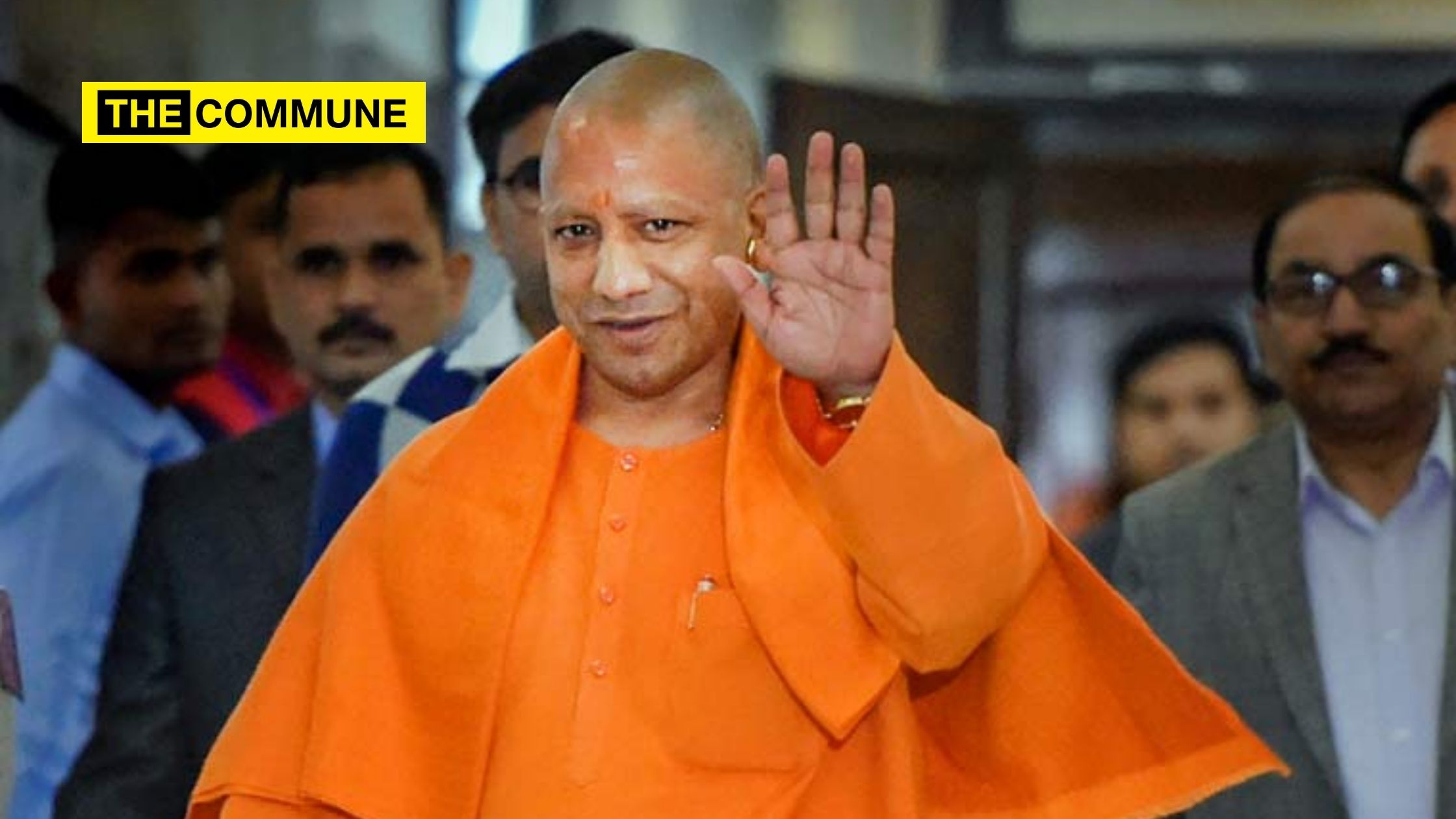
Honouring his promise of coming to the aid of Hindu refugee families who fled persecution in neighbouring Islamic countries, Uttar Pradesh Chief Minister Yogi Adityanath today distributed residential and agricultural land papers to 63 Hindu refugee families from Bangladesh. The chief minister took the measure under the Mukhayamantri Awaas Yojana.

Notably, the Citizenship Amendment Act of the that was passed in 2019 has not been implemented yet. The measure that the Yogi Adityanath government has taken is not for recent refugees from Pakistan and Bangladesh but for those displaced during the war for the creation of Bangladesh, where Hindus were the largest section of victims of atrocities perpetrated by the Pakistan Army.

Chief Minister Yogi had promised to accommodate Hindus displaced from Pakistan and Bangladesh by giving them residential and agricultural land in Uttar Pradesh.

The chief minister had said that such families would be allotted the state government land freed from encroachers.

Chief Minister Yogi had said that his government would bring all the land freed from “encroachers” under a ‘land bank’ and these pieces of land will be used for setting up schools, industries and other businesses and for the rehabilitation of Hindu refugees from Bangladesh and Pakistan.

At the function held at Lok Bhawan today, Chief Minister Yogi targeted the previous governments for their apathy towards such families that had been moving government departments for the past 38 years since they fled Bangladesh. Welcoming all the 63 Hindu families in the program, the chief minister said that their wait for 38 years was over.

The Uttar Pradesh government has sanctioned two acres of agricultural land, 200 sq m housing lease to each family in Rasulabad of Kanpur Dehat Janpad and one housing, toilet sanctioned in Mukhya Mantri Awas Yojana.

The chief minister said that in 1970, all the families had migrated from East Pakistan (now Bangladesh) to India. They were given jobs in a yarn mill in Hastinapur, these were about 407 families. The yarn mill closed in 1984, after which some families were resettled in different parts of the country. But there were 65 families who have been waiting for their rehabilitation since 1984.

(This article has been sourced from Sirf News and has been republished here with permission.)

Click here to subscribe to The Commune on Telegram and get the best stories of the day delivered to you personally.
“I don’t know Ram, we don’t see any Ram Temples In TN”: Congress MP Jothimani

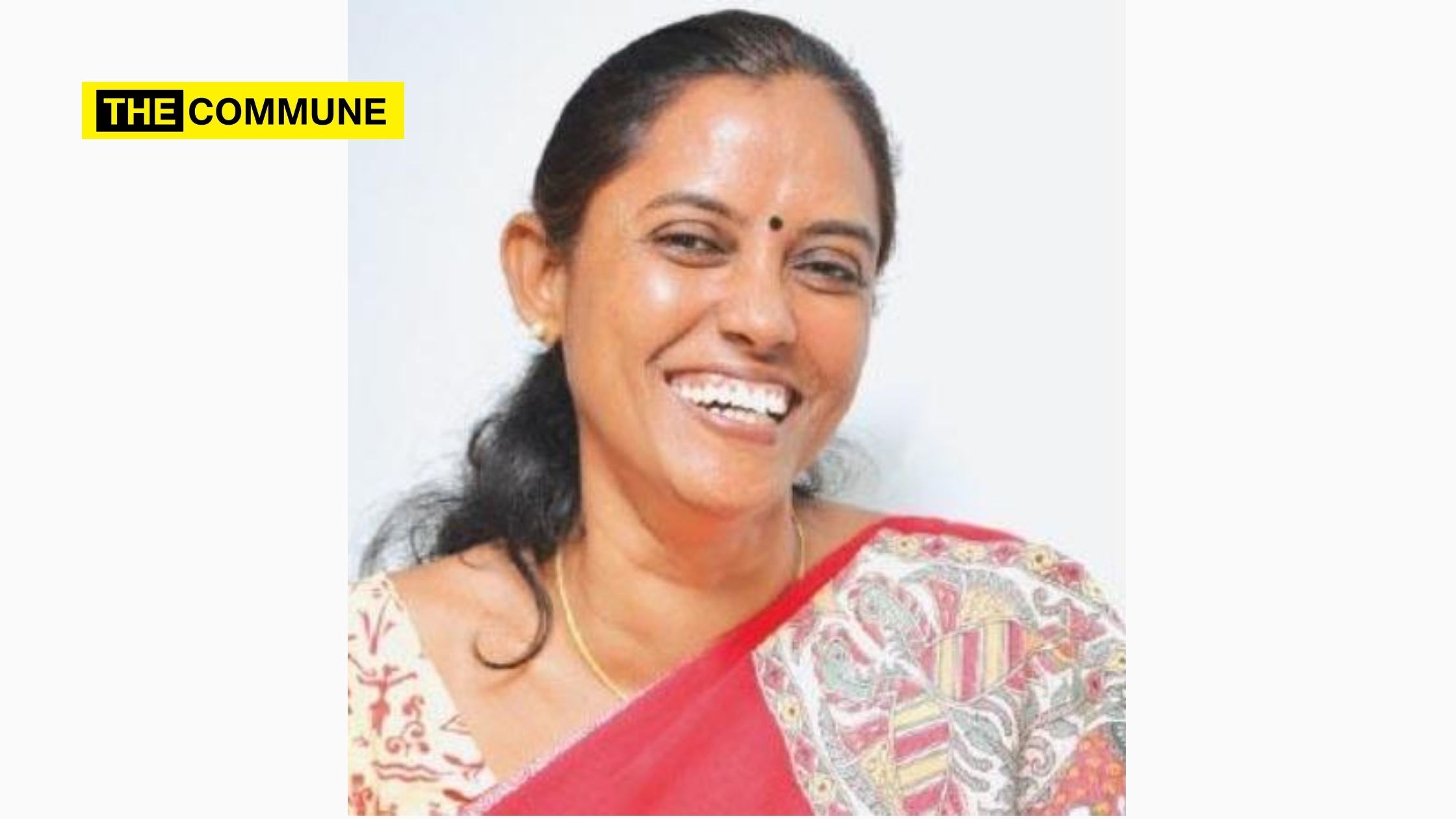
Congress MP from Tamil Nadu Jothimani, has courted controversy saying that she does not know Lord Ram and that there are no temples for Lord Ram in Tamil Nadu.

The Lok Sabha MP from Karur said “I’m from Tamil Nadu. I don’t know Ram. Because we are indigenous people. We follow ‘ancestral worship’. You ask anybody in Tamil Nadu. We don’t see any Ram Temple.”

“Every week I go to my temple. Because my clan used to go that temple. Basically, it is an ‘ancestor worship’. There are many south Indian states, even north-east tribals, SCs, Dalits, OBCs, we pray indigenous worship, basically an ancestral worship. So, that’s what we’re trying to say.”, she further added.

Jothimani also hinted that she never knew about Ram before coming to national politics but contradicted the same statement saying “I read Ramayana, I read Mahabharatha, that’s how I know”.

“When it comes to worship, we strictly worship our ancestors”, she said.

Netizens are now lashing out at the Congress MP with many pointing out the ubiquitousness of ‘Ram’ existing as Ram Temples, in names and so on.

Click here to subscribe to The Commune on Telegram and get the best stories of the day delivered to you personally.