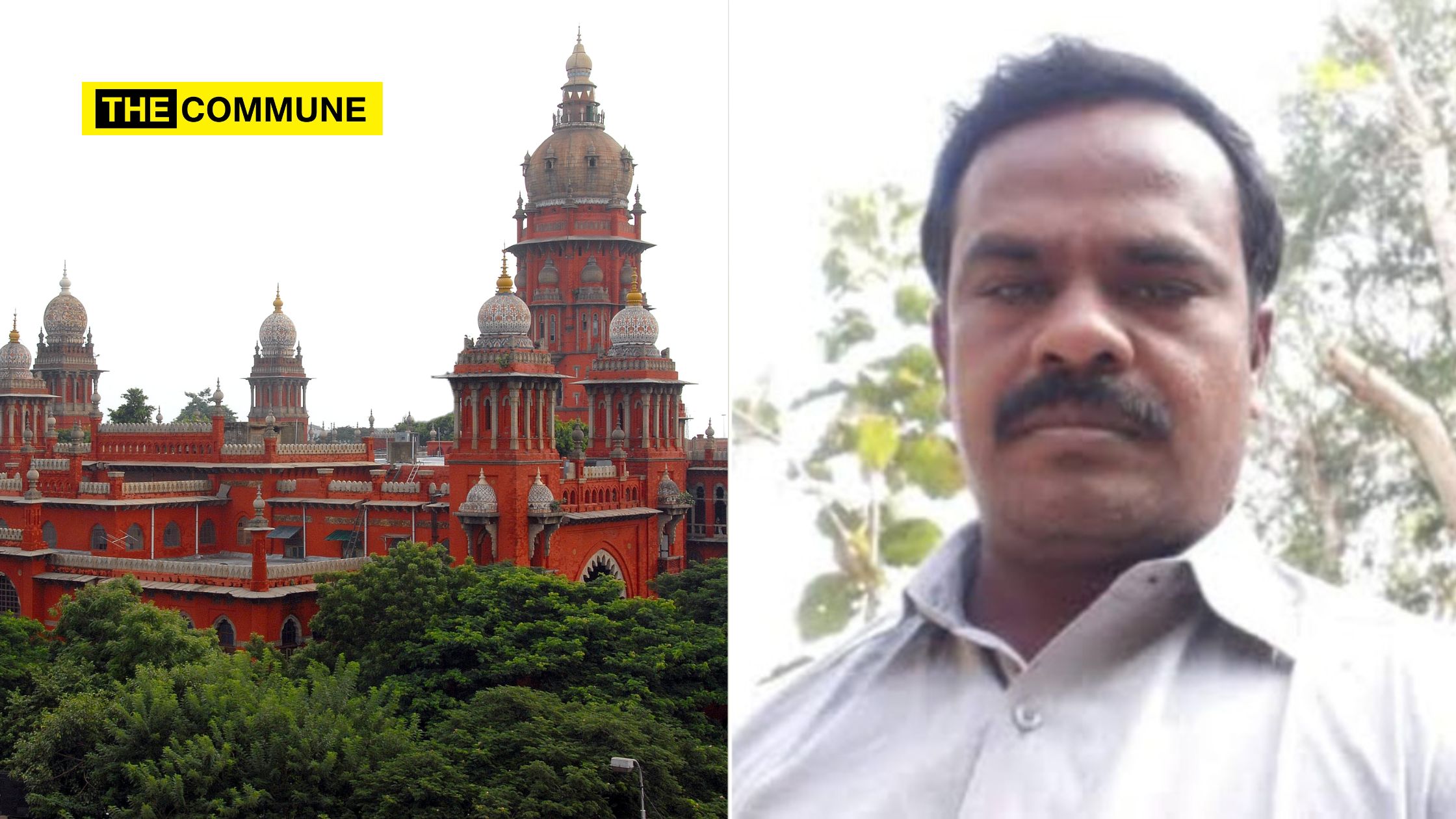
On Oct 4, the Madras High Court declined to grant bail to 10 accused in the murder of a PMK functionary Ramalingam who opposed who Hindus being converted to Islam in his area.
Ramalingam was killed by radical Islamists after he resisted religious conversion in the area. His right hand was chopped off by the gang, and was left to die. The murder took place the day he confronted some Muslim men who were attempting to convert residents of his community to Islam. Ramalingam took off the skull cap of one of Islamic preacher and put it on his head while also applying ash on the man’s forehead.
Thiruvidaimaruduar police registered a case and investigated the matter. According to the police’s FIR, it was discovered during the investigation that he was allegedly killed for interfering with a Muslim group’s religious propagation activities in Pakku Vinayagam Thoppu hamlet in Thiruvidaimarudhur on the morning of the murder. On April 25, 2019, the NIA took over the investigation from the Tamil Nadu police.
NIA in its chargesheet said, “Investigation has revealed that accused persons planned a criminal conspiracy and attacked victim Ramalingam, causing his death, with the intention of terrorising the general public and deterring anyone from further interfering in the religious propagation activity of the PFI/SDPI, after Ramalingam had an argument with the PFI dawah team on the morning of February 5, 2019, at Pakku Vinayagam Thopu village. Ramalingam’s murder had sparked intercommunal strife and instilled fear in the hearts of some.”
The 18 persons who have been charged include those who gave the attackers’ vehicles and the man who gave them lodging, as well as those who planned, organised, and oversaw how the crime was carried out.
In this scenario, 10 of the main accused, including Mohammad Azharuddin and Mohammad Riaz, out of 18 had filed a bail petion in Poonamalle Special Court. The Special Court, however, dismissed the bail the same day. The 10 accused then moved the Madras High Court for the bail. The case was heard by a bench comprising of Justices PN Prakash and Teekaa Raman. Special Advocate R. Karthikeyan appeared on behalf of the National Investigation Agency.
The bench in its order said, “Going by the trial judge’s report and documents, it appears that the accused have consented to go ahead with the trial without insisting that the defence witnesses be cross-examined first. Therefore, it is inadmissible to demand bail on grounds that the defence witnesses were not questioned.”
“Therefore, the Poonamallee Court should take immediate steps to complete the examination and cross-examination of the defense witnesses. In this instance, there is no merit. The petitions have been rejected,” the judges have thus ruled.
Click here to subscribe to The Commune on Telegram and get the best stories of the day delivered to you personally.
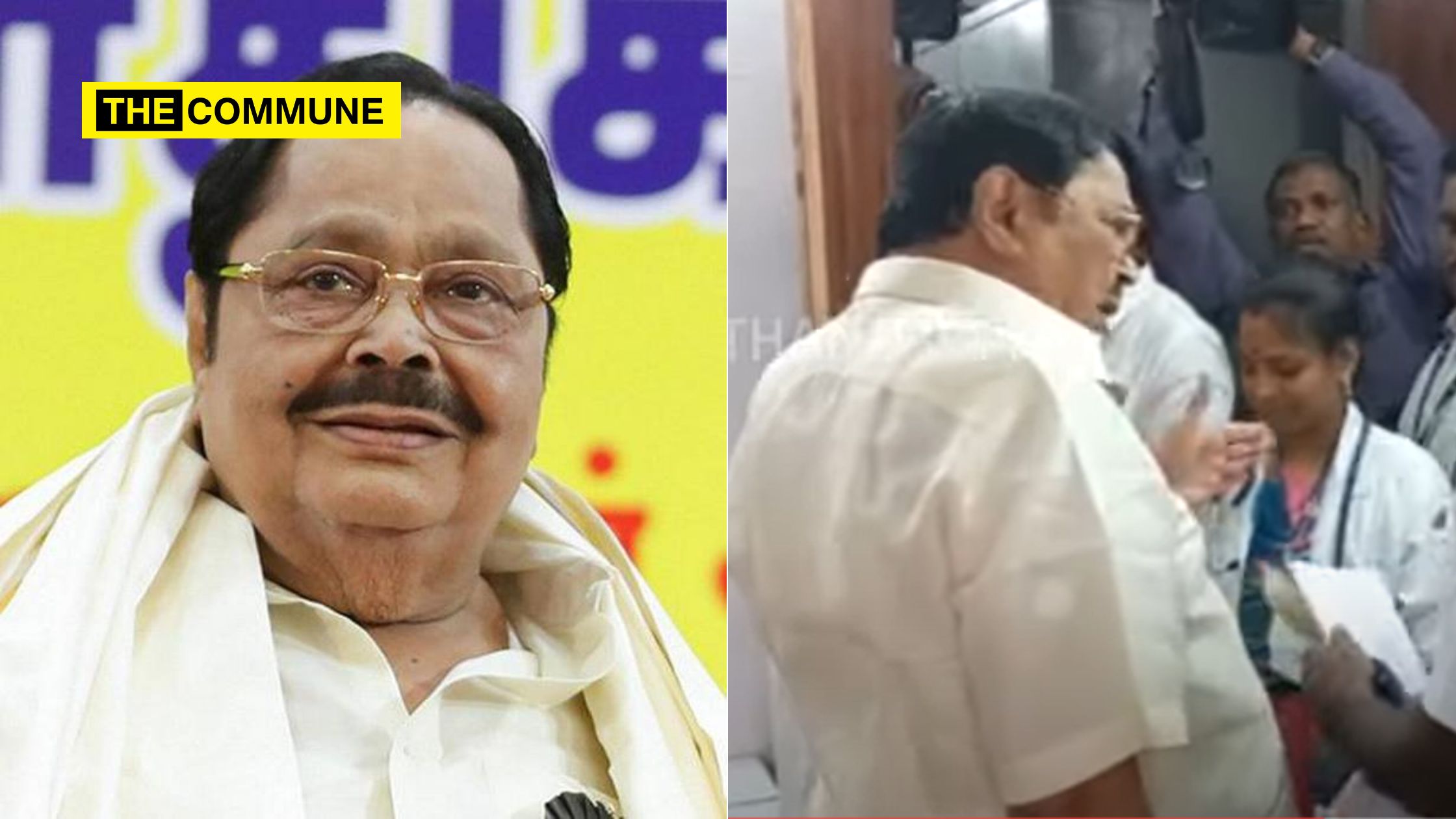
A video of DMK Water Resource Minister Duraimurugan threatening to transfer a government doctor to Kanyakumari while inspecting Ponnai Primary Health Center along with Tamil Nadu Minister for Health and Public Welfare M. Subramanian is going viral.
Ponnai Primary Health Center in Vellore Kaatpaadi was inspected by Minister for Health and Public Welfare Ma Subramanian and Water Resources Minister Duraimurugan on Wednesday (Oct 5).
In this occasion, there were allegations that despite being located in a hilly location, the hospital lacked snakebite medications and that the doctors weren’t frequently on duty. In relation to this Minister M. Subramanian has already recommended transfer of the 2 concerned doctors.
The Water Resource Minister, who was also present for the inspection, said furiously to the duty doctor, “Where are you hailing from? The doctor should be thrown (transferred) to Kanya Kumari.” This video of Minister Duraimurugan threatening the government doctor has gone viral in social media.
Earlier this week, another such video of minister Duraimurugan saying they’re getting ‘change in lower denominations’ to give one thousand rupees to the heads of the families went viral on social media.
Of late, DMK Ministers have embroiled themselves in controversies because of their behaviour and talk in public.
Recently, a couple of other Ministers, including Higher Education Minister K Ponmudy, DMK MP A Raja, and Revenue Minister KKSSR Ramachandran, were involved in loose talks, and their statements went viral on social media, inviting criticism from opposition parties.
The Chief Minister was forced to warn his ministers to exercise extreme caution when making public speeches and interacting with the general public.
Click here to subscribe to The Commune on Telegram and get the best stories of the day delivered to you personally.
Had Mahatma Gandhi lived long enough, the differences between the well-meaning Gandhi and the politically motivated Nehru, would most likely have spilt over into the streets and into the pages of national and international media.
Mr. M.K Gandhi’s utopian ideas and lack of pragmatism was made up for, by his humility and sincere well-intentioned wish to see a more egalitarian India and a pluralistic one. The collateral damage to his selfless but obstinate, impractical idea of a pluralistic India, was inflicted on the large masses of the Hindus, whose deep rooted, cultural reverence for spiritually-inclined men and women, allowed them to be emotionally exploited. Gandhi used his privileged, western education to re-educate himself in the ancient Indian social sciences and philosophy. He sacrificed his career, material comforts and his family for the larger idea of an India (however impractical) that he believed in. Gandhi preached a fusion of Indic spiritual tradition within a modern, egalitarian pluralistic, social and economic construct .
Jawaharlal Nehru’s idea of a post independence India, lacked Gandhi’s originality and clarity . Nehru’s idea of India was one acquired and developed over a period of time, based on a tapestry of ideas from the taller leaders of the pre-Independence Congress party. He made up for his lack of good leadership, lack of knowledge on several matters, a lack of deeper understanding of the Indian masses and lack of collaboration with the other leaders, with a strong, consistent and crafty, outwardly endorsement of the well-meaning Gandhi and his uniquely Indian sensibilities .
Nehru’s alignments with the factions present within the Congress party, betrayed his ego-propelled, self centered personal goals and budding levels of border line narcissism. Unlike Gandhi, he nurtured covert political ambitions and utilized his incomplete Western education to promote Western social , economic and philosophical theories. His fascination of Western ideology in all spheres of life and rejection of traditional Indic treatises on the social, physical and philosophical sciences is well known . In fact, his disdain for most things native and Hindu in particular, was documented before, as well as after India’s independence.
It would be controversial to mention it but I do wonder sometimes, if Gandhi’s early demise ended up being an advantage for the masses he sacrificed and fought for or for the handful of privileged men and women he worked with, towards the common cause of Indian Independence. If official and unofficial documented evidence is to be considered, it proved to be an advantage for the privileged Nehru and his self centered, Western-centric, sycophantic friends.
A power-wielding few, exercising complete and unquestioned authority over the needs, rights, sentiments of a new nation. A small, powerful group , promoting their own self interests, with nobody to question their intentions and behavior. Had Gandhi lived to see the many prejudiced, unparliamentary actions of Nehru and his coterie, he may have protested, yet invariably disappeared into obscurity, because politics and wily politicians have always ruled over the sacrifices of simple men and women .
Gandhi’s idea of Bharat’s economic freedom, social equality and prosperity, firmly rooted in the culture and spiritual traditions of the country, differed vastly from Nehru’s unabashed westernized views of the nation’s future, based almost entirely on western ideals, at the the expense of a collective Indic wisdom. Nehru’s disagreements with Gandhi numbered almost as many, as the agreements he had with him. There was even some debate around the specific nature, role, use and extent of non-violence in the freedom struggle, although by and large, there was a significant amount of agreement on the subject, between the two.
The two men were differently oriented with their personal lives and goals as well. Gandhi idealizing and striving towards a life, less dependent on material comforts, sensual pleasures and more inclined towards the teachings of the Hindu spiritual texts. Nehru, eager to abandon and ready to erase any traces of his cultural heritage, the spiritual traditions of his ancestors, his homeland’s Hindu contribution and history in favor of a disproportionately anglicized, Christian and Islamic influenced view of the world, along with a dose of his specific brand of socialism.
Predictably, the two men’s families fared differently too, in post Independence India. While Gandhi and his family opted not to take the political center-stage and did not mind fading into the annals of a worthy historical sacrifice, the Nehru clan did exceeding well for themselves in politics, administration and investments, at the cost of Indian democracy, Indian territorial security and Indian domestic as well as foreign policies.
Nehru and his clan established for themselves a neo, de facto, modern day monarchy of sorts, in which their authority reigned supreme, behind a veiled curtain of name-sake democracy. The well-meaning Gandhi could not have imagined the near-total dominance of the crafty Nehru and his progeny, in Indian politics! The two men were indeed, different!
In contrast to their differences of opinion on several matters, the biggest agreement shared by the two men, probably their strongest link, in the turbulent waters of pre-Independence politics, at the time of Independence and after India’s Independence, was a consistent tendency in both men, to be unusually concerned with the welfare of a large Muslim minority.
Both expected unquestioned obedience in this matter by the more docile, tolerant Hindu majority, regardless of the circumstances, biased jurisdiction of the day, historical injustices and instances of violence. In the same vein, both were unusually eager to bend backwards for Mohammed Ali Jinnah and his idea of a separate homeland, exclusively for the Muslim cause. Both men harbored a strange, unreasonable propensity for consistently and frequently requesting, even demanding, a collective Hindu forgiveness of a disproportionate number of violent, intolerant Muslim actions.
This common thread between the worlds of two otherwise, differently oriented men, shaped the future of independent India, in ways that did not always serve India’s best territorial, social and economic interests.
Dare we recognize a repeat in more recent Indian history? Try drawing parallels between the Gandhi-Nehru duo and the eerie similarity of the once existent relationship between the simple, well-meaning Mr. Anna Hazare and his ex disciple-in-disguise, the more complex , politically driven Mr. Arvind Kejriwal.
Mr. Anna Hazare’s ideals and well-intentioned vision of a corruption free, more egalitarian India, helped nurse the political ambitions of the astute Mr. Kejriwal. Kejriwal too supported by a coterie of intellectuals and the media. While Kejriwal and his like-minded friends enjoy the privileges of power and continue to harbor increasing political ambitions of national importance, the modest Mr. Hazare is already a relic, faded into the obscurity of another history chapter!
Click here to subscribe to The Commune on Telegram and get the best stories of the day delivered to you personally.
The ruling Eknath Shinde faction of Maharastra’s Shiv Sena, received endorsement and validation from the late founder, Bal Thacker family.
Bal Thackeray’s elder son and other Thakarey family members shared the Dussera stage with current Maharashtra Chief Minister, Mr. Eknath Shinde.
Mr. Uddhav Thackeray, younger son of Bal Thackarey, the recently ousted Chief Minister of a Shiv Sena coalition in Maharashtra, was no doubt disappointed.
His Shiv Sena led government which was in a coalition with the Congress and the NCP, fell to a strategic coup from within his party, in alleged protest against a coalition made up of ideologically different partners .
An annual Dussera meeting and celebration has been a Shiv Sena tradition since Bal Thackeray’s times.
This year’s feature was expected to be unique, in that, the party’s two rival factions were both expected to hold it.
In the end, Mr. Eknath Shinde who heads the current government with the support of the BJP in the state, may have tipped the scales in his favor, when he talked about aligning with ideologically similar parties and not betraying the Shiv Sena’s core voter base of Hindutva supporters.
Click here to subscribe to The Commune on Telegram and get the best stories of the day delivered to you personally.
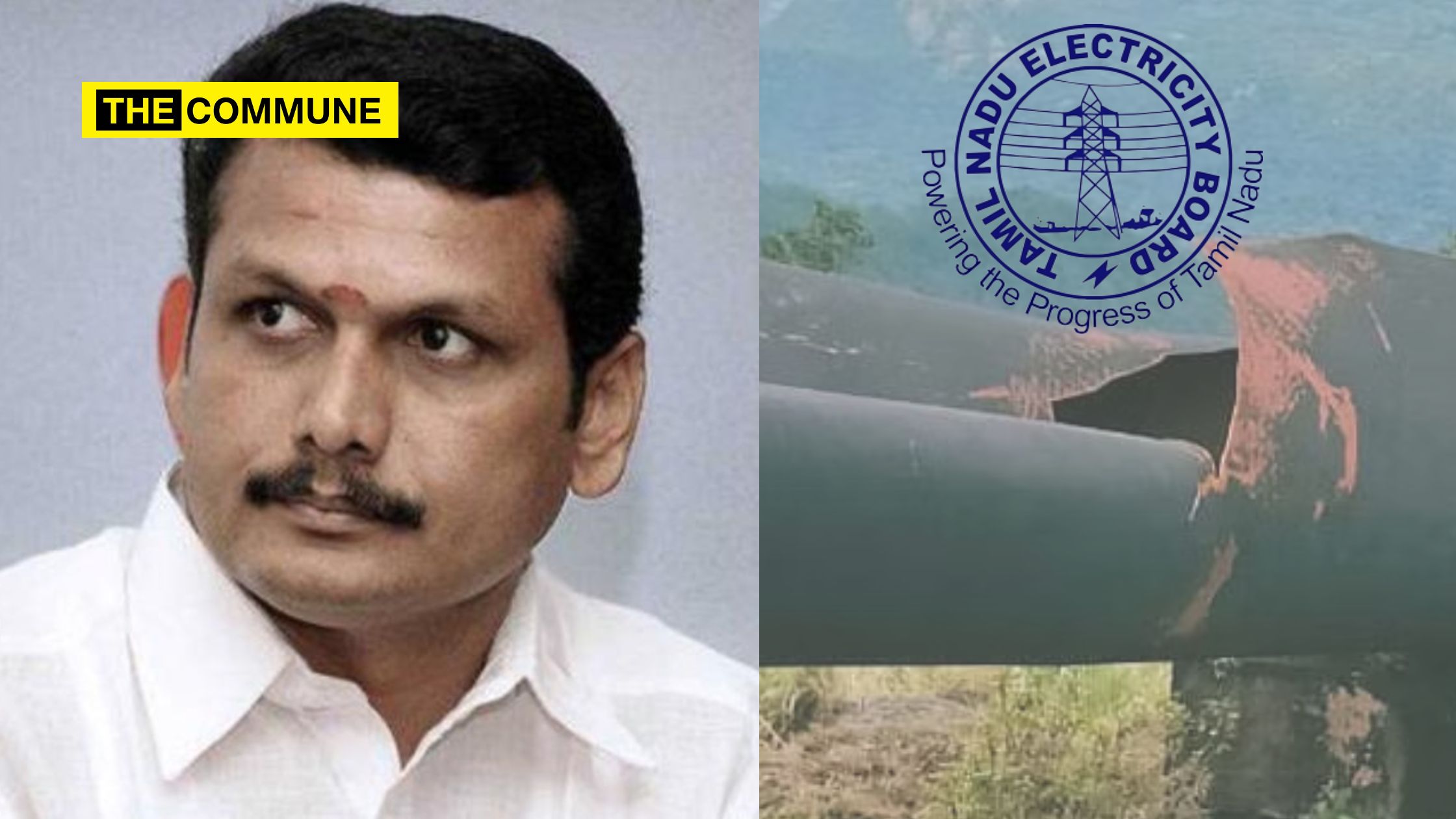
Due to a delay in receiving the necessary approval from Tamil Nadu Electricity Minister Senthil Balaji, the Tamil Nadu Electricity Board (TNEB) faced a loss of several crore rupees without producing 13 lakh units of power at the Suruliyar power station in the Theni district.
The Iranvangalar Dam, which is fed by the Manalaru and Venniaru dams, is used to store the rainwater collected in the Meghamalai Hills in the Theni district.
To generate electricity, a 971-meter pipeline is being built from the Iravangalar dam to the Suruliyar power station in the Vannathipara district.
The late Chief Minister MGR commissioned this power plant in 1978. It is second in Asia at producing energy by extracting water from an elevation.
A generator, imported from Austria, with a capacity of 35MW of power generation, is used to generate power of 4.8 lakh units per day.
The electricity generated here is transported to Kayatharu power station in Thoothukudi district and distributed to other districts. For the same 35 MW of power generated, the power plant in Lower Camp would need up to 400 cubic feet of water, whereas the Suriliyaru power plant only needs 141 cubic feet of water drawn from the Iravangalar Dam.
It was reported that the pipeline connecting Iravangalar Dam and Suriliyaru power station was damaged on September 14, 2021. As a result, power generation was halted, the Suruliyar power plant was shut down, and there has been no power generating for the past 13 months. The production of at least 13 lakh units of power has been disrupted.
According to the officials, it has been constantly raining for the past few months, and the water has been squandering into the sea without producing any electricity.
It was reported that the TNEB officials could not start the repair of the pipeline as it requires approval from the Electricity Minister. Additionally, the work could not begin quickly since welding cannot be done in the rainy season. Local residents have urged that the Tamil Nadu government should take steps to start the repair work and generate electricity as soon as possible.
There is no shortage for virtue-signallers in Kollywood who function as propagandists for the DMK.
There is actor Suriya Sivakumar who became vocal in the lead up to the 2021 Assembly Elections, parrotting the DMK’s rhetoric on NEET, National Education Policy and other issues.
His wife Jyothika took to virtue-signalling when she said her heart weeps on seeing money being spent on maintaining temples instead of hospitals.
Then came alleged ‘comedian’ Soori who while showering praises for Suriya, said that educating one child is far nobler than building temples or giving money for Annadanam (food served for free at temples).
Needless to mention is Kamal Haasan who has been in this pseudo-rationalism virtue-signalling trade for a long time.
Then there are blatantly anti-Hindu demagogues like Pa. Ranjith, Ameer Sultan and Karu Pazhaniappan, spewing venom about Hinduism whenever there is a mike in front of them.
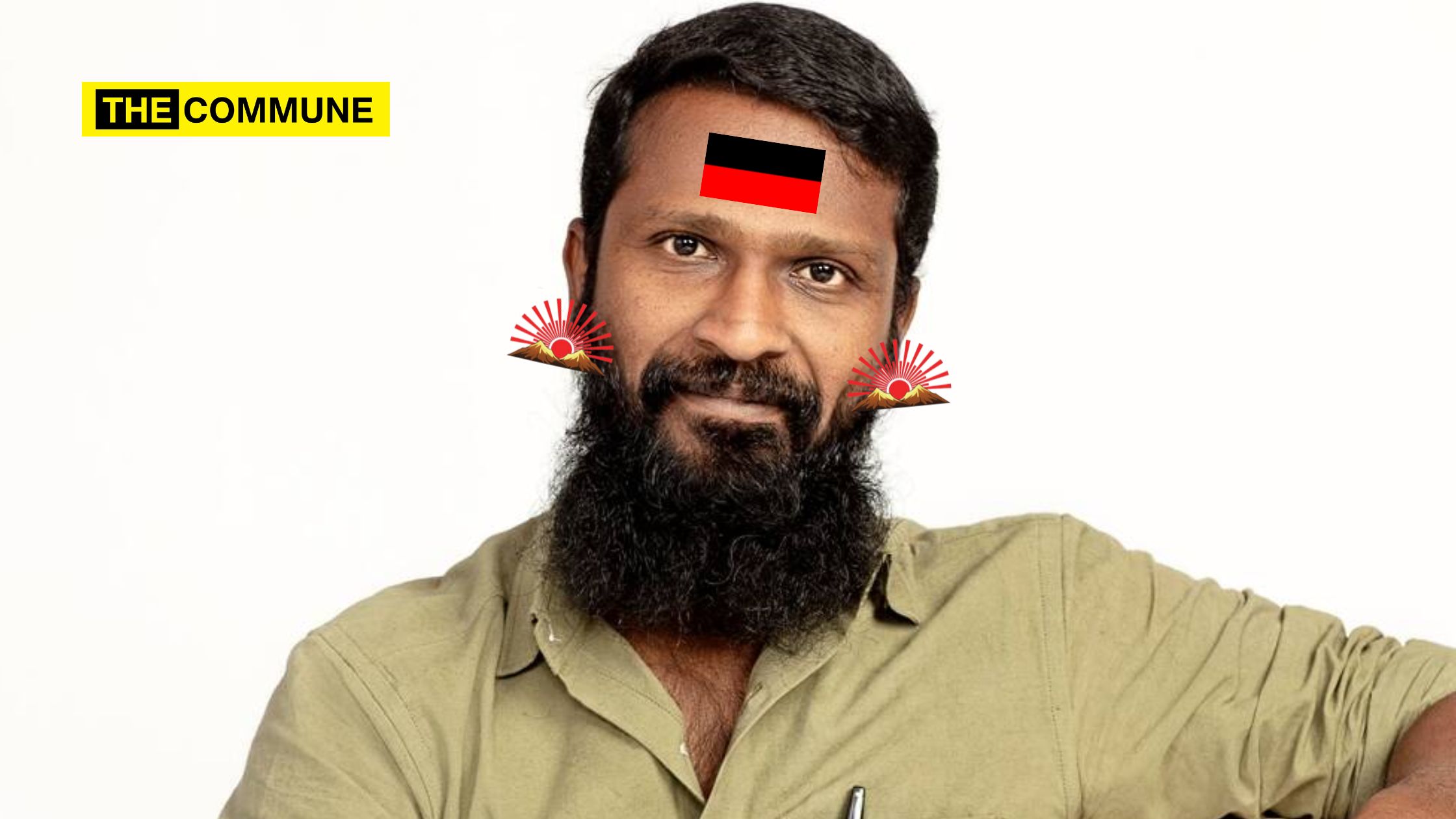
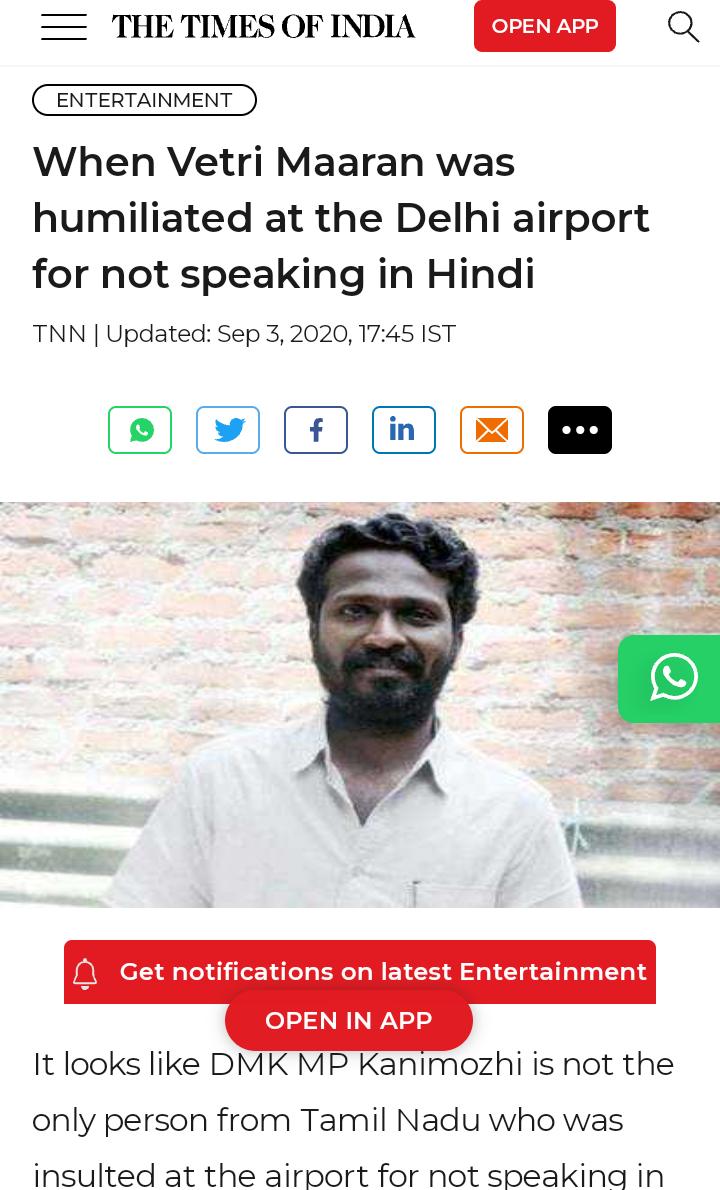
The latest to get added to this list is the acclaimed film director Vetrimaaran. He is known for blockbuster films like Visaranai, Aadukalam, Vada Chennai, Asuran, to name a few.
While the man may be good at his craft, he is your typical Dravidian Stockist who seeks to separate Hindu identity from Tamil culture. This separation of Hindu identity from Tamil culture to form a distinct ‘Dravidian’ identity has always been the aim of external evangelical forces.
Vetrimaaran: An Agmark Dravidian Stockist
Not many may know but Vetrimaaran hails from a family that owes its allegiance to the DMK. His maternal uncle Ela. Pugazhendi was a 3 time DMK MLA from Cuddalore. It was Pugazhendi who named him Vetrimaaran.
Pugazhendhi’s father Ere. Elamvazhuthi was also a DMK MLA from Cuddalore and had worked closely with rabid anti-Hindu demagogue E.V. Ramasamy Naicker (known as Periyar by his followers) and also with CN Annadurai and Karunanidhi.
So, the anti-Hindu DNA runs in the family.
Vetrimaaran: A Regurgitator Of Dravidian Stockist BS
It isn’t just his family’s inclination to the DMK that makes Vetrimaaran a Dravidian Stockist. Vetrimaaran has acted as a propaganda vehicle for the DMK both on and off screen.
Like this one time, he fanned the linguistic chauvinism lit by DMK MP Kanimozhi who in 2020 claimed that she was questioned and ridiculed by CRPF personnel at Chennai airport for not knowing Hindi.
Today at the airport a CISF officer asked me if “I am an Indian” when I asked her to speak to me in tamil or English as I did not know Hindi. I would like to know from when being indian is equal to knowing Hindi.#hindiimposition
Just days after Kanimozhi’s claims, Vetrimaaran alleged in an interview that he was insulted by the immigration officials at Delhi Airport back in 2011 when he was returning from Canada.
Apparently, the immigration official also told him “You people are like this…You Tamils, Kashmiris are only breaking this country.”.
That he chose to casually pass of this as a matter of fact trying to draw an equivalence between Tamils and Kashmiris says a lot about his intentions.
He would have done a similar thing in his film Visaaranai where he casually superimposes Tamil identity with LTTE in a scene.
A Tamil Muslim man named Afzal is interrogoated by an Andhra Pradesh police officer who asks “Are you LTTE?”
The beauty in these two instances is that the extrapolations and superimpositions about Tamilians comes from the antagonists of his stories – the immigration official from his alleged real life incident and the police official in the reel life Visaranai.
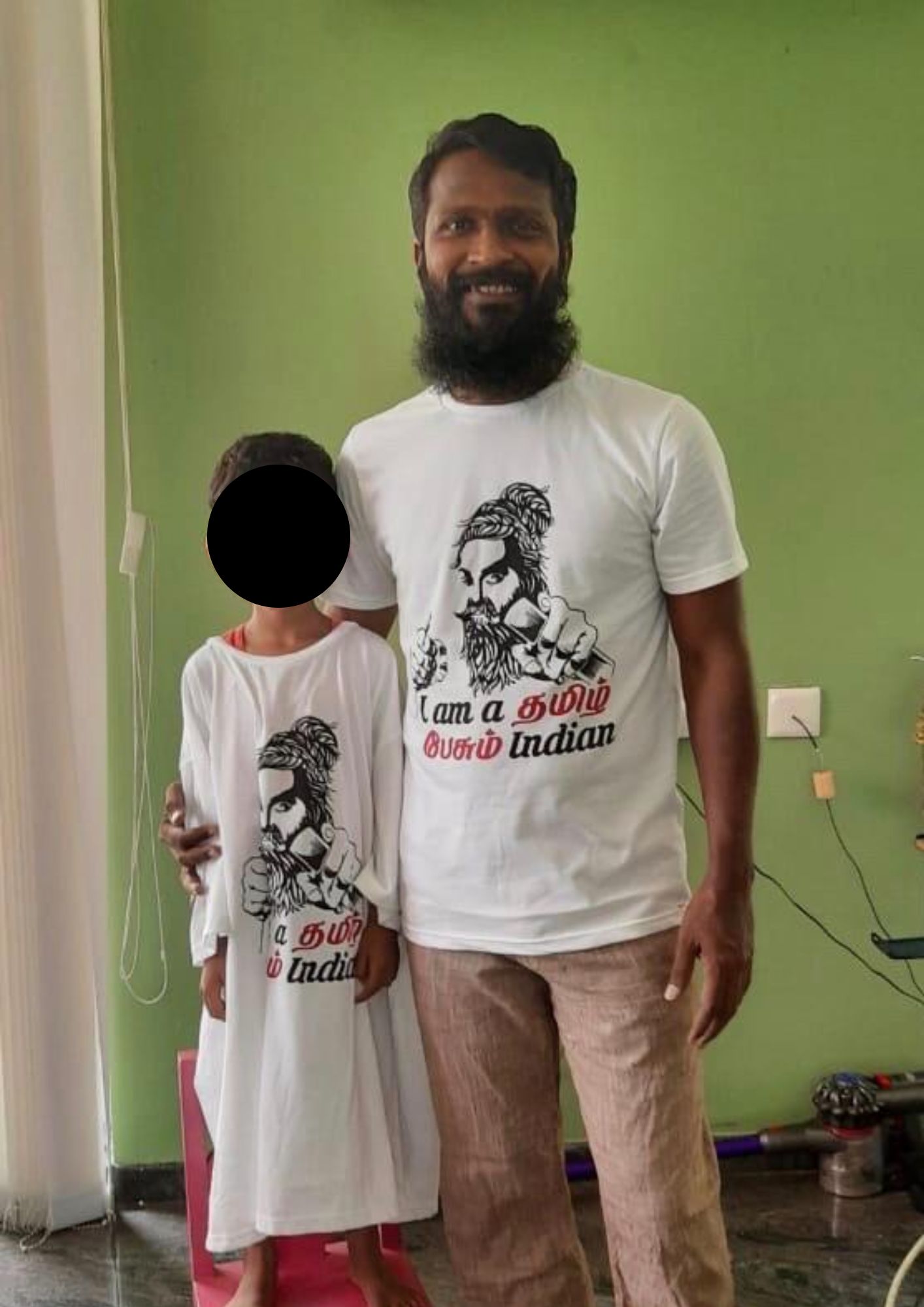
When the ‘Hindi Theriyathu Poda’ t-shirt campaign was kicked off and given patronage by Kanimozhi and Udhayanidhi Stalin, he was also one of the film personalities to join the brigade.
Even in his films he has peddled the Dravidian Stockist propaganda.
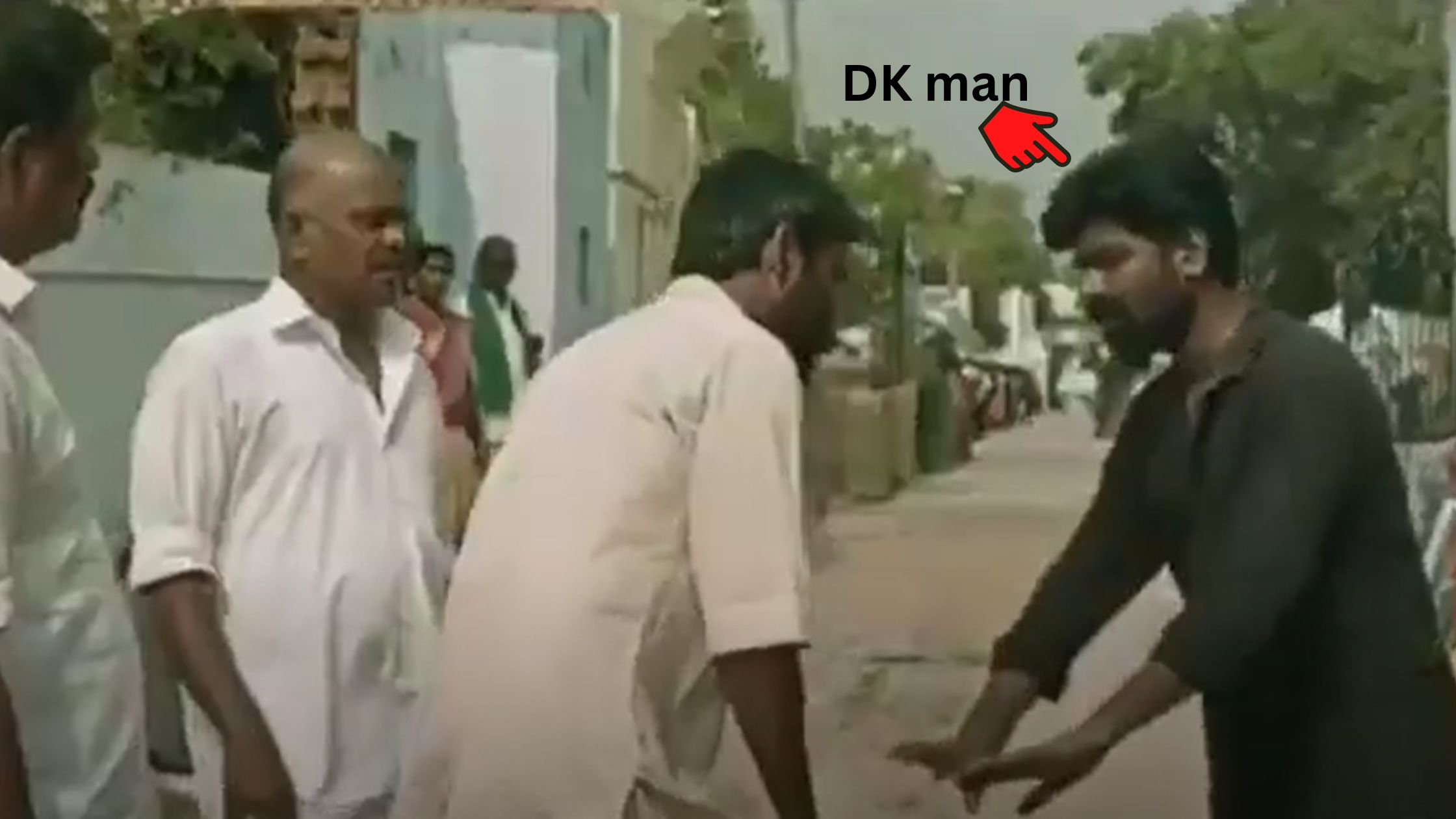
In the critically acclaimed blockbuster Asuran, there is a scene where Sivasaami (played by Dhanush) is made to fall at the feet of villagers by members of the dominant caste. Sivasaami is shown trying to reach the feet of a man clad in black-shirt who asks him not to, indicating that the blackshirt man is a member of the Dravida Kazhagam (DK) started by E.V. Ramasamy Naicker.
The village where dominant caste members live is named (Vadakkoor – northern village) and the place where Dalits live is named (Thekkoor – southern village).
This is the typical dichotomy drawn by Dravidian Stockists to peddle their separatist victimhood propaganda.
North : Oppressors :: South : Oppressed
“Vadakku Vaazhgiradhu, Therku Theigiradhu (North is flourishing, South is perishing)”, as stated by DMK founder Annadurai.
In the same film, there is a scene where Sivasami’s family along with many others, are burned alive in their huts similar to the horrific Keezhvenmani massacre. But there is no subtle reference to the original perpetrators of the crime, the apathy of the then DMK government or to E.V. Ramasamy Naicker who refused to condemn the incident and instead justified the crime saying, “Labourers should simply accept the wages offered to them by the land-owners instead of demanding more than what they deserve”.
Vada Chennai which was released in 2018, had heavy anti-development propaganda when the DMK was upping the ante against Chennai-Salem Expressway, Sagarmala, Indian Neutrino Observatory and other projects.
Vetrimaaran: A Coward Of The First Order?
Vetrimaaran in his recent controversial speech stated that art is inherently political and that it was very important to politicize cinema.
Yes, cinema is political and it is through cinema that the Dravidian political parties reaped benefits.
It is important that cinema apart from providing entertainment also educates and enlighten people about things that they should know about.
In that light, will Vetrimaaran have the courage to take a film on the rotten state of affairs in Tamil Nadu where corruption is the order of the day?
Will Vetrimaaran have the guts and the gumption to take a film on the Maanjolai Massacre that happened under Karunanidhi’s watch in which 17 innocent Dalit tea estate workers including two women and a two-year-old child were killed for demanding a wage increase of ₹30?
Will Vetrimaaran have the guts and the gumption to take a film on the horrific murder of Leelavathi, a Communist Party councillor in Madurai who was hacked to death in broad daylight by DMK goons?
Will Vetrimaaran have the guts and the gumption to talk about the casteist venom spewed by DMK leaders?
If he doesn’t even make an attempt to do any of the above, then there is no bigger coward of the first order like him.
Vetrimaaran: A Hypocrite Of The First Order?
Vetrimaaran also said that art is for people and that it should reflect the society which we live in. He talked about ‘erasure of identities’.
“We should handle art responsibly. If we don’t, our identities will be taken from us. Constantly our identities are being snatched away.”, he said.
Vetrimaaran should have thought twice before making this statement.
In his film Vada Chennai, he had portrayed people of (Meenavar) fishermen community of north Chennai as if they were involved only in piracy, drugs, goondaism and crime. He had shown the women folk as lacking decency and using cuss words.
The Meenavar community which includes communities like Pattanavar, Paravars and Sembadavars have a glorious history in seafaring. The Pattanavars are maritime community densely populated in Chennai, Kanchipuram, Cuddalore, Vizhupuram and Nagapattinam districts of Tamil Nadu. They have traditionally been involved in fishing, shipment, navy, and trade. They had served as naval force under various Tamil kings. According to historian Hermann Kulke, the Pattanavars were instrumental in in the organization and exploits of Chozha Navy.
Yet, Vetrimaaran chose to snatch away this glorious history and identity of Meenavars and showed them as uncouth people.
Vetrimaaran: A Cog In The Breaking India Machinery
Speaking at the 26th edition of International Film Festival of Kerala (IFFK) held at Thiruvananthapuram in March 2022, Vetrimaaran said “Today’s world is divided. Most of us feel that you have to choose – you are either left or right. There is no middle. If you say that you are middle then you are right. So, it is either left of right. So, there is a time where you have to choose.”
"Today's world is divided. You have to choose. You are either left or you are right. There is no middle. If you say that you are in the middle, then you are in the right."
The left has always built careers by exploiting linguistic, religious, and caste faultlines. This statement of Vetrimaaran shows where he belongs and what his agenda is. Through his movies and statements he makes it clear that his agenda is to peddle political propaganda favourable to the DMK and the left.
Vetrimaaran: A Filtered Bigoted Illiterate?
In his recent controversial speech Vetrimaaran said that his friend had done a meticulous study on how literature and cinema were in ‘their’ hands (Brahmins), and how the Dravidian movement took over cinema from them.
Well here are some facts:
KB Sundarambal who lives in the hearts of millions of Tamils as Avvaiyaar was a Gounder.
MK Thiyagaraja Bhagavathar, the first superstar of Tamil cinema belonged to the Aasaari/Aachari (goldsmiths) community
The iconic Sivaji Ganesan who ruled the Tamil film industry for decades and helped us visualize Lord Siva, Karnan, Veerapandiya Kattabomman and VO Chidambaram Pillai was a Thevar.
Then lady superstar Saroja Devi belonged to a Vokkaliga family.
Accclaimed director Bhimsingh who gave hits like Pasamalar, Kalathur Kannamma, Paalum Pazhamum was a Bondil Rajput (a migrated community who settled in then Madras Presidency from Rajasthan and Madhya Pradesh).
Superstar Rajinikanth (originally Sivaji Rao Gaewad) who still rules the Tamil film industry as an actor belongs to a Marathi Kunbi family.
And the list is endless which busts the Brahmin – non-Brahmin narrative peddled by Vetrimaaran who has shown himself to be the typical Dravidian Stockist bigot.
Vetrimaaran also took to expose his cultural illiteracy with his comments on Rajaraja Chozhan “being appropriated as a Hindu”.
The Chozha rulers – Rajaraja Chozha, Rajendra Chozha I, Rajadhiraja I, Rajendra Chozha II, Virarajendra Choza – aestablished Vedic schools all across the then Tamil land. According to the Karandai copper plates, Rajendra Chola I himself studied the Vedas apart from learning horseriding and military skills.
To those who say Cholas are Saivites and not “Hindus”, well the Chozhas not just built and patronaged Sivan temples but also Perumal (Lord Vishnu) temples.
Nanda Chozha built the Azhagiya Manavalan Perumal temple at Uraiyur near Trichy. Chozha kings namely Dharmavarcholan and Killivalavan developed the Srirangam Renganathaswamy Temple.
Alas, the Chozhas didn’t built any mosque or church. So, Chozhas like Thiruvalluvar will be known as Hindu kings who strengthened Hindu spirituality and Tamil culture.
To the argument that there was no Hinduism back then and there existed various sects like Saivism, Vaishnavism, Shaktham, Ganapathyam and Kaumaram, well even Tamil Nadu didn’t exist back then. The region was split as Chera Nadu, Chozha Nadu and Pandiya Nadu. The name Tamil Nadu was not there earlier. Does that mean Tamil people and culture did not exist?
Today, a Hindu who goes to a temple prays to Vinayagar, Murugan, Siva, Sakthi, Vishnu, and every 33 crore Gods present in the Hindu pantheon. He/she prays at Ekambaranathar temple and also prays at Ulagalanda Perumal temple in Kanchipuram. They go to Uchipillayar Koil in Trichy and also go to Srirangam Ranganathar temple. He visits Tirupati and also prays at Kalahasthi. He goes to Palani praying to Lord Murugan and also carries his irumudi for Ayyappa at Sabarimala.
As a fellow director from Tamil film industry says, the pseudo-rationalists are more dangerous and vicious who are hell bent on breaking the unity of this country.
So, Mr. Vetrimaaran, please spare us you regurgitated Dravidian Stockists BS.
Click here to subscribe to The Commune on Telegram and get the best stories of the day delivered to you personally.
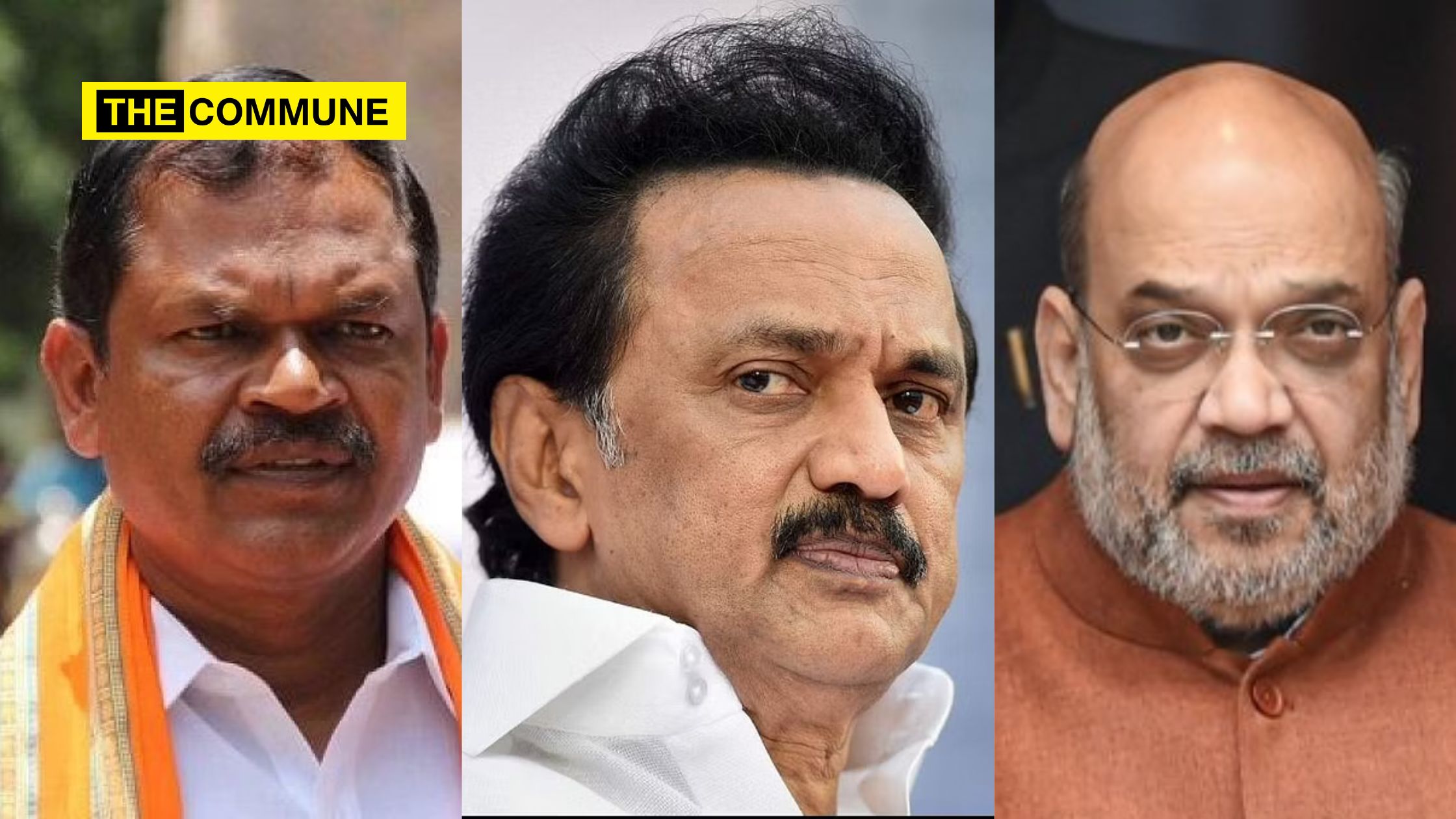
A complaint has been filed on behalf of the Indu Makkal Katchi to the Union Home Minister Amit Shah, demanding action against the DMK, over filing of false cases against BJP members in Tamil Nadu. Indu Makkal Katchi chief Arjun Sampath met Union Home Minister Amit Shah in New Delhi and presented the petition.
Addressing the press after the meeting, he said, “Recently in Tamil Nadu false cases are being filed against BJP members. Houses and offices of BJP members are regularly attacked. Petrol bombs are thrown. Many BJP functionaries have been jailed in false cases. We urged Home Minister Amit Shah to conduct a detailed inquiry into the matter and take action against those involved.”
Accusing DMK of indirectly supporting banned organizations in Tamil Nadu, he said,” The DMK government is indirectly supporting the recently banned Popular Front of India through the parties Viduthalai Siruthaigal Katchi and Naam Tamilar. We took up this matter with the Home Minister. We also urged HM to take action against DMK MP Raja for making derogatory comments on Hindu women.”
He also added that they have petitioned External Affairs Minister Jaishankar to stop the Sri Lankan government’s actions to disturb the sanctity of the Thirukoneswarar Temple in Triconamalai, Sri Lanka.
“We presented a petition to the Union Urban Development Minister Hardeep Singh Puri to build a statue of Chhatrapati Shivaji and former Prime Minister Vajpayee at Marina beach in Chennai,” he concluded.
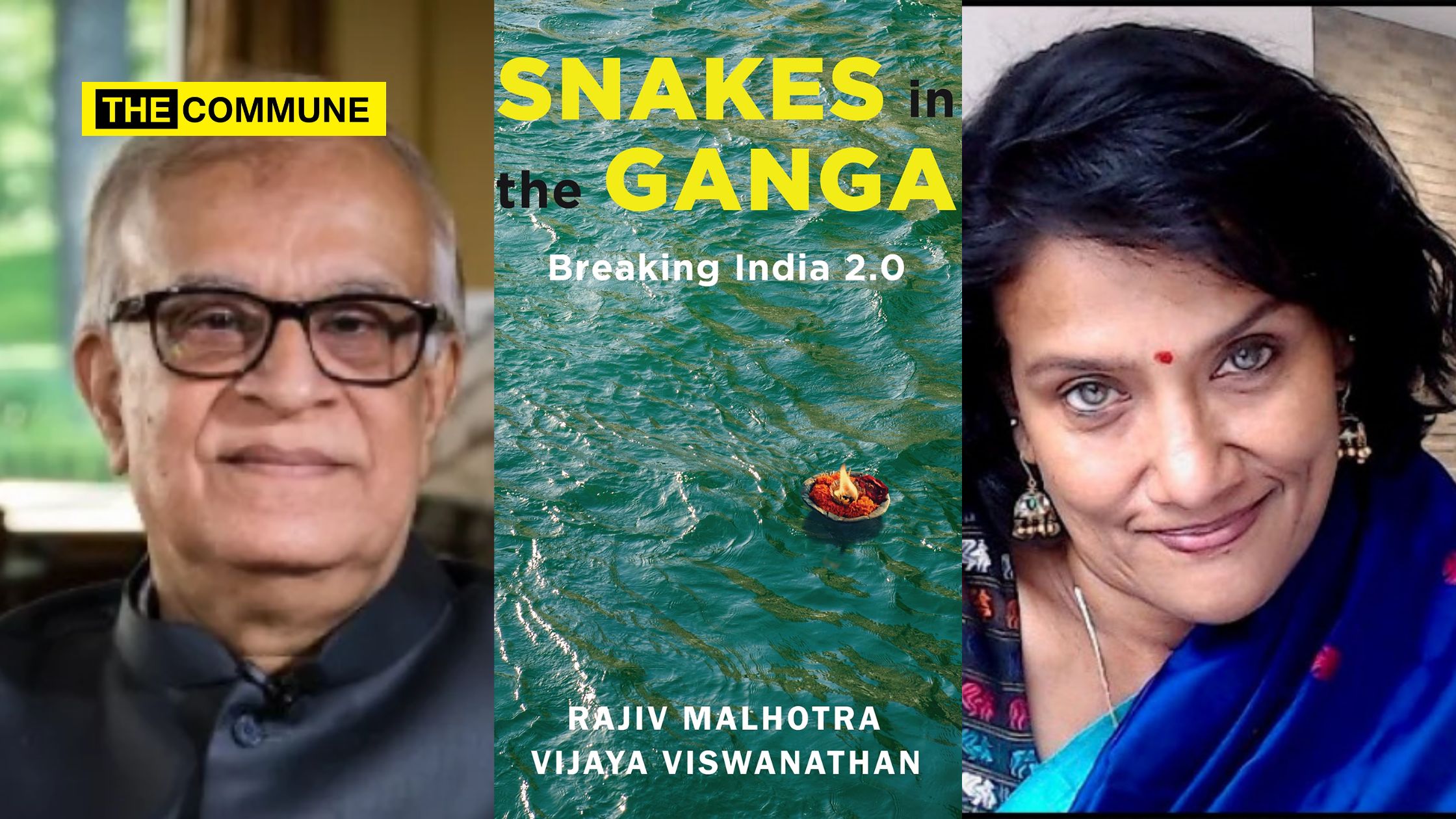
What does it mean to be an Indian and a Hindu, in the 21st century? Why is Indian way of life, amongst the most misunderstood in the world and why is Indic culture amongst the most susceptible to fanatic, divisive forces within and outside of our nation? Do the “Breaking India” forces make an effort to understand and appreciate the inherent freedom, liberalism, pluralism and inclusivity present in Indic philosophic thought and spiritual practices? Is Indian sovereignty at threat?
Noted author and founder of Infinity Foundation Rajiv Malhotra along with Prof. Vijaya Viswanathan answer these questions in the book Snakes In The Ganga which is being touted as a sequel in the “Breaking India” series.
Rajiv Malhotra had earlier co-authored a book titled “Breaking India: Western Interventions in Dravidian and Dalit Faultlines” with Tamil writer Aravindan Neelakandan which went on to become one of the best sellers.
This time, Rajiv Malhotra and Vijaya Viswanathan discuss about negative forces that are infiltrating India’s institutions. The book exposes the new academic frameworks and discourse being developed in places like Harvard University that have sinister intentions towards India and how Dalits, Muslims, feminists, LGBTQ+ and others are aroused to oppose the Indian nation.
The book is being launched in Chennai on 9 October 2022 in Chennai at the Chinmaya Heritage Centre, Chetpet, Chennai.
Swami Mitrananda of the Chinmaya Mission will be giving the inaugural address and Editor of ‘Thuglak’ magazine S. Gurumoorthy will preside over the event as chief guest.
Noted journalist and founder of Chanakyaa YouTube channel Rangaraj Pandey will address the event as keynote speaker.
Click here to subscribe to The Commune on Telegram and get the best stories of the day delivered to you personally.
The book “Vaalum Varaikkum Valluvam” by Prof. Jagatheesan was officially released at the Dravida Kazhagam headquarters in Vepperi, Chennai. The book was released by Dravidar Kazhagam president K. Veeramani and its copy received by VCK chief Thol. Thirumavalavan.
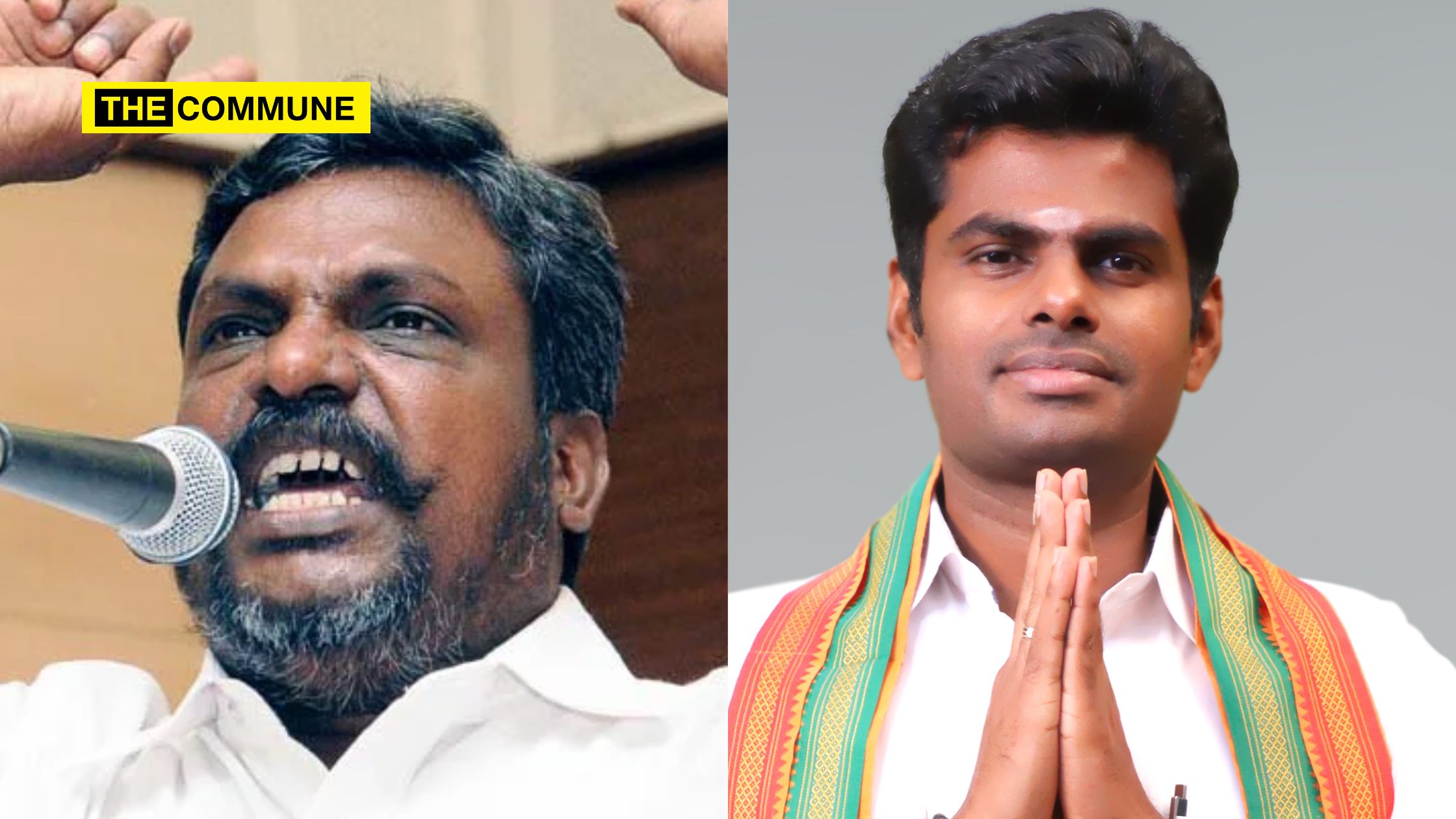
Speaking at the event, Thirumavalavan said, “Hindutva groups are trying to make inroads into Tamil Nadu. Are we going to hear the slogan ‘Jai Sriram, Bharatmata ki Jai, Jai Hanuman’ in this land that has been chanting ‘Long live Periyar, Long live Anna, Long live Kamaraj’? Are we going to allow them to change the Tamil Nadu like this?”
He stated that Tamil Nadu is undergoing transformation and questioned, “What is the need for a rally in the name of a cultural organisation (RSS)? Their only intention is to spread the slogans of Jai Shri Ram and Jai Hanuman.”
He went on to say that it was a disgrace that three Puducherry ministers attended the rss rally while holding the saffron flag and that Tamil Nadu is in a dangerous situation.
“Some people are questioning why the RSS can’t conduct a rally because they have the same rights as any other organization in Tamil Nadu? No. They are fascist organization. They are terrorist organization” he continued.
He insinuated that they must unify in opposing and demanding a ban on the RSS, or they will be unable to wear black and blue shirts in Tamil Nadu in ten years.
He continued his provocation by saying,” October 11 is our day. We must demonstrate to them (RSS) that Tamil Nadu is not like UP or Gujarat. The time has come to show them (RSS) that we will chase them away. All 4.5 crore Tamil Nadu voters should take to the streets to fight the RSS. They should flee to Uttar Pradesh after witnessing our might on the 11th.”
He proceeded, “Those who assassinated Gandhi, attempted to assassinate Kamaraj, demolished the Babri Masjid, massacred 3000 Muslims in Gujarat, were engaged in the Malegaon blast, and assassinated Gauri Lankesh are now attempting to enter Tamil Nadu by shouting the Jai Sri Ram slogan. It’s a pity Sudhira Annamalai is unaware of this.”
Click here to subscribe to The Commune on Telegram and get the best stories of the day delivered to you personally.
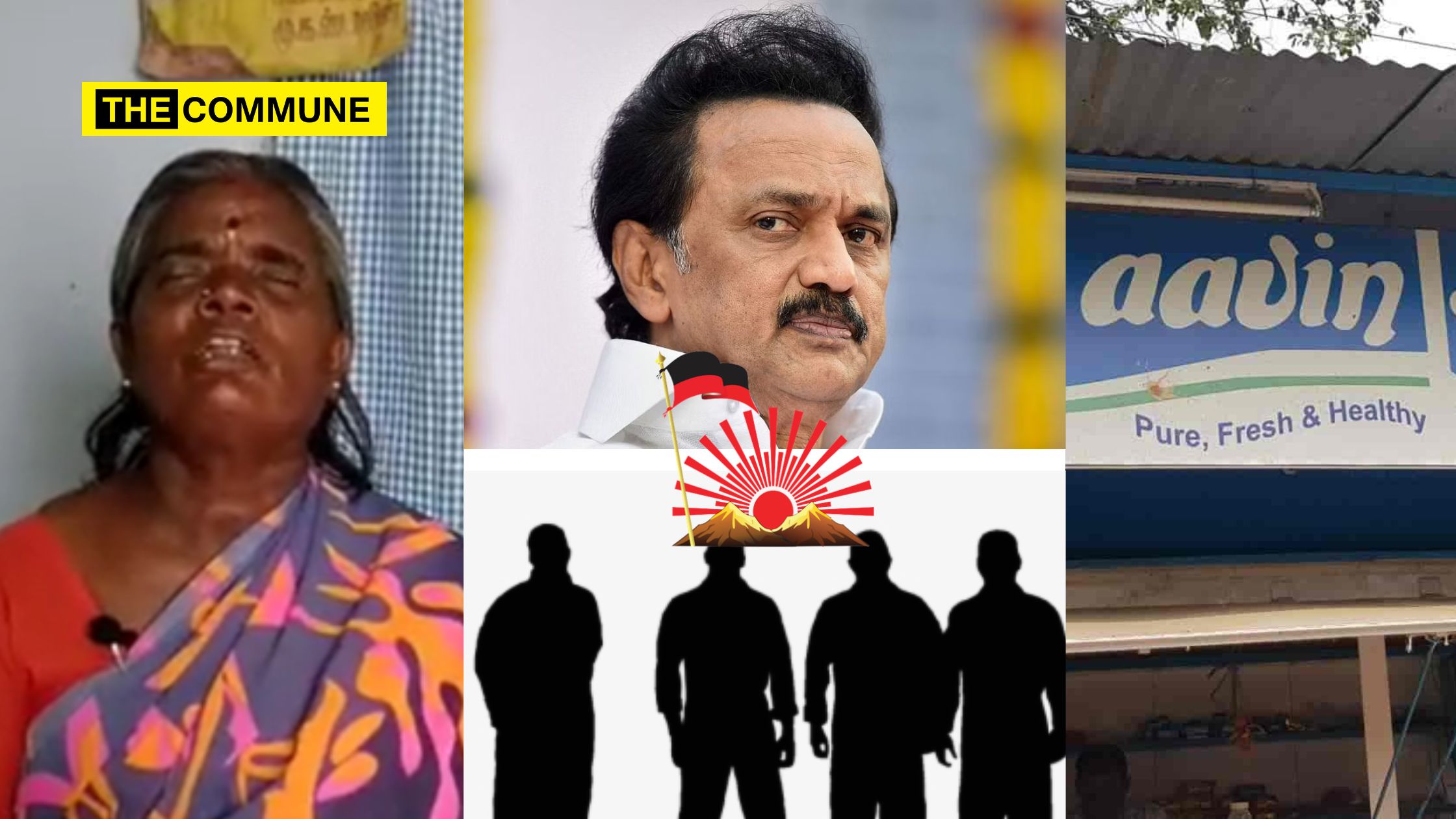
Nanaambal, is a visually-impaired woman from Aattaiyambatti in Salem district who had lost vision since birth.
She met Tamil Chief Minister MK Stalin a few months ago, explained her financial hardship, and requested permission to set up an Aavin kiosk in Salem.
Tamil Nadu CM Stalin granted her permission using his discretionary powers under Rule 110 in the Tamil Nadu Assembly to open Aavin Kiosk outside the Salem Government Hospital. She was told to meet the Salem District Collector after 10 days for getting the necessary orders and other procedure.
The elderly woman obtained the necessary orders from the district collector to open the kiosk.
The elderly woman borrowed money and sold her jewels to open the Aavin kiosk. She and her family finished setting up the kiosk outside the hospital at a cost of ₹2 lakhs.
They had even printed invitations announcing that the kiosk would be inaugurated in the presence of chief guests DMK MLA R. Rajendiran and Mayor of Salem. They were also formally invited by the elderly woman’s family.
But Chidambaram, a DMK office bearer, forbade her from opening the kiosk as he feared that it would harm the business at his shop nearby.
The differently-abled women went from pillar to post, trying to meet with Mayors and MLAs to complain about Chidambaram, but her efforts went in waint because of Chidambaram’s influence.
She also claimed that the municipal administration is delaying the issuance of a No Objection Certificate (NOC).
When Nanaambal’s brother met the Mayor and told him that the shop was being setup as per CM’s order and whether the CM’s order has no value in Salem corporation, the Mayor responded to him saying “Yes, we will not obey Chief Minister’s orders; if you want, go and meet CM again.”
What is worth mentioning is that the visually-impaired woman herself is a DMK member and hails from a family of DMK supporters.
In a video, the old woman’s brother appealed to CM Stalin to do the needful and help his sister.
சேலத்தில் மாற்றுத்திறனாளி பெண்ணுக்கு ஆவின் பாலகம் அமைக்க உத்தரவிட்ட முதலமைச்சர். ஆனால் முட்டுக்கட்டை போடும் உடன் பிறப்புகள்! pic.twitter.com/T6LBMmsGzO


The Hitchhikers
Had Mahatma Gandhi lived long enough, the differences between the well-meaning Gandhi and the politically motivated Nehru, would most likely have spilt over into the streets and into the pages of national and international media.
Mr. M.K Gandhi’s utopian ideas and lack of pragmatism was made up for, by his humility and sincere well-intentioned wish to see a more egalitarian India and a pluralistic one. The collateral damage to his selfless but obstinate, impractical idea of a pluralistic India, was inflicted on the large masses of the Hindus, whose deep rooted, cultural reverence for spiritually-inclined men and women, allowed them to be emotionally exploited. Gandhi used his privileged, western education to re-educate himself in the ancient Indian social sciences and philosophy. He sacrificed his career, material comforts and his family for the larger idea of an India (however impractical) that he believed in. Gandhi preached a fusion of Indic spiritual tradition within a modern, egalitarian pluralistic, social and economic construct .
Jawaharlal Nehru’s idea of a post independence India, lacked Gandhi’s originality and clarity . Nehru’s idea of India was one acquired and developed over a period of time, based on a tapestry of ideas from the taller leaders of the pre-Independence Congress party. He made up for his lack of good leadership, lack of knowledge on several matters, a lack of deeper understanding of the Indian masses and lack of collaboration with the other leaders, with a strong, consistent and crafty, outwardly endorsement of the well-meaning Gandhi and his uniquely Indian sensibilities .
Nehru’s alignments with the factions present within the Congress party, betrayed his ego-propelled, self centered personal goals and budding levels of border line narcissism. Unlike Gandhi, he nurtured covert political ambitions and utilized his incomplete Western education to promote Western social , economic and philosophical theories. His fascination of Western ideology in all spheres of life and rejection of traditional Indic treatises on the social, physical and philosophical sciences is well known . In fact, his disdain for most things native and Hindu in particular, was documented before, as well as after India’s independence.
It would be controversial to mention it but I do wonder sometimes, if Gandhi’s early demise ended up being an advantage for the masses he sacrificed and fought for or for the handful of privileged men and women he worked with, towards the common cause of Indian Independence. If official and unofficial documented evidence is to be considered, it proved to be an advantage for the privileged Nehru and his self centered, Western-centric, sycophantic friends.
A power-wielding few, exercising complete and unquestioned authority over the needs, rights, sentiments of a new nation. A small, powerful group , promoting their own self interests, with nobody to question their intentions and behavior. Had Gandhi lived to see the many prejudiced, unparliamentary actions of Nehru and his coterie, he may have protested, yet invariably disappeared into obscurity, because politics and wily politicians have always ruled over the sacrifices of simple men and women .
Gandhi’s idea of Bharat’s economic freedom, social equality and prosperity, firmly rooted in the culture and spiritual traditions of the country, differed vastly from Nehru’s unabashed westernized views of the nation’s future, based almost entirely on western ideals, at the the expense of a collective Indic wisdom. Nehru’s disagreements with Gandhi numbered almost as many, as the agreements he had with him. There was even some debate around the specific nature, role, use and extent of non-violence in the freedom struggle, although by and large, there was a significant amount of agreement on the subject, between the two.
The two men were differently oriented with their personal lives and goals as well. Gandhi idealizing and striving towards a life, less dependent on material comforts, sensual pleasures and more inclined towards the teachings of the Hindu spiritual texts. Nehru, eager to abandon and ready to erase any traces of his cultural heritage, the spiritual traditions of his ancestors, his homeland’s Hindu contribution and history in favor of a disproportionately anglicized, Christian and Islamic influenced view of the world, along with a dose of his specific brand of socialism.
Predictably, the two men’s families fared differently too, in post Independence India. While Gandhi and his family opted not to take the political center-stage and did not mind fading into the annals of a worthy historical sacrifice, the Nehru clan did exceeding well for themselves in politics, administration and investments, at the cost of Indian democracy, Indian territorial security and Indian domestic as well as foreign policies.
Nehru and his clan established for themselves a neo, de facto, modern day monarchy of sorts, in which their authority reigned supreme, behind a veiled curtain of name-sake democracy. The well-meaning Gandhi could not have imagined the near-total dominance of the crafty Nehru and his progeny, in Indian politics! The two men were indeed, different!
In contrast to their differences of opinion on several matters, the biggest agreement shared by the two men, probably their strongest link, in the turbulent waters of pre-Independence politics, at the time of Independence and after India’s Independence, was a consistent tendency in both men, to be unusually concerned with the welfare of a large Muslim minority.
Both expected unquestioned obedience in this matter by the more docile, tolerant Hindu majority, regardless of the circumstances, biased jurisdiction of the day, historical injustices and instances of violence. In the same vein, both were unusually eager to bend backwards for Mohammed Ali Jinnah and his idea of a separate homeland, exclusively for the Muslim cause. Both men harbored a strange, unreasonable propensity for consistently and frequently requesting, even demanding, a collective Hindu forgiveness of a disproportionate number of violent, intolerant Muslim actions.
This common thread between the worlds of two otherwise, differently oriented men, shaped the future of independent India, in ways that did not always serve India’s best territorial, social and economic interests.
Dare we recognize a repeat in more recent Indian history? Try drawing parallels between the Gandhi-Nehru duo and the eerie similarity of the once existent relationship between the simple, well-meaning Mr. Anna Hazare and his ex disciple-in-disguise, the more complex , politically driven Mr. Arvind Kejriwal.
Mr. Anna Hazare’s ideals and well-intentioned vision of a corruption free, more egalitarian India, helped nurse the political ambitions of the astute Mr. Kejriwal. Kejriwal too supported by a coterie of intellectuals and the media. While Kejriwal and his like-minded friends enjoy the privileges of power and continue to harbor increasing political ambitions of national importance, the modest Mr. Hazare is already a relic, faded into the obscurity of another history chapter!
Click here to subscribe to The Commune on Telegram and get the best stories of the day delivered to you personally.