Home Blog Page 1012

“India Will See Genocide In 2023 Under BJP”: Hyderabad Pastor Incites Citing ‘Secret American Report’

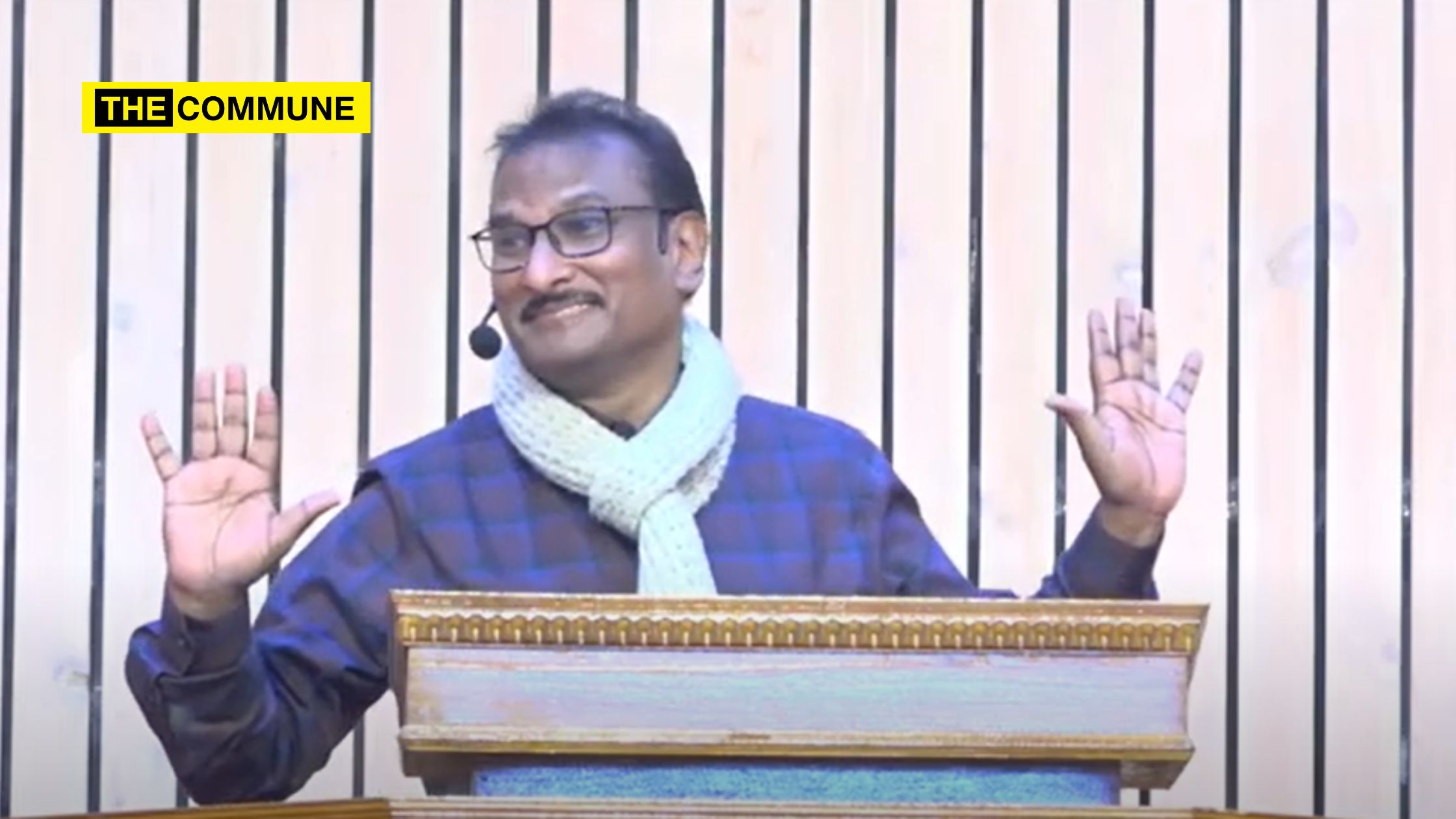
In a inflammatory speech, a Christian pastor named Kuntam Edward Williams fearmongered the gathering of a Christian New Year event saying that a genocide will happen in 2023 under the ruling BJP regime.

The pastor while addressing the gathering at Bethel Church in Mushirabad, Hyderabad, said “According to the American top secret agency report available, in 2023, there will be religious attacks and genocide in India and lakhs of Christians will be killed”.

Comparing Prime Minister of India, Narendra Modi and Union Home Minister Amit Shah with Nebuchadnezzar called it their ‘Duty assigned by God’ to hate Christians.

Nebuchadnezzar is a Biblical king who is considered as a ruthless and cruel king who destroyed Jerusalem and forced the Jewish people into exile.

The pastor made extreme comments saying that the BJP government at the centre will create ‘genocide’ in 2023 and lakhs of Christians will be killed by stab wounds and gunshots in that horrific massacre.

Citing the example of German dictator Hitler’s massacre of Jews,  Pastor Kuntam Edward Williams said that the same thing is going to happen in India in 2023. Pointing at the crow, the pastor fearmongered that almost half of them will not be seen in 2024, and they will die by stabbing, shooting and beating without seeing the new year 2024.

He also said that India ranks 8th in terms of Persecution in the world, beyond Saudi Arabia and Syria. “While the whole world is looking at India, the ruling BJP is planning to separate Hyderabad from Telangana and make Hyderabad a union territory to steal the revenue generated from that city.”, he said.

He also instigated the Christians gathered saying “this is a beautiful opportunity for the Christians of India to become a hero or zero.”

The full video of Taluk’s speech during the New Year event organized at the Mennonite Brethren Bethal Church in Mushirabad, Hyderabad, has recently been uploaded by the church on YouTube on 1 Jan 2023.

Who Is Pastor Kuntam Edward Williams?

As per the available information, Pastor Kuntam Edward Williams joined the Union of Evangelical Students of India as a student counsellor in 1990 and ministered to students in many universities and colleges for ten years. He then was the State Secretary of Andhra Pradesh until 2006. Apparently, he conducted seminars in prestigious institutes like IIT Bombay, IIT Kharagpur, IIT Gundy, IISC Bangalore, JNU Delhi, Central University Pondicherry, JIPMER Pondicherry and CMC Vellore.

It is also learnt that Pastor Kuntam Edward Williams is trained as an apologist at Ravi Zacharias International Ministries (RZIM), founded by the late Frederick Antony Ravi Kumar Zacharias, an Indian-born Canadian-American Christian evangelical minister and apologist. There were severe sexual abuse allegations levelled against Frederick Antony Ravi Kumar Zacharias by multiple women that he had engaged in habitual sexual misconduct and/or abuse. Ruth Malhotra, a former member of RZIM, claims that suspicions regarding Zacharias’ behaviour had existed during his lifetime but that RZIM employees were not allowed to investigate.

Pastor Kuntam Edward Williams has been the host of Nireekshana television since 2000, which was sponsored by CBN Multimedia Pvt Ltd and is aired on TV9 every Sunday evening at 5.30. He is also the blogger and interactive web manager for an IPTV called “tipritv’ which reaches the diaspora Indians.

(With inputs from Nijam Today)

Click here to subscribe to The Commune on Telegram and get the best stories of the day delivered to you personally.

TN Pastor Arrested Under POCSO Act For Sexually Assaulting 15-Year-Old School Girl In Tiruppur

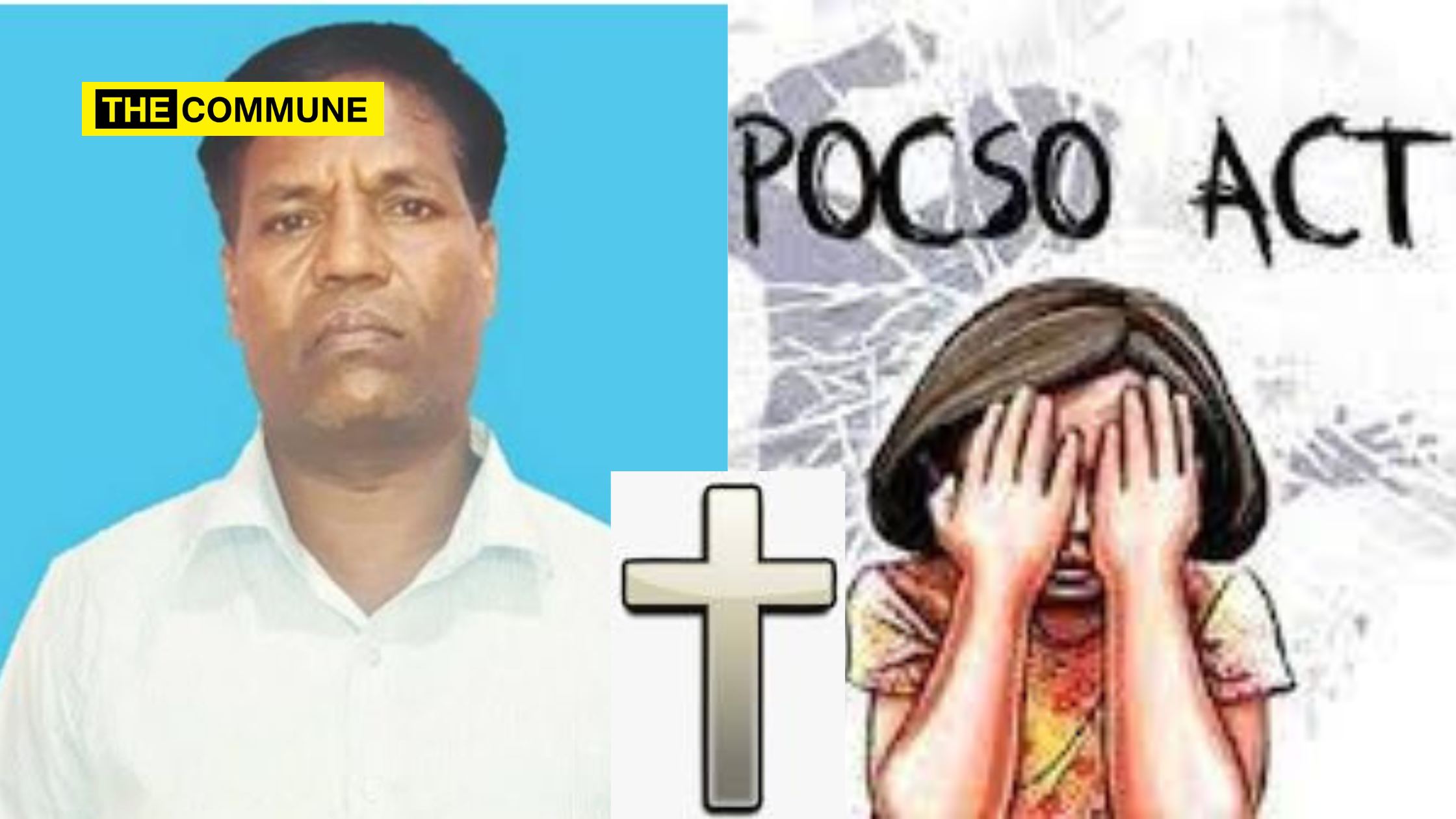
Tiruppur police have arrested and are investigating a Christian pastor who molested a 15-year-old schoolgirl and a number of working women who stay in a private hostel.

Father Andrews, 46, is the supervisor of a private hostel in Konampatti, near Oothukuli, in the Tiruppur district, where school students, college students and working women stay.

Many had left the hostel for the Christmas and New Year holidays. The matter came to light when a 15-year-old schoolgirl, who was staying in a hostel run by the pastor, refused to return to the hostel after Christmas vacation.

The school girl informed her parents that Father Andrews raped her on December 14, 2022, and that the Father also threatened her not to tell anyone about the incident.

According to reports, on December 14, the girl skipped evening prayers and stayed in her room, claiming health problems. Pastor Andrews, who was on rounds at the time, approached her and sexually assaulted her. Pastor Andrews was introduced to the victim’s parents at the church they attend. The pastor and his wife run a “hostel” for children and women. The victim and her brother were admitted to the hostel, and the siblings attended school from there.

Upon hearing about her child’s ordeal, her parents filed a complaint with the Oothukuli police station. Following that, the police launched an investigation and arrested Pastor Andrews under Protection  Of Children From Sexual Offences (POCSO) Act.

Orphanages, children’s homes, and hostels are all run by Christian organizations and are attended by children whose parents cannot afford to send their children to school or by working parents who are unable to care for them.

Child rights organisations that need to monitor such institutions are dominated by Christians, so many incidents of abuse go unreported, say activists.

(With inputs from Hindu Post and Kathir News)

Click here to subscribe to The Commune on Telegram and get the best stories of the day delivered to you personally.

Tamil Thaai Awards, BJP’s Move To Dismantle Dravidianism In Tamil Cinema

The Tamil Nadu BJP through its arts and culture cell felicitated several senior artists from the Tamil film industry as well as several achievers from other fields of work on 5th January, 2023 in Chennai. Cash awards were given out to several good short films that were based on social issues which were selected by Jury formed under the well-known Tamil film director, Mr. Bhagyaraj.

On the surface, this would look like a normal function. However, this is a masterstroke of Annamalai’s BJP to counter Dravidian Stockist cinema. The BJP in Tamilnadu today is a very different organization under K. Annamalai. Like how the central BJP under Modi saw a radical change, the Tamil Nadu BJP under the leadership of Annamalai has acquired a new dynamic personality.

Tamil Nadu electorate is significantly influenced by the movie industry today. In order for BJP to catch the imagination of the public, they have to come up with several strategies and cannot just depend on a political discourse criticizing DMK government on issues like dynasty, corruption, law and order, misadministration etc. They have to penetrate into the movie industry and make themselves visible to the common people in Tamil Nadu even in the villages who keenly follow this entertainment industry which is dominated today by DMK. This award function was a big step in this direction.

Already we have seen several movie directors and producers in Tamilnadu speaking up publicly against the ideology and functioning of DMK like Perarasu, Kanal Kannan, JSK Gopi, Draupadi movie director Mohan G Kshatrityan and so on. Several producers, directors and actors today are not liking one distribution company relating to a big political family almost monopolizing the business. This is a very good opportunity for Annamalai’s BJP to make lot of friends in this industry and start pushing a different narrative through this very impactful medium in Tamil Nadu and register themselves in the minds of the public.

The fact that a strong industry like Bollywood that was ruled by a few people that were able to push their ideologies into the minds of common man so far through their movies, is staring at an inevitable phase of reinventing themselves speaks volumes of why Tamily entertainment industry ruled by a couple of families cannot avoid going through this inevitable churn soon. The other fact that Bollywood is now forced to do historical movies revolving around Hindu rulers like Prithviraj, Tanhaji etc. moving away from movies glorifying Mughal emperors like Jodha Akbar etc., the fact that more movies are being made with more Indian flavor in them moving away from movies with western outlook entrenched in them, the fact that Ponniyin Selvan release made a movie director in Tamil Nadu think that it had a Hindu flavor in it prove the point that movie industry is not immune from politics and changes based on changes in the politics of the time. Dravidian parties have always influenced the voters through the movies. Annamalai understands that very well and has taken this smart first step.

The second important thing to note is the award resembles a Hindu deity and not the usual type of awards given earlier that carefully distanced themselves from using Hindu symbols. This is a big statement sent out by Annamalai’s BJP that they will not hesitate to project the innate spiritual culture of Tamil Nadu.

The third important takeaway is naming these awards as Tamil Thai awards dedicated to mother Tamil. This shows how serious BJP is promoting Tamil through every possible medium. They could have easily given this an English name but they carefully chose this name to send out a message to the Tamil Nadu public that they really do what they say.

Hence, this award function is more than just what meets the eye and is a masterstroke by Annamalai and team BJP.

The work to dismantle Dravidianism in Tamil cinema has begun.

Click here to subscribe to The Commune on Telegram and get the best stories of the day delivered to you personally.

Warangal Police Arrest Abu And Azmad Ali For Repeatedly Raping A Minor Girl

On Thursday (5 January 2023), the Warangal Police picked up Azmad Ali (22) and Abu (27) from the city on charges of raping a 15-year-old girl repeatedly over the last six months. Both have been booked for rape and under sections of the Protection of Children from Sexual Offences (POCSO) Act.

As per report by Times of India, the issue became communally sensitive as the survivor belongs to the Hindu community.

According to the police, Abu, one of the accused working in a second-hand furniture store, lured the victim girl to his house on the pretext of befriending her and started raping her continuously. He continued to exploit the minor girl repeatedly on various occasions. When his 22-year-old brother Azmad Ali found out about the rape, he too started raping her.

According to a report by Velugu Daily, this gruesome incident came to light when the girl told her family about the sexual assault after which they complained to the Mills Colony area police station four days ago. The angered victim’s family members attacked the houses and vehicles of the accused on Thursday, citing no police action on accused. As this news came into limelight, about 50 BJP activists stormed into the house of the accused and damaged the property. A local BJP activist, Kusuma Satish, claimed that the accused threatened to circulate the girl’s photos on social media and even kill her father if she told anybody about the assault.

Warangal ACP K Giri Kumar said that police had identified the accused personal, and they were picked up for investigation. The minor girl was sent for a medical examination.

Local BJP leaders accused the police of not acting immediately, but Warangal commissioner AV Ranganath denied the claim. “We received a complaint on Wednesday night, and a case was registered during the early hours of Thursday. There was no delay,” he said.

(With inputs from Nijam Today)

Click here to subscribe to The Commune on Telegram and get the best stories of the day delivered to you personally.

Thamizhagam Vs Tamil Nadu: After Guv Ravi’s Speech, DMK IT Wing And Dravidian Stockists Start Dangerous Trend With Separatist Undertones

On 4 January 2023, Tamil Nadu Governor RN Ravi said that the state has experienced “regressive politics” over the past 50 years and that Thamizhagam would be a more appropriate name than Tamil Nadu while speaking at an event held at the Raj Bhavan in Chennai to felicitate the organizers and volunteers of Kashi Tamil Sangamam.

“In Tamil Nadu, there has been regressive politics claiming they are Dravidians, and the only reason they have been brought together is because of the Constitution. There have been efforts over the past 50 years to support the idea that they are not truly a part of the nation. That is why there is too much stress on federalism, despite the fact that Bharat existed before these states were founded and existed for many thousands of years,” he said.

He added,”Tamil Nadu has a different political environment. They say we are Dravidians for everything. Tamil Nadu says ‘no’ if there is an action plan across India. It has become a habit. So many theses have been written, all of which are false and poor fiction. This needs to be broken. The truth must triumph.”

He further stated,”It would be more correct to say Tamizhagam rather than Tamil Nadu. We must defeat false propaganda. People should be told what is true. In fact, Tamil Nadu is the land that holds the soul of Bharat. It is the identity of Bharat. For a long time, the rest of the country suffered greatly at the hands of foreigners.”

He stated, “But somehow, Tamil has been preserved for several years in Tamil Nadu. So, this is the hope to rejuvenate Bharat. All false narratives must be broken, and Kashi Tamil Sangamam is an excellent starting point.”

Though Tamil Nadu Governor RN Ravi used the term Tamizhagam to show that Tamil Nadu is an integral part of India and to defeat the false narrative that Tamils are Dravidians and different from the rest of the people in India to further their divisive politics, the DMK IT wing, the party’s leaders and a few Dravidian Stockists in Tamil media misrepresented the governor’s message in social media starting a dangerous trend which has separatist undertones.

The DMK IT wing and DMK leaders trended the hashtag #தமிழ்நாடு in opposition to the governor, with some Twitter IDs trending separatist tweets with the same hashtag.

TRB Raja, DMK IT wing secretary and MLA, has referred to Honorable Governor RN Ravi as “Sanghi Ravi” and stated that the governor’s raising of the “Thamizhagam” issue is a diversion tactic. He also took an indirect jibe at Tamil Nadu BJP President Annamalai by calling him ‘Aadu (goat)’. He also retweeted a tweet that referred to the governor as ‘Rummy Ravi.’

DMK sympathizers and Dravidian Stockists posted separatist tweets with several calling for India to leave ‘Tamil Nadu’. DMK IT wing members were spreading separatist tweets with several calling for India to leave ‘Tamil Nadu’. A prominent handle named “deepsealioness” know for peddling DMK’s propaganda shared a picture with an alleged quote of CN Annadurai saying she belongs to a ‘country’ called Tamil Nadu, which is a part of India, implying that it could secede at any time.

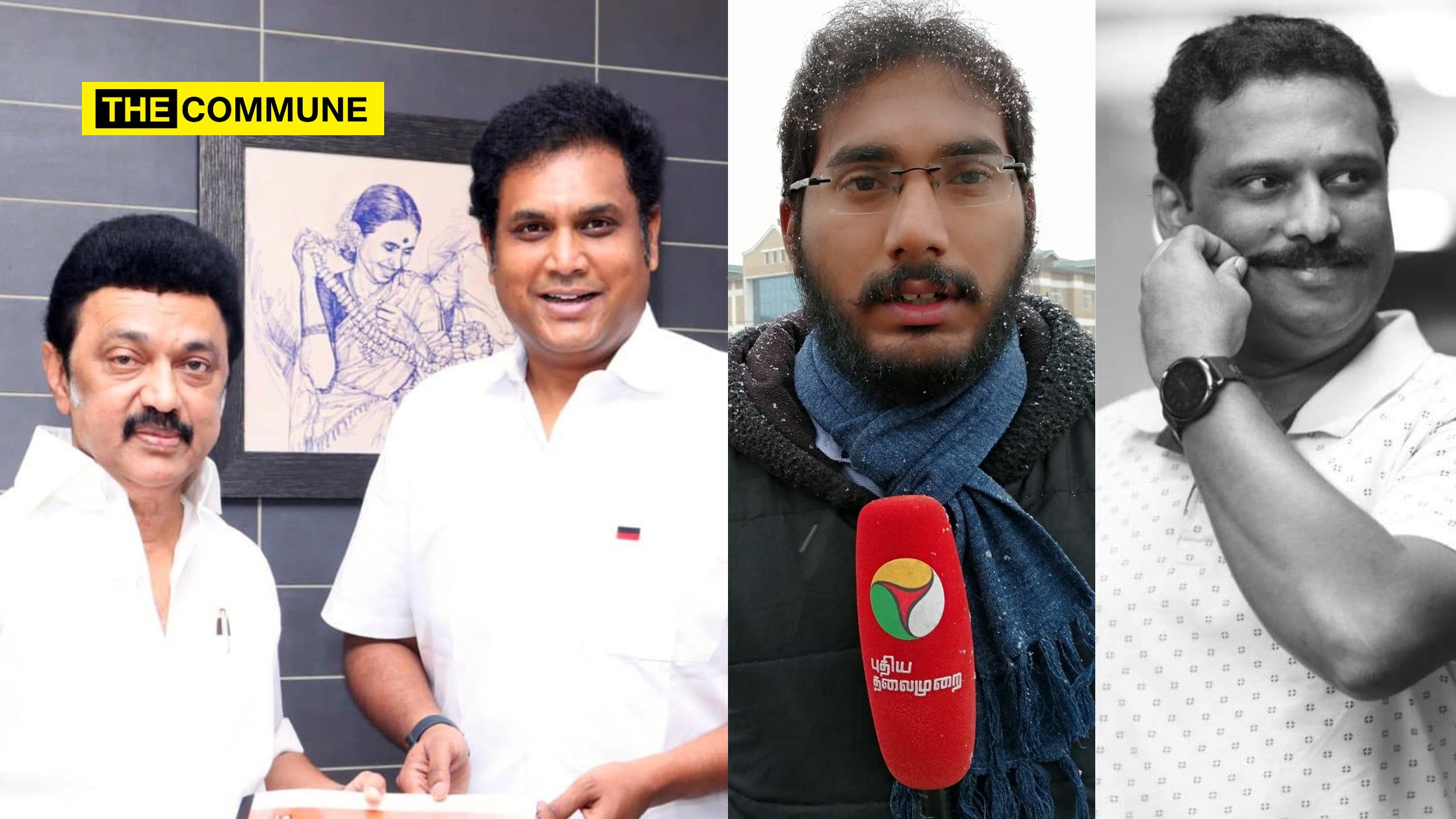
Serial fake news peddler Niranjan Kumar, an alleged ‘journalist’ from Puthiya Thalaimurai who is known for fanning ‘north-south’ divide posted a tweet full of ‘Tamil Nadu’, implying that the state is a ‘Nadu’ country).

Self-styled ‘entrepreneur’, serial fake news peddler, Dravidian Stockist and DMK supporter Suresh Sambandam, posted saying “Get lost man! This is Tamil Nadu”.

Click here to subscribe to The Commune on Telegram and get the best stories of the day delivered to you personally.


KCR Testing Andhra Waters Will Rock The Boat In His Own Home State

Chief Minister of Andhra’s twin sister state, Telangana expands his political horizon southwards towards Andhra Pradesh. K Chandrasekhar Rao, Telangana’s Chief Minister and founder of its current ruling party, the Bharat Rasthra Samithi (BRS) recently announced a New Year surprise – his party’s official entry into the political marathon of Andhra Pradesh, which ahead of its early 2024 elections, has already turned into a political circus, with an over charged environment of political threats in word and action, obscene commentary, unparliamentary language, crude political jokes and theatrical, dramatical performances of all varieties.

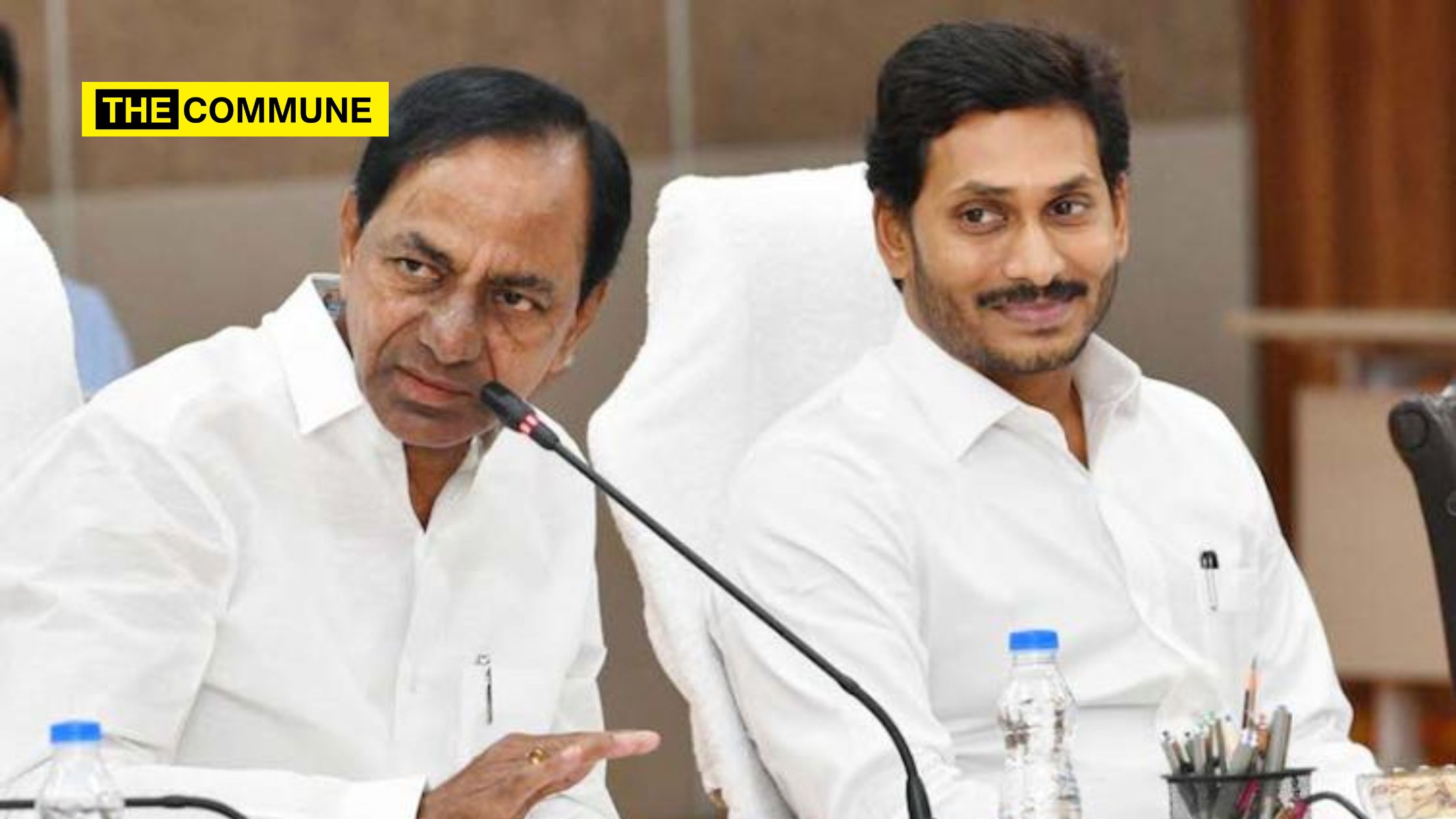
The BRS party’s K Chandrasekhar Rao (KCR) will meet his match in Andhra’s current Chief Minister and leader of the YSRCP party, YS Jagan Mohan Reddy. Both men are known for their rather large, sensitive male egos and a penchant for loud, rude, outspoken commentary often times, barely within boundaries of accepted cultural norms for decent language and accusations. It is bound to be a unpleasant face-off and a slimy slug-fest if it comes down to an actual political war between KCR and Jagan, currently the reigning kings in their respective states. Incidentally, the Andhra CM’s own sister, Sharmila who is rumored to be on bad terms with YS Jagan Reddy, launched her own YSRTP party in Chandrasekar Rao’s Telangana state in 2021. Now with KCR’s official entry into A.P politics well after Jagan’s sister Sharmila’s 2021 entry into Telangana politics, the two men are officially on each other’s toes and turf, although Jagan claims disinterest and non-involvement in his sister’s party. Sibling rivalry apart, people assume, there is bound to be some sympathy and support for each other beneath a carefully projected political veneer.

KCR’s Telangana based Bharat Rasthra Samithi party (BRS) was until October 2022, better known as the TRS party (Telangana Rashtra Samiti), a party confined to Telangana, whose statehood after the bifurcation of the larger, united Andhra Pradesh into Telangana and Andhra, was attributed to the efforts of KCR and his TRS party. In October of last year, the TRS party was registered and renamed BRS after KCR announced a larger national political interest rather than staying true to its regional roots and presence. Andhra Pradesh has become the BRS party’s first state outside of its native Telangana territory that the party wants to test its national ambitions on. Andhra may be a natural interest for KCR and the BRS party given that it is a sister Telugu state but it’s certainly not going to be an easy ride. Andhra’s people and politicians are more socially aware, politically savvy and more “seasoned” in the ways of the world than the people of Telangana who are often referred to as simple, local-oriented, content and trusting in nature.

Additionally, it’s going to be a hard sell for the BRS party in Andhra because it was KCR and his BRS/TRS party that was responsible for the bifurcation of the united erstwhile state of Andhra Pradesh back in 2014. Public memory, especially in politically opportunistic Indian states, can be short but it is less than ten years since the major event of a bitterly contested bifurcation between Andhra and Telangana – the people of Andhra are still smarting from what is considered an unfair split and a stinging ‘defeat’. KCR and his party had refused to share Hyderabad as a common capital and continue to put up a fight for shared resources and financial incentives between the two Telugu states. Even now, almost a decade after the bifurcation, it is common to hear conversations in Andhra about how it was the leaders and people from the Andhra regions that helped bring a certain level of awareness and development to the Telangana regions, which had hitherto suffered backwardness and economic hardship after centuries of rule by the vassals of the Mughal empire, the Nizams of the former Hyderabad State.

The Andhra people argue that both leaders as well as enterprising settlers from the more progressive Andhra region, helped bring development to the Telangana districts over the years. Many Telangana people acknowledge the contribution of Andhra leaders, particularly the Telugu Desam Party’s (TDP) founder, N.T Rama Rao with his social awareness and social welfare programs and current TDP leader, Chandrababu Naidu with his technology oriented focus on Hyderabad’s development into a major player in the IT and Pharmaceutical industries.

There is also speculation that KCR’s timely entry into A.P politics may covertly be a minor electoral distraction and help, in favour of Jagan Reddy’s YSRCP party, which is currently under immense pressure from a seemingly united and strong opposition against it – the TDP, JSP (Jana Sena party), the BJP and CPI appear favorable to each other, inspite of ideological differences. They see the deteriorating law and order situation in A.P and the YSRCP party’s autocratic rule as problems that need to be addressed in the 2024 elections.

Thus far, the BRS party’s strategy for Andhra appears to be heavily dependent on defectors from other A.P parties and some sarcastically remark, ex-leaders with an “expiry” date, seeking political relevance in current times. Leaders that have since joined the brand new 2023 A.P unit of the BRS party are: Thota Chandrasekhar, ex- general secretary of Pawan Kalyan’s Jana Sena party (JSP), former minister Ravela Kishore Babu who was with the BJP, a former IRS official Ch Partha Sarathi, TJ Prakash, ex-leader from Anantapur who was previously with Chiranjeevi’s Praja Rajyam Party before its merger with the Congress party in 2011. Ravela Kishore Babu, is a party hopper known for jumping ship from TDP to Jana Sena, onwards to the BJP and now signed up with the BRS. Thota Chandrasekhar has been anointed, president of AP unit of the BRS. He claims that several sitting legislators from the ruling party are keen on joining the BRS party.

In his inaugural address at the announcement of the BRS party’s entry into AP politics, KCR has promised farmers ‘free’ power at the cost of Rs 1.45 Lakh Crore per year, within two years of being voted to power. He also promised a 24 hour uninterrupted power supply across the state and implementation of the “Dalit Bandhu” Scheme.

Strong reactions are coming in from various quarters among the general public, on social media platforms. People in AP are sharing old video recordings of KCR viciously attacking Seemandhra (united Andhra movement, opposing the state’s bifurcation) leaders and the Andhra people. The Andhra leaders who have joined the BRS unit in AP are being questioned and shamed.

Throwback to the varied reactions from the political circles of Andhra back in October 2022, when KCR’s regional TRS party became the national BRS party, from leaders across Andhra’s political parties:

Telugu Desam Party (TDP) chief and current opposition leader, N. Chandrababu Naidu when asked for a reaction on the newly renamed TRS party as the BRS party with national Vs regional ambitions, responded with a quick and cryptic laugh but declined to answer.

Many leaders from the ruling YSR Congress party (YSRCP) felt that the transition of the regional TRS party into a national BRS party would have no impact on AP, back in October. Did they or did they not anticipate the BRS’s direct entry into A.P politics just two months after their dismissive remarks ?

YSRCP leader and education minister, Botcha Satyanarayana was of the opinion that although the transition of the TRS party into the BRS party was clearly for politically strategic reasons, it would be a minor presence in A.P and would simply be one among many parties with little significance.

Deputy Chief Minister Peedika Rajanna Dora doubted the survival of KCR’s party in Andhra Pradesh. “Can we/should we allow KCR to come here and dominate our people? He did not accept Hyderabad as joint capital. People will not accept his hegemony here (in AP),” he observed.

YSRCP general secretary, Sajjala Ramakrishna Reddy opined that new parties were welcome because they increase competition and hence improve performance of existing parties.

Housing minister of the YSRCP, Jogi Ramesh remarked “no issues… but if they try to create any trouble for our party, we will retaliate strongly”.

Senior YSRCP leader, TTD Trust Board chairman and Jagan’s uncle Y.V. Subba Reddy, boasted that no party would be a match for his nephew’s YSRCP party. He seemed confident that the YSRCP party’s numerous ‘free’ welfare schemes would bring Jagan back to power in 2024.

Former Congress MP from Rajahmundry, Vundavalli Arun Kumar said he was not averse to voting for the BRS party in the next A.P elections as he would be in favour of anyone willing to stand against the BJP!

Ex-Congress leader, Akula Srinivas Kumar reiterated that KCR was solely responsible for the bifurcation of united Andhra Pradesh. KCR had spread hatred against Andhra and its people and continues to create problems for the residual A.P in terms of resource allocation and sharing. He expressed indignation at the audacity of KCR’s political ambitions in A.P, considering the existential crisis inflicted on A.P and the insults heaped on its people.

Click here to subscribe to The Commune on Telegram and get the best stories of the day delivered to you personally.

Tenkasi Man Felicitated At Washington In The Presence Of US Congressmen

Ananthan Ayyasamy, State Vice President of Tamil Nadu BJP Other States & Overseas Tamil Development Cell (OOSTD Cell), was awarded the honour “PRIDE OF INDIA” by US Congressman Raja Krishnamoorthi at the historic GSA INDIA@75 EXPO in Washington DC.

The three-day event The G.S.A. India @75 Expo 2022 commenced on December 15, 2022 at the Sheraton Hotel in Lisle/Naperville to highlight how India has changed through growth and development as one of the top global economies since gaining independence in 1947.

This one-of-a-kind Expo brought together ANCIENT INDIA and NEW INDIA on a single stage with a vibrant trade show, meaningful daily workshops, informative plenary sessions on investment opportunities in Indian states, and a rich cultural extravaganza of dance, music, chanting, meditation in various forms, as well as talks on the science of Yoga, Ayurveda, and Vaastu.

Somnath Ghosh, the Consul General of India in Chicago, and Congressman Danny K. Davis launched the Expo in the presence of several local dignitaries, including political and community leaders.

The Global Eye G.S.A. India @75 Expo 2022 had the slogan “MADE IN INDIA – MADE FOR THE WORLD” as its theme. This innovative project of the Indian American community in the Chicago aims to engage the American mainstream society, strengthen ties between India and the US, promote Indo-US trade, highlight India’s contributions to American industry and research and vice versa, educate the next generation, and enlighten the world.

The Indian Ministry of External Affairs in Delhi, as well as the Indian Council of Cultural Relations, also encouraged and supported the Expo Team. Several Indian MSMEs also took part.

Ananthan Ayyasamy, a Tenakasi resident who came from humble beginnings to become a Silicon Architect and is currently the State Vice President of the Tamil Nadu BJP OOSTD Cell, received the “PRIDE OF INDIA” honour from US Congressman Raja Krishnamoorthi, US House Representative for Illinois’ 7th District Rep. Danny K. Davis, and Congressman-elect Jonathan Jackson of Illinois’ 1st Congressional District during the expo. The GlobalEye magazine chose him for the honour.

Ananthan Ayyasamy stated at the expo, “There has never been a better time for the slogan “MADE IN INDIA – MADE FOR THE WORLD” than now, with India and Prime Minister Modi going to lead the G20. India now has a 3.3 trillion-dollar economy.”

Talking about India-US relations, he stated, “India exports approximately 420 billion, with America being the largest export partner. India’s third largest import partner is the United States. The most start-ups in the world. However, India lacks capital, which is impeding growth. It is about collective opportunity for the entire world, not just India. Bring your resources to India and make the world flourish.”

Sridhar Vembu, CEO of Zoho, shared in his Twitter account,” Congratulations Ananthan. You are truly the PRIDE OF INDIA! Ananthan rose from very humble rural roots in Tenkasi to great heights as a semiconductor architect and businessman in America and has entered politics in India to serve our society. I am truly privileged to know him.”


Click here to subscribe to The Commune on Telegram and get the best stories of the day delivered to you personally.


The Untold Stories Of Bharat’s Military Expeditions In Iraq, Iran And Arabia

One of the negative effects of the Colonial and Leftist influence over modern history writing of Bharat has been the complete obliteration of all references of sensational Hindu military conquests and expeditions outside South Asia. In fact, a study of Chinese, Tibetan, Pehlevi and Arabic literary texts along with Sanskrit and Prakrit records detail at least 21 military expeditions and conquests by Hindu empires from Bharat in regions as far as China, Palestine, Iraq, Iran, Arabia, Turkestan, Malaya, Indonesia and Vietnam.

In fact today, so bad is the ignorance of our own military history that if you even ask any Indian academic (right, left or centre) – “Did Hindu emperors conquer or lead military expeditions abroad?” – the answer you will get will be “No. Except for Rajendra Chola’s expedition to South East Asia, we have no other records”. Pressed further they may speak of Hindu armed contingents which acted as mercenaries in Persian and Greek empires and fought their wars. But when asked about foreign conquests and military strikes by Mauryas, Guptas, Pratiharas, Guhilots, Pallavas or Cholas other than Rajendra Chola – the question will only draw a blank. Basically, the unsaid misconception is that a majority of Hindu rulers left to themselves were defensive in nature and hardly thought of striking at the heart of the enemy’s territory abroad through offensive operations.

And yet this notion is completely false. The fact that foreign literary sources or epigraphic inscriptions abroad alone speak of 17 of these 21 expeditions is evidence that Hindu offensive operations abroad were not considered rare or infrequent in ancient and medieval times. Each of the great empires mentioned in the previous paragraph had significant expeditions and conquests in areas outside the subcontinent. Full details of these 21 expeditions will form part of my forthcoming book to be released in early 2023.

One of these 21 expeditions was the brilliant series of military naval raids in the heart of the Islamic Abbasid caliphate of Baghdad – the most powerful empire in Islamic history. The heroic dynasty which successfully executed these operations was the Hindu Pratihara empire with its capital at Kanyakubja (Kannauj) in Bharat. This article is a summarized description of this sensational military operation.

Background:

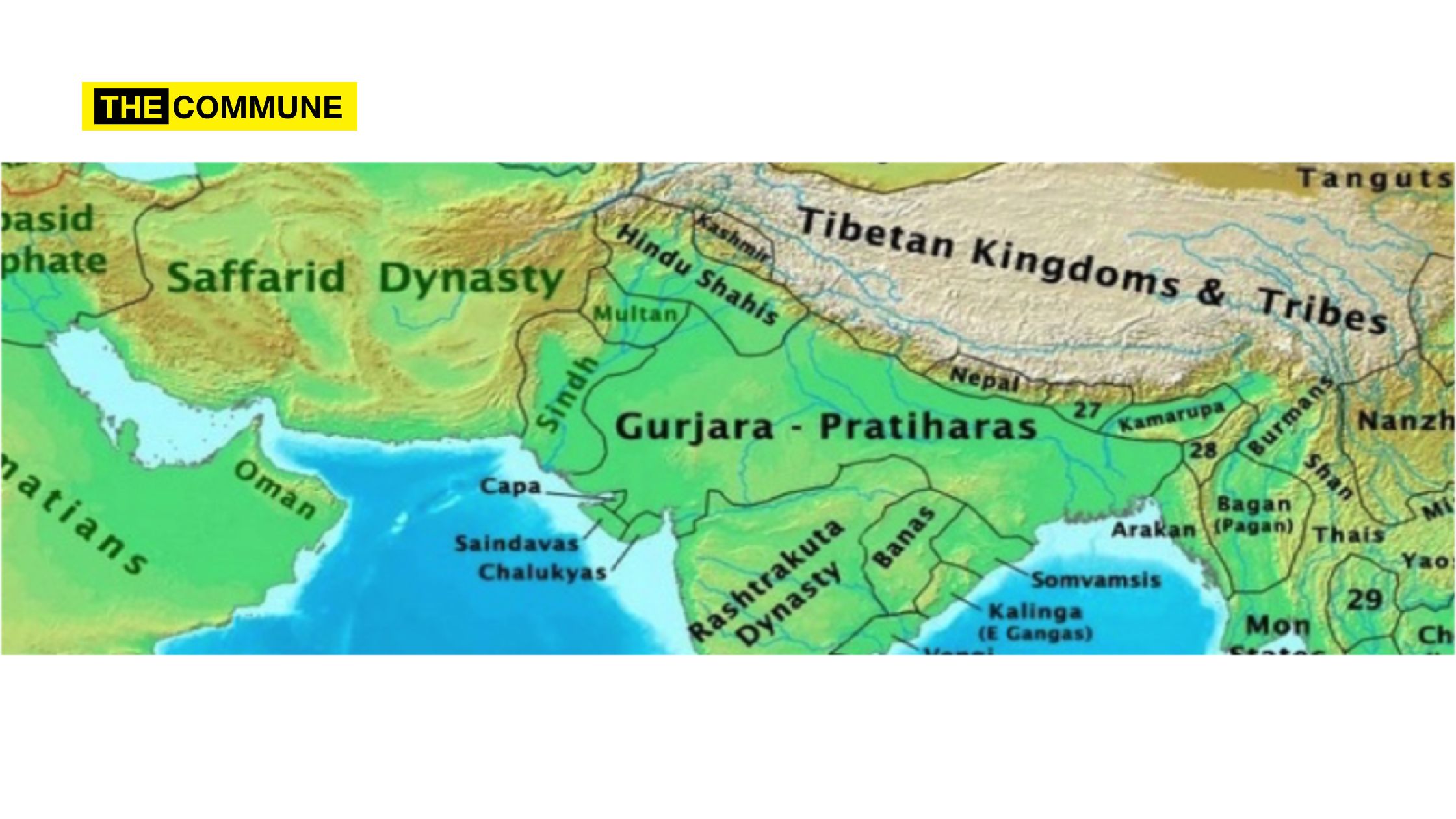
The powerful Hindu Pratihara (or Gurjara-Pratihara) empire of Bharat flourished from the 8th to the 11th centuries with Kannauj (modern Uttar Pradesh) as its principal imperial centre. At its height, the empire stretched from the Himalayas in the north to the river Narmada in the South and the Kathiawad peninsula in the west to North Bengal in the East. This was a vibrant period of cultural, artistic and military accomplishment. The most prominent rulers of this dynasty include, Nagabhata I, Nagabhata II,  Mihira Bhoja and Mahendrapala. The Pratihara rulers played a decisive role in the defence of Bharat against the Islamic Arab invaders and defied some of the most powerful Caliphates known in Middle Eastern history. A less studied aspect of Nagabhata II’s reign is the brilliant naval raids all across the Middle East carried out by small, specialized mobile marine units onboard mid-sized assault ships. We find details of these amphibious operations in Arabic and Persian records. These records include documented siras, tasfirs and also local traditions from the Persian Gulf. Studying these operations helps us understand early medieval Hindu naval tactics in “blue water military raiding operations”.

The Abbasid Caliphate established around 750 CE in Kufa (in modern Iraq), reached its peak in the period from 775 CE to 861 CE known as the “Abbasid Golden Age”. The Caliphate became one of the largest empires ever known in Islamic history stretching across the Middle East, Persia, Central Asia, North Africa and parts of South Asia. From 762 CE, Baghdad became the principal capital and legend of one of its most celebrated emperors, Harun-Al-Rashid (ruled 786 -809 CE) and the great metropolis survives till today. Abbasid maritime power was one of the principal reasons for the strong influence of Arab commercial shipping in the Persian Gulf and the Western Indian ocean.

Abbasid ambitions and strategic objectives with respect to the Indian subcontinent got them into direct conflict with the mighty Pratihara empire. Little did they expect that they would be dealt telling military blows through targetted but sharp offensives on land and sea. Ultimately the various land and sea borne operations between 816 to 820 CE not only reduced the Arab threat on Bharat’s frontiers; secured interests of Hindu commercial shipping but also disrupted caliphate logistics to enable success in a major Pratihara land offensive against the Arabs in Sindh.

The foundation of the Pratihara Navy under Nagabhata II

Nagabhata II, the third imperial ruler of the Pratihara dynasty ascended the throne around in c 805 CE and consolidated his hold over Western, Central and Northern Bharat (1). He launched an expedition and established his suzerainty over the three principal Kingdoms of the Gujarat-Surashtra region viz Saindhavas, Chalukyas and Chapas (2). The conquest of Kathiawad, as part of this campaign, with its long coastline and hardy seafaring traditions laid the foundations of the Pratihara navy. The imperial navy drew on the rugged maritime expertise of the conquered native kingdoms. Foremost amongst these were the Saindhavas. The Saindhavas, ruling from Bhutambilika (modern Ghumli, near Porbandar) had developed a strong naval fighting arm by the second half 8th century (3). They styled themselves as the “Apara samudradhipati” or “masters of the Western sea” (4). At least two Arab naval expeditions in 756 and 776 CE were defeated and repulsed by the Saindhava kings Krishnaraja and Agguka I respectively (5).

The Pratihara navy comprised of vessels of various sizes and tonnage. Amongst them, relevant for our study were mid-sized assault vessels called in Arabic records as Al-Barija. Unfortunately, some modern scholars have misinterpreted and miscategorized all Indian naval activity in the Persian Gulf in the 9th century as being the work of “Indian pirates” from the use of the Arabic term “Bawarij”. However as a study of Arabic sources would reveal, the word “Bawarij” as used in the 9th -10th centuries is derived from a type of Indian ship (Al-Barija) and not a type of people (6). This particular type of ship was used by both state and non-state actors from different parts of the subcontinents – Al-Sindh, Al-Hind (Indian mainland excluding Sindh), Barada (parts of Kathiawad), etc. (7). From, the description of a few major “Bawarij” operations in Omani chronicles which were explicitly military in nature and type of vessels as mentioned in the Tarikh-i-Tabari (10th century), we can easily distinguish the Pratihara naval raids using Barija vessels from other Bawarij operations.

We can get a picture of the Pratihara “Al-Barija” from a description of the Persian historian, Tabari (838-923 CE). Each ship had one captain (Ashtiyam), three artillery fire throwers (naffatun), a cook, a ship-carpenter and thirty nine marines. The ships were mid-size and used for guerilla type coastal assaults and not conventional naval battles. (8)

The Strategic Landscape c 816 CE and objectives of the Pratihara offensive of 816-820 CE

Right from the time of Rashidun Caliphate (632-661 CE), the Arabs had launched periodic naval raids on several port cities on the Western coast of Bharat which were stoutly resisted by the Hindu powers. (9). It was through the sea-route that the Arabs achieved their first success in the subcontinent viz the conquest of Sindh in 712 CE. (10). During the reigns of the powerful Caliphs Harun-Al Rashid (789-809 CE) and Al-Ma’mun  (813-833 CE) of the Abbasid dynasty, a determined attempt was made to consolidate and expand the Caliphate’s rule in Bharat. The defiant areas of Western Sindh and the unconquered region of Sindan within Sindh were ruthlessly conquered. (11). A massive invasion of Western Bharat was launched under the Caliphate’s representative in Sindh, Bashar. As can be inferred from the medieval works “Prabhandakosa” and “Khumana-Raso”, Nagabhata II with the help of his Chahamana and Guhila feudatories repulsed this invasion (12). However, the Pratihara emperor did not rest on his laurels and decided to take the offensive. By 815 CE, he had captured the imperial city of Kannauj and hence laid claim to pan-subcontinental sovereignty (13). The credibility of the claims could be better supported with a major military achievement such as liberation of Arab held areas of Sind. Moreover, the revival of the Caliphate naval threat on Kathiawad from the late 8th century CE required a decisive response. The invasion of Bashar brought home the danger of a powerful foreign power on his western frontiers. So due to these various reasons, a Pratihara campaign against the Arabs became a necessity.

As was evident during the fall of Sindh and later campaigns, Arab power in Sindh was supported at all critical points through the sea. The ports of the Persian Gulf played an important role in staging naval raids on the Indian ports. Reinforcements and expeditionary troops from Al-Iraq or the Omani coast followed well established maritime sea routes from the Persian Gulf to the west coast of the subcontinent. As per the 9th century Arab geographer Ibn Khurdadbhih, there were two principal sea-routes connecting the Persian Gulf to Bharat (14). One route was through Basrah-Siraf-Suhar-Muscat and then onwards to the ports of western Indian coast terminating at Kulam Mali (Quilon). The second route was a more coasting voyage calling at Qays island, old Hormuz, Tiz in Makran and Debal on the coast of Sind. The latter route was very imporatnt for the military supply of the garrisons of Sindh. The first route on the other hand was the most probable route for offensive naval raids on Pratihara ports in Kathiawad.

For any Pratihara offensive on Sindh to succeed, it was necessary that these sea lanes of communication be severely disrupted. Moreover as Arab commercial shipping also followed these routes, disrupting these would cause significant psychological impact on the Abbasids.  Therefore Nagabhata II planned a series of swift hit-and raids on critical ports of the Abassid empire. The fleet for the purpose had to be self-sufficient and live off the ports it raided. The vessels had to be mid-size without heavy artillery to not attract attention and not betray the element of surprise. In summary. the strategic objective of the Pratiharas was to liberate a significant part of Sindh, disrupt maritime support and communication of the Arab garrisons at Sindh with the Abassid ports of the Middle East and establish military superiority to deter further Arab incursions on Bharat’s soil.

We find some evidence of Nagabhata’s thinking from the Gwalior prasasti – an inscription of the mid 9th century. The inscription tells us that Nagabhata had stopped believing in “Sama, bheda and dana” or diplomacy, statecraft and gifts as a means to placate the Arabs. He realized, as per the inscription that “Ananya Pratap” or undiminished show of power and martial glory was the only recourse left to teach the Caliphate a lesson they would never forget. The inscription compares his situation to that of Lord Ram who along with the Vanaras resolved the cross the ocean to bring Lanka to heel. Here Nagabhata, inspired by his favourite Lord Ram, resolved to cross the Western Indian ocean and strike terror at the Lanka of his enemies viz the heart of the Middle East.

Tactical details of the first phase of the raids: Al-Iraq and Al-Fars

From an account preserved in Arabic records, existing traditions of ship building on the western coast and the scale and scope of the operations we can infer a picture of the type of vessels and composition of the assault force. The barijas would have been wooden sail ships between 250-500 tonnage built out of babul or jackfruit wood with around 40-50 metres in length and around 10-15 metres in width. At least 15-20 ships would have participated with around 700-1000 marines and 45-50 artillery pieces in total.

The first phase of the raids were launched around 815-816 CE and targetted the ports in Iraq and Persia. We get details on these raids from multiple historical Omani chronicles and Siras from Ibadi missionaries in Basrah. To quote Tuhfat al – A’yan during the reign of Imam Ghassan (808- 23 CE),

“The Bawarij, who are kuffar from Al-Hind, hampered the regions of Oman plundering, taking prisoners and harassing towards Al-Iraq and Al-Fars and it reached us that they are heading towards Dibba and Julfar…” (15).

These details are supported by a sira from Munir, an ibadi missionary in Basrah. The account can be placed just prior to 816 CE as in response to the same Imam Ghassan moved to Sohar in 816 CE (16). As per this account, multiple strikes by Pratihara barijas attacked all important ports in the Persian Gulf and completely paralyzed Arab administration and commerce in the region (17). In a recent engagement, Munir quotes that the Arabs suffered no less than fifty fatalities in battle (18). The missionary deplores the attack and expresses the complete helplessness of the Abassid navy to counter these attacks. So desperate was the situation that Basrah residents ignored the authorities in Iraq and beseeched help from the Omani Ibadi Imamate, which was itself not in the best of terms with the central Abassid authority.

The above accounts give us some interesting details on the way the Pratiharas planned the operation and executed it. The first objective of stealth and surprise appears to have been completely achieved by the Pratihara fleet. Interestingly, the Omani Imamate which controlled regions close to the Hormuz straits was in complete dark of infiltration of assault ships from Bharat till much after the attacks were executed deep into the Persian Gulf. They were in fact informed from residents of the affected port cities. Partly this could be explained in the turmoil in the relations between the Ibadi Imamate and Abassid Caliph. But the reason for the complete stealth in the ingress of the Pratihara assault force could also be due to them taking the Makran-Tiz-Old Hormuz- Qays route to enter the gulf. The relatively mid size of the ships and the ability of the barijas to be disguised as civilian ships appears to have also played a role. We find support for this route from the fact that the Omani chronicles mention that the ports of Julfar and Dibba on the Arabian side of the straits were targetted only after Al-Iraq and Al-Fars had been raided.  The troubled conditions in Makran (19) and the need for the force to keep close to a less hostile coast to re-supply also appears to support this hypothesis.

The first phase of the “hit and run” raids were a complete tactical success and the Pratihara naval assault groups performed spectacularly. From the Tufail, we can understand that the tactics of the barijas were two fold. The principal thrust was to send small contingents of marines to the land to launch “commando-style” attacks on strategic targets, take high value prisoners and raid economic centres to re-furbish supplies for the next raid. In parallel the relatively light artillery on board the ship was used as a diversionary arm to attack port shipping and structures from sea in an area different from that targetted by the marine assault groups. The Fire throwers on ship were also useful in case of engagement by hostile ships during retreat. Enemy casualties appear to occurred in mostly hand to hand fighting.

Form the accounts it appears that ports of Al -Iraq suffered greatly. From the complaints of the Ibadi missionaries, it appears that Basrah was one of the ports to bear the brunt of the attacks. Al-Ubulla which lies east of Basrah at the head of the Persian Gulf also appears to have been attacked. As per Arabic records Hindu naval offensive operations against these ports have a long history stretching to the 7th century. For example, as per one account, in the early 7th century, “The governor (of Ubulla) always had to fight against either the Arab Beduins on land or the Indian navy on sea.” (20). Similarly as per the account of the persian scholar Tabari (829-923 CE), “the explicit aim for the founding of Basra (modern Iraq) in 638 CE was to have a strategic place in the Tigris which could protect Arab camps from naval attacks which were undertaken from Oman and Al-Hind…” (21) The Pratihara marines of 816-820 CE raids would have been inspired by these early tales of maritime glory of their ancestors.

The other region, which was attacked, as per contemporary sources, was the province of Al-Fars or Persia. Two of the prominent ports of this period include Siraf and Genaba. Both lie on the route from Hormuz and Qays towards Basrah (22).

Tactical details of the second Phase of the raids: Julfar and Dibba

The complete paralysis of the Abassid naval command and port administration and the desperate pleas of the ibadi missionaries roused the Omani Imam Ghassan to action. He moved to Sohar for five years (816-820 CE) and built a large naval force to counter the Hindus. However, before he could attack Pratihara targets, his own homeland was struck pre-emptively by the ferocious barija assault fleet. Two battles took place around the port towns of Julfar and Dibba. We may quote the Tufail for the second phase of these Pratihara operations:

“Ghassan set out in a shada (a type of ship) for a naval expedition, and he was the first in Oman to undertake such [such an endeavour]. He attacked these (Indian) raiders on these shores (Julfar and Dibba) and protected the people from the bawarij with these shadha’at..” (23).

The records are not clear whether the battles of Julfar and Dibba took place at the end of the raids on Al-Iraq and Al-Fars or were a separate expedition launched by the Pratiharas. Julfar is identified with a site in Ras-Al Khaimah, modern UAE while Dibba is located in the Musandam Peninsula (shared between modern Oman and UAE). It is interesting that the Omani chronicles do not claim a victory for Ghassan against the Pratiharas or him driving out the raiding parties. His claim is of protecting the civilian population of these ports, which anyway would not have been the objective of the Pratihara assault groups. In short, the basic tactical objective of throwing the enemy off balance and affecting his morale psychologically was achieved by the Pratihara naval detachment.

As a result of these surgical operations, Ghassan could not move his huge flotillia to support the Arab garrisons in Sindh in anyway during the Pratihara invasion of the province. The fear that leaving the Arabian coast would invite more Pratihara naval attacks was so high that the entire offensive posture of the Omani fleet was changed to a complete defensive coast hugging posture. For once rather than the Hindu warriors it was the Islamic Arab warriors who were on the defensive – tactically and psychologically. This was a huge strategic setback for the Arabs.

It is striking that the tactical success was achieved by the Hindu flotilla against one of the leading maritime powers of world history despite operating 1000-1600 nautical miles from their home bases over a prolonged period.

The Strategic Aftermath: Role of the naval raids in the Middle East vis-a-vis the Pratihara campaign for liberation of Eastern Sindh

The successes in the middle eastern naval raids supported the larger strategic aims of the terrestrial Pratihara campaign. Indian and Arab records from the 9th century evidence that the Pratihara land offensive on Sindh was a brilliant success. As per the Gwalior prasasti, Nagabhatta II, “forcibly seized the strongholds of the Turushkas in the west (25) (a generic term along with Yavanas and mlecchhas used for Arabs in the 9th century) and expanded his empire in that direction. As per the account of Suleiman (c 851 CE), the river Sindhu passed through one of the cities of Jurz (Gurajara) (26). Both these records help us conclude that Nagabhata’s campaign resulted in a liberation of a substantial part of Eastern Sindh from Arab rule. The Strategic implications were however far larger. The reverses suffered by the Abassids and the vulnerabilities over the sea lanes of communication contributed to their governor, Bashar rebelling against the Caliphate. Bashar’s rebellion was put down by Ghassan who placed his deputy Musa in what was left of Arab Sindh. Musa nominated his own son as successor and the Sindh chiefs henceforth ruled as independent rulers vis-a-vis Central Arab authority. In the late 9th century, these territories formed part of the Persian Saffarid empire and by early 10th century established their independent existence as the petty states of Mansurah and Multan (27). So, in a way, Nagabhata II’s campaign was the beginning of the end of Caliphate rule in the sub-continent and reduced the Arab threat on Bharat’s frontiers to a great extent. The role played by the hardy coastal communities of Saurashtra caused a deep imprint on the minds of the Arabs. It was this region which according to the Arab account of Sualiman made the empire of Jurz (Gurjara) protrude like a “tongue of land” into the Arabian Sea (28). The hardy maritime traditions of this “tongue” supported the military might of the Pratiharas. Sulaiman considered the  Pratiharas as unfriendly and amongst the greatest foes to the Caliphate due to their sheer military power (29).

Nagabhata II became famous in the subcontinent’s traditions. Described as an avatara of Lord Narayana, the Gwalior Prasasti declares, “Nagabhata II, short and modest was of resistless energy. He possessed atmavaibhava, true greatness of soul, He was virtuous and worked for the welfare of the people and performed many sacrifices” Have we forgotten this great hero of Bharat’s maritime history?

This is a modified version of an article that appeared under this Author’s name in Sagardhara-the newsletter of the Maritime History Society in its January 2022 issue and was presented as part of the Annual Maritime Conclave in November 2021 organized by Maritime History Society.

(This article has been republished from Bharat Voice with permission.)

Sources: –

  1. R. C. Majumdar, “Rise and fall of the Pratihara empire”, in The Age of Imperial Kannauj, ed R.C.Majumdar (Mumbai, Bharatiya Vidya Bhavan, 1993)
  2.  D. C. Ganguly, “Central and Western India”, in The Age of Imperial Kannauj, ed R.C.Majumdar (Mumbai, Bharatiya Vidya Bhavan, 1993)
  3. Ibid.,#.
  4.  D. C. Ganguly, “Central and Western India”, in The Age of Imperial Kannauj, ed R.C.Majumdar (Mumbai, Bharatiya Vidya Bhavan, 1993), Pg 99
  5. D. C. Ganguly, “Central and Western India”, in The Age of Imperial Kannauj, ed R.C.Majumdar (Mumbai, Bharatiya Vidya Bhavan, 1993), Pg 99-100
  6. Dionisius A. Agius, Classic ships of Islam from Mesopotamia to the Indian Ocean (Boston, Brill, 2008), Appendix A
  7. George F. Hourani, Arab Seafaring in the Indian Ocean in ancient and medieval times (Princeton, Princeton University Press, 1951)
  8. Aly Mohamed Fahmy, Muslim Naval organization in the Eastern Mediterranean from the seventh to the Tenth century AD (California, National Publication and Print House, 1966), Pg 139; George F. Hourani, Arab Seafaring in the Indian Ocean in ancient and medieval times (Princeton, Princeton University Press, 1951), Pg 114
  9.  R. C. Majumdar, “The Arab Invasion”, in The Classical Age, ed R.C.Majumdar (Mumbai, Bharatiya Vidya Bhavan, 1954)
  10. Ibid.,#.
  11.  D. C. Ganguly, “Central and Western India”, in The Age of Imperial Kannauj, ed R.C.Majumdar (Mumbai, Bharatiya Vidya Bhavan, 1993)
  12.  Ibid.,#.
  13. K. M. Munshi, “Foreword”, in The Age of Imperial Kannauj, ed R.C.Majumdar (Mumbai, Bharatiya Vidya Bhavan, 1993)
  14. Andre Wink, Al-Hind: the making of the Indo-Islamic world (Boston/Leiden, Brill Academic Publishers,2002), Pg 50- 60
  15. Eric Staples, “Oman and Islamic Maritime networks (635-1507 CE)”, in Oman: a maritime history, ed Abdulrahman Al Slimi and Eric Staples (New York, Georg Olms Verlag, 2017), Pg 88
  16.  Staples, “Oman and Islamic Maritime networks”, Pg 81-117 #.
  17. Ibid.,#.
  18. Ibid.,#
  19. D. C. Ganguly, “Central and Western India”, #
  20. R. C. Majumdar, “Intercourse with the Outside world”, in The Classical Age, ed R.C.Majumdar (Mumbai, Bharatiya Vidya Bhavan, 1954), Pg 639
  21. George. F. Hourani, Arab Seafaring, #, Pg 54
  22. Aly Mohamed Fahmy, Muslim Naval organization, .#.;George . F. Hourani, Arab Seafaring,.#.
  23.  Eric Staples, “Oman and Islamic Maritime networks,. #, Pg 88.
  24.  Base Map is from en.m.wikipedia.org; All battle routes, markings and representations are by Author
  25. R. C. Majumdar, “Rise and fall of the Pratihara empire”, D. C. Ganguly, “Central and Western India”, in The Age of Imperial Kannauj, ed R.C.Majumdar (Mumbai, Bharatiya Vidya Bhavan, 1993); Pg 24 and Pg 127.
  26. K. M. Munshi, “Foreword”, in The Age of Imperial Kannauj, ed R.C.Majumdar (Mumbai, Bharatiya Vidya Bhavan, 1993)
  27. D. C. Ganguly, “Central and Western India”, #.
  28. R. C. Majumdar, “Rise and fall of the Pratihara empire”, in The Age of Imperial Kannauj, ed R.C.Majumdar (Mumbai, Bharatiya Vidya Bhavan, 1993), Pg 32
  29. Ibid,.#
  30. K. M. Munshi, “Foreword”,. #, Pg XV

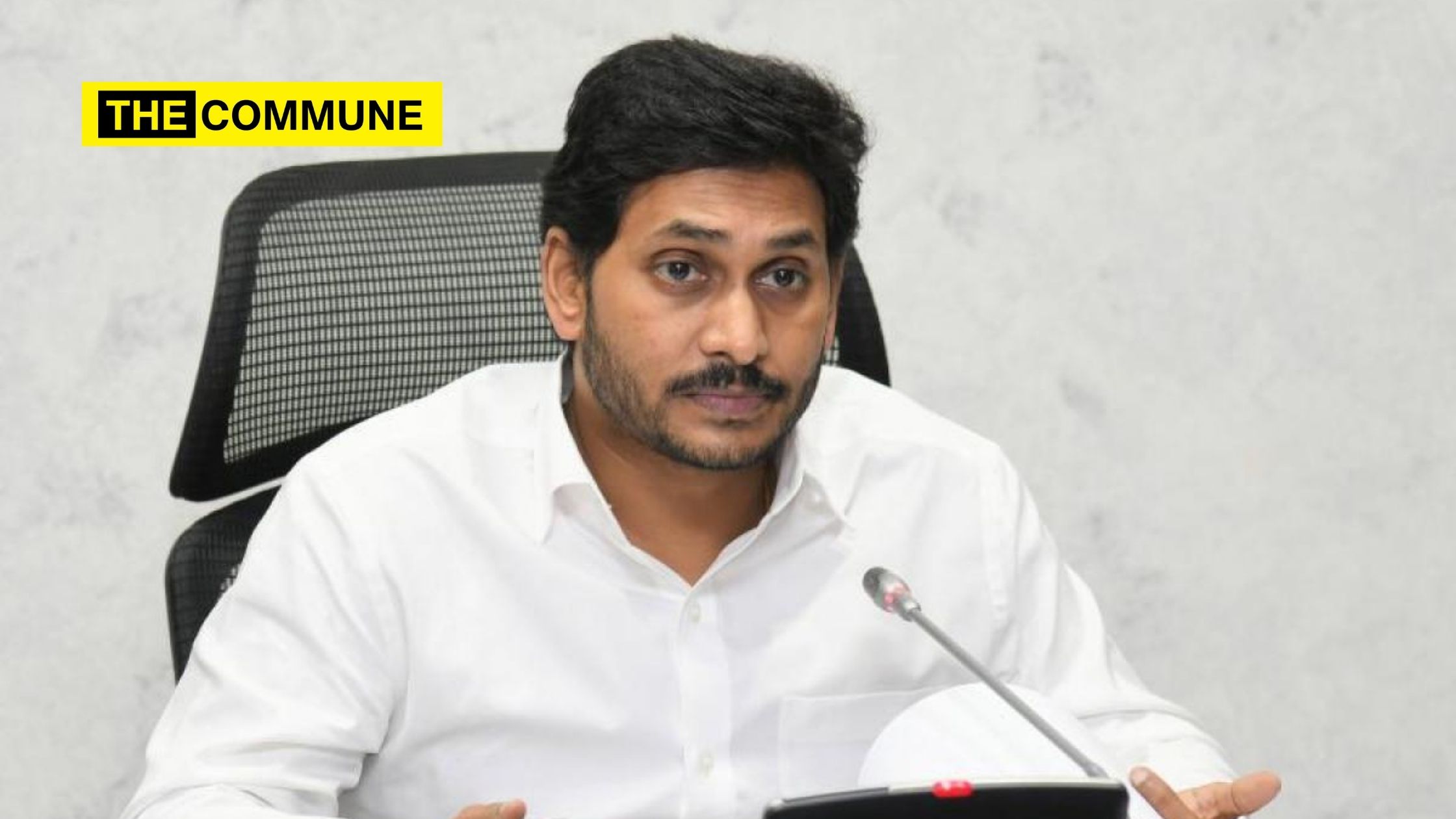
Is Jagan Jittered?

The undemocratic, dictatorial style of Andhra C.M, Jagan Reddy has yet again been criticized by all opposition parties. Jagan, who has become infamous for “banning”, refusing permission to opposition parties for holding rallies, meetings or walkathons had himself used these mediums to interact with the masses and come to power in the last Andhra Pradesh state elections.

Recent stampedes and about a dozen deaths resulting from them at the Telugu Desam Party’s (TDP) meetings in Nellore and Guntur, have given Jagan Reddy just the excuse he needed to impose a blanket ban on all political gatherings in Andhra Pradesh. The people and all opposition parties ask, why he himself continues to speak at large meetings.

Political observers are of the opinion that Jagan Reddy, who is a chief minister out on bail over as many as 31 pending cases, is extremely nervous about the renewed popularity of Chandrababu Naidu’s TDP and the growing presence of Pawan Kalyan’s Jana Sena Party (JSP), both of which look forward to an alliance with the BJP in the state elections scheduled for mid-2024. The previous TDP regime (2014-2019) was in an alliance with the BJP till 2019 when it lost elections to the YSRCP party. Currently, the BJP receives outside support from the incumbent YSRCP party led by Jagan Reddy.

The prohibitory order on public meetings/rallies was issued under sections 30, 30A and 31 of the Police Act, 1861, which calls for regulation of assembly of people and processions on public roads, streets, road margins. Although the right to conduct public meetings is a fundamental right under the Constitution, the state police are also empowered under law to regulate such activity in public interest per the Police Act of 1861. The opposition argues that the archaic Police Act of 1861 created under British Colonial rule, is rarely used in present times as it was clearly enacted before India’s independence with the intent to serve unfair interests of the then British empire.

The recent government order also states that such meetings may be held at alternative locations like public grounds and private places, which the opposition parties argue is not practical and in many locations, impossible, given the massive crowds that the opposition rallies have been attracting since last year. The opposition claims that the state police has not been effective in helping with meeting arrangements and security and that the police department is being deliberately withheld by the autocratic Reddy and his YSRCP government, from discharging their Law & Order duties.

Reddy faced strong opposition and criticism when he went as far as to state that the TDP had deliberately caused the death of meeting attendees. The TDP and other opposition leaders questioned Jagan’s motives, his lack of decency and dared him to prove that his party known for its hooliganism was not behind the stampedes and the resulting deaths. The opposition asks the public to think for themselves logically – which party benefits most from the chaos, lack of police support, stampedes and stampede deaths occurring at an opposition party’s meetings? Certainly not the opposition party. Hence is it possible that Jagan’s party, the ruling party was involved in the unfortunate deaths of eager attendees?

The opposition chided Jagan on his childish, dictatorial, unsportive, revenge-seeking ways and reminded Reddy, that his family including himself were not prevented from their fundamental right to hold public meetings, rallies and walkathons in the past when he was an opposition leader. The opposition also reminded Jagan that there were as many as 8 reported deaths, during their own public meetings back in the 2017-2019 period when Chandrababu Naidu’s TDP was in power. An opposition leader questioned “just because there are road accidents, is road traffic or driving banned?” The BJP is closely watching the tense political situation in A.P and analysing political developments/ trends, while still playing it safe with the ruling YSRCP.

In October 2022, the YSRCP tried to stop a huge political rally in Vishakapatnam and nearby locales by Pawan Kalyan’s JSP party which led to several altercations and a public showdown between Pawan Kalyan and Jagan Reddy. The TDP extended its sympathies and support to the JSP while the BJP tacitly questioned the current Andhra Pradesh government’s law and order irregularities and the politically charged environment in the state. A few days after the altercation between Pawan and Jagan Reddy, Mr. Modi had invited Paaan Kalyan to a brief personal meeting in Vishakapatnam, which set off a series of rumours. Reddy has been on a spree of permission-denials for political meetings of opposition parties, including publicly expressing displeasure at Naidu’s and Pawan’s rallies/ meetings, to which it is reported that large numbers of people show up, without monetary incentives. Is this a possible indication of the rising sympathy and support for Andhra’s opposition parties among the people? This is said to be making Jagan Reddy anxious for his politcal future as well as his personal predicament if the numerous CBI cases against him, come back to haunt him, if and when he is no longer in power.

It is widely rumoured that the Andhra Pradesh police department is completely under the dictatorial control of YS Jagan Reddy and the YSRCP party’s senior leaders and that the police are instructed and deliberately prevented from doing their jobs during meetings held by opposition leaders. The general public is of the opinion that the two stampedes at the TDP’s meetings in Nellore and Guntur and the unfortunate deaths (8 and 3 respectively) could have been avoided if the local police had been allowed to do their jobs in the first place. The opposition parties and their supporters speculate the strange, uncommon instance of stampede deaths at an opposition rally within 4 days of each other (December 28, 2022 in Nellore and January 1, 2023 in Guntur), which they claim is fishy and suspect to be the sinister work of Jagan’s YSRCP party, in a bid to bring negative publicity to the opposition parties (TDP, JSP, BJP, CPI), which are all sympathetic to one another, claiming severe abuse of power and financial resources and the deteriorating law & order situation in Andhra under Reddy’s autocratic rule.

The TDP and JSP parties have consistently said that their crowd-pulling rallies are an indication of the people’s displeasure and loss of trust in the mis-rule of the YSRCP party and Jagan’s arrogance. YS Jagan Reddy’s stepped up ante against his opponents over their apparent success at being able to draw large crowds to their meetings, displays his nervousness around losing support from the common people and the lower classes whom he thinks will continue to be attracted to his numerous free/ welfare schemes and free money deposited into their accounts.

Will Jagan Reddy’s large variety of sops, his irresponsible, financially draining, free “welfare” schemes, continue to bring him the votes regardless of his performance and the state’s poor management? The answer to this question will be revealed in Andhra’s 2024 elections. In the meanwhile, all opposition parties are impacted by the current Andhra Pradesh government’s order of banning all meetings, rallies and padayatras (walkathons). Will a united opposition come together to fight the unreasonable blanket ban on public meetings and approach the courts for relief? The next 2-6 weeks may likely reveal the opposition’s response and strategy to the denial of their fundamental right to hold meetings with the necessary permissions and with duly assigned police assistance.

Click here to subscribe to The Commune on Telegram and get the best stories of the day delivered to you personally.

The Abuse Of Adi Shankara By Communist Minister In Kerala Is Only The Tip Of ‘Anti-Hindu’ Attitude Of The Left

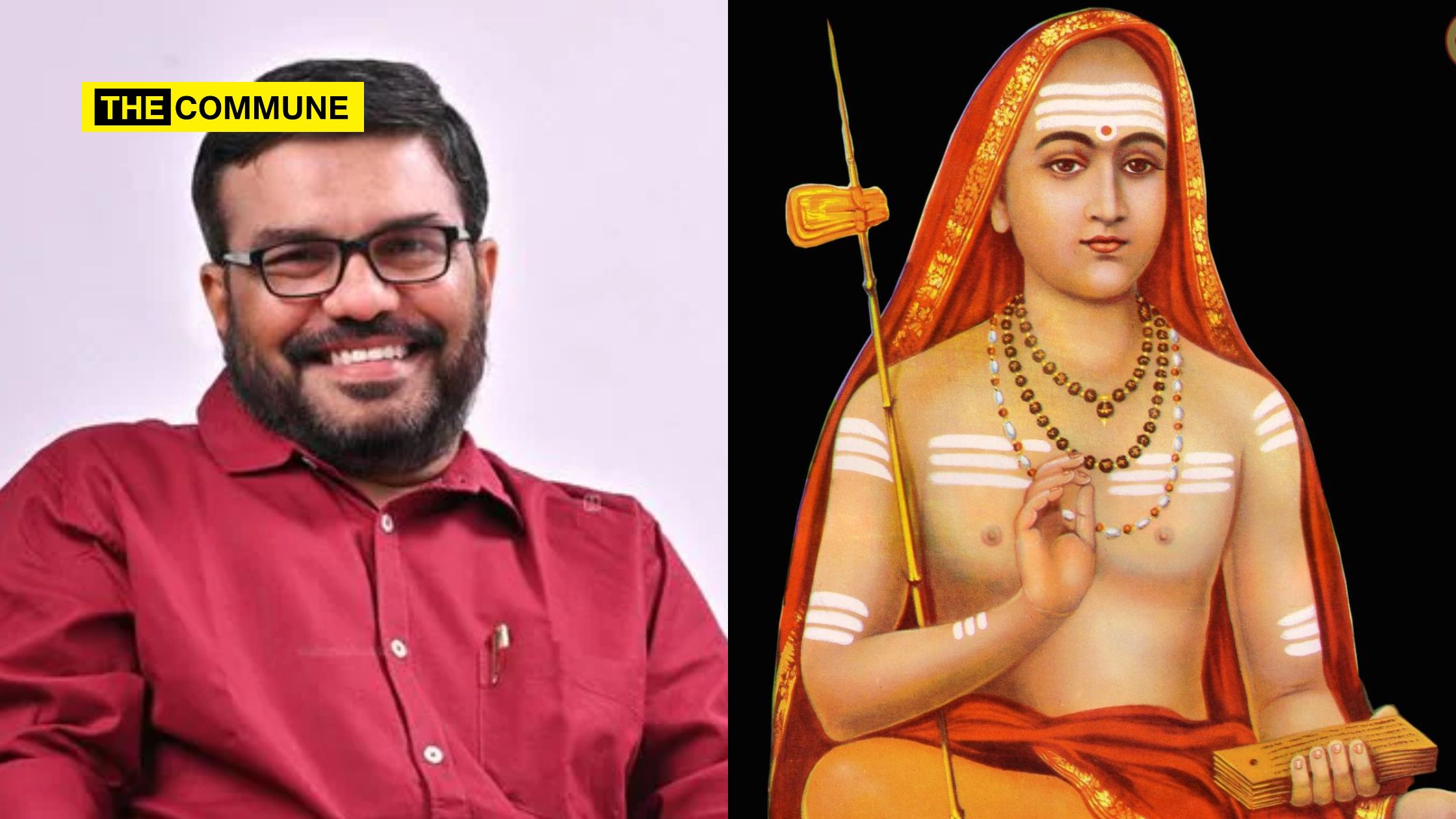
Recently, Communist leader and Minister MB Rajesh has stirred a controversy with his distasteful and derogatory remarks against Adi Shankaracharya. Speaking at an inaugural event of an organisational meeting linked to the Sivagiri Pilgrimage Rajesh said Shankaracharya was not the Acharya of Kerala as he “preserved caste system and varnashrama system”.  This remark by the left leader stems from not only from his ignorance of history but also from a continuous patter adopted by leftist government in Kerala in maligning Hindu icons and traditions. In this context this article will look in to the remarks made by the Minister and also examine as to why this remark represents only the tip of ‘Anti-Hindu’ attitude of the Left in Kerala.

Distasteful comment and ignorance of History

In his statement, Rajesh claimed that Shankaracharya preserved the caste system while Gurudeva (Sree Narayana Guru) worked on weeding it out from society. He added that Shankaracharya was the “implementer of the cruel caste system based on Manusmriti”. He claimed that the devotees realised by the teachings of Swami Chidanandapuri that Guru’s vision had nothing to do with other Indian Sanyasa Traditions. Before we delve more in to this statement, understanding the background in which the Minister made the statement becomes critical as it lifts the facade of secularism adorned by left in Kerala. 

Some days ago, Union Defense Minister Rajnath Singh and Pandita Sannyasivaryan Chidanandapuri Swami recently noted the similarities in the works of Shankaracharya and Sree Narayana Gurudeva and stated they both are the same. Their statement seemingly angered the left, leading to the statement by Rajesh. In response to this, Union Minister of State for External Affairs, V Muraleedharan condemned Rajesh’s statement and said both Adi Shankara, the Vedanta Philosopher and Sree Narayana Guru, the saint and social reformer, belonged to the same ascetic linage of the country. He added that Rajesh’s attempt to create a division in Hindu dharma and his statement should be condemned. He added that his statement showed the intolerance of the communists towards ancient Indian traditions and philosophy. The insecurities of left also came out in open through this comment by the Minister as there is a visible fear for the Communist regarding unification of Hindus as it will badly hurt vote bank of left in Kerala.

The distasteful comments also trace its roots to utter ignorance of history by the Minister, who is a representative of ruling dispensation in Kerala. Adi Shankaracharya was born in Kerala and he propounded ‘Doctrine of Advaita’ (Monoism). Advaita articulates a philosophical position of radical nondualism, a revisionary worldview which it derives from the ancient Upanishadic texts. According to Advaita Vedantins, the Upanishads reveal a fundamental principle of nonduality termed ‘brahman’, which is the reality of all things. The philosophy propounded by Adi Shankaracharya thus clearly seeks to annihilate divisions in the society in favour of looking everything as an embodiment of universal soul, this teaching is similar to teachings of Sri Narayana Guru, who taught that there is ‘only one caste, one religion and one god’ for humans. The rejection of duality and acceptance of radical non duality are the common threads which runs through teachings of both godly men. The Minister while making the derogatory comments intentionally ignored this as his statement traces its origin not towards history or facts but towards the pattern of ‘anti-Hindu’ agenda for vote bank followed by the left in the state.

Anti-Hindu Left in Kerala

The ‘anti-Hindu’ nature of left in Kerala is anchored on two prime beliefs, one is that, unification of Hindu’s for their own cause will shatter vote base of Communist in the state and second is that, constant anti-Hindu stance might secure them vote of minorities which are alluding the left. But, in both of these scenario Hindu’s are taken for granted as mere rubber stamps who will vote for the party in the state. (More than 50% of left vote in Kerala are Hindus). If we look back in to the two terms of current Pinarayi Vijayan government, the pattern of constant ‘Anti-Hindu’- ‘Minority appeasement’ policy measures are visible.

During the first term of Pinarayi Vijayan government, there was a diktat against government employees using office hours for Onam celebrations and PWD minister at that time G. Sudhakaran’s also stated that lighting of ‘Nilavilakku’ (tradional lamp) and religious prayer should be avoided at government functions. In both these matters, was following the lines of the Muslim League which views ‘Nilavilakku’ and ‘Pookalam’ (flower rangoli) as a religious symbol. One must understand that, in traditions and customs of Kerala, both views ‘Nilavilakku’ and ‘Pookalam’ have an indispensable role as it represents good luck for conducting any fuctions. Onam and ‘Nilavilaku’ has always been considered more as symbol of Kerala rather than symbol of religions. By issuing the diktat the CM toed the line of extremist Islamic fringe groups. Later after the Supreme Court’s ruling on Sabarimala issue, the left in Kerala took a stance on entry of women into Sabarimala temple, which was also against the Hindu beliefs and traditions. Meanwhile, in issues of Muslims in the state, the left always had taken a softer approach. In early 2022, during the event of “Jana Maha Sammelanam”, organised by the Popular Front of India (PFI), the mob assembled warned Hindus and Christians of dire consequences if they did not live peacefully in the country. Most shocking incident was slogans raised by a little boy in the event. The boy shouted, “Be ready for your death rituals if you won’t live in our land quietly. Be ready with rice flakes to fill your mouth, if you won’t live quietly (For Hindus). Be ready to burn amber in your home if you won’t live quietly (For Christians). Because we are coming, we are your death. We won’t go to Pakistan or Bangladesh, you have to live here as we say, or else we know how to make you live quietly, we will kill you even if we are attacked. We take pride in being a martyr, we salute them. If you won’t live quietly, we know how to ask for ‘Azadi’. Be prepared for your death,” the PFI members shouted in Malayalam. The left government in the state was slow to respond to this dangerous incident showcasing their nature of minority appeasement. One must also not forget when The Kerala government vouched for the legal and Constitutional validity of the Shariat law by holding it as the “real expression of the Prophet” upholding its significance in all aspects of the Muslim Personal Law, especially on law of inheritance. The state appeased minorities by upholding an archaic law which is being rejected even by the Muslims itself. 

These instances are just tip of an iceberg; the pattern adopted by Communist government in the state is clear. It is based on appeasement of minorities and ‘anti-Hindu’ agenda. The left should not be left alone to do as they please, the hypocrisy of party must be exposed and Hindus in the state must understand how they are being manipulated and divided by those in power.

Click here to subscribe to The Commune on Telegram and get the best stories of the day delivered to you personally.