Home Blog Page 1003

TN Police Interfere In Hindu Devotees’ Rituals In Madurai, Allow Completion After Protest

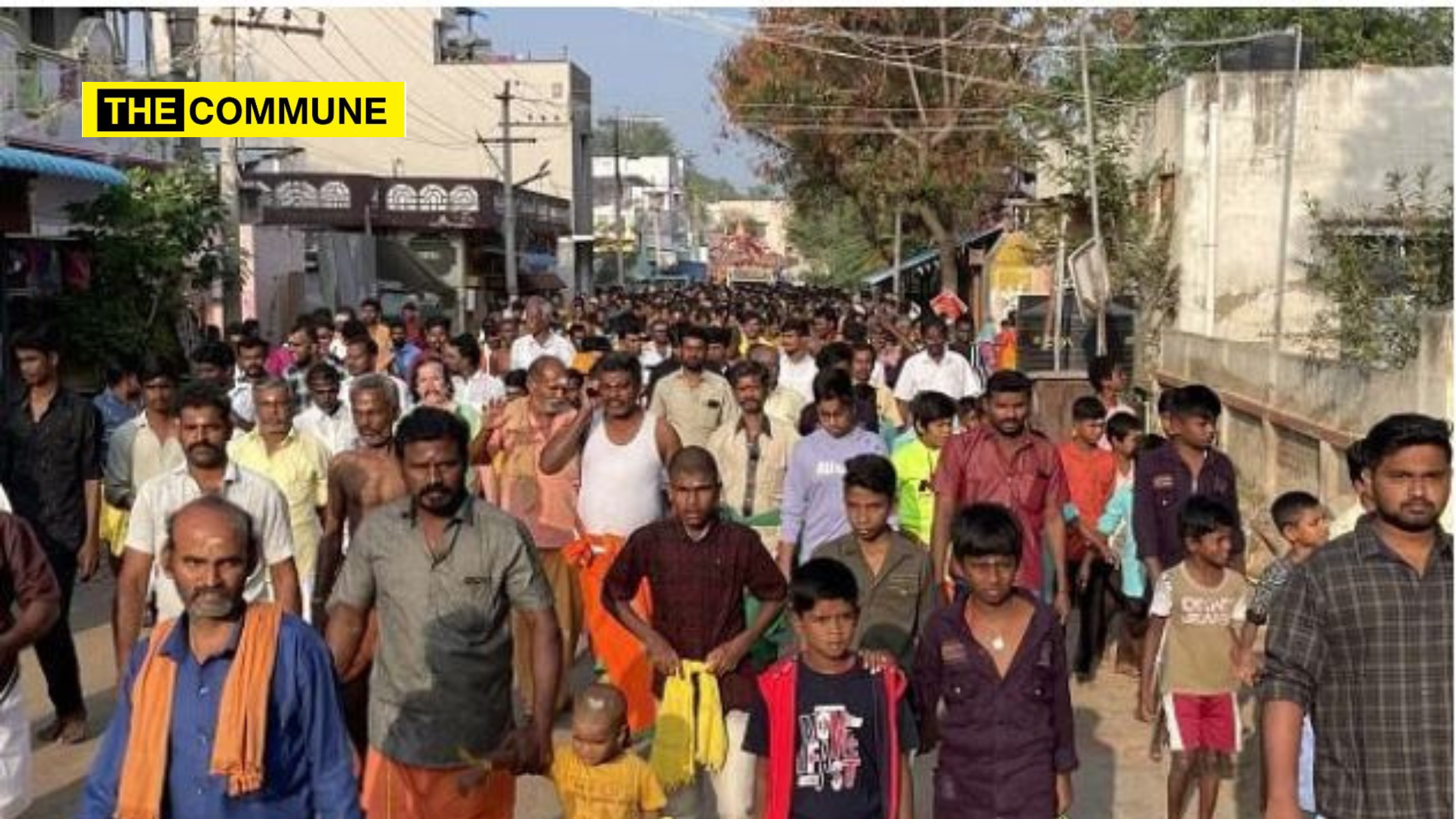
Tamil Nadu Police had prohibited Tamil Hindu devotees from Pasiyaapuram village near Keezhadi in Thiribuvanam in Sivaganga district from traveling to Madurai district to take a holy dip in the Vaigai river, a 30-year-old tradition.

On the auspicious Tamil day of ‘Thaipusam’, the people of Keezadi and Pasiyapuram villages in Sivanganga district take a dip in the Vaigai river near the Silaimaan area in Madurai district, bringing milk, Karagam, and Kavadi and completing their rituals in nearby Murugan temples.

In this situation, the Tamil Hindu devotees who went to take a bath and complete their rituals in the Vaigai river yesterday were stopped by the Silaimaan police and were barred from entering the Madurai district.

The devotees were astounded to see that the Silaimaan Police had barricaded the border and assembled in large numbers in front of the location where they perform their usual rituals.

The Tamil Hindu devotees were granted permission by the Police after a fierce struggle, but they refused permission to go to the Vaigai river near the Silaimaan graveyard to perform their rituals. However, the devotees were granted permission only after they threatened to protest.

Sivaprasad, the SP of Madurai, stated, “When I became aware of the situation, I directed the Madurai police to allow the devotees to complete their rituals. I also instructed the Silaimaan police to prevent similar incidents in the future.”

Sankarapandi, a devotee, stated, “We’ve been taking Karagam and dipping it in the Vaigai river near Silaimaan for 27 years. Why should the Madurai police come here and stop us after we have obtained formal permission from the Thirubhuvanam police station?”

(With inputs from Dinamalar)

Click here to subscribe to The Commune on Telegram and get the best stories of the day delivered to you personally.

The Adani – Hindenburg Affair: A Bittersweet Experience Of Laissez-Faire

The Hindenburg Adani Controversy: Unpacking the Players Behind The Hindenburg Report

Hindenburg was largely known only to a small number of people in India, from its crash at New Jersey in 1937, until a fortnight ago when it brought about crash in the share prices of Adani Group in India.

They wrote a scathing report with largely known issues and shared with a few privileged clients before releasing it in the public domain. I am not interested in examining the merit of the charges or comments or conclusions made in the report, but making an attempt to present a balanced view on the larger issues that this saga has raised without letting any bias cloud our judgement.

But before that, it is important to understand the business of short-selling which the likes of Hindenburg specialize in.

Shortselling: Is It Legal And Ethical?

Shortselling is not an illegal or unethical practice. Just like investors have a positive view (Bull) on a company or its shares or bonds, there are people that have a negative view (Bear) and want to benefit from a fall in the stock or bond prices. So a short-seller looks for vulnerabilities to exploit. Most short sellers go silent after taking a position and wait for it to play out. Have you heard of Paulsen & Co or Mike Burry that made a fortune during the sub-prime mortgage crisis in US? Probably not, as they went about their jobs. And they were not questioned for betting against the “American Dream”. And we have had our own short sellers in the past like Manu Mundra and it is said that Big Bull Rakesh Jhunjhunwala also practiced short selling, before he started to believe in India’s growth story!

Usually short selling keeps the market valuations fair and helps in maintaining a balance. As financialisation of savings take deeper root in India, it is essential for even the retail investors to generate healthy long term returns. As India grows as an economy and financial markets mature, we will have diverse set of investors that will play markets different than the typical buy and hold investor (or long – only). The investor community and our markets should be ready to handle that.

How Did Hindenburg Short? 

“short positions in Adani Group Companies through U.S.-traded bonds and non-Indian-traded derivatives, along with other non-Indian-traded reference securities”

To me this is the most interesting piece of the puzzle. While it is easy to identify vulnerable companies in India, its not easy to express a bearish view in in any emerging market security, given the inherent lack of liquidity. In this extant case, the short sellers have used the US traded bonds and derivatives (probably through buying what is called Credit Default Swaps or CDS, that grows in value when the credit risk increases). 

Adani USD was largely BBB-, meaning they belong to a category called high yield bonds that rarely trade and if they trade USD 10 million in a month, it’s a surprise. The bond markets operate through broker-dealer and faith is critical. When some broker calls you and says he has a seller, the first question is – who is the seller – Is it a hedge fund, bond fund, HNI etc? And the secon question is – Why is he selling?. The motivation of a seller is critical, which makes it difficult to short sell at scale.

Another suggestions that it could be a large Over The Counter (OTC) position is little stretched, as it would be imprudent for a bank to take a large exposure and selling down the position is difficult. Hence my guess is the short position on Adani bonds is likely to be small and in the range of USD 10-15 mn (lets say ₹100 cr). Anything above, I would be surprised. And for all practical purposes, this could be lot lower.

In my view, the short seller might have created short positions in ADRs (American Depository Receipts) of Indian entities or ETFs (Exchange Traded Funds), probably hoping to benefit from a spill over or a mass hysteria. Most commentators suggest that there was nothing new in the long research note and most issues have been raised by various Indian media outlets over the last couple of years.

Why The Bloodbath Happened?

There could be multiple reasons and we would never know why in the clearest sense and it will remain a folklore, where you will have somebody that you know knowing someone that they know that did something. But some simplistic reasons could be panic selling by Indian holders, some selling to subscribe FPO (economically speaking, partly paid shares are better to own than fully paid shares) or it could be margin calls, considering the meteoric rise and the fall in the stock prices or any other reason. 

This saga has raised lot of important questions and we look at some of them below.

The Capital Market Strategy Of Adani Group

 While it was necessary to raise equity capital, the choice of FPO (Remember this is a partly paid share and not the same as the one that is currently listed) as a route suggests that they might have missed reading the markets. Most of the recent PP issues were done at a deep discount (Reliance in 2020 or Bharti Airtel in 2021). While a rights issue offer a significant pricing flexibility, an FPO does not. A retail issue of this size – ₹6000 cr (30% of issue size) needed effective marketing but we did not see much by way of that!

The ideal structure should have been a rights issue at a deep discount, that promoters could have renounced through sale of entitlements in markets. This could have helped as the retail investors might have participated and promoters could have used it to reduce their stake as well as reduce leverage.

What Can Adani Do Now?

They need to build investor confidence quick and fast. They can consider to bring in strategic investor in quality, cashflow generating businesses they own. Another alternative will be to buyback some of the USD bonds to comfort the investors. 

Irrespective of the outcome, there will be a growth slowdown in Adani, as their access to markets will be tricky and they may need to postpone some of their investment plans. It also gives them an opportunity to carryout a strategic analysis of businesses and exit any non-core investments, which will also help them reduce debt.

The common issue that has hurt over the last few years is financing promoters through what is called as “Loan Against Securities or LAS”. While most companies maintain debt at low levels in the operating entities, LAS introduces an element of leverage at promoter’s holding company, which adds to the risks in bear markets and makes the group vulnerable. Any reduction in promoter LAS will be a welcome change.

Is There A Contagion Risks To Indian Banks

While I would have thought that its possible a few years ago, the same is not the case today. The banks are clean and looking to expand credit. The exposure of the Indian banks to Adani as a percentage of all bank loans is less than 1% and this is an issue specific to the group and not a systemic issue. To add to that most of the loans in India are to the operating companies in India with many of them generating cash flows and prompt in servicing debt. 

What Should Retail Investors Do?

Most Mutual Funds in India, have emerged winners in this just by staying away investing in Adani group companies. Although its difficult to say where the stock price rout may end, retail investors should take cues from institutional investors when investing in troubled times and will do well not to blindly follow ultra HNIs as their risk tolerance and ability to handle a loss is very different!

Implications For Other Overseas Issuers

Most Indian companies are seasoned issuers in overseas  bond markets. Not too long ago, in 2007, India companies were one of the largest FCCB issuers. This saga is a clarion call as the overseas markets may hold them to a higher governance level than what is required by law. In addition they will need to understand the modality of shorting employed by Hindenburg or its clients as well as consider the outcome of this saga in their decisions in future. 

What Should The Government Do

The government did nothing, while the Finance Secretary (in his personal capacity) left it to markets and Adani to sort it out. They did what they had to do – just remain on the sidelines, as Adani scrambled to halt the damage. This was probably the best response the government could have come up with, as anything else could be seen as cronyism.

In the budget of 2019, a proposal for increase of free float (public ownership of listed companies) to 35% (from 25%) was mooted by Finance Minster Nirmala Sitharaman. While the proposal metb with resistance at that point in time, its probably time to consider implementing it now. Larger free float could help keep valuations in the fair zone as well and absorb the investment flows due to financialisation of savings. A crisis or even a semblance of one cannot go unutilised.

Both RBI and SEBI while reaffirming that the system is strong, stayed away from any punitive action against the messenger. Allowing market forces to prevail improves the perception of the market in the eyes of an investor. When an investor commits capital into an EM, they are aware of the risks too, but do not expect the regulator or governments to step in to prevent losses! They need stable and predictable regulatory and tax regime and would appreciate the role played here, contrary to what commentators think. 

The message was clear and loud – while the system remains strong, the market will decide the fate of the short seller and the issuer – laissez faire at its best!

Click here to subscribe to The Commune on Telegram and get the best stories of the day delivered to you personally.
Three Women Dressed In Burqa Entering Nellayappar Temple In Tirunelveli Sparks Controversy

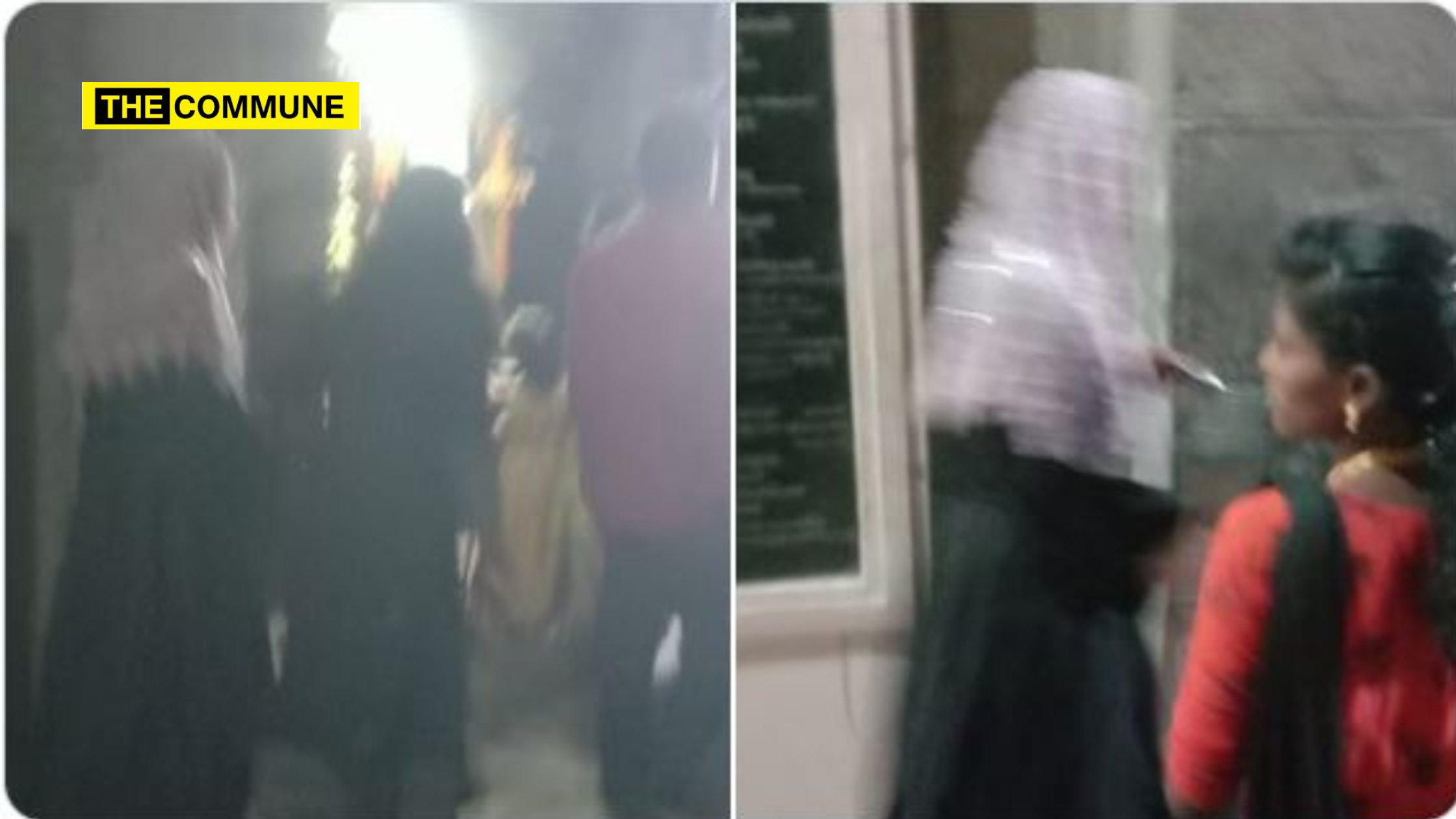
Images of three women dressed in Islamic-style burqa inside Tirunelveli’s Nellayapar temple went viral on social media, sparking controversy.

Nellaiappar Temple is a Hindu temple dedicated to the deity Shiva, located in Tirunelveli, a city in the South Indian state of Tamil Nadu. Shiva is worshipped as Nellaiappar (also called Venuvananathar) represented by the lingam and his consort Parvati is worshipped as Kanthimathi Amman. The temple is located on the northern banks of the Thamirabarani River in the Tirunelveli district. The presiding deity is revered in the 7th-century Tamil Saivite literary work, the Tevaram, written by Tamil sage poets known as the Nayanmars and the temple is hence classified as ‘Paadal Petra Sthalam’.

On 5 February 2023, three Muslim women dressed in burqa entered the temple at around 11:15 AM and went around the Shiva and Amman shrines.

Despite the fact that there are separate dress codes for men and women inside the temple, neither the police nor the HR&CE staff prevented the Muslim women from entering the temple.

Hindu Munnani State Secretary Kutraalanathan reported the incident to the temple office and the local police, who are now investigating the incident using CCTV footage.

On their official Twitter handle, Hindu Munnani said,”None of the temple staff even asked how they can enter the temple with black veil. When the Hindu Munnani functionaries came to know the information and arrived at the spot, the persons wearing the black veilss came out of the temple and started running without stopping. Why the person came, what they brought, and what they did is still a mystery.”

The Hindu Munnani also alleged that the women in black veil went up to the sanctum sanctorum (moolasthanam) and even took pictures of various places inside the temple.

Hindu Munnani leaders have decided to stage a protest in front of the temple to condemn the incident and the HR&CE officials’ failure to protect the temple’s sanctity.

Click here to subscribe to The Commune on Telegram and get the best stories of the day delivered to you personally.
Kerala Budget 2023: Left Govt Continues Trend Of Keeping The Poor Poorer

The Kerala government is facing a heavy backlash from the general public after they presented the budget for the financial year 2023-24 recently. The budget marked a continued trend of deteriorating financial condition of the state and how government has tried to shift this burden on to the poor people instead of finding novel methods to manage the situation. As the Pinarayi Vijayan government enters in to its 7th year of governance, this article will look in to why budget 2023 is a representation of fiscal mismanagement of Kerala by communist government and why it is an anti-poor document keeping with the trend of robbing the poor?

A Blueprint To Encash The Poor

The State Budget has adopted an anti-poor approach charting out novel methods to rob the poor. Opposition parties in Kerala also has staged protests in different parts of Kerala on Saturday against the LDF government’s budget proposal to impose cess on petrol, diesel and liquor. Considering the fact that while Centre slashed excise duty of ₹13 on petrol and ₹16 on diesel last year. Kerala has reduced ₹1 at the same time. This year, they have increased ₹2. The Kerala government is also facing a heavy backlash from the general public after they presented the budget for the financial year 2023-24 on Thursday. As per the citizenry of Kerala, the increase in cess on petrol and diesel will lead to a huge price hike. The prices of daily necessities have more than doubled in Kerala. The ‘robbing’ effect of the budget was also well articulated by Shashi Tharoor who is inspiring to get a foothold in Kerala politics. Speaking to ANI, Tharoor said, “It is an extremely disappointing budget. The Budget is unfortunately exploiting the common man. Because the government seems to have no imagination, no idea how to generate revenue.” “Instead of promoting more revenue-generating activities, all they are trying to do is tax people. An extra cess on fuel…₹2 per litre for petrol and diesel. Also, more primitive tax on alcohol where there is already the highest tax on alcohol in the entire country,” he said. The Congress leader said taxes and cesses on everything have an inflationary effect. “When you put ₹2,000 crore to control inflation, it makes no sense at all. So, it is a deeply disappointing budget. If this budget is for say a school exercise, you will get a failure mark,” Tharoor said.

Instead of taking apt measures to collect the tax gap of over ₹70,000 crore and declaring austerity measures to better fiscal position, the government has dug into the pockets of the poor and the middle-class who are already burdened by the financial crisis. The budget has disappointed the public by imposing huge burden on them at the same time not giving them back anything in return. 

A State In Fiscal And Social Decline

“A state which was famous for its welfarism and governance model has now become a paradise for corrupt communist which has left Kerala in a state of mismanagement.”

Kerala is in an extremely bad financial situation. The debt of Kerala government has climbed to almost ₹4,00,000 crore and small Kerala has surpassed most of the Indian states in this debt situation. The debt/GDP ratio is at 37% and a recent RBI report titled ‘State finances: A risk analysis’ indicates dark days ahead for the state. The major reason for the crisis is the inefficient handling of the fiscal situation by the successive Pinarayi Vijayan government. Being a consumption state with no visible major industries to bring in revenues, the state is solely dependent on tax revenues and money pumped in by expats. In 2017, the state had relaunched an ambitious off-budget infrastructure development scheme under the Kerala Infrastructure Investment Fund Board (KIIFB), essentially aimed at circumventing the budgetary loan taking restrictions imposed by the Kerala Fiscal Responsibility Act under the Fiscal Responsibility and Budget Management Act, 2003. The source of KIIFB will be cess on petrol, motor vehicle tax, loans, and grants from the government. After six years, KIIFB has turned out to be failure. 962 projects worth ₹75,000 crore were announced, but only projects worth Rs 6,300 crore have been completed by February 2022. Projects worth ₹20,000 crore are in early stages of completion. The Comptroller and Auditor General of India in a report later declared that all off-budget borrowings form an integral part of state finances, thus landing all KIIFB projects in a self-created mess.

The Kerala welfare model is also failing. It looks like Kerala is quickly losing out to other states in an area where it was perennially considered a model: social welfare spending. That Kerala’s status as the country’s pre-eminent welfare state has long taken a beating was revealed in Reserve Bank of India’s latest study ‘State Finances: A Study of Budgets of 2022-23’. Kerala’s social sector expenditure in 2004-05, which was 36.2 per cent of its total expenditure, was the fourth highest in the country. Only the newly formed states of Chattisgarh and Jharkhand, which were formed in 2000 specifically to improve social sector spending, had better figures: Chattisgarh (37.7 per cent) and Jharkhand (44 per cent). The small north eastern state of Tripura, too, had spent more (37.6 per cent). Kerala was then beacon of welfarism. A decade and a half later, by 2020-21 Kerala’s rank fell steeply to 21. Now, almost all other states spend more on social services than Kerala. However, it is the fall in education spending that will have a bearing on Kerala’s future. Kerala’s expenditure on education has not even stagnated in the last one-and-a-half decades. It has fallen. From 16.6 per cent in 2004-05, it dropped to 11.4 per cent in 2020-21. There is not much cheer in public health spending, too. In 2004-05, by spending 4.9 per cent of its total expenditure, Kerala was the eighth highest spender on public health. Kerala is at 13th position in the country.

Kerala is rotting fast both fiscally and socially and this is being reflected in numbers. A state which was famous for its welfarism and governance model has now become a paradise for corrupt communist which has left Kerala in a state of mismanagement.

Click here to subscribe to The Commune on Telegram and get the best stories of the day delivered to you personally.
Instances When DMK Ministers Attacked People

Tamil Nadu Chief Minister MK Stalin while speaking at the DMK General Committee meeting held in October 2022 said that he wakes up every morning hoping that his partymen do not create any fresh trouble for the day.

His anguish is reasonable as his Ministers have brought bad reputation for his government because of their personal conduct in public.

And this objectionable attitude of DMK Ministers have continued even after their chief warning them. In fact, if earlier the Ministers brought in disrepute through their words, they have now gone a step ahead.

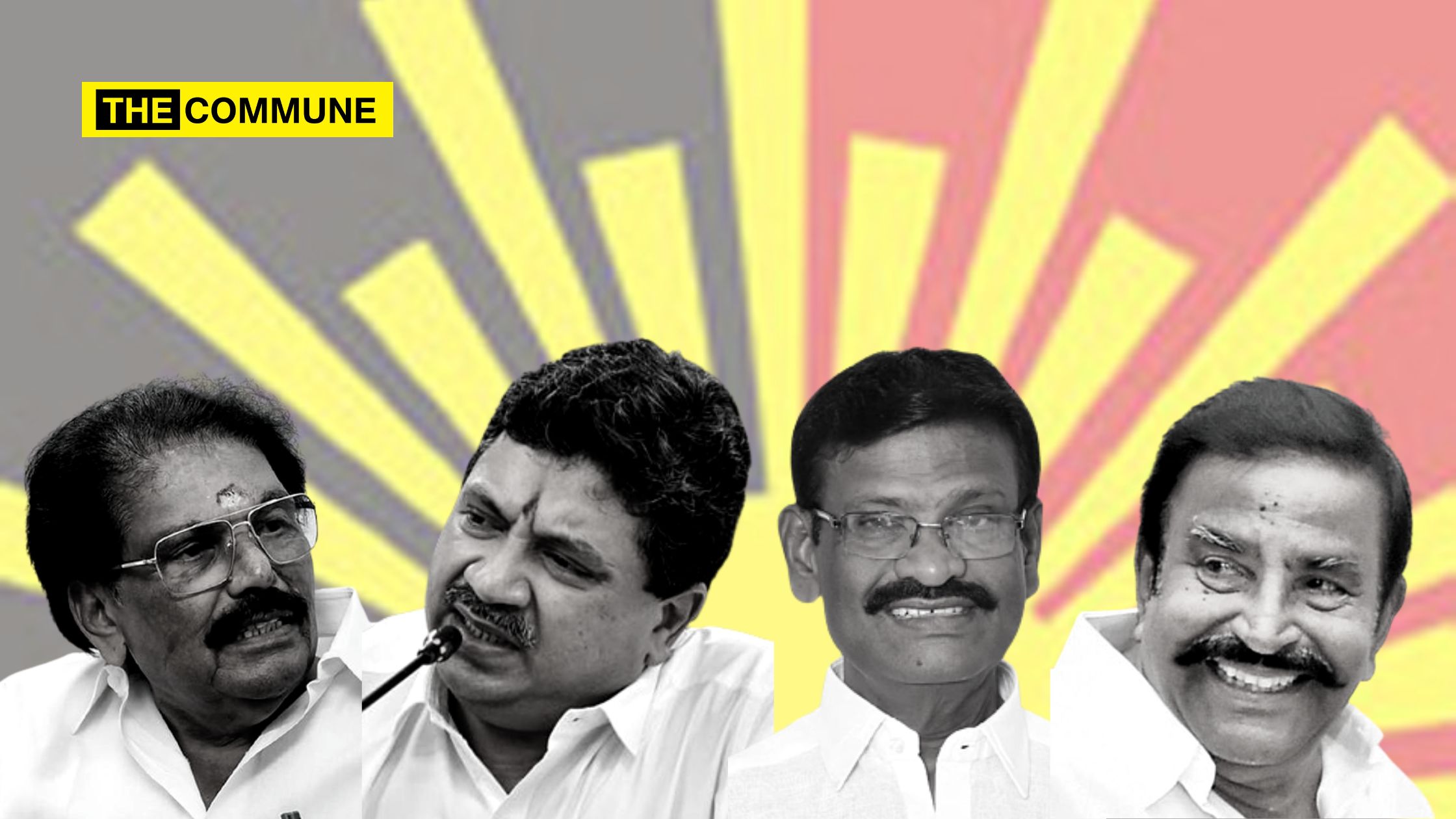
Here is a list of  DMK Ministers who have hit their own partymen or common people in full public view.

KN Nehru

Tamil Nadu Minister for Municipal Administration KN Nehru was seen hitting a party worker on stage.  The incident was reported from Salem, Tamil Nadu, where DMK workers had gathered to welcome Chief Minister Stalin’s so  Udhayanidhi Stalin, the newly appointed sports minister.

However, Tamil media and certain journalists attempt to trivialise these incidents by either making absurd interpretations or failing to publish the news itself.

Earlier on January 10, a video surfaced on social media showing DMK Minister KN Nehru slapping a DMK ward councillor on the head during a government welfare programme in Trichy.

https://twitter.com/Muthuhere3/status/1612454972842708994?ref_src=twsrc%5Etfw%7Ctwcamp%5Etweetembed%7Ctwterm%5E1612454972842708994%7Ctwgr%5Ea4e9a0e5e42876a6e647c37ef4e419ebc33d1981%7Ctwcon%5Es1_&ref_url=https%3A%2F%2Fthecommunemag.com%2Fdmk-min-kn-nehru-slaps-councilor-in-full-public-view%2F

SM Nasar

DMK Minister for Milk and Dairy Development SM Nasar was caught on camera on Tuesday losing his cool and throwing a stone at a party worker, allegedly over a delay in bringing chairs.

The DMK minister was in charge of preparations at a venue in Tiruvallur where Chief Minister M K Stalin is scheduled to speak at a public meeting on Wednesday as part of the DMK’s ‘Veera Vanakkam Naal’ event.

Nasar became enraged at the worker for allegedly taking the time to get him a chair. The minister can be heard yelling at the worker in the video.

Earlier, while speaking at an event, Nasar was seen punching a man with his elbow for accidentally stepping on the mic wire. As Minister was giving a speech, a man was trying to move on the stage when he accidentally stepped on the wire, causing the microphone to fall down. Angered over this, the DMK minister lost his temper and elbowed him on the back and continued his speech.

KKSSR Ramachandran

A middle-aged woman who had approached DMK Minister KKSSR Ramachandran seeking old age pension for her mother was hit on the head by the Minister with the petition paper she had given him.

However,  the media in Tamil Nadu had tried to cover the incident in favour of the Minister stating claiming that he hit her in a ‘friendly way’. It was reported that the woman who approached him, was the Minister’s relative and that he had only nudged her and did not hit.

Palanivel Thiagarajan

Tamil Nadu Finance Minister PTR Palanivel Thiagarajan called a commoner on social media a ‘dolt’ and a person with ‘unwarranted-privilege-hardened skull’ while responding to the person on the ‘baby-shower’ controversy, where the Finance Minister allegedly skipped the GST Council meeting at Lucknow to attend a baby shower ceremony organized in his constituency

In another instance, Palanivel Thiagarajan stooped to a new low by uttering words unbefitting of a Minister. He said “Dude… I crap bigger than you.” and went on to call the netizen a ‘scum’, ‘cultist’ and ‘minion’ who had taken a jibe at the collapse of Lehmann Brothers where Palanivel Thiagarajan worked.

While Stalin has been mouthing about Dravidian Model of ‘social justice’ on every platfirmm, these instances of DMK Ministers talking and behaving in such objectionable manner shows a deeply entrenched feudal mindset.

Click here to subscribe to The Commune on Telegram and get the best stories of the day delivered to you personally.
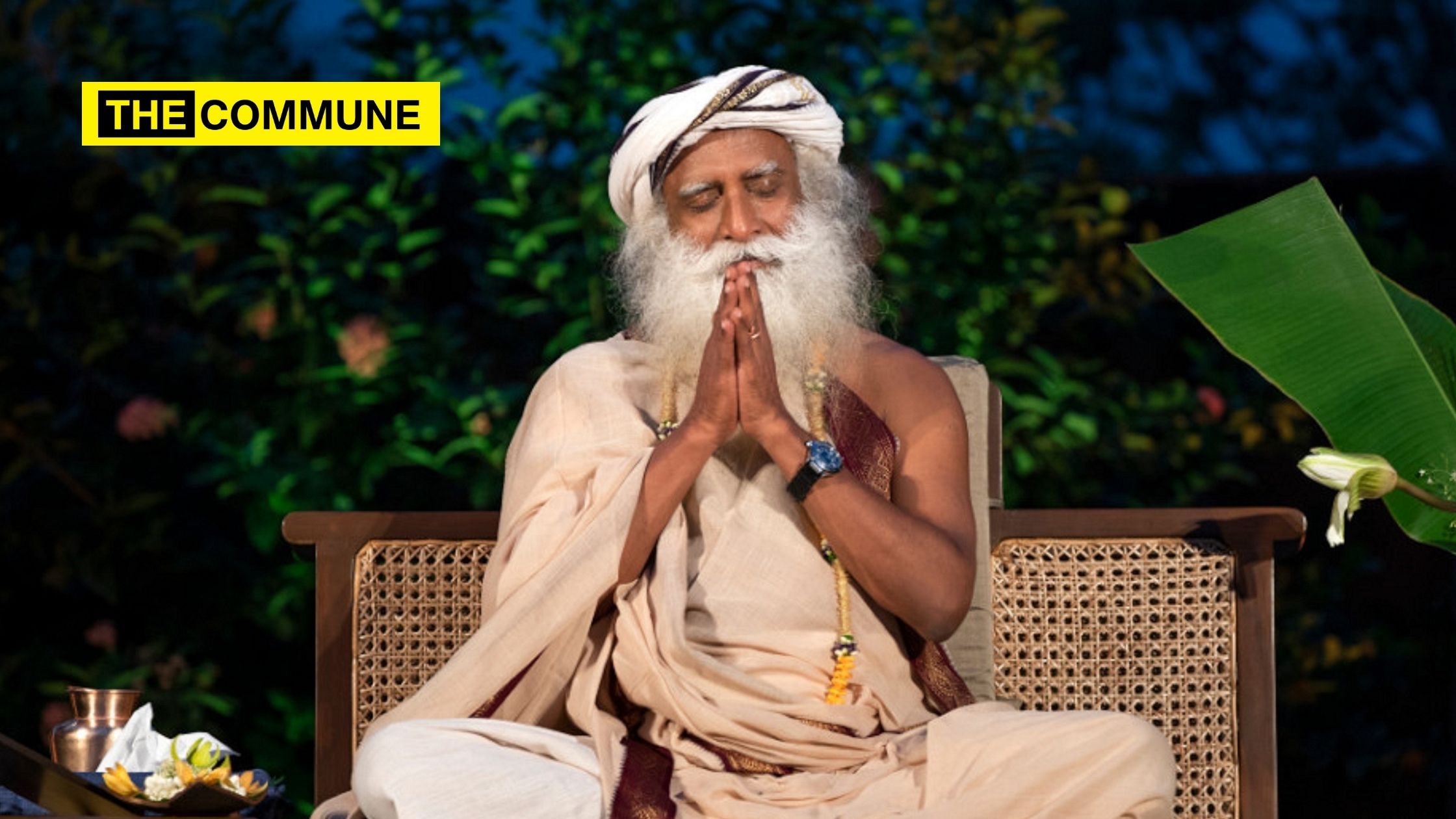
Divine And Discrimination Cannot Go Together Tweets Sadhguru As Dalits Enter The Muthumariamman Temple For The First Time In 80 Years

“#Divine and discrimination cannot go together. It is a disgrace that even in a place of the Divine, we discriminate among human beings. We should not even be thinking about who is a #Dalit and who is not. Congratulations to Thenmudiyanur village,” tweeted Sadhguru after the Dalits entered and worshipped inside the Muthumariamman temple for the first time in 80 years.

For the past 80 years, Dalits were not allowed to enter the Muthumariamman temple in Thenmudiyanur village of Tiruvannamalai district. Subsequently, Dalit people belonging to the area complained about this to the District Collector.

Following this, last week, in the presence of the Tiruvannamalai District Collector and police officers, Dalits entered and worshipped inside the Muthumariamman temple for the first time in 80 years.

At Isha, people from all walks of life, without any discrimination, can visit Dhyanlinga, Linga Bhairavi, and other consecrated spaces. Everyone can offer milk and water at Dhyanlinga on the new moon and full moon days.

(This is an official press release from Isha Foundation. The Commune was not involved in creating this content.)

Click here to subscribe to The Commune on Telegram and get the best stories of the day delivered to you personally.
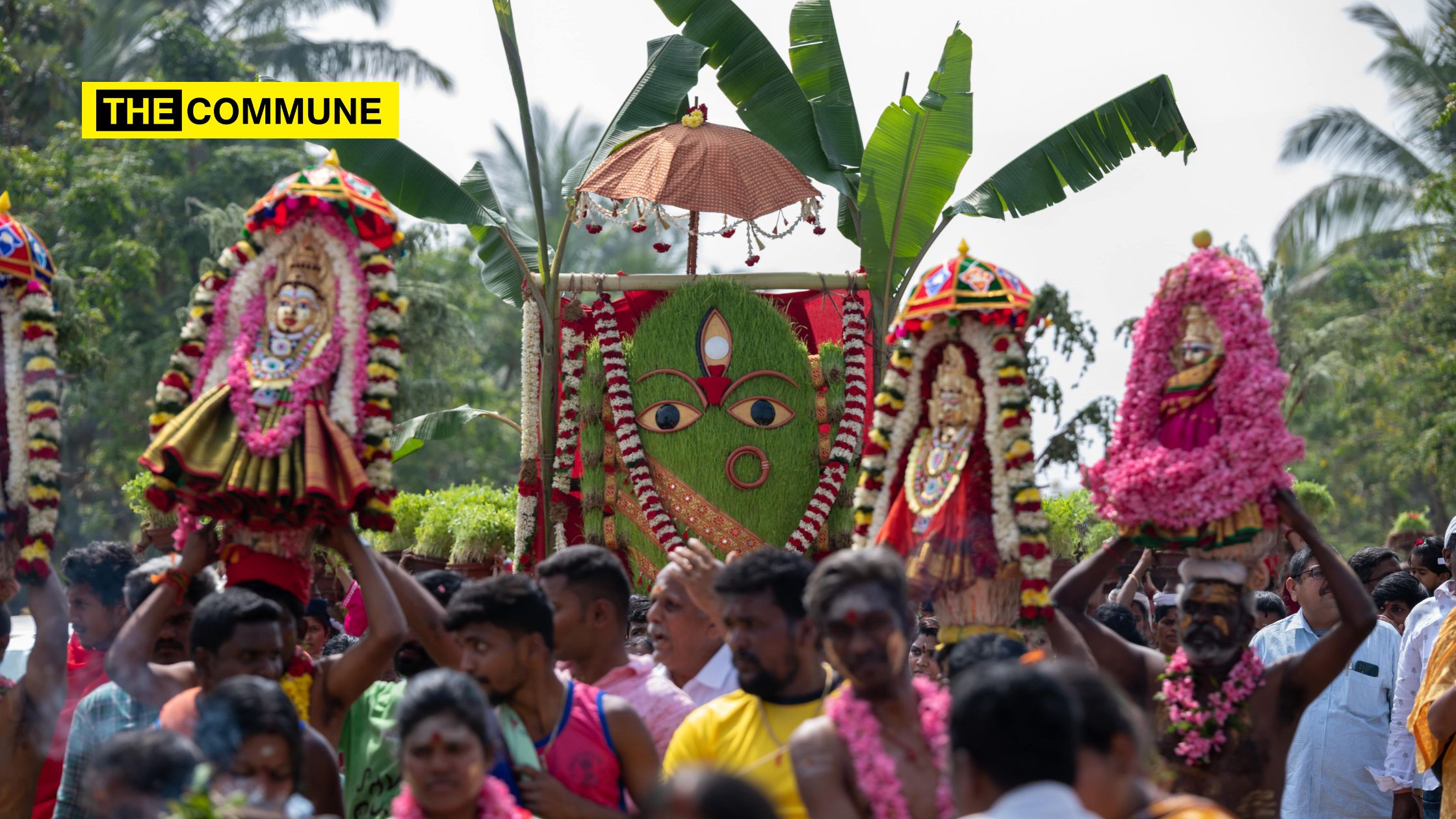
Thaipusam Festival In Linga Bhairavi: Hundreds Of Women Join Mulaipari Yatra

Thaipusam festival was celebrated with much fanfare at Linga Bhairavi in Isha. Hundreds of women devotees carrying mulaipari on their heads came walking from Kallipalayam on a pilgrimage to Linga Bhairavi for darshan. Local villagers and pilgrims across India and abroad participated, beyond any caste or religious discrimination.

The men walking with Karagam were followed by a procession of chariot decorated with the image of Linga Bhairavi Devi made of Mulaipari itself. The pilgrimage started at 6.30 am from Kallipalayam next to Alandurai and reached Linga Bhairavi at noon. On the way, the villagers at various places, including- Alandurai, Madhavarayapuram, Iruttupallam, and Semmedu, gave a warm welcome.

Thaipusam is celebrated not only in Tamil Nadu but also in various Indian states. Thousands of women across India observed Shivanga Sadhana for 21 days. The sadhana culminated at Linga Bhairavi today by offering coconuts, grains, and ghee deepams at Linga Bhairavi temple.

(This is an official press release from Isha Foundation. The Commune was not involved in creating this content.)

Click here to subscribe to The Commune on Telegram and get the best stories of the day delivered to you personally.
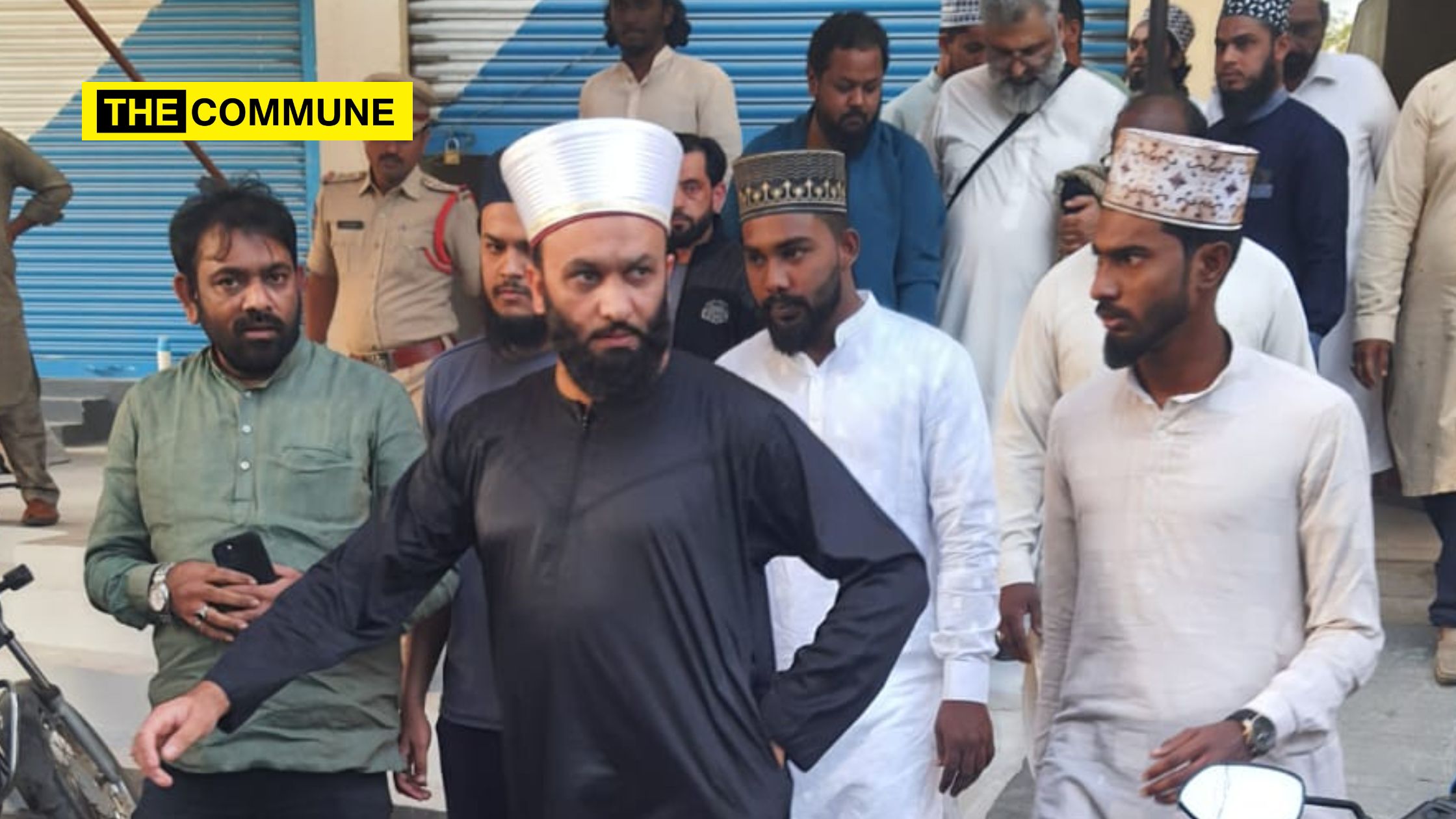
Pak-Origin British Islamic Preacher Detained In Telangana, Mass Islamic Event Cancelled

Following complaints filed against Muhammad Saqib bin Iqbal Shaami, a British Islamic preacher with Pakistan links, the Warangal Police reportedly stopped him from attending the scheduled religious event and sent him back.

International Islamic Scholar Saqib Iqbal Shami, born in Pakistan Occupied Kashmir and is said to have residence in Karachi. He reportedly acquired citizen of Britain, and was supposed to attend an event at the Azam Jahi Mill grounds on Saturday (4 February 2023). The event was to be attended by BRS MLA Nannapuneni Narender as well. Saqib Iqbal Shami has been in India since January 26 to attend religious events in various cities including Delhi, Mumbai and Bangalore.

Earlier, The Commune had reported about the Pakistani-origin British Islamic preacher attending a mass Islamic congregation in Warangal which is a violation of Indian visa norms. Legal Rights Protection Forum (LRPF), an organization working in the field of national security, had filed a complaint with the Ministry of Home Affairs detailing his visa rule violation and alleged anti-India activities.

LRPF in its complaint note that he is interfering in Indian internal policy matters. He is one among the 120 Islamic scholars from the United Kingdom who wrote a letter to Indian Prime Minister Narendra Modi expressing dissatisfaction and displeasure over the abrogation of Article 370.

He had participated in a mass Islamic religious event at Aligarh Muslim University, Uttar Pradesh on 2 February 2023. In his social media post he termed it as the “biggest political, cultural, social & Islamic gathering of all time”.

After his Warangal programme came to light, the Warangal unit of the Vishwa Hindu Parishat (VHP) also lodged a complaint with Warangal Police Commissioner urging them to prevent the Islamic preacher Saqib Iqbal Shami’s tour that is in violation of Indian Visa provisions following which he was detained.


As per the latest report, the official Facebook page of the Saqib Iqbal Shami has removed all the posters linked with his Indian tour.

Click here to subscribe to The Commune on Telegram and get the best stories of the day delivered to you personally.
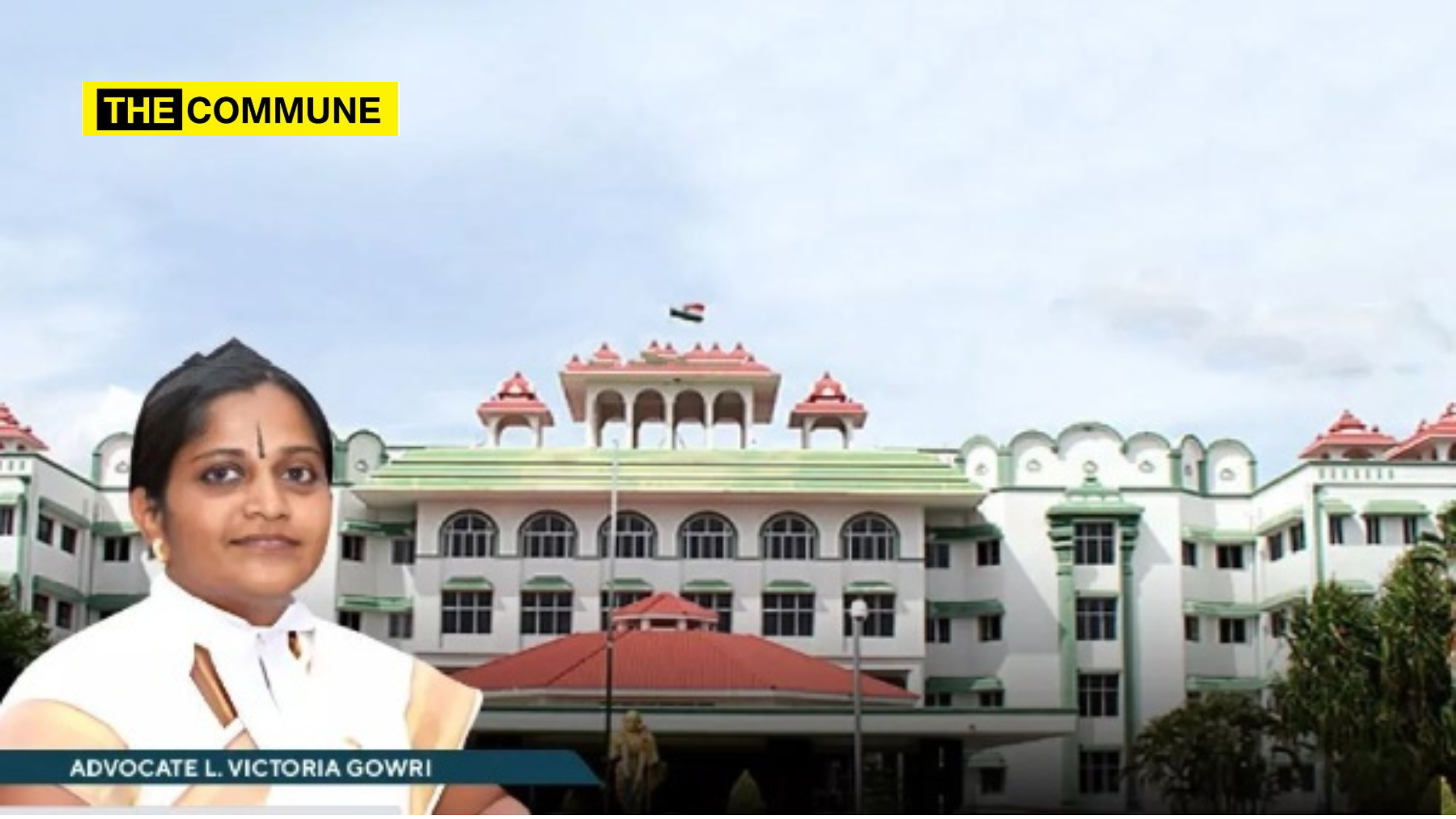
Madurai Bar Council Advocates Write To Collegium In Support Of Victoria Gowri

On Friday, more than 100 advocates from the Madras high court’s Madurai bench wrote to the Supreme Court collegium in support of the recommendation to appoint advocate Lekshmana Chandra Victoria Gowri as a Madras High Court judge. The representation is also signed by some Senior Advocates like K. Balasundharam, K.P.S.Palanivel Rajan and S. Srinivasa Raghavan, the President of the Madurai Bench of Madras High Court Bar Association.

The advocates wrote to the collegium after a group of Chennai-based lawyers urged President Droupadi Murmu to reconsider the collegium’s recommendation to elevate Gowri. The advocates claimed that Gowri, as a BJP leader, gave several anti-minority speeches.

The advocates stated in their representation to President Murmu on Friday that Gowri, who is currently working as an assistant solicitor general of India at the Madurai bench, has worked hard and contributed to the upholding of the law. Several advocates who worked directly as members or office-bearers of political parties have been appointed as judges across India, and many have been appointed judges of the Madras high court despite being district secretaries or office-bearers of Tamil Nadu’s leading political parties.

The collegium was pleased to recommend her name based on input from central and state government agencies. A group of advocates from various political parties is attempting to interfere with the administration of justice and the appointment of judges for no reason other than political animosity. This should be avoided at all costs.

According to the advocates, it is important to note that in the past, many advocates with political affiliations were appointed judges and performed their duties well and impartially. It is also assumed that Gowri will perform her duties as a judge.

“We humbly request to reject the claim of a group of lawyers to withdraw the recommendations of the collegium relating to the appointment of Mrs. L. Victoria Gowri.”, the representation reads.

“It is to be considered that based on the inputs from the state and the central government like Special Branch Police, Intelligence Bureau, and as well from the candidates, the Hon’ble Collegium was pleased to recommend her name. Now without any valid reasons, except political vendetta and political animosity, a group of advocates belonging to some political factions is directly trying to interfere with the administration of justice and administration of judges.”, the representation says.

Click here to subscribe to The Commune on Telegram and get the best stories of the day delivered to you personally.

“PTR Targets Brahmin Women Journalists”: Independent Journalist Alleges

Independent journalist Sandhya Ravishankar has leveled serious allegations against Tamil Nadu Finance Minister Palanivel Thiagarajan, including being a racist and casteist.

In her interview with the Youtube Channel Pesu Tamizha Pesu, she said, “I released a report based on my field research on the 40 constituencies a few months before the May 2021 Tamil Nadu assembly elections. PTR and I had a good relationship until the report was released. I was the first to interview PTR for the Huffington Post, even before he was announced as a candidate for the 2016 election, because he had a solid background as an investment banker and wanted to do something for Tamil Nadu politics. He used to respond to my messages.”

She added, “However, he was dissatisfied with the survey’s findings in the southern region, particularly in the DMK Poongothai Aladi Aruna constituencies, where people said they would vote for the BJP instead of the ADMK and DMK. It all started after that.  Then we did another article on the Pollachi incident, where we interviewed a victim who claimed that she was not sexually abused, but that several others were. PTR used a line from the story out of context to claim that we were supporting the Pollachi rapists. PTR even referred to me as an apologist of Pollachi rapists. Despite my efforts to explain, he ignored me and began targeting me. He even blocked me after calling me a scum.”

She further said, “Later, he was regularly targeting Malini Parthasarathy (of The Hindu group). PTR will not talk about what Malini madam says; instead, PTR will target her caste. If you disagree with my viewpoint, you can disregard it by blocking me. Why is he referring to us as cultists? If we look at the pattern of attack by PTR, we can see that he only targets Brahmin women journalists. It started with me, then Malini Parthasarathy, who is constantly targeted by PTR, and recently Chandra Srikanth of Moneycontrol, who is not even a reporter in Tamil Nadu.”

She went on to say, “When Karunanidhi was Chief Minister of Tamil Nadu, he never abused a journalist, despite that many negative articles were written about him by the journalists.”

She asked sternly, “How many times you know PTR has called Malini Parthasarathy a ‘Cultist’. Can we call him ‘Pannaiyaar’ if he refers to us as ‘cultists’? Will PTR call Malini a cultist if she is born in Scheduled Caste or Scheduled Tribe? If PTR is offended by our viewpoint, he should inform us politely. Who gave him the authority to abuse us? Is this the Dravidian model? As English journalists, Malini, Chandra Srikanth, and I have a better vocabulary than PTR. Do you want us to descend to PTR’s level?”

She further added, “There is a problem with his upbringing, in my opinion. Being in a powerful position, how dare he speak like that? Because of his feudal mindset, he used filthy words against everyone. People say that he studied in the US. Will the US finance minister speak like PTR? PTR is in a respectable position. He must not act like an IT wing troll.”

She ended by saying, “PTR has no right to talk about me. He knows absolutely nothing about me. He is unaware of my family or my difficulties. How dare he say such a thing? I raised the issue with international press organizations such as the Committee to Protect Journalists. As women in this field, we already face numerous challenges. Nobody paved the way for us. we fought and we have come up. A state finance minister doing this is setting a bad precedent. Only someone with a fascist mentality would do it.”

Click here to subscribe to The Commune on Telegram and get the best stories of the day delivered to you personally.