


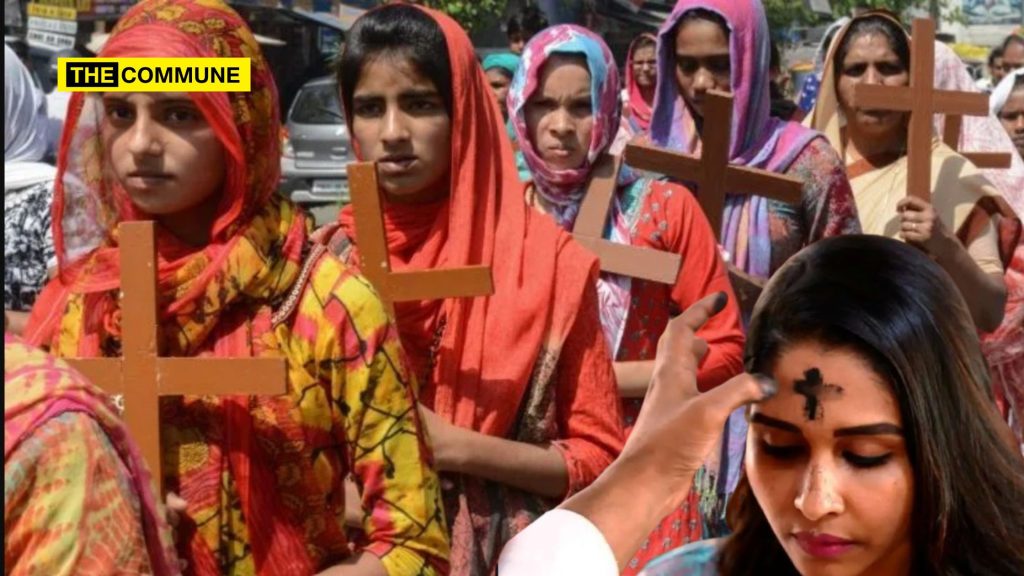
Uttar Pradesh has seen a noticeable increase in Christian missionary-led conversion activities, raising concerns about religious manipulation through so-called “healing” events, temporary prayer halls, and community gatherings.
These programs, often operating under the guise of offering medical help, financial support, or social upliftment, primarily target economically and socially vulnerable Hindu communities.
Recent cases in cities like Lucknow and Gorakhpur have shed light on the growing use of deceptive tactics by individuals who secretly converted to Christianity commonly referred to as crypto-converts and are now involved in orchestrating mass religious conversions.
Widespread Exposure of Missionary Activities Across India
Similar to earlier reports concerning Islamic missionary work, Christian conversion campaigns appear to be expanding, particularly in rural and semi-urban regions of Uttar Pradesh. The state is now home to numerous Changai Sabhas (healing prayer sessions), temporary churches, and door-to-door outreach led by newly converted Christians who often conceal their religious identity.
These events frequently make promises of healing, improved livelihoods, better job prospects, or even marriage to encourage participation and eventual conversion. However, under Uttar Pradesh’s stringent anti-conversion laws namely the Uttar Pradesh Prohibition of Unlawful Religious Conversion Act and applicable sections of the Bhartiya Nyaya Sanhita (BNS) several individuals have already been arrested and charged.
Lucknow Man Arrested for Converting Over 50 Hindus
In a major case from Lucknow, a man formerly known as Malkhan, now going by the name Mathew, was arrested for allegedly converting more than 50 Hindus. According to the complaint filed by local activist Dharmendra Sharma, Mathew had converted around ten years ago and began holding bi-monthly “healing sessions” at a makeshift venue built on his farmland in Bakhtaurikheda Mehndauli village.
During these gatherings, he reportedly, sprinkled “holy water”, read from the Bible, showed videos of churches and missionary sermons via projector, made claims of curing illnesses such as arthritis, epilepsy, and respiratory conditions and discouraged devotion to Hindu deities and promoted Christianity
An FIR (No. 186/2025) was registered at Nigoha Police Station on September 28. Following the complaint, a team led by ACP Rajneesh Verma and supervised by DCP Nipun Agarwal arrested Mathew and seized Bibles and promotional content from his residence.
Authorities are now investigating the financial sources backing his activities, including a probe into the bank accounts of his family members. Police have confirmed that he also conducted baptism ceremonies, particularly focusing on Scheduled Caste families. The arresting team was rewarded ₹25,000 for their swift action.
Over 100 Villagers Attend Suspected Conversion Event in Gorakhpur
Another case surfaced in Gorakhpur on the same day. A religious gathering held at the residence of Lakshmi Yadav in Bhagaura village, Sahjanwa area, was allegedly part of a conversion campaign. The event, attended by over 100 villagers mostly women was disrupted after members of the Vishwa Hindu Parishad (VHP) intervened.
Saurabh Jaiswal, VHP’s district vice-president, filed a formal complaint (FIR No. 509/2025) at Sahjanwa Police Station, accusing Lakshmi and unidentified accomplices of attempting to convert attendees by claiming that prayer sessions could cure illnesses.
Lakshmi, whose husband left her years ago, stated during questioning that she began turning to prayer after struggling with kidney stones. She said a person in Bahraich had introduced her to a religious text and daily prayer practices, after which she started hosting weekly prayer sessions under the pretense of offering healing.
She and three others are currently being interrogated. Authorities have confirmed that four people were taken into custody for further investigation.
Broader Pattern Emerging Across the State
These incidents are not isolated. Reports of faith-based conversion attempts disguised as welfare or healing programs are becoming increasingly frequent in Uttar Pradesh. The enforcement of anti-conversion laws has intensified, and many are now watching to see whether the judicial system will deliver strict penalties to those found guilty.
Moreover, these developments have reignited the ongoing debate about the misuse of affirmative action and reservation benefits. Many individuals from Dalit and tribal communities who have converted to Christianity allegedly continue to claim Scheduled Caste benefits that are reserved for Hindus. This has led to growing demands for a policy reassessment, with some suggesting that caste-based benefits should be limited to those who remain within the Hindu fold.
Critics argue that such conversions, often induced through financial incentives or emotional manipulation, dilute the spirit of social justice and divert resources away from those who genuinely need them.
(With inputs from Organiser)
Subscribe to our channels on Telegram, WhatsApp, and Instagram and get the best stories of the day delivered to you personally.