


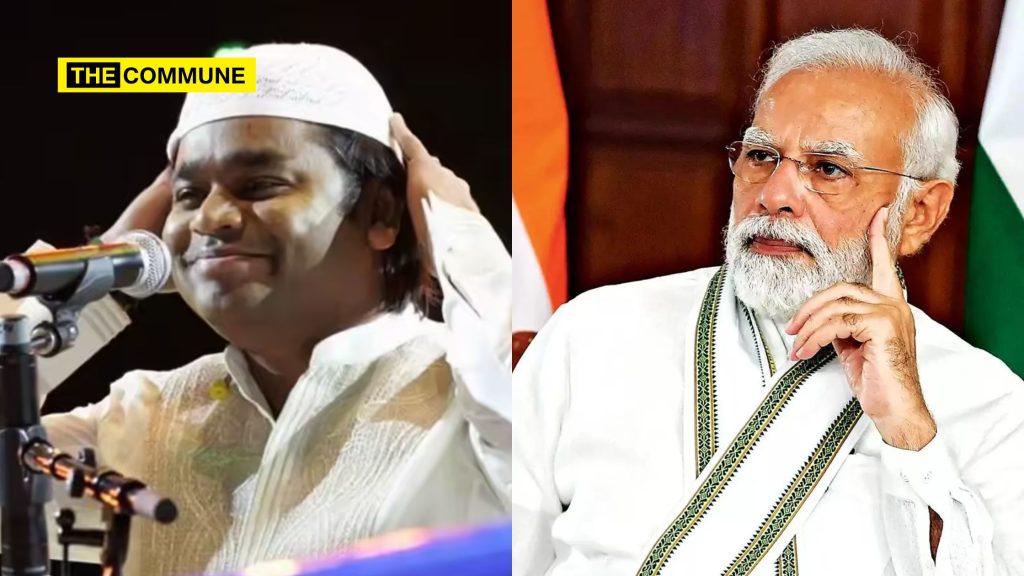
Amid his recent remarks suggesting that he has received less work in Hindi cinema alluding to a “communal environment” under the BJP-led government at the Centre, a look at A R Rahman’s own record of national recognition presents a striking contrast.
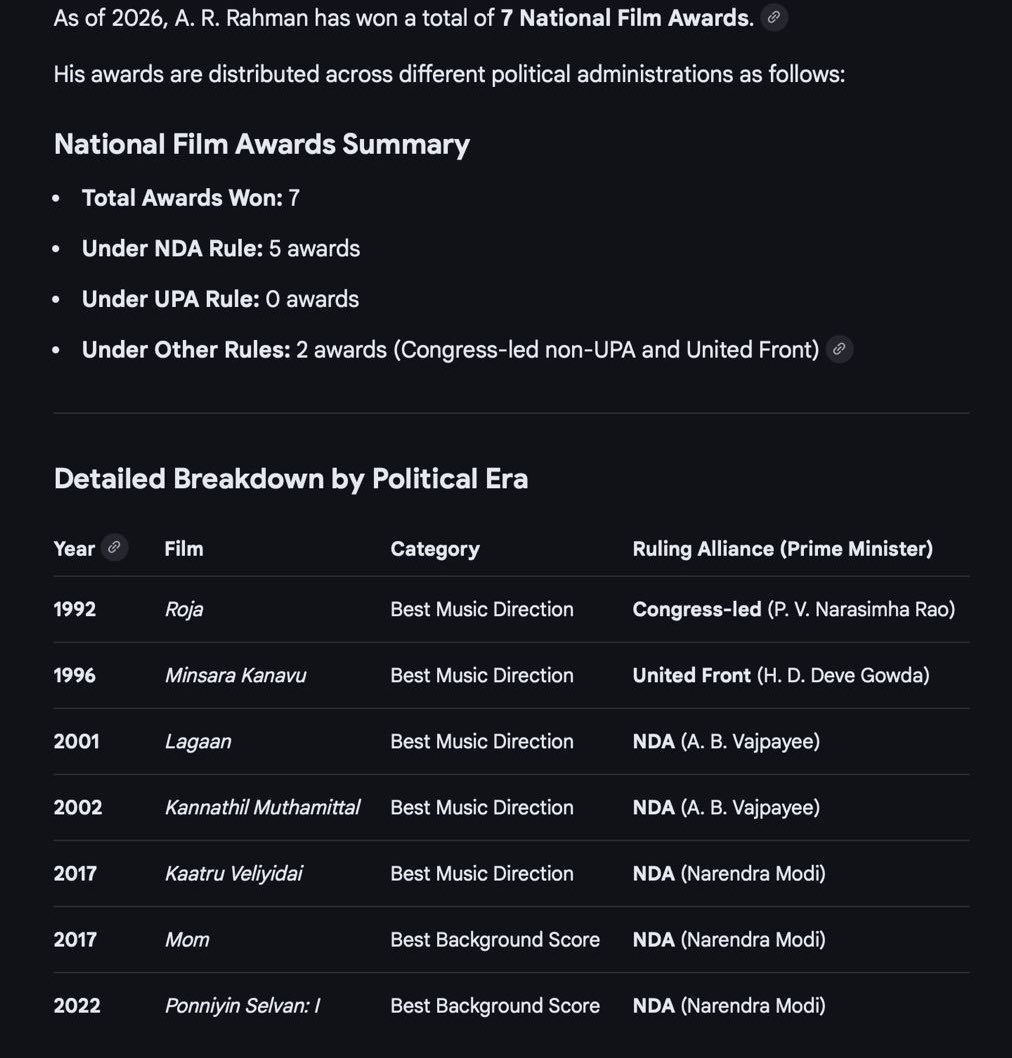
AR Rahman has won seven National Film Awards during his career. Of these, five were conferred during periods when the BJP-led NDA was in power at the Centre. Notably, none of his National Awards were awarded during the decade when the Congress-led UPA government, supported by the DMK, governed India.
AR Rahman has won 7 National awards. 5 of them were given when the BJP was in the Central Government. None during the 10 years when Congress and DMK were in the Centre.
He should choose his friends wisely! pic.twitter.com/smQCL9SpQk
— Krishna Kumar Murugan (@ikkmurugan) January 17, 2026
How Are National Awards Given?
National Film Award winners in India are selected through a jury-driven process administered by the Directorate of Film Festivals under the Ministry of Information & Broadcasting. Independent juries comprising senior filmmakers, composers, writers, critics, and technicians from across regions and languages evaluate films that are formally submitted by producers, as non-submitted works are not considered. The jury assesses entries based on artistic merit, technical excellence, cultural relevance, and originality, and arrives at decisions through collective discussion and voting. Politicians play no role in selecting winners; the government’s involvement is limited to administration, with the awards formally conferred by the President of India, underscoring their status as state honours rather than political favours.

Out-Of-Tune AR Rahman
The contrast is significant given Rahman’s suggestion that the present political climate has adversely affected his opportunities in Hindi cinema. The record shows that his most substantial institutional recognition at the national level came under the very political dispensation he now appears to fault.
In fact, AR Rahman himself states that the makers of Chhaava were particular about having him in the film as they thought he would only do justice. It is another matter that the music he scored for Chhaava was pathetic. Did he give an underwhelming score because he was offended by portraying Aurangzeb as a ruthless bigot?
Instead of acknowledging that audiences and filmmakers are moving on, he chooses to cloak professional stagnation in insinuations of bias. Dressing up a fading dominance as a consequence of “communal” forces is deflection. No artist, however celebrated, enjoys permanent supremacy. Decline is not persecution, it is inevitability.
Subscribe to our channels on Telegram, WhatsApp, and Instagram and get the best stories of the day delivered to you personally.