


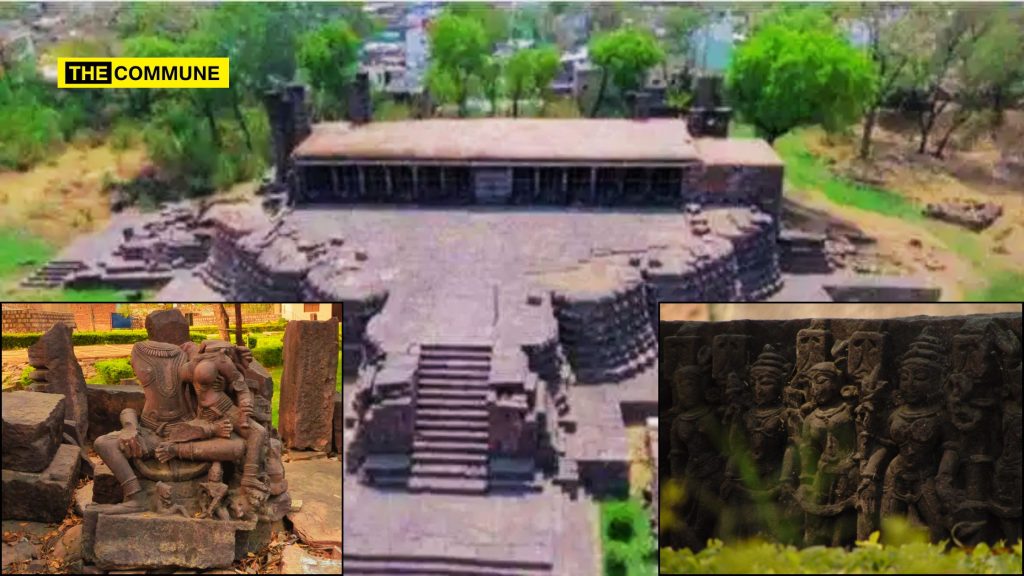
Madhya Pradesh is the land of antiquity. In the heart of Vidisha district in the state stands one of India’s most magnificent ancient temples – the Bijamandal Temple, also known as the Vijay Surya Mandir. Built in the 8th century CE by the Chalukya dynasty and later expanded by Paramara rulers, this colossal temple complex once rivaled the grandeur of Konark and exceeded the scale of Khajuraho. Yet today, this sacred Hindu monument remains locked behind iron gates, its true identity deliberately obscured by bureaucratic mislabeling that calls it a “mosque” in government records.
The magnitude of this injustice cannot be overstated. For over six decades, Hindu devotees have been denied their fundamental right to worship inside their own ancestral temple, forced instead to offer prayers to locked doors during the annual Nag Panchami festival. This systematic suppression of Hindu religious rights represents not just an administrative error, but a calculated assault on India’s civilizational heritage.
The Sun Temple That Touched the Sky
The Bijamandal Temple’s original splendor was so immense that the renowned 11th-century scholar Al-Biruni described it as having a height of 315 feet with a shikhara visible from five kilometers away. The temple complex stretched over half a mile in length and width, reaching a height of 105 yards, making it one of the grandest temples in medieval India.
Ruins of Bijamandal temple in Vidisha, showcasing ancient Indian temple architecture preserved as an archaeological site
Historical accounts reveal that this was not merely a single deity temple, but a magnificent Panchayatan complex dedicated to multiple Hindu deities. Over its 300-year golden period from the 8th to 11th centuries, the temple evolved to house:
- Surya Bhagwan (the primary solar deity)
- Lord Shiva and Parvati
- Lord Ganesha and various Devi manifestations
- Saptamatrika and Ashtamatrika panels
- 64 Yoginis associated with tantric traditions
- Goddess Charchika (established by Paramara King Naravarman)
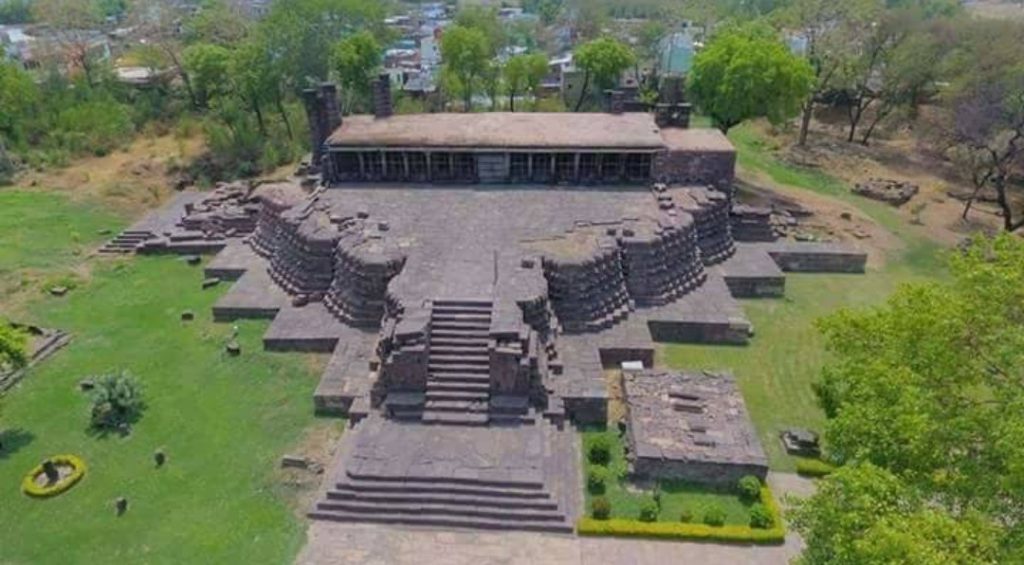
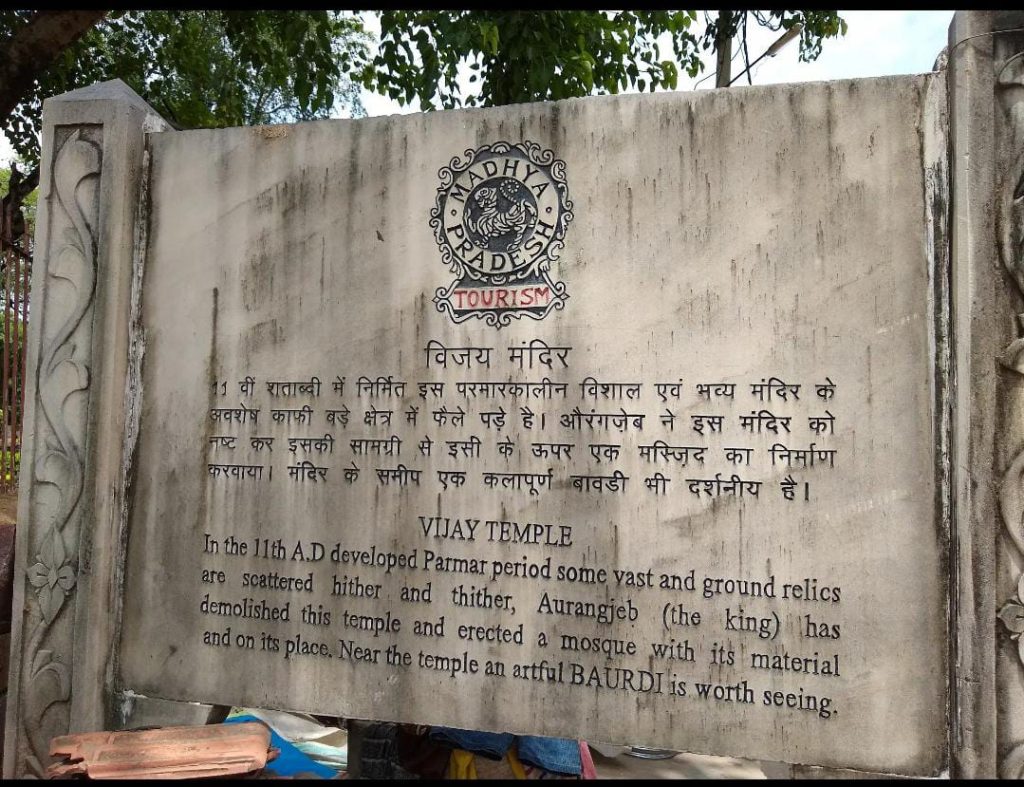


MP Tourism Plaque
A History of Repeated Destruction and Unyielding Rebuilding
Like many other temples across the country, Bijamandal has also seen its share of repeated destruction.
Systematic Destruction by Islamic Invaders
The temple’s tumultuous history exemplifies the broader pattern of Islamic iconoclasm against Hindu sacred sites. The destruction occurred in systematic waves:
1233-34 CE: Sultan Iltutmish first attacked and demolished the temple, looting its immense wealth and taking the main deity to Badaun mosque in Delhi, where it was deliberately placed on the entry steps for Muslims to trample upon as an act of religious humiliation.
1290 CE: Alauddin Khilji’s general Malik Kafur destroyed the rebuilt temple, stealing an eight-foot Ashta Dhatu idol and embedding it in the stairs of a Delhi Mosque for continued desecration.
1456-60 CE: Mahmud Khilji of Mandu obliterated both the temple and the entire town of Bhelsa (ancient Vidisha).
1532 CE: Bahadur Shah of Gujarat reduced the temple to near-complete ruins.
1682 CE: The final devastating blow came from Aurangzeb, who used cannons to pulverize the temple structure with the intent that Hindus should not worship – so he made it a “khandith” idol. He cemented the octagonal sections, converted them to quadrangular shapes, built a hall structure on top with two minarets, and declared it the “Alamgir Mosque.” Until 2000, the marks of twelve cannonballs remained visible on the temple walls as testimony to this act of religious vandalism.
Unwavering Hindu Resistance
Despite centuries of persecution, the Hindu community never abandoned their sacred site. After each destruction, devotees would return to worship among the ruins, demonstrating an unbroken spiritual connection spanning over a millennium. Following Aurangzeb’s death, Hindus immediately resumed worship of the scattered deity fragments, treating the site with the reverence due to their ancestral temple.
When the Marathas arrived in 1760 CE, they found the Islamic structure already in ruins and witnessed Hindus actively worshipping their deities. This continuous Hindu presence establishes an unbroken chain of religious practice that predates and outlasts any temporary Islamic occupation.
The Modern Betrayal: From Worship to Lockdown
Post-Aurangzeb, during the Maratha rule, the Islamic structure fell into disuse, and Hindus gradually resumed worship, considering it a temple of Charchika Mata or Bijasan Devi. This continued for centuries until a pivotal moment in 1922.
The 1922 Deception and Its Consequences
When floods destroyed the Muslim Idgah near the Betwa river, local Muslims approached the Scindia king requesting temporary permission to use the Bijamandal site for a single day’s Eid prayer. The king, unaware of the site’s significance as a Hindu temple, granted this one-time permission based on incomplete information. No official documentation exists for any permanent transfer.
However, Muslims violated this temporary arrangement by returning repeatedly for subsequent Eid celebrations. When Hindu organizations like the Hindu Mahasabha and Arya Samaj protested this unauthorized occupation, they faced government persecution instead of justice.
The Nehru Era: Institutionalized Anti-Hindu Bias
The situation deteriorated dramatically after 1947. When Muslims objected to Hindu Sharad Purnima celebrations in 1947, instead of protecting Hindu rights, Nehru’s government banned Hindus from entering their own temple. This marked the beginning of systematic state-sponsored discrimination against Hindu religious practices.
For 16 years, from 1948 to 1964, the people of Vidisha, supported by Hindu satyagrahis from across India, including groups from Uttar Pradesh, Delhi, Maharashtra, and Punjab, conducted continuous protests demanding restoration of worship rights. They endured lathi charges, imprisonment, and even the desecration of women satyagrahis in jail to reclaim their temple. The government’s response was to impose curfews during Hindu festivals while facilitating Muslim prayers, and to jail thousands of Hindu protesters.
The 1965 Agreement: Muslims Abandon Claims
The breakthrough came in 1965 when Prime Minister Lal Bahadur Shastri intervened directly. He called representatives of both communities and offered Muslims alternative land and ₹40,000 to construct a new mosque elsewhere in Vidisha – this mosque still stands today. Muslims accepted this offer and vacated the temple site, acknowledging through their actions that they had no legitimate claim to the Hindu monument.
By all legal and moral standards, the property should have reverted to its rightful owners, the Hindu community.
But tragedy struck. Shastri’s untimely death allowed anti-Hindu bureaucrats to perpetuate the injustice by maintaining the fraudulent “mosque” classification in official records.
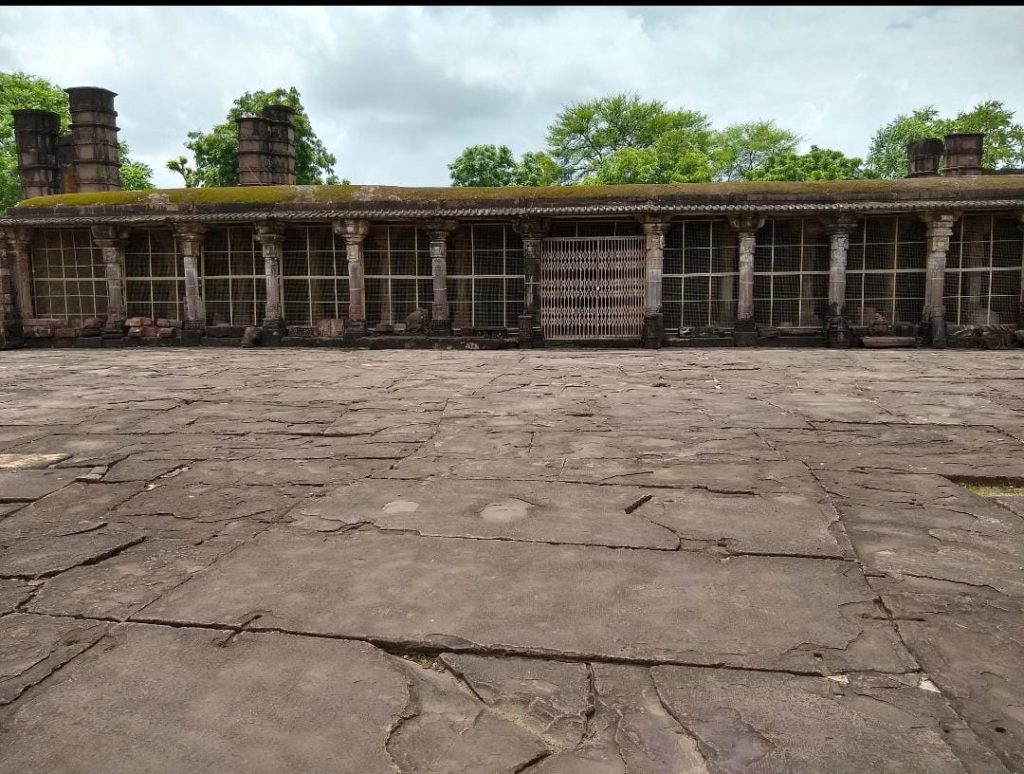

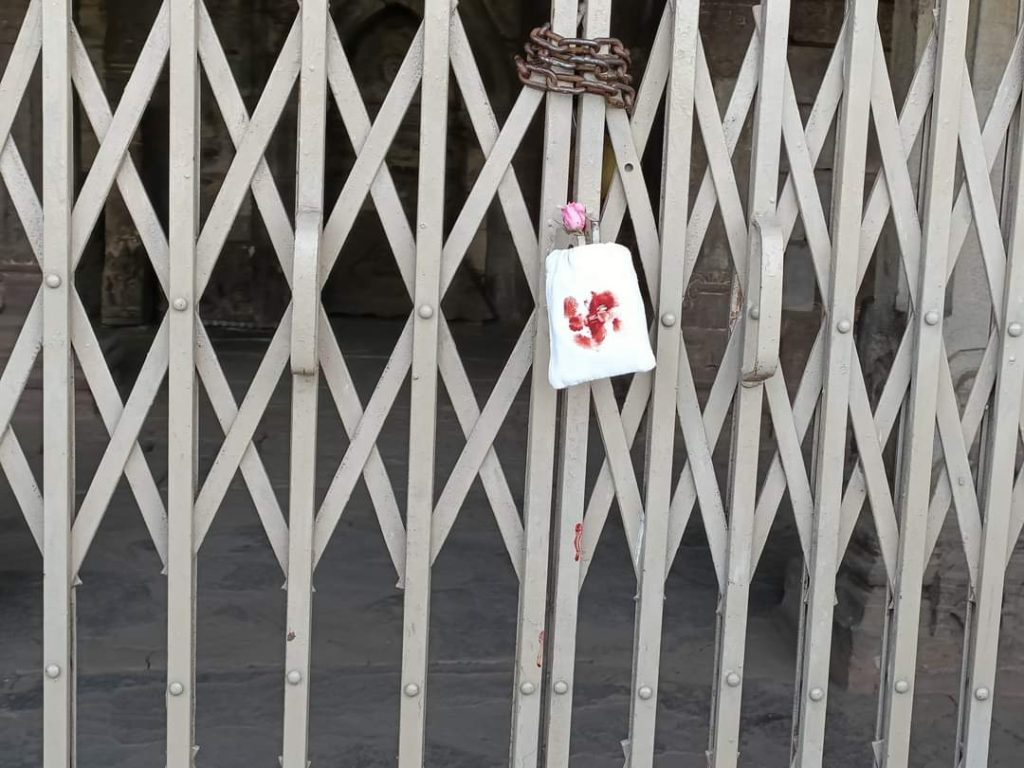

Today, worship is permitted only once a year, on Nag Panchami. And even then, for the last 30-35 years, the garbhagriha (inner sanctum) has remained locked. Hindus are forced to worship a locked iron door – an insult and historical injustice to Hindus.
ASI’s Fraudulent Classification: A Bureaucratic Crime Against Heritage
Now take a look at the images of the temple complex and the sculptures within the temple complex.
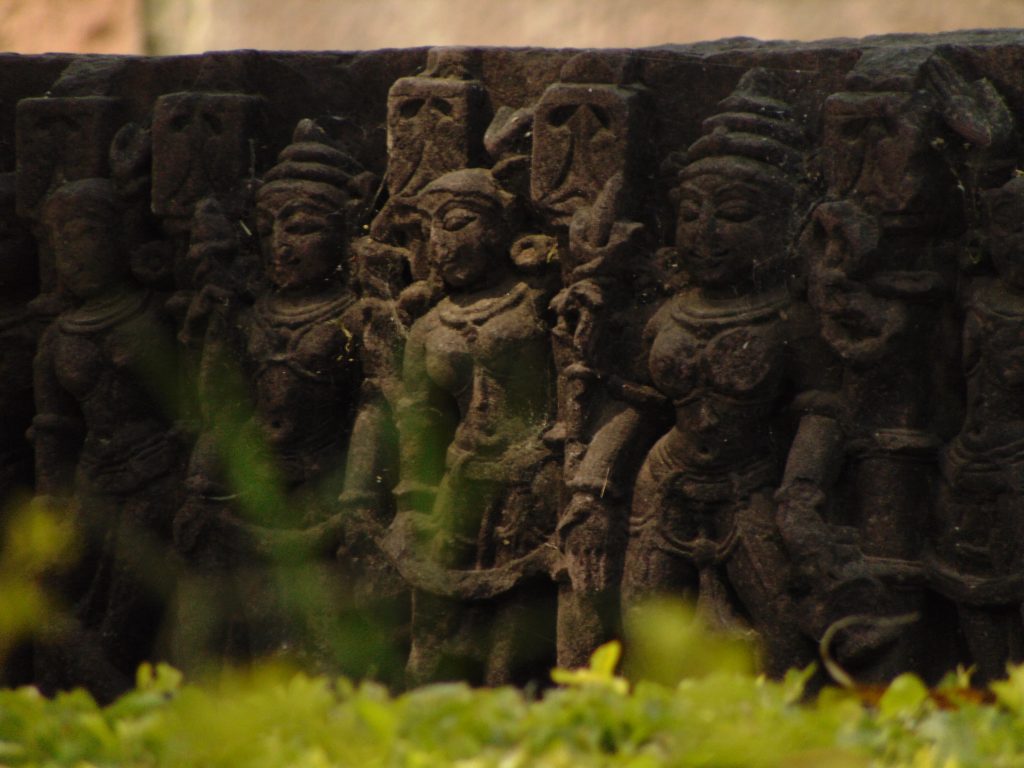
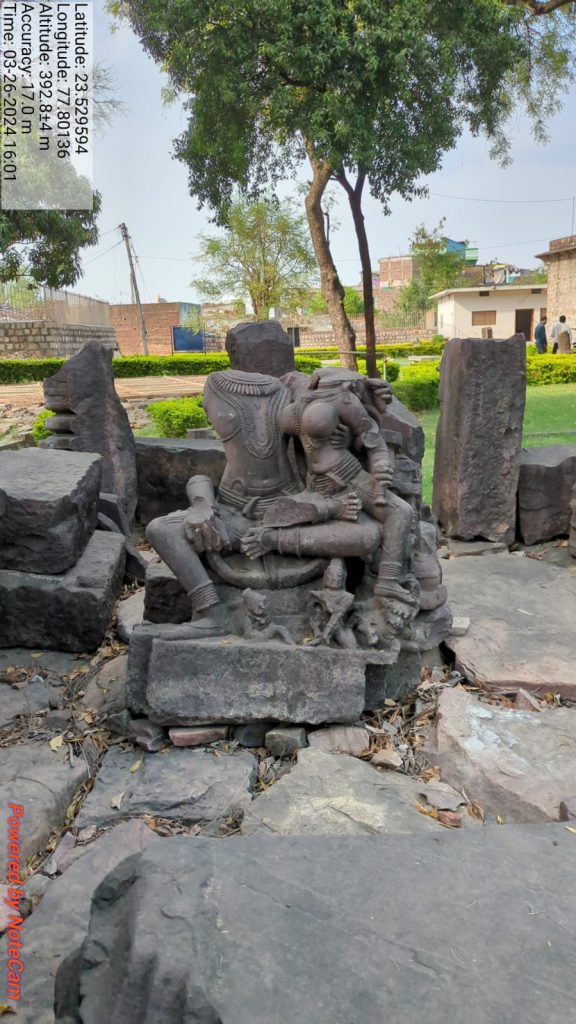


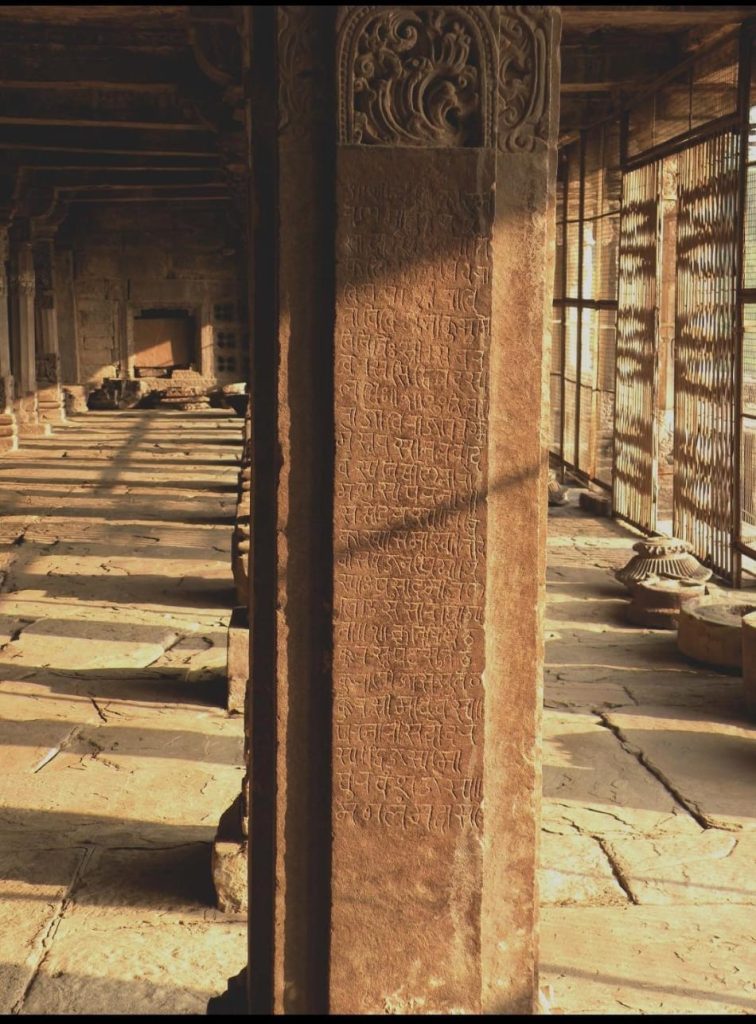
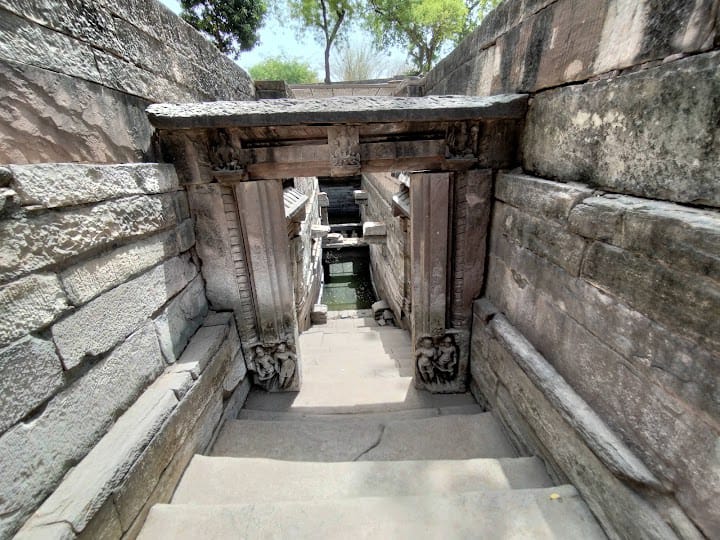
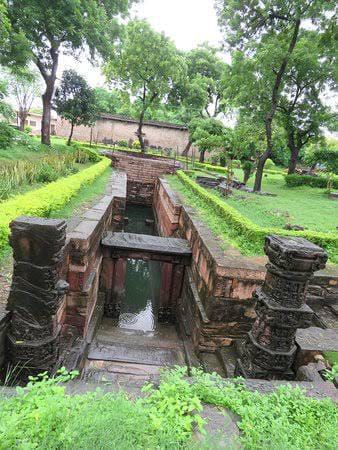
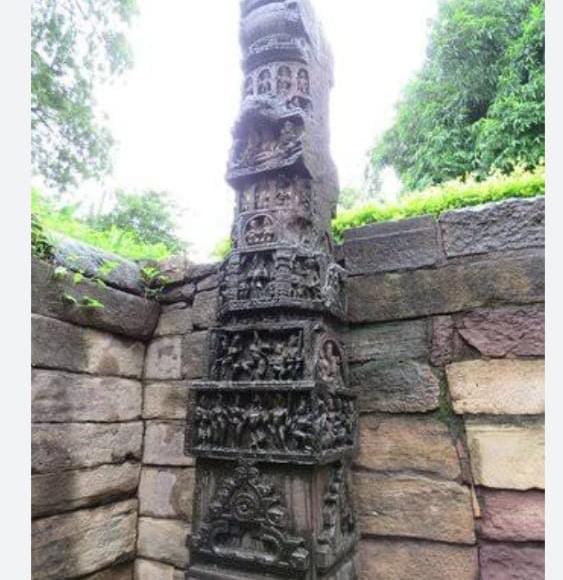


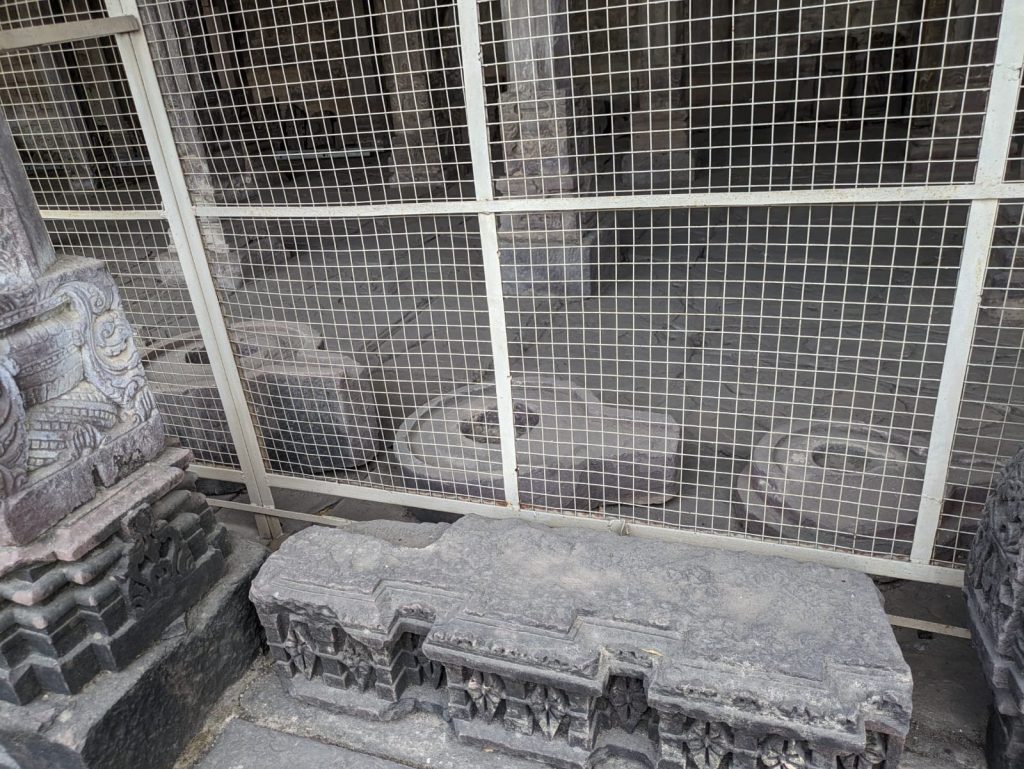

What do these tell you – do they indicate by any inkling that it is an Islamic establishment? But that is not what the ASI did.
The 1951 Gazette Deception
The Archaeological Survey of India’s classification of Bijamandal as a “mosque” in its 1951 gazette notification represents one of the most egregious examples of historical revisionism in independent India. This classification was made despite:
- No documentary evidence of legitimate Islamic construction
- Overwhelming archaeological proof of Hindu origins
- Continuous Hindu worship for centuries
- Absence of Islamic architectural elements in the original structure
When challenged under RTI queries, ASI officials admitted that historians recognize the site as a temple but claimed they were legally bound by the 1951 classification. This circular reasoning using a fraudulent classification to justify continued fraud exposes the bankruptcy of ASI’s position.
The “Non-Living Monument” Fraud
ASI’s designation of Bijamandal as a “non-living monument” represents another layer of administrative deception. This classification is used to deny Hindu worship rights while simultaneously allowing tourism and commercial exploitation. The hypocrisy becomes evident when considering that:
- Multiple ASI-protected sites across India permit regular worship
- Bhojshala temple in Dhar allows Hindu worship despite similar disputes
- Jama Masjid in Delhi, also under ASI protection, permits Muslim prayers without restriction
This selective application of rules reveals the discriminatory intent behind ASI’s actions.
The Unlock Bijamandal Movement: A New Chapter in Hindu Resistance
Several locals from Vidisha began raising their voice for the temple. One of them is Dr Shubham Verma.
Dr. Shubham Verma’s Crusade for Justice
In 2018, frustrated by decades of humiliating “lock worship” ceremonies, local researcher and activist Dr. Shubham Verma launched the groundbreaking “Unlock Bijamandal” movement under the banner of Sakal Hindu Samaj. This movement marked a decisive shift from passive acceptance to active resistance against religious discrimination.
Hindu protesters holding a religious flag during a street demonstration associated with Bijamandal temple issues in Madhya Pradesh.
The movement gained massive momentum in 2024 when Hindu groups formally requested permission to worship inside the temple during Nag Panchami. When the then-collector Buddhesh Kumar Vaidya denied this request, citing ASI’s fraudulent “mosque” classification, the movement exploded into national prominence.
Government Response: Intimidation and Threats
The government’s response to peaceful Hindu demands revealed the extent of anti-Hindu bias in the administrative system. District authorities issued threatening letters warning Hindu devotees of two years’ imprisonment and ₹1 lakh fines for attempting to worship in their ancestral temple. Police forces from five districts were deployed to prevent Hindus from entering the temple during Nag Panchami 2024.
The intensity of this repression treating Hindu worship as a criminal act demonstrates how far the Indian state has strayed from its constitutional obligations to protect all citizens’ religious rights equally.
The Civilizational Stakes
This is not merely about one temple but about India’s relationship with its own civilization. When the Indian state protects structures built through Islamic conquest while denying rights to the indigenous Hindu community, it becomes complicit in legitimizing historical genocide and cultural destruction.
The Al-Biruni accounts themselves serve as historical testimony to both the temple’s magnificence and the Islamic strategy of deliberate religious humiliation. These primary sources from Islamic historians leave no room for doubt about the temple’s original Hindu identity and the calculated nature of its destruction.
A Call to Conscience and Courage
This is no longer about history. It is about justice. It is about the integrity of our nation to honour its own heritage.
Hindus must unite to see Bijamandal for what it represents. It is Ayodhya, Kashi, and Mathura playing out in silent, heartbreaking repetition. Hindu voices should join the chorus demanding its liberation.
The government must immediately correct all records to declare the site the “Vijay Surya Temple,”, unlock the sanctum sanctorum, end the grotesque spectacle of Hindus worshipping a locked door on Nag Panchami, apologize for decades of misclassification and willful ignorance, and also begin the process of restoring the temple to its rightful status as a living place of worship.
The sculptures of Bijamandal are speaking. They are testifying to their own identity. The only question that remains is whether we have the courage to listen and the will to act.
Subscribe to our channels on Telegram, WhatsApp, and Instagram and get the best stories of the day delivered to you personally.