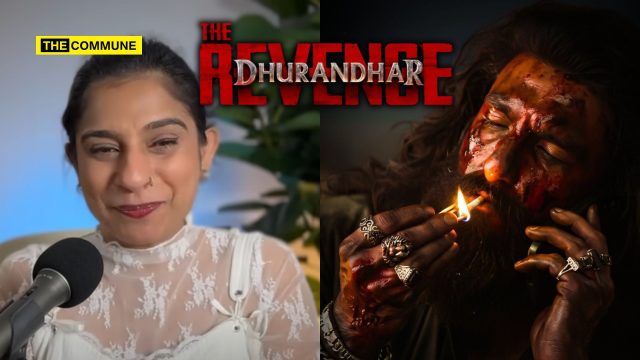
Dhurandhar: The Revenge has clearly broken some people’s brains, and this 8‑minute rant by alleged film ‘reviewer’ Sucharita is Exhibit A.
The review is less a film critique and more an ideological tantrum dressed up in English and references. She opens by announcing that to talk about this movie is to talk about “the very face of contemporary Hindi cinema” and immediately positions herself as a noble dissenter surrounded by brainwashed stars, filmmakers and trolls. For a film that she claims is “critic‑proof”, she spends a remarkable amount of time anxiously trying to prove her own courage for criticising it.
Instead of basic criticism – what works, what doesn’t in terms of script, staging, editing, she treats a commercial spy‑action sequel as a human‑rights case file. The most revealing line is when she suggests that someone “better versed in the finer details of international humanitarian law” should comment on the ethics of the backstory, because a death‑row convict is recruited as an undercover agent. This is where the review collapses into self‑parody. This “film critic” needs IHL experts to examine a genre trope that has been used for decades across world cinema. Governments using condemned prisoners as assets is practically a cliché; to suddenly discover a moral crisis here only because the film’s politics offend her is laughable.
Her political discomfort bleeds into every frame. She cannot get over “New India, very male, very angry, very ready to wage war”, repeats that everyone else is “weak and incompetent”, and then declares the whole thing “unfazed propaganda”. The fact that the movie has a disclaimer, caricatured versions of real figures, obvious Easter eggs and heightened villains is acknowledged and then ignored because she needs it to be sinister, not pulpy. Modi’s speeches, demonetisation references, Dawood‑like dons, Atiq‑like gangsters: all of this is read not as deliberate, provocative masala but as proof of some dangerous project that must be resisted.
When she briefly concedes that the hair–makeup is excellent, the casting sharp, Ranveer competent, Arijit’s “Phir Se” beautiful, it’s almost accidental. She immediately runs away into detours about Triangle of Sadness, Iron Claw, Just Mercy – anything to signal that she belongs to a higher, more civilised cinema, not this vulgar, angry, massy world that actual audiences are flocking to. By the end she’s not analysing Dhurandhar; she’s policing it. If the film is “clap‑trapping” propaganda, her review is pure performative outrage: overblown, humourless, and so desperate to score political points that it forgets the first duty of criticism – engage honestly with the work on its own terms, not as a prop in your culture‑war monologue.
It is noteworthy that just a few months ago, when Dhurandhar (part 1) was released, held a group therapy session with her woke peers. She could not stop whining about the volume of negative comments that far exceeded her video’s views, leading her to question whether some responses were coordinated. At one point, she suggested, then quickly walked back, the possibility that people may have been “deployed” to target critics, clarifying she did not believe the filmmakers were involved. She also asked whether director Aditya Dhar should address aggressive fan behaviour. The therapy session or rather a group rant session was due to the backlash from viewers over genuine disagreement rather than organised trolling.
Subscribe to our channels on WhatsApp, Telegram, Instagram and YouTube to get the best stories of the day delivered to you personally.