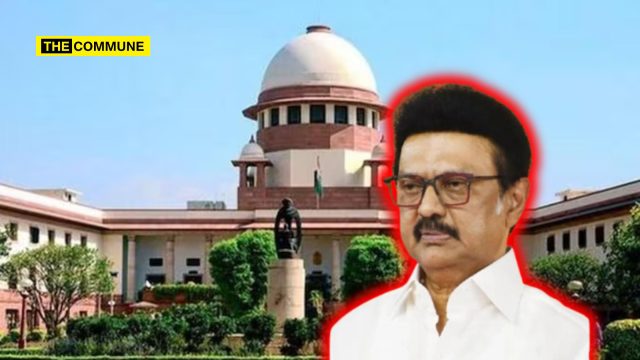
The Supreme Court on Thursday, 19 February 2026, came down sharply on the practice of pre-election handouts by state governments, questioning how such measures would be funded and warning of their impact on economic development.
The strong observations were triggered by a proposal from the DMK government in Tamil Nadu, which is poll-bound, to provide free electricity to consumers irrespective of their financial status. A Bench led by Chief Justice of India Surya Kant expressed concern over states spending large sums on subsidies while simultaneously citing a lack of funds for development.
“What kind of culture are we developing pan-India?” Chief Justice Surya Kant said. “If you start giving free food from the morning… then a free cycle… then free electricity… and now we are reaching a stage where we transfer cash into people’s account directly… imagine.”
The court cautioned that indiscriminate distribution of freebies, particularly to those who can afford to pay, risks creating perverse incentives.
“It is understandable to provide, as part of a welfare system, for those who cannot pay. But if you distribute without distinction between those who can afford and those who can’t…” the Chief Justice observed.
Emphasising the need for targeted welfare, he added, “There are children who cannot afford education. Then the state must provide… it is the state’s duty. But those who are affluent (but still) any kind of freebie first comes to their pocket. Is it not high time for states to revisit these policy frameworks?”
The Bench also questioned the timing of the Tamil Nadu scheme, asking why it had been announced “at the last minute”, which, it noted, left power distribution companies scrambling to adjust tariffs and financial projections.
At least a quarter of each state’s revenue should be spent on development, the Chief Justice said, expressing concern over fiscal priorities.
“Sometimes we are really disturbed. Even if you are a revenue surplus state… is it not your obligation to spend for development for the overall public – to develop infrastructure, hospitals, schools, and colleges? Instead, you keep on distributing things at the time of election,” he remarked.
“Not a single penny is left,” the court told the Tamil Nadu government, “for development because of such policies by state governments. It is the problem of all states, not just yours.”
Justice Joymalya Bagchi, also on the Bench, stressed the need for fiscal transparency. He suggested that states wishing to distribute subsidies should formally account for them.
States should “put it in your budgetary allocation and justify how you will do so (spend the money),” he said, distinguishing between planned and unplanned expenditure.
The court noted that sudden policy announcements could create arbitrariness and disrupt regulatory processes, particularly in the power sector.
The Bench was hearing a writ petition filed by the Tamil Nadu government seeking to quash Rule 23 of the Electricity Amendment Rules, 2024, arguing that the provision is arbitrary, unreasonable, and violative of Article 14 and the Electricity Act, 2003.
Rule 23 governs the gap between the approved Annual Revenue Requirement and estimated annual revenue from approved tariffs. The court observed that if subsidies are announced in advance, they can be factored into distribution companies’ financial projections.
The Supreme Court has directed the Tamil Nadu government to file a detailed reply explaining how it plans to fund the free electricity promise. Notice has also been issued to the Centre.
Source: NDTV
Subscribe to our channels on Telegram, WhatsApp, and Instagram and get the best stories of the day delivered to you personally.