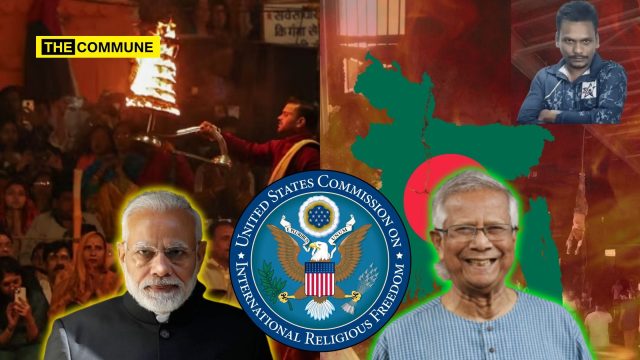
The United States Commission on International Religious Freedom (USCIRF) has come under sharp criticism on social media over allegations of selective focus and double standards in its assessment of religious freedom violations worldwide, particularly in relation to India and Bangladesh.
Critics have pointed out that while USCIRF has repeatedly designated India as a Country of Particular Concern (CPC) and highlighted individual cases to build what they describe as a specific narrative, it has not accorded the same classification to Bangladesh, despite repeated instances of violence against religious minorities there.
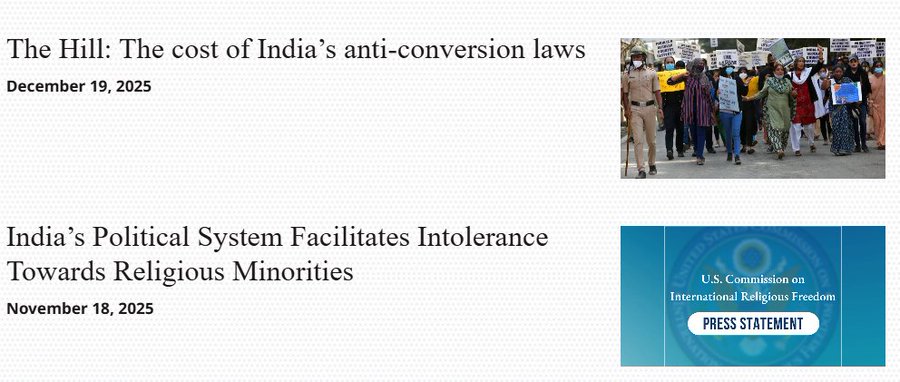
According to commentators, USCIRF does not classify Bangladesh even under the CPC category.
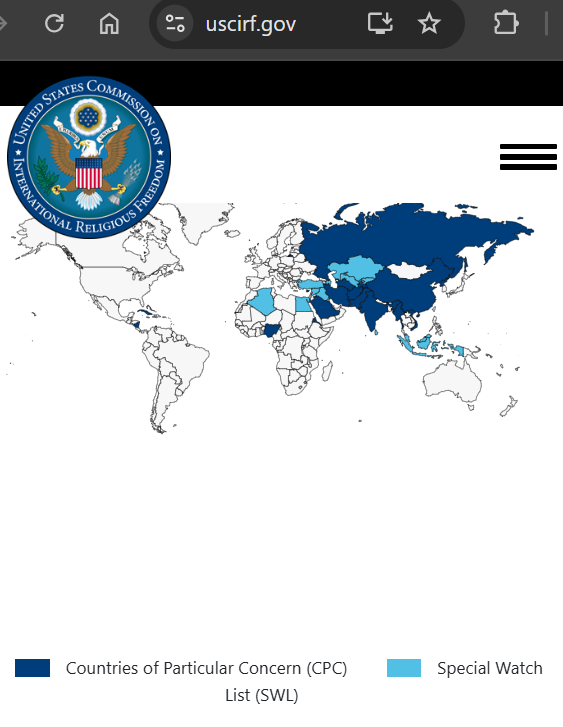
In its 2025 Annual Report, the commission acknowledged that Hindus in Bangladesh are often targeted more due to their political affiliations than purely for religious reasons.
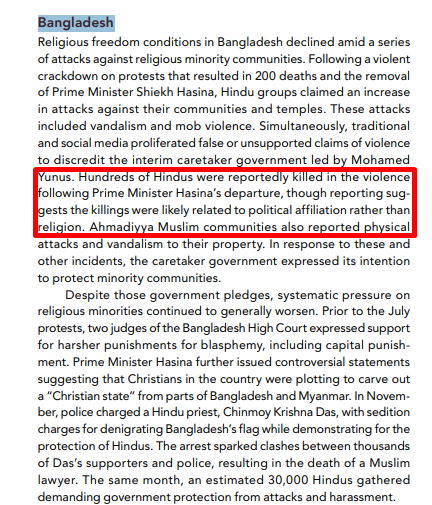
Nevertheless, Bangladesh was not designated as a CPC, a decision that has drawn criticism in light of recent violent incidents.
In recent days, USCIRF has issued statements or comments on a range of global cases, including the trial of Umar Khalid in India, the Bondi Beach attack on Jewish individuals in Australia, the assassination of a Christian pastor in Pakistan, and the case of a Catholic prisoner in China.
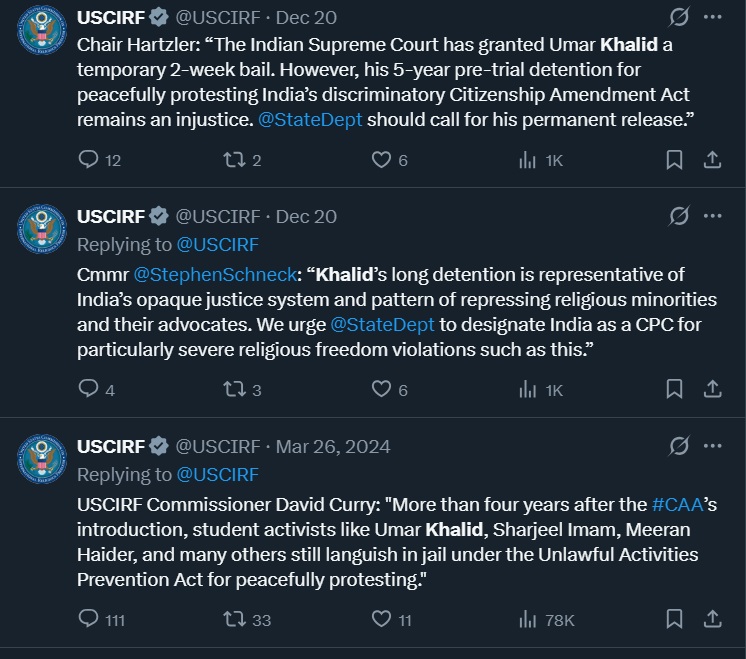
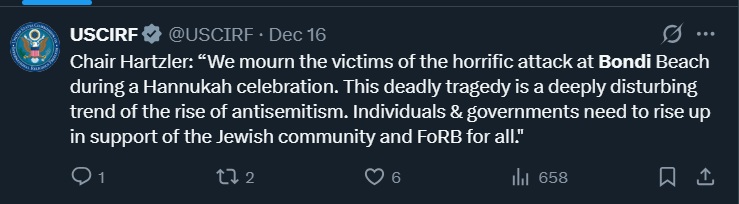
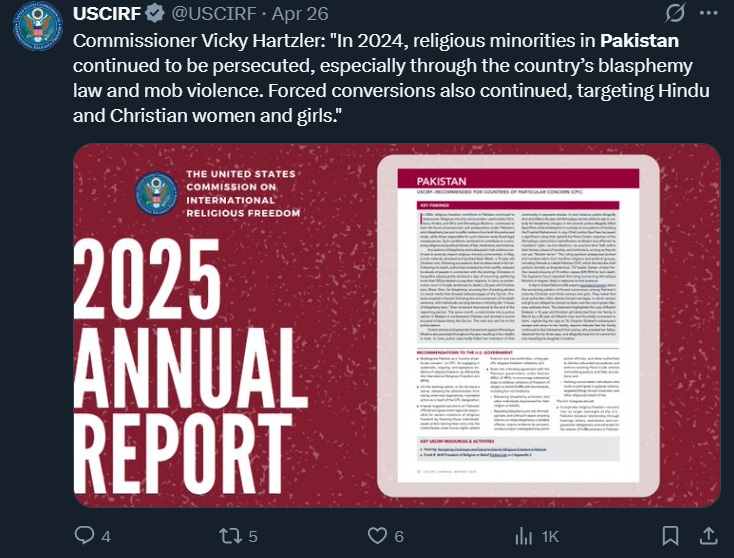
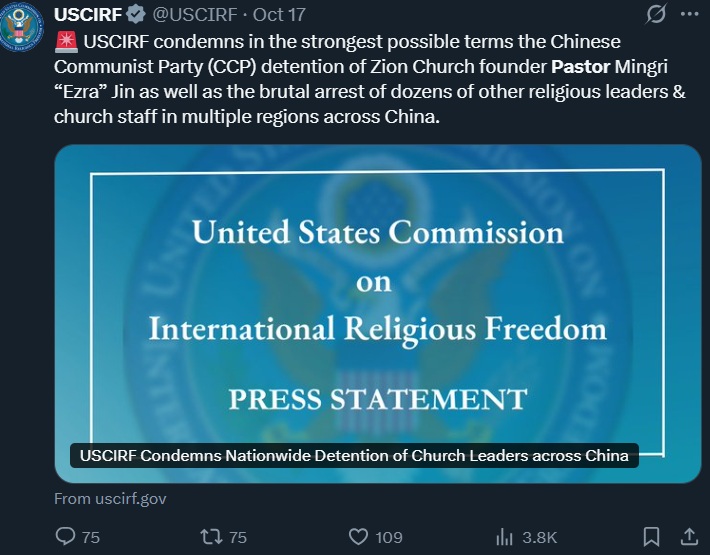
Observers noted that these interventions were promptly shared on the commission’s official social media platforms.
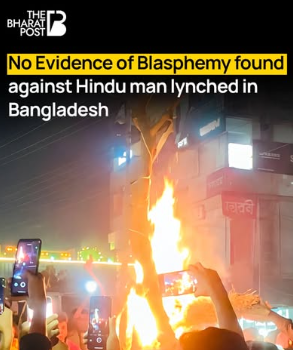
However, critics have highlighted what they describe as a conspicuous silence from USCIRF regarding the killing of Dipu Chandra Das, who was allegedly murdered by a radical Islamist mob in Bangladesh. They noted that none of the current USCIRF commissioners had publicly commented on the incident, despite its severity and in a case where there was absolutely no proof of the blasphemy charges.
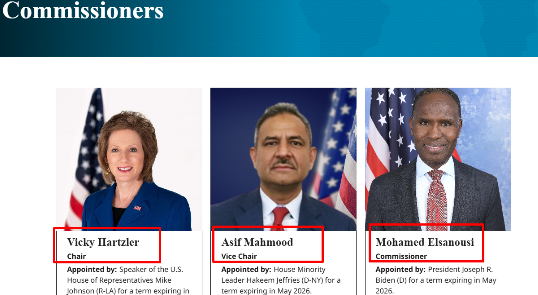
Attention has also been drawn to the composition of the commission itself. Critics allege that USCIRF’s commissioners are predominantly practising Catholics, followed by prominent Muslim members, with some Jewish representation, while Hindus, who constitute roughly 15% of the global population, have no representation on the body. This, they argue, raises questions about balance and perspective in the commission’s reporting and priorities.
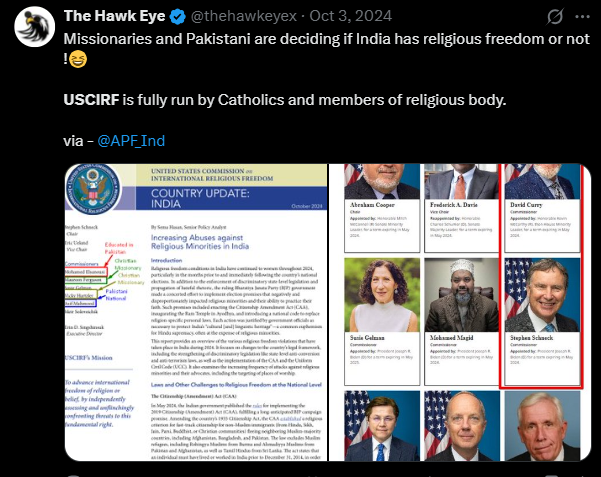
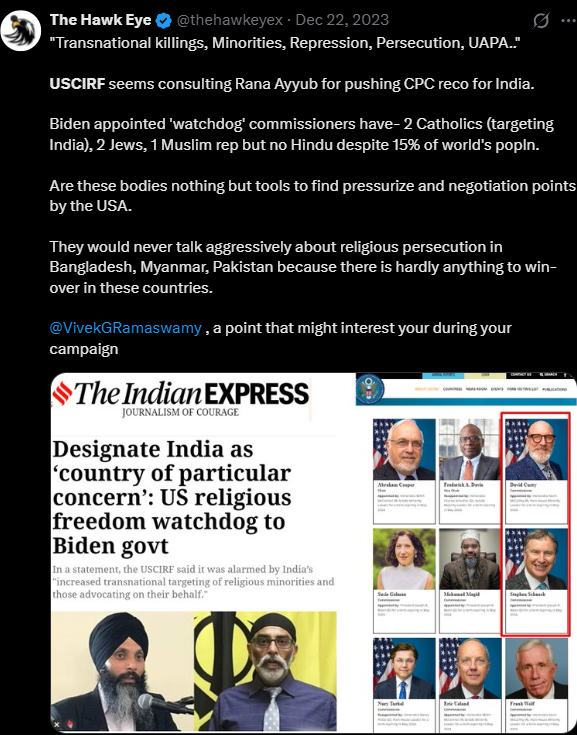
The criticism has reignited a broader debate over whether USCIRF functions as an impartial watchdog on religious freedom or selectively amplifies certain narratives while overlooking others. As of now, USCIRF has not issued a response addressing the specific allegations of bias or its silence on the killing of Dipu Chandra Das in Bangladesh.
(This article is based on an X Thread By The Hawk Eye)
Subscribe to our channels on WhatsApp, Telegram, Instagram and YouTube to get the best stories of the day delivered to you personally.