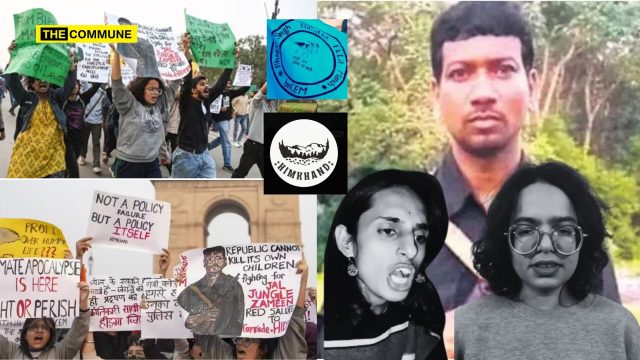
The internet was filled with images of dust-filled air purifiers from residences in Delhi; voices for “clean air” started increasing and protests took place some time ago – without permission.
But the protests were back on Sunday, 23 November 2025, in the national capital – at India Gate to be precise, for allegedly the same reason.
However, things took a drastic turn when slogans that were raised began to be talking about the neutralised Maoist terrorist Madvi Hidma.
The protest that began as raising voice against air pollution in Delhi swiftly devolved into a violent display of support for Left-Wing Extremism as activists belonging to urban naxal groups used the environmental cause as a ruse to glorify Hidma and launch an assault on police personnel.
The event has exposed a coordinated effort by radical leftist organizations to weaponize public issues, mirroring tactics observed during the 2020 Delhi riots.
From Environmental Concern to Open Glorification of Terror
What began as a gathering against rising pollution levels in Delhi took a sharp ideological turn when protesters unveiled posters of Madvi Hidma. Hidma, a senior commander of the banned Communist Party of India (Maoist), was neutralised by security forces on 18 November 2025 in the Maredumilli forests of Andhra Pradesh. He was implicated in some of the most brutal attacks on security personnel in recent history.
Amid the environmental slogans, chants of “Comrade Hidma Amar Rahe” (Long live Comrade Hidma) rang out, explicitly celebrating the slain Maoist. Protesters were heard advocating for a “Maoist-like governance” model in Delhi, praising the so-called “people’s governments” in Bastar and Bijapur, which are run by Maoists through intimidation and violence.
#WATCH | Delhi: A group of protesters holds a protest at India Gate over air pollution in Delhi-NCR. They were later removed from the spot by police personnel pic.twitter.com/DBEZTeET0U
— ANI (@ANI) November 23, 2025
Protest is on Delhi Pollution
Slogans- “Comrade Hidma Amar Rahe”
The real protest is against Killing of Naxalite Hidma who has killed hundreds of our Jawans.
These “Laal Salam” Communists celebrated when Hidma led attack on on 75 CRPF Jawans in 2010.
These JNU Leftists are… pic.twitter.com/SO6lWWtbH0
— Ankur Singh (@iAnkurSingh) November 23, 2025
Violence Erupts: Chilli Powder and Alarming Historical Parallels
The situation escalated when the protesters, who had breached barricades and defied police orders, turned violent. For the first time in such a context, police reported the use of chilli spray against its personnel.
New Delhi Deputy Commissioner of Police (DCP) Devesh Kumar Mahla stated, “We requested them to move, as many ambulances and medical personnel were waiting behind them and required emergency access. We removed them from the C-Hexagon to avoid disrupting traffic. During the removal, several protesters scuffled with the police, and many of our personnel were injured.” He confirmed that several officers required treatment at RML Hospital.
#WATCH | Delhi | New Delhi DCP Devesh Kumar Mahla says, “…For the first time, we encountered the use of chilli spray against police personnel. A few of our officers were sprayed in the eyes and are currently receiving treatment at RML Hospital. Legal action is being taken in… https://t.co/fNMeaffsFb pic.twitter.com/M97aUbWNJV
— ANI (@ANI) November 23, 2025
An FIR has been registered, and over 15 individuals were arrested for assaulting police officers, obstructing official duties, and blocking the roadway.
This tactic bears a striking resemblance to the 2020 anti-Hindu Delhi riots. During court proceedings related to those riots, it was noted that accused Gulfisha Fatima, along with others, had mobilized a crowd of 300 women to block roads and “attack the police using chilli powder, stones, sticks and other dangerous articles.”
The Orchestrators: A Nexus of Radical Outfits
Investigation reveals that the protest was spearheaded by two primary leftist organizations:
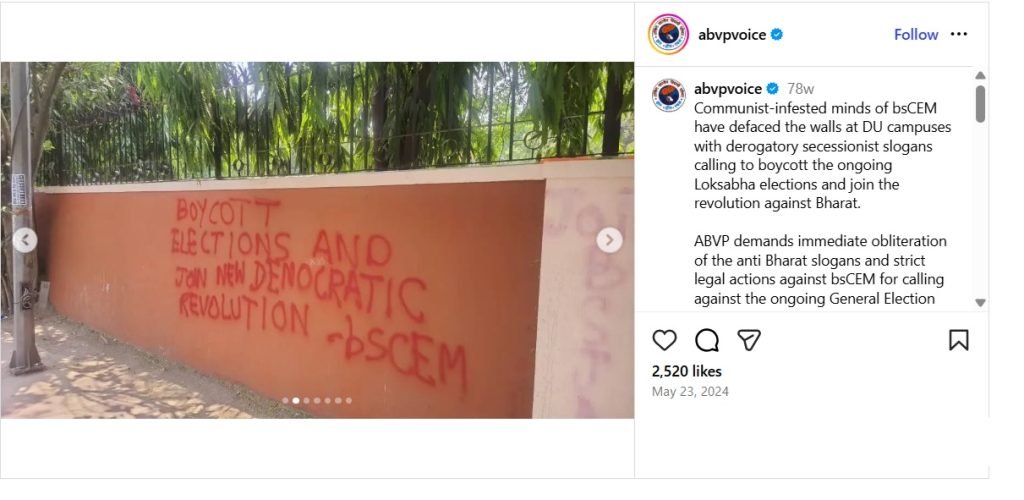
Bhagat Singh Chhatra Ekta Manch (bsCEM): This group has a history of anti-national vitriol. In May 2024, it vandalized Delhi University walls with graffiti proclaiming “Ek hi raasta Naxalbari” (The only way is Naxalbari).
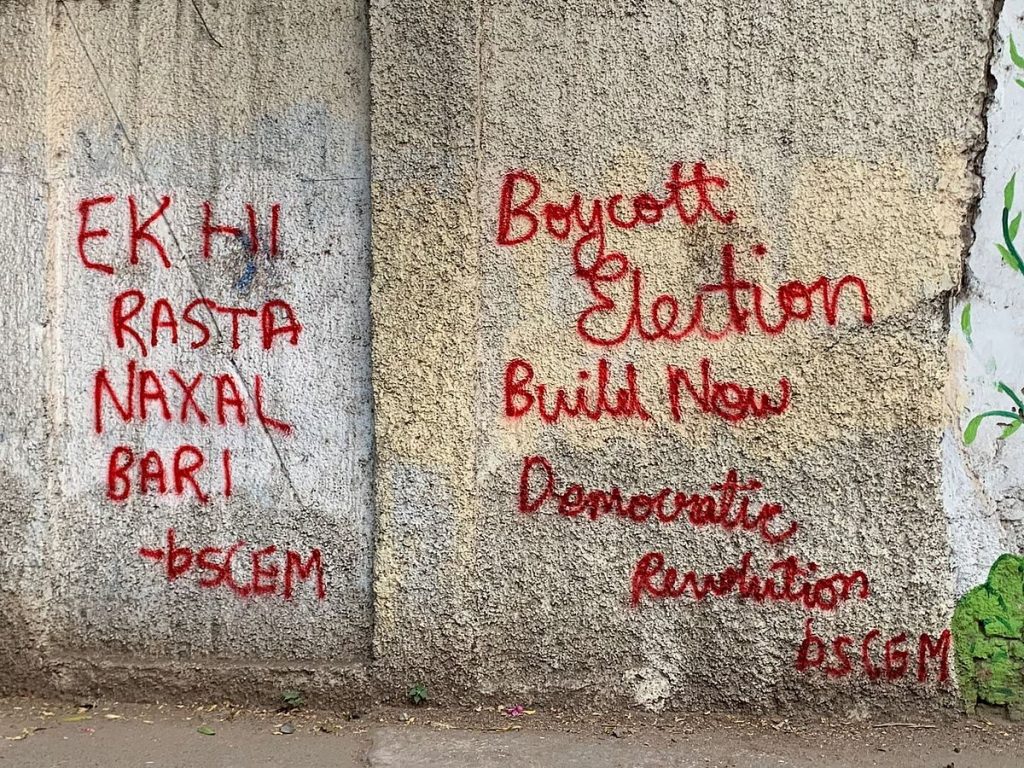
The group actively called for a boycott of the Lok Sabha elections and advocates for a “democratic revolution.”
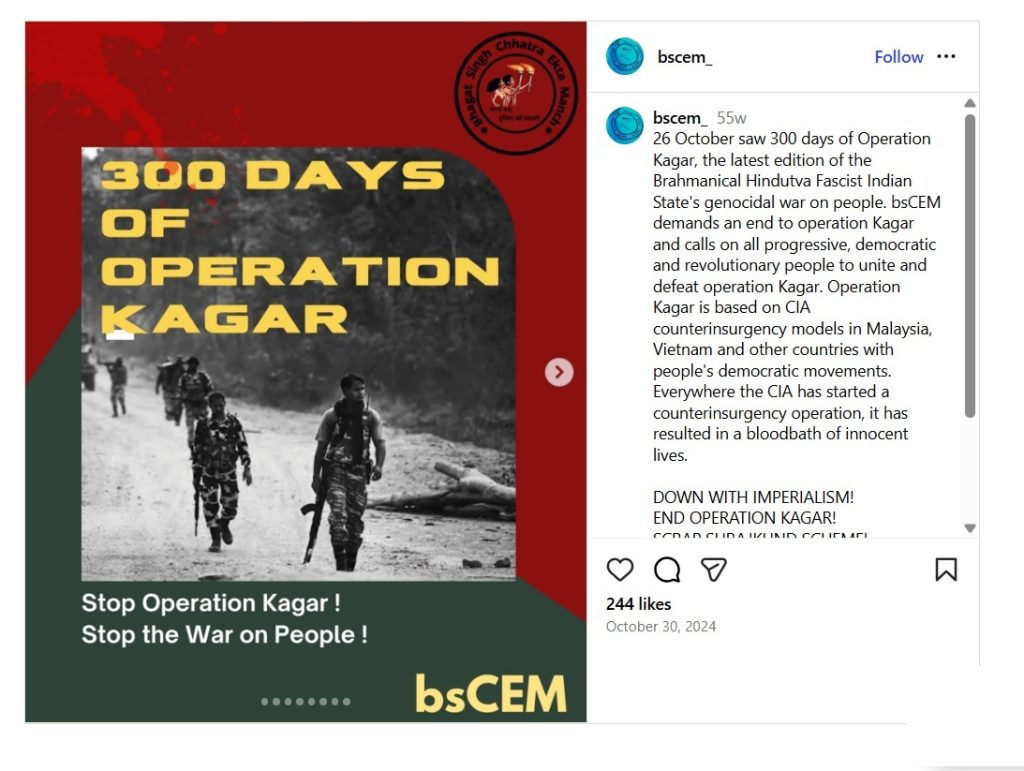
It has repeatedly referred to India as a republic that “kills its own children” and has demanded the government halt Operation Kagar to protect its “Naxal brethren.”
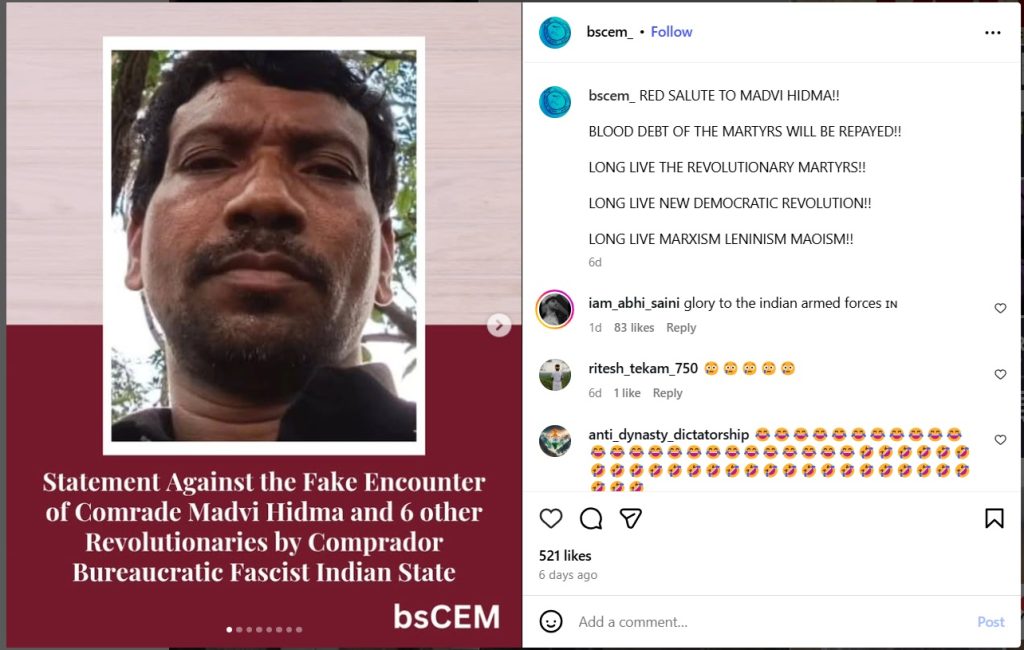
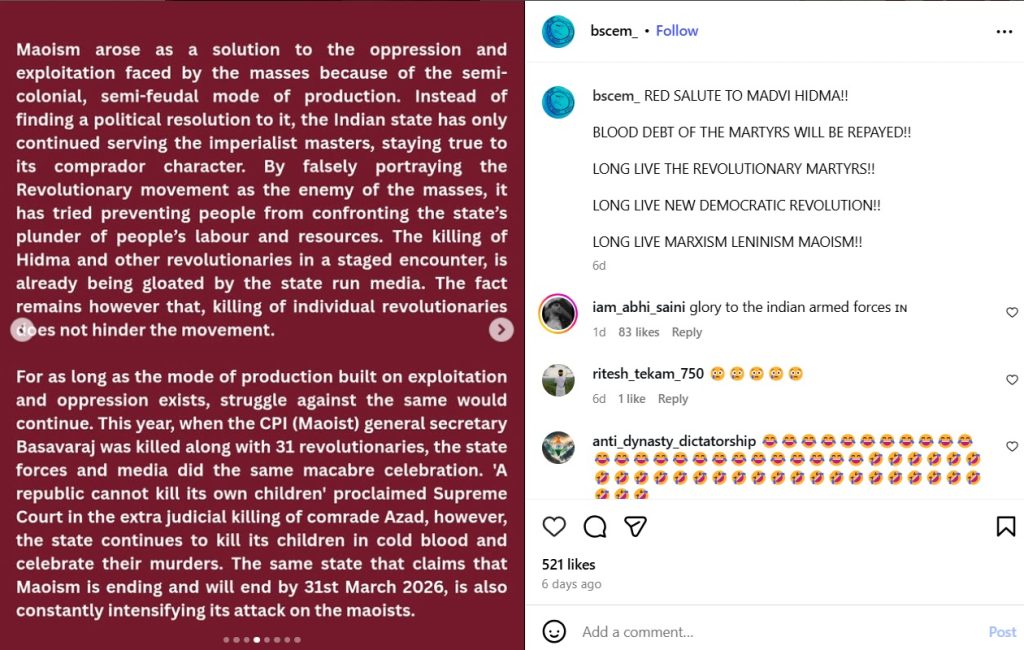
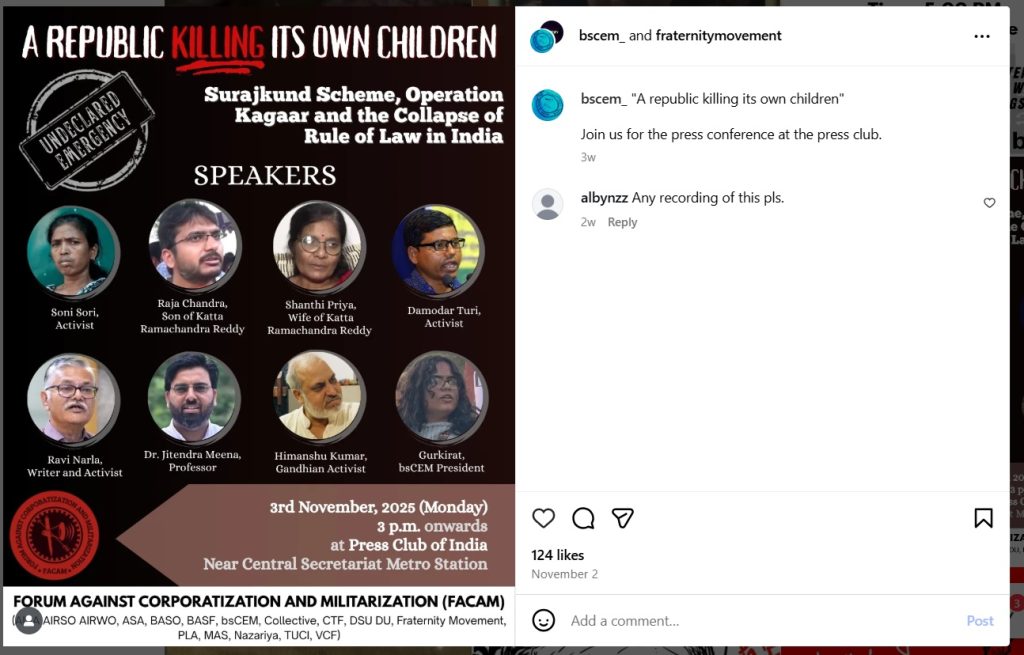
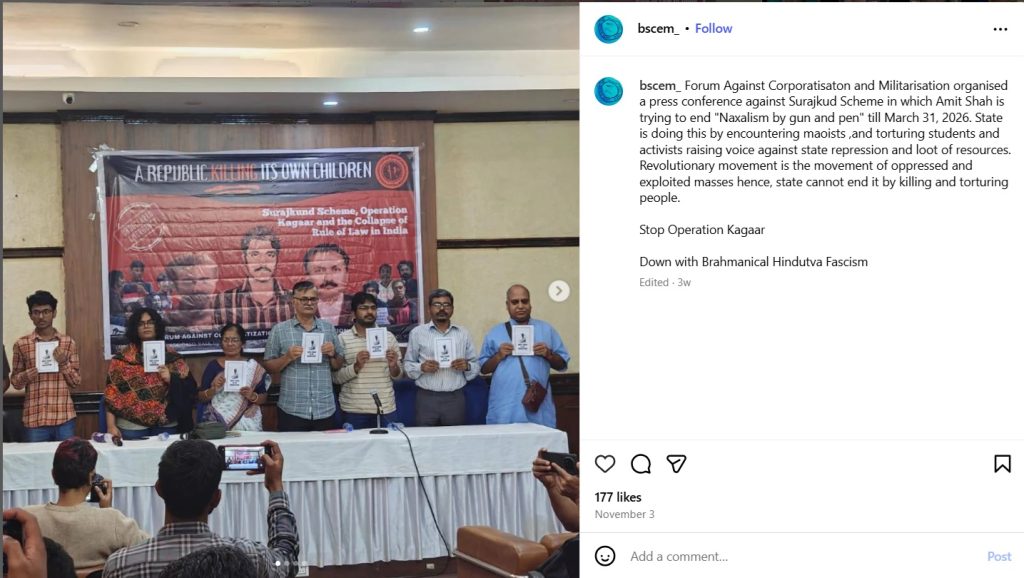
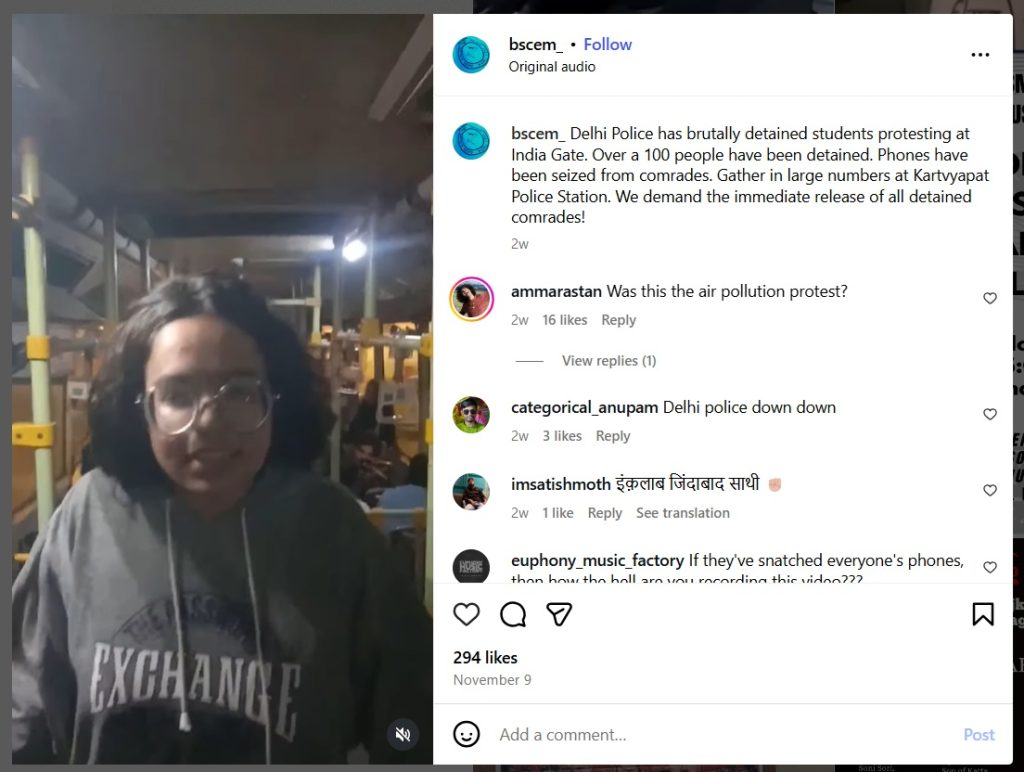
A prominent member, Ravjot Kaur, a Computer Science graduate from Guru Gobind Singh Indraprastha University, was identified as a key participant in the sloganeering for Hidma.
According to this lady protesting in Delhi yesterday, air pollution is happening because of ‘profit-led development model’.
She wants it replaced with ‘people led development model practised by Maoists’.
(Protest had posters lionising Maoist commander Hidma)
Delhi Police has… pic.twitter.com/WYp9fcEdCd— Padmaja Joshi (@PadmajaJoshi) November 24, 2025
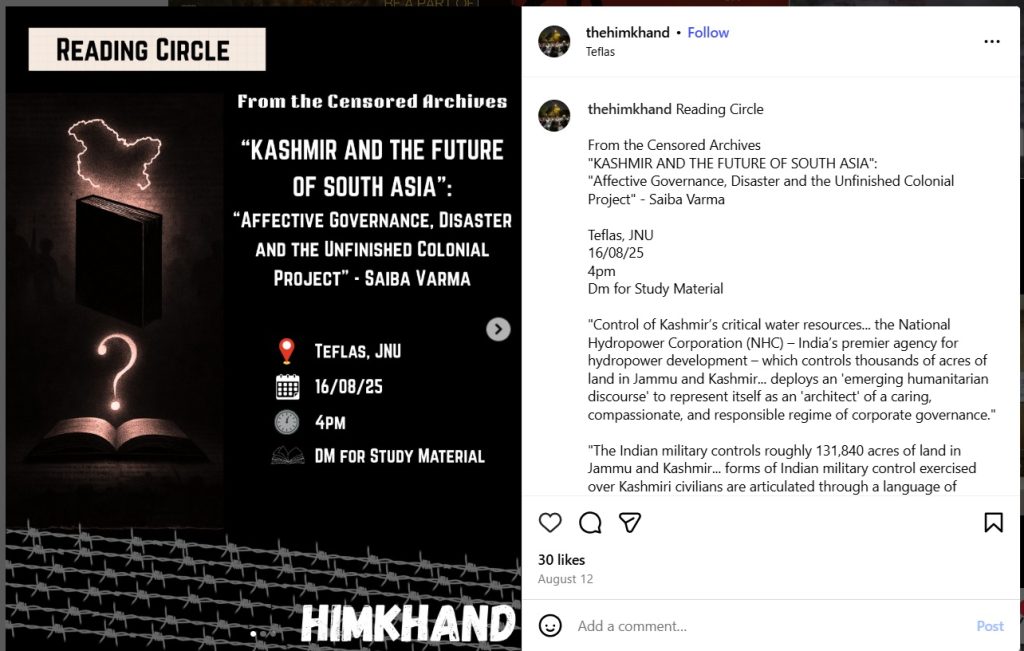
The Himkhand: A relatively new outfit that began operations around May 2024, initially focusing on climate change.
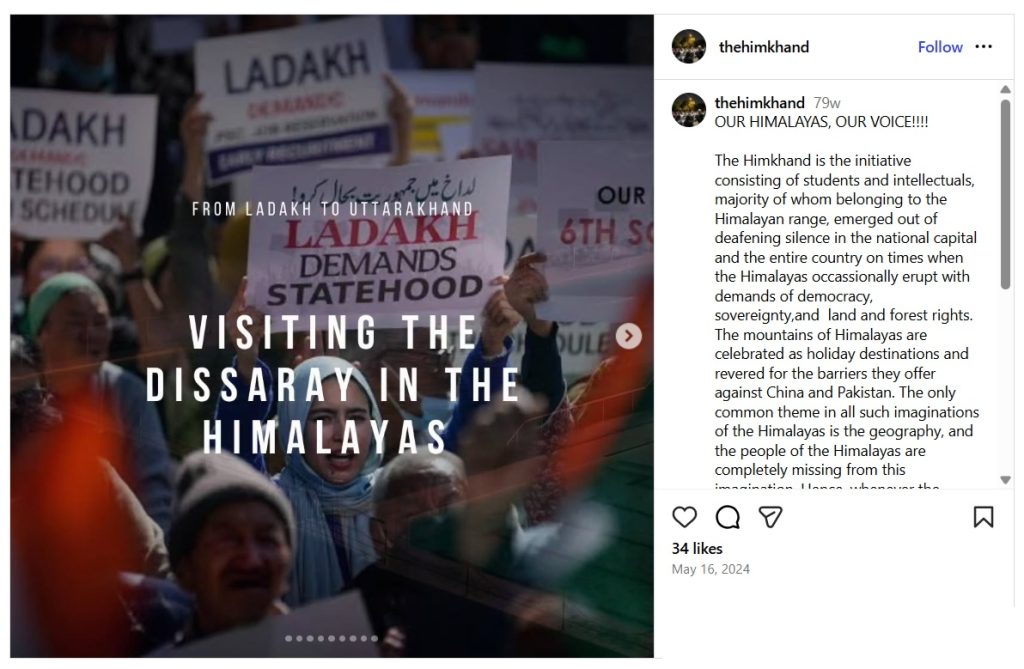
It has quickly evolved to co-opt regional, anti-establishment narratives. For example, they posted about how India’s NHC was “controlling land in J&K”.
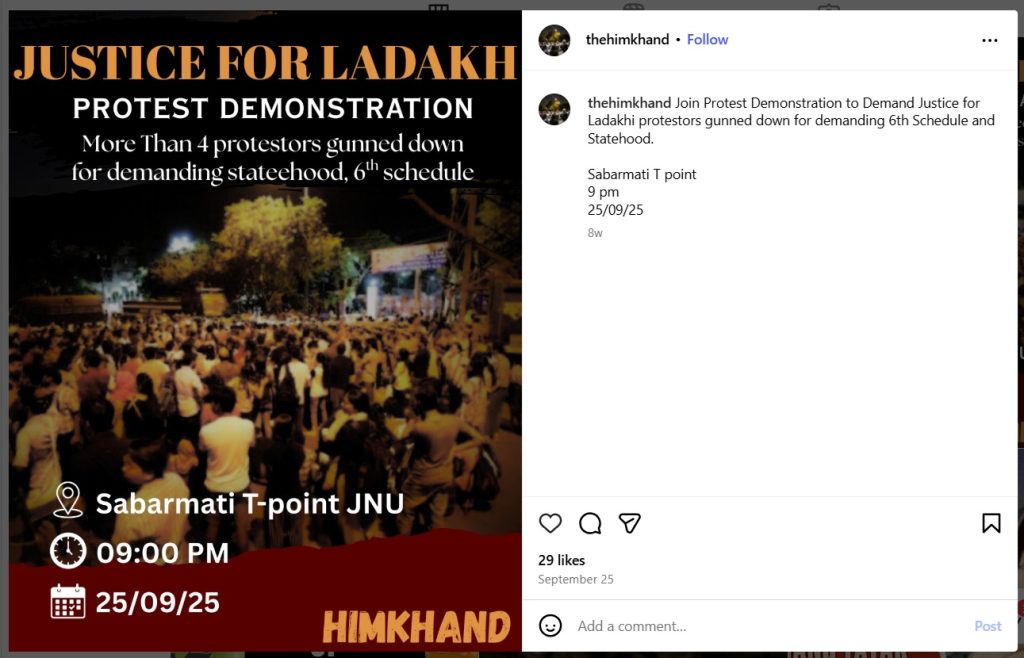
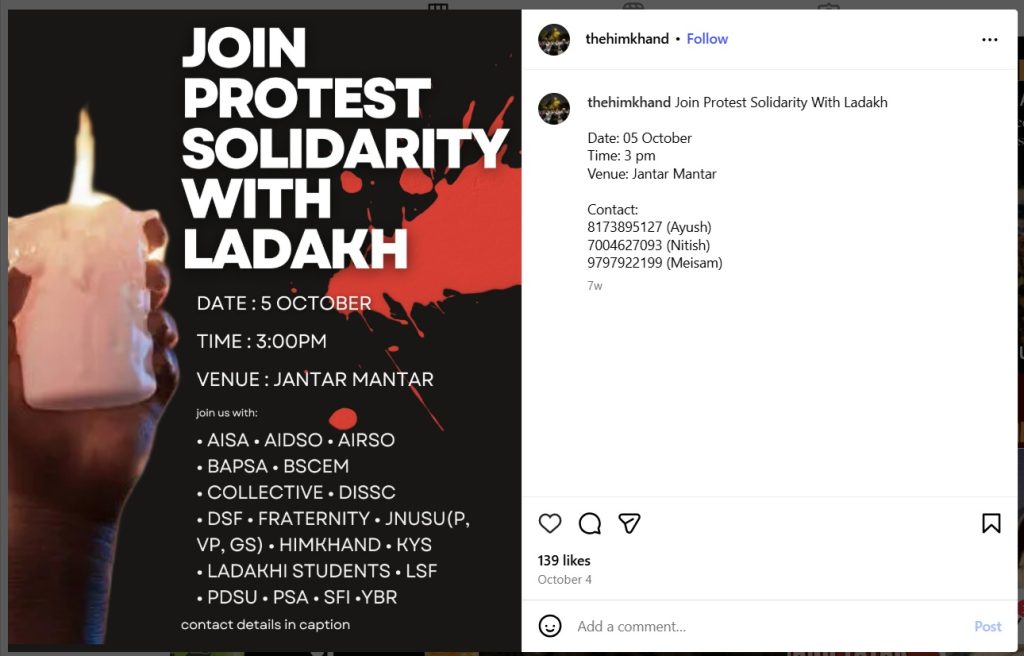
In October, the organization openly championed the Ladakh movement and rationalized violence, including the torching of a BJP office, which it called a “symbolic rejection of the party’s model of anti-Himalayan development.”
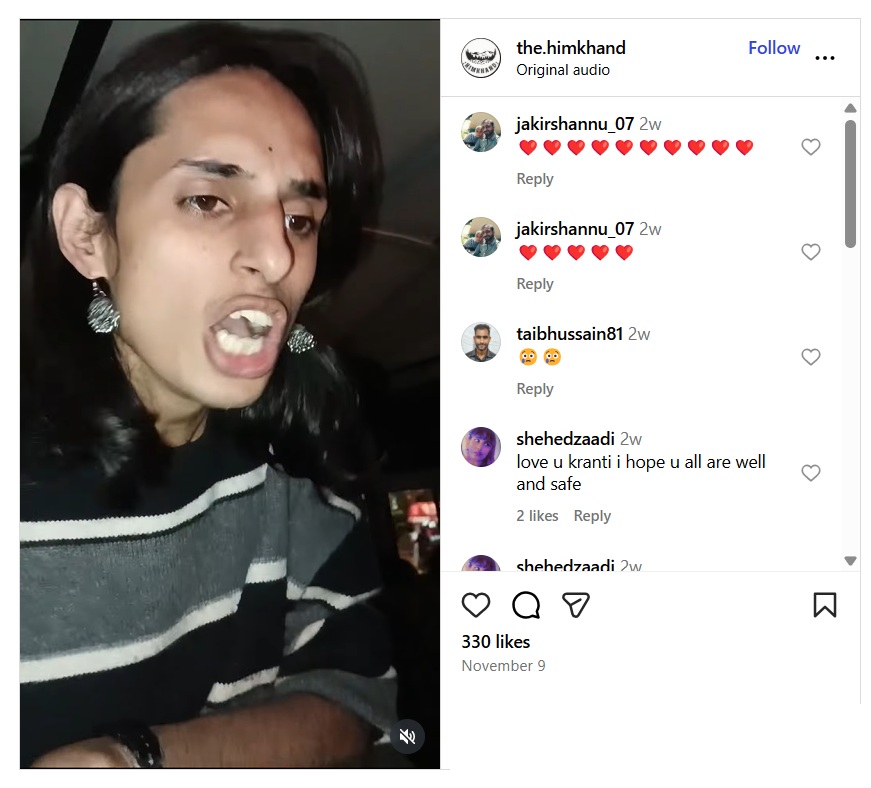
The group is spearheaded by an individual named Kranti, who was spotted alongside bsCEM’s Ravjot during the protests.
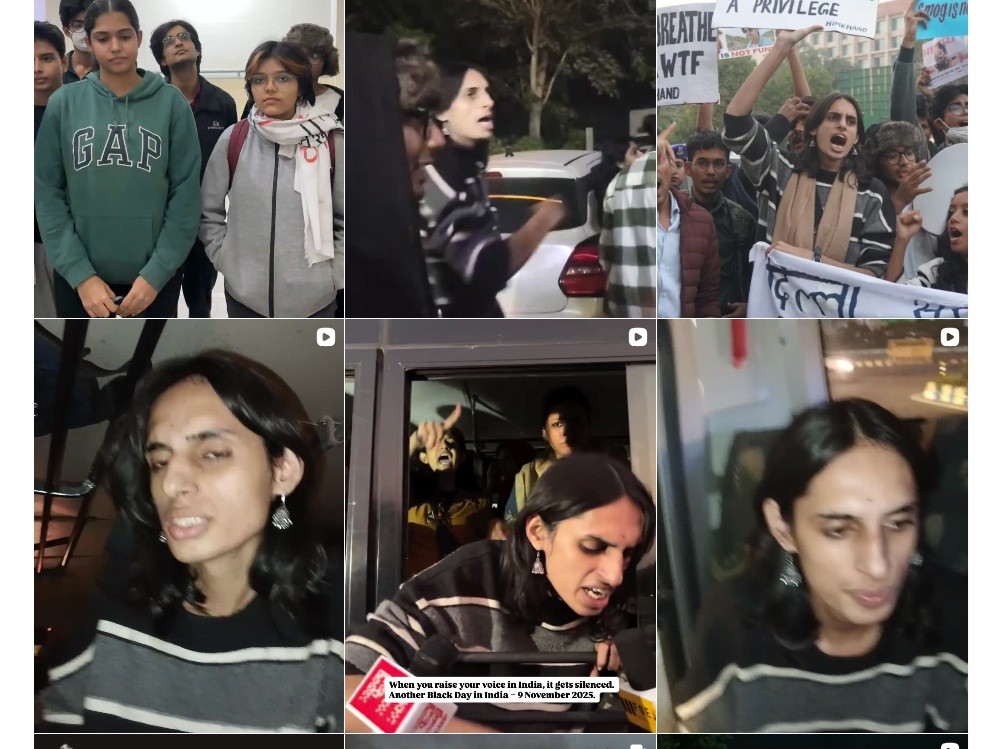
These are protesters who were demonstrating at India Gate against pollution and expressing support for the Naxalite leader Madvi Hidma
They have been actively gathering people from several colleges
This can’t be a simple protest or agitation pic.twitter.com/8o07w5aICq
— Tushar ॐ♫₹ (@Tushar_KN) November 24, 2025
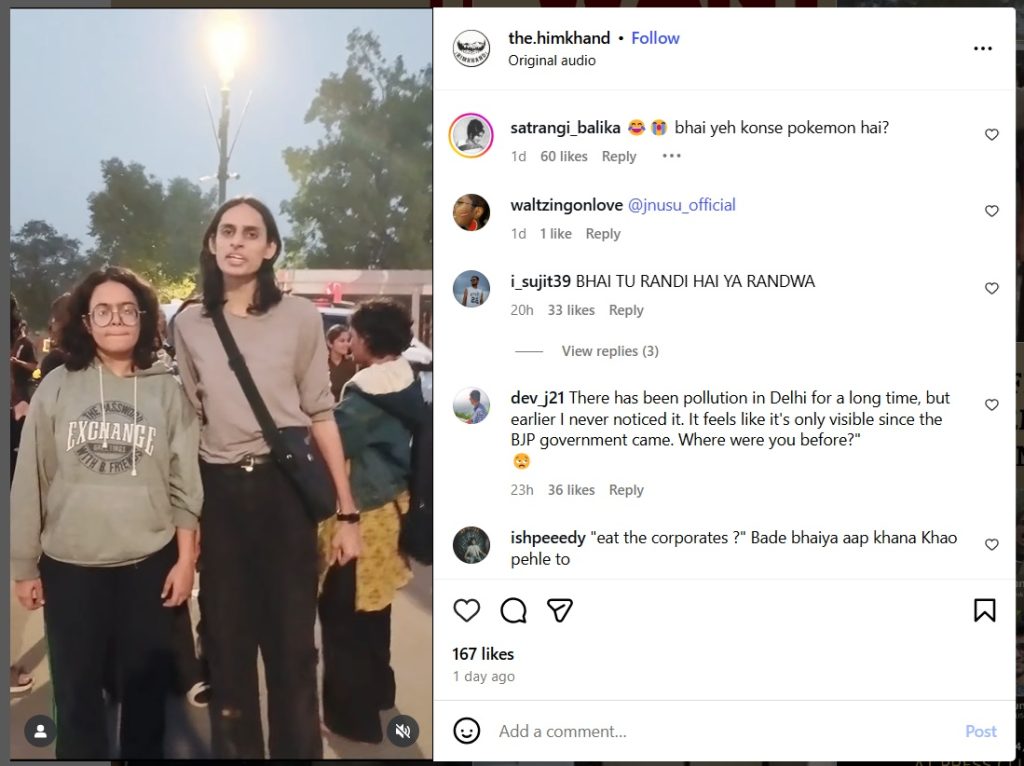
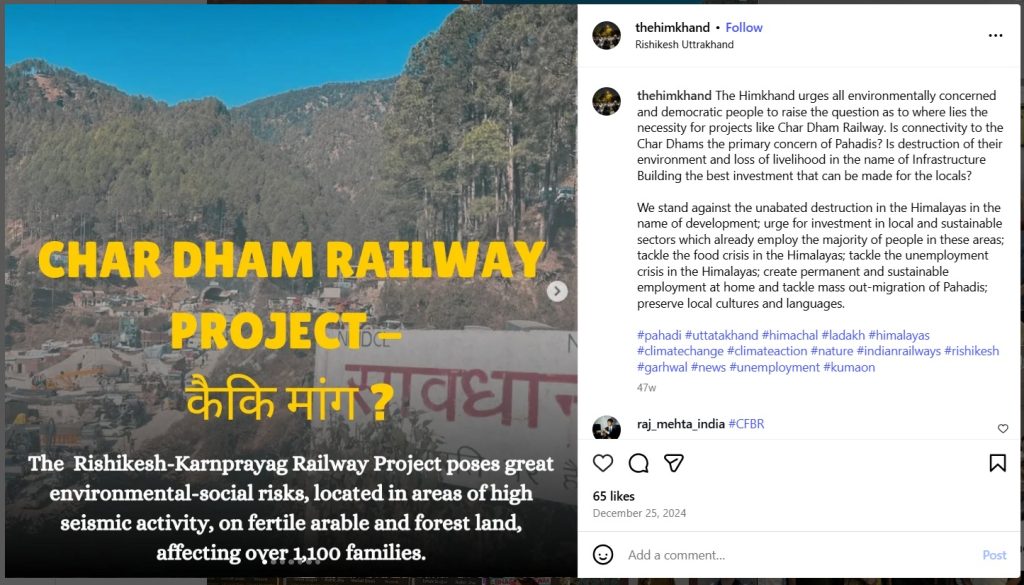
‘The Himkhand’ has also been at the forefront of opposing key development projects like the Char Dham Railway project under the guise of environmentalism.
Pre-Event Collaboration and Ideological Alignment
The collaboration between these groups is not new. On 14 November 2025, bsCEM organized a conference in collaboration with other leftist outfits including Himkhand and the All India Students Association (AISA) of Delhi University, on the subject of pollution. Significantly, the event featured Prashant Bhushan as a speaker—a lawyer who was a major provocative voice during the 2020 anti-Hindu Delhi riots.
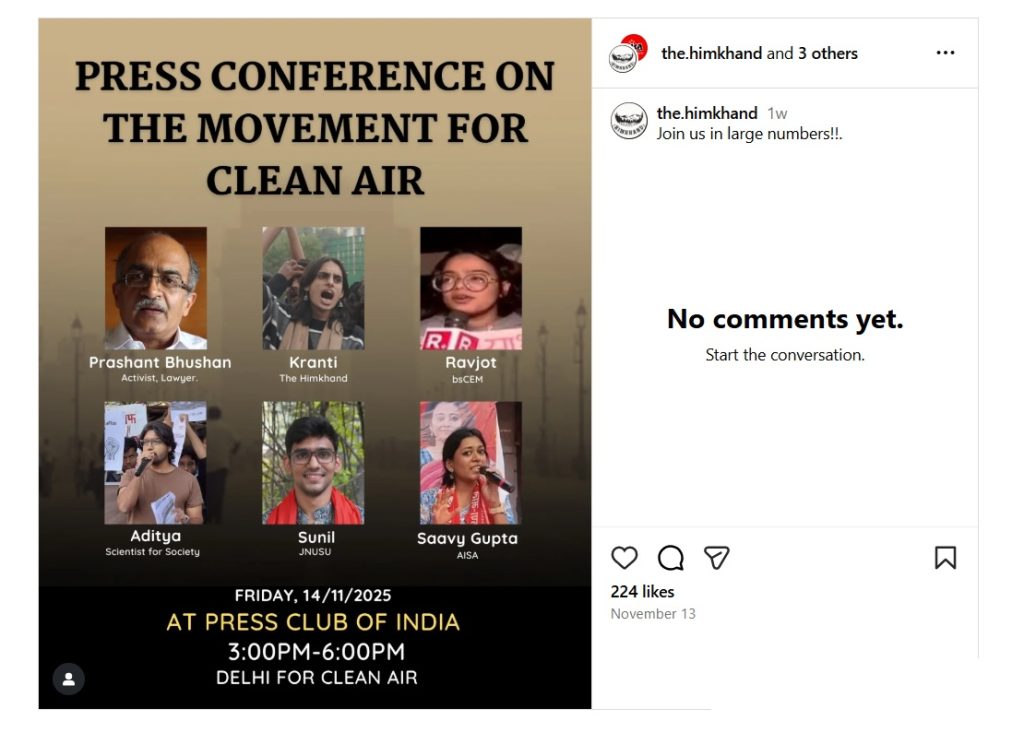
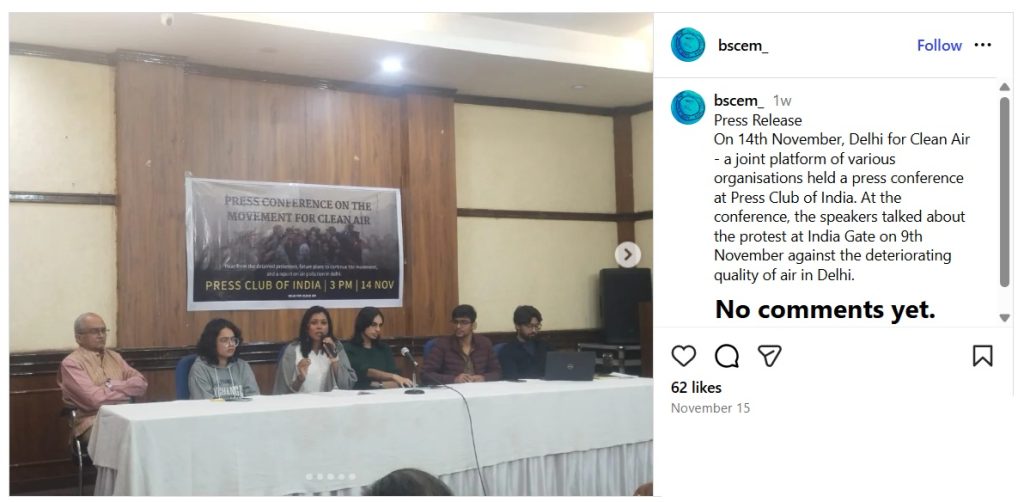
Screenshot of Instagram post
The Maoist Playbook: Mainstreaming Terror Through Deception
During the protest, members of these groups articulated a clear agenda to mainstream Maoist ideology. A bsCEM member claimed that pollution stems from a “profit-driven development model” and advocated for the Maoist model, falsely claiming, “Sustainable development is practiced there… They do not allow outside contractors to enter the territory and collective farming takes place.”
Another protester described Hidma as a “tribal person who took up arms to fight for their rights,” attempting to legitimize his violent campaign against the Indian state as a “struggle for water, forests, and land.”
This was a protest over air pollution- quickly revealed its true face- a protest against the elimination of Naxal Madvi Hidma…
Delhi police confirmed some of these protesters used chilli spray against cops pic.twitter.com/8qWTaEUo4d
— Akshita Nandagopal (@Akshita_N) November 24, 2025
This narrative whitewashes the reality of Maoist extortion, such as their documented history of levying taxes on Tendu leaves exporters in Chhattisgarh to fund their violent insurgency.
A Pattern of Subversion
The events of 23 November 2025 reveal a calculated strategy by urban naxal networks. The pattern is consistent: a public issue (like the CAA in 2020 or pollution in 2025) is used as a facade to gather momentum, which is then hijacked to push a radical, anti-India agenda, often culminating in violence.
While the 2020 riots were part of a broader “regime change” operation, the current agitation seeks to resist the government’s successful drive against Maoism and mainstream a dangerous ideology. As the security forces make significant strides in eradicating Left-Wing Extremism from its rural strongholds, its urban supporters are growing increasingly desperate, shedding their disguises and revealing their true intent to destabilize the nation’s democratic fabric.
(Source: OpIndia)
Subscribe to our channels on WhatsApp, Telegram, Instagram and YouTube to get the best stories of the day delivered to you personally.