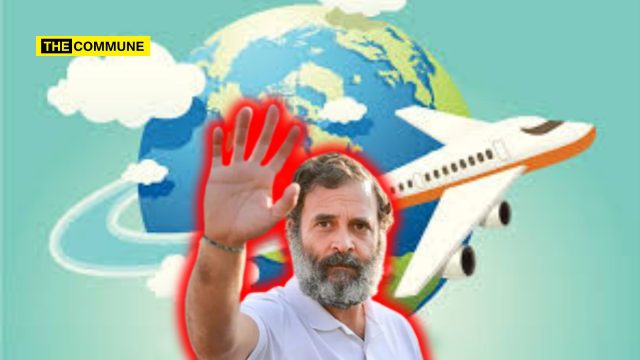
Opposition leader in the Lok Sabha and senior Congress figure Rahul Gandhi has embarked on yet another foreign trip, this time to South America. According to Pawan Khera, head of the Congress’s media and publicity department, Gandhi’s itinerary includes visits to Brazil and Colombia. During this four-nation tour, he will meet political leaders, address university students, and interact with members of the business community on topics like trade and technology.
The Congress party has framed this tour as a diplomatic outreach aimed at strengthening India’s ties with South America, citing historical links through the Non-Aligned Movement and the shared legacy of the Global South. However, the timing of this foreign trip has sparked considerable debate back home. With the Bihar assembly elections around the corner, many are questioning why the leader of India’s principal opposition party is globe-trotting rather than focusing on the political battlefield in one of the most crucial states.
Leader of the Opposition in Lok Sabha, Shri Rahul Gandhi, has embarked on a visit to South America. He is scheduled to engage with political leaders, university students, and members of the business community across four countries.
— Pawan Khera 🇮🇳 (@Pawankhera) September 27, 2025
Rahul Gandhi is neither the prime minister nor part of an official government delegation. Yet, he has assumed the role of a globe-trotting statesman, addressed overseas universities and held high-level meetings abroad. This might seem like an effort to enhance his international profile, but it comes at the expense of domestic responsibilities. Bihar is not just another state for the Congress.
The party is struggling to remain relevant there, battling both the BJP-led NDA and its own dwindling cadre. At such a critical juncture, a serious leader would be expected to stay on the ground, engage with party workers, strategize with allies, and directly connect with voters.
Instead, Gandhi’s schedule shows he would rather speak to students in Bogotá or São Paulo than rally crowds in Patna or Gaya. This pattern reinforces the widespread perception that he views politics as a part-time activity, something he dips into occasionally before retreating abroad to reset.

Rahul Gandhi’s latest trip comes on the heels of another controversy, his recent vacation in Malaysia. Earlier this month, after completing his so-called Voter Adhikar Yatra in Bihar, he quietly slipped away to Langkawi. The trip only came to light when pictures of him vacationing surfaced on social media, triggering sharp criticism. BJP IT cell head Amit Malviya posted on X, “Rahul Gandhi has slipped away yet again this time on a clandestine vacation in Langkawi, Malaysia. Looks like the heat and dust of Bihar’s politics were too much for the Congress Yuvraj, who had to rush off for a break. Or is it another one of those secret meetings that no one is supposed to know about?”
The trip became even more controversial due to Langkawi’s association with Islamic preacher Zakir Naik, who fled India and took Malaysian citizenship. Speculation swirled online about whether Gandhi’s visit involved any meeting with Naik or his associates, though the Congress party has offered no clarity.
Regardless of the truth, the optics were damaging. For many observers, this episode symbolized Rahul Gandhi’s tendency to treat political campaigns like assignments, something to be completed before jetting off for leisure or undisclosed meetings abroad.
This is not the first time Gandhi has chosen to leave the country at a crucial political moment.
- In October 2023, just ahead of assembly elections in several states, he quietly left for Uzbekistan. The trip remained secret until he was spotted returning at Delhi airport, and even then, he refused to disclose its purpose. Such behavior is hardly new.
- In December 2021, following a humiliating Congress defeat in five state assembly elections, Gandhi flew to Italy. His absence delayed campaign activities in Punjab, inadvertently paving the way for the Aam Aadmi Party’s rise.
- In December 2020, on the very day Congress celebrated its 136th foundation day, he left for another personal trip to Italy.
- Similarly, in October 2019, just two weeks before crucial elections in Haryana and Maharashtra, he flew to Bangkok without explanation.
This recurring pattern has earned him a reputation for disappearing during crises. Even within the Congress, there is unease about his habit of vanishing at decisive moments, leaving the party leaderless and directionless.
Adding to the suspicion are questions about the people Gandhi meets during his foreign travels. During his 2023 visit to the US, he met Sunita Vishwanath, co-founder of Hindus for Human Rights (HfHR), an organization accused of being an Islamist-linked advocacy group that regularly maligns India on global platforms.
Such associations raise eyebrows, especially when viewed alongside his history of criticizing India’s internal policies while abroad. For instance, he has repeatedly used foreign platforms to attack the Indian government, even appealing to international actors to intervene in what he calls a “crisis of democracy” in India.
Moreover, his repeated violations of security protocols during foreign trips prompted the government to withdraw his SPG (Special Protection Group) cover. Defense Minister Rajnath Singh himself raised this issue in Parliament, underlining the potential risks involved.
With the Bihar elections approaching, Rahul Gandhi’s South American tour looks like yet another example of misplaced priorities. Bihar represents a crucial battleground for the Congress and its allies, yet its top leader is thousands of miles away, addressing foreign audiences instead of connecting with local voters. This behavior signals more than just poor timing; it reflects a deeper problem. Leadership demands commitment, especially in times of political flux. By consistently leaving India during critical political moments, Gandhi undermines not only his personal credibility but also the morale of his party workers and allies.
Rahul Gandhi’s defenders may argue that foreign outreach is necessary for building India’s image abroad. However, without holding domestic ground, these tours risk looking like vanity projects. The optics are especially poor when set against a backdrop of repeated election losses and organizational decline.
As Bihar gears up for a high-stakes contest, the Congress should be consolidating its position on the ground. Instead, the leader’s absence reinforces the perception that the party lacks direction and seriousness. Until Rahul Gandhi proves otherwise through consistent, hands-on leadership, his foreign tours will continue to be seen as evidence of detachment from India’s political realities, a luxury no opposition leader can afford.
Dr. Prosenjit Nath is a techie, political analyst, and author.
Subscribe to our channels on Telegram, WhatsApp, and Instagram and get the best stories of the day delivered to you personally.