Major political parties in Tamil Nadu have not fielded any Brahmin candidates in the ongoing Assembly elections, marking the first such instance in 35 years and indicating a decline in the community’s electoral presence.
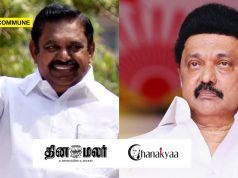
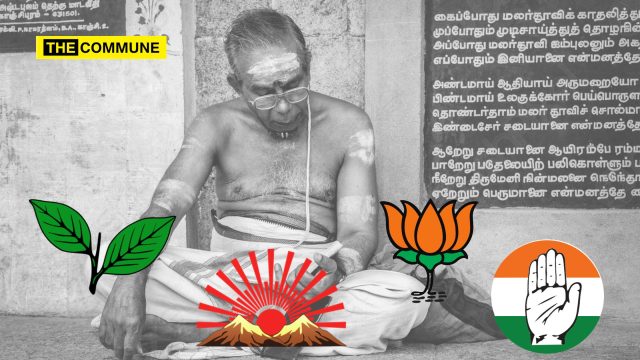
The All India Anna Dravida Munnetra Kazhagam has not nominated any Brahmin candidate this time. Its ally, the Bharatiya Janata Party, also does not have any Brahmin candidates among the 27 seats allotted to it, though it has secured support from the Tamil Nadu Brahmin Association. The Dravida Munnetra Kazhagam and the Indian National Congress have likewise not fielded any Brahmin candidates.
Brahmins are estimated to constitute around 3% of the state’s population. Most candidates fielded by major parties are reported to belong to Other Backward Classes (OBC) communities, except in constituencies reserved for Scheduled Castes and Scheduled Tribes.
In contrast, actor-turned-politician Vijay’s Tamilaga Vettri Kazhagam has fielded two Brahmin candidates, while Seeman’s Naam Tamilar Katchi has fielded six. These candidates have been placed in constituencies such as Mylapore and Srirangam, where Brahmin voters are present in relatively higher numbers.
Over the decade following the death of former Chief Minister J. Jayalalithaa, a Brahmin leader, the AIADMK had fielded only one Brahmin candidate: R. Nataraj, a retired Director General of Police in the 2021 Assembly elections, indicating a gradual reduction in representation.
Political commentator Raveendran Duraisamy was reported as stating that the AIADMK had done injustice to the Brahmin community, adding that leaders such as Jayalalithaa and M. G. Ramachandran had historically fielded Brahmin candidates.
Political analyst Arun Kumar was reported as saying that the AIADMK had retained Brahmin support for decades, but that this support had shifted in recent years. He indicated that after Jayalalithaa’s death, Brahmin voters had increasingly moved towards the BJP, resulting in reduced electoral incentive for AIADMK to field candidates from the community.
On the rationale behind NTK fielding six Brahmin candidates, analysts were reported as saying that the party’s ideological positioning played a role. Times of India reported political analyst Ayyanathan as stating that the party had taken an anti-Periyar stance and used caste and identity explicitly in its political messaging, including references to dismantling the “Dravidian wall.”
In the case of the TVK, observers were reported as stating that there appeared to be no clearly defined rationale in candidate selection. However, it was suggested that the party may be attempting to signal that it is not an anti-Brahmin formation, despite identifying Periyar as one of its ideological icons.
The DMK, meanwhile, has nominated actor Kamal Haasan to the Rajya Sabha. Analysts were reported as noting that he identifies as an atheist. They added that while the DMK does not have formal rules excluding Brahmins, its broader political position has focused on non-Brahmin empowerment.
Subscribe to our channels on WhatsApp, Telegram, Instagram and YouTube to get the best stories of the day delivered to you personally.