


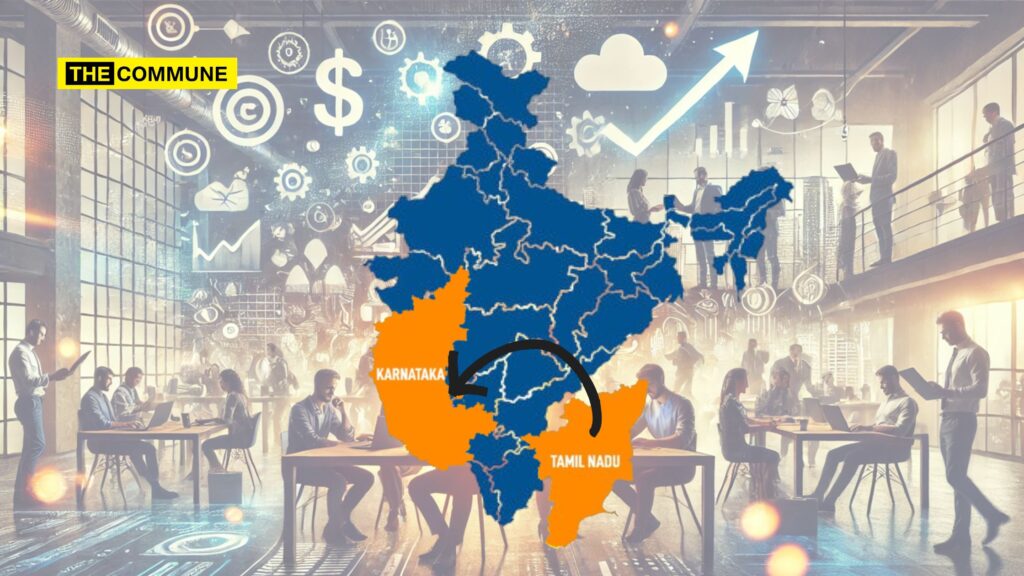
In yet another instance of a Tamil Nadu-based startup moving out of the state to neighbouring Karnataka, an agritech company Fragaria announced that they were shifting to Bengaluru.
Taking to LinkedIn to announce the move, the co-founder Harish Varadarajan wrote, “Fragaria is moving to Bengaluru!
As a Tamil boy, I dreamt of building a truly global product right from Tamil Nadu. We gave it everything in Chennai — and proved premium strawberries can be grown here against all odds.
But the climate, market access, supportive laws for agriculture, expat livability, and the thriving startup ecosystem have made the move to Bengaluru inevitable. That said, Chennai will always be our first home. Our R&D farm will continue there, and I hope to find many more reasons to bring farms back to Tamil Nadu in the future.”


While one might argue that they are incorrectly blaming climate, one must note that he has addressed the point by saying “proved premium strawberries can be grown here against all odds.”- this points us to the other reasons that may have triggered the move.
This is not the first time in recent months that a startup has moved out of Tamil Nadu. Earlier this year, startups like Wheelocity and Arcana announced their move from Tamil Nadu to Bengaluru.
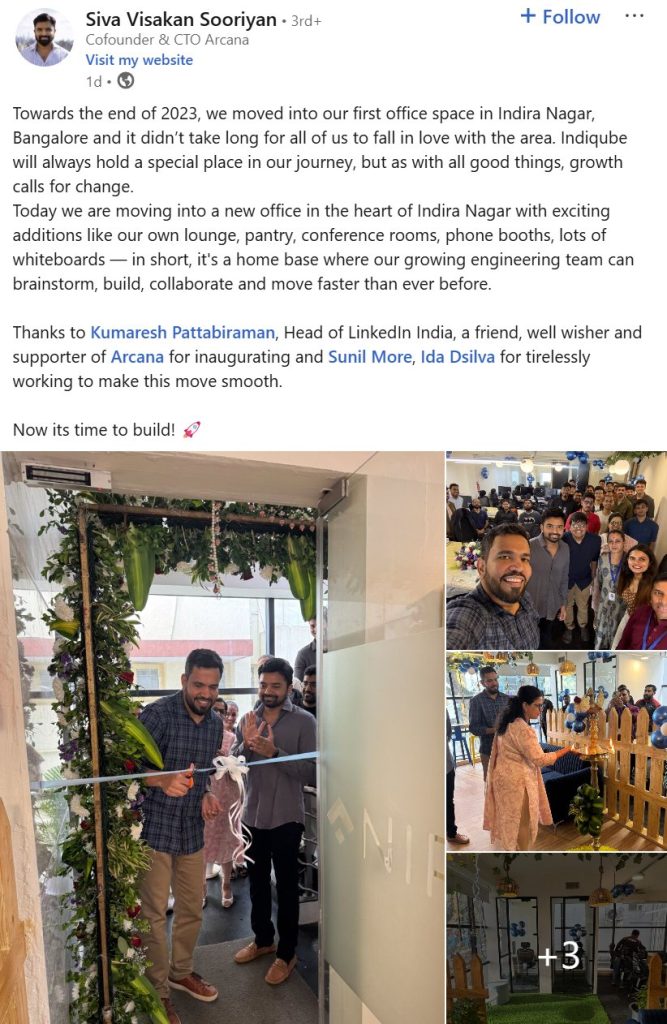
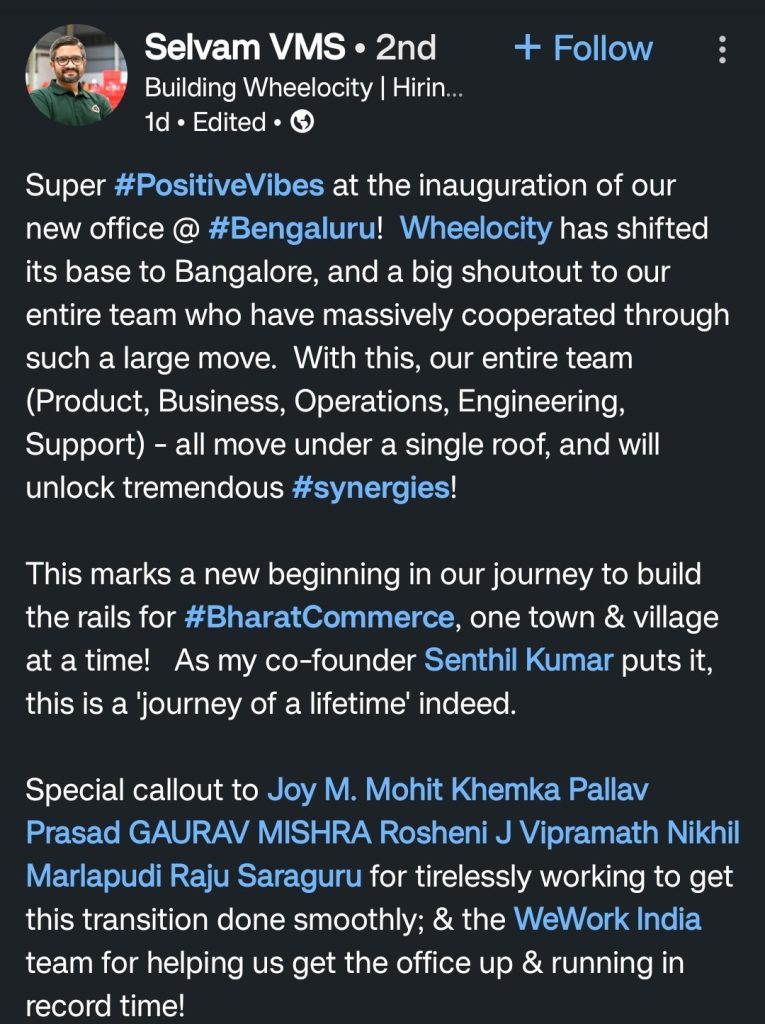


The exodus of startups from Tamil Nadu to Bengaluru signals a glaring failure in the Dravidian model state’s ability to retain innovation and enterprise. Even though the DMK government claims that the state is a favoured investment destination, Tamil Nadu’s startup ecosystem suffers from chronic underfunding, a lack of risk-taking culture, and an absence of local champions in high-growth sectors.
Why Are TN Startups Shifting To Bengaluru?
A January 2025 report from Times of India highlights that startups in Tamil Nadu are often seen as more “tortoises” than “unicorns,” reflecting a slower growth pace compared to other regions. Despite being the second-largest economy in terms of gross national income, Tamil Nadu continues to lag in the startup scene. Last year was especially challenging, with venture capital funding for startups in Tamil Nadu dropping 44% from the previous year, according to data from Venture Intelligence. This marks the lowest funding since 2020, even as national funding saw a recovery in 2024.
Arun Natarajan, founder of Venture Intelligence, acknowledges that while Tamil Nadu’s funding ecosystem is underdeveloped compared to other startup hubs, this doesn’t pose a significant issue for the right kind of entrepreneurs. Many startups have demonstrated that founders can easily reach out to venture capitalists (VCs) in other cities for funding. However, due to a lack of local seed capital and the more conservative nature of Tamil Nadu’s entrepreneurs, startups here tend to approach external investors much later than those in cities like Bengaluru or NCR.
The absence of role models, particularly in the consumer sector, is another challenge, according to Natarajan. While founders like Girish Mathrubootham have successfully scaled B2B software ventures, there are fewer success stories in the consumer-focused, cash-burning startups like Swiggy or Zepto, which take years to turn profitable. Moreover, there is a lack of local investors willing to back such ventures.
According to data from Tracxn, just over 250 startups in Tamil Nadu have raised Series A funding or beyond, and around 10 startups have reached unicorn status. This includes companies like Uniphore, Freshworks, Chargebee, and Zoho, but is still far fewer compared to other startup hubs like Bengaluru and Mumbai. Most of Tamil Nadu’s ventures are B2B-focused, primarily working in enterprise applications and financial services.
I.A.S. Balamurugan, managing partner and co-founder of Anicut Capital, emphasizes that Tamil Nadu’s startup ecosystem needs to evolve beyond just funding. While a few software and fintech firms in the state have received significant capital, Balamurugan hopes to see the growth of sectors like manufacturing tech and automobiles. He advocates for an ecosystem that supports both profitable and risky startups, allowing them to fail if they’re not viable businesses. Without a risk-taking mentality, the ecosystem will struggle to nurture high-potential ventures.
Arvind Subramaniam of Enlighten Capital, a micro-VC, believes that while Tamil Nadu startups have traditionally been conservative and reluctant to raise external capital, the situation is changing. Entrepreneurs are becoming more open to funding as they gain exposure to other hubs, and former employees of successful startups are now starting their own ventures with seed capital from experienced founders.
Sivarajah Ramanathan, CEO of startupTN, points out that Tamil Nadu’s startup ecosystem has a lower failure rate compared to other regions. He believes that alternative funding sources, such as debt or a company’s turnover and profitability, should also be considered. Ramanathan is optimistic about the future of the state’s ecosystem, noting that efforts are underway to improve access to funds. In the past six months, the state has facilitated 90 crores in cumulative funding.
An executive from a well-known startup investor firm suggests that their philosophy aligns more with slow, steady growth—like the tortoise—rather than the pursuit of unicorn status. This mindset, shared by some Tamil Nadu startups, raises the question of whether these “tortoises” will ultimately win the race over the “unicorns.”
Subscribe to our channels on Telegram, WhatsApp, and Instagram and get the best stories of the day delivered to you personally.