


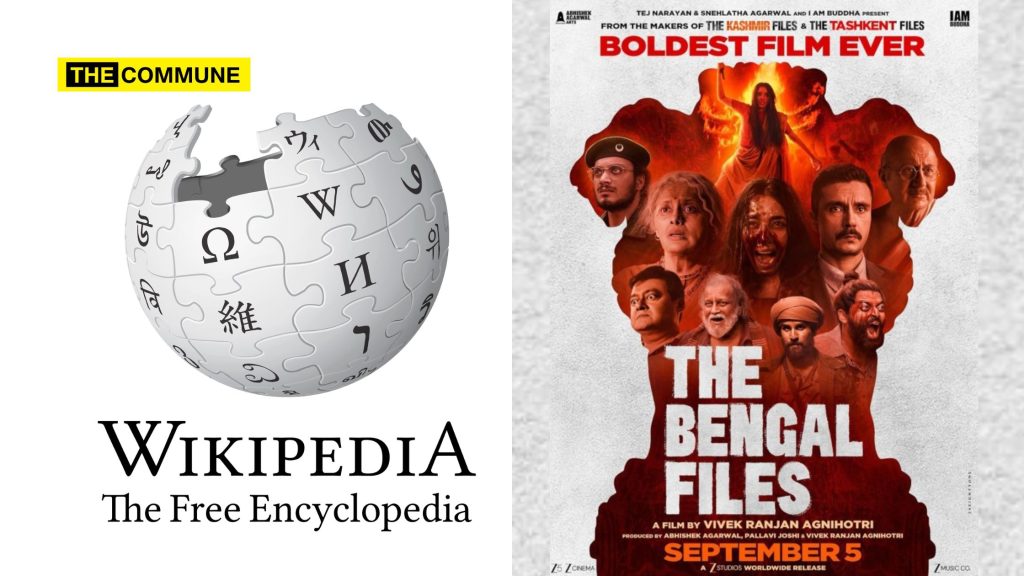
Wikipedia, often accused of promoting left-leaning narratives, has sparked fresh outrage for labeling The Bengal Files a film depicting the 1946 anti-Hindu violence of Direct Action Day and the Noakhali riots as “political drama propaganda” on its page.
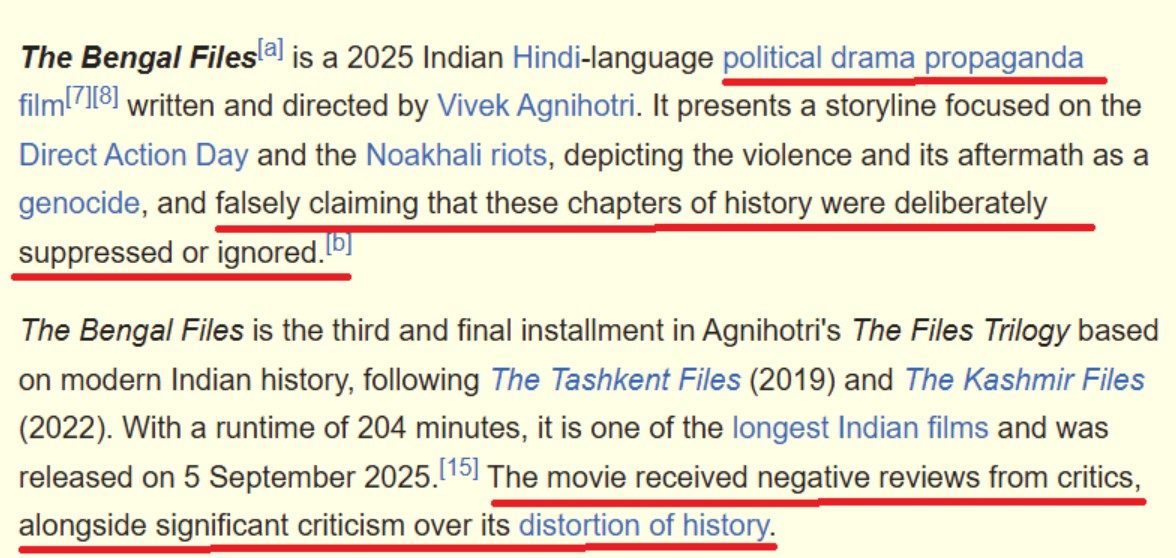

Within just three days of the film’s release, its Wikipedia entry labeled it as “propaganda” a move critics say is the result of a coordinated effort by politically motivated editors. This label, prominently placed on a widely visited platform, threatens to distort public perception of the film, especially among readers who still consider Wikipedia to be a reliable source.
The article’s opening sections accuse The Bengal Files of pushing false claims, particularly the assertion that historical events such as Direct Action Day and the Noakhali massacres have been deliberately suppressed. Wikipedia also alleges that the film received largely negative reviews and was criticized for “distorting history.”
These claims continue throughout the entry, particularly in the “Reception” section, where the film is said to have been poorly received by critics. However, a deeper look into the article’s “Talk Page” reveals deliberate manipulation. Editors with clear ideological leanings, such as one operating under the name ‘Computeracct’, repeatedly referenced opinion pieces from sources like The Hindu and The Indian Express classifying them as definitive, while dismissing dissenting views.
Even when another editor cited The Times of India, which did not refer to the film as propaganda, their input was overruled. Neutral and positive reviews from outlets like DNA India, Amar Ujala, and Moneycontrol were removed or dismissed as unreliable, despite being recognized as reliable sources for cinema coverage elsewhere on Wikipedia.
The manipulation didn’t stop at reviews. The article also misrepresents the film’s budget. Although the director, Vivek Agnihotri, clearly stated a budget of ₹30 crores, Wikipedia editors cited speculative reports suggesting ₹50 crores a figure 67% higher. When this was challenged with direct quotes and coverage from Amar Ujala, the editors refused to accept it, claiming “quotes don’t matter” unless supported by their preferred sources.
Worse, the structure of the article was skewed. Negative reviews were placed prominently at the beginning of the “Reception” section, while positive and neutral takes were buried or erased entirely contradicting Wikipedia’s own guidelines for balanced presentation in its “Featured” and “Good” articles.
In reviewing the talk page, critics noted clear efforts to engineer the perception of The Bengal Files as a failure, despite multiple positive and neutral reviews. Reviews from platforms not aligned with the dominant editorial narrative were discarded, while left-leaning portals like Scroll were treated as authoritative.
This pattern of selective editing and double standards has once again highlighted how Wikipedia can be used to push specific agendas particularly when it comes to politically sensitive topics. As seen in this case, ideologically driven contributors appear to have hijacked the platform’s editorial process to discredit The Bengal Files and suppress its perspective.
(With inputs from OpIndia)
Subscribe to our channels on Telegram, WhatsApp, and Instagram and get the best stories of the day delivered to you personally.