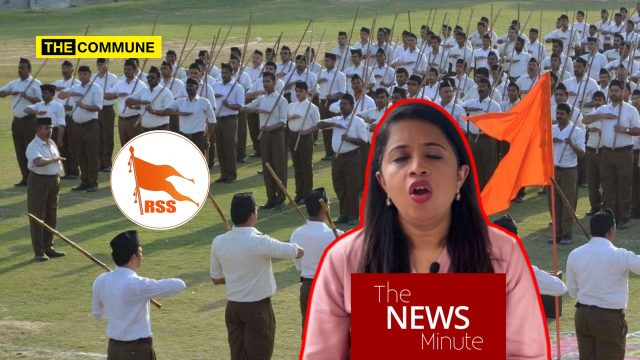
The News Minute’s (TNM) recent coverage of the national education conclave hosted by RSS affiliate Shiksha Sanskriti Utthan Nyas (SSUN) in Kerala makes for an interesting study – not in reportage, but in projection.
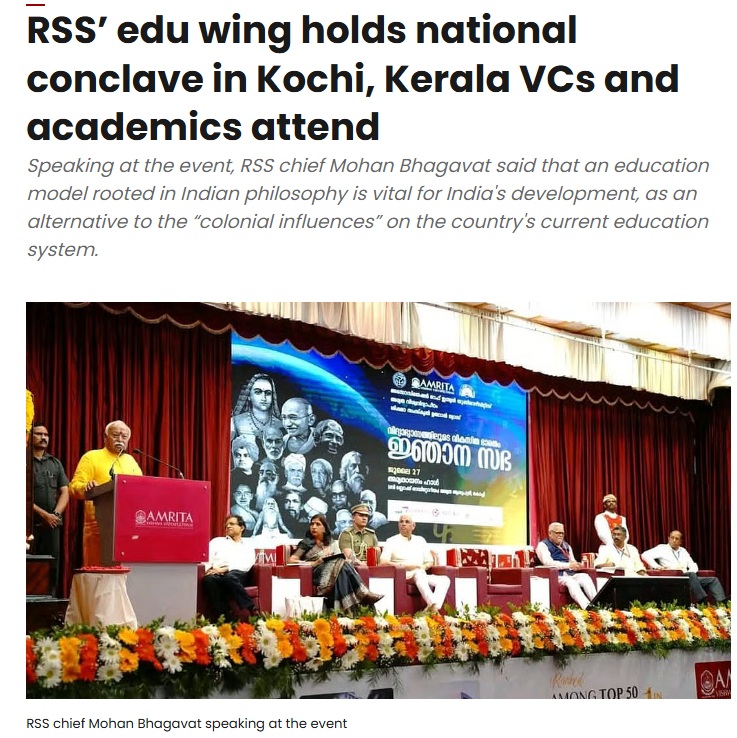
Cloaked as a straight news report, the article subtly reveals the unease The News Minute (TNM), and its ideological ecosystem feel when long-standing institutions of Indian thought gain ground in domains historically dominated by colonial or Marxist narratives.
The RSS holding an education conclave isn’t new, nor is it clandestine. The theme, “Education for a Developed India” and its emphasis on Indian philosophy and the National Education Policy (NEP) 2020 are aligned with well-publicized government and civil society efforts to decolonize and indigenize education. Yet TNM’s tone, framing, and selective emphasis betray a larger anxiety: the growing intellectual mainstreaming of Bharatiya civilizational frameworks.
The article seems less interested in evaluating the ideas discussed and more in asking, “Why were vice chancellors present?” Well, why not? The VCs represent institutions that are part of India’s education ecosystem. The NEP has been official policy for five years. Shouldn’t VCs attend policy-oriented forums, especially those discussing structural shifts mandated by the government? Or is the objection not about academic engagement but about who’s hosting?
This is where TNM’s ideological discomfort shows. Repeated references to RSS as if invoking a danger, pointed mention of SFI protests, and the citation of a High Court judgment unrelated to the conclave’s content, these are not incidental. They are part of a narrative scaffolding that seeks to paint any RSS-linked initiative as inherently illegitimate, regardless of content or context.
Then there’s the tone policing of academic participation. Professors are quoted only to be subtly discredited. Vice chancellors are name-dropped with a sense of foreboding, as if academic freedom itself is suspect when it operates outside leftist boundaries.
Even when quoting Kerala Governor Rajendra Arlekar or RSS chief Mohan Bhagwat, TNM focuses on phrases like “vishwa guru” and “Bharatiyaness” with thinly veiled mockery. But these aren’t fringe, jingoistic slogans; they represent widely held aspirations of civilizational resurgence across Indian society. If anything, the unease stems from the fact that such ideas are no longer restricted to speeches in Nagpur, they are now entering seminar halls in Kochi. Did they forget that the RSS has a very strong presence in Kerala, and it is not new?
The real concern for TNM then, is not about the conclave itself, or the content of the discussions. It’s about the collapse of their (leftist) monopoly. For decades, the Indian education discourse was curated by a select intellectual class that defined “progressive” as Westernised, “scientific” as materialist, and “national” as suspect. That stranglehold is weakening. Institutions are experimenting, faculty are exploring, and the RSS, long the subject of caricature, is being engaged with, if not yet embraced, by the academic mainstream.
So why is TNM so rattled? Because the ideological certainties it once considered settled are now up for debate. The narrative it helped shape is now being challenged by alternative visions grounded in dharma, diversity, and indigenous knowledge.
Keep being rattled TNM because your future is bleak.
Subscribe to our channels on Telegram, WhatsApp, and Instagram and get the best stories of the day delivered to you personally.