In recent days, political analysts have raised concerns about whether Congress leader Rahul Gandhi is truly acting as the opposition leader within India’s Parliament or serving the interests of foreign powers. Critics argue that his statements and actions suggest a misplaced loyalty, potentially favoring adversaries who oppose India’s growth. Several instances have been cited to support this claim.
One major point of contention has been Gandhi’s repeated criticism by the judiciary for misleading and false statements. Most recently, on 8 August 2025, the Supreme Court reprimanded him for remarks during the Bharat Jodo Yatra, where he claimed that Chinese forces were overpowering Indian soldiers in Arunachal Pradesh, referencing the December 2022 Tawang sector incident.
The Bench of Justices Dipankar Datta and Joymalya Bagchi questioned Gandhi’s assertion that China had occupied 2,000 square kilometers of Indian territory. They asked whether he had credible evidence and remarked that “if he were a true Indian, he would not have said all this.” The Court also questioned why such claims were made on social media instead of in Parliament.
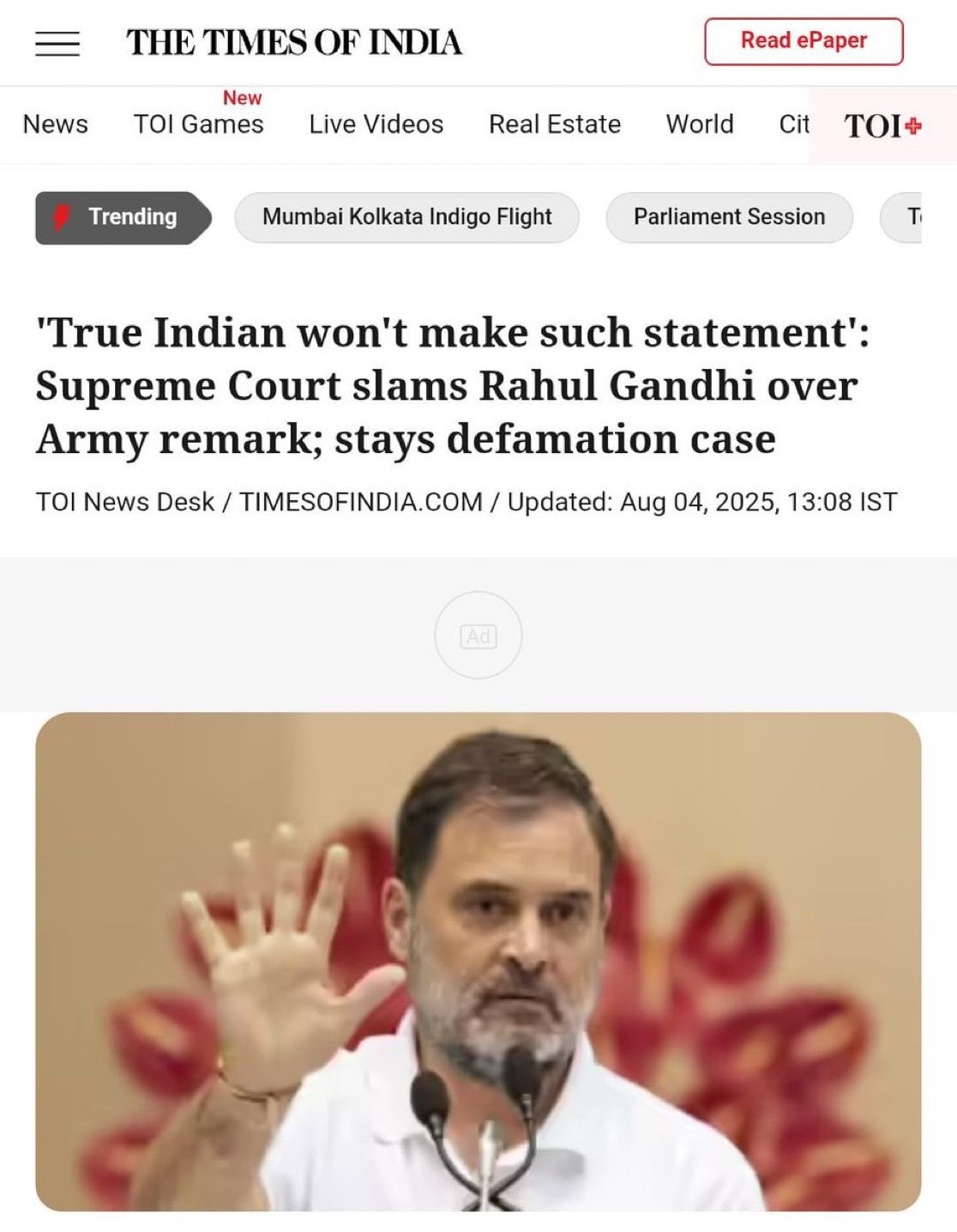
Similarly, the Allahabad High Court criticized Gandhi over the same statements, rejecting his plea against a summons related to alleged defamatory remarks against the Indian Army. The Court emphasized that while freedom of speech is protected under Article 19(1)(a), it does not extend to statements that defame the Army.
Gandhi has publicly questioned why Indian media did not highlight the supposed Chinese incursion or the casualties suffered by Indian soldiers. These statements, critics argue, exaggerate the situation and project a negative narrative.
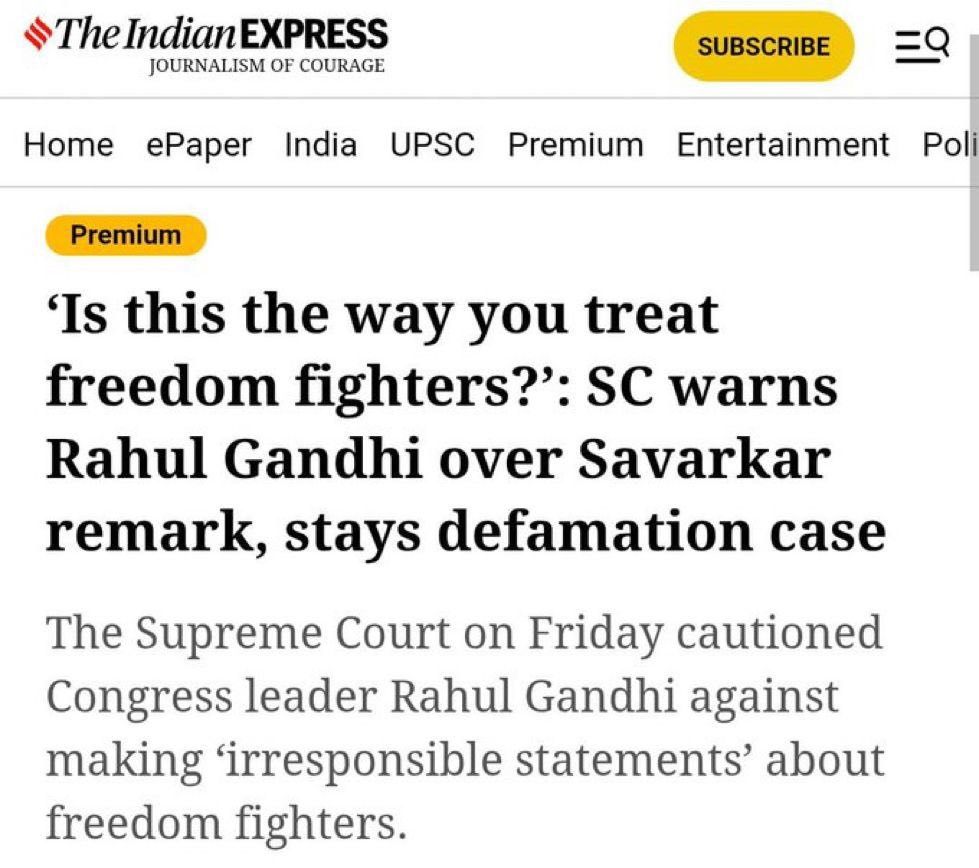
Earlier, in April 2025, the Supreme Court also took exception to Gandhi’s comments on freedom fighter V. D. Savarkar, staying criminal defamation proceedings while warning against making irresponsible statements about freedom fighters. The bench cautioned that freedom fighters deserved respect and that political leaders should not use their names carelessly.
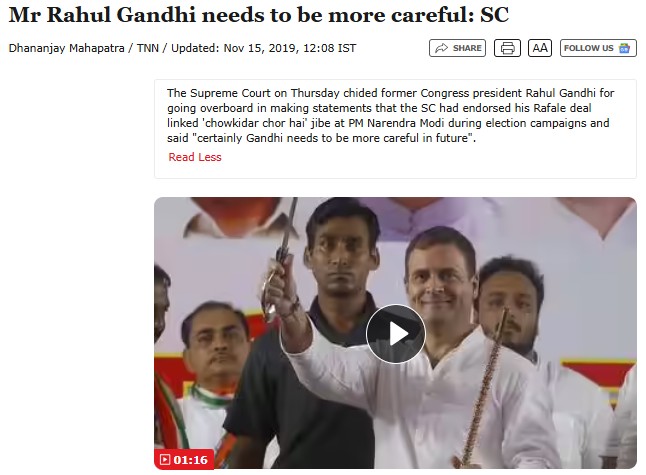
In 2019, the Supreme Court had similarly rebuked Gandhi for his “Chowkidar Chor Hai” campaign remarks against Prime Minister Narendra Modi, criticizing him for misrepresenting the Court’s stance. The bench advised Gandhi to be more careful and accept mistakes rather than attempting to justify them with lengthy affidavits.
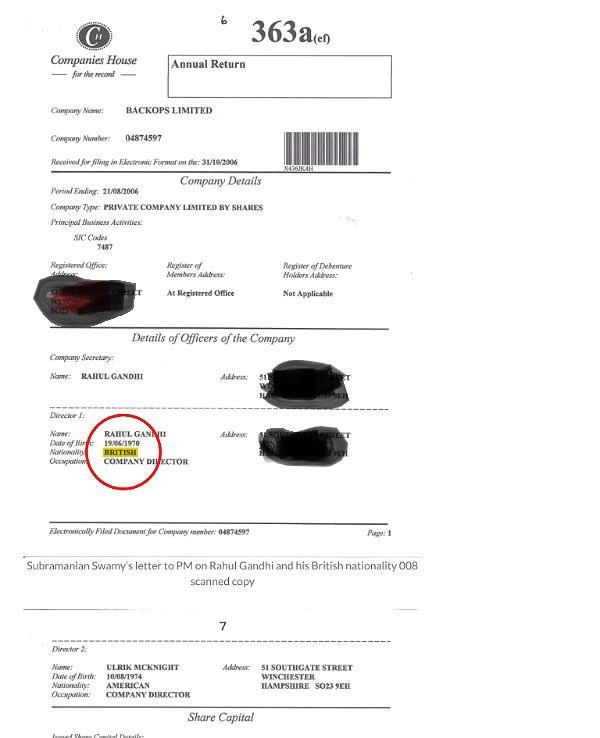
Critics further allege that Gandhi and his team are shaping narratives to favor foreign interests, including political figures like Donald Trump, rather than focusing on India’s national priorities. Records from the UK’s Companies House indicate that Rahul Gandhi holds British citizenship.
Additionally, his business partner, Ulrik McKnight, is a US citizen engaged in defense-related ventures.
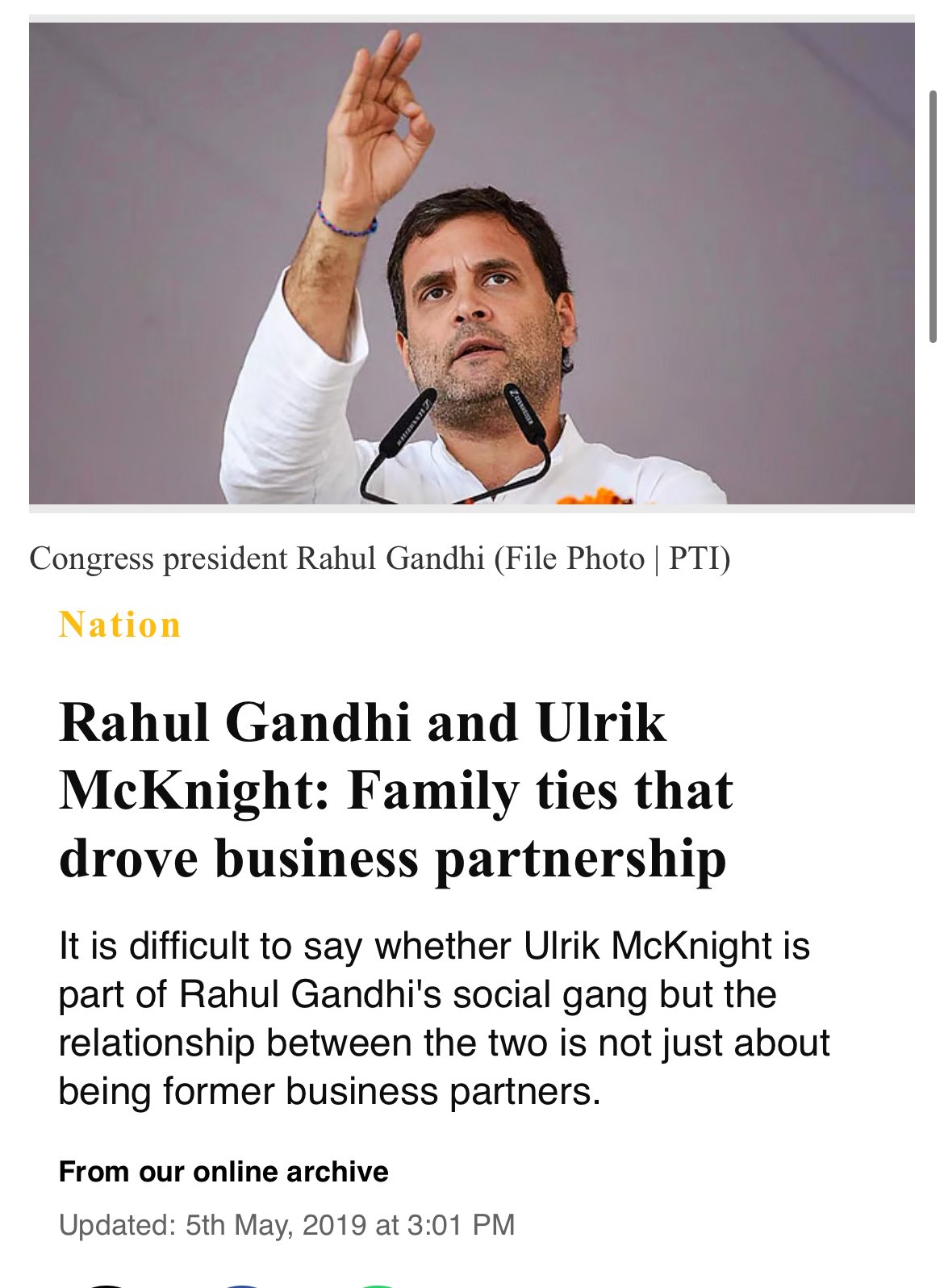
The Indian branch of their company reportedly received substantial funds from foreign sources without transparent disclosure.
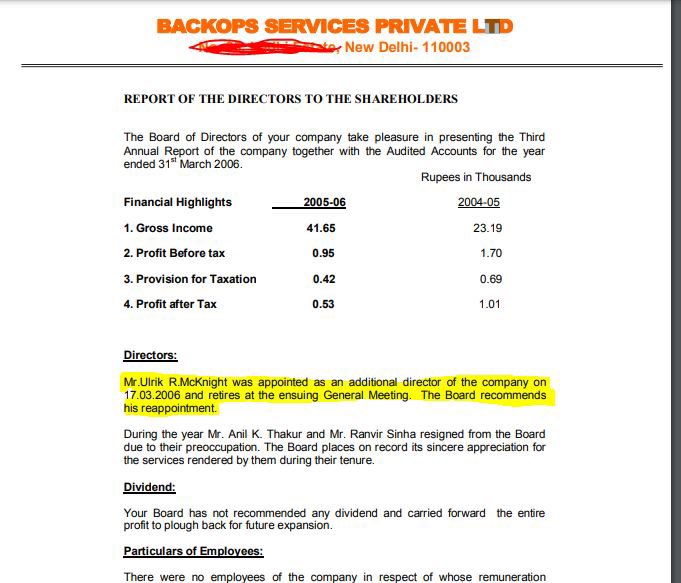
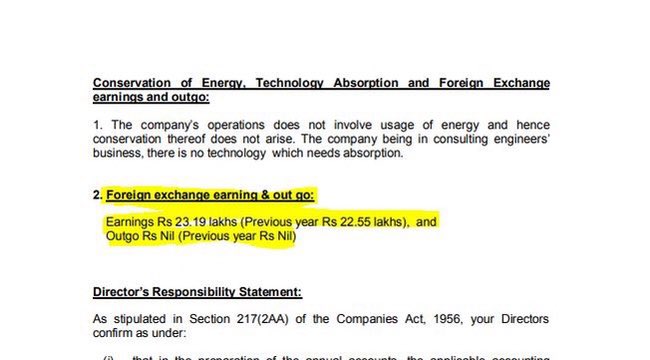
These revelations have fueled speculation that Gandhi’s foreign ties and business interests may be influencing his political actions. Critics argue that his British citizenship renders him ineligible for the posts of Member of Parliament and Leader of the Opposition, raising serious questions about his allegiance to India.
(This article is based on an X Thread By Vijay Gajera)
Subscribe to our channels on Telegram, WhatsApp, and Instagram and get the best stories of the day delivered to you personally.