The claim that Brahmins in Tamil Nadu never faced violence from the Dravidianists has been debunked several times and with larger amounts of proof coming up each time.
If one thought this was not reported much in India, that might be true. Unlike Kashmiri Pandit massacre and the Chitpavan massacre, the continued eviction and harassment that Tamil Brahmins have been facing did not go unnoticed by the New York Times back in the 1950s.
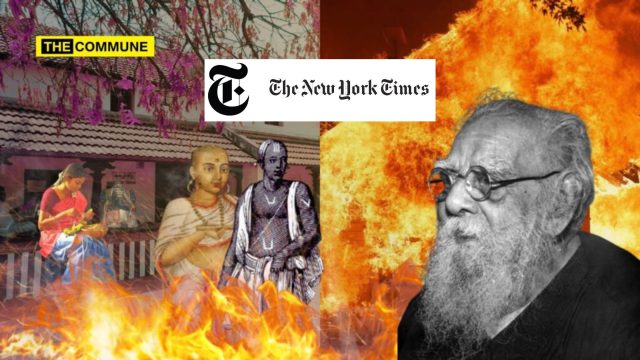
An archival report published by The New York Times on 6 December 1957 offers a rare international snapshot of caste tensions in South India during the height of the Dravidian movement, documenting what it described as a period of intense hostility directed at the Brahmin community.
The report, datelined New Delhi, detailed a surge in anti-Brahmin mobilisation led by Dravidian ideologue EV Ramasamy Naicker (popularly known as Periyar), noting that the campaign had already resulted in 2,884 arrests as authorities attempted to contain escalating unrest.
Parliament Briefed on Anti-Brahmin Activity
According to the report, India’s then Home Minister Govind Ballabh Pant presented findings to Parliament on what was described as a flare-up of anti-Brahmin activity. The developments were portrayed as not merely political agitation but a movement blending political, social, and racial rhetoric against the community.
The newspaper characterised the campaign as one of the central political weapons of Periyar’s Dravidian movement, which positioned itself as representing the interests of “original Dravidians” of South India.
Ideological Roots of the Conflict
The report explained that Dravidian activists accused Brahmins of historical domination alleging that Brahmins had “trampled and perverted” native traditions after migrating from the north centuries earlier.
However, from the standpoint of Brahmin communities, the period marked growing social insecurity. The report recorded incidents of intimidation and violence, including assaults on individuals performing religious rituals.
Calls for Violence Draw Alarm
One of the most alarming elements highlighted by the newspaper was rhetoric attributed to Periyar during the period.
It reported that on his seventy-ninth birthday, he had asked followers for a “birthday present”, the death of Brahmins, a statement that intensified national concern over incitement and public order.
The report further noted threats by sections of the movement to burn the Constitution of India, which they alleged had been framed under Brahmin influence.
Constitution Burning and Street Violence
Government briefings cited by the newspaper stated that members of Dravidian organisations had burned copies of the Constitution on November 26.
In addition, the Home Minister reported incidents where Brahmins engaged in ritual bathing were attacked, their sacred threads cut, and their traditional hair tufts shorn, acts seen as symbolic humiliation targeting religious identity.
Legislative Response: Anti-Insult Law
In response, the Madras State Legislature enacted a law, referred to in the report as the Prevention of Insults to National Honor Act, criminalising acts such as burning the Constitution or desecrating images of Mahatma Gandhi.
The move was presented as an attempt to curb extremist protest methods and restore civic order.
Social Climate and Brahmin Position
The New York Times piece observed that the unrest had made life “unpleasant” for Brahmins in parts of South India, even as the community continued to command social respect in other regions of the country.
It contextualised Brahmins’ traditional standing within Hindu society, as priests and custodians of ritual life, while also noting their disproportionate representation in education, administration, and government in early post-Independence India.
At the time, several top constitutional offices, including President, Prime Minister, and key Union ministers, were held by Brahmins, a factor that critics cited as evidence of elite dominance, but which supporters viewed as a reflection of educational advancement.
Historical Snapshot, Continuing Debate
The archival coverage remains significant today as it documents how caste politics, social reform movements, and identity conflicts were perceived internationally during a formative period in India’s political evolution.
Subscribe to our channels on Telegram, WhatsApp, and Instagram and get the best stories of the day delivered to you personally.