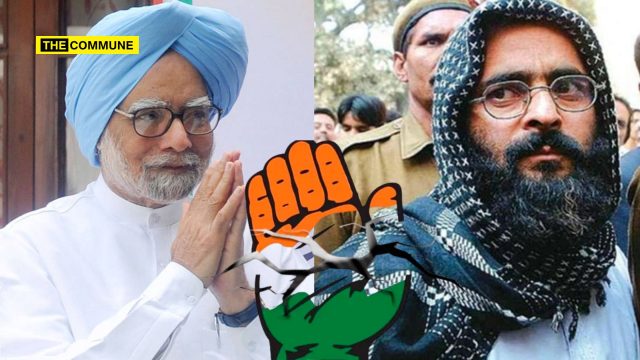
When Afzal Guru, convicted for masterminding the 13 December 2001 terror attack on the Indian Parliament that killed 14 people was finally hanged on 9 February 2013, it should have been a moment of justice, long overdue after nearly eight years on death row. Instead, the Congress-led UPA government turned his execution into a political scandal – not over any injustice to the nation, but over its perceived failure to adequately protect the feelings of a terrorist’s family.
The execution was carried out as a top-secret operation at Tihar Jail. Within days, the Congress establishment including Prime Minister Manmohan Singh himself was busy questioning its own Home Minister, Sushil Kumar Shinde, about why Guru’s family wasn’t given enough notice. Not why the execution was delayed for years despite a Supreme Court conviction. Not why the mercy petition dragged on. But why a terrorist’s family wasn’t personally called up before his hanging.
This is not a joke.
This was called UPA
Yes, you read the headline correctly:
PM questions Home Minister
Over delay in informing family about execution of terrorist convicted for Parliament attack
Dear GenZ,
Do you realize how this country was running before 2014? pic.twitter.com/jWMTi7qm73
— Abhishek (@AbhishBanerj) March 26, 2026
The Home Ministry sent a speed post letter to Sopore at midnight on February 7 but the notification method is not the point. The point is that the Prime Minister of India spent political energy demanding answers about why a convicted terrorist’s family wasn’t given enough comfort, while the families of the 14 people killed in the Parliament attack received no such Prime Ministerial attention. This was not a bureaucratic lapse – it was a conscious political choice to appease a constituency that viewed Afzal Guru as a martyr.
According to sources quoted in NDTV’s own report, Singh personally rang Shinde to demand answers – a level of Prime Ministerial intervention rarely seen on behalf of victims’ families.
Meanwhile, Guru’s family, human rights activists, and the usual chorus of separatist-adjacent voices lambasted the government. And Congress, characteristically, apologised to them – not to the families of the nine security personnel and civilians who died in the Parliament attack.
This was the Congress playbook on terrorism in a nutshell: The Supreme Court had already upheld his death sentence in 2005. Congress’s only job was to act on it, instead, they sat on the mercy petition for over seven years, moving only when political pressure became unavoidable and then spend more political energy managing the terrorist’s family’s grievances than defending the nation’s sovereignty. The Parliament, the seat of Indian democracy was attacked. Fourteen people died. Yet when justice was finally served, Congress’s first instinct was to question whether it was served politely enough to the convict’s relatives.
Subscribe to our channels on WhatsApp, Telegram, Instagram and YouTube to get the best stories of the day delivered to you personally.