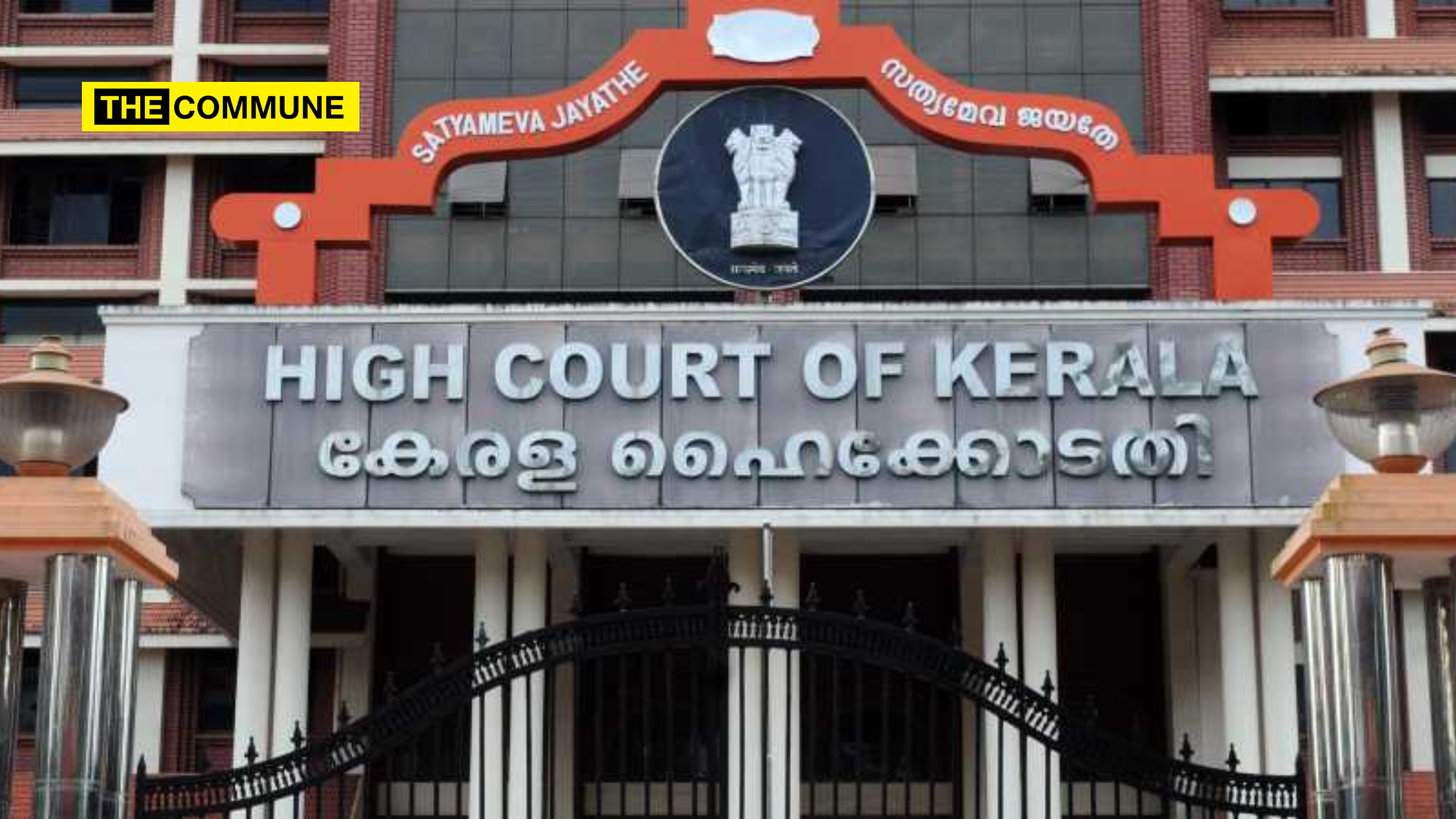
The Kerala High Court on Wednesday delivered a sharp rebuke to the Union government for its refusal to grant loan waivers to victims of the 2024 Wayanad landslides, stating that the Centre has “virtually failed” the people of Kerala.
A Division Bench comprising Justices A.K. Jayasankaran Nambiar and Jobin Sebastian said the Union government’s stance reflects an “unwillingness” to act despite having the constitutional authority.
“Please tell the Union Government it has failed the people of Kerala. We had made it very clear that it is not a situation where the Union is powerless to act. By this affidavit, you’ve clearly shown again, that you are hiding behind this power argument, you’re saying you are powerless to act. Why is that being done?” the Bench observed.
The court termed the Centre’s refusal as “bureaucratic babble” and questioned its willingness to act: “Enough is enough. We don’t need the central government’s charity. This is just bureaucratic babble. It’s not about whether the central government can act, but whether they are willing to act. If you are unwilling to act, we (the Bench) dare to say it. Who are you trying to fool?”
The remarks came during a hearing in which the central government submitted that there is no provision for granting loan waivers in cases of natural disasters, and that the Ministry of Home Affairs’ involvement is limited due to Reserve Bank of India (RBI) guidelines governing banks’ commercial transactions.
“The Union of India has limitations because of an RBI circular? In relation to the Union of India, what is the Reserve Bank? Affidavits filed by bureaucrats often fail to grasp the legal significance of what transpires within Constitutional institutions,” the Bench said. “We have made it very clear—this is not a case where the Union is powerless to act; it is a matter of whether the Union is willing to act. Through this affidavit, you have again demonstrated that by hiding behind the argument of powerlessness, you are essentially saying that you choose not to act. Why is that being done?”
The court also highlighted disparities in central relief funding for other states. Citing newspaper reports, it noted that Rs 707.97 crore had been approved for Assam and Gujarat, which experienced floods and landslides in 2024, while Rs 903.67 crore was allocated to Haryana, Madhya Pradesh, and Rajasthan for fire service expansion and modernisation. The Bench observed that neither of these disasters were classified as severe, and yet substantial funds were released.
“One could understand if the Union Executive did not have the funds. Let us hope we don’t reach that stage — where the Union of India is helpless and in penury, unable to assist any particular State,” the court said.
The Bench stressed that the federal principle does not allow differential treatment of citizens based on state or party politics and highlighted the constitutional guarantee of the fundamental right to life, “Party politics cannot negate the constitutional guarantee of protection of the fundamental rights of the people in a democratic republic. In the instant case, what is at stake is the fundamental right of the landslide victims of Wayanad to a life with dignity.”
The Bench expressed dismay over the recovery actions of banks against landslide victims, calling them “Shylockian methods.” It suo motu impleaded 12 banks, including SBI, Canara Bank, Central Bank of India, Punjab National Bank, and Bank of Baroda, and directed that any recovery action against the victims be kept in abeyance until the final disposal of the writ petition.
The court further directed the banks to file affidavits stating whether they were willing to waive, wholly or partially, the loans availed by the landslide victims. If not, the banks must provide justification with reference to the terms of loan agreements, including interest, for seeking repayment during the pendency of the case.
The Bench noted that while it is constrained by the principle of separation of powers and cannot direct the Centre on economic policy, it cannot remain a “mute spectator” when banks pursue loan recovery against victims struggling to rebuild their lives.
“Our sense of Constitutional morality requires us to respect the principle of separation of powers, and therefore, we will not issue directions to the Union Government. That is not due to any lack of authority, but because of our magnanimity—as a Constitutional body and integral part of the State that respects the Constitution. Enough is enough. We do not need the Union’s charity,” the court remarked.
The Wayanad landslide struck the Mundakkai and Chooralmala regions on 30 July 2024, causing over 200 deaths, hundreds of injuries, and leaving 32 persons missing. The destruction of property, including agricultural land offered as loan collateral, left victims unable to repay loans, further exacerbating their plight.
The Bench concluded that the refusal to exercise powers that exist and allow relief is “nothing short of an affront to their dignity,” adding that the Centre has virtually failed the victims of Wayanad. The matter has been listed for further hearing on October 29, 2025.
(With inputs from The New Indian Express)
Subscribe to our channels on Telegram, WhatsApp, and Instagram and get the best stories of the day delivered to you personally.