


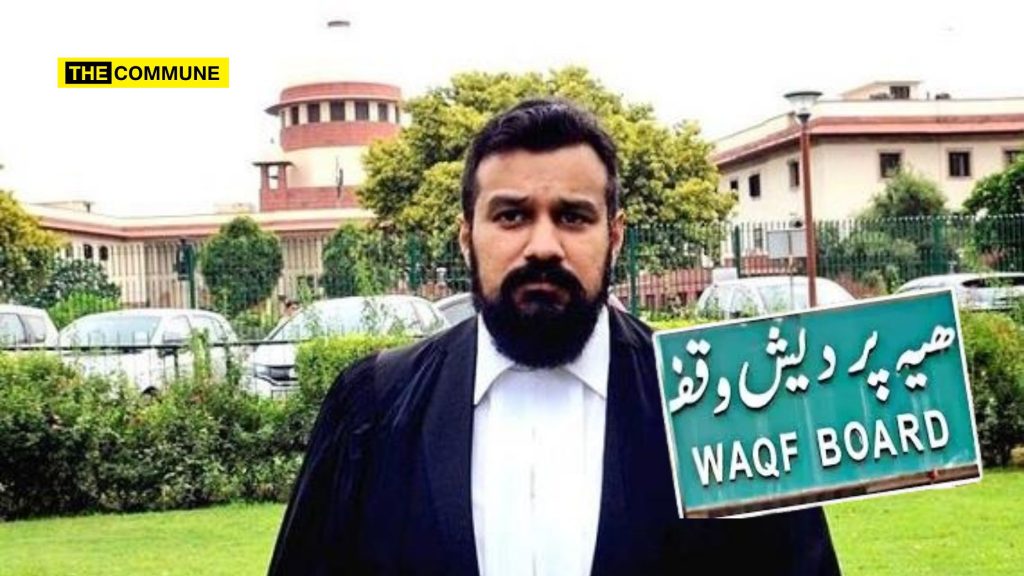
As the Supreme Court begins hearing over 70 petitions challenging the Waqf Amendment Act, advocate Vishnu Shankar Jain has raised serious questions over what he calls “inconsistent judicial standards” when it comes to religious endowment laws in India.
Speaking ahead of Thursday’s (17 April 2025) hearing before a bench comprising Chief Justice Sanjiv Khanna, Justice PV Sanjay Kumar, and Justice KV Vishwanathan, Jain pointed to a stark disparity in how the top court has handled petitions related to Hindu and Muslim religious institutions.
“When we filed a petition in the Supreme Court regarding the Waqf Board, the Court asked us why we came directly to the Supreme Court and suggested we go to the High Court,” said Jain. “We did not even get interim relief, despite more than 140 related petitions pending in various High Courts. But now, when others file Waqf-related cases, not only are they heard in the Supreme Court, but interim orders are also discussed. What is the standard here?”
#WATCH | Delhi | Advocate Vishnu Shankar Jain says, "When we filed a petition in the Supreme Court regarding the Waqf board, the Court asked us why we came directly to the Supreme Court and suggested that we should go to the High Courts, and we didn't get any interim relief even… pic.twitter.com/jw2AfuWCvO
— ANI (@ANI) April 17, 2025
Supreme Court Questions Government on Waqf Provisions
During a two-hour-long hearing on Wednesday (16 April 2025), the Supreme Court heard arguments from both sides and raised key concerns over the provisions of the Waqf Act. The bench questioned the government on:
- Why properties claimed as government land cannot be classified as Waqf.
- The lack of representation of non-Muslims in Waqf Boards and the Waqf Council.
- The broad powers granted to Waqf Boards over land, which many argue have been exercised without adequate due process.
The court has sought a detailed reply from the government and will continue hearing the matter.
“Create A Constitutional Bench In A High Court,” Suggests Jain
Jain further pointed to the Supreme Court’s recent decision to transfer long-pending cases related to the Hindu Religious Endowment Acts of four states to the respective High Courts. “For 13 years, the Supreme Court heard matters related to the state control of Hindu temples, only to recently say these belong in the High Courts,” he noted.
“My suggestion is that all petitions regarding the Waqf Amendment Act be sent to one High Court and heard by a constitutional bench, with a clear timeline of six months for resolution,” Jain said.
The remarks have triggered renewed debate about the judiciary’s approach to religious matters. While Hindu temple management and endowment laws have often been redirected to lower courts, the Waqf Act—a law affecting vast tracts of land and thousands of properties—continues to receive attention at the highest level.
Critics argue this reflects an imbalance in how religious issues are handled, especially given the wide-reaching powers that Waqf Boards enjoy under current legislation.
(With inputs from Jagran)
Subscribe to our channels on Telegram, WhatsApp, and Instagram and get the best stories of the day delivered to you personally.