


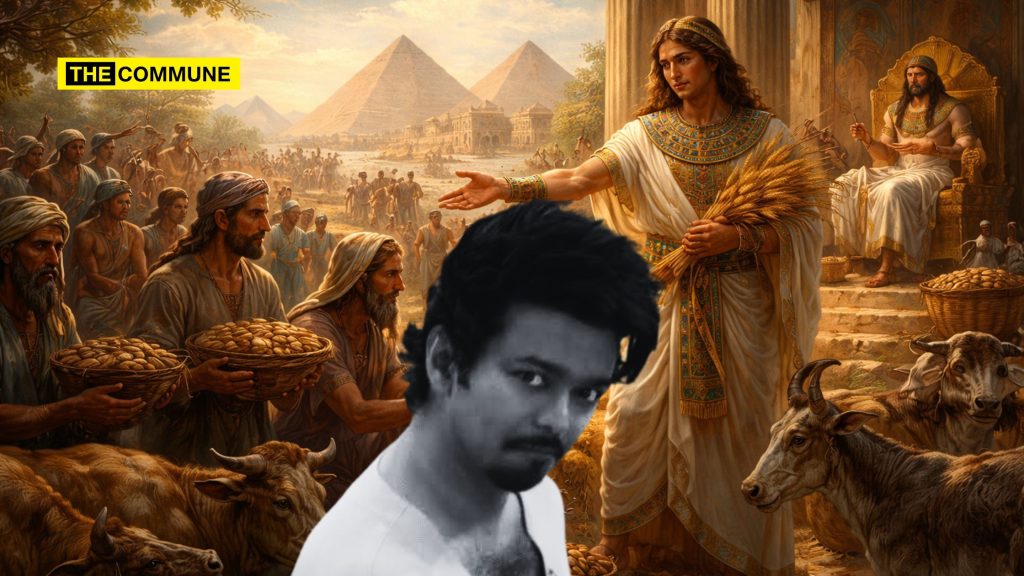
Actor-turned-politician Vijay has triggered a debate after a speech delivered at a Christmas celebration organised by his party the Tamilaga Vettri Kazhagam on 22 December 2025, in which he referred to a Biblical story of betrayal, endurance, and eventual triumph, widely understood to be the story of Joseph from the Old Testament.
Speaking at the event, Vijay described a figure who was betrayed by his own people, overcame adversity, rose to become the ruler of a country, and later saved not only those who betrayed him but the entire nation. He said such stories in the Bible reflected God’s will, the strength of the people, and the belief that even against powerful enemies, victory was possible. He concluded by reaffirming his commitment to what he described as a “secular ideology,” assuring protection for all, and extended Christmas greetings to the audience.
Political observers and commentators identified the reference as drawing from the Biblical account commonly titled Joseph and the Famine, found in Book of Genesis, particularly Chapter 47. The story recounts Joseph’s rise to power in Egypt during a prolonged famine.
However, critics argue that the speech selectively highlighted only one aspect of the narrative. According to Genesis 47, during the severe famine in Egypt, Joseph, acting on behalf of Pharaoh, first collected all the people’s money in exchange for grain. When their money was exhausted, he took their livestock. When even that was depleted, the Egyptians themselves proposed selling their land and their labour to Pharaoh in return for food. The text states that Joseph subsequently bought all the land for Pharaoh, reduced the people to servitude “from one end of Egypt to the other,” and imposed a permanent tax of one-fifth of agricultural produce, with the people declaring, “You have saved our lives… we will be servants to Pharaoh.”
Critics contend that while Joseph’s actions consolidated state power and ensured food distribution, they also resulted in the loss of land, autonomy, and economic independence for ordinary Egyptians, creating a dependent, taxed peasantry under Pharaoh. They argue that portraying Joseph solely as a benevolent saviour overlooks the coercive economic consequences described in the text.
Some commentators have suggested that Vijay’s reference may have been influenced by the symbolic overlap between his own name and the Biblical figure of Joseph but accused him of presenting only a partial reading of the story. Others contrasted the Biblical narrative with figures from Indian epics, arguing that stories such as that of Karna offered a more just and morally consistent model of sacrifice and righteousness.
ஆதாரம் கேட்டவர்களுக்கு இதோ ஆதாரம்: “பைபிளில் joseph and the famine (in egypt) தேடுங்கள் கிடைக்கும்.
ஜோசப் அரசனான கதையை விஜய் சொல்வது அவர் விருப்பம். ஆனால் ஜோசப் எகிப்த் மக்களை அவர்களின் வறுமையை பஞ்சத்தால் உருவான சூழலை பயன்படுத்தி நிலம் , கால் நடைகள் அனைத்தையும் மன்னனுக்கு எழுதி… pic.twitter.com/ZqyRhsw5hQ
— Maridhas (@MaridhasAnswers) December 22, 2025
Subscribe to our channels on WhatsApp, Telegram, Instagram and YouTube to get the best stories of the day delivered to you personally.