


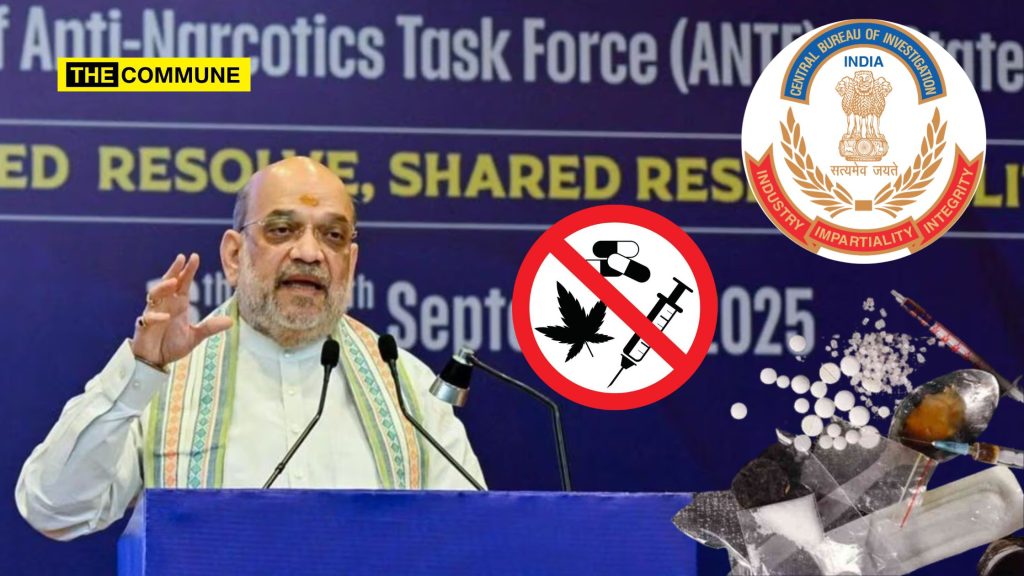
Union Home Minister Amit Shah has called on state and union territory officials to intensify efforts against drug trafficking by working closely with the Central Bureau of Investigation (CBI) to trace, locate, and bring back fugitives managing drug networks from foreign countries.
Speaking at the Second National Conference of Anti-Narcotics Task Force (ANTF) Chiefs, Shah urged states and central agencies to escalate their crackdown on drug smuggling at every level from border-level cartels to local peddlers. The event, organized by the Narcotics Control Bureau (NCB), was attended by key officials from state police forces, central agencies, and intelligence units.
“The fight against narcotics needs to move beyond just catching petty peddlers. We must strategically dismantle three major types of drug cartels those operating at the borders, those distributing drugs across states from the entry points, and those responsible for local-level retail, even up to paan shops,” Shah said.
He emphasized the importance of a multi-tiered action plan at both state and district levels, urging each state to devise targeted strategies for all cartel types. He also called for monthly participation from all departments, not just police forces, to contribute a day solely for anti-narcotics efforts.
Shah outlined a three-pronged approach to combat the drug menace, a strategic plan for reducing demand, a compassionate approach towards harm reduction, and zero-tolerance policy towards drug cartels.
He further stressed the urgency of bringing international drug criminals under Indian jurisdiction, stating that extradition and deportation are critical tools in this battle. “The CBI has made significant progress, and I encourage all ANTF heads to work in close coordination with CBI Director Praveen Sood to strengthen an effective extradition framework not just for drug-related cases, but also terrorism and gang crimes,” he said.
Shah also recommended a more flexible and practical deportation process to quickly remove foreign nationals involved in drug-related offenses. He suggested establishing a collaborative mechanism between the NCB, CBI, and state police to handle such cases more effectively.
According to an official familiar with the discussions, NCB Director General Anurag Garg emphasized the need for states and UTs to identify foreigners, particularly those overstaying their visas and suspected of engaging in drug trafficking. The official revealed that approximately 16,000 individuals from African nations are suspected to be living illegally in India, with a significant number believed to be involved in narcotics trade.
Shah also directed state governments to establish dedicated financial investigation units to follow the money trail, monitor hawala networks, check cryptocurrency transactions, and strengthen cyber surveillance of drug traffickers. He further recommended that every state set up a narcotics-focused forensic unit, which would assist in evidence collection and reduce the likelihood of offenders securing bail easily.
(With inputs from Hindustan Times)
Subscribe to our channels on Telegram, WhatsApp, and Instagram and get the best stories of the day delivered to you personally.