“Tamil civilization was non-religious. Ancient Tamils were secular. Keezhadi excavations prove that Tamils have no connection with Hinduism.” – These are the kind of narratives that gets churned out by the DMK and its Dravidianist ecosystem in the media, academia and government. Notably, archaeologists K. Amarnath Ramakrishna who has been spearheading the Keezhadi excavations has been claiming that there was no evidence of religious symbols at the site which implying the ‘secular’ nature of the Tamil civilization.
However, a 2023 ground report by PoliTalks channel has revealed stunning evidences. The video evidence suggests that connections to Hindu faith near the site are being concealed, despite visible remnants of temples and idols just 100 meters from the dig location.
Since the Keeladi excavations began, they have revealed significant historical insights into ancient Tamil civilization. However, one point has been repeatedly emphasized: that no evidence of religious practice or worship has been found at the site. This has led to the assertion that Sangam-era Tamils lacked deities, spirituality, or any form of worship associated with Hinduism. But an on-site investigation by Team PoliTalks appears to contradict this narrative.
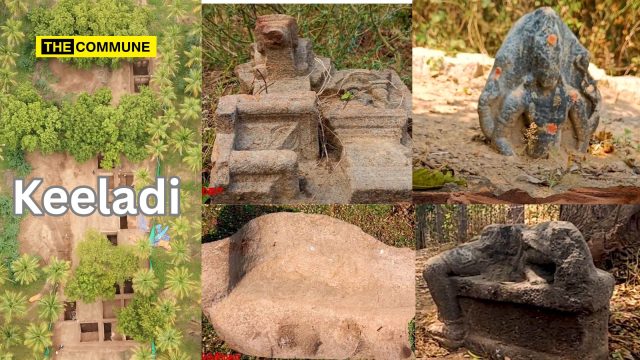
Their findings indicate that only a small section of what was likely a much larger city has been excavated. Crucial information could still lie in the unexcavated surrounding areas. Notably, within a 400-meter radius of the current site, there are visible signs of what appears to be a large temple complex. These include the top portion of a stone pillar, the foundation base of a temple, a half-buried Vishnu idol, and sculptures of other deities. Scattered large stones and column-like structures further indicate the presence of a grand temple that once stood in the area.
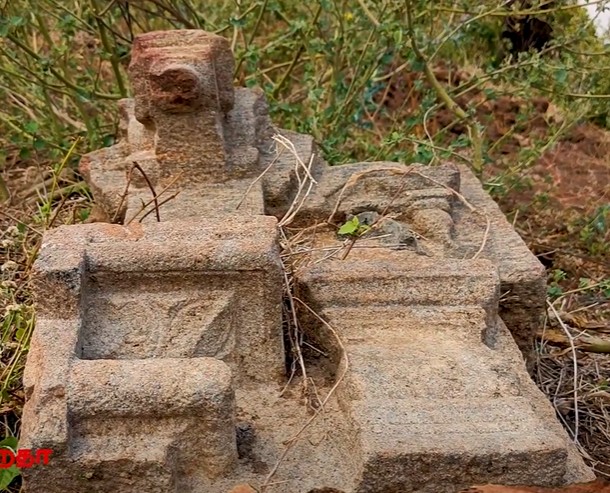
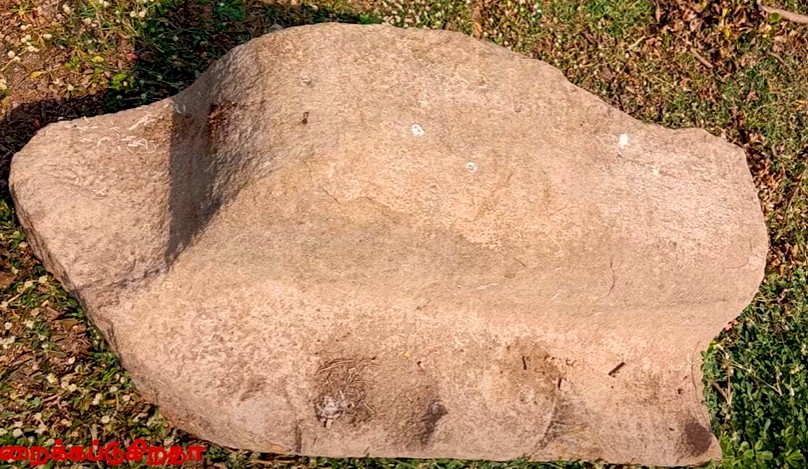
In addition to the presumed Shiva temple ruins, within just 100 meters of the main excavation zone, several idols can be found discarded, lying in debris or partially buried—prompting further concerns about the selective focus of the archaeological documentation.
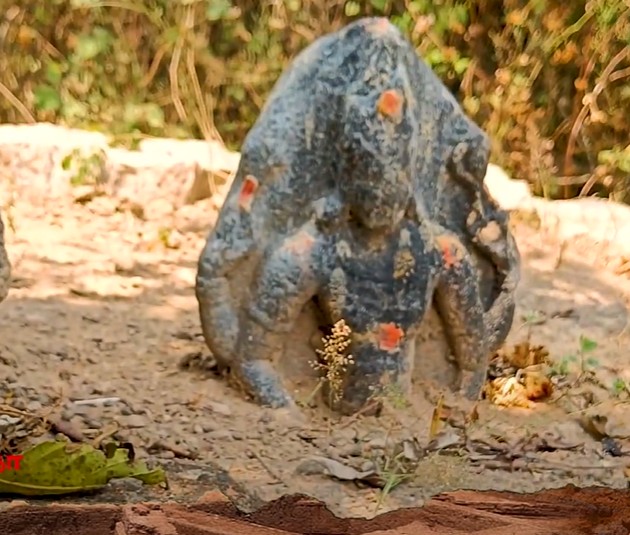
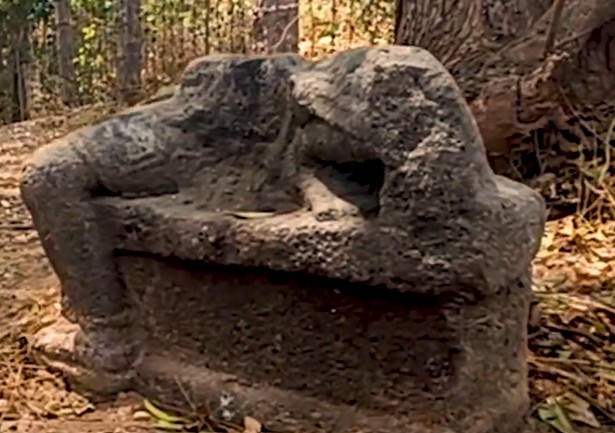
Three specific artifacts found directly at the Keeladi site also stand out:
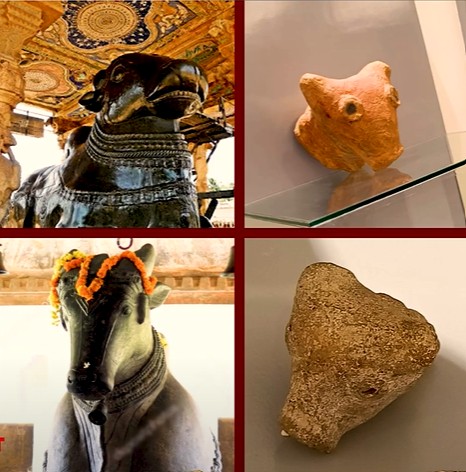
- A figurine of a bull’s head
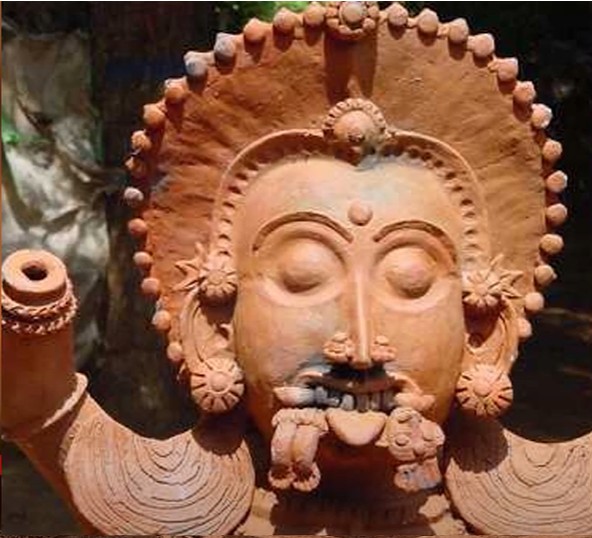
- A female terracotta figure with a wide mouth and prominent teeth
- A coral piece engraved with a pig’s image
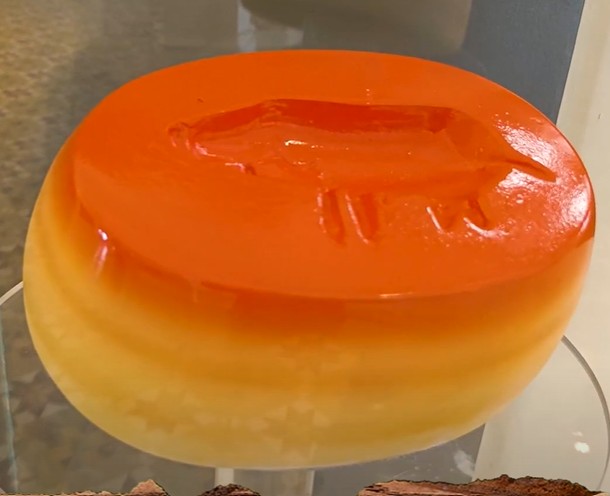
These items have raised cultural and historical questions. The female figurine closely resembles depictions of Goddess Neeli, revered as a guardian deity of Madurai. The pig engraving is seen as potentially referencing a legend in which Lord Shiva assumes the form of a boar during his divine acts in Madurai. The bull’s head is believed by some to symbolize Nandi, the mount of Lord Shiva.
Despite these findings, researchers have reportedly overlooked these artifacts in discussions surrounding Keeladi. Critics argue that there has been little to no academic acknowledgment of the site’s spiritual or religious aspects. This concern extends to the recently inaugurated Keeladi Museum, which contains no mention or display of Tamil religious beliefs, practices, or associated artifacts from the site.
Allegations continue to circulate that ideological leanings particularly from Dravidianist circles are influencing the framing of Keeladi’s history, promoting a narrative that ancient Tamils had no connection to Hinduism or religious worship. The exclusion of religious evidence, despite the presence of idols, temple ruins, and supporting Sangam literature, should now become a central point the debate over the portrayal of Tamil heritage.
Subscribe to our Telegram, WhatsApp, and Instagram channels and get the best stories of the day delivered to you personally.