For weeks, protests against the UGC Equity Regulations, 2026 have followed a familiar script. Anger has been aimed at the BJP, at the Modi government, at the Education Ministry. Hashtags accuse the regime of authoritarianism. Editorials warn of institutional overreach.
But that outrage is misdirected.
The real story of how the UGC Equity Regulations, 2026 came to be is not one of ideological zeal or secret backroom bargaining. It is a story of courtroom pressure, strategic litigation, and bureaucratic capitulation where a balanced, defensible policy drafted by the Education Ministry itself was dismantled and rewritten under judicial supervision.
If critics want accountability, they need to follow the paper trail.
A Draft That Proved Better Policy Was Possible
In February 2025, the Ministry of Education and the University Grants Commission released a draft titled the University Grants Commission (Promotion of Equity in Higher Education Institutions) Regulations, 2025. That draft now reads like a document from another universe.
Measured. Cautious. Procedurally fair.
It squarely addressed caste discrimination against Scheduled Castes and Scheduled Tribes, the precise concern raised in a long-pending Supreme Court case, while preserving due process, institutional autonomy, and equality before law. Complaints were to be investigated with evidence from both sides. There were no automatic punishments. No presumption of guilt.
Most strikingly, the draft included a safeguard almost unheard of in contemporary Indian policy: penalties for demonstrably false or malicious complaints.
This was a recognition of reality. Universities are competitive ecosystems, riddled with personal rivalries, ideological factions, and career stakes. Any grievance mechanism without abuse safeguards becomes a weapon.
The draft also avoided rigid identity-based silos. Equity Committees were broad-based, chaired by institutional heads, and included representation without converting them into caste-exclusive tribunals.
Observers across the spectrum acknowledged that, with refinements from the 391 public suggestions it received, the February 2025 draft could have become a model anti-discrimination framework.
So, what went wrong?
The Case That Changed Everything
The origins of the regulations lie in tragedy.
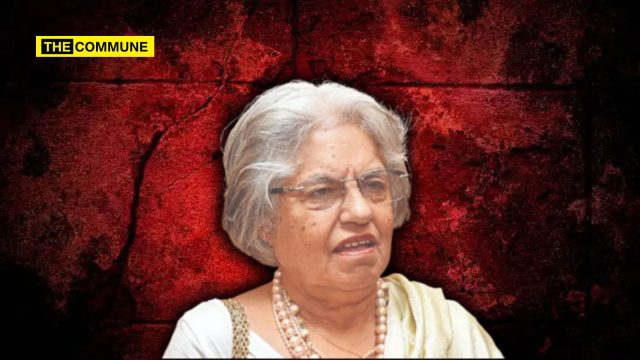
After the deaths of Rohith Vemula in 2016 and Payal Tadvi in 2019, their mothers, Radhika Vemula and Abeda Salim Tadvi, filed a Public Interest Litigation in August 2019. Represented by senior advocate Indira Jaising, the petition did not demand radical new law. It sought enforcement of the existing 2012 UGC equity regulations: functional Equal Opportunity Cells, real monitoring, and integration with accreditation bodies like NAAC.
The Supreme Court issued notices. And then, nothing. For nearly five years, the PIL gathered dust.
That changed in January 2025, when a bench led by Supreme Court of India Justices Surya Kant and Ujjal Bhuyan demanded answers. The UGC was rebuked for non-compliance and asked to produce data. Under judicial prod, the February 2025 draft emerged.
At this point, the system had done its job. But the equilibrium didn’t last.
15 September 2025: When Balance Collapsed
At a hearing on 15 September 2025, Indira Jaising pressed for ten specific changes. These included grievance committees with heavy “marginalised” representation, withdrawal of grants for non-compliance, explicit anti-segregation clauses, and stronger punitive powers.
The bench set an eight-week deadline and made it clear that omissions would be scrutinised.
The Education Ministry now faced a choice. It could defend its draft, explain why safeguards against misuse were essential, and argue that equity does not require abandoning due process. Or it could surrender.
It chose surrender.
13 January 2026: The Rules Become Unrecognisable
When the final UGC (Promotion of Equity in Higher Education Institutions) Regulations, 2026 were gazetted on January 13, the transformation was stark.
Every major demand raised in court had been absorbed. Sections now included debarment powers, explicit anti-segregation mandates, mandatory counselling, confidentiality rules, anti-retaliation clauses, Equity Squads, Equity Ambassadors, and committees packed with SC/ST/OBC/PwD/women representation.
What vanished entirely were the safeguards.
The penalty for false complaints? Deleted.
Procedural symmetry? Gone.
Equality of protection? Abandoned.
The final regulations define “caste-based discrimination” exclusively as acts against SC, ST, and OBC students. General category students are not covered by the same framework. They cannot file equivalent complaints under the same rules. They face institutional machinery without reciprocal protections.
This is asymmetry by design.
The Minister’s Assurances Don’t Change the Text
Union Education Minister Dharmendra Pradhan broke his silence on 27 January 2026, assuring the public that no one would be harassed and that misuse would not be tolerated.
BIG BREAKING 🚨 Dharmendra Pradhan speaks for the first time on UGC Controversy.
He says it is under Supreme Court’s jurisdiction.
“I want to assure everyone that no one will be subjected to harassment and there will be no discrimination”
“As far as this issue is concerned, it… pic.twitter.com/nKzdTVBQNj
— News Algebra (@NewsAlgebraIND) January 27, 2026
But policy is not governed by press statements. It is governed by gazette notifications.
The notification is unambiguous. Only certain groups can claim caste-based discrimination. Only one side enjoys institutionalised protection. The ministry’s own February 2025 draft proves this was not inevitable, it was a conscious reversal.
Why the Blame Game Misses the Point
This is why indiscriminate BJP-bashing misses the real failure.
The Education Ministry did not ideologically engineer this outcome. It already had a better policy on the table. The final rules emerged not from partisan obsession, but from an unwillingness or inability to defend that policy under judicial pressure.
This was not policymaking. It was policymaking by attrition.
Senior advocate Indira Jaising has since dismissed protests as an “upper caste reaction” and insists the regulations remain inadequate. That position is telling. It confirms what critics fear: that the framework is not meant to be neutral, but corrective in only one direction.
A Lost Opportunity
The tragedy is not that India tried to address caste discrimination in universities. That was necessary and overdue.
The tragedy is that the state abandoned the principle that justice must bind everyone equally.
The February 2025 draft showed that it was possible to protect vulnerable students without dismantling due process, without creating two classes of citizens, and without turning equity into a zero-sum contest.
That draft died not because it was unjust but because it was not defended.
If outrage is to mean anything, it should be directed where it belongs: at the process that turned a careful reform into a divisive instrument, and at the actors who insisted that balance itself was unacceptable.
Until that reckoning happens, the controversy over the UGC Equity Regulations will remain not a debate about discrimination but a warning about how policy is captured in plain sight.
Source: Swarajyamag
Subscribe to our channels on Telegram, WhatsApp, and Instagram and get the best stories of the day delivered to you personally.