


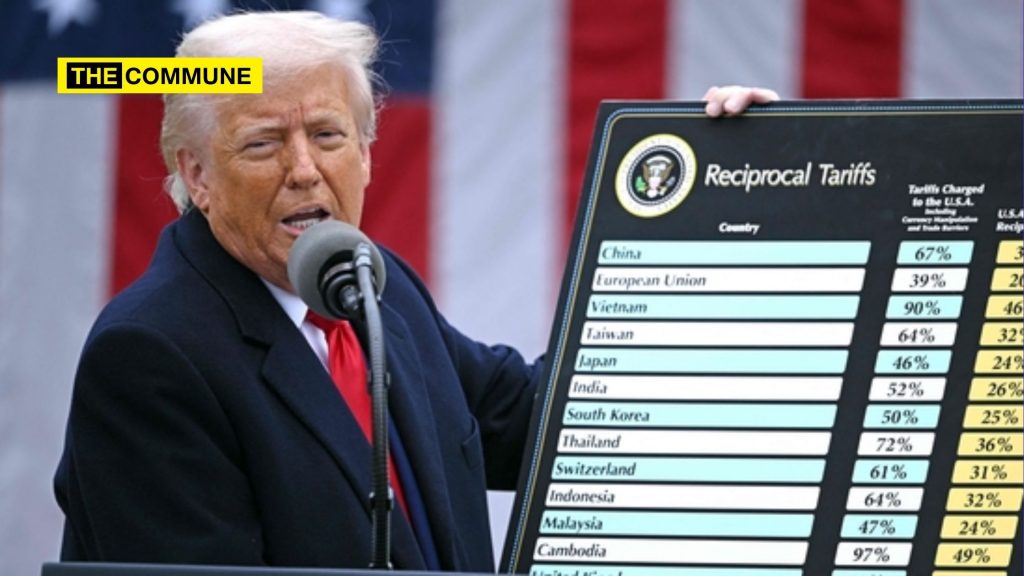
The statement by US President Donald Trump that India’s tariffs are way too high does not hold water as several nations, including America itself, protect their domestic businesses by imposing high customs duties on products.
According to the World Trade Organisation (WTO) data, the US imposes high duties on items such as dairy products (20%), fruits and vegetables (132%), cereals and food preparations (196%), oilseeds, fats and oils (164%), beverages and tobacco (350%), fish and fish products (35%), and minerals and metals (38%).
India, on the other hand, imposes 150% on whiskey and wines and 100-125% on automobiles. Japan also levies around 400 % duty on rice, Korea 887% on fruits and vegetables, and the US 350% on tobacco to protect domestic industries. While India’s simple average tariff is 17%, the actual duties on key American imports are much lower.
The weighted average tariff on US exports to India is below 5%. India has already started buying more oil and gas from the US to reduce the trade surplus and has offered to increase these purchases. The country has proposed significant tariff reductions, potentially lowering average duties from 13% to 4%, in exchange for exemptions from US tariff hikes imposed during the Trump administration.
According to Mahendra Patil, Founder and Managing Partner, MP Financial Advisory Services LLP, the imposition of a 25% US tariff on Indian exports marks a disruptive moment for sectors such as textiles, gems and jewellery, auto components, and pharmaceuticals. “For India Inc, the immediate priority is to diversify markets, accelerate value addition, and build domestic buffers to better withstand the unpredictability of global trade,” he mentioned. The recently concluded India-UK Free Trade Agreement presents a timely opportunity by unlocking stable, tariff-free access to a key market.
“This calls for a more nuanced and coordinated fiscal response, such as targeted support to impacted export sectors, faster refund mechanisms, and temporary enhancements to incentive schemes. India must use this moment not only to cushion near-term shocks but to strategically reposition itself in global value chains,” said Patil. India remains a domestic-oriented economy with consumption accounting for 60% of the total GDP. On the other hand, merchandise exports accounted for only 12% of GDP in FY24.
-IANS
Subscribe to our channels on Telegram, WhatsApp, and Instagram and get the best stories of the day delivered to you personally.