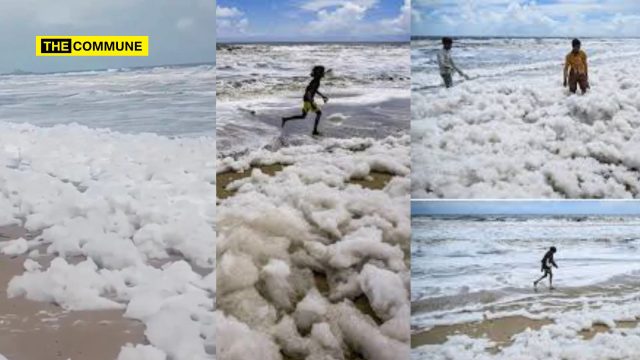
Chennai witnessed an unusual environmental phenomenon on Wednesday, 22 October 2025, as a thick layer of white froth/toxic foam spread across nearly 1.5 kilometers of the city’s coastline between Pattinapakkam and Srinivasapuram. Officials attributed the frothing to intense rainfall over the Adyar basin, which increased river discharge into the sea.
New “wonder of the world”
🚨 A kilometer-long stretch of white foam floating on the Pattinappakkam coast Chennai #Tamilnadu
The froth formed after excess water from Sembarambakkam Lake overflowed during the northeast monsoon, pushing chemical waste through the Cooum River into… pic.twitter.com/xHFp3NAaTW
— Nabila Jamal (@nabilajamal_) October 23, 2025
The combined flow of river water and untreated sewage, rich in phosphates, created a churning effect at the Adyar estuary, leading to the formation of froth. Despite government expenditure of hundreds of crores on restoring the city’s waterways, the Adyar, Cooum, and Buckingham Canal continue to carry untreated sewage, and illegal outfalls remain largely unchecked.
Experts have warned that the foam poses public health risks, particularly for children and residents frequenting busy beaches such as Marina, Thiruvanmiyur, and Besant Nagar. Contact with the froth can cause skin irritation, especially during prolonged exposure, which could affect fishermen and coastal workers.
Previous tests conducted by the Tamil Nadu Pollution Control Board (TNPCB) indicated that while pH and dissolved oxygen levels were within permissible limits, phosphate concentrations were elevated, potentially triggering frothing. Data from the National Centre for Coastal Research (NCCR) buoy on the Chennai coast confirmed that pH and oxygen levels remained normal, with phosphates identified as the primary cause of frothing. Scientists noted that no real-time sensors currently monitor phosphate levels, but their studies have consistently shown that elevated phosphate content in untreated sewage contributes to the foam’s formation.
Local fishermen observed that the froth often appears during periods of changing wind direction and increased sea churning, though the current instance coincided with the post-monsoon increase in river discharge. Fishing community leaders highlighted that the foam could disrupt breeding grounds in estuaries, affecting young fish and potentially threatening livelihoods if such occurrences continue.
The event was widely documented on social media, showing a thick layer of foam washing ashore along the southern coast of Chennai. Authorities have urged the public to avoid contact with the frothy waters until conditions return to normal, and environmentalists have called for stricter monitoring of industrial discharges and sewage treatment to prevent recurring incidents.
(Source: The New Indian Express)
Subscribe to our channels on Telegram, Instagram and YouTube to get the best stories of the day delivered to you personally.