


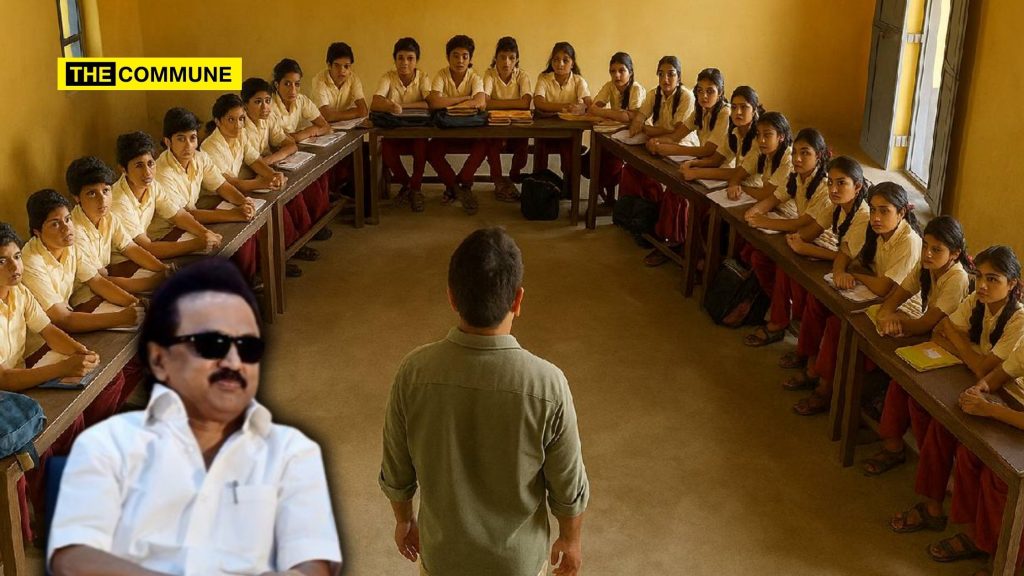
Despite widespread criticism from educators, health professionals, and parents, the Tamil Nadu School Education Department (SED) has moved forward with implementing the experimental ‘ப’ (Pa)-shaped seating arrangement in select government schools, reviving its controversial “no backbencher” classroom model.
The initiative aimed to restructure classroom layouts into a semi-circular format resembling the Tamil letter ‘ப’. The design, officials said, would promote student inclusivity, erase the frontbench-backbench hierarchy, and foster interactive learning environments.
However, after the plan drew intense criticism, particularly over potential ergonomic and psychological impacts on students, the department had earlier announced a temporary suspension pending further review, as per a Dinamalar report. School Education Director S. Kannappan had indicated over the weekend that implementation would be paused in light of “ongoing discussions.”
Yet by Monday, 14 July 2025, the department confirmed that the seating model had in fact been introduced in classrooms with fewer students and sufficient space. “The exact number of schools that have adopted the arrangement is yet to be compiled,” a senior official said. In Chennai, sources confirmed that institutions like Lady Willingdon Government Girls’ Higher Secondary School and Presidency Government Girls’ Higher Secondary School have already adopted the new format.
The seating model is inspired by a classroom design popularized in the Malayalam film Sthanarthi Sreekuttan and first trialed at a school in Valakom, Kerala. It positions students in a U-shape or along the classroom walls to ensure equal visibility and proximity to the teacher.
Despite its egalitarian goals, the model has faced significant opposition. The Indian Association of Physiotherapists (Tamil Nadu Branch) issued a public advisory warning that the layout could cause neck and spine strain, postural fatigue, and other musculoskeletal issues, especially among young students. The statement cited guidelines from the WHO and International Ergonomics Association, which recommend symmetrical seating facing the front to ensure healthy posture and visual comfort.
Beyond health concerns, the format has raised logistical and psychological red flags. Educationists warned of its unsuitability for overcrowded classrooms and lack of adaptability for students with disabilities. Mental health experts cautioned that constant eye contact and visibility might cause anxiety for introverted or neurodivergent children who prefer more private seating.
The Federation of Private School Associations of Tamil Nadu also opposed the plan, stating it was impractical in most school environments and could result in increased visual and physical strain.
(With inputs from The New Indian Express)
Subscribe to our channels on Telegram, WhatsApp, and Instagram and get the best stories of the day delivered to you personally.