


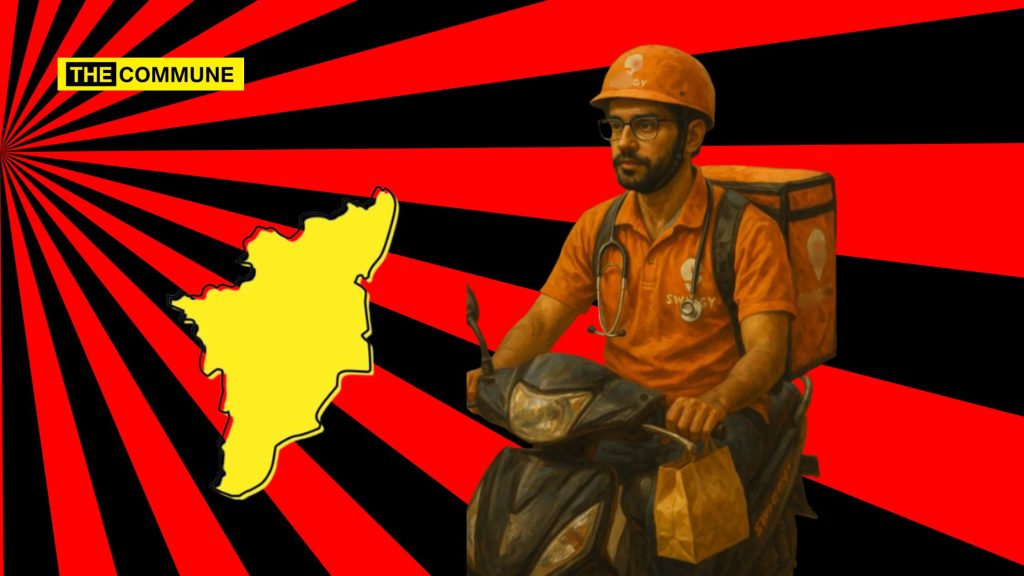
Tamil Nadu, once a beacon of medical excellence in India, is confronting a severe crisis as its highly qualified doctors, trapped by low wages and scarce opportunities, are being forced to abandon their profession for gig economy jobs. The situation has ignited a fierce debate over whether the state’s political aversion to other Indian languages, particularly Hindi, is now crippling the career mobility of its own medical graduates.
The plight of the medical community was starkly highlighted when veteran surgeon Dr Jaison Philip revealed his take-home salary after nearly 30 years of service, and 275 kidney transplants is just ₹1.3 lakh. He alleged that corruption and a system that prioritizes profit over patients have broken the medical ecosystem.
An MBBS graduate begins at ₹15,000–30,000 a month, and by age 30, many barely reach ₹30,000, after spending 8–10 years studying medicine. Even specialists earn ₹60,000, and superspecialists ₹90,000, if they find a job at all. This testimony of Dr Jaison Philip was supported by a 28-year-old MBBS graduate who now works as a food delivery agent, hiding his reality from his parents who took huge loans for his education.
While the state government claims it has achieved “zero-vacancy” in existing posts, critics point out that the number of government medical posts has remained stagnant at 19,000 for two decades, while 5,000 new doctors graduate every year. This has created a massive pool of unemployed or severely underpaid medical talent.
Language Barrier Compounds Crisis, Limits Migration
A critical dimension of this crisis, often overlooked, is the linguistic barrier. As doctors in states like Uttar Pradesh, Bihar, and Madhya Pradesh command respectable incomes, Tamil Nadu’s medics find themselves geographically stranded. The state’s political climate, which has historically championed Tamil pride while often displaying hostility towards other Indian languages, has resulted in a generation of doctors who are not equipped to practice in neighboring states where higher-paying jobs may be available.
Political observers note that while the “Dravidian model” espouses social justice, its linguistic insularity is having an unintended economic consequence. By not ensuring medical graduates are proficient in at least one other major Indian language, the model is effectively limiting their employment horizons to Tamil Nadu’s saturated market. It is counterproductive for professionals to shun a language like Hindi and then find themselves stuck in a state with a salary lower than what a marketing agent in a metropolitan city might earn.
Systemic Failures and a Glimmer of Hope
The crisis is multifaceted. Senior doctors speak of the “corporatization of healthcare,” where boardrooms discuss revenue over patient recovery, and small clinics are suffocated by regulations and competition from corporate hospitals.
Despite the grim scenario, many young doctors are now taking matters into their own hands. Recognizing that opportunity lies beyond the state’s borders, a growing number are proactively learning new languages and preparing for licensing exams to practice in other Indian states or abroad. Their struggle is not just for a job, but to reclaim the dignity of a profession they once dreamed of joining.
(Source: DTNext)
Subscribe to our channels on WhatsApp, Telegram, Instagram and YouTube to get the best stories of the day delivered to you personally.