In a dramatic escalation, the Madurai Bench of the Madras High Court has taken the extraordinary step of directing Hindu devotees to personally light the sacred Karthigai Deepam at the ancient Deepathoon stone pillar atop Thirupparankundram Hill in Madurai, after the DMK government’s Hindu Religious and Charitable Endowments (HR&CE) Department outright refused to comply with an initial court order. Citing the department’s “non-compliance” and the urgency of the festival—set for today, December 3—the court has further mandated the deployment of Central Industrial Security Force (CISF) personnel to ensure the ritual proceeds without disruption. This ruling underscores a deepening rift over the preservation of Tamil Hindu traditions amid allegations of administrative overreach and appeasement politics under the DMK-led government.
A Sacred Flame Caught In Dravidian Model Appeasement Politics
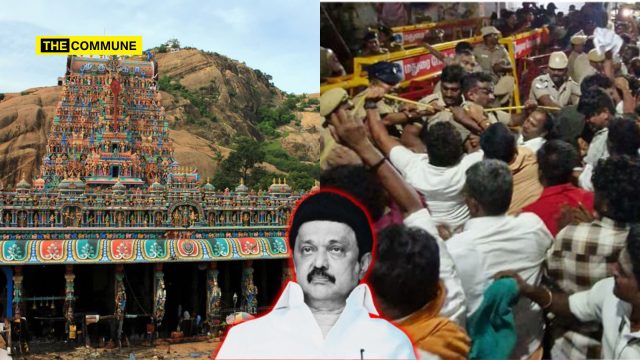
Thirupparankundram Hill, one of the six abodes of Lord Murugan in Tamil Nadu, is a site of profound spiritual significance for Hindus. At its base lies the revered Arulmigu Subramania Swamy Temple, while the summit hosts the Sikkandar Badhusha Dargah, a Muslim shrine established in the 17th century.
The Karthigai Deepam festival, celebrated during the Tamil month of Karthigai (November-December), symbolizes the triumph of light over darkness and knowledge over ignorance.
Lighting massive oil lamps atop hillocks is a deeply rooted Tamil tradition, referenced in ancient Sangam literature like the Akananuru. For over a century, the Deepam at Thirupparankundram was lit at the Deepathoon, but in recent decades, it has been relegated to a mandapam near the Uchipillaiyar Temple midway up the hill—allegedly to avoid proximity to the dargah, about 50 meters away on a separate peak.
This year’s controversy ignited on November 3, when the temple’s Executive Officer, under HR&CE oversight, issued an order restricting the lighting to the mandapam, citing “law and order concerns” due to the site’s nearness to the dargah.
Devotees, led by Rama Ravikumar, state general secretary of the Hindu Makkal Katchi, challenged this as a dilution of tradition and a failure to assert temple property rights. Multiple writ petitions followed, arguing that the Deepathoon falls squarely within temple-demarcated land and that withholding the ritual risks further encroachments by dargah trustees.
High Court Intervenes: Reprimands HR&CE
On December 1, Justice G.R. Swaminathan of the Madurai Bench delivered a landmark order, allowing the petitions and directing the temple management—itself under HR&CE control—to light the Deepam at the Deepathoon “apart from the usual places” starting this year.
The judge emphasized that “lighting lamps atop hillocks during Karthigai is a deeply rooted Tamil tradition” and that “the very purpose of a Deepathoon is to light a lamp.”
He dismissed objections from the Tamil Nadu Waqf Board and dargah representatives, noting that the site is on a lower peak, outside their demarcated area, and that “by lighting the lamp at Deepathoon… the structure of the Dargah is not in any way affected.”
Justice Swaminathan went further, critiquing the HR&CE for its “lack of vigilance” in protecting temple interests: “The Supreme Court has held that a worshiper is entitled to take action to safeguard the interest of the idol when the trustee fails to discharge his duty.”
He analogized the ritual to a symbolic assertion of ownership, akin to closing temple gates periodically to prevent easement claims, and ordered police protection to enforce compliance.
“With police protection ensured, lighting a lamp—a sacred act—cannot offend anyone’s sensibilities,” the judge concluded.
HR&CE’s Defiance: Appeal And Refusal Spark Crisis
Yet, within hours of the December 1 order, the temple’s Executive Officer filed an urgent appeal to a Division Bench, challenging the directive and seeking a stay.
Critics, including heritage advocate TR Ramesh, labeled this as “fraudulent” interference by the DMK-controlled HR&CE, which administers over 38,000 Hindu temples but has faced accusations of diverting funds and suppressing traditions.
The appeal argued that the single-judge order risked communal tensions, echoing CPI(M) MP Su Venkatesan’s X post branding the Deepam a potential “riot lamp” and accusing “sectarian forces” of exploiting secularism.
By December 2, with the festival eve approaching, the HR&CE’s refusal crystallized. Local authorities, citing the pending appeal, withheld permissions and security arrangements, effectively stonewalling the temple management’s compliance.
Petitioners returned to court, prompting Justice Swaminathan’s stern rebuke on December 3: “Despite vast powers, courts lack the ability to ensure compliance—a judgment has little meaning if it cannot be enforced.”
In a bold pivot, the judge empowered the petitioners themselves to light the Deepam, bypassing the “recalcitrant” HR&CE. To avert any law-and-order fallout, he invoked the rare provision for CISF deployment, directing the Centre to provide “full security” for the ritual.
Hindus Protest
Hindus led by Hindu Munnani have taken to the streets to pushback against the DMK government’s draconian attitude in denying Hindus their fundamental right.
திருப்பரங்குன்றத்தில் முருகனை கும்பிட வந்த அப்பாவி பக்தர்கள் மீது காவல்துறை நடத்திய வெறித்தனமான தாக்குதலுக்கு எனது கடும் கண்டனங்கள்!
இந்துக்கள் என்றாலே இந்த தி.மு.க அரசுக்கு ஏன் இவ்வளவு கசப்பு? பக்தர்களை ஏதோ தீவிரவாதிகள் போல விரட்டி விரட்டி அடிப்பதுதான் உங்கள் ‘#திராவிடமாடல்‘… pic.twitter.com/uI3npa0kcn
— Dr.SG Suryah (@SuryahSG) December 3, 2025
Protests break out at the Tiruparankundram hill temple in Madurai as the Deepam that was to be lit in the Deepathoon didn’t happen DESPITE the Madras HC order pic.twitter.com/jBiPtSwLzX
— Akshita Nandagopal (@Akshita_N) December 3, 2025
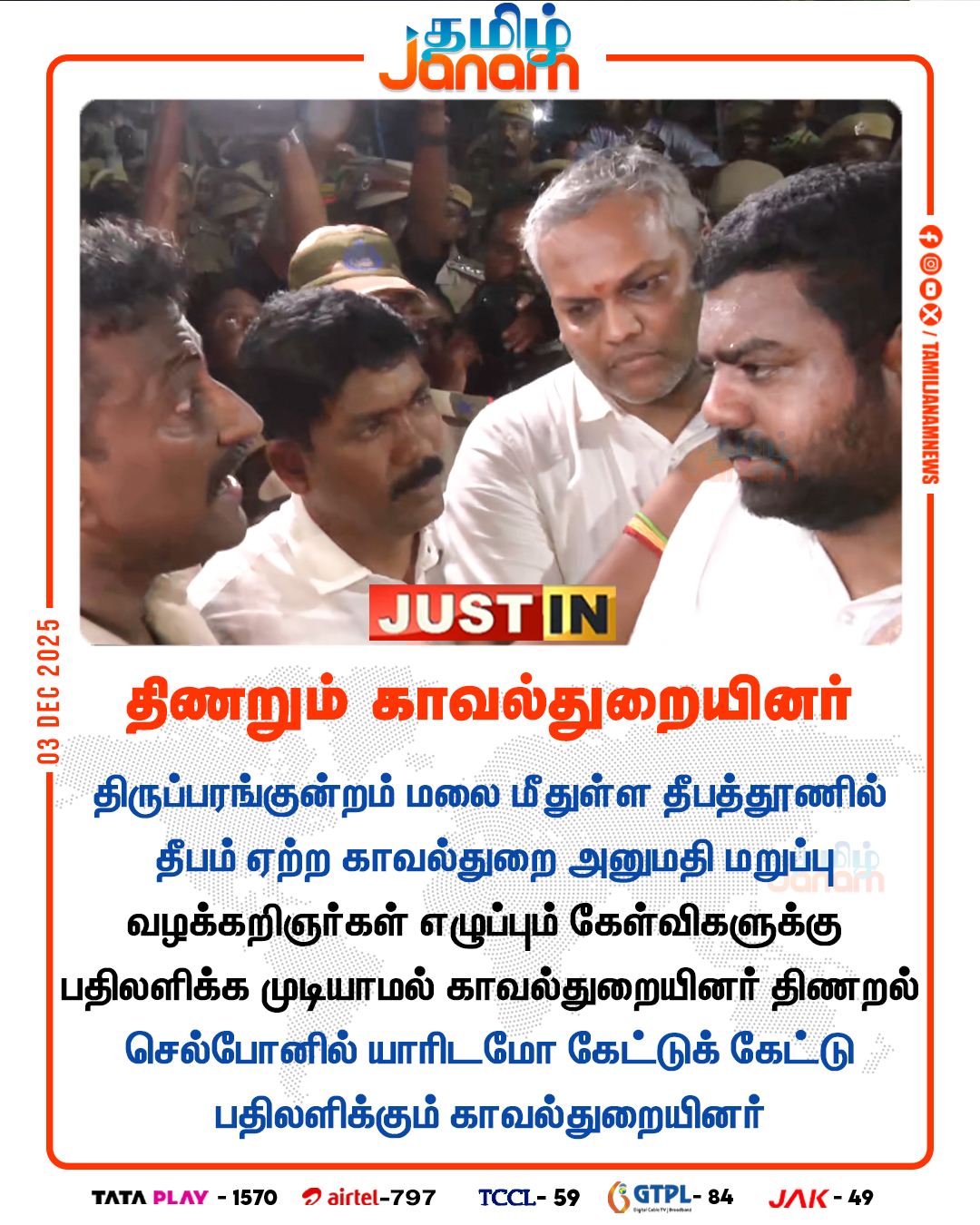
Scuffle broke out between the police and protesting devotees as they attempted to cross the barriers erected.
Section 163 of the Bharatiya Nagarik Suraksha Sanhita (BNSS) has been imposed in Thirupparankundram.
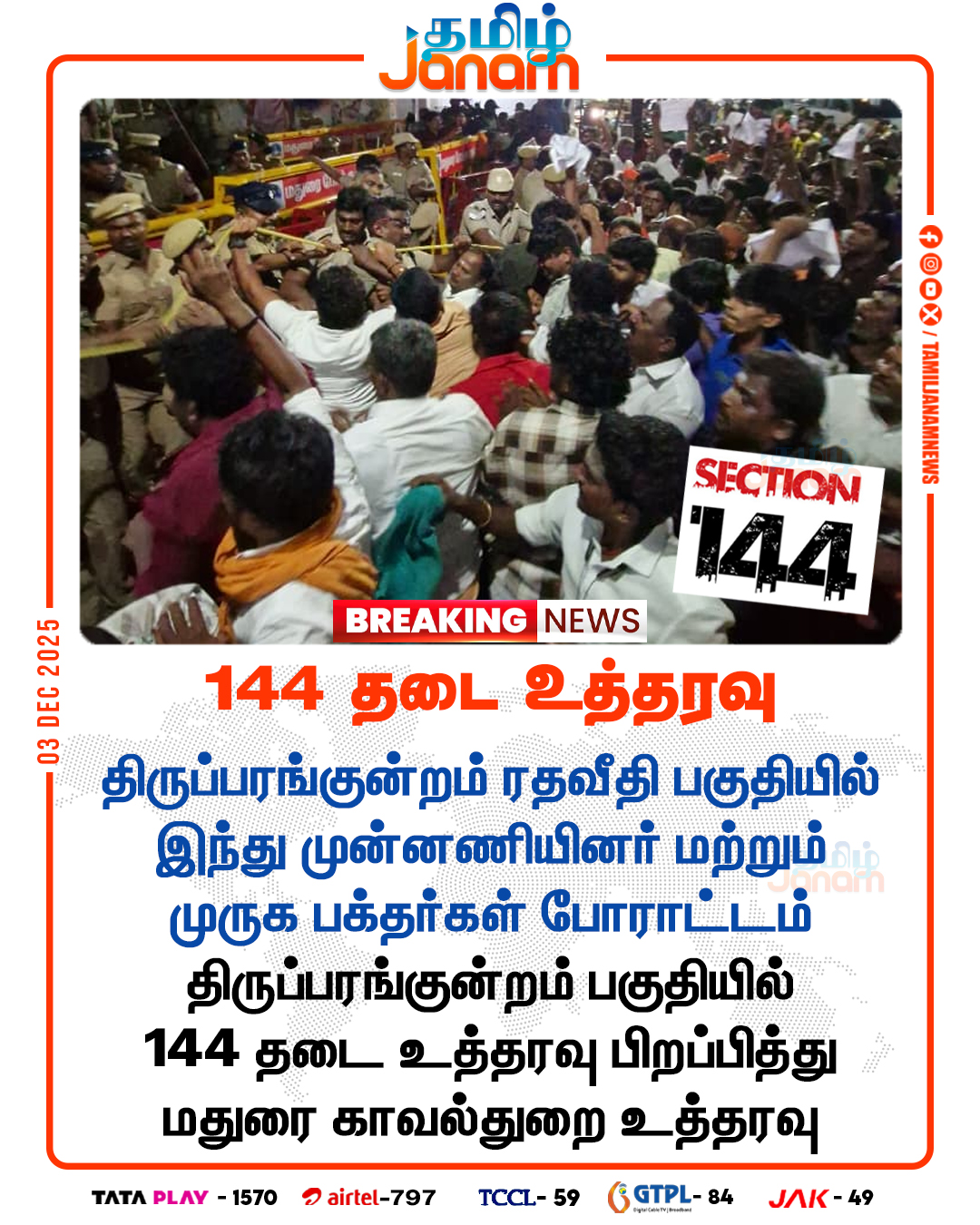
The police at the spot are being grilled with questions by Hindu advocates while they have been taking instructions from above and denying entry to Hindus citing vague reasons.
A Watershed Moment For Hindus In Tamil Nadu
Today’s lighting, if it proceeds under CISF watch, could set a precedent for devotee-led enforcement of religious rights when state machinery falters. It also amplifies calls for HR&CE reforms, with activists demanding audits of temple lands amid encroachment fears. The DMK government, has once again shown its anti-Hindu face which is going to eventually lead to Hindu consolidation.
Subscribe to our channels on WhatsApp, Telegram, Instagram and YouTube to get the best stories of the day delivered to you personally.