


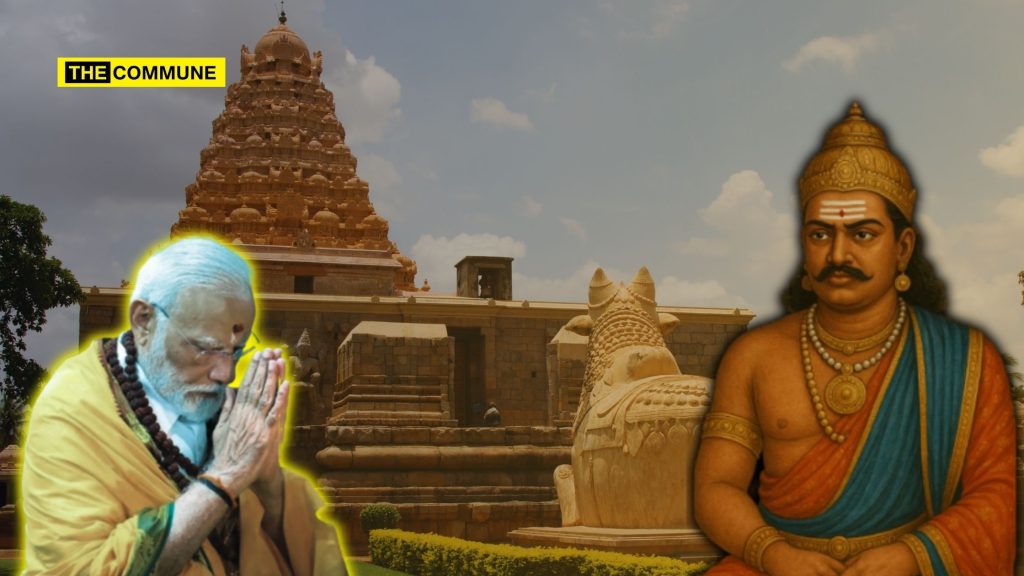
Gangai Konda Cholapuram, a modest town in the Ariyalur district of Tamil Nadu, is poised to witness historic celebrations this week. On 23rd July, the town will commemorate the birth anniversary of the great Chola emperor Rajendra Chola I, which falls on the auspicious Thiruvathirai (Ardra) Nakshatra. Additionally, this year marks the 1000th anniversary of Rajendra Chola’s victorious naval expedition to Southeast Asia—a milestone event that etched the Chola name into global maritime history. A series of celebratory events are being organized from July 23rd to 27th to honour these two monumental occasions.
Although today a quiet town, Gangai Konda Cholapuram was once the bustling imperial capital of the Chola Empire, surpassing earlier capitals like Thanjavur, Pazhayarai, and Uraiyur. Many are unaware that it served as the capital for over 250 years, longer than any other Chola city. Rajendra Chola, son of the illustrious Rajaraja Chola, shifted the capital from Thanjavur due to its overcrowding, brought on by the swelling Chola army, administrative officials, temple personnel, and civilians. Strategically, he also desired quicker access from the northern territories, which were difficult to reach due to the rivers encircling Thanjavur.
As part of this grand vision, Rajendra not only planned a new city but also sought to build a temple that matched the grandeur of his father’s Brihadeeswarar Temple in Thanjavur. Staying true to his flair for symbolism and power, he wanted the Kumbhabhishekam of the new temple to be performed with the sacred waters of the Ganges. To achieve this, he dispatched a military expedition under his general Arayan Rajarajan, which marched across the subcontinent, defeated Mahipala—the Pala king of Bengal—and brought back Ganga water to Tamil Nadu.
The Thiruvalangadu copper plates poetically record that “the Ganga water was collected in pots and carried on the backs of elephants, forming a bridge across the mighty river.” Rajendra himself travelled as far as the Godavari River to ceremoniously receive the Ganga water, which was then brought to his capital and used to consecrate the temple. He poured the sacred water into a special temple well and also built a lake named Chola Gangam, establishing it as a ‘Jala Sthambam’ (water pillar) to commemorate his spiritual and military conquest—an alternative to the typical ‘Jaya Sthambam’ (victory pillar).
Architectural Grandeur And Turbulent Past
The temple Rajendra constructed is a masterpiece of Chola architecture, now recognized as part of the UNESCO World Heritage Site “Great Living Chola Temples”. Sadly, the temple suffered immense damage from successive invasions, beginning with Malik Kafur’s raid in the 14th century, which destroyed the two-storied outer walls and the Somaskanda shrine. During the British colonial period, the temple was further desecrated: a rampart was built in the southeastern corner, the Mahamandapam dismantled, and its stones used to build a dam across the Kollidam River. The temple’s original two gopurams were also destroyed—only the lower portion of the second remains today. The current Nandi (Rishabha) at the entrance is a later addition; the original is lost.
The temple layout features a Mukha Mandapa, Mahamandapa, and Ardha Mandapa, leading to the sanctum sanctorum. These mandapas were reconstructed during the Vijayanagara and Nayaka periods. The Sri Vimana, rising 51 meters from the Upa Peeta, is slightly shorter than that of Thanjavur, a deliberate choice by Rajendra to honour his father. The hollow interior of the Vimana indicates adherence to the Makutagama architectural canon. The presiding deity, the Shivalingam, stands an imposing 3.3 meters tall, making it one of the tallest in India.
Sacred Shrines And Sculptural Brilliance
Flanking the main shrine are two sub-shrines known as South Kailayam and North Kailayam, both originally dedicated to Shiva. Today, South Kailayam lies vacant, while North Kailayam has been converted into a Devi shrine. A Ganapati shrine of later origin stands on the southwestern side. On the northern side, Rajendra constructed a shrine for Durga, a deity brought from the Chalukya kingdom. Also notable is the Simha Keni (Lion-faced Well), built by the Udayarpalayam Zamindar, adjacent to the sacred well containing Ganga water.
The temple is also renowned for its stunning sculptural panels. On the southern side, exquisite carvings of Gajalakshmi, Nritya Ganapati, Ardhanareeswara, Harihara, and Nataraja are seen. The Nataraja panel, in particular, is celebrated for the deity’s ethereal smile, unmatched in Chola art. The spot for Dakshinamurthy is now vacant, likely removed during invasions. On the rear side, panels depict Gangadhara, Lingodbhava, and Mahavishnu, while the northern side features dynamic depictions of Kalasamhara Murti, Durga, Brahma, Bhairava, and Kamadahana Murti.
At the base of the northern entrance steps lie two of the temple’s most captivating reliefs. On the right, a rare Gnana Saraswati panel portrays the goddess in a meditative pose holding a Japa Mala, notably without her veena—an iconographic rarity. Opposite is the Chandeswara Anugraha Murti, surrounded by a detailed visual narrative: the story of Visarasarma, a young devotee who offered milk to the Shivalinga against his father’s wishes. When his father disrupted the offering, Visarasarma’s stick miraculously transformed into an axe, slaying his father. Moved by his devotion, Shiva appeared and granted him the title of Chandeswara.
Each panel in the temple tells a full visual story, capturing not just divinity but the Bhakti ethos that was central to Chola spiritual life.
Revival and Contemporary Celebrations
Despite its historical and artistic significance, Gangai Konda Cholapuram remained in neglect for centuries, left to the care of the Archaeological Survey of India (ASI). In recent times, a group of local devotees initiated a cultural revival by installing a new Dwajasthambam (temple flagstaff) and conducting Kumbhabhishekam using Ganga water, mirroring the original consecration by Rajendra himself.
Now, with the birthday of Rajendra Chola and the millennial anniversary of his legendary conquest of the Srivijaya Empire, Gangai Konda Cholapuram is finally receiving the recognition it deserves. These celebrations mark not just a remembrance of the past, but a cultural and spiritual renaissance, affirming this historic site as a sacred destination for generations to come.
TS Krishnan is a Tamil scholar, historian and author.
Subscribe to our Telegram, WhatsApp, and Instagram channels and get the best stories of the day delivered to you personally.