


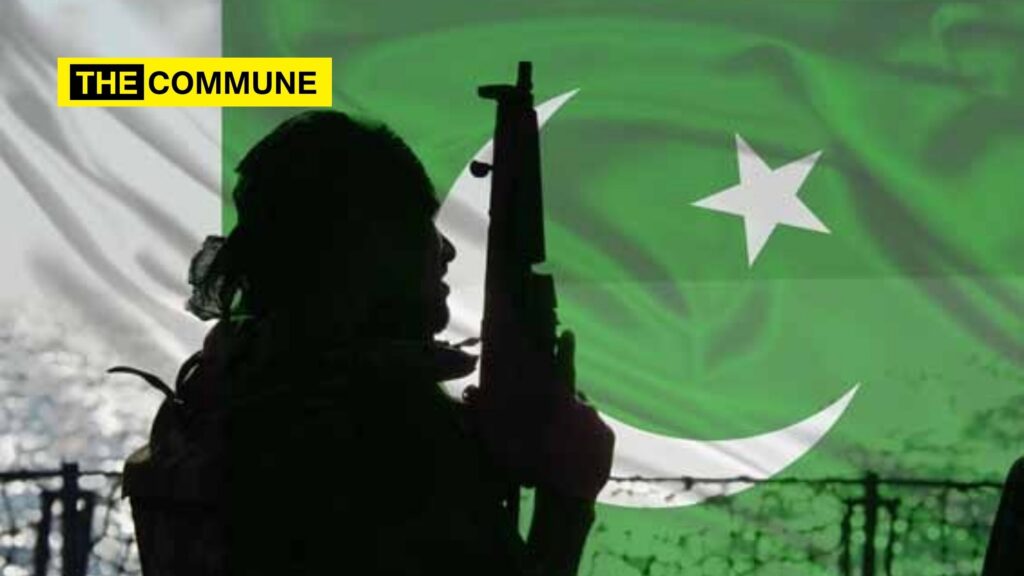
The rivalry between India and Pakistan, born in blood during the Partition of 1947, remains one of the most persistent and dangerous conflicts of the modern world. Beyond Kashmir, the hostility is rooted in deeper ideological, political, and societal dysfunctions within Pakistan. As an observer, I have sought to examine the five critical drivers of the perpetual conflict: Pakistan’s public, its military-intelligence complex, terror outfits, radical clerics (Maulvis), and the ideological manipulation of Islam itself — along with the unavoidable conclusion that reform within Islam is necessary for peace.
Five Elements Fueling The Conflict
1. The Pakistani Public: Trapped By State Lies And Religion
The Pakistani public is often caricatured as fanatically anti-India, but reality is more complex. While many ordinary Pakistanis seek better lives and peace, they are trapped between a toxic cocktail of forced jingoism, religious indoctrination, and manufactured hatred. School textbooks, media narratives, and mosque sermons portray India as an existential enemy (Ref: K.K. Aziz, The Murder of History, 1993). Economic hardship, rampant unemployment, and political instability fuel public frustration, which the state conveniently redirects toward India. Some, exposed to global ideas via social media, question the endless conflict, but they remain marginal voices — crushed under state censorship, blasphemy laws, and extremist societal pressure.
2. The Pakistani Government and Its Military/ISI: Merchants of Perpetual Conflict
Pakistan’s government has long been a façade for real power wielded by its military, particularly since the era of General Zia-ul-Haq (1977–1988). Under Zia, the military formally adopted the “Islamization” of the state and began using jihadist groups as tools of foreign policy, particularly against India (Ref: Husain Haqqani, 2005). The doctrine of “bleeding India with a thousand cuts” was not just strategy — it became national identity. Today, the Army and ISI continue to orchestrate covert operations, sponsoring insurgencies and terrorism in Kashmir and beyond. Meanwhile, generals and ISI officers enrich themselves off the country’s resources, running vast business empires under military control (Ref: Ayesha Siddiqa, Military Inc., 2007). War is not a cost for Pakistan’s military; it is a business model.
3. Terror Outfits: Proxy Warriors for the Pakistani State
Groups like Lashkar-e-Taiba (LeT), Jaish-e-Mohammed (JeM), and Hizbul Mujahideen function as semi-official arms of Pakistan’s “deep state.” Their existence is no accident — they receive financing, protection, and logistical support from the ISI (Ref: U.S. Department of State, Country Reports on Terrorism). They recruit and radicalize young men in training camps and madrassas, often masquerading as “charitable” organizations. Terrorism is marketed as “jihad” for Kashmir, but in reality, it serves to keep the Indian state off-balance, internationalize the Kashmir dispute, and justify Pakistan’s bloated military budget. As long as these terror factories operate freely inside Pakistan, peace will remain a fantasy.
4. Radical Clerics (Maulvis): Ideological Shock Troops
Pakistan’s religious clerics have become the amplifiers of hate. Instead of spiritual guidance, many Maulvis preach radicalism, intolerance, and violence, creating a fertile breeding ground for militancy. Mosques and madrasas, especially those funded by Saudi Wahhabi money during and after the Afghan jihad, serve as recruitment and indoctrination centers (Ref: Ahmed Rashid, Taliban, 2000). Political leaders and courts are either powerless or complicit — terrified of clerical mobs that can paralyze the country overnight. Blasphemy laws, vigilante justice, and public lynchings for alleged “offenses to Islam” demonstrate the complete breakdown of civil authority. These clerics are not fringe actors — they are mainstream.
5. Islam Itself: The Weaponized Ideology
It is no longer enough to pretend that extremism is just a “misinterpretation” of Islam. The fact remains: jihadist violence, supremacist ideas, and deceptive tactics like taqiyya (even if historically Shia-focused) have been reinterpreted and weaponized by radicals using Islamic texts. Certain Quranic verses — whether in their original historical context or not — are exploited to justify violence against non-Muslims and perpetual war until “global supremacy” is achieved (Ref: Maajid Nawaz, Radical, 2012).
Without reform — real, painful, structural reform — Islam will continue to be hijacked for political and military agendas. Moderation cannot be achieved without revisiting and either reinterpreting or critically filtering the problematic parts of the scripture. It is controversial, yes. But necessary.
Consequences: A Nation — And A Region — In Peril
The result is a vicious, self-sustaining cycle:
- The military benefits financially from endless conflict.
- Terrorists gain legitimacy as “freedom fighters.”
- Radical clerics control societal thought.
- The public remains brainwashed and economically crippled.
Meanwhile, Pakistan sinks into economic disaster — kept afloat only by IMF bailouts and handouts from China and Gulf states. The FATF gray-listing, growing international isolation, and plummeting foreign investment are direct outcomes of its policies. India too pays a heavy price: wasted military expenditure, human costs of terrorism, and constant strategic distraction.
Reforming Islam For The 21st Century: A Non-Negotiable Need
Moderation of Christianity during industrialization offers a blueprint. Urbanization, education, scientific inquiry, and democratic institutions forced Christian societies to re-interpret violent Biblical passages in favour of peaceful coexistence. Islam needs a similar internal upheaval.
Reform must involve:
- Contextualizing or filtering violent Quranic verses.
- Replacing madrasa education with modern schooling.
- Empowering progressive Muslim scholars.
- Systematic de-radicalization programs.
- International economic incentives tied to religious reforms.
None of this can happen unless Islamic religious texts are no longer treated as the ultimate, unquestionable source for education and law. Someone from within Pakistan — with the gravitas of a Mohammed bin Salman — must lead this revolution. External pressure alone will not suffice.
Breaking The Cycle
The India-Pakistan conflict is not just territorial — it is ideological. It is the product of a militarized state, terror as policy, clerical radicalism, and the weaponization of religion. Without brutally honest introspection and reform, Pakistan will continue to bleed — and make others bleed — for generations.
It’s time to stop pretending peace can be achieved without confronting the ideological rot at the core. It’s time for the Muslim world especially those in the Gulf, to drive some sense into the pathetic, mindless Pakistani state before it turns into a hellhole.
G Saimukundhan is a Chartered Accountant.
Subscribe to our channels on Telegram, WhatsApp, and Instagram and get the best stories of the day delivered to you personally.