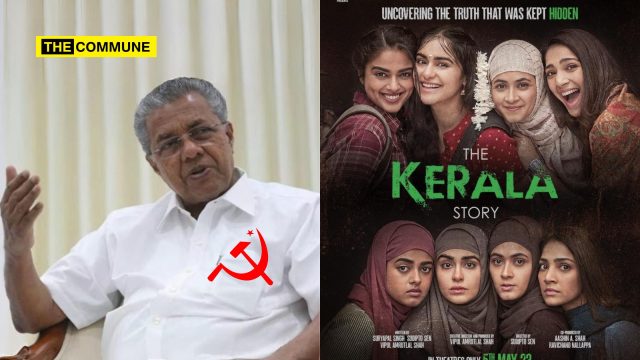
Following the announcement of the 71st National Film Awards, Sudipto Sen’s ‘The Kerala Story’ was awarded the Best Cinematography honour. Kerala Chief Minister Pinarayi Vijayan, publicly expressed displeasure against the recognition granted to the film.
Taking to his official X account, Vijayan expressed his displeasure, criticizing the central government and the jury for honouring a film that, “By honouring a film that spreads blatant misinformation with the clear intent of tarnishing Kerala’s image and sowing seeds of communal hatred, the jury of the #NationalFilmAwards has lent legitimacy to a narrative rooted in the divisive ideology of the Sangh Parivar. Kerala, a land that has always stood as a beacon of harmony and resistance against communal forces, has been gravely insulted by this decision. It is not just Malayalis, but everyone who believes in democracy, must raise their voice in defence of truth and the constitutional values we hold dear.”
By honouring a film that spreads blatant misinformation with the clear intent of tarnishing Kerala’s image and sowing seeds of communal hatred, the jury of the #NationalFilmAwards has lent legitimacy to a narrative rooted in the divisive ideology of the Sangh Parivar. Kerala, a…
— Pinarayi Vijayan (@pinarayivijayan) August 1, 2025
This public denouncement raised severe questions, Is the Chief Minister’s opposition driven by genuine concern, or is it a move rooted in appeasement politics and a desire to maintain minority vote banks?
About the Film: The Kerala Story
‘The Kerala Story‘ is a 2023 Hindi-language drama directed by Sudipto Sen and produced by Vipul Amrutlal Shah. Featuring Adah Sharma, Yogita Bihani, Siddhi Idnani, and Sonia Balani, the film revolves around inspired by true events.
The narrative focuses on a group of young women from Kerala who are allegedly lured into converting to Islam and subsequently recruited by the Islamic State (ISIS). Central to the film is the controversial theme of “Love Jihad”, portraying the systematic targeting of non-Muslim women under the guise of romantic relationships to facilitate religious conversion and extremist recruitment.
Plot Overview
The story follows four college girls Shalini (Adah Sharma), Geetanjali (Siddhi Idnani), Nimah (Yogita Bihani), and Asifa (Sonia Balani) who come from Hindu, Christian, and Muslim backgrounds. Set in a nursing college in North Kerala, the film paints a picture of ideological conflict and cultural manipulation. The character Asifa, a devout Muslim, gradually begins influencing her roommates, convincing them to adopt Islam with the help of community elders, Quranic verses, and young men posing as romantic partners.
As the story progresses, it delves into the transformation of the protagonist, Shalini, from a cheerful student to Fatima, an ISIS recruit and mother, desperate to escape the life she was forced into. The film shows how these girls are manipulated emotionally, psychologically, and physically eventually trafficked into war zones.
The film doesn’t shy away from depicting disturbing scenes of rape, religious coercion, and violence under Sharia law. While unsettling, these portrayals are claimed to reflect real incidents of exploitation in extremist circles.
Link to Real-Life Incidents
The film draws heavily from the 2016 ISIS recruitment case involving 21 individuals from Kerala, including four women: Sonia Sebastian (Ayisha), Merrin Jacob (Mariyam), Nimisha (Fathima Isa), and Raffaela. These women reportedly converted to Islam and left India with their husbands to join ISIS-K (Khorasan Province) in Afghanistan.
Their cases came into the public domain after being captured and investigated abroad. Documentaries, including one by StratNews Global, have presented detailed testimonies of the women and their radicalization. The film builds its narrative around these documented accounts while expanding it through dramatization.
While The Kerala Story captures the emotional and psychological trauma faced by the women, it also takes significant creative liberties, particularly in its representation of Kerala’s culture and Muslim communities. The film’s core messaging remains consistent: the use of love and emotional manipulation as a tool for religious conversion and extremist recruitment. The closing scene features a real-life victim’s testimony, further blurring the line between fiction and documentary.
Though the leftist and political parties blame it as heavily dramatized and politically charged, The Kerala Story has succeeded in bringing the term Love Jihad into mainstream discussion. Whether viewed as a wake-up call or propaganda, it has undeniably ignited a national conversation about religious extremism, conversion, and the thin line between fact and fiction in storytelling.
Subscribe to our channels on Telegram, WhatsApp, and Instagram and get the best stories of the day delivered to you personally.